

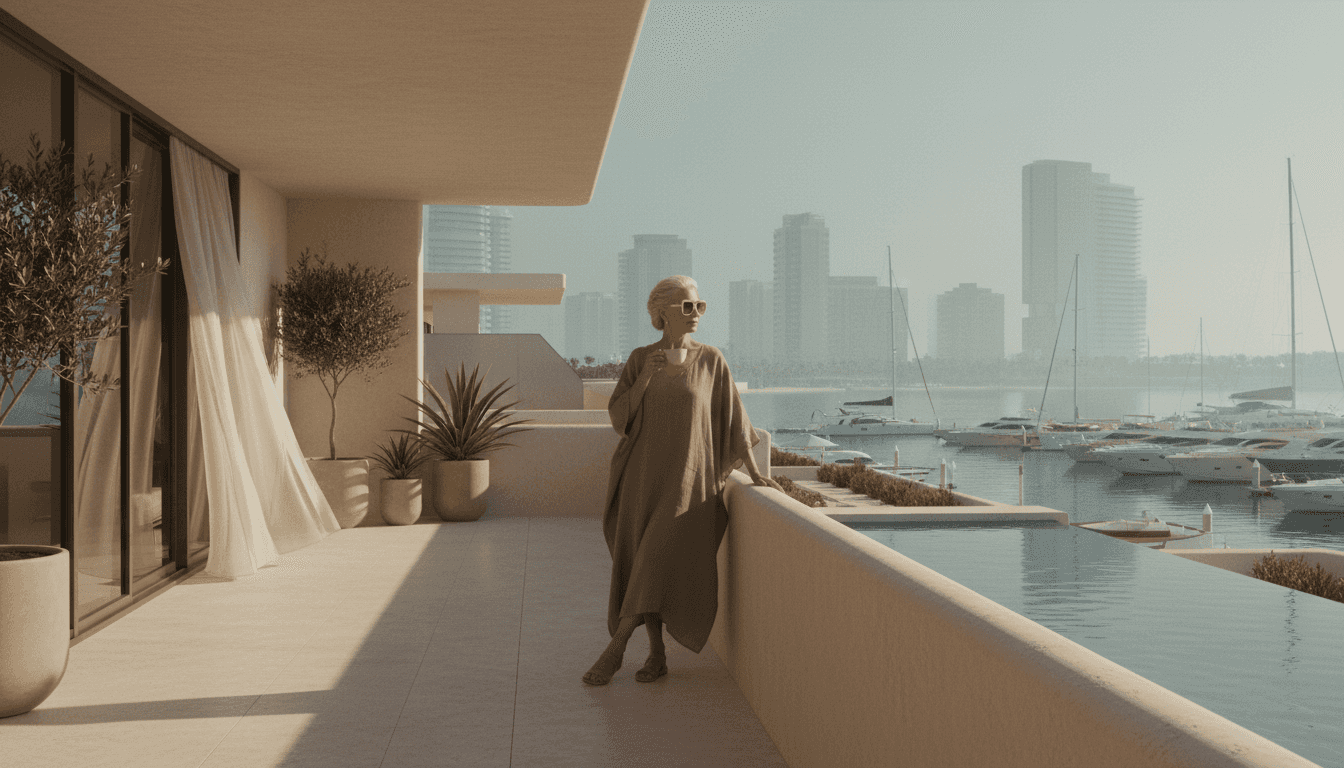
Dubai's Future Value: Infrastructure and Apartment Growth
As an apartment specialist, I've seen firsthand how major infrastructure projects like new Metro lines and highways are the primary drivers of capital appreciation in Dubai's growth corridors. Understanding these catalysts is key to smart property investment.

As an apartment specialist, I’ve learned that the most reliable predictor of future property value in Dubai isn’t a crystal ball — it’s a map. Specifically, it's the official maps showing future transport lines, new public facilities, and economic zones. These infrastructure investments are the lifeblood of our city's expansion, transforming quiet sandy plots into thriving communities and creating significant capital appreciation for early investors.
Here's what we'll explore:
- The fundamental link between infrastructure and property value.
- How to identify Dubai's key growth corridors for apartment investment.
- The game-changing impact of the Metro's expansion on accessibility and prices.
- The multiplier effect of Al Maktoum International Airport's development.
- A deep dive into specific communities set to benefit, from Dubai South to the corridors along Sheikh Mohammed bin Zayed Road.
- A case study on how past projects created today's prime real estate.
- A costed example of investing in these growth areas.
The Iron Law: Connectivity Creates Value
At its core, real estate value is a function of location and utility. An apartment is only as valuable as its access to jobs, schools, retail, and leisure. In a city as dynamic and spread out as Dubai, infrastructure is the critical variable that defines this access. When the Roads & Transport Authority (RTA) announces a new highway interchange or a Dubai Metro extension property value becomes a hot topic, it’s not just about convenience; it's a direct signal of future economic activity and population growth. This is the foundation of capital appreciation Dubai infrastructure projects can deliver. Think of it as the city’s leadership underwriting the future success of a new district. They are literally paving the way for people and businesses to move in, creating the demand that pushes property prices and rental incomes upwards.
For apartment investors, this principle is particularly potent. Unlike villa communities which can sometimes create their own self-contained bubbles, apartment towers are deeply reliant on the surrounding urban fabric. Their appeal is directly tied to walkability, public transport links, and proximity to commercial hubs. A new metro station within a 10-minute walk can add a significant premium to an apartment's value compared to an identical unit two kilometres away. We saw this play out perfectly along the Route 2020 extension for Expo. Communities like Al Furjan and Discovery Gardens, once considered somewhat disconnected, saw a marked increase in demand and value as the metro line brought them into the city’s connected fold. This isn't speculation; it's a proven market dynamic.
This is why, at Gaia Living, when we analyse off-plan launches, one of our first steps is to overlay the project's location onto the Dubai 2040 Urban Master Plan and any announced RTA projects. We're looking for that confluence of a reputable developer and a government-backed infrastructure catalyst. The developer builds the homes, but the government builds the neighbourhood. This synergy de-risks the investment and provides a clear path to value growth. A well-planned apartment in a designated growth corridors Dubai property zone, purchased at an early stage, is one of the most reliable strategies for long-term wealth creation in this market. It’s a strategy that moves beyond chasing short-term trends and instead aligns your investment with the city's long-term vision.
Identifying Dubai's Next Growth Corridors
 Featured project
So where are these corridors? The most prominent is the southern axis, stretching from Jabal Ali towards the Abu Dhabi border. This area is anchored by two monumental projects: the expansion of Al Maktoum International Airport (DWC) and the legacy site of Expo City. The government's plan to consolidate all airport operations to DWC over the next decade is the single biggest catalyst for this region. An airport handling 260 million passengers annually isn't just an airport; it's an 'aerotropolis' — a city in its own right, surrounded by logistics, commercial, residential, and leisure districts. The demand for housing for the millions of professionals who will eventually work in and around DWC will be immense. This makes areas like Dubai South, with its dedicated residential districts, a focal point for future value.
Another critical corridor is forming along the E311 (Sheikh Mohammed Bin Zayed Road) and E611 (Emirates Road) arteries, particularly in the stretch between Arabian Ranches and the areas inland from the coast. These zones are home to large-scale master communities like Damac Hills and Damac Hills II, Tilal Al Ghaf, and a host of new projects in areas like Arjan. For years, the primary drawback of these areas was their reliance on private cars. However, as the city's centre of gravity shifts south and new road projects improve connectivity, their value proposition strengthens. The planned Dubai Metro Blue Line, intended to connect these communities with the existing Red and Green lines, is the missing piece of the puzzle. The announcement of its precise route will be a major inflection point for apartment values in these areas.
Finally, we must look at the revival of what I call the 'Grand Projects'. The relaunch of Palm Jebel Ali by Nakheel is a prime example. This isn't just a new development; it's the completion of an iconic vision. The sheer scale of this project, which will be twice the size of Palm Jumeirah, will create its own economic ecosystem. While much of the focus is on luxury villas, there will be a significant number of apartments, particularly on the 'trunk' of the palm, offering a more accessible entry point. Similarly, projects like Dubai Island (formerly Deira Islands) in the city's historic heart are being reimagined with new infrastructure, creating waterfront apartment opportunities in an area of Dubai that has been historically underserved with premium new-builds. Investing here is a bet on the city's ability to revitalise and densify its older districts, a strategy that has paid dividends in cities worldwide.
The Metro Effect: How Transit-Oriented Development Shapes Value
The impact of the Dubai Metro on property is one of the clearest examples of infrastructure-driven value creation. The RTA's own studies and market data consistently show a 'Metro premium' on properties within a 10-15 minute walking radius of a station. This premium isn't just a one-time bump; it's a sustainable increase in the asset's fundamental value. Why? Because it radically expands the potential tenant and buyer pool. An apartment near a metro station is accessible to a much wider demographic, including young professionals who don't own a car, families looking to reduce their transport costs, and tourists seeking convenient short-term lets. This translates to lower vacancy rates and higher, more stable rental yields — the bedrock of a solid property investment.
We saw this unfold with the Red Line's initial launch. Areas like Dubai Marina and Jumeirah Lakes Towers (JLT) already had appeal, but the arrival of the metro cemented their status as prime residential hubs. It made car-free living a viable option, connecting residents directly to major business districts like DIFC and the World Trade Centre. The subsequent Green Line did the same for older, denser parts of Dubai like Bur Dubai and Deira. The most recent example, the Route 2020 extension to the Expo site, offered a live case study in the Dubai Metro extension property value effect. As construction progressed, we saw a clear uptick in interest and transaction volumes in communities like The Gardens, Discovery Gardens, and Al Furjan. Developers with projects near the new stations began highlighting 'metro-proximity' as a key selling point, and prices reflected this newfound convenience.
>The announcement of a new metro line is like a starting gun for savvy investors. It provides a multi-year window to acquire assets before the full value uplift is realised upon the service's launch.
The upcoming Blue Line, an ambitious 30-kilometre extension, is the next major catalyst to watch. While the final route is still subject to official confirmation, it is expected to link existing endpoints and service a dozen key areas, including Creek Harbour, Festival City, International City, and Silicon Oasis, eventually connecting to the areas around Dubai Science Park and Arjan. For an area like Dubai International City, which has always offered some of the most affordable apartments in Dubai but suffered from traffic congestion and limited public transport, a metro link would be transformative. It could significantly improve its reputation, attract a new tenant profile, and trigger a wave of renovation and redevelopment, leading to substantial capital appreciation for existing owners. My advice to investors is to follow the RTA's announcements closely. Once the station locations are confirmed, a new wave of future development zones apartment value growth will be unlocked.
The DWC Aerotropolis: A New City in the South
It's difficult to overstate the long-term impact of the decision to make Al Maktoum International Airport (DWC) the world's largest aviation hub. This is more than just an airport expansion; it's the creation of a new economic anchor for the southern end of the emirate. The project, with its planned capacity for 260 million passengers and 12 million tonnes of cargo, is a core component of the Dubai 2040 Urban Master Plan. The government's vision is to create an entire 'aerotropolis' around it, a city where logistics, commerce, hospitality, and residential communities are all interconnected and centred on the airport. This is the definition of infrastructure investment Dubai apartments will thrive on.
The direct consequence for the property market is the creation of immense, sustained housing demand. We're talking about hundreds of thousands of jobs, from pilots and cabin crew to logistics managers, engineers, retail staff, and corporate executives. These people will all need places to live, and they will want to live close to their workplace to avoid long commutes. This positions communities within a 15-20 minute drive of DWC for exceptional long-term growth. The most obvious beneficiary is Dubai South itself, a 145-square-kilometre master-planned city that is being developed around the airport. Its residential district, with projects like the Pulse and a range of new launches, is designed precisely to meet this coming demand. Buying an apartment here is a direct investment in the success of the DWC project.
Beyond Dubai South, the ripple effect will extend across the southern corridor. Expo City, with its existing world-class infrastructure and growing residential offerings, is perfectly positioned to become a premium address for those working at DWC. Further north, communities along the E311 and D57 corridors, like Damac Hills and Damac Hills II and Town Square by Nshama, will also benefit. As the DWC ecosystem grows, these areas will no longer feel like distant suburbs but well-connected parts of a new, vibrant economic zone. The new road projects real estate impact will be critical here, with ongoing upgrades to the road network ensuring smooth connectivity between DWC and these residential hubs. For investors with a long-term horizon (10+ years), acquiring apartments in this southern corridor today is like buying in Dubai Marina in the early 2000s. You are getting in on the ground floor of what will become one of the most important economic zones in the world.
Community Spotlight: Where to Look Now
Given these macro trends, where should an apartment investor be looking for opportunities today? Let's get specific.
First, Dubai South and the immediate vicinity of Expo City. As discussed, this is ground zero for the DWC effect. The government is not just a facilitator here; it is the master developer, which adds a layer of security to the investment. Look for apartment projects within the Dubai South Residential District. The price points are currently among the most attractive in Dubai for new-builds, offering a low entry cost for a future-proof location. Expo City is also transitioning into a fully-fledged community, with developers launching new residential projects that use the site's incredible existing infrastructure. The presence of a dedicated metro station is a huge advantage.
Second, the corridor of Arjan, Dubai Science Park, and Al Barari. This cluster is interesting because it's reaching a tipping point of maturity. For years, it was a collection of individual towers, but now it's coalescing into a proper community with schools, hospitals (Mediclinic Parkview), and major retail attractions like Dubai Hills Mall nearby. The anticipated route of the Metro Blue Line is the final catalyst this area needs. We are seeing a new generation of more refined apartment projects launching here from respected developers like Binghatti and Vincitore, offering higher quality finishes and amenities than the older stock. My view is that there is a significant value gap to be closed between this area and more established communities like JVC, and the new infrastructure will be the trigger.
Third, Sobha Hartland and Sobha Hartland II within Meydan. This is a prime example of a developer-led infrastructure push. Sobha Realty has not just built towers; they have master-planned an entire waterfront community with international schools, green spaces, and a crystal lagoon, just minutes from Downtown Dubai. The infrastructure here is largely internal but is supported by excellent access to the Al Khail and Ras Al Khor roads. The upcoming Metro Green Line extension towards this area, and the sheer quality of the product, make it a compelling proposition for both end-users and investors seeking a premium product in a location that is only getting more central. The quality of build and master planning provides a defensive moat, but the external infrastructure improvements will provide the next leg of growth.
A Case Study from the Past: Dubai Marina
To understand the future, it helps to study the past. There is no better case study for infrastructure-led growth than Dubai Marina. In the early 2000s, this area was a vast construction site, a bold vision by Emaar Properties carved out of the desert along a new stretch of Sheikh Zayed Road. Early investors bought into a concept, often from little more than a floor plan and a model. The initial infrastructure was the newly constructed Al Sufouh Road and the interchanges connecting it to the city's main artery. This was followed by the Dubai Tram and two metro stations, which transformed the area's accessibility and livability.
The effect was dramatic. The tram line, in particular, was a masterstroke. It created a local circulatory system, connecting the various parts of the marina with JBR and the metro. It made the entire district walkable and user-friendly. This multi-layered transport infrastructure — major highway, metro, and local tram, created a powerful network effect. It made Dubai Marina one of the few places in Dubai where a car-free lifestyle was not just possible, but pleasant. This attracted a huge demographic of residents and tourists, which in turn attracted retail, restaurants, and services, creating a virtuous cycle of growth and value creation.
An apartment purchased off-plan in the first phase of Dubai Marina for, say, AED 700 per square foot would have seen its value multiply several times over the following two decades as this infrastructure was layered in. The initial road access provided the first uplift. The completion of the marina waterway and pedestrian walks added another. The opening of the metro stations was a major catalyst, and the tram cemented its status. Each piece of infrastructure added a new layer of value, reduced the perceived risk of the location, and widened its appeal. This is the exact playbook we are seeing being prepared for Dubai's new growth corridors. The lesson is clear: invest where the concrete is being poured, not just for buildings, but for the roads, rails, and public spaces that turn a collection of towers into a community.
The Financials: Costing an Investment in a Growth Corridor
Theory is useful, but as an investor, you need to understand the real numbers. Let's model a hypothetical purchase of a one-bedroom off-plan apartment in a growth corridor like Dubai South or Arjan, where new projects are being launched.
The first thing to understand is the payment plan. Developers in these areas often compete by offering attractive, post-handover payment plans. A typical structure might be 60/40, meaning 60% of the purchase price is paid during the construction period (usually over 3-4 years) and the remaining 40% is paid over a set period *after* you receive the keys. This can be highly advantageous for cash flow.
Let's break down the costs for a hypothetical one-bedroom apartment with a purchase price of AED 1,000,000.
Upfront and Construction-Phase Costs:
- Booking Fee/Down Payment: Typically 10% to 20%. Let's assume 20%. (AED 200,000)
- Dubai Land Department (DLD) Fee: 4% of the purchase price. (AED 40,000)
- Oqood (Off-plan Registration) Fee: This is a DLD administration fee, typically around AED 5,250. (AED 5,250)
- Developer Admin Fees: Some developers charge a nominal fee. Let's budget AED 5,000. (AED 5,000)
- Total Initial Outlay: AED 250,250
Over the next 3 years of construction, you would pay the remaining 40% of the pre-handover portion (AED 400,000). This is usually broken down into smaller instalments of 5-10% tied to construction milestones (e.g., 10% on 20% completion, 10% on 40% completion, etc.).
Post-Handover Costs & Considerations:
- Remaining Balance: The final 40% (AED 400,000) would be due according to the post-handover plan, perhaps 1% per month for 40 months. This allows you to rent out the property and use the rental income to help cover these payments.
- Service Charges: This is a crucial, often overlooked cost. In these newer areas, service charges for a good quality building with amenities might range from AED 14 to AED 18 per square foot per year. For a 750 sq. Ft. apartment at AED 16/sq. Ft., this would be AED 12,000 per year, or AED 1,000 per month. You must factor this into your net yield calculations.
- Rental Income: Based on current market conditions in comparable completed areas, a new one-bedroom apartment of this quality might rent for AED 70,000 to AED 85,000 per year. As the new infrastructure (like a metro station) comes online, you can reasonably expect this rental demand and price point to firm up and increase.
The strategy here is to acquire the asset while the area is still developing and the infrastructure is under construction. Your purchase price is locked in, but the future rental income and resale value will benefit from the improvements. The post-handover payment plan acts as a form of developer-provided financing, reducing your initial capital burden and allowing the asset to start generating income before it is fully paid off.
Investing in Dubai's growth corridors is a long-term strategy that aligns your capital with the city's documented, publicly funded expansion plans. By focusing on areas set to benefit from major new infrastructure like the Metro Blue Line or the DWC aerotropolis, you move beyond speculation and into strategic positioning. The key is to buy early, understand the full cost structure including service charges, and have the patience to let the city's vision — and your investment, mature.
Sources
- Dubai 2040 Urban Master Plan: Government of Dubai
- Real Estate Laws and Regulations: Dubai Land Department (DLD)
- Transport Projects and Information: Roads & Transport Authority (RTA)
- UAE Government Information: u.ae Official Portal
Questions, answered
- Which new infrastructure project will have the biggest impact on Dubai property?
- The expansion of Al Maktoum International Airport (DWC) into the world's largest is arguably the most significant future catalyst. This will create a new economic hub in Dubai South, driving demand for apartments in surrounding areas like Expo City and those along the Sheikh Mohammed Bin Zayed Road corridor.
- Does a new Dubai Metro line always increase property values?
- Yes, properties within a 10-15 minute walk of a new Metro station typically see a value increase. This 'Metro premium' is due to improved accessibility and convenience, making the area more attractive to tenants and end-users, which boosts both rental yields and capital appreciation.
- What are Dubai's main 'growth corridors' for apartment investment?
- Key growth corridors are areas poised for significant development, often along new infrastructure routes. Look at the zones around Al Maktoum International Airport (like Dubai South), areas along the new Metro Blue Line route, and master-planned communities like Sobha Hartland and Sobha Hartland II and the re-emerging Palm Jebel Ali.
- How much does infrastructure affect off-plan property prices?
- Infrastructure announcements have a major effect on off-plan property. Buying early in a master plan, before the key infrastructure is complete, allows investors to benefit from capital appreciation as the area matures. The price you pay for an off-plan unit in an area with no metro is significantly lower than what it will command once the station opens.
- Are there risks to investing based on planned infrastructure?
- The main risk is project delays or changes. While Dubai has a strong track record of delivery, timelines can shift. It's crucial to have a long-term investment horizon and be prepared for the area to take time to mature. Always factor in potential holding periods when calculating your expected returns.
- How can I find out about future infrastructure projects in Dubai?
- Stay informed by following official announcements from the Dubai government, the Roads & Transport Authority (RTA), and major developers. The Dubai 2040 Urban Master Plan also provides a high-level blueprint for the city's future growth and development priorities.

Ravi lives and breathes apartment living — from studio yields in JVC to branded residences on the Palm. Floor plans, service charges, and view lines are his love language.
Related stories
Smart Homes or Smart Marketing? Dubai's AI Real Estate Boom
Developers are touting AI and smart features as the next big thing, but what do they really add to a Dubai property's value? I separate the genuine innovations from the marketing gimmicks.
The Social Fabric of Dubai's Villa Communities
A deep dive into how community events and shared spaces are the true foundation of family life in Dubai's most sought-after villa neighbourhoods.
A Seller’s Guide to Bank Valuations in Dubai
When selling to a mortgage buyer, the bank's appraisal is the final hurdle. As a seller, you have more influence over this property valuation in Dubai than you might think; this guide shows you how to secure the best possible outcome.
Echoes, in your inbox
One thoughtful email a month. Market insight, new launches, no spam.