

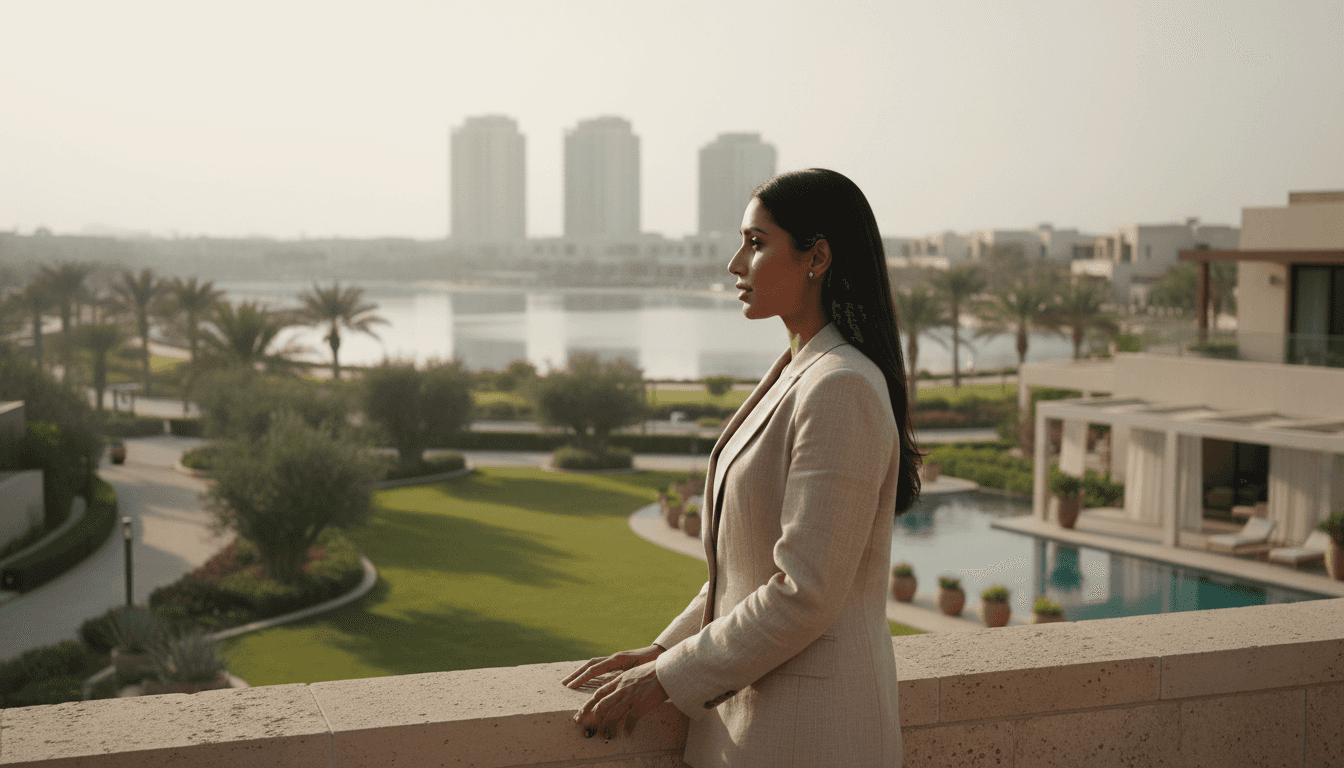
Developer Vision: Shaping Dubai's Top Family Communities
I explore why a developer's long-term vision is the most crucial, yet often overlooked, factor in choosing a family home and securing your investment's future in Dubai.

When we talk about buying a family home in Dubai, the conversation often starts with the house itself — square footage, bedroom count, the style of the kitchen. But after years of walking families through these decisions, I've come to believe we're starting in the wrong place. The single most important factor isn't the four walls you buy; it's the vision of the developer who built everything around them.
In this guide, I'll walk you through why a developer's long-term plan is the bedrock of a successful family community and a sound property investment.
Here’s what we will explore:
- The fundamental difference between a 'building' and a 'community'.
- How to spot the markers of a genuine, long-term master plan.
- Case studies: The enduring success of Emaar's vision in communities like Arabian Ranches.
- The other end of the spectrum: Communities where the vision faltered.
- The financial metrics: How a strong master plan impacts service charges, yields, and capital growth.
- Practical steps for assessing a developer's vision before you buy.
- My verdict on the developers who are getting it right for the next generation of Dubai families.
The Anatomy of a Master Plan
First, let's be clear about what we mean by a 'vision'. It’s more than just a glossy brochure with renders of happy families cycling past fountains. A true developer long-term vision is a detailed, multi-decade strategy for creating a self-sustaining ecosystem. It's the DNA of a place. It dictates not just what is built, but how it will function, mature, and evolve over twenty, thirty, or even fifty years. This is the essence of Dubai community planning. When you buy a villa in a master-planned community, you are not just acquiring property; you are buying a share in this overarching strategy.
Think of it as the difference between a standalone building and a living organism. A standalone tower might have a pool and a gym, but it relies entirely on the surrounding city for everything else: schools, clinics, shops, parks, and soul. Its fate is tied to the whims of municipal planning and the success of neighbouring plots. A master community, by contrast, is designed to be largely self-sufficient. The developer acts as a micro-government, curating the entire experience. They don't just build homes; they build the school, lease the supermarket space, design the road network, and plant the trees that will one day form a mature canopy. This control is what allows for a cohesive, high-quality environment.
I often see buyers fixate on the handover-day condition of a property. While important, it’s a snapshot in time. The real questions are about the future. Will the landscaping be just as lush in ten years? Will the community centre be well-maintained or look tired? Will a new highway exit be built to ease traffic? Will the promised school actually materialise and be a good one? The answers to these questions lie entirely within the capability, commitment, and financial stability of the master developer. Their vision is the promise that the life you see in the marketing materials will not only be delivered but will be sustained and enhanced for the entire time you live there. This is what creates a truly sustainable community development.
Hallmarks of a Winning Vision
 Featured project
So, how do you distinguish a robust, family-friendly master plan from a superficial marketing pitch? Over the years, I've learned to look for a few key indicators. The first and most obvious is a track record. A developer’s past projects are the most reliable predictor of their future performance. When we at Gaia Living advise clients, we always start here. Look at a developer’s ten-year-old communities. Visit them. Are the public spaces immaculate? Do the amenities feel current? Is there a tangible sense of community? Talk to residents. This is where the developer reputation Dubai has been built — on promises kept over decades.
Emaar Properties is the textbook example. Take a drive through The Meadows or Arabian Ranches, communities that are now approaching two decades old. The parks are not just green; they are mature, shaded, and alive with activity. The community centres are bustling. The quality of the maintenance is immediately apparent. This isn't an accident. It's the result of a founding vision that prioritised lifestyle and longevity over short-term profit. Emaar understood that their brand reputation was intrinsically linked to the long-term success of their residents' experience. They invested heavily in landscaping, security, and facilities management from day one, and they continue to do so. This creates a virtuous cycle: a great living experience attracts and retains residents, which supports property values, which in turn reinforces the developer's brand.
Beyond a track record, look for a phased and logical development plan. A strong vision isn't about building everything at once. It's about a patient, strategic rollout. A great developer will build the core infrastructure and anchor amenities — like a school or a retail centre, early in the development cycle. This demonstrates commitment and creates a gravitational pull for the first wave of residents. Subsequent phases then add layers and texture to the community. In contrast, a developer with a weak or purely sales-driven plan will often front-load the residential units and leave the amenities as 'future' promises on a map. These promises are the first to be compromised if sales slow down or market conditions change.
Finally, the best visions are adaptable. Dubai changes at a phenomenal pace. A master plan conceived a decade ago needs to accommodate new demands, whether it's for co-working spaces, EV charging stations, or different types of retail. I look for developers who actively reinvest and upgrade their established communities. A new F&B concept in the community centre, a refurbished pool area, the addition of a dog park — these are all signs of a developer who sees the community not as a finished product to be sold, but as a living asset to be managed and improved. This is what makes future-proof communities.
The Emaar Blueprint: A Case Study in Success
To truly understand the power of a developer's vision, we have to look closely at the Emaar model. It's a formula that has been honed over two decades and has become the gold standard for family-friendly master plans in Dubai. When I take a family to see a villa in Arabian Ranches for the first time, I always tell them to ignore the house initially. Instead, we spend an hour just driving around. We visit the community centres, watch the kids playing in the parks, and stop for a coffee at the retail spine. The feeling of the place — the calm, the greenery, the sheer normality of it all, is the product.
What did Emaar get so right? First, they understood the fundamentals of neighbourhood planning. The road networks are hierarchical, keeping through-traffic on the periphery and leaving the internal streets quiet and safe for children. The distribution of amenities is deliberate. You are never more than a short walk from a local park or pool. The larger community centres, with their supermarkets, clinics, and restaurants, are strategically placed to be easily accessible but not intrusive. It sounds simple, but the number of developments that get this wrong is staggering.
Second, Emaar has always been disciplined about the quality and maintenance of the public realm. This is funded by service charges, and while no one enjoys paying them, in a well-run Emaar community you can see exactly where the money goes. The landscaping is immaculate, security is visible and professional, and the shared facilities are kept in pristine condition. This relentless focus on quality creates an environment that people are proud to live in, which in turn encourages them to maintain their own properties to a high standard. It’s a powerful social dynamic that preserves the value of the entire community. As a result, even Emaar’s oldest villa communities have aged with remarkable grace.
Most importantly, the vision extends beyond the physical. Emaar actively fosters community engagement. They run farmers' markets, outdoor movie nights, and holiday celebrations. These aren't just marketing gimmicks; they are the threads that weave a collection of houses into a neighbourhood. They provide opportunities for neighbours to meet and for friendships to form. This is the intangible, unquantifiable element that transforms a property investment into a family home. When clients ask me why an Emaar villa in an older community often commands a premium over a brand-new house in a less established area, this is the answer. You are paying for the certainty of a proven, living community, a benefit that a new development can only promise.
When the Vision Falters: A Cautionary Tale
Of course, not every master plan succeeds. For every Arabian Ranches, there are developments that started with grand ambitions but failed to deliver. It’s important for buyers to understand the warning signs. These situations almost always stem from a developer's vision that was either flawed from the outset, under-capitalised, or abandoned when market conditions turned.
One common failure mode is the 'sea of villas' approach. This happens when a developer focuses exclusively on maximising the number of saleable units without giving equal thought to the connective tissue that makes a community liveable. The result is a soulless, repetitive landscape of houses with inadequate green space, narrow roads, and a single, underwhelming community centre tacked on as an afterthought. These communities may look appealing in an off-plan render, but the reality is often a logistical headache for families. The school run becomes a traffic jam, there are no safe places for kids to play, and a simple trip to the supermarket requires a major expedition.
Another red flag is the over-reliance on 'future' promises. I have seen countless master plans where the most attractive features — the central lagoon, the golf course, the world-class retail district, are relegated to the final phases of a ten-year development cycle. A developer might sell the first few phases of villas based on this grand vision. But if their sales momentum stalls, or if they lack the financial depth to weather a market downturn, these crucial amenities are often the first things to be 'value-engineered' or postponed indefinitely. Early buyers are then left in a permanent construction site, with a home that is part of a community that never fully became what it was promised to be. This is why our team at Gaia Living places so much emphasis on a developer's financial strength and their history of delivering on phased promises.
Here’s a practical checklist for spotting a potentially faltering vision:
- Unrealistic Amenity Promises: Does the plan include features that seem out of scale or financially unsustainable for the size of the community?
- Vague Phasing: Is the timeline for delivering key infrastructure and amenities unclear or constantly shifting?
- Poor Early Infrastructure: In the initial phases, are the roads, lighting, and basic landscaping already showing signs of poor quality?
- High Density, Low Green Space: Does the master plan map show a very high ratio of buildings to open, public space?
- Reputation Gaps: Does the developer have a history of incomplete projects or disputes with investors in other communities?
Falling for a flawed vision can have serious consequences. It can lead to a lower quality of life, stagnant property values, and difficulty in selling or renting your home in the future. It underscores why due diligence on the developer and their master plan is just as important as the survey on the house itself.
The Financials: Service Charges, Yields, and Growth
Ultimately, the strength of a developer's vision translates directly into tangible financial outcomes for homeowners. This is where the abstract concept of 'community' meets the hard reality of your bank account. A well-conceived and managed master plan creates value in three key ways: it justifies service charges, supports rental yields, and drives long-term capital appreciation.
Let’s start with service charges. These annual fees, regulated by the Dubai Land Department (DLD) and RERA, cover the maintenance and operation of all common areas. In a poorly planned community, these fees can feel like a tax with little visible return. In a great community, they are the engine that preserves your lifestyle and your investment. For example, in a premium Emaar community like Arabian Ranches or Dubai Hills Estate, service charges for a villa might range from AED 3.50 to AED 5.50 per square foot on the plot area. While not insignificant, you can see the results everywhere: pristine parks, 24/7 security, spotless swimming pools, and vibrant community events. This level of maintenance prevents the decay that plagues less-managed areas, directly protecting the value of your home. It’s a classic case of 'you get what you pay for'.
Next, consider rental yields. A strong community vision creates a place where people actively want to live. This high demand translates into lower vacancy rates and stronger rental income for investors. When a tenant is choosing between two identical villas, one in a fully-fledged community with schools, parks, and shops, and another in an isolated development with no amenities, the choice is obvious. They will pay a premium for the superior lifestyle. This is why we consistently see properties in communities like Sobha Hartland and Sobha Hartland II, with its focus on green space and high-quality schools, achieve robust rental returns. The developer’s vision has created a desirable product that is always in demand with discerning tenants.
“The best developers in Dubai aren't just selling homes; they are curating a complete lifestyle, and that is what underpins long-term value.”
Finally, and most importantly for many, is capital appreciation. This is where a developer's long-term vision pays the greatest dividends. Properties in well-managed, mature master-planned communities tend not only to hold their value better during market downturns but also to appreciate more significantly during growth cycles. Why? Because the supply of genuinely great communities is limited. You cannot simply build another Arabian Ranches overnight. The maturity of the trees, the established social networks, the reputation of the schools — these are assets that take more than a decade to develop. This creates a powerful moat around the value of these properties. An investor who bought into one of these communities early on wasn't just buying a house; they were buying a stake in a growing and maturing ecosystem, and their return reflects that.
How to Assess a Developer's Vision: A Buyer's Checklist
Assessing a developer's vision requires a shift in mindset. You need to think less like a homebuyer and more like an investor evaluating a long-term business plan. Whether you're considering an off-plan launch or a home in a nearly completed community, here is a practical framework I use with my clients at Gaia Living.
First, conduct a 'legacy audit'. This is non-negotiable. Identify the developer's oldest projects, especially those from 10-15 years ago. Spend a weekend afternoon visiting them. My checklist for these visits includes:
- Public Realm Quality: Is the landscaping mature and well-tended? Are the pavements clean and free of cracks? Does the street lighting all work?
- Amenity Condition: Visit the main pool and community centre. Do they look fresh and modern, or dated and neglected? Are they being used by residents?
- Commercial Viability: Look at the retail spaces. Are they fully tenanted with quality brands, or are there lots of 'For Lease' signs and low-end shops?
- Resident Sentiment: Casually speak to a few people walking their dogs or at the playground. Ask them what they love about living there and what their biggest frustrations are. Their answers are pure gold.
A developer's commitment to their older communities is the clearest sign of their corporate character and their approach to long-term value. A developer like Nakheel, for instance, has a vast portfolio. Visiting their more mature villa communities like Jumeirah Islands or The Gardens provides invaluable insight into their long-term management style, which is essential information if you're considering a new project like Palm Jebel Ali.
Second, scrutinise the master plan for the new community itself. Don't just look at the render of your specific villa cluster. Get the full master plan map. Look for the 'soft' infrastructure. Where are the parks? How big are they? Where are the schools, clinics, and mosques? How will pedestrians and cyclists move around? A great master plan will show clear, dedicated pathways and an abundance of green space that is integrated into the residential areas, not just pushed to the undesirable edges of the plot. Look at the phasing plan. Ask the developer tough questions: What are the guaranteed, bonded amenities that will be delivered in Phase 1? What is the committed timeline for the rest? Get it in writing.
Third, understand the money. Investigate the developer's financial health. Are they a publicly-listed company with transparent accounts? A government-backed entity? Or a private, family-owned business? Look into their project financing. As per RERA regulations, off-plan projects must have a secure escrow account where buyer payments are held and only released to the developer against construction progress. You can verify a project's escrow account details through the Dubai REST app. This is a crucial protection for off-plan buyers. Finally, ask about the projected service charges and request a detailed breakdown of what they will cover. Compare these figures to the developer's other, similar communities. If the projected fees seem unusually low, it could be a red flag that they are being subsidised to attract early buyers and may rise sharply later.
My Verdict: The Developers Defining the Future
As someone who lives and breathes Dubai's communities, I have a clear perspective on which developers are truly shaping the future of family living. In my view, the developers who will succeed in the next decade are those who have learned the lessons of the past and are doubling down on the core principles of holistic, sustainable community development.
Emaar remains the benchmark. Their ability to deliver consistently high-quality, aspirational lifestyles is unmatched. In newer projects like Dubai Hills Estate, you can see the evolution of their blueprint. They've taken the successful formula of Arabian Ranches and elevated it with a central park, a championship golf course, and a world-class mall, creating a truly integrated 'city within a city'. Their commitment to green spaces and family-centric amenities continues to set them apart. For families prioritising stability, proven quality, and long-term value preservation, Emaar is, in my opinion, the safest and most reliable choice.
However, other developers are creating compelling and differentiated visions. Sobha Realty is a fascinating example. Their focus on vertical integration — controlling everything from design to construction, has resulted in an exceptional level of build quality. In Sobha Hartland and the newer Sobha Hartland II, their vision is clearly articulated around two things: greenery and education. The promise of over a million square feet of parkland and the inclusion of top-tier international schools right within the community is a powerful draw for families. It’s a vision that is less about sprawling suburbia and more about a lush, green urban sanctuary, close to the city's core. For families who value meticulous construction quality and proximity to Downtown, Sobha presents a very strong case.
We are also seeing exciting innovation from developers who are reimagining community living on a grander scale. Nakheel's relaunch of mega-projects like Palm Jebel Ali and Dubai Islands represents a monumental long-term vision. These are not just communities; they are future cities. Success here will depend entirely on Nakheel's ability to execute a patient, decades-long strategy that balances development with world-class infrastructure and unique lifestyle offerings. For pioneering investors and families excited by the prospect of being part of Dubai's next iconic chapter, these projects hold immense potential, albeit with the longer time horizon that such ambition requires.
When you choose your next family home, look past the marble countertops and the fresh paint. The most valuable asset you can buy is a share in a developer's well-funded, proven, and passionately executed long-term vision. It is the single greatest predictor of your future happiness and your financial return. Choose the vision first, and the right home will follow.
Sources
- Dubai Land Department (DLD): https://dubailand.gov.ae/
- Real Estate Regulatory Agency (RERA): Part of the DLD website.
- Dubai REST App (for Escrow and Service Charge information): https://dubairest.gov.ae/
- UAE Government Portal (for visa information): https://u.ae/
Questions, answered
- What is a master-planned community in Dubai?
- A master-planned community is a large-scale residential development designed with a comprehensive, long-term vision. It integrates homes with a full suite of amenities like parks, schools, retail, and healthcare, all managed by a single master developer to ensure cohesive growth and quality.
- Why is a developer's reputation so important in Dubai?
- A developer's reputation is critical as it indicates their track record for quality, on-time delivery, and long-term community management. A strong developer reputation, like that of Emaar or Nakheel, gives buyers confidence that the promised lifestyle and amenities will be delivered and maintained, protecting their investment.
- How does a developer's vision affect property values?
- A strong developer vision creates a desirable, self-sustaining community with high-quality amenities and infrastructure. This consistent demand from end-users leads to stable occupancy, healthy rental yields, and strong capital appreciation over time, making the community more resilient to market fluctuations.
- What are 'future-proof communities' in a Dubai context?
- Future-proof communities in Dubai are those designed with long-term sustainability and adaptability in mind. This includes features like integrated public transport, green spaces, energy-efficient buildings, and a mix of amenities that can evolve with residents' needs, ensuring the community remains relevant and desirable for decades.
- Are older master-planned communities still a good investment?
- Yes, mature communities from top-tier developers like Emaar's Arabian Ranches or The Meadows are often excellent investments. They offer established greenery, proven infrastructure, and a strong sense of community that can't be replicated overnight, which supports stable, long-term value.

Sophia profiles Dubai's villa communities — schools, commute times, green space, and the intangible feel of a neighbourhood. She writes for families putting down roots.
Related stories
The Return of Yield in Dubai's New Market
Capital appreciation has dominated Dubai's property narrative, but as the market matures, rental yield is making a powerful comeback. I'll break down the new maths for investors.
Dubai's Outdoor Spaces: A Deeper Look at Value
In Dubai's apartment market, a balcony or terrace is far more than just extra space. I'll explain how it impacts value, usability, and your overall investment, drawing on years of analysing floor plans across the city.
Furnished vs. Unfurnished: A Seller's Guide to Maximising Price
I’ll break down whether selling your Dubai property furnished or unfurnished will achieve a higher price, examining the strategic factors that influence the best choice for your specific home.
Echoes, in your inbox
One thoughtful email a month. Market insight, new launches, no spam.