

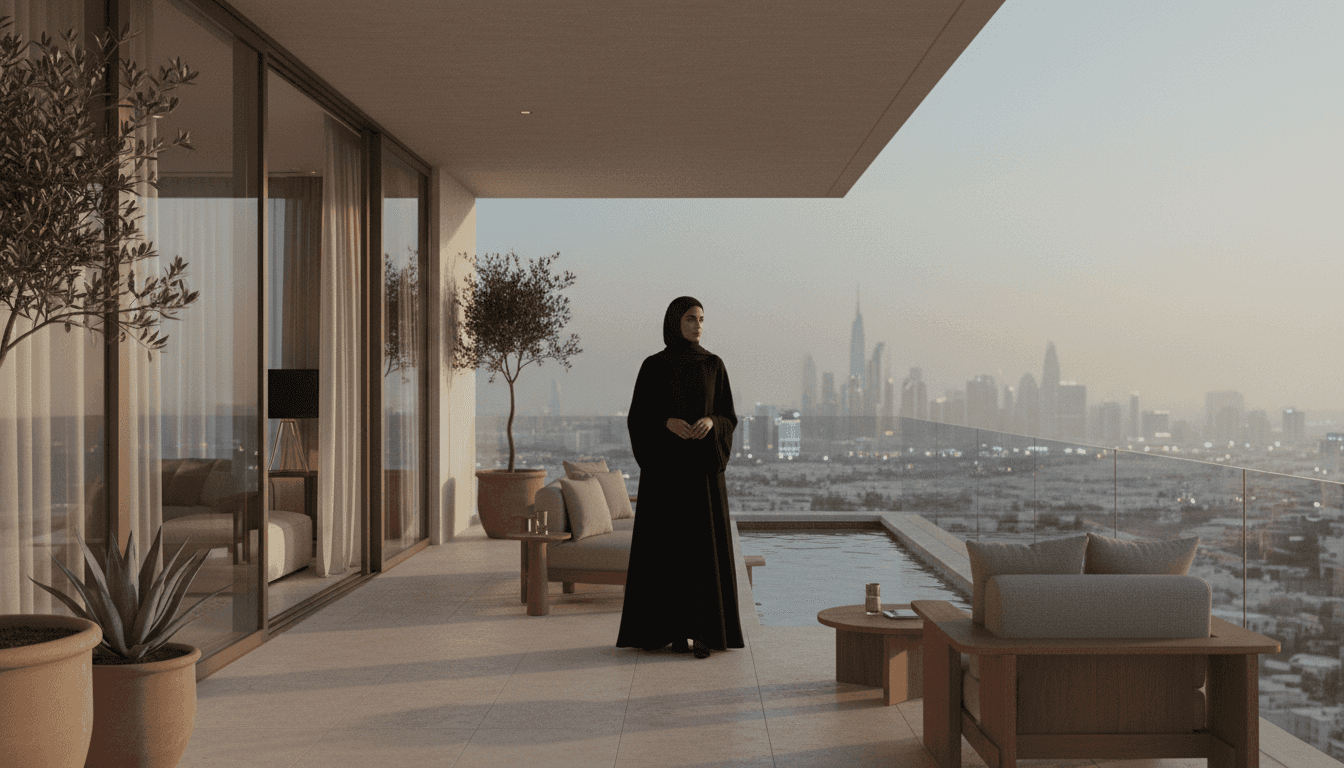
Furnished vs. Unfurnished: A Seller's Guide to Maximising Price
I’ll break down whether selling your Dubai property furnished or unfurnished will achieve a higher price, examining the strategic factors that influence the best choice for your specific home.

One of the most frequent questions I get from sellers is also one of the most fundamental: “Lena, should I sell my home furnished or unfurnished?” It sounds like a simple logistical question, but it’s one of the most critical strategic decisions you’ll make. This choice directly influences your target buyer, your marketing narrative, the speed of your sale, and ultimately, your final sale price.
Here's what we'll explore:
- The strategic difference between selling a home and selling a commodity.
- The various definitions of "furnished" in the Dubai market.
- A deep dive into the buyer psychology for furnished vs. Unfurnished properties.
- The crucial financial calculation: does furniture actually add monetary value?
- How property type and location dictate the best strategy.
- The power of professional staging as a powerful middle ground.
- A practical checklist for preparing your home, whichever path you choose.
The Fundamental Question: Are You Selling a Home or a Commodity?
Before we get into specifics, let's establish the core principle. The furnished vs. Unfurnished decision forces you to define what you are selling. Are you selling square footage and a location — a blank canvas for someone else to make their own? Or are you selling a turnkey lifestyle, a ready-made solution that a buyer can walk into with just a suitcase? Your answer to this question will define your entire sales strategy, from photography and listing descriptions to the type of buyer you attract. There is no universally correct answer, only the answer that is correct for *your* property, in *this* market, for *your* financial goals.
Consider the two primary buyer archetypes in Dubai. First, the end-user. This could be a growing family moving to a villa in Arabian Ranches or a young professional buying their first apartment in JVC. End-users are buying a *home*. They have often spent months, if not years, envisioning their life in a new space. They want to imprint their own personality, taste, and memories onto the property. For this buyer, your lovingly selected furniture, no matter how expensive, can be an obstacle. It prevents them from seeing the space as their own. They mentally calculate the cost and hassle of removing your items, which can detract from the property's appeal. For them, an unfurnished property is a blank page, full of potential.
Second, the investor. This buyer is focused on one thing: return on investment. They are buying an asset, a commodity that needs to generate income from day one. An investor purchasing a one-bedroom apartment in Dubai Marina wants to list it for rent the day after the transfer is complete. For this buyer, a high-quality, tenant-ready furniture package is a massive value-add. It eliminates the downtime, effort, and upfront cost of furnishing the unit themselves. They're not just buying a property; they are buying an operational business. This is where a furnished sale shines and can command a premium. The strategic choice you make at the outset determines which of these two buyers you are targeting.
Decoding "Furnished": From Turnkey to Tenant-Ready
 Featured project
The term "furnished" is not a monolith in the Dubai property market. When you list a property as furnished, you need to be precise about what that entails. At Gaia Living, we advise sellers to be crystal clear from the first viewing to avoid disputes later. The spectrum ranges from a fully-equipped, hotel-like residence to a basic package that just covers the essentials. Understanding these nuances is key to managing buyer expectations and is a core component of any discussion about an unfurnished vs furnished sale.
Here’s a breakdown of the common interpretations:
- Fully Furnished & Equipped (Turnkey): This is the highest level. It includes everything: beds, sofas, tables, major appliances, but also electronics like televisions, a fully stocked kitchen with cutlery and crockery, linens, towels, and decorative items. This is common in high-end serviced apartments or holiday homes in areas like Palm Jumeirah or Downtown Dubai. The appeal is for buyers wanting an instant home or a premium short-term rental asset with zero setup required.
- Fully Furnished: This typically includes all major furniture and appliances. The buyer can expect beds, wardrobes, a dining set, sofas, and white goods (fridge, washing machine, cooker). It generally excludes smaller items like kitchenware, electronics, and linens. This is the most common standard for long-term rental investments.
- Part-Furnished: This is a more ambiguous category and needs careful definition in the sales agreement (MOU). It might mean only large, difficult-to-move items are included, like built-in wardrobes and major kitchen appliances. Sometimes it includes key pieces like a sofa or bed, but nothing else. This option can be a difficult middle ground, often failing to fully satisfy either the end-user or the investor.
- Unfurnished (with White Goods): In Dubai, it's standard for "unfurnished" properties to still include a cooker/hob and often integrated appliances like a dishwasher or fridge, particularly in newer apartments. It's crucial to specify which appliances are included in the sale.
Your choice of which package to offer, if any, must align with your target buyer. An investor looking at a studio in Business Bay will value a tenant-ready, fully furnished package. A family buying a four-bedroom villa in The Meadows, a community developed by Emaar Properties, will almost certainly want it unfurnished to accommodate their existing possessions and tastes. Misjudging this can mean alienating your most likely buyer pool from the start. The key is to have your agent profile the typical buyer for your specific unit type and community *before* you decide what to include.
Buyer Psychology: The Emotional vs. The Financial Decision
When a buyer walks through your door, they are making two parallel assessments: an emotional one and a financial one. The furnished vs. Unfurnished choice plays directly into both. An effective sales strategy understands how to appeal to the right mindset. Selling an unfurnished home is a bet on the buyer’s imagination. You are asking them to see past the empty rooms and project their own life into the space. The emotional appeal is about potential, space, and freedom. The financial calculation is straightforward: they are assessing the price per square foot against comparable empty properties. Your job is to present a clean, well-maintained, and neutral space that doesn’t distract them.
Selling a furnished property, however, is a different psychological game. You are not selling potential; you are selling a finished product. The emotional appeal is one of convenience, aspiration, and instant gratification. When a buyer sees a beautifully furnished apartment, they aren’t just seeing a floor plan; they are seeing a lifestyle. A well-placed sofa can make a living room feel social and inviting. A stylish dining set can help them imagine hosting dinner parties. This is a powerful tool, especially in a market with many similar, competing properties. It helps your listing stand out and can create an emotional connection that an empty unit struggles to achieve. This is the core principle behind attracting buyers furnished; you are selling them a vision they can step into immediately.
Financially, the furnished buyer is calculating a different equation. They are weighing the premium you are asking for the furniture against the cost, time, and hassle of sourcing it themselves. A new resident to Dubai, for instance, might be very willing to pay an extra AED 50,000 for a turnkey apartment because it saves them weeks of shopping, delivery logistics, and assembly in a new city. An investor will calculate the 'opportunity cost' of a vacant period while they furnish the unit. If furnishing takes a month, and the rent is AED 10,000/month, then a ready-to-rent unit is immediately worth at least AED 10,000 more to them. Understanding this value proposition is key to pricing a furnished sale correctly.
>The decision to sell furnished isn't about getting money back for your old sofa. It's a calculated marketing choice about whether selling a 'lifestyle' will attract a better buyer than selling 'space'.
The Financial Calculation: Does Furniture Actually Add Value?
This is the million-dirham question. Will including furniture increase your net proceeds after the sale? The blunt answer is: rarely as much as you think, and almost never the full retail price you paid. Furniture, like a new car, depreciates the moment it leaves the showroom. A buyer will not pay 100% of the original cost, no matter how new or high-end it is. The value of furniture in a property sale is not its replacement cost; it's its *convenience value* to a specific buyer. This is the most misunderstood aspect of selling a furnished property in Dubai.
Let’s run a realistic scenario. Imagine you are selling a one-bedroom apartment in Jumeirah Village Circle (JVC) for AED 1,000,000. You spent AED 80,000 two years ago on a stylish furniture package from a premium store. You might hope to sell the apartment for AED 1,080,000. This is highly unlikely. A more realistic outcome is that the furniture might help you achieve your asking price of AED 1,000,000 faster, or perhaps push the final price to AED 1,020,000 or AED 1,030,000, but not the full AED 80,000. The buyer is not reimbursing you; they are paying a small premium for the convenience.
The real financial benefit often lies not in a higher price, but in a faster, more secure sale. In a competitive market with dozens of similar units for sale, a beautifully furnished property stands out. It photographs better, gets more clicks online, and makes a stronger impression during viewings. This can lead to more offers, sooner. A property that sells in 30 days instead of 90 days saves you three months of service charges, mortgage payments, and potential market decline. This indirect financial gain is often more significant than the direct premium for the furniture itself. It is a tool for marketing and velocity, not just a line item on a balance sheet.
Here's a simplified cost-benefit analysis for a seller considering this option:
Scenario: Selling a Furnished 1-Bed in Business Bay
- Base Unfurnished Price: AED 1,200,000
- Original Furniture Cost: AED 75,000
- Likely Furnished Sale Price: AED 1,230,000 - AED 1,240,000
- Apparent 'Gain' on Furniture: AED 30,000 - AED 40,000 (a 40-53% 'return' on its depreciated value)
Indirect Financial Benefits: * Reduced Holding Costs: If the property sells 2 months faster than an unfurnished equivalent, you save: * Service Charges: ~AED 2,500/month x 2 = AED 5,000 * Mortgage Interest (if applicable): ~AED 4,000/month x 2 = AED 8,000 * Total Savings: AED 13,000 * Total Financial Benefit: AED 43,000 - AED 53,000
This calculation shows that the furniture value in a property sale is a combination of a direct premium and indirect savings. This is the strategic property presentation that can make a tangible difference to your bottom line.
Location, Location, Location: Matching Your Strategy to the Neighbourhood
The furnished vs. Unfurnished decision is hyper-local. The right choice for a villa in Al Barari is completely wrong for a studio next to Expo City. As a seller, you must analyse the dominant buyer profile and property use case for your specific community. At Gaia Living, a core part of our seller advisory is a granular analysis of the local micro-market to guide this decision.
High-density, transient, and investor-heavy areas are prime candidates for furnished sales. Think of communities with a large population of young professionals, new expatriates, and a vibrant short-term or long-term rental market. In these locations, convenience is king. A turnkey property can command a premium and will attract a flood of investor interest. Prime examples include: Dubai Marina, Downtown Dubai, Business Bay, JVC, and parts of [Jumeirah Lakes Towers (JLT)]. For a standard one or two-bedroom apartment in these districts, my default recommendation is often to sell furnished, provided the furniture is modern, neutral, and in excellent condition.
Conversely, family-oriented, end-user-dominated communities are where an unfurnished strategy usually prevails. These are areas where people put down roots and plan to stay for the long term. Buyers here have their own furniture, often accumulated over years, and a strong vision for their family home. Presenting them with a furnished property can be a negative. They don't want your taste; they want a blank canvas for their own. This applies to most villa communities, such as Arabian Ranches, The Springs, Meadows, and many of the newer suburban developments by builders like Nakheel or Emaar. It also applies to larger apartments and penthouses in any building, which are more likely to be purchased by owner-occupiers.
There are also emerging areas or specific property types where the lines blur. For instance, branded residences, a growing segment in Dubai, are almost always sold furnished to a very high specification, as the brand standard is part of the product. Developments like those by Omniyat or on Jumeirah Bay fall into this category. Similarly, co-living or compact studio developments in hubs like Dubai Science Park may cater to a demographic that heavily prioritises furnished, hassle-free options. The key takeaway is to resist a generic approach. Your strategy must be tailored to the unique DNA of your property's location.
The Power of Staging: The Best of Both Worlds?
What if you could capture the emotional appeal of a furnished home without forcing the buyer to purchase your personal items? This is the power of professional home staging. Staging is a strategic marketing investment that sits perfectly between the furnished and unfurnished options. It involves hiring a specialist to bring in a curated selection of rental furniture, art, and accessories designed to showcase your property's best features for the duration of the sales campaign. Once the property is sold, the staging company removes everything, leaving the home empty for the new owner.
From my perspective as a seller's strategist, staging is one of the most underused and effective tools in the Dubai market. It solves the core problem of an unfurnished sale: the lack of soul and vision. Empty rooms can feel cold, small, and uninviting. Buyers struggle to understand the scale of a room or how their own furniture might fit. Staging defines the space. It shows a buyer that a king-sized bed fits comfortably in the master bedroom, that the living area can accommodate a proper seating arrangement, and that the awkward corner can become a perfect home office. It creates the 'wow' factor that makes a buyer fall in love.
Crucially, staging allows you to appeal to both end-users and investors. The end-user gets to see the property's full potential and lifestyle, but they are not burdened with buying your furniture. They get the emotional connection without the logistical baggage. The investor, while they may prefer a turnkey solution, can still appreciate a well-presented property that will photograph beautifully for their future rental listing. Staging demonstrates the asset's potential, even if the furniture itself isn't included.
The cost of staging in Dubai varies based on the property size and the duration of the rental, but for a typical two-bedroom apartment, you might expect to invest between AED 15,000 and AED 25,000 for a three-month campaign. While this is a significant upfront cost, countless studies and my own experience show that staged homes sell faster and for a higher price than their empty counterparts. The return on investment is often multiples of the initial cost. It is a pure marketing expense designed to maximise your final sale price, and in many cases, it is the most intelligent of all Dubai property sale options.
My Practical Playbook: A Final Checklist
Making the final call requires a clear-eyed assessment of your specific situation. There is no magic formula, but by answering these questions honestly, you can arrive at the most profitable decision for your sale. I walk every one of my clients through this process before we go to market.
Here is my strategic checklist for sellers:
1. Analyse Your Property Type & Location: * Is it a small apartment or a large family villa? * Is it in an investor-heavy area (Business Bay, JVC) or an end-user haven (Arabian Ranches, The Springs)? * What is the prevailing trend for comparable sold properties in your building or community? We at Gaia Living pull this data for our clients as a first step.
2. Assess Your Furniture's Condition & Style: * Be brutally honest. Is it modern, neutral, and in pristine condition? Or is it dated, worn, or highly personal? * Would a neutral buyer see it as a stylish asset or a tired liability? * If your furniture is not an asset, your only option is to sell unfurnished. Bad furniture is worse than no furniture.
3. Define Your Target Buyer: * Based on the above, who is your ideal buyer? A time-poor investor or an aspirational end-user family? * Tailor your entire presentation — furnished, unfurnished, or staged, to this single profile.
4. Run the Numbers: * Get a realistic valuation for your property in both an unfurnished and furnished state from an experienced agent. * Calculate your holding costs (service charges, mortgage) per month. How much would a faster sale save you? * If considering staging, get quotes and weigh the cost against the potential for a faster sale at a higher price.
5. Prepare a Contingency Plan: * If you decide to try selling furnished, what is your Plan B? If buyers resist, are you prepared to remove the furniture? * Know the costs and logistics of removal and storage *before* you list. This prevents panic and weak negotiation later if you need to pivot.
Ultimately, the choice is a calculated risk. Selling furnished bets on finding a specific buyer who values convenience. Selling unfurnished bets on broader appeal and a buyer's imagination. Staging mitigates the risks of both. Your task is to work with your agent to determine which bet has the highest probability of paying off for your unique property.
The decision to sell furnished or unfurnished is a marketing strategy, not a logistical afterthought. The right choice is dictated by your property type, its location, and the buyer you intend to attract. While a high-quality furniture package can add a modest premium and speed up a sale in investor-focused areas, staging often presents a more powerful and flexible alternative, creating emotional appeal for all buyer types without the commitment.
Sources
- Dubai Land Department (DLD): dubailand.gov.ae
- Real Estate Regulatory Agency (RERA): rera.gov.ae
- UAE Government Portal (Property Laws): u.ae
Questions, answered
- Does selling a property furnished add value in Dubai?
- It can, but it's not guaranteed. High-quality, design-led furniture in prime locations like Dubai Marina or Downtown can add a premium, especially for investors. However, the added value rarely equals the full retail cost of the furniture.
- Are there extra costs when selling a furnished property?
- There are no extra DLD or agency fees based on furniture. The main costs are indirect: professional staging, storage if you remove personal items, and potential repair or replacement of worn-out furniture to ensure a premium presentation.
- Which buyer type prefers furnished properties?
- Investors seeking immediate rental returns and new expatriates looking for a turnkey solution are the primary market for furnished properties. End-user families often prefer unfurnished homes to personalise the space themselves.
- Can I negotiate the furniture separately from the property price?
- Yes, this is a common strategy. You can agree on the property price and then negotiate a separate price for the furniture package. This provides clarity and can be beneficial for the buyer's mortgage calculations.
- What happens to the furniture if my property doesn't sell as furnished?
- You will need a contingency plan. This could involve selling the furniture separately through second-hand platforms, hiring a company to clear it, or placing it in storage. Factoring in these potential costs is a key part of your sales strategy.
- Is it better to sell an apartment or a villa furnished?
- Apartments in high-demand rental areas like JVC or Business Bay often benefit more from being sold furnished, attracting investors. Large family villas in communities like Arabian Ranches are typically better sold unfurnished, as buyers want a blank canvas.

Lena writes exclusively for owners looking to sell. Staging, listing timing, agent selection, and how to read a lowball offer — she's in the seller's corner.
Related stories

Unlocking Your Dubai Property Equity
Your Dubai property has likely grown in value. Here's my practical guide on how to access that equity to fund your next investment, step by step.
Family Offices & Dubai: The New Legacy Builders
Family offices are no longer passive investors in Dubai property. I explore their strategic shift towards acquiring legacy assets and even entire developments, fundamentally reshaping the city's premium market.

The Real Taste of Dubai: Dining & Property Value
I explore how a neighbourhood's local, everyday dining scene—not just its Michelin stars—is a powerful and often overlooked driver of property value and desirability in Dubai.
Echoes, in your inbox
One thoughtful email a month. Market insight, new launches, no spam.