

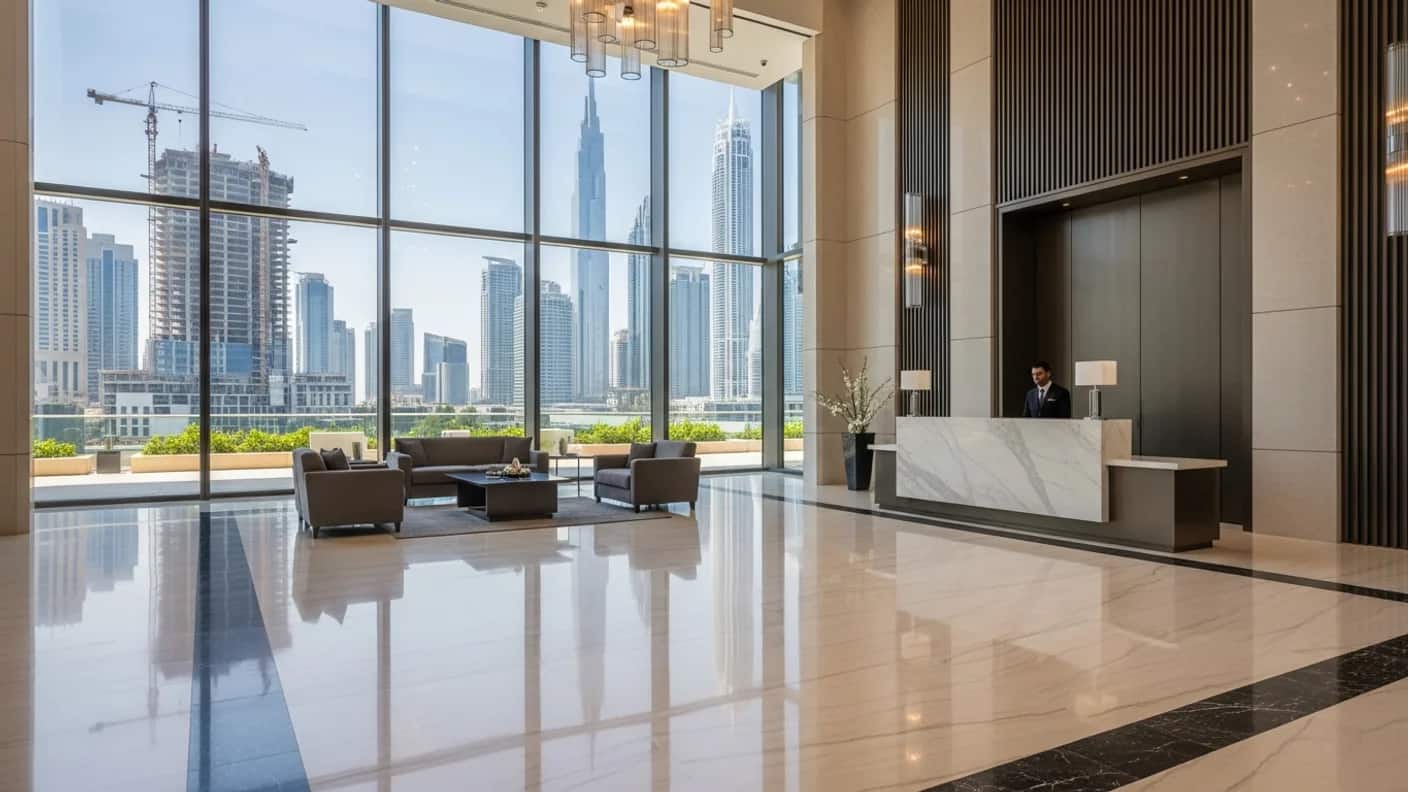
Decoding Dubai's Service Charges
For many new buyers in Dubai, the focus is almost entirely on the purchase price. But as seasoned investors know, the true cost of owning an asset unfolds over years, not just at the moment…

For many new buyers in Dubai, the focus is almost entirely on the purchase price. But as seasoned investors know, the true cost of owning an asset unfolds over years, not just at the moment of transfer. In Dubai's dynamic property market, no ongoing expense is more significant, or more misunderstood, than the annual service charge.
Here is a detailed look at what we'll be exploring:
- The legal and regulatory framework governing service charges, including RERA's role.
- The Mollak system and how it revolutionised transparency for owners.
- A complete Dubai service charge breakdown of what your fees typically cover.
- A community-by-community analysis of why charges vary so dramatically.
- The direct impact of property maintenance fees Dubai on your net rental yield and ROI.
- The hidden costs of property ownership in Dubai, such as special levies and chiller fees.
- Your rights and responsibilities as a member of the Owners Association.
- A practical due diligence checklist to use before you buy any property.
- My final verdict on how to view service charges as a strategic part of your investment.
The Foundation: What Are Service Charges and Who Governs Them?
At its core, a service charge is a recurring fee paid by all homeowners in a jointly owned property project. This applies to apartment towers, villa communities, and everything in between where common areas and shared facilities exist. These fees are not arbitrary; they are the lifeblood of a community, funding the entire operation, maintenance, and management of all the spaces you share with your neighbours. Think of the pristine lobbies, the temperature-controlled swimming pools, the landscaped gardens, the 24/7 security, and the gleaming hallways — none of it runs itself. The service charge is what makes the premium lifestyle promised in the brochure a daily reality.
The system is built around a clear structure of stakeholders. First, there is the Owners Association (OA), the legal entity comprised of all property owners within a specific project. The OA is ultimately responsible for the community. To handle the day-to-day work, the OA typically hires a licensed OA Management company. This firm handles administrative tasks, financial management, and contractor procurement. They, in turn, will hire a Facilities Management (FM) company to perform the physical maintenance, cleaning, security, and landscaping. In new developments, the developer manages this entire process until a formal OA can be established and elected by the homeowners.
Crucially, this entire ecosystem does not operate in a vacuum. The entire process is regulated by Dubai’s Real Estate Regulatory Agency (RERA), the regulatory arm of the Dubai Land Department (DLD). RERA’s mandate is to protect owners and ensure that the community charges Dubai are fair, transparent, and used for their intended purpose. RERA reviews and audits the annual budgets proposed by every Owners Association in the emirate. No OA can legally invoice owners until their budget has been scrutinised and officially approved by RERA. This single checkpoint is one of the most important investor-protection mechanisms in our market, preventing arbitrary fee hikes and ensuring a baseline of accountability.
The RERA Framework: Mollak and the Drive for Transparency
 Featured project
For anyone who owned property in Dubai in the market’s early days, the concept of service charges was often a source of frustration. Billing could be opaque, funds were sometimes mixed, and it was difficult for an owner to know precisely where their money was going. Recognising this, the DLD and RERA implemented a transformative solution: the Mollak system. The name translates to 'owners' in Arabic, and the system is designed to put them in control by creating a regulated, transparent framework for the management of jointly owned properties.
Mollak is a sophisticated online portal that serves as the single source of truth for service charges across Dubai. Every Owners Association and OA Management company is required to be registered on this platform. The core innovation of Mollak is the ring-fencing of funds. For each community, a specific set of bank accounts is registered with Mollak and approved by the Central Bank of the UAE. When an owner pays their service charge invoice through the system, the funds go directly into an escrow-like account that is exclusively for the use of that community. This makes it impossible for developers or management companies to co-mingle funds from different projects or use the money for other purposes, a critical step toward accountability.
The process for setting the annual budget is rigorous. The OA Management company, on behalf of the Owners Association, must prepare a detailed budget for the upcoming year. This budget outlines every single anticipated expense, from security guard salaries to elevator maintenance contracts to the cost of fertiliser for the gardens. This budget is uploaded to Mollak and submitted to RERA for a full audit. RERA’s team of auditors reviews every line item, comparing costs against market rates and historical spending. They have the authority to reject inflated costs or question unnecessary expenses. Only after RERA is satisfied and provides its official approval can the OA issue invoices to owners through the Mollak system. This provides a powerful layer of protection and professional oversight that benefits every single homeowner.
A Typical Dubai Service Charge Breakdown
One of the most frequent questions we get at Gaia Living from first-time buyers is, "What am I actually paying for?" The invoice you receive is a single figure, but it represents a bundle of essential services that keep the community functioning and preserve the value of your asset. Understanding this Dubai service charge breakdown is key to appreciating its value. While the exact mix can vary slightly, the vast majority of RERA-approved budgets include the following core components:
- Maintenance & Operations: This is the largest portion of the budget. It covers the technical upkeep of all common area assets, including HVAC systems (chillers, pumps), electrical systems, plumbing, elevators, fire safety equipment, and swimming pool machinery. It includes both preventative maintenance contracts and a budget for ad-hoc repairs.
- Cleaning Services: This ensures all shared indoor and outdoor spaces — lobbies, lifts, corridors, gyms, pool decks, parking areas, and refuse rooms, are kept to a high standard of hygiene. The cost depends on the frequency and intensity of the cleaning schedule.
- Security Services: This funds 24/7 security personnel at gates and in lobbies, mobile patrols within the community, and the maintenance and monitoring of CCTV systems. The quality and visibility of security is a major factor in a community's perceived value.
- Landscaping & Groundskeeping: For communities with gardens, parks, and water features, this covers irrigation, planting, lawn-mowing, and general upkeep to maintain the aesthetic appeal of the neighbourhood.
- Common Area Utilities: This is the cost of electricity and water (DEWA) for all shared areas. It powers the lights in the corridors, the AC in the lobby, the pumps for the pool, and the irrigation for the gardens. This is separate from the individual DEWA bill for your own apartment or villa.
- Management & Administration: This is the fee paid to the professional Owners Association Management company for their services, which include financial management, administration, procurement, contract management, and ensuring legal compliance with RERA regulations.
- Insurance: The OA is required to hold insurance for the building's structure and common areas, covering risks like fire, water damage, and public liability. This does not cover the contents of your individual unit; you need your own home contents insurance for that.
- Sinking Fund: This is arguably the most critical component for long-term value. The sinking fund is a mandatory contribution to a long-term reserve fund. This money is set aside specifically for major capital expenditures and replacements that will be needed in the future — think replacing the entire chiller plant after 15 years, repainting the building's facade, or overhauling the elevators. A healthy sinking fund is the hallmark of a well-managed building and protects owners from massive, unexpected bills down the line.
The Great Divide: Why Charges Vary Across Dubai
The most striking thing about service charges is their sheer range. You can find properties with annual charges of AED 12 per square foot and others that command over AED 40. This isn't random; it's a direct reflection of the property's location, age, density, and, most importantly, the level of amenities and service provided. An investor must learn to see this not as a simple cost, but as a price for a certain standard of living and asset quality.
Location and prestige are primary drivers. A tower in the heart of Downtown Dubai with front-row seats to the Burj Khalifa and Dubai Fountain show will naturally have higher underlying costs and service expectations than a building in a more suburban community like Liwan. Similarly, the prime waterfront real estate of Palm Jumeirah or Dubai Marina commands a premium that is reflected in the service charges needed to maintain that exclusive environment. As a general guide, you might see rates of AED 12-18/sqft in emerging areas like JVC or Arjan, AED 18-30/sqft in established prime areas like the Marina or Downtown, and AED 25-40+/sqft for ultra-premium, amenity-rich developments in locations like DIFC or on the Palm fronds.
Amenities are the next major factor. The difference between a building with a simple gym and pool versus one with an indoor cinema, a residents' lounge, a full-service spa, multiple pools, and a concierge is immense. Every additional feature requires staffing, maintenance, and utilities, which are all funded by the service charge. A developer like Emaar Properties is known for its amenity-rich master communities like Dubai Hills, where the charges support vast parks, cycle tracks, and community centres. In contrast, a more budget-focused developer might offer lower charges by providing more basic facilities. There's no right or wrong answer; it's about aligning the cost with the target market and the owner's priorities.
Finally, the age, build quality, and density of a project play a huge role. An older building might face higher reactive maintenance costs if it wasn't built to the highest standards or if the sinking fund was underfunded in its early years. Newer buildings benefit from warranties and modern, efficient systems, but must contribute aggressively to their sinking fund from day one. Density also matters. A large project like Town Square can use economies of scale, spreading the cost of maintaining large parks and pools across thousands of units, potentially leading to a more efficient per-square-foot rate than a single, isolated tower with the same facilities.
The Investor's Calculation: Impact on ROI and Resale Value
For an end-user, service charges are part of the cost of a chosen lifestyle. For an investor, they are a critical variable in the profit-and-loss equation. Overlooking the impact of Dubai property owner expenses is one of the fastest ways to turn a promising investment into a disappointing one. The primary metric that service charges affect is your net rental yield — the true return your property generates after all operating costs are paid.
The calculation is simple but essential. Gross yield is your total annual rent divided by the property's purchase price. But this figure is misleadingly optimistic. To find your net yield, you must first subtract all your annual expenses from the rent, with service charges being the largest by far. Let’s run through a realistic example for a one-bedroom apartment in a prime area like Business Bay:
Sample Net Yield Calculation:
- Purchase Price: AED 1,500,000
- Apartment Size: 950 sq. Ft.
- Annual Gross Rent: AED 120,000
- Gross Yield: (120,000 / 1,500,000) = 8.0%
Now, let's factor in the costs:
- Service Charge: 950 sq. Ft. @ AED 22/sq. Ft./year = AED 20,900
- Net Rental Income: AED 120,000 - AED 20,900 = AED 99,100
- Net Yield: (99,100 / 1,500,000) = 6.6%
As you can see, the service charge has a direct and substantial impact, reducing the yield from a theoretical 8% to a real-world 6.6%. This is why comparing two properties based on purchase price alone is a flawed strategy. A slightly cheaper apartment with excessively high service charges could easily generate a lower net return than a more expensive unit in a well-managed, efficient building.
However, the story doesn't end with yield. Service charges have a profound, long-term effect on your property's capital appreciation and resale value. A building with very low charges may seem attractive initially, but if this results in peeling paint, broken elevators, a murky pool, and a non-existent sinking fund, the building's reputation will suffer. It will become less attractive to tenants, forcing you to lower rent, and much harder to sell to a discerning buyer. Conversely, a building with reasonable — or even high, service charges that are clearly being used effectively to maintain the property to a five-star standard will hold its value far better. Buyers will pay a premium for quality, security, and peace of mind. A healthy sinking fund, in particular, is a massive selling point, as it assures the next owner they are not about to be hit with a huge bill for capital works.
“In my experience, savvy investors don't hunt for the lowest service charge; they hunt for the most efficient one. They're buying into a well-run asset, not just a cheap one.”
Beyond the Bill: Special Levies and Other Hidden Costs
While the RERA-approved annual service charge covers all planned operational expenses, property ownership can sometimes involve costs that fall outside this regular billing cycle. Understanding these potential hidden costs of property ownership in Dubai is vital for accurate long-term financial planning and risk management. The most significant of these are special levies, also known as special assessments.
A special levy is a one-off charge voted on and approved by the Owners Association to fund a major, unforeseen, or unbudgeted capital expense. This typically occurs when an essential repair is needed that exceeds the amount available in the sinking fund. Examples could include an urgent government-mandated facade upgrade for fire safety, the complete failure of a chiller plant years before its expected end-of-life, or major structural repairs. The process is democratic: the OA board must call a General Assembly, present the case for the levy with contractor quotes, and secure a majority vote from the owners. If approved, every owner must pay their share, which can sometimes be a substantial sum. The risk of special levies is precisely why a healthy sinking fund is so important — it acts as the first line of defence against these financial shocks.
Another critical cost to understand is for air conditioning, or 'chiller'. In Dubai's climate, this is a major household expense. The billing method varies significantly between buildings. In some, typically older developments, the cost of running the chiller plant is considered a common utility and is included within the main service charge budget. In most newer buildings, however, the cooling is provided by a third-party utility company like Empower or Emicool. In this model, the service charge covers only the maintenance of the air-conditioning equipment in the common areas. The owner (or their tenant) then receives a separate, consumption-based bill for the cooling used within their actual apartment. This can be a significant monthly cost, and buyers must clarify the exact chiller situation for any property they are considering. An agent telling you the service charge is a low AED 15/sqft is telling only half the story if there's a separate chiller bill of several thousand dirhams a year.
Your Role as an Owner: Rights, Responsibilities, and Influence
When you buy a freehold property in a jointly owned project in Dubai, you are not just purchasing real estate; you are becoming a stakeholder in a community. You are automatically a member of the Owners Association, and with that membership come both rights and responsibilities that give you a direct say in how your investment is managed.
Your most fundamental right is the right to participate. You are entitled to attend the Annual General Meeting (AGM) where the OA board presents the budget, discusses the community's performance, and tables key decisions for a vote. At the AGM, you have the right to review the detailed financial statements, question the board and the management company about expenditures, and vote on the approval of the next year's budget. You also have the right to elect the members of the OA board — your fellow owners who will volunteer their time to oversee the management of the community. An active, engaged, and professional board can make an enormous difference in ensuring value for money, re-tendering contracts to achieve better pricing, and driving improvements.
With these rights comes the crucial responsibility to pay your service charges in full and on time. These fees are not optional. The consequences of non-payment are serious and enforced by law. The OA has the right to charge late payment penalties. They can also deactivate your access cards, preventing you from using common facilities like the pool, gym, and sometimes even parking. Ultimately, the OA can file a case with the DLD, which can place a legal block on your property. This means you will be unable to sell or transfer the property until the outstanding debt, along with any legal fees, is settled. Prompt payment is not just a legal obligation; it's a duty to your neighbours, as the entire community relies on these funds to operate.
Due Diligence Before You Buy: A Practical Checklist
Given the significant impact of service charges on your finances and the quality of your investment, conducting thorough due diligence before you sign the purchase agreement is non-negotiable. As your real estate advisor, this is a process we at Gaia Living guide every client through. A low headline price can mask serious underlying issues that a careful document review will uncover. Before committing to any apartment or villa in a managed community, you or your agent must investigate the following:
- Obtain Historical Service Charge Invoices: Request the seller to provide copies of the official Mollak invoices for the specific unit for the last 2-3 years. This allows you to see the actual charges paid and identify the trend. Have they been stable, or have there been sharp increases?
- Review the OA Financial Statements: Ask for the most recent audited financials for the Owners Association. Pay close attention to the balance sheet. The single most important number to look for is the current balance of the Sinking Fund. A low or depleted sinking fund is a major red flag, suggesting future special levies are likely.
- Read the AGM Minutes: The minutes from the last one or two Annual General Meetings are a goldmine of information. They will reveal any major disputes among owners, highlight recurring maintenance problems, and, most importantly, document any discussion of planned major works or potential special levies.
- Verify the Chiller Arrangement: Get a definitive, written confirmation of how the air conditioning is billed. Is it included in the service charge, or is it a separate, consumption-based bill from a third-party provider? If it's the latter, ask for sample bills to understand the likely cost.
- Identify the Management Companies: Find out the names of the OA Management and Facilities Management companies. Are they reputable firms with a good track record in Dubai? A quick search can often reveal a lot about their reputation.
- Conduct a Physical Inspection: The documents tell one story; your own eyes tell another. Walk through all the common areas of the project — the lobby, the lifts, the gym, the pool area, the car park. Do they feel clean, modern, and well-maintained, or are they showing signs of neglect? This is the simplest and often most telling piece of due diligence.
The smartest property decisions in Dubai are made by looking past the purchase price to understand the total, ongoing cost of ownership. Scrutinising the service charge isn't about being cheap; it's about being a sophisticated investor who understands that you're buying into a managed asset, and the quality of that management will ultimately define its long-term value.
## Sources - Dubai Land Department (DLD): https://dubailand.gov.ae/ - Real Estate Regulatory Agency (RERA): Part of the DLD website. - UAE Government Portal (u.ae): https://u.ae/ - Dubai REST App: Information available via https://dubairest.gov.ae/
Questions, answered
- What is a typical service charge rate in Dubai?
- Service charges in Dubai vary widely, from around AED 12-18 per square foot annually in communities like JVC, to AED 18-30 in areas like Dubai Marina and Downtown, and potentially AED 25-40+ in premium locations such as Palm Jumeirah or DIFC. The final cost depends on the building's age, amenities, and level of luxury.
- Are chiller (AC) fees included in Dubai service charges?
- Not always. While some older buildings include chiller costs in the main service charge, most newer developments have separate, consumption-based billing from providers like Empower or Emicool. It's crucial to verify this before purchasing a property, as it can be a significant additional expense.
- What is the Mollak system in Dubai?
- Mollak is an online system managed by the Dubai Land Department (DLD) and RERA to regulate and audit service charges in jointly owned properties. It ensures all owner payments go into a secure, approved account for that specific community, increasing transparency and preventing mismanagement of funds.
- What is a sinking fund and why is it important?
- A sinking fund is a mandatory component of your service charge, acting as a long-term savings account for major capital repairs and replacements, like facade work, roof repairs, or replacing chillers. A healthy sinking fund is a key sign of a well-managed building and protects owners from sudden, large special levies.
- Can I challenge my service charges in Dubai?
- Yes, owners have rights. You can attend the Annual General Meeting (AGM), vote on the proposed budget, and elect the Owners Association board. If you believe charges are unreasonable, the first step is to raise concerns with the board; if unresolved, disputes can be escalated through RERA's official channels.
- How do service charges affect my property's rental yield?
- Service charges are a major operational expense that is deducted from your gross rental income to determine your net yield. For example, an AED 20,000 annual service charge on a property renting for AED 120,000 reduces your income to AED 100,000, directly lowering your net return on investment.

Omar tracks the announcements that move the market — new launches, regulation, mega-projects, and developer moves — and tells you what they actually mean for buyers.
Related stories

Dubai 2040: A Land Use and Investment Blueprint
A deep dive into the Dubai 2040 Urban Master Plan, analysing specific zoning changes and land use designations to reveal the next generation of property investment hotspots.

Beyond the Blueprint: The Retail Value Multiplier
It's a simple truth of Dubai real estate: proximity to quality retail and leisure isn't just a perk, it's a powerful driver of property value. I'll explain how operational hubs are creating measurable premiums for investors and residents.

Your Dubai Home Setup Guide
A step-by-step guide for new Dubai homeowners on connecting utilities, setting up essential services, and integrating into your new community.
Echoes, in your inbox
One thoughtful email a month. Market insight, new launches, no spam.