

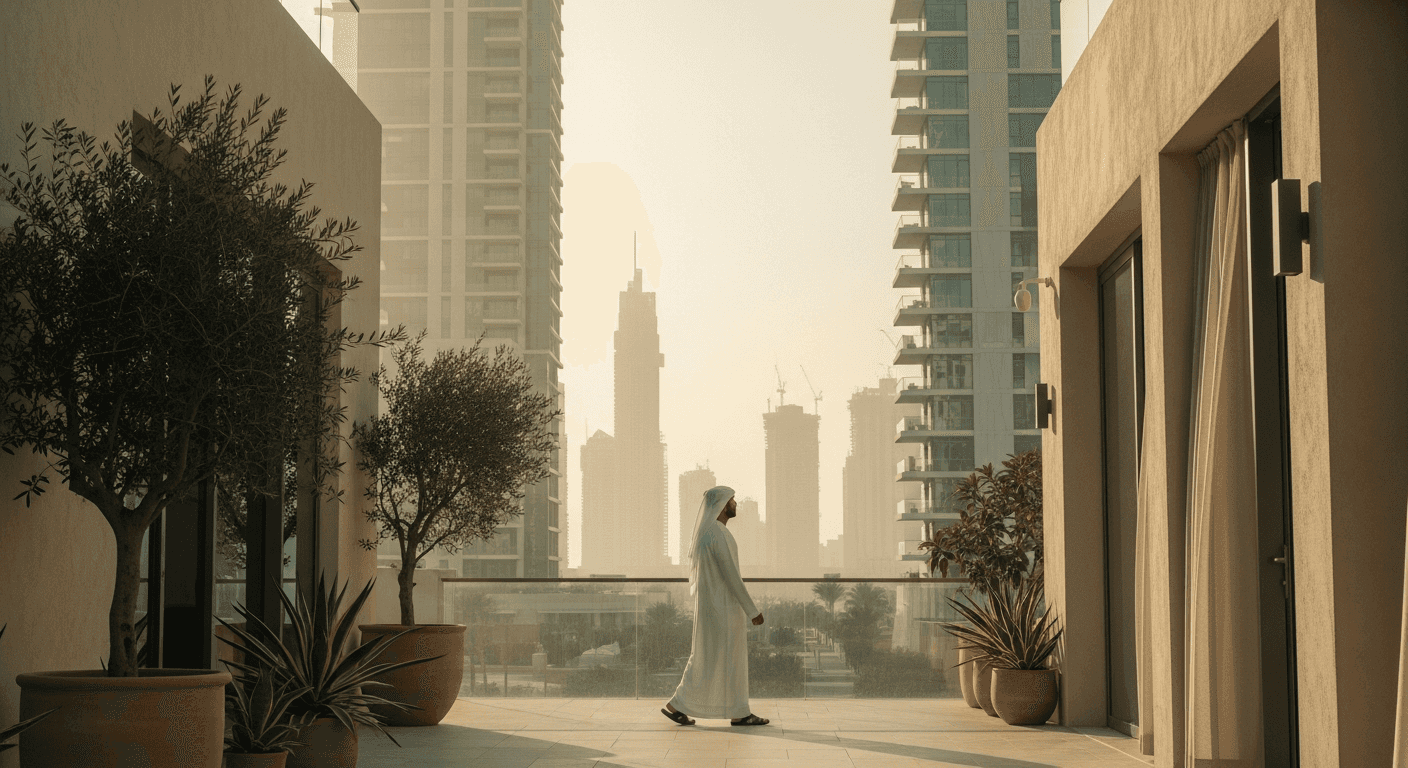
Beyond the Marina: Dubai's Next Growth Areas
Everyone knows the prime postcodes. I explore the emerging neighbourhoods in Dubai poised for significant growth, offering value and a lifestyle you might not have considered.

The headlines love the familiar triumphs: another record-breaking penthouse sale on Palm Jumeirah, soaring demand in Dubai Hills Estate. As a city, we are rightly proud of these prime postcodes. But as a property professional, I find the most interesting conversations I have with clients are about what comes next. The real story of Dubai’s future is being written in its emerging communities. For buyers and investors seeking genuine value and significant growth potential, looking beyond the obvious has become more than a strategy — it’s an absolute necessity.
Here’s what we'll explore in this deep dive:
- The key markers of a neighbourhood poised for growth.
- A detailed look at Expo City, Dubai's futuristic urban lab.
- Why Dubai South is far more than just an airport city.
- The evolution of Jumeirah Village Circle (JVC) into a mature community.
- Dubai Islands as the next great waterfront opportunity.
- How to spot an undervalued asset before the market does.
- A comparative cost analysis for buying in these areas.
The Anatomy of a High-Growth Neighbourhood
Spotting the next hotspot isn’t about crystal balls. It’s about pattern recognition. Over my years in the Dubai market, I've learned that emerging neighbourhoods Dubai all share a similar DNA. The first and most powerful catalyst is always government-led infrastructure. Look for the cranes that aren't building residential towers, but bridges, metro stations, and highways. The RTA’s Route 2020 Metro extension is a perfect case study. It unlocked areas like Al Furjan and Discovery Gardens, turning them from car-dependent suburbs into connected communities. Suddenly, properties within a 10-minute walk of a station commanded a premium that simply didn't exist before. This is the most reliable indicator of where the government is directing the city's future growth.
Second, look for a master developer with a clear, long-term vision and deep pockets. A collection of disparate towers built by a dozen different companies creates a disjointed neighbourhood. A single, powerful master developer like Emaar or Nakheel ensures cohesion. They don't just sell plots; they curate a lifestyle. They build the parks, the schools, the retail centres, and manage the public realm. This master planning is what separates a thriving community from a mere collection of buildings. When we at Gaia Living assess new off-plan launches, the developer's track record in delivering on their masterplan promises is one of our most critical due diligence points. Their ability to deliver not just the building, but the entire ecosystem around it, is what underpins long-term value.
Finally, identify the economic anchor. A neighbourhood needs a reason to exist beyond just housing. This could be a commercial hub like a free zone, a logistics hub like an airport or port, or a lifestyle anchor like a world-class attraction. These anchors generate jobs, create organic daily traffic, and provide a stable tenant base for investors. Dubai South is anchored by Al Maktoum International Airport and the logistics district. Expo City is anchored by its eponymous event site and a growing cluster of tech and innovation companies. This economic gravity is what ensures sustainable demand. An area with beautiful apartments but no jobs nearby will always struggle. An area with a powerful economic engine will thrive, creating a virtuous cycle of demand for both properties for rent and for sale.
Expo City: A Vision for a Sustainable Future
 Featured project
When Expo 2020 closed its doors, the question on everyone's lips was, 'what now?'. The answer, Expo City, is proving to be one of the most ambitious urban transformation projects on the planet. The legacy site is being repurposed into what is billed as a clean, green, human-centric city of the future. The infrastructure is already there: the stunning Al Wasl Plaza, the gardens, the exhibition centres, and a dedicated Metro station. Now, the first residential launches — Expo Valley and Mangrove Residences, are giving us a glimpse of what living there will actually be like. The focus is squarely on sustainability and well-being, with car-free zones, shaded pedestrian pathways, and a genuine commitment to green living that feels more integrated than in many older parts of Dubai.
This is a place designed for a different kind of resident. The city is actively attracting tech firms, startups, and innovation-focused companies to its commercial spaces, creating a built-in professional community. This makes it an interesting proposition for those who will work within the city, offering a commute that can be measured in steps, not kilometres. The appeal is clear: imagine living in a community where your children can walk to school, where you can cycle safely to the office, and where your weekends are spent in lush parks, not searching for parking. It’s a vision that strongly resonates with a growing demographic of buyers, particularly from Europe, who prioritise quality of life and sustainability over sheer size or glitz.
However, it's still early days. The success of Expo City will depend entirely on its ability to evolve from a stunning event site into a living, breathing community. It needs more retail, more schools, and more of the everyday amenities that make a neighbourhood feel like home. The initial property prices reflect this pioneering stage; they are at a level that represents a future investment Dubai opportunity. Buyers are purchasing a vision. If that vision is realised, early investors will be rewarded handsomely. My advice for clients considering Expo City is to think long-term. This is not a market for flipping. It's an opportunity to buy into a unique urban experiment at the ground floor, with the potential for significant capital appreciation as the city matures over the next five to ten years.
Dubai South: The Aerotropolis Takes Shape
For years, Dubai South was synonymous with one thing: Al Maktoum International Airport (DWC). It was seen as a peripheral, industrial zone. That perception is now years out of date. Dubai South is emerging as a fully-fledged city, an 'aerotropolis' where aviation and logistics are the economic heart that pumps life into a vast ecosystem of residential and commercial districts. The recent government announcement to consolidate all airport operations to a massively expanded DWC is the final, definitive signal. This isn't just an airport; it's the future global hub for Emirates and the nucleus of a city projected to house one million people.
The residential offerings here are diverse and, crucially, affordable. Projects by developers like MAG, Azizi and the government-backed Dubai South Properties offer a mix of apartments, townhouses, and villas at price points that are a fraction of those in central Dubai. For example, a three-bedroom townhouse in a community like The Pulse or Emaar South can be acquired for a price that might only get you a one-bedroom apartment in Downtown. This makes it an incredibly attractive area for families and first-time buyers who have been priced out of more established neighbourhoods. The value proposition is simple: more space for your money.
Of course, there are trade-offs. While connectivity has improved, a car is still essential for residents of Dubai South. The social infrastructure — schools, clinics, large-scale retail, is still developing. This is the classic dynamic of an emerging area. The prices are low precisely because these amenities are not all in place yet. This is where investors with foresight can find opportunity. As the airport's expansion accelerates and the population grows, the demand for these services will surge, and the property values will inevitably follow. We are already seeing strong rental yields in the area, driven by the thousands of employees working in the logistics and aviation sectors. For an investor looking for a blend of rental income and long-term growth, Dubai South represents one of the most compelling high growth areas Dubai has to offer.
Jumeirah Village Circle (JVC): From Outlier to Mature Hub
I remember when JVC was considered 'the middle of nowhere'. It was a dusty circle on the map, a patchwork of construction sites with confusing road access. Today, it’s one of Dubai's most populated and searched-for communities. JVC's journey is a lesson in how affordability, when combined with gradual infrastructure improvement, can create a powerful centre of gravity. Its initial appeal was purely price-driven, offering some of the best price-per-square-foot rates in the city. This attracted a huge base of tenants and buy-to-let investors seeking high yields.
The community's main challenge has always been its inconsistent quality and lack of cohesive planning. With hundreds of different developers building individual plots, the result is a mixed bag of architectural styles and building standards. However, over the past few years, a few things have changed. Firstly, the road network in and out of JVC has been significantly upgraded, easing the traffic congestion that once plagued it. Secondly, the community infrastructure has matured. We now have several Circle Malls, numerous parks, schools, and a growing number of quality cafes and restaurants. It is finally starting to feel less like a construction site and more like a proper neighbourhood.
My verdict on JVC today is nuanced. For the pure investor seeking the explosive capital growth of its early days, that ship has likely sailed. The area is now well-established, and prices reflect that. However, for end-users, especially young families and couples, JVC offers some of the best value for money in the city for spacious apartments and townhouses. From an investment perspective, the key is to be selective. Focus on projects by top-tier developers who are known for quality construction and good facilities management. An up-and-coming property Dubai opportunity in JVC is no longer about buying just anything; it’s about buying the *right* thing. Buildings with superior amenities — large pools, modern gyms, and professional management, will always command higher rents and better resale values in a crowded market.
Dubai Islands: The Next Waterfront Frontier
Dubai’s love affair with the sea is at the heart of its identity. For two decades, Palm Jumeirah has been the undisputed king of waterfront living. But that exclusivity comes with a hefty price tag. For many buyers, the dream of a sea-view home felt increasingly out of reach. This is the gap that Dubai Islands is designed to fill. Formerly known as Deira Islands, this cluster of five islands is being developed by Nakheel, the masterminds behind the Palm. This isn't a small project; it's a new coastal city in the making, located off the coast of old Dubai, with over 20 kilometres of new beachfront, resorts, retail, and residential communities.
What makes Dubai Islands so compelling is its timing. It offers a ground-floor opportunity to invest in a master-planned waterfront destination at a price point that is significantly more accessible than its famous predecessor. We are at the very beginning of its development cycle. The first residential projects, like Rixos Hotel & Residences and Bay Residences, are setting the tone for a premium yet more relaxed lifestyle. Think of it as the early days of Dubai Marina or Palm Jumeirah, but with the benefit of two decades of lessons learned in coastal development. The plan incorporates not just luxury homes but also public beaches, parks, and a connection to the city's heritage in nearby Deira.
“For the first time in a decade, there is a path to prime waterfront property in Dubai that doesn't start at an eight-figure sum. That, in itself, is a monumental shift in the market.”
The investment case rests on a simple premise: as the islands develop, as the hotels open, as the retail and lifestyle elements come online, the value of the residential real estate will appreciate. It's a proven model in Dubai. Early buyers are betting on Nakheel's ability to execute this vision. Given their track record, it's a calculated risk with a potentially high reward. For clients of ours who have been aspiring to a waterfront lifestyle but were daunted by the prices in established areas, Dubai Islands is now a primary topic of conversation. It's a chance to secure an undervalued property Dubai asset in a segment of the market — prime waterfront, that has historically shown the most resilience and growth.
A Practical Guide to Spotting Value
Beyond just picking a neighbourhood, how do you identify a specific property that is undervalued? First, become a master of the micro-market. Don't just look at the average price for a one-bedroom in JVC. You need to know the price difference between a building with a great pool and one without, or the premium for a unit with an unobstructed park view versus one facing another building. Use tools like the Dubai Land Department's Dubai REST app to check recent transactions in the *exact same building*. If a unit is listed 10-15% below the recent comparable sales, you need to find out why immediately. It could be a motivated seller, or it could be a hidden defect. This is where a good agent adds immense value — we do this homework for a living.
Second, look for properties with 'good bones' but cosmetic flaws. Many buyers are put off by dated kitchens, old flooring, or questionable paint colours. This is a huge opportunity. A cosmetic renovation is relatively inexpensive in Dubai, but it can add significant value and dramatically improve the property's appeal for rent or resale. If you can find a structurally sound apartment in a great building that just needs a modern facelift, you have found a classic value-add opportunity. We often guide our clients through this process, connecting them with reliable contractors and helping them budget for the renovation to ensure the final value outweighs the total cost.
Third, understand the impact of service charges. A property might seem cheap, but if its annual service charges are excessively high, it can cripple your net rental yield and make the property harder to sell. These fees are published by RERA and are a matter of public record. When comparing two similar properties, the one with lower, more reasonable service charges is often the better long-term investment. I always run the numbers for my clients like this:
Sample Net Yield Calculation: * Property Price: AED 1,000,000 * Annual Rent: AED 70,000 * Gross Yield: (70,000 / 1,000,000) * 100 = 7.0%
Now, let's factor in costs: * Service Charges (1,000 sq ft @ AED 18/sqft): - AED 18,000 * Maintenance (estimate 5% of rent): - AED 3,500 * Net Annual Income: AED 48,500 * Net Yield: (48,500 / 1,000,000) * 100 = 4.85%
That 7% gross yield quickly becomes a sub-5% net yield. An identical property with service charges at AED 12/sqft would deliver a net yield of 5.45%. Over years, this difference is substantial.
The Numbers: A Comparative Cost Analysis
Let's ground this discussion in concrete numbers. Buying a property in Dubai involves more than just the sticker price. It's essential to budget for the associated fees to get a true picture of your total upfront cost. The single largest cost is the Dubai Land Department (DLD) transfer fee, which is a non-negotiable 4% of the property's purchase price, mandated by law and detailed on the DLD website.
Here’s a line-by-line breakdown of the estimated upfront costs for a hypothetical AED 1.5 million apartment in an emerging area:
- Purchase Price: AED 1,500,000
- Dubai Land Department (DLD) Fee (4%): AED 60,000
- DLD Registration Fee: AED 4,200 (for properties over AED 500k)
- Agency Fee (2% + 5% VAT): AED 31,500
- Developer's No Objection Certificate (NOC): AED 1,050 (this can vary from AED 500 to AED 5,000 + VAT)
- Mortgage Registration Fee (if applicable, 0.25% of loan): AED 3,000 (on a typical 80% loan of AED 1.2M)
- Bank Processing/Valuation Fee (if applicable): AED 4,200
Total Estimated Upfront Cost (with mortgage): approximately AED 1,604,150
This means you need to have around AED 404,150 in cash ready for the down payment (20% for residents) and the associated fees. This is a critical piece of financial planning that many first-time buyers overlook. When comparing neighbourhoods, the percentage-based fees will scale with the property price, but the absolute cash outlay required can be dramatically different. A AED 3M villa in a prime area would require nearly double the cash. This is why the relative affordability of emerging neighbourhoods Dubai is so powerful; it lowers the barrier to entry and allows buyers to get onto the property ladder with less initial capital.
In my experience, the biggest mistake buyers make is underestimating these closing costs. They focus solely on securing the mortgage pre-approval for the purchase price, only to find themselves short of cash when the final payment schedule is due. At Gaia Living, our buyer & investor guides always start with this crucial budgeting step. Before we even start looking at properties for sale, we ensure our clients have a crystal-clear understanding of every single fee, so there are no surprises on the path to ownership.
The smartest money in Dubai real estate is often the quietest. It moves into areas anchored by new infrastructure and economic drivers long before they become headline news. Neighbourhoods like Expo City, Dubai South, and Dubai Islands offer a tangible opportunity to invest in the city's next chapter of growth, while a matured JVC provides excellent value for end-users. The key is to balance vision with pragmatism, understanding both the potential and the current trade-offs.
## Sources - Dubai Land Department (DLD) - dubailand.gov.ae - Dubai REST Official App - dubairest.gov.ae - UAE Government Portal (Property Ownership Rules) - u.ae
Questions, answered
- Which areas in Dubai are considered up-and-coming for property investment?
- Areas showing significant growth potential include Expo City, with its focus on sustainability and tech; Dubai South, driven by logistics and aviation; Jumeirah Village Circle (JVC), which is maturing with better infrastructure; and Dubai Islands, a new waterfront project.
- Is Jumeirah Village Circle (JVC) still a good investment?
- In my view, JVC is transitioning from a high-yield rental hub to a more mature community. While early investor returns may have peaked, it offers good value for end-users seeking affordable family homes, and select new projects still present solid long-term investment opportunities.
- What are the main costs when buying property in an emerging Dubai neighbourhood?
- Beyond the property price, you must budget for the Dubai Land Department (DLD) transfer fee of 4% of the purchase price, a registration fee of up to AED 4,200, an agent's fee (typically 2%), and the developer's No Objection Certificate (NOC) fee, which can range from AED 500 to AED 5,000.
- How does infrastructure like the Dubai Metro affect property value?
- Major infrastructure projects, especially extensions to the Dubai Metro, are powerful catalysts for property value appreciation. The 'Route 2020' extension significantly boosted values in areas like Discovery Gardens and Al Furjan, and future metro plans will be a key indicator for high growth areas.
- What makes an area 'undervalued' in the Dubai property market?
- An undervalued area typically has strong fundamentals — like upcoming infrastructure, a major developer, or a strategic location, that are not yet fully reflected in its property prices compared to established prime neighbourhoods. The opportunity lies in buying before this future potential is widely recognised and priced in.
- Are there any new waterfront projects that offer better value than Palm Jumeirah?
- Dubai Islands is an emerging waterfront alternative. Developed by Nakheel, the same developer behind the Palm, it offers a similar island lifestyle but at an earlier, more accessible price point. It represents a ground-floor opportunity for those seeking waterfront living with potential for long-term growth.

Yusuf writes about how Dubai actually lives — waterfront mornings, community dining, walkability, and the lifestyle premium built into an address.
Related stories
Dubai's Big Squeeze: Smaller Plots, Denser Living
Dubai real estate is undergoing a fundamental shift towards smaller plot sizes and higher density. We analyse the economic drivers, the impact on property values, and what this new era of compact urban living means for both homebuyers and investors.
Resort Living as Your Dubai Reality
Explore how to trade temporary staycations for a permanent home with five-star amenities in Dubai. I'll break down the real costs, best communities, and lifestyle trade-offs of embracing high-end resort living every day.
Finding Your Tribe in Dubai's Villa Communities
I explore which of Dubai's renowned villa communities attract specific expat nationalities and lifestyle groups, offering insights to help you find a place that feels like home.
Echoes, in your inbox
One thoughtful email a month. Market insight, new launches, no spam.