

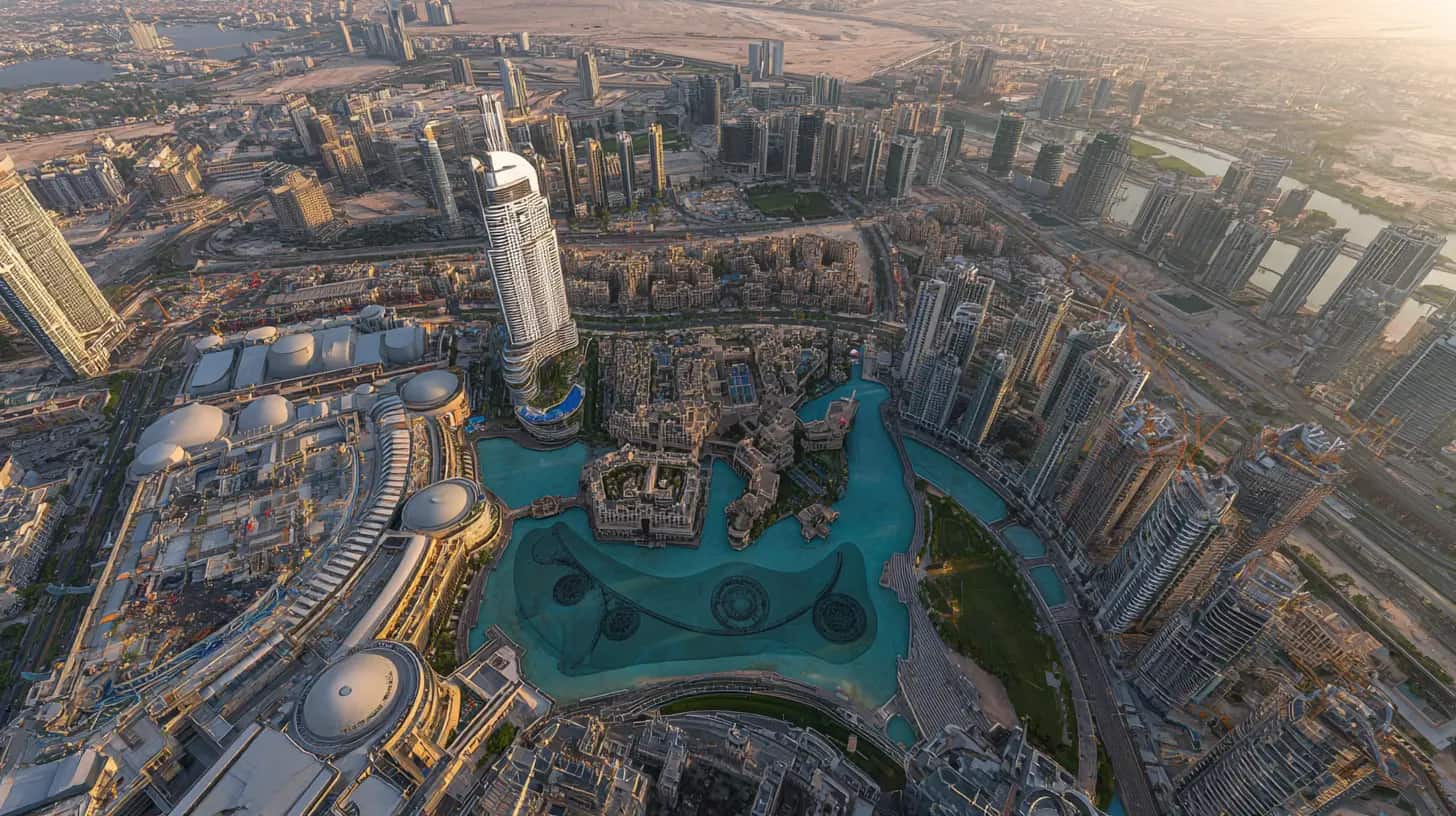
Average Price Range for Apartments in Downtown Dubai
Downtown Dubai Is One of the World's Most Recognised Addresses. The Price Reflects It. Real estate addresses have existed that are globally recognized—an easy way to communicate quality…
Downtown Dubai Is One of the World's Most Recognised Addresses. The Price Reflects It.
Real estate addresses have existed that are globally recognized—an easy way to communicate quality, prestige, and certain style of living to buyers and renters alike around the world. One example of this is downtown Dubai. The Burj Khalifa, The Dubai Fountain, Dubai Mall, and The Dubai Opera—the defining infrastructure of the area—are more than simply important locally. They make the cut for lists of truly iconic urban areas, and accordingly, the residential real estate in the vicinity is priced as such.
And its pricing has soared over the last couple of years. Downtown Dubai apartments have become some of the best-performing real estate in the Dubai property market since the pandemic, due to genuine demand for housing, strong international demand, and lack of new supply in a place where most available land for development has already been used. One-bedroom apartments purchased at AED 1.1 million to AED 1.5 million back in 2019 and 2020 are now priced between AED 1.8 million and AED 3 million, depending on specific criteria.
Downtown is a diverse place. A studio apartment in an older building in a peripheral location of downtown and a two-bedroom apartment at the higher floors in a premium building with the view of the Burj Khalifa and Dubai Fountains are both called "Downtown Dubai apartments" even if they offer quite different experiences and come with quite different price tags. Knowing the factors influencing the price and knowing how important they are allows one to establish whether the specific listing in question offers a good deal.
This article examines the entire price range for Downtown Dubai apartments of all bedroom configurations by tier of buildings, floors, view, and by purchase as well as rental prices. It also considers the potential of downtown as an investment destination and the potential yield from investment in this property market.
What Drives Price Variation Within Downtown Dubai
Downtown Dubai is not a uniform market. Several specific variables drive price differences within the district that can be larger than the difference between Downtown and many other Dubai communities.
View category is the most significant single price driver in Downtown. A Burj Khalifa view — a direct sightline to the tower, available from a relatively small number of buildings and a specific range of floors — commands the most significant premium in the district. Fountain views are the second most valued category — a direct view of The Dubai Fountain from the apartment or balcony. Community views — looking over the Downtown landscaping, the boulevard, or the Opera district without a direct fountain or Burj line — are the third tier. City or partial views are the baseline.
The Burj Khalifa and fountain view premium varies by building and floor but typically adds 20% to 40% to the price of a unit over a comparable community-facing unit in the same building. On a AED 2 million one-bedroom, that is AED 400,000 to AED 800,000 in absolute value. The premium is real, durable, and has held up through multiple market cycles because the view cannot be replicated and the number of units with it is fixed.
Building age and specification is the second major price driver. Downtown has several distinct generations of residential development — the original Emaar towers from the mid-2000s to early 2010s, the newer premium towers and developments from 2015 onward, and the most recent ultra-luxury launches. Older buildings with dated specifications trade at meaningful discounts to newer towers. Address Residences, Il Primo, The Address Boulevard, and Act Towers represent the premium end of the building quality spectrum. The Address Downtown Hotel residences and the older Emaar towers sit below them.
Floor level matters more in Downtown than in many Dubai communities because the key views — the fountain, the Burj — are either accessible or not depending on height. The floors below the sightline threshold for fountain views are priced differently from those above it. Within the view-accessible range, each additional floor tier typically adds 3% to 8% to the price.
Proximity to The Dubai Mall and the fountain plaza affects rental demand more than capital values — walk-to-mall proximity is a significant tenant preference factor that drives rental rates in the closest buildings.
Current Price Ranges by Bedroom Type
The prices below reflect active secondary market listings and recent DLD transactions as of Q1 2026. They represent the range across the full Downtown market — from the most affordable entry point in older peripheral buildings to the premium achieved in the district's best buildings with the best views.
Studios
Studios in Downtown Dubai are not common relative to the larger unit types and the supply is concentrated in specific buildings. Current pricing runs AED 900,000 to AED 1.6 million on the secondary market. The lower end of this range represents older buildings with limited views. The upper end represents newer buildings or studios with fountain or Burj partial views.
Rental rates for studios run AED 75,000 to AED 110,000 annually, generating gross yields of 6% to 8% at current purchase prices. Studios are the highest-yielding product type in Downtown by bedroom count, reflecting the combination of strong tenant demand from young professionals and investors who value the Downtown address alongside the relatively low capital cost.
One-Bedroom Apartments
One-bedrooms are the most actively traded product type in Downtown and the category where the widest range of quality and pricing exists. Current secondary market pricing runs AED 1.5 million to AED 3.5 million.
At the lower end: older Emaar towers on lower floors with community or city views. At the upper end: newer premium towers on high floors with direct Burj Khalifa or fountain views, or in ultra-luxury branded developments. The middle of the range — AED 2 million to AED 2.8 million — represents the core of the market for a quality one-bedroom in a well-regarded building with a partial or good community view.
Rental rates for one-bedrooms run AED 110,000 to AED 220,000 annually, with the widest range in the category reflecting the significant view and building quality premium. Gross yields typically run 5.5% to 7.5%.
Two-Bedroom Apartments
Two-bedrooms in Downtown range from AED 2.5 million to AED 7 million on the secondary market, with a meaningful cluster in the AED 3 million to AED 4.5 million range for well-located, quality buildings.
The AED 5 million to AED 7 million range represents the premium product — large two-bedrooms or two-bedrooms plus study configurations in towers like Il Primo, The Address Residences, and newer ultra-premium developments, typically on high floors with panoramic views.
Rental rates for two-bedrooms run AED 165,000 to AED 380,000 annually. The upper end of this range is concentrated in buildings that attract corporate tenants and senior executives who specifically want the fountain or Burj views and are willing to pay for them. Gross yields for two-bedrooms run 5% to 7%.
Three-Bedroom Apartments and Larger
Three-bedroom apartments in Downtown start at approximately AED 4 million and run to AED 15 million and above for large units in premium buildings with exceptional views. The market for three-bedrooms is smaller and less liquid than one and two-bedrooms — the tenant and buyer pool at this size is more specific and the time on market is typically longer.
Rental rates run AED 260,000 to AED 600,000 annually. Gross yields are at the lower end of the Downtown range — 4.5% to 6% — reflecting the higher capital values.
For current availability and live pricing across Downtown's apartment market, our Downtown Dubai listings are updated in real time.
Gaia Realty Original Research: Downtown Dubai Price Snapshot, Q1 2026
Based on DLD transaction records, active secondary market listing analysis, and rental registration data across Downtown Dubai's residential buildings as of Q1 2026.
Capital values by unit type and tier:
Studios:
- Older buildings, community view: AED 900K to AED 1.2M
- Mid-tier buildings, partial view: AED 1.1M to AED 1.4M
- Premium buildings, Burj or fountain view: AED 1.3M to AED 1.6M
1-bed apartments:
- Older buildings, community view: AED 1.5M to AED 2M
- Mid-tier buildings, good community or partial view: AED 2M to AED 2.8M
- Premium buildings, Burj or fountain view: AED 2.8M to AED 3.5M
2-bed apartments:
- Older buildings, community view: AED 2.5M to AED 3.2M
- Mid-tier buildings, good view: AED 3.2M to AED 4.5M
- Premium buildings, Burj or fountain view: AED 4.5M to AED 7M
3-bed apartments:
- Mid-tier buildings: AED 4M to AED 6.5M
- Premium buildings, panoramic views: AED 6.5M to AED 15M+
Capital appreciation since January 2020:
- Community-facing units across the district: 55% to 70%
- Fountain and Burj Khalifa view units: 75% to 105%
- Ultra-premium branded residences: 80% to 120%
Average gross rental yields by unit type:
- Studios: 6.5% to 8%
- 1-bed: 5.5% to 7.5%
- 2-bed: 5% to 7%
- 3-bed and above: 4.5% to 6%
Average days on market for secondary sales in 2025:
- Studios: 31 days
- 1-bed: 24 days
- 2-bed: 28 days
- 3-bed: 41 days
The Investment Case for Downtown Apartments
Downtown Dubai as an investment market has specific characteristics that distinguish it from yield-focused communities like JVC or Al Reem.
It is not primarily a yield market. At AED 2 million to AED 3 million for a typical one-bedroom, gross yields of 5.5% to 7% are real but not exceptional compared to what can be achieved in more affordable communities. The investment case for Downtown is built on a combination of capital preservation, global brand recognition, deep secondary market liquidity, and the premium that the Burj Khalifa and fountain infrastructure adds to both rental rates and resale values.
The liquidity argument is particularly compelling. Downtown's secondary market is one of the deepest and most consistently active in Dubai — average days on market for one-bedrooms sat at 24 days in 2025, reflecting a broad buyer pool that spans local end-users, corporate tenants buying accommodation, international investors, and short-term rental operators. This liquidity means exits are achievable on reasonable timelines even in softer market conditions.
The short-term rental market in Downtown is among the most active in Dubai. Fountain and Burj view apartments generate premium nightly rates during the Grand Prix, New Year's Eve, and the broader October to April peak season. DTCM-licensed holiday home operators consistently report Downtown among their top three revenue-generating communities. New Year's Eve specifically produces nightly rates that are three to five times the standard peak-season rate for fountain-view units.
The supply constraint is a structural support for Downtown values that is frequently understated. The core of Downtown — the area within walking distance of the fountain and The Dubai Mall — is substantially built out. New supply is limited and is typically premium-priced when it does come to market. This constraint on supply, combined with sustained international demand for one of the world's most iconic urban addresses, provides a floor under Downtown pricing that more supply-exposed communities don't have.
According to Knight Frank's 2025 Prime Residential Index, Downtown Dubai recorded the strongest prime residential price growth of any Dubai district in 2024, outperforming the Marina, Palm Jumeirah, and Business Bay on a year-on-year basis. The full index is worth reviewing for buyers doing comparative district analysis: Knight Frank Dubai Prime Residential Report 2025.
How Downtown Compares to Adjacent Markets
Buyers evaluating Downtown are typically also looking at Business Bay — which sits immediately to the south and offers canal-facing product at meaningfully lower prices — and at DIFC, which sits to the east and serves a different professional and lifestyle profile.
Business Bay one-bedrooms run AED 1.1 million to AED 2.5 million — below Downtown across the range, with the gap widest at the premium end where fountain and Burj views are only available from Downtown. Business Bay yields are typically higher at 6% to 8% for mid-market product. For buyers who want the urban professional address without the Downtown price premium, and for whom the fountain and Burj views are not the primary driver, Business Bay offers a credible alternative.
DIFC is a different product entirely — primarily serving the financial district professional community, with a premium on the regulatory and professional environment of the free zone. Residential prices in DIFC run AED 2 million to AED 5 million for one and two-bedrooms, comparable to Downtown but serving a more specific tenant profile.
For buyers and investors comparing Downtown against Business Bay or DIFC, our property search allows direct price and yield comparison across all three communities with current available inventory.
Questions People Ask About Downtown Dubai Apartment Prices
Why are Downtown Dubai apartments more expensive than equivalent Marina apartments?
The Burj Khalifa and fountain infrastructure creates a view premium that the Marina's canal and sea views don't replicate in the same way. The Marina has excellent views — but nothing globally as recognisable as the world's tallest building and the world's largest fountain. That brand recognition supports a premium both on capital values and on short-term rental rates.
Is now a good time to buy in Downtown Dubai?
Prices are near historical highs following three years of strong appreciation. The case for further appreciation rests on continued international demand, constrained supply in the core district, and the sustained pull of the address globally. The easy gains from buying at 2020 to 2021 levels are gone — but buying a quality asset in a supply-constrained, globally recognised location at current prices has supported long-term investors through previous cycles.
What's the difference between buying in The Address Residences versus a standard Emaar tower?
The Address branded residences carry a hotel-service component — residents have access to concierge, housekeeping, and F&B through the hotel infrastructure. This produces a meaningfully different daily living experience and a premium on both capital values and rental rates. The trade-off is higher service charges and a more dynamic building environment given the hotel guest population.
Do fountain view units always outperform non-fountain units on resale?
On a percentage basis, yes — consistently. The view premium has been durable through multiple market cycles. On an absolute return basis, a high-quality non-fountain unit in a well-managed building also performs well because the Downtown address itself supports values broadly. The fountain view adds outperformance, it doesn't define the entire investment case.
Are studios in Downtown a good investment?
Strong yields relative to the other Downtown bedroom types — 6.5% to 8% gross — and lower absolute entry prices make studios accessible for investors who want Downtown exposure at under AED 1.5 million. The trade-off is lower capital appreciation relative to the larger units and a slightly higher tenant turnover given the demographic of studio renters. Worth considering for yield-focused investors with smaller budgets.
What service charges are typical for Downtown apartments?
Higher than most Dubai communities — typically AED 18 to AED 35 per square foot annually, reflecting the district's premium infrastructure maintenance. Factor service charges into net yield calculations. On a 900 square foot one-bedroom, AED 25 per square foot is AED 22,500 per year — a meaningful deduction from gross rental income.
Can I rent out a Downtown apartment on Airbnb?
Yes, with a DTCM holiday home licence. Downtown is one of Dubai's most active short-term rental markets, particularly for fountain and Burj view units. Annual gross revenues of AED 130,000 to AED 200,000 for a well-managed fountain-view one-bedroom are achievable during peak season — though operator commissions and off-peak periods bring net yields closer to long-term rental returns.
How does Downtown pricing compare to Palm Jumeirah for apartments?
Palm Jumeirah Shoreline apartments sit in a similar price range to mid-tier Downtown product — AED 1.8 million to AED 3.5 million for one-bedrooms. The Palm's premium is beach access and the island address. Downtown's premium is the fountain and Burj infrastructure. Yields are broadly comparable. The choice is about lifestyle preference as much as financial analysis.
Is the Burj Khalifa view worth the premium?
For buyers whose investment thesis includes short-term rental, yes — definitively. Burj Khalifa view units command nightly rates that are meaningfully above community-facing units and the premium is most pronounced on New Year's Eve and other high-demand dates. For long-term buy-to-hold investors who are less focused on short-term rental, the view premium on capital values has been consistent but the yield premium is more modest.
What's the most affordable way to get into Downtown Dubai?
Studios in older Emaar towers on lower floors without premium views — entry pricing from AED 900,000 to AED 1.1 million. These units generate solid yields and provide the Downtown address and Dubai Mall proximity at the lowest entry point the district offers. The trade-off is limited capital appreciation relative to the premium product and a building specification that reflects a mid-2000s construction standard.
Are there new off-plan launches in Downtown in 2026?
Supply in the core Downtown district is limited. Emaar occasionally launches additional phases of The Address Residences and related branded products. The broader Mohammed Bin Rashid City area — adjacent to Downtown — has more active off-plan supply. For genuinely Downtown-core product, the secondary market is the primary access route for most buyers.
What's the best floor to buy on in a Downtown building?
Above the fountain view threshold if fountain views are the objective — which varies by building and orientation. For buildings on the canal or with Burj views, higher is generally better for views and rental rates. The sweet spot for most investors is mid-to-high floor with a confirmed view line — high enough to see the fountain or Burj clearly, not necessarily the absolute top floor where the price premium may exceed the incremental view improvement.
Downtown Dubai Prices Reflect a Market That Has Earned Its Premium and Shows No Sign of Surrendering It.
In the period since 2020, there have been very high rates of appreciation, with a range between 55% and 105 depending on the type of product and view. These trends have been driven by a structural supply constraint. There has been diversification of demand across many nationalities including the UK, India, Russia, Europe, and the GCC, thus contributing to a market that does not depend on the involvement of one nationality.
From the perspective of buyers looking to enter Downtown after five years, i.e., 2026, there will be higher entry point costs compared to five years ago. Moreover, the expected return over the next five years will probably be less high compared to the previous five years. However, this is no cause for worry but an opportunity for thorough research into the matter. Investing in Downtown can be looked at as capital preservation and good asset investing, which is characterized by high sustainable yields and strong secondary market liquidity. In other words, Downtown is no longer a speculative market for appreciation when purchasing in 2026.
In the case of buyers looking for a globally recognized property location, good secondary market liquidity, a very attractive short-term rental yield, and view asset that cannot be duplicated, then the premium paid will definitely be worth it considering market evidence.
If you want to explore what's available in Downtown Dubai across all bedroom types and price points, our team covers this community in detail. Reach out and we'll take it from there.
Related stories
Dubai's Established Charm: The Case for Older Homes
In a city focused on the future, I believe the smartest move for many buyers is to look back. Dubai's seasoned communities offer space, character, and surprising value that new builds often can't match.
The True Cost of Owning a Dubai Property
Beyond the purchase price, your annual budget for a Dubai home must account for service charges, utilities, and maintenance. I'll break down every ongoing expense you need to plan for.
Calculating ROI on Dubai Rental Upgrades
As a landlord in Dubai, you can't just follow trends. I'll show you how to calculate the precise ROI of minor property upgrades to genuinely increase your rental yield.
Echoes, in your inbox
One thoughtful email a month. Market insight, new launches, no spam.