

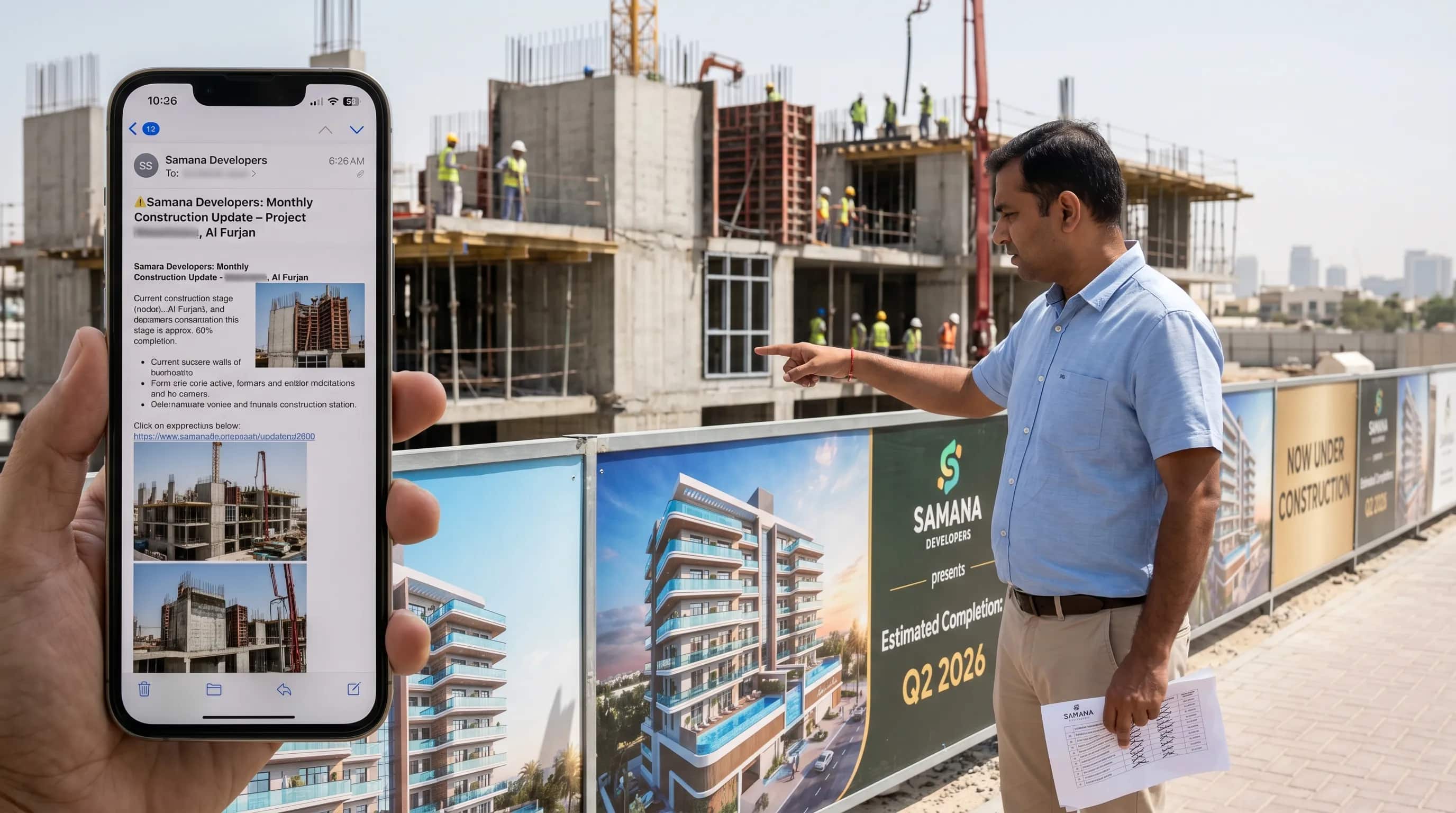
Samana Properties: Why International Investors Are Paying Attention
Samana has become one of Dubai’s fastest-rising developers by selling yield-focused, fully-furnished apartments. Here’s what international buyers are getting.
In any expatriate-targeted coffee shop in Dubai in 2026, one will inevitably hear people discuss Samana. It might be the Filipino teacher buying her second unit, the Indian tech worker comparing payment plans or the little Lagos investor who got in on the pre-launch.
Just six years before, Samana would barely even have a name. And this is where our amazement comes in. Samana Properties founded in 2018 became among the fastest-selling developers by sales volume in Dubai, especially among international retail buyers by 2024. By 2025, they made a habit of the off-plan market, with launches selling faster than even some well-established players could manage.
We have lived through this story first-hand. We have helped evaluate Samana property units. We have talked to people who liked what they bought and others who did not like theirs. Our story goes beyond “yet another Dubai developer" angle, as the company did not make it by challenging Emaar and Sobha. No, Samana made its own thing.
This article will try to explore what this “thing" is all about, why international buyers love it and whether or not their model caters to the type of buyer who is interested in this article. We will talk about the story of the founder, the product, the payment plan, communities and the real-life performance numbers. But we will also be honest about the drawbacks of the model.
If you have heard about Samana and wanted to know what is behind the name, by the time you finish reading this, you should get a good feel for whether or not the product meets your needs. There is no middle ground. Samana has a certain offer and does very well for a certain group of buyers.
Who Samana Properties Is, and Where They Came From
Samana was founded in 2018 by Imran Farooq, who serves as the company’s CEO. Farooq’s background isn’t traditional Dubai real estate. He came up through international business and identified a gap in the Dubai market that most established developers were ignoring.
The gap was this. International retail investors, particularly from Asia and Africa, wanted to buy Dubai property but couldn’t access the prime market and didn’t trust the bottom end. They wanted a recognizable brand that built reliably, charged reasonably, and offered payment plans that didn’t require massive upfront capital. Emaar wasn’t going to sell them a unit on a 1% monthly plan. The smaller developers might, but the brand risk was high.
Samana built itself specifically for that gap. The pitch was simple. Quality finishes, hotel-style amenities, fully-furnished units ready to rent on day one, and payment plans designed around small monthly amounts rather than large upfront deposits.
The strategy worked. By 2023 Samana was launching multiple projects a year. By 2024 they’d opened sales offices in India, Pakistan, the Philippines, Nigeria, and several European cities. The buyer base became aggressively international. We’ve seen Samana sales events in Mumbai where the room was full of first-time Dubai property buyers, each writing checks for a unit they’d never visited.
Samana’s official entity is Samana Developers, based in Dubai. The brand sometimes gets confused with similarly-named projects, so it’s worth being clear. The full company is Samana Developers, and they only build in Dubai for now.
Knight Frank’s tracking of Dubai developer launches has consistently put Samana in the top tier by volume since 2023. They’ve moved from unknown to high-volume in under five years, which is unusual for any property market and especially unusual for Dubai where established names dominate.
What Samana is not is a luxury or super-prime developer. They’ve stayed deliberately in the mid-market. The pricing is accessible. The unit sizes are compact. The amenities are designed to attract renters, not to impress dinner-party guests.
The company has grown its team, opened international sales offices, and built out a property management arm. The infrastructure around Samana is more developed than most newer Dubai developers, which matters for buyers who’ll be dealing with the developer for years after handover. Snagging support, post-handover service, warranty management, and property management referrals all flow through Samana’s own teams rather than being outsourced to third parties.
Industry data suggests Samana has captured a disproportionate share of the international retail investor market in Dubai over the last three years. Bayut and Property Finder both list Samana among the most-viewed developer brands by international users on their platforms. The brand recognition outside the UAE is now stronger than many older Dubai developers who haven’t invested in international sales channels.
The Samana Properties Investment Pitch (Decoded)
So what’s actually being sold.
Samana’s product is what we’d call a packaged yield investment. Each unit is designed to function as a rental property from the moment of handover. Furnished. Decorated. Equipped with amenities that pull short-term and long-term renters. Located in communities with strong rental demand.
The core pitch breaks down to:
• Fully furnished units, ready to rent on day one, with no setup work for the buyer
• Hotel-style amenities (rooftop pools, gym, sauna, sometimes a beach setup or splash pad)
• Locations chosen for rental demand rather than capital appreciation alone
• Smaller unit sizes that translate to better price-per-square-foot rental yields
• Payment plans designed for income earners rather than cash-rich buyers
• A focus on the rental yield story rather than the appreciation story
• Property management arrangements available through Samana or affiliated partners
• Marketing aimed at international investors rather than UAE-resident buyers
The investment math is presented straightforwardly. Buy a 1-bedroom in a Samana project for AED 1.1M. Pay 20% to 30% during construction. Pay the rest in 1% monthly installments after handover. Rent the unit out for AED 80,000 to AED 110,000 per year. Service the remaining payments from the rental income. End up owning the unit free and clear in roughly 7 to 9 years.
The math works on paper if rental absorption is strong. The question every Samana buyer should ask is whether absorption is actually as strong as the brochure suggests.
Imran Farooq has been clear in his public statements that Samana’s positioning is deliberate. The company is targeting investors who want to participate in Dubai’s growth without having the cash to buy in the prime market. That positioning has expanded their addressable market dramatically compared to a developer like Sobha or Omniyat.
The risk, of course, is supply. Samana isn’t the only developer chasing this buyer. Danube, Azizi, and others are in similar territory. When too many units of the same general type land in the same submarkets at the same time, rental absorption slows and the math gets harder.
Samana Communities in Dubai Worth Knowing
Samana has focused its footprint on a handful of areas. They’re not in Downtown. They’re not in the Marina. They’ve chosen mid-market neighborhoods with good infrastructure, growing population, and accessible price points.
Samana in JVC and Arjan
JVC and Arjan have been Samana’s main territory for several years. Both areas suit the Samana model. Mid-market pricing. Strong rental demand from young professionals. Growing infrastructure. Apartment-heavy stock.
Samana’s JVC and Arjan projects include Samana Greens, Samana Park Views, Samana Waves, and several others. The projects share a similar visual identity. Compact but well-appointed units. Heavily amenitized common areas. Pricing in the AED 800K to AED 1.5M range for 1-bedrooms depending on building and finish.
If you want to see what’s currently active across the JVC area including Samana inventory, the listings update regularly.
The thing to check carefully with Samana in JVC is the surrounding pipeline. JVC has been receiving a heavy supply of off-plan launches from many developers over the last three years. The risk isn’t Samana specifically. The risk is that handover-timed supply lands all at once and depresses both rents and resale prices in the first 12 to 18 months after completion.
What Samana JVC residents tell us about daily life. The buildings are well-finished and the amenities work as advertised. The pool decks are genuinely usable. The gyms are stocked. The lobbies feel premium for the price point. The downside is that JVC itself has infrastructure gaps that no individual building can fix. Traffic in and out of the community can be slow at peak times. Public transport options are limited. Schools require a drive. These are JVC issues, not Samana issues, but they affect daily life either way.
Samana Sports City, Studio City, and Other Yield Plays
Beyond JVC and Arjan, Samana has built in Dubai Sports City, Dubai Studio City, Dubailand sub-clusters, MBR City, and more recently Al Furjan and parts of Discovery Gardens.
These secondary areas are where the yield math looks strongest on paper. Lower entry prices. Higher gross yields on a percentage basis. Smaller per-unit values that allow international buyers to enter without large capital commitments.
Things to verify when looking at Samana units in the secondary areas:
• Specific competing supply pipeline within a 1km radius for the next 24 months
• Building amenity quality compared to neighboring projects, since amenity drives rental premium
• Service charge per square foot at completion, not the estimate at launch
• Realistic achievable rent based on actual let listings in the area, not brochure projections
• Mortgage availability post-handover from the buyer’s home market or UAE banks
• Property management quality and the fee structure if using Samana’s affiliated partner
• Exit liquidity scenarios if the buyer needs to sell within three to five years
• The specific community’s stage of development, since some are still maturing
The pattern across all Samana communities is consistent. Buy for yield, expect modest appreciation, manage actively or via a partner, plan to hold for 5 to 10 years rather than flipping for quick gains.
For current Samana launches across all communities, the property launches page lists what’s available now.
The Payment Plans That Drive International Buying
If there’s one thing Samana sells that nobody else has matched at the same scale, it’s the payment plan structure.
Most Samana projects offer 1% monthly post-handover plans. Sometimes the structure is 20% down, 1% monthly during construction, balance after handover. Sometimes 15% down with even more deferred. The point is the monthly amount sits at a level a salaried professional in another country can actually afford from their income, not from accumulated savings.
A typical Samana plan on a AED 1M unit:
• AED 200,000 down (20%) at booking
• AED 10,000 per month during construction (1% per month)
• AED 10,000 per month after handover (1% per month) until paid in full
• Total construction period payments: roughly AED 200,000 to AED 300,000
• Roughly 50% to 60% of the unit value still owed at handover, paid over 5 to 7 years
For an investor in Manila earning USD 4,000 per month, that AED 10,000 monthly payment is roughly 25% of monthly income. Doable. Compare that to a traditional Dubai mortgage which would require AED 250,000 to AED 400,000 in down payment plus 25% LTV deposit equivalent, and the contrast explains the appeal.
The risk lives in the back half of the payment plan. Once the unit is handed over, the rental income is supposed to service the monthly payments. If rental absorption is slow, the buyer covers the gap from personal income. If they can’t, they default and lose the unit. Samana’s contracts include the usual developer protections in this scenario.
Property Monitor data for Samana communities suggests rental absorption has been generally strong but variable by project. Some buildings rent within weeks. Others take 3 to 6 months. The variance is meaningful for buyers depending on the loan-equivalent monthly burden.
Our Research: How Samana Units Have Performed
We pulled secondary market data and rental absorption metrics for Samana communities that have completed handover. The numbers tell a clearer story than the marketing.
Samana communities performance, 2024 to 2025:
• Samana Greens (JVC): +3.8% price growth from handover, 6.8% gross yield, 5 to 7 week rental absorption
• Samana Park Views (Arjan): +4.5% price growth from handover, 7.2% gross yield, 4 to 6 week absorption
• Samana Waves (JVC): +2.9% price growth, 6.5% gross yield, 6 to 9 week absorption
• Samana Skyros (Sports City): +1.8% price growth, 7.5% projected gross yield, recent handover so absorption data limited
• Samana Mykonos (Studio City): +4.1% price growth, 6.9% gross yield, 5 to 8 week absorption
• Samana Santorini (JVC): not yet at handover, current secondary premium of 8% to 12% on early sales
The pattern is reasonably consistent. Modest capital appreciation. Strong rental yields. Acceptable absorption times. Not spectacular numbers, but solid for the price points involved.
The comparison that matters is against the alternatives. A buyer with AED 1M to deploy could buy a Samana 1-bedroom on a deferred plan, or a Danube unit, or an Azizi unit, or any number of mid-market alternatives. Samana’s actual performance numbers are broadly in line with the better mid-market peers. Where Samana differentiates is the payment plan accessibility, not the underlying asset performance.
The honest read is that Samana units perform as expected for the segment. They’re not undervalued. They’re priced fairly for what they are. The investment thesis only works if the buyer values the cash flow structure and is comfortable with mid-market exposure.
The Honest Read on Samana for International Investors
The following profile will benefit from the investment in Samana: an international retail buyer with minimal up-front money, looking for stable earnings and a lengthy horizon, actively managing or paying for property management.
For this profile, Samana is a decent choice. The payment plans are realistic in reducing the cost of entry into the Dubai real estate market. The units can produce rental earnings. The yields are actual. The brand has already established itself in the Dubai real estate market at such a point where one can expect to sell without too much difficulty.
Samana would not be a proper fit for investors interested in capital appreciation in the long run. The mid-market is highly competitive and often overbuilt. The increase in the price per square meter in Samana's units was relatively low. Expectations of capital gains similar to those witnessed in 2021 would prove to be unreasonable.
It will not appeal either to investors lacking a solid plan for property management. An empty apartment in JVC leads to expenses even though the payments are made every month. The very nature of the payment plans which makes them easy to accept, makes losing more money due to the property being empty a greater possibility.
Our advice to invest in Samana would go to investors having the following characteristics: planning their first or second purchase in Dubai; having steady income from abroad; planning to keep it for no less than 7 to 10 years; purchasing off-plan as opposed to ready; aiming to make rental yield rather than capital gain; having a partner or a firm ready to manage the property upon handover.
Our advice not to invest in Samana would go to investors having the following characteristics: owning enough money to buy a Sobha or Emaar prime property; being interested mainly in capital gain; selling in no more than three years; purchasing ready-made units.
If you’re considering Samana and want a clear-eyed evaluation of a specific unit or project, the Gaia Realty team has worked with dozens of Samana buyers. We can tell you which buildings are performing and which are underperforming. Drop us a line through the contact page and we’ll go through your specific situation.
Related stories
Dubai's Established Charm: The Case for Older Homes
In a city focused on the future, I believe the smartest move for many buyers is to look back. Dubai's seasoned communities offer space, character, and surprising value that new builds often can't match.

The True Cost of Owning a Dubai Property
Beyond the purchase price, your annual budget for a Dubai home must account for service charges, utilities, and maintenance. I'll break down every ongoing expense you need to plan for.
Calculating ROI on Dubai Rental Upgrades
As a landlord in Dubai, you can't just follow trends. I'll show you how to calculate the precise ROI of minor property upgrades to genuinely increase your rental yield.
Echoes, in your inbox
One thoughtful email a month. Market insight, new launches, no spam.