

Why Dubai's Mature Villa Communities Are Worth the Premium
In a city obsessed with the new, discover the lasting value found in Dubai's established villa communities, where shaded streets, settled schools, and proven infrastructure offer a unique quality of life for families.

In a city defined by its relentless pursuit of the future, it’s easy to get swept up in the glamour of the new. Yet, for many of us looking for a true family home in Dubai, the real treasure isn’t found in a glossy brochure for an off-plan launch, but along the quiet, shaded streets of its most established neighbourhoods.
Here’s what we'll explore:
- The tangible value of time: what 'mature' really means for trees, schools, and stability.
- Case studies in community character: a deep dive into Arabian Ranches, The Meadows, and The Springs.
- The crucial role of proven infrastructure and why it can't be bought off-plan.
- The financial equation: understanding the premium, service charges, and renovation costs.
- The school run factor: how established schools anchor these family-centric districts.
- Navigating the purchase process for a resale villa.
- My verdict: are these communities still the gold standard for family living in Dubai?
The Tangible Value of Time
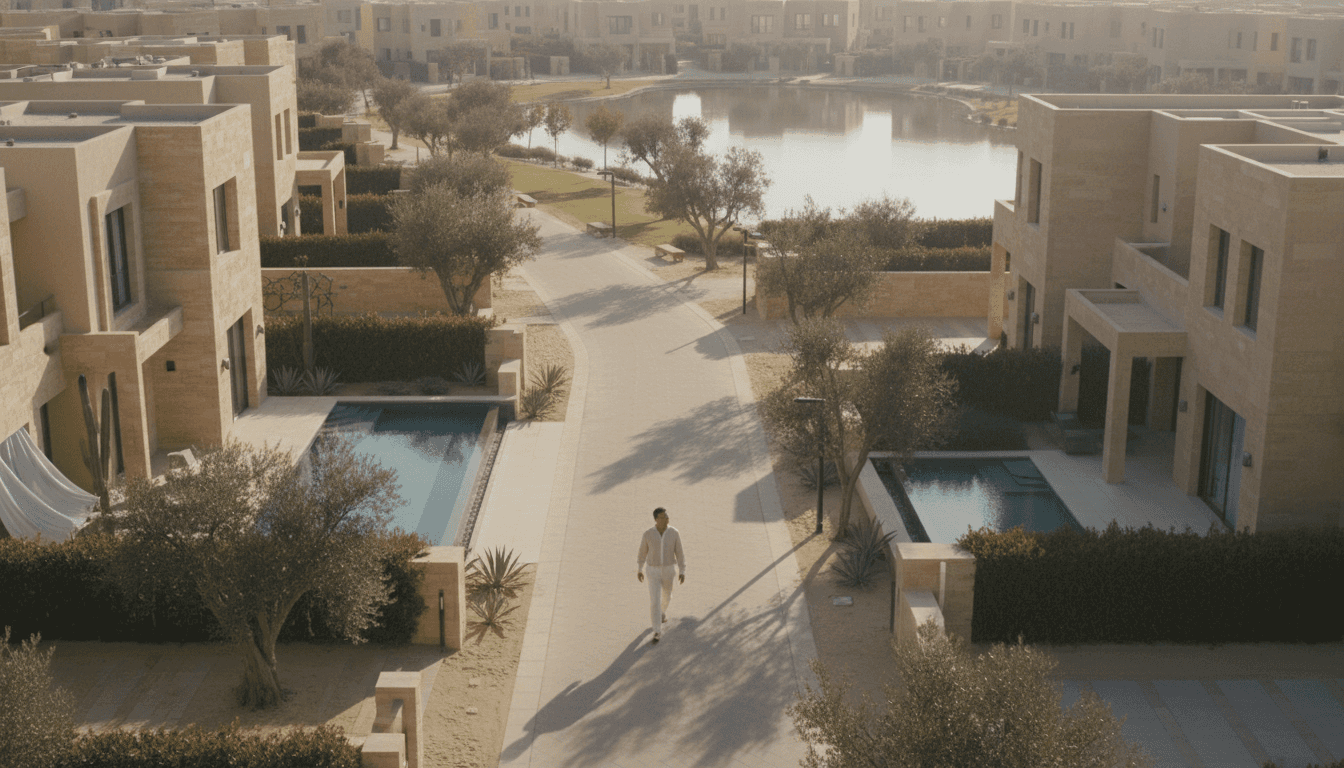
When we talk about 'mature Dubai communities', we’re not just talking about age. We’re talking about an ecosystem that has had 15 to 20 years to grow, settle, and flourish. This is a concept that often gets lost in the excitement of a new project handover. In my experience walking through countless communities across the city, the difference between a one-year-old development and a fifteen-year-old one is profound. It’s a sensory experience. In a new community, the sun beats down on wide, open roads. The saplings, planted with optimistic precision, offer little respite. In a place like Arabian Ranches or The Springs, the story is different. You drive under canopies of Ghaf and Damas trees, their branches intertwined overhead, creating tunnels of cool, dappled light. This is what we mean by shaded streets Dubai; it’s not an architectural feature you can order, but a natural asset that only time can deliver.
This maturity translates directly into quality of life, especially for families. The parks aren't just patches of grass; they are genuine green spaces with towering trees, established playgrounds that have seen years of laughter, and a sense of permanence. Children can ride their bikes on pavements that are settled and familiar, not flanked by construction hoarding and dusty detours. There's a certain peace that comes from knowing the community is complete. The promise of a future retail centre or community pool has been fulfilled years ago. The shops are open, the cafes are bustling with regulars, and the traffic flow has long been established. This predictability is, in my opinion, one of the most underrated luxuries in a dynamic city like Dubai. It represents community stability.
This stability extends to the social fabric of the neighbourhood. In these established villa neighbourhoods, you find a resident base that is often more settled. People put down roots. Neighbours know each other, children grow up together, and a genuine community spirit forms. This is a stark contrast to newer areas that can sometimes feel transient, with a higher turnover of residents still figuring out if the location is right for them long-term. In a mature community, the 'pioneers' have already done the hard work. They’ve established the parent groups, the neighbourhood watch, the book clubs, and the annual street parties. When you buy a home here, you are not just buying property; you are buying into a living, breathing community with a history and a rhythm of its own.
Case Studies: Arabian Ranches, The Meadows, and The Springs
 Featured project
To truly understand the appeal, you have to walk the ground. Let's look at the titans of this category, the communities that set the benchmark for suburban family living in Dubai. First, there's Arabian Ranches, the original desert-themed master community by Emaar Properties. Launched in the early 2000s, it’s the definitive example of a mature, self-contained neighbourhood. What I love about the Ranches is its authenticity. The architecture, with its earthy tones and traditional Arabian design cues, has aged gracefully. It doesn't feel like a passing trend. The community is built around the Arabian Ranches Golf Club and the Dubai Polo & Equestrian Club, which act as vast green lungs, giving the entire area a spacious, open feel that is hard to replicate.
The real magic of the Ranches, however, is in its sub-communities. Each one — from the smaller townhouses in Al Reem to the sprawling luxury villas in Mirador or Saheel, has its own distinct character. The landscaping is incredibly dense and varied. You’ll find walking trails that snake through thickets of greenery, leading to community pools and parks that feel secluded and private. For families, this is paradise. The proximity to Jumeirah English Speaking School (JESS), located right within the community, is a huge draw. It means children can walk or cycle to one of Dubai's top-tier schools, a simple luxury that profoundly impacts daily family life. The Ranches Souk provides all the necessary amenities, from a supermarket to clinics and restaurants, meaning residents rarely need to leave the 'bubble'.
Then you have The Meadows and The Springs, also developed by Emaar as part of the wider Emirates Living master plan. While the Ranches has a desert theme, these communities offer a more verdant, lakeside lifestyle. The Springs consists of more compact two-to-four-bedroom townhouses, making it an accessible entry point for families. The Meadows offers larger, independent villas, many of which back directly onto the serene lakes that wind through the community. What has always struck me about The Meadows is the sheer scale of the greenery. The plots are generous, but it’s the common areas — the vast parks and the tree-lined boulevards, that define the experience. Driving through it feels almost un-Dubai-like in its lushness. It’s another prime example of green communities for families. Like the Ranches, it offers its own schools, such as Dubai British School, and community centres, providing that all-important self-sufficiency.
The Unseen Value of Proven Infrastructure
When clients are weighing a new launch against a home in an established area, I always urge them to consider the invisible assets. We call this proven infrastructure Dubai, and it’s a critical factor that is often overlooked in the excitement of a new property. This goes far beyond just roads and power lines. It's about the complete, tested, and de-risked ecosystem that supports daily life. In a mature community, the DEWA connections are stable. The drainage systems have been tested by the occasional Dubai downpour. The mobile and internet connectivity is robust, with providers having had years to optimise their networks.
Think about the daily commute. In a place like The Meadows or Arabian Ranches, the access and egress points to major highways like Sheikh Mohammed bin Zayed Road or Al Khail Road have been established for over a decade. Traffic patterns are known and predictable. While congestion can still occur at peak times, it’s a known quantity. Contrast this with a newly developing area, where the promised road networks might still be under construction. Residents can face years of temporary diversions, single-lane access roads, and the general disruption that comes with living in a construction zone. This uncertainty can add significant stress and time to a daily routine, a factor that is hard to quantify on a sales brochure but has a huge impact on family life.
On top of that, the soft infrastructure is just as important. The retail centres are not just shells; they have a curated mix of tenants that has evolved based on the community's actual needs. The medical clinics are established, with doctors who have been serving the local population for years. The security teams are experienced and familiar with the layout and the residents, creating a safer environment. Even the maintenance teams, whether employed by the developer or third parties, have a deep understanding of the common property types and their specific issues. This collective, accumulated knowledge is a powerful but invisible advantage. It creates a smooth living experience where things just work. You are not a beta tester for a new master plan; you are moving into a system that has been refined and optimised over many years.
“The most valuable amenity in a mature community is certainty. The trees are grown, the school run is mapped, and the construction is finished. You are buying a known reality, not a future promise.”
This proven infrastructure provides a crucial layer of financial security. When you buy in a mature community, there are no surprise master plan changes. The view from your garden is the view you will likely have in ten years. The park across the street is not going to be suddenly re-zoned for a high-rise tower. This stability, governed by the master developer and the Dubai Land Department (DLD), underpins the long-term value of your property. It’s a level of assurance that simply cannot be matched by a community still in its early phases of development, where the final form of the neighbourhood can remain a moving target for years.
The Financial Equation: Premiums, Service Charges, and Renovations
Of course, this stability and quality of life come at a price. Properties in mature communities typically command a premium over newer villas of a similar size in developing areas. You are paying for the location, the established greenery, the proven infrastructure, and the lack of construction risk. A standard three-bedroom villa in The Springs might be priced similarly to a larger, brand-new four-bedroom villa in a community further out. The key for buyers is to understand what they are paying for. It's a trade-off between space and newness on one hand, and location and lifestyle on the other.
Let's break down the costs associated with buying a resale villa in one of these neighbourhoods. The process is different from buying off-plan. Here's a typical cost structure for purchasing a secondary market villa valued at AED 4,000,000:
- Purchase Price: AED 4,000,000
- Dubai Land Department (DLD) Transfer Fee: 4% of purchase price = AED 160,000
- DLD Registration Trustee Fee: ~AED 4,200 (fixed fee)
- Real Estate Agency Fee: 2% of purchase price = AED 80,000
- Mortgage Arrangement Fee (if applicable): Typically 0.5% - 1% of the loan amount
- Mortgage Registration Fee (at DLD): 0.25% of the loan amount = AED 8,000 (assuming 80% loan of AED 3.2M)
- Bank Valuation Fee: ~AED 3,000
- No Objection Certificate (NOC) Fee from Developer: AED 500 - AED 5,000 (varies by developer)
Total Upfront Cost (approximate, excluding mortgage fees): AED 4,250,000+
Beyond the purchase price, prospective buyers must budget for two other significant costs: service charges and potential renovations. Service charges in these established communities are transparent and regulated by the Real Estate Regulatory Agency (RERA). They cover the maintenance of all common areas, including landscaping, pools, security, and waste management. For villa communities like Arabian Ranches or The Meadows, you can expect these to range from AED 2.50 to AED 4.50 per square foot, calculated on the plot area, not the built-up area. For a villa on a 6,000 sq. Ft. plot, this could mean an annual fee of AED 15,000 to AED 27,000. While this is a recurring cost, it's what keeps the community looking pristine and protects the value of your investment.
Renovation is the other major variable. Many villas in these areas are now approaching 15-20 years old. While often structurally sound, their interiors — kitchens, bathrooms, flooring, may be dated. This presents both a cost and an opportunity. In my view, it's a fantastic chance to modernise a home with a great 'bone structure' in an unbeatable location. However, you must budget for this realistically. A light cosmetic refresh (painting, new fixtures, updating floors) could cost AED 150,000 - AED 300,000. A full gut renovation, including a new kitchen, all bathrooms, and possibly an extension, can easily run from AED 700,000 to over AED 1 million. Many of our clients at Gaia Living see this as a worthwhile investment, as a tastefully upgraded villa in a prime community will always be in high demand, both for resale and for rent.
The School Run Factor
For any family with children, the school run is a non-negotiable part of the daily calculus. It can define your morning routine, your stress levels, and your overall quality of life. This is where mature communities have an almost unassailable advantage. They are anchored by well-established, highly reputable schools that are often located directly within the community gates or just a few minutes' drive away. This is not a coincidence; master developers like Emaar planned these communities with schools as central pillars of their infrastructure from the outset.
The impact of this cannot be overstated. When your children can walk, cycle, or take a short bus ride to a top-tier school, it transforms the family dynamic. It frees up hours every week that would otherwise be spent in traffic. Let's return to the example of Jumeirah English Speaking School (JESS) in Arabian Ranches. It is consistently rated 'Outstanding' by the KHDA and is one of the most sought-after schools in Dubai. Having it within the community is a powerful anchor that draws families and keeps property values strong. Similarly, the Emirates Living area is served by Dubai British School, Emirates International School, and Dubai International Academy, all of which have long track records and excellent reputations.
This contrasts sharply with many newer developments. While they may have plots allocated for schools, the schools themselves can take years to be built and, more importantly, years to establish a reputation. For parents, choosing a school is a decision based on trust and track record. An established school has years of inspection reports from the KHDA, a stable leadership team, a proven curriculum, and a strong alumni network. A new school, no matter how impressive its facilities, is an unknown quantity. Many families are simply not willing to take that gamble with their children's education. This is why you see a consistent pattern of families choosing to buy or rent in older, more central communities, even if it means a smaller or older home. The 'school-run premium' is a very real factor in the Dubai property market.
Navigating the Purchase of a Resale Villa
Buying a home in the secondary market is a different journey than securing an off-plan unit. It requires more due diligence but offers the significant advantage of being able to see, touch, and inspect the exact property you are buying. At Gaia Living, we guide our clients through a meticulous process to ensure there are no surprises.
Here is a simplified checklist for what to expect when purchasing a resale villa:
1. Mortgage Pre-Approval: Before you even start viewing properties, get a mortgage pre-approval from a bank. This defines your budget and shows sellers you are a serious buyer. The Central Bank of the UAE's regulations state that expatriate first-time buyers will need a minimum 20% down payment for properties under AED 5 million. 2. Property Viewing & Due Diligence: This is the most critical stage. Inspect the property thoroughly. Look for signs of water damage, check the age and condition of the AC units, and assess the state of the plumbing and electrical systems. We always recommend a professional snagging report for an older property. 3. Making an Offer & MOU: Once you've found the right home, you'll make an offer. If accepted, both buyer and seller sign a Memorandum of Understanding (MOU or Form F), a formal sales agreement registered with the DLD. At this point, the buyer typically pays a 10% security deposit, usually held by the agent. 4. The NOC Process: The seller must obtain a No Objection Certificate (NOC) from the master developer (e.g., Emaar, Nakheel). This confirms that all service charges are paid up and there are no outstanding issues with the property. This process can take one to two weeks. 5. Final Transfer at the Trustee Office: Once the NOC is issued and the buyer's bank is ready with the funds, all parties meet at a DLD-approved Registration Trustee office. The final payments are made, the old title deed is cancelled, and a new title deed is issued in the buyer's name. This is when you pay the 4% DLD fee and the transfer is officially complete.
It’s a more involved process than a simple off-plan payment schedule, but it provides complete transparency. One of the best parts of my job is handing over the keys to a family for a home in a community I know they will love. With a resale property, that handover is immediate. There are no construction delays or worries about the final quality. You can move in the next day and start your new life on those beautiful, shaded streets.
My Verdict: The Gold Standard for Family Life
So, in a city that is constantly reinventing itself, do these older communities still hold their own? In my professional opinion, absolutely. In fact, their appeal is arguably stronger than ever. As Dubai continues to expand outwards with a wave of new off-plan launches, the central, green, and established nature of these mature villa neighbourhoods becomes an increasingly rare and valuable commodity. They represent a finite resource. You can't simply create a 20-year-old forest of Ghaf trees overnight.
For families prioritising lifestyle, stability, and a sense of community over the thrill of the brand-new, the choice is clear. The premium you pay is not just for bricks and mortar; it's for the certainty of a completed community, the luxury of shaded parks and walkways, the convenience of established schools and retail, and the peace of mind that comes from proven infrastructure Dubai. These are not just housing developments; they are true neighbourhoods that have grown and evolved with the city itself.
The opportunity to buy an older villa and renovate it to your exact taste is, for many, the perfect blend of old and new. You get the irreplaceable location and community feel, combined with a modern, personalised interior. It requires more effort than buying off-the-shelf, but the result is a home that is truly your own, set in one of the most desirable family settings in the Middle East. While the glittering new launches will always capture the headlines, the quiet, enduring appeal of Dubai's greenest, most established communities represents the real heart of family life in this city.
The premium paid for a home in a mature Dubai community is an investment in certainty. You are buying a proven lifestyle, established infrastructure, and a stable environment that cannot be replicated by new developments, making them the enduring gold standard for family living.
Sources
- Dubai Land Department (DLD): dubailand.gov.ae
- Real Estate Regulatory Agency (RERA): For service charge information and regulations.
- Central Bank of the UAE: centralbank.ae for mortgage regulations.
Questions, answered
- What is considered a 'mature' villa community in Dubai?
- A mature villa community in Dubai is typically one developed 15-20 years ago, like Arabian Ranches or The Meadows. These areas are fully built-out, with established landscaping, operational schools and retail, and a stable resident population.
- Are older villas in Dubai a good investment?
- Yes, they can be. While they may require upgrades, older villas in established communities often hold their value well due to their prime locations, larger plot sizes, and proven community infrastructure. They are particularly sought after by end-user families.
- What are the typical service charges in communities like Arabian Ranches?
- Service charges in mature villa communities like Arabian Ranches or The Springs typically range from AED 2.50 to AED 4.50 per square foot of the plot area annually. These fees cover security, landscaping, pool maintenance, and general upkeep of common areas.
- Which schools are located in or near these mature communities?
- Key schools include Jumeirah English Speaking School (JESS) in Arabian Ranches, Dubai British School in Emirates Hills (serving The Springs and Meadows), and Kings' School Al Barsha, which is a short drive from many of these neighbourhoods. The proximity to established, highly-rated schools is a major draw for families.
- How much does it cost to renovate an older villa in Dubai?
- Renovation costs vary widely. A basic cosmetic update (paint, flooring, fixtures) might cost AED 150,000-300,000, while a full structural renovation with extensions can easily exceed AED 1 million. It's crucial to get multiple quotes and factor this into your total purchase budget.
- What is the biggest advantage of buying in a mature community over a new launch?
- The biggest advantage is certainty. What you see is what you get: the landscaping is grown, the amenities are operational, the traffic patterns are known, and the schools have established reputations. This eliminates the construction risk and timeline uncertainty associated with off-plan properties.

Sophia profiles Dubai's villa communities — schools, commute times, green space, and the intangible feel of a neighbourhood. She writes for families putting down roots.
Related stories
A Guide to Apartment Orientation in Dubai
Your apartment's direction matters more than you think. I'll break down how sun, views, and privacy are shaped by orientation, and how this impacts your quality of life and the property's real estate value in Dubai.
Firing Your Dubai Agent: A Seller's Strategic Guide
Feeling stuck with an underperforming agent in Dubai? This guide outlines the clear signs it's time for a change and the precise steps to terminate your listing contract professionally and effectively.

The Ultimate Off-Plan Due Diligence Guide for Dubai
My definitive guide to navigating the complexities of buying off-plan property in Dubai. Learn the essential checks that protect your capital and ensure you're investing in a project with real potential.
Echoes, in your inbox
One thoughtful email a month. Market insight, new launches, no spam.