

The Upgrade Dilemma: Real Value in Off-Plan Finishes?
When buying off-plan, developers offer tempting finish upgrades. I'll break down the true cost versus benefit, helping you decide if these packages are a smart investment or an expensive convenience.

The moment arrives in nearly every off-plan sales negotiation. After you’ve settled on the unit, the view, and the payment plan, the conversation turns to the finishes. With a knowing smile, the sales agent presents the 'Premium' or 'Luxury' package — an alluring vision of marble floors, high-end German appliances, and integrated smart home technology. It’s presented as the key to unlocking a superior lifestyle and, implicitly, superior value. But as an investment advisor, it's my job to look past the glossy brochure and ask the hard questions. Are these developer upgrade packages a savvy financial move, or are you simply paying a steep premium for convenience?
Here's what we'll explore:
- The developer's pitch versus the investor's reality.
- A line-by-line cost comparison: Developer upgrade vs. Post-handover renovation.
- How upgrades impact rental yields and capital appreciation.
- Developer tiers: How quality and cost vary between builders.
- The end-user calculation: Convenience vs. Customisation.
- Critical questions to ask before you sign for an upgrade.
- My final verdict on making the right financial decision.
The Allure of the Upgrade: Why Developers Push Enhanced Finishes
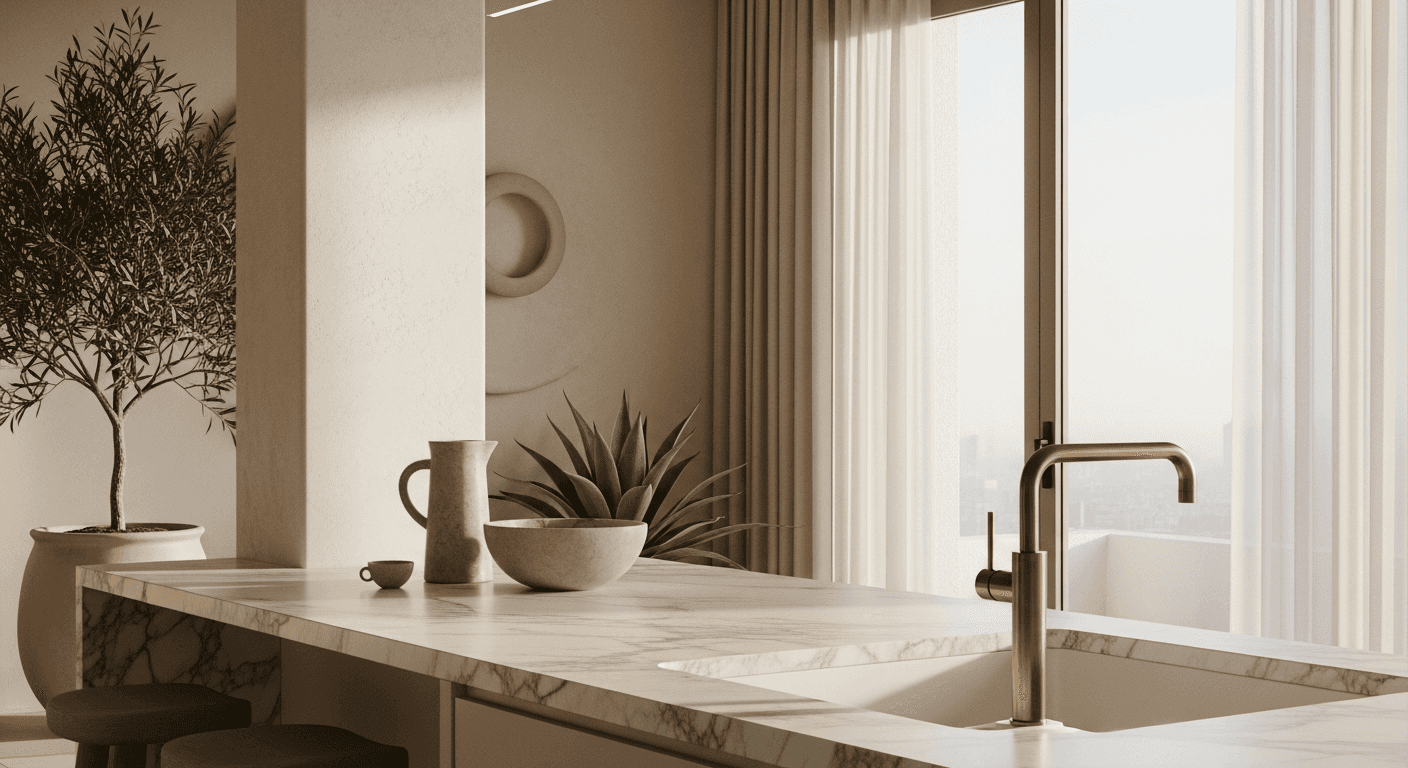
To make a sound decision, you first need to understand the psychology and business mechanics behind the upgrade offer. Developers are master marketers, selling not just square footage but a vision of a life well-lived. The enhanced finishes package is a powerful tool in this narrative. It transforms the conversation from the abstract notion of an off-plan property into a tangible, aspirational home. The images are always seductive: sun-drenched living rooms with gleaming natural stone, chef-grade kitchens ready for entertaining, and spa-like bathrooms that promise daily tranquility. This isn't just about materials; it's about emotion. The upgrade is positioned as the difference between a standard apartment and a truly premium home.
The business case for the developer is even more straightforward. Upgrade packages are a significant, high-margin revenue stream. Developers have immense purchasing power, securing materials like tile, wood flooring, and kitchen fixtures at wholesale prices far below what any individual could access. While they pass some of this benefit on, the markup on these packages is substantial. It's a classic up-sell. The core product — the apartment itself, is sold at a competitive market rate, while the high-margin extras help bolster the project's overall profitability. There’s nothing inherently wrong with this; it’s just business. But as a buyer, you must be aware that you are the final customer in this value chain, and the price you pay reflects more than just the cost of the materials.
The primary value proposition offered to the buyer is convenience. The promise is a smooth, turn-key experience. You sign the papers, follow your payment plan, and on handover day, you walk into a perfectly finished home, exactly as depicted in the brochure. There's no need to source contractors, battle with material suppliers, or live through the dust and disruption of a renovation. For busy professionals or overseas investors, this hassle-free proposition is incredibly compelling and has a real, tangible value. Developers lean heavily on this, contrasting the ease of their package with the perceived nightmare of a post-handover project. This is especially true in villa communities like Arabian Ranches or Dubai Hills, where families are eager to settle in quickly without the chaos of a building site.
Finally, the rise of branded residences has normalised the idea of pre-packaged luxury. When developers like AHS Properties or WOW Resorts collaborate with high-end fashion or hotel brands, a certain level of finish is not an upgrade but the default standard. This creates a halo effect across the market. It trains buyers to associate premium living with specific material palettes and brand names (Miele appliances, Italian marble, Villeroy & Boch sanitary ware). Other developers use this trend, offering similar — if not identically branded, packages to capture a slice of that aspirational market. They create a 'good, better, best' tiered system within their projects, and the upgrade package is the simple path to 'best'. Your task is to determine if their 'best' is truly worth the price.
Breaking Down the Numbers: Developer Upgrade vs. Post-Handover Renovation
Analysis must be grounded in numbers. Let's move away from abstract concepts and run a realistic scenario. Imagine you're purchasing a two-bedroom apartment of approximately 1,200 square feet in a quality development, perhaps in a community like Creek Harbour by a top-tier developer like Emaar Properties. The standard finish is already good — porcelain tiles, decent cabinetry, and appliances from a reliable brand like Bosch. The developer offers a 'Luxury Upgrade Package' for an additional AED 220,000. This lump sum is added to your Sale and Purchase Agreement (SPA) and integrated into your payment plan. Let's assess the value proposition by comparing it to what you could achieve with a post-handover renovation.
First, let's detail the developer's offer. What does AED 220,000 typically get you? It's a package deal, so the costs are bundled, but it generally includes:
- Flooring: Replacing standard porcelain tiles with mid-range marble or high-quality parquet flooring across living areas and bedrooms.
- Kitchen: Upgrading appliances to a premium brand like Miele or Gaggenau, installing stone countertops instead of composite, and possibly higher-quality cabinet fronts.
- Bathrooms: Higher-spec sanitary ware and fittings (e.g., from Grohe to Hansgrohe AXOR), plus feature tiling.
- Technology: A basic integrated smart home system for lighting, climate, and security.
- Joinery: Upgraded internal doors, wardrobes, and skirtings.
Now, let's budget a similar-quality renovation managed by you post-handover. This requires more effort but gives you control and cost transparency. Here’s a plausible line-by-line breakdown for that same 1,200 sq. Ft. apartment:
- Flooring (approx. 1,000 sq. Ft. net area): Sourcing good quality Omani or Turkish marble, including installation, waterproofing, and polishing, would cost around AED 450 per square metre (approx. AED 42 per sq. Ft.).
- *Cost: 1,000 sq. Ft. x AED 42/sq. Ft. = AED 42,000*
- Kitchen Overhaul:
- Premium Appliance Package (Miele oven, hob, hood, fridge, dishwasher): ~AED 65,000
- New Quartz/Sintered Stone Countertops: ~AED 18,000
- Cabinetry Refacing/Replacement: ~AED 25,000
- *Kitchen Total: AED 108,000*
- Bathroom Upgrades (x2): Replacing fixtures, sanitary ware, and adding feature tiling. Sourcing quality brands yourself.
- *Cost: ~AED 15,000 per bathroom = AED 30,000*
- Smart Home System: A basic, professionally installed system (e.g., Control4 or Lutron) for main areas.
- *Cost: ~AED 30,000*
- Painting & Finishing: Full repaint with a premium paint (e.g., Jotun Fenomastic).
- *Cost: ~AED 8,000*
Subtotal of Direct Costs: AED 218,000
This looks almost identical to the developer's price. But we haven't included the indirect and project management costs, which are critical. You need to hire a contractor to manage this. A reputable interior fit-out company will typically charge a project management fee of 15-20% of the total cost. Let's be conservative and say 15%. This fee covers supervision, logistics, and coordinating the various trades. Also, there are costs for design, permits, and unforeseen issues. Let's add a buffer.
- Project Management (15% of AED 218,000): AED 32,700
- Design, Permits (NOC), Contingency (5%): AED 10,900
Total Post-Handover Renovation Cost: ~AED 261,600
Suddenly, the developer's AED 220,000 package seems more competitive. However, this comparison isn't quite apples-to-apples. With the self-managed renovation, you have complete control over every single choice of material, brand, and layout. You could choose a more expensive marble, a different kitchen layout, or a more sophisticated smart home system. The developer's package is a fixed menu. Beyond that, a savvy owner who is willing to manage tradespeople directly and source materials cleverly could potentially bring the project management costs down. My analysis shows that for a like-for-like quality, the developer's price often includes a convenience premium of about 15-25%. You are paying extra to avoid the headache, which we will explore later.
The Investor's Calculus: Impact on Rental Yield and Capital Appreciation
For a pure property investor, the decision to upgrade hinges on a cold, hard calculation: will the additional expense generate a proportional increase in financial returns? The answer depends heavily on the type of return you're targeting — rental yield or capital appreciation, and the specific market segment of your property.
Let's first examine the impact on rental yield. The central question is whether a tenant will pay a significantly higher rent for upgraded finishes. In my experience, the answer for the vast majority of Dubai's rental market is no, not enough to justify the cost. Consider a standard two-bedroom apartment in a popular mid-market area like Jumeirah Village Circle (JVC). Let's say the standard unit rents for AED 120,000 per year. An identical unit with a 'premium' developer upgrade might command a rent of AED 128,000 to AED 130,000 per year. Tenants might appreciate the nicer finishes, but their primary decision drivers are location, size, community amenities, and the headline rental price. The AED 8,000-10,000 annual rental uplift is marginal.
Now, let's look at the return on that specific investment. If the upgrade cost you AED 220,000, an extra AED 10,000 in rent represents a mere 4.5% annual return on that portion of your capital. You could almost certainly achieve a better return by deploying that AED 220,000 elsewhere — whether as a larger down payment on a second property or in other investment vehicles. The story is different at the very top of the market. For a luxury villa in Emirates Hills or a penthouse in Jumeirah Bay renting for over AED 1 million per year, high-end finishes and branded appliances are not a luxury; they are an expectation. In this segment, failing to have them can make your property difficult to rent at the market-correct price. But for the 95% of the investment market, standard finishes from a good developer are perfectly adequate for attracting quality tenants.
Capital appreciation is a more complex story. The common assumption is that a more expensive, upgraded property will appreciate more. This is only partially true. When it comes time to sell, an upgraded apartment will certainly be more attractive than a tired, basic one. It will likely sell faster and for a higher price. However, the key question is whether the increase in sale price will equal or exceed the original cost of the upgrade. In most cases, it does not. A AED 220,000 upgrade package might only add AED 120,000 to AED 150,000 to the property's market valuation five years down the line. Why the discrepancy? Firstly, depreciation. Finishes and appliances age. What looks cutting-edge today might seem dated in five to seven years. Secondly, taste is subjective. You paid a premium for the developer's specific choice of beige marble, but the next buyer might have preferred grey porcelain and plans to renovate anyway. They won't pay the full premium for a finish they don't love.
The crucial mistake investors make is assuming the money spent on an upgrade translates dollar-for-dollar into the property's resale value. The market rarely agrees; it values the upgrade at a discount, especially as time passes. The investor carries the full cost, but the market only prices in a portion of the benefit. This is the core risk of over-capitalising on finishes. From a purely financial standpoint, the most prudent strategy for an investor in the mid-market is often to accept the standard finishes, ensure the property is well-maintained, and let the market-wide appreciation of the location and building do the heavy lifting for your ROI.
The Developer Spectrum: From Budget to Branded
Making an informed decision about upgrades requires understanding that the term 'developer' covers a vast spectrum in Dubai. The quality of a 'standard' finish and the value proposition of an 'upgrade' vary dramatically from one company to the next. At Gaia Living, we categorise developers into broad tiers to help our clients manage their expectations. This framework is essential when evaluating developer finish packages.
At the top are the Tier 1 developers, such as Emaar, Meraas, and Select Group. For these blue-chip companies, the 'standard' finish in their prime projects (think Downtown Dubai or Bluewaters Island) is already what many would consider premium. They use high-quality porcelain, solid engineering, reputable European appliance brands, and excellent workmanship. When they offer an upgrade, it's often about pushing into the realm of true luxury. This could mean switching from high-grade porcelain to book-matched Italian marble, from Bosch to Gaggenau appliances, or including sophisticated home automation. In these cases, the upgrade can be worth considering for end-users seeking a specific level of opulence that would be difficult and expensive to replicate post-handover. The developer's ability to source these ultra-premium materials at scale can present genuine, albeit expensive, value.
Next is the broad and competitive Tier 2, which includes major players like Nakheel, Damac Properties, and Abu Dhabi's Aldar. Their standard finishes are generally good and built to last, but there is a more noticeable gap between 'standard' and 'premium'. An upgrade here might involve moving from laminate to real wood veneer, or from a local or Turkish brand of fittings to a German one. Damac, famous for its marketing and branded partnerships, is a key example in this space. They excel at selling a lifestyle, and their upgrade packages are central to that. My advice here is to be diligent. Visit the mock-up apartment and physically inspect the materials. 'Luxury' is a subjective term; you need to verify what it means in practice. The upgrade might offer a good aesthetic jump, but you must scrutinize the cost against the tangible improvement in quality.
Finally, we have the Tier 3 developers, which includes many private and volume-focused firms like Azizi and Binghatti. Their primary business model is to deliver properties at highly competitive price points, making them very popular among first-time investors. To achieve this, standard finishes are often basic and functional rather than luxurious. They meet the requirements but may lack aesthetic flair or long-term durability. In this segment, the off-plan upgrade costs can be tempting, as the jump in quality is significant. However, this is also the segment where a post-handover renovation can offer the most dramatic and cost-effective transformation. An investor might buy a basic unit at a low price and then invest AED 80,000-100,000 to completely modernise the kitchen and bathrooms, creating a standout property in a sea of standard units. For these developers, my counsel is often to take the standard package and retain control over future upgrades, where your money can have a much greater impact.
The End-User Equation: The Price of Convenience
While investors are driven by ROI, end-users — those who will call the property home, operate on a different set of calculations. For them, the value of an upgrade package isn't measured solely in yield or appreciation, but in lifestyle, comfort, and peace of mind. The decision becomes less about financial optimisation and more about personal utility.
The most significant, non-financial benefit of a developer's upgrade package is the sheer convenience. Building a life in a new city or moving a family is stressful enough. The prospect of managing a renovation project immediately after taking possession of a new home can be daunting. It involves finding and vetting contractors, sourcing materials, securing approvals, and enduring weeks or months of dust and disruption. For many, the ability to simply receive the keys and move into a beautifully finished home is worth a substantial premium. This 'hassle factor' is the single biggest selling point for developer upgrades, and its value should not be underestimated. This is especially true for buyers in established family communities, where the goal is to settle in and start life, not to start a construction project.
Another critical factor for end-users is financing. The cost of a developer's upgrade, even if it's several hundred thousand dirhams, is folded into the total property price on the SPA. This means it becomes part of your developer payment plan and, subsequently, your mortgage. You pay for it over a long period. A post-handover renovation, in contrast, requires cash. You will need to have the full amount — potentially AED 100,000 to AED 300,000 or more, liquid and ready to deploy as soon as you get the keys. For buyers who have already stretched their finances for the down payment and fees, coming up with this additional cash can be impossible. The alternative is a personal loan, which comes at a much higher interest rate than a mortgage and has a shorter repayment term, putting a strain on monthly cash flow. The ability to finance the renovation as part of the home loan is a huge structural advantage for the developer's package.
Lastly, there's the element of warranty and accountability. When you opt for the developer's package, all the finishes and installed appliances are typically covered under the standard one-year Defect Liability Period (DLP). If the marble flooring cracks or the integrated oven fails, you have a single, clear point of contact for rectification: the developer. When you manage your own renovation, you are reliant on the warranties provided by your contractor and individual suppliers. Chasing a small contracting firm for repairs a year later can be far more difficult than holding a major developer accountable. This integrated warranty provides a layer of security that many homeowners find reassuring.
The Hidden Costs and Risks of Post-Handover Renovation
While a post-handover renovation offers greater control and potential cost savings, it's crucial to approach it with a clear understanding of the challenges. My earlier cost breakdown presented a best-case scenario. In reality, the path is fraught with potential pitfalls that can erode your budget and timeline. It's my responsibility to be candid about these risks so you can make a truly informed choice.
The single greatest challenge is finding a high-quality, reliable contractor. The market is flooded with fit-out companies, but their standards vary wildly. A bad contractor can turn your project into a nightmare of missed deadlines, shoddy workmanship, and escalating costs. Proper due diligence — checking trade licenses, references, and past projects, is non-negotiable. Even then, disputes can arise. At Gaia Living, we always advise clients to have a clear, detailed contract in place, ideally reviewed by a legal professional, that specifies the full scope of work, materials, timeline, and payment schedule. Without this, you have little recourse if things go wrong.
Another significant hurdle is the approvals process. You cannot simply start tearing down walls or making major changes. Any modification to your property requires a No Objection Certificate (NOC) from the master developer. This process involves submitting detailed plans and specifications for review. Developers have a vested interest in maintaining the structural integrity and aesthetic consistency of their communities, so their rules can be strict. Some may prohibit certain changes to the external facade or major plumbing alterations. The NOC process takes time — from a few weeks to over a month, and can involve fees. For more extensive work, you may also need permits from authorities like Dubai Municipality or Trakhees, adding another layer of bureaucracy.
Perhaps the most overlooked factor is the opportunity cost of time. A typical apartment renovation can take two to four months from design and approvals to final execution. During this entire period, your property is a work site. You cannot live in it, nor can you rent it out. However, your financial obligations continue. You will be paying service charges, and if you've transitioned to a mortgage, you'll be making monthly payments. This 'dead time' has a real cost. For an investor, three months of lost rent on a property that should be generating AED 15,000/month is a AED 45,000 loss. For an end-user, it's three months of paying for alternative accommodation. These holding costs must be factored into your total post-handover renovation cost to make an accurate comparison with the developer's turn-key offer.
A Practical Checklist: Questions to Ask Before Upgrading
If you are leaning towards the developer's upgrade, arming yourself with the right questions is the best way to protect your interests and ensure you're getting genuine value. Don't be swayed by persuasive marketing; demand clarity and specifics. Before you sign any addendum to your SPA, I insist my clients get satisfactory answers to the following:
- What, precisely, is included in the package? Request a detailed 'Schedule of Finishes' or 'Specification Sheet' for both the standard and the upgraded package. Vague terms like "premium European appliances" are a red flag. You need to know the exact brand and model numbers. Is it Bosch, Siemens, or Miele? What is the specific type of marble or wood being used? Get everything in writing.
- Can I see and touch the materials in person? CGI renders are designed to look perfect. Reality can be different. Insist on visiting the mock-up unit or sales centre showroom. Open the kitchen cabinets, feel the texture of the countertops, check the weight of the door handles, and look at the tile grouting. This is your only chance to assess the real-world quality of the materials and workmanship.
- What is the itemised or per-square-metre cost? While developers sell a 'package', you can push for more transparency. Ask for a breakdown. What is the upcharge for the kitchen appliances alone? What is the cost per square metre for the flooring upgrade? This allows you to compare their pricing against market rates and identify where the costs are most heavily loaded.
- How does this affect my total purchase price and fees? Clarify that the upgrade cost will be added to the SPA value. Remember that the 4% Dubai Land Department (DLD) transfer fee, plus associated registration trustee fees, is calculated on this final price. An AED 220,000 upgrade will add at least AED 8,800 to your closing costs. You can verify official fee structures on the Dubai Land Department's website.
- What is the warranty on the upgraded components? Confirm that all upgraded items fall under the developer's one-year DLP. For appliances, ask if the longer manufacturer warranties (often 3-5 years) will be registered and transferred to you upon handover. This is an important detail that is often overlooked.
- Will this choice impact my handover date? In some cases, units with special finishes are completed in later phases. Sourcing unique materials can also lead to supply chain delays. Ask for a written confirmation that selecting the upgrade will not negatively affect your anticipated completion date.
- What are the community rules for future renovations? Even if you take the upgrade now, you might want to make changes later. Before you buy, you should understand the community's rules regarding modifications. Ask for the Master Community Declaration or design guidelines. This will tell you what you can and cannot change post-handover, which is crucial for your long-term flexibility.
My Verdict: Striking the Right Balance in Your Off-Plan Investment
After walking through the mechanics, costs, and risks, my final guidance comes down to your primary objective: are you an investor or an end-user? The answer to that question should fundamentally shape your approach to developer upgrades.
For the majority of my clients focused on pure off-plan investment decisions, my advice is generally to exercise extreme caution. For properties in the vast mid-market — the engine of Dubai's rental economy, the premium paid for developer upgrades seldom generates a commensurate return on investment. The marginal increase in rental income is often insufficient to justify the substantial upfront cost, and the capital appreciation rarely reflects the full expense. The wiser financial move is often to accept the developer's standard finish (assuming it's from a reputable builder like those found on our developers portal), which is typically of a perfectly rentable and sellable quality. This preserves your capital, keeps your entry price competitive, and allows you to deploy funds more effectively. The exception remains the ultra-luxury segment, where high-end, bespoke finishes are not an option but a prerequisite for entry.
For end-users, the calculation is more nuanced and personal. The 'value' of the upgrade extends beyond a spreadsheet. If you are a busy professional, a family with young children, or an overseas buyer who cannot personally oversee a project, the convenience of a turn-key solution is immense. The ability to finance the cost of a beautiful interior through your mortgage, and to have it all covered by a single developer warranty, provides a level of simplicity and security that has real worth. In this scenario, the developer's upgrade package is a legitimate and logical choice. The key is to enter the agreement with open eyes, understanding that you are paying a significant — but perhaps justifiable, premium for that convenience. Your goal isn't to get the cheapest price, but to get a fair price for a hassle-free result.
Key takeaway: Ultimately, there is no single right answer. The correct choice lies in a clear-eyed assessment of your own priorities and financial situation. Investors should focus on the numbers, where standard finishes usually win. End-users should weigh the cost of the upgrade against the non-financial — but very real, cost of stress, time, and effort that a post-handover renovation demands.
## Sources - Dubai Land Department (DLD): https://dubailand.gov.ae
Questions, answered
- Is it cheaper to renovate an off-plan property myself after handover?
- Generally, yes. Sourcing materials and labour yourself is almost always more cost-effective than paying the developer's premium. However, you must account for the hassle, potential project delays, and the cost of lost rent during the renovation period.
- Do developer upgrades increase my DLD transfer fees?
- Yes. The developer upgrade cost is typically added to the total purchase price on your Sale and Purchase Agreement (SPA). The 4% Dubai Land Department (DLD) transfer fee is calculated on this total value, so the upgrade will increase your upfront closing costs.
- Will upgraded finishes guarantee higher rental income?
- Not necessarily. While upgraded finishes can attract a slight rental premium, typically 5-7%, this often isn't enough to provide a strong return on the initial upgrade cost, especially in price-sensitive mid-market areas. Tenants are more focused on location, size, and overall rent.
- How much value does a developer upgrade add to the resale price?
- An upgrade rarely adds value on a 1:1 basis. You might pay AED 200,000 for a package but only see the property valuation increase by AED 100,000-120,000. Tastes change, and future buyers may prefer to renovate to their own style anyway.
- What is the biggest risk of choosing a post-handover renovation?
- The primary risk is project management. Finding a reliable, skilled, and honest contractor in Dubai can be challenging. Budget overruns, extended timelines, and inconsistent quality are common pitfalls you must be prepared to manage.
- Should I choose the upgrade if I'm an end-user, not an investor?
- For end-users, the decision is more about lifestyle than pure ROI. If you value a hassle-free, move-in-ready experience and can finance the upgrade through your payment plan, it can be a valid choice. You are essentially paying a premium for convenience and peace of mind.

Isabelle covers off-plan and investment strategy — payment plans, handover risk, developer track records, and the maths of buying before completion.
Related stories
Dubai's Established Charm: The Case for Older Homes
In a city focused on the future, I believe the smartest move for many buyers is to look back. Dubai's seasoned communities offer space, character, and surprising value that new builds often can't match.

The True Cost of Owning a Dubai Property
Beyond the purchase price, your annual budget for a Dubai home must account for service charges, utilities, and maintenance. I'll break down every ongoing expense you need to plan for.
Calculating ROI on Dubai Rental Upgrades
As a landlord in Dubai, you can't just follow trends. I'll show you how to calculate the precise ROI of minor property upgrades to genuinely increase your rental yield.
Echoes, in your inbox
One thoughtful email a month. Market insight, new launches, no spam.