

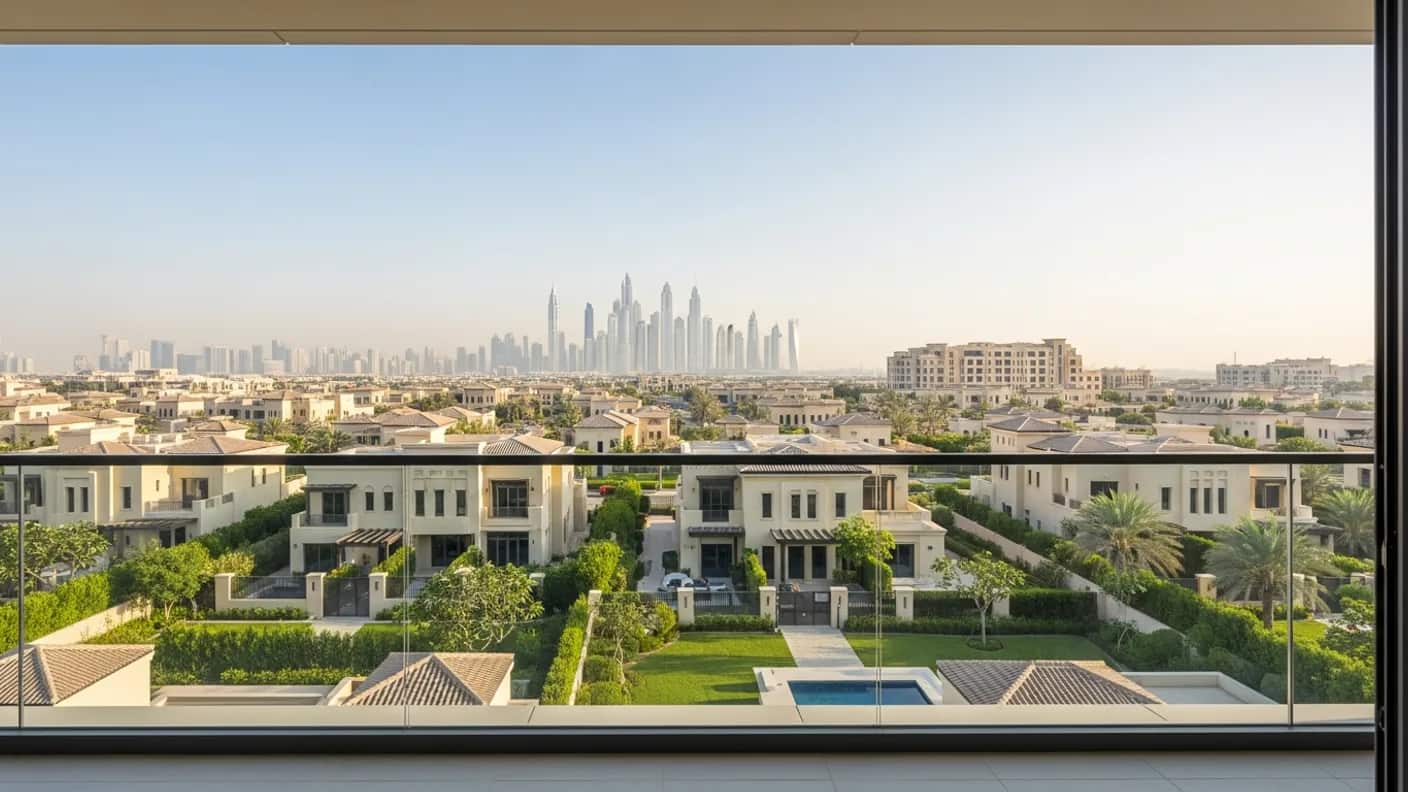
The Secondary Market's Revenge: Is Ready Property King?
For years, Dubai's off-plan market dominated headlines. Now, a quiet revolution is underway as the secondary market asserts its value, offering stability and immediate returns in an uncertain global economy.

For as long as I’ve covered this market, the conversation in Dubai real estate has orbited one central star: the off-plan launch. The renderings, the VIP events, the post-handover payment plans — it was the engine of the market narrative. But a fundamental change is taking place. The balance of power is shifting, quietly but decisively, back to the tangible, the immediate, the proven. The secondary market is making a powerful comeback, and in my view, it's not a fleeting trend but a structural maturation of Dubai's property landscape.
Here's what we'll explore in this analysis:
- The shift in market dynamics: why buyers are turning back to ready properties.
- Off-plan vs. Secondary: a head-to-head comparison of costs, risks, and rewards.
- The tangible value of a Dubai mature community investment and its infrastructure.
- Financing challenges and opportunities for ready vs. Off-plan purchases.
- A line-by-line cost breakdown for buying pre-owned property Dubai.
- Yields and capital appreciation: where the real returns are being found today.
- My verdict on the best strategy for today's investor and end-user.
The End of the Off-Plan Gold Rush?
Let's be clear: Dubai was built on ambitious, forward-looking projects. The city's skyline is a monument to the power of the off-plan vision, driven by master developers like Emaar Properties, Nakheel, and Meraas. For over a decade, the formula was intoxicatingly simple for investors. Put down a small deposit, ride a wave of market appreciation during the construction phase, and either 'flip' the contract for a profit before completion or benefit from a brand-new asset at a price locked in years earlier. The proliferation of generous developer payment plans — often stretching for years after handover, further fueled this fire, making it possible to control a valuable asset with relatively little initial capital.
However, the market of today is not the market of ten, or even five, years ago. Several powerful macro and micro-economic forces are converging to challenge the supremacy of the off-plan model. The global environment of higher interest rates has cooled speculative appetites worldwide. The idea of tying up capital for three to four years with no income, in the hope of future appreciation, is a tougher sell when safer assets offer reasonable returns. This financial reality check is pushing investors to prioritize cash flow and proven performance over speculative gains. The `off-plan vs secondary market Dubai` debate is no longer just about price; it's about the cost of time and the price of risk.
More significant, in my opinion, is the demographic shift within Dubai itself. The city's successful handling of the pandemic, its pro-business policies, and the introduction of long-term visas like the Golden Visa have attracted an unprecedented influx of professionals, entrepreneurs, and families from around the world. These are not speculators looking for a quick flip. They are end-users seeking a home. They need a place to live now, not in 2028. They want to know which school their children will attend, how long their commute to DIFC or Dubai Media City will be, and where they can walk their dog. These practical, immediate needs cannot be met by a glossy brochure and a completion date years in the future. This groundswell of end-user demand is the primary force propping up both prices and rental rates in the secondary market, creating a solid foundation that is less susceptible to investor sentiment swings.
The Core Appeal: What Makes a Resale Property So Compelling Now?
 Featured project
The primary advantage of a resale property is its profound certainty. It exists. You can walk through it, touch the finishes, check the water pressure, and stare out the exact window to see the actual view. This simple fact eliminates the single greatest risk of off-plan purchasing: the gap between the marketing promise and the delivered reality. With a ready property, there are no surprises about build quality, no last-minute changes to the layout, and no heartbreaking discovery that your promised 'panoramic sea view' is now partially obscured by a newly announced building. This principle of 'what you see is what you get' provides immense psychological and financial comfort in a significant life purchase.
Beyond the physical asset itself is the immediate utility it offers. For an investor, this means rental income from day one of ownership. The moment the title deed is in your name, you can list the property on the rental market and begin generating a return on your investment. In a market with strong rental demand, this completely changes the financial equation, turning a static asset into a cash-flowing one instantly. For an end-user, the benefit is even more direct: you have a home. You can move your family in, escape the cycle of rising rents, and start building a life. This immediacy is something off-plan can never offer, and its value has soared as Dubai's population has grown.
This leads to the most underrated aspect of `ready property value Dubai`: the maturity of the surrounding community. When you buy in an established area like Arabian Ranches or Dubai Marina, you're not just buying an apartment or a villa; you are buying into a fully functioning ecosystem. The roads are paved, the parks are green and shaded, the supermarkets are stocked, the clinics are open, and the traffic patterns are understood. Communities like Jumeirah Golf Estates or Emirates Hills didn't just appear overnight; their prestige and value have been built over years of careful management and the organic growth of a resident community. Compare this to a new development on the city's fringe, which may exist as a construction site for its first five years, with limited retail, landscaping that is yet to mature, and infrastructure that is still being built out. The premium you pay for a property in a mature community is a fee for skipping that decade-long growing pain.
The Financials: A Head-to-Head Cost Analysis
When comparing off-plan and secondary market properties, buyers often fixate on the sticker price, but the real story is in the total cash required and the timing of those payments. The allure of off-plan is the low initial outlay. A developer might ask for a 5% booking fee and a further 15% during the first year of construction. On a hypothetical AED 2 million property, that's AED 400,000 spread over 12 months, plus the 4% Dubai Land Department fee for Oqood registration. This structure makes it seem more accessible.
However, the picture for a `Dubai resale property investment` is very different and requires a clear-eyed understanding of the upfront costs. Let's create a detailed breakdown for buying a ready apartment with a purchase price of AED 2,000,000, assuming the buyer is a UAE resident eligible for an 80% mortgage. The cash you'll need to have ready is substantial.
Here is a realistic line-by-line breakdown of the upfront costs:
- Purchase Price: AED 2,000,000
- Mortgage Down Payment (20%): AED 400,000. This is the largest single cash component and must be available in your bank account, not borrowed.
- DLD Transfer Fee (4% of Price): AED 80,000. This is a mandatory government fee paid to the Dubai Land Department (DLD) to register the transfer of ownership.
- DLD Admin Fee: Approximately AED 4,200 (fixed fee).
- Property Registration Fee: Approximately AED 4,200 if the property is in a freehold area and a mortgage is involved.
- Real Estate Agency Fee (2% of Price + 5% VAT): AED 42,000. This is the standard commission for the buyer's agent who facilitates the deal.
- Trustee Office Fee: Approximately AED 4,200. This is paid to the DLD-approved office that manages the transfer process.
- No Objection Certificate (NOC) Fee: Ranges from AED 500 to AED 5,000. This is paid to the master developer to certify that the seller has no outstanding service charges. Let's use a common figure of AED 1,500.
- Mortgage Arrangement Fee (up to 1% of Loan + VAT): The loan amount is AED 1,600,000. A 1% fee would be AED 16,000 + 5% VAT, totaling AED 16,800.
- Mortgage Valuation Fee: Approximately AED 3,150 (including VAT). The bank must value the property before approving the loan.
Total Upfront Cash Required: Adding these up, the total cash needed to complete the purchase is approximately AED 556,250. This is a significant figure, representing about 27.8% of the property's price. It's far more than the initial 5-10% booking fee for an off-plan unit. This is the financial hurdle of the secondary market. However, it's also the price of entry for an asset that is real, tangible, and can start generating returns or providing a home from the moment the transaction is complete. The choice is stark: less cash down for a long wait filled with uncertainty, or more cash down for immediate ownership and peace of mind.
Financing and Mortgages: The Great Divider
The ability to secure financing is perhaps the most significant structural difference between the two market segments. The secondary market operates on a well-established and regulated mortgage framework overseen by the Central Bank of the UAE. For a first-time resident buyer purchasing a property valued under AED 5 million, banks are permitted to lend up to 80% of the property's value. For non-residents, the loan-to-value (LTV) ratio is typically capped at 75%, though some banks may offer different terms. This established system allows a wide range of buyers to access the market, provided they have the required down payment and can demonstrate sufficient income to service the loan.
This accessibility to use is a powerful tool. It allows a buyer to control a substantial asset (our AED 2 million apartment) with AED 556k in cash. The bank's willingness to lend is, in itself, a form of due diligence. A bank will only issue a mortgage against a real, completed property that has been independently valued. They are taking on the majority of the financial risk, and their approval provides a crucial layer of validation for the buyer about the asset's worth. This process gives buyers confidence that they are paying a fair market price, as the bank's own valuation must support the loan amount.
In stark contrast, off-plan properties are generally not mortgageable until the point of handover. Buyers are instead locked into the developer's payment plan. While these plans can be attractive — often advertised as 'interest-free', they represent a rigid, inflexible form of financing. You must make the scheduled payments regardless of changes in your personal financial situation. The real test comes at completion, when the final, large 'balloon' payment (often 40-60% of the price) is due. To meet this, many buyers plan to secure a mortgage. This is where the 'handover mortgage gap' can become a serious problem. If, in the intervening years, market values have softened, the bank's valuation at handover might come in lower than the original off-plan purchase price. If you bought at AED 2 million, but the bank now values it at AED 1.8 million, they will only lend 80% of AED 1.8 million (AED 1.44 million), leaving you to find a much larger cash sum than anticipated to complete the purchase. This risk, coupled with potential changes to a buyer's own income or creditworthiness over a multi-year construction period, can place buyers in an extremely difficult position, with their previous installments at risk if they cannot complete.
“In a world of digital assets and paper promises, the market is rediscovering the profound value of a physical key to a door you can actually open today.”
Unpacking "Value": Yields, Appreciation, and Service Charges
When we discuss `ready property value Dubai`, we must look beyond the purchase price to the total return profile. For an investor, the most compelling number is rental yield, and on this metric, the secondary market wins decisively in the short to medium term. A ready property in a high-demand rental area like Jumeirah Village Circle (JVC) or Business Bay can generate a gross rental yield of 6-9% from the first month of ownership. A two-bedroom apartment purchased for AED 2 million might rent for AED 140,000 per year, representing a 7% gross yield. That is real, recurring income that immediately starts paying down your mortgage and contributing to your holding costs.
An off-plan property, by definition, has a yield of 0% for the entire duration of its construction. An investor who buys off-plan is forgoing three to four years of potential rental income. When you factor this opportunity cost into the total return calculation, the initial 'discount' on an off-plan property often evaporates. The secondary market property may have a higher entry price, but it provides cash flow that compounds over time. Capital appreciation is the other side of the coin. Historically, the biggest percentage gains were made by those who bought off-plan at the very beginning of a market upcycle. However, that strategy relies on market timing, which is notoriously difficult. In a more mature and stable market, a different kind of appreciation takes hold.
Value growth in established communities like Dubai Hills is driven by fundamentals: the opening of a new school, the expansion of a metro line, or simply the continued desirability of the lifestyle it offers. This type of appreciation is often more sustainable and less volatile than the speculative frenzy that can surround new launches. A `Dubai mature community investment` is a bet on proven demand and quality of life, which tends to be a much safer long-term position. The value is underpinned by thousands of families who have already chosen to make it their home, creating a resilient and self-sustaining micro-economy.
Finally, a critical but often underestimated factor is service charges. These are the annual fees paid by homeowners to cover the maintenance and operation of a building's common areas. They are regulated by the Real Estate Regulatory Agency (RERA) and are calculated per square foot of your property's area. When `buying pre-owned property Dubai`, you can request the seller's complete service charge history. You can see exactly what was paid over the past several years, allowing you to budget accurately. In a ready building, typical charges might range from AED 15-25 per sq. Ft. for a standard apartment tower to over AED 30 per sq. Ft. for a luxury building with extensive amenities like those on Bluewaters Island. For off-plan projects, the initial service charge estimates provided by the developer are just that — estimates. It's not uncommon for the actual charges post-handover to be significantly higher once the real operational costs of the building are known, leading to an unpleasant surprise for new owners.
The End-User vs. The Investor: Two Different Mindsets
The `off-plan vs secondary market Dubai` debate plays out differently depending on who is asking the question. For an end-user — a family or individual buying a primary residence, the scales are heavily tilted in favour of the secondary market. The home-buying journey is an emotional and practical one. It's about imagining your life within a space and a community. This is only possible with a physical property. You can assess the morning light in the master bedroom, check the commute time to your office during rush hour, and talk to potential neighbours in the elevator. You can see the quality of the local park's playground or measure the distance to the nearest Spinneys.
For a family with children, these factors are non-negotiable. The decision to buy in Town Square might be driven by its family-friendly parks and pools, while a move to Al Furjan might be based on its proximity to the metro and Ibn Battuta Mall. These are lifestyle decisions that can only be made with confidence by experiencing the community firsthand. The risk of buying off-plan, only to discover upon handover that the local school is oversubscribed or the traffic is unbearable, is a risk most families are unwilling to take. The secondary market offers the certainty required for what is often the biggest financial and emotional decision of a family's life.
For the pure investor, the calculation is colder and more financial. The choice becomes a strategic one about risk tolerance and investment horizon. The off-plan investor is essentially a venture capitalist. They are providing capital for a project that does not yet exist, in exchange for a potentially higher return if the venture is successful and the market timing is right. This requires a high-risk appetite, a long-term view, and the ability to absorb a total loss if the project fails or the market turns. It is a strategy best suited for sophisticated investors who can afford to diversify across multiple such projects and are not reliant on any single one for income.
The secondary market investor is more of a traditionalist, akin to someone buying blue-chip stocks. They are buying a proven asset with a history of performance (rental history) in an established market. The primary goal is often a reliable income stream (dividends, in the stock market analogy) combined with steady, long-term capital growth. This `Dubai resale property investment` strategy is far lower risk. It requires more upfront capital, but the returns are immediate and more predictable. This approach is ideal for investors looking to build a stable, income-generating portfolio to fund their retirement or other long-term financial goals. It aligns perfectly with the needs of the new wave of Dubai residents who are looking for stability and long-term security.
Navigating the Purchase: Key Steps for a Resale Property
The process of buying a pre-owned property in Dubai is well-defined and secure, but it has several steps that must be followed correctly. For anyone new to the market, it can seem complex, which is why working with a professional agent is not just advisable, it's essential. Here is a simplified step-by-step guide to the process:
1. Budgeting and Mortgage Pre-Approval: Before you even start browsing our properties for sale, you need to know your true budget. This means calculating the total upfront cash you have available for the down payment and all associated fees (as detailed earlier). The next crucial step is to approach a bank and secure a mortgage pre-approval letter. This document confirms the amount the bank is willing to lend you and makes you a serious, credible buyer in the eyes of sellers. 2. Property Search and Agent Engagement: This is the exciting part. With your budget set, you can begin your search. An experienced agent from our team at Gaia Living can provide access to on- and off-market properties that fit your criteria, offer insights into different Dubai communities, and advise on fair market value. 3. Making an Offer (MOU/Form F): Once you've found the right property, your agent will help you submit a formal offer. This is done through a standardized RERA contract called the Memorandum of Understanding (MOU), or Form F. You will also need to provide a security deposit cheque (typically 10% of the purchase price), which is held by the agency and is only cashed if you back out of the deal without a valid reason. 4. The NOC Application: With a signed MOU, the next step is to apply for a No Objection Certificate (NOC) from the property's master developer (e.g., Emaar, Damac). This process, managed by the seller, confirms that all service charges and any other dues on the property are fully paid. The bank will require this certificate before it proceeds with the final loan disbursement. 5. Final Valuation and Loan Agreement: While the NOC is being processed, the bank will conduct its own official valuation of the property. Assuming the valuation aligns with the purchase price, they will issue a final loan agreement for you to sign. 6. The Transfer at the Trustee Office: The final step is the transfer appointment at a DLD-approved trustee office. Here, the buyer, seller, and agents convene. You will hand over the manager's cheques for the down payment and fees, and the bank will transfer the mortgage amount directly to the seller. The seller hands over the keys, and the trustee office issues the new Title Deed in your name. The entire process is managed through secure systems like the DLD's `Dubai REST` (dubairest.gov.ae) app, ensuring a transparent and legally binding transfer of ownership.
My Verdict: Why the Smart Money is on 'Ready'
After years of analyzing this market, my conclusion is clear. While the glamour of a new off-plan launch will always capture attention, the fundamental gravity of the Dubai property market has shifted. The era of purely speculative, high-use off-plan flipping as the dominant strategy is over. The market has matured, and with that maturity comes a preference for substance over promise, for reality over renderings.
For the vast majority of buyers in the market today — whether end-users seeking a family home or investors building a sustainable income portfolio, the secondary market offers a superior proposition. The risks are lower, the process is more transparent, and the rewards are immediate. The ability to physically inspect a property, assess its community, secure a mortgage, and begin earning rental income or living in your own home from day one are powerful advantages that off-plan simply cannot match.
This is not to say off-plan has no role. For niche luxury products, innovative concepts from boutique developers like AHS Properties, or the opening of entirely new geographies like Al Marjan Island, off-plan remains the only way to get in on the ground floor. It will always appeal to a certain type of high-risk, high-reward investor. But for the core of the market, the solid, dependable, and ultimately more valuable choice is a home that already exists. The real comeback isn't just about the secondary market's transaction volumes; it's the comeback of certainty in an uncertain world.
In today's mature Dubai property market, the tangible benefits of ready properties — immediate utility, proven community infrastructure, and financing accessibility, offer a superior risk-adjusted return compared to the speculative nature of most off-plan investments. For both end-users and long-term investors, the smart strategy is to focus on the value you can see and touch.
Sources
- Dubai Land Department (DLD): https://dubailand.gov.ae/en/
- Real Estate Regulatory Agency (RERA): https://dubailand.gov.ae/en/tera/
- Central Bank of the UAE: https://www.centralbank.ae/
- Dubai REST: https://dubailand.gov.ae/en/eservices/dubai-rest-app/
Questions, answered
- Is it better to buy off-plan or ready property in Dubai now?
- While off-plan offers attractive payment plans, the current market favors ready properties. They provide immediate rental income or housing, have no construction risk, and are located in established communities, making them a more stable investment for most buyers.
- What are the main upfront costs when buying a resale property in Dubai?
- Expect to pay around 6-8% of the property's value in fees on top of your mortgage down payment. This includes the 4% DLD transfer fee, 2% agency fee, trustee fees, and various registration and mortgage setup costs.
- Can I get a mortgage for a resale property in Dubai?
- Yes, secondary market properties are readily mortgageable. UAE residents can typically borrow up to 80% of the property's value for their first home (under AED 5 million), while non-residents can usually borrow up to 75%.
- Which Dubai communities are good for investing in ready properties?
- Mature communities with strong infrastructure like Dubai Marina, Downtown Dubai, and Arabian Ranches are excellent choices. For higher yields, areas like Jumeirah Village Circle (JVC) and Arjan offer strong rental demand.
- Are rental yields higher for ready properties?
- Yes, because you can start earning rent immediately. While off-plan properties might be bought at a lower price per square foot, you earn zero income during the 2-4 year construction period, which significantly impacts your overall return on investment.

Omar tracks the announcements that move the market — new launches, regulation, mega-projects, and developer moves — and tells you what they actually mean for buyers.
Related stories
Dubai 2040: A Land Use and Investment Blueprint
A deep dive into the Dubai 2040 Urban Master Plan, analysing specific zoning changes and land use designations to reveal the next generation of property investment hotspots.
Beyond the Blueprint: The Retail Value Multiplier
It's a simple truth of Dubai real estate: proximity to quality retail and leisure isn't just a perk, it's a powerful driver of property value. I'll explain how operational hubs are creating measurable premiums for investors and residents.
Your Dubai Home Setup Guide
A step-by-step guide for new Dubai homeowners on connecting utilities, setting up essential services, and integrating into your new community.
Echoes, in your inbox
One thoughtful email a month. Market insight, new launches, no spam.