

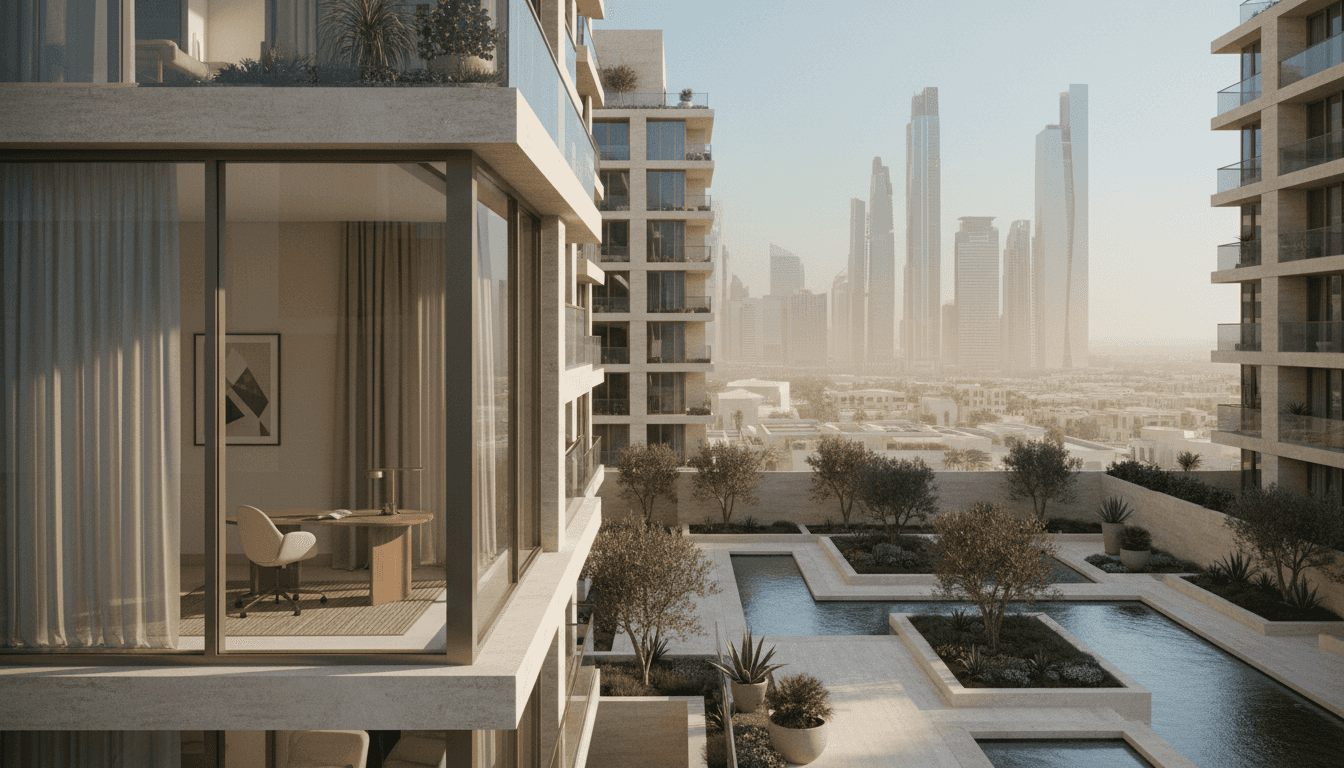
The New Tenant: How Visas Remake Dubai's Rental Market
Dubai's new remote work and talent visas are reshaping the rental landscape. I'll analyse how these policies are driving demand in specific mid-market communities and what this means for tenants and landlords.

As a market analyst, I'm trained to look for inflection points — policy shifts or economic changes that fundamentally alter supply and demand. In my view, the single most significant, yet often underestimated, driver of Dubai’s rental market in recent years has not been a specific new development or a mega-project. It has been the strategic overhaul of the UAE's visa system, specifically the introduction and expansion of remote work, digital nomad, and specialised talent visas. These programmes have created an entirely new channel of rental demand, distinct from the traditional corporate relocation packages of the past. This new cohort of tenants is reshaping rental patterns, particularly in the mid-market segment, and their preferences are now a key factor for any serious property investor to consider.
Here is what I will analyse in this report:
- The Visa Framework: A closer look at the key schemes attracting new residents.
- The New Tenant Profile: Who these visa holders are and their specific housing needs.
- Mid-Market Hotspots: Identifying the communities seeing the most pronounced impact.
- The Furnished Premium: Why turnkey apartments are commanding higher rents.
- Upfront Costs vs. Total Cost of Occupancy: A detailed breakdown for new tenants.
- Supply and Demand Dynamics: How this new demand is being absorbed.
- Landlord and Investor Strategy: How to adapt to this new market reality.
- The Long-Term Outlook: My verdict on the durability of this trend.
The New Visa Framework: More Than Just a Stamp
For decades, Dubai's residency system was almost exclusively tied to employment. A company sponsored your visa, and if your job ended, your right to reside in the country became precarious. This model served the economy well during its foundational growth phases, but it created a sense of transience. The recent visa reforms, championed by the UAE government, represent a paradigm shift from a job-centric model to a talent- and lifestyle-centric one. These are not minor tweaks; they are fundamental changes designed to attract and retain individuals based on their skills, wealth, and ability to contribute to the economy independently of a local employer. This is the critical expat visa property effect we are now witnessing.
The most prominent of these is the Dubai Remote Work Visa. First launched when global work habits were changing, this one-year, renewable visa allows professionals to live in the UAE while continuing to work for an employer based overseas. The key requirement is a minimum monthly salary of USD $3,500. This relatively accessible threshold opened Dubai’s doors to a global pool of location-independent professionals — software developers, marketers, consultants, and creatives, who were no longer tethered to an office. Suddenly, the lifestyle, safety, and world-class infrastructure of Dubai became an attainable reality for a demographic that previously had no straightforward path to residency.
Complementing this is the Green Visa, a five-year, self-sponsored visa aimed at skilled employees, freelancers, and investors. Unlike the traditional employment visa, it doesn't require a sponsor, giving its holder greater flexibility and security. For skilled professionals, a bachelor's degree and a salary of at least AED 15,000 per month are required. Freelancers must have a permit from the Ministry of Human Resources and Emiratisation and prove an annual income of at least AED 360,000. This visa targets the established professional, someone with a proven track record who wants to build a more permanent life in the UAE. The five-year duration is a powerful incentive, reducing the administrative burden and psychological stress of constant renewals.
Finally, the expanded Golden Visa program represents the top tier of this new framework. This is a 10-year, self-sponsored visa granted to investors, entrepreneurs, and individuals with exceptional talents in fields like science, art, and sport. For real estate investors, a key route is purchasing a property worth at least AED 2 million. This has a direct impact on the sales market, of course, but its effect on high-end rentals is just as significant. Many Golden Visa holders, even those who buy investment properties, often choose to rent a primary residence first as they settle in. The specialised talent visa Dubai property demand is also driven by this scheme, attracting leading doctors, scientists, and creatives who seek premium, well-located homes that reflect their status and lifestyle needs.
The Profile of the New Tenant
 Featured project
The individuals arriving on these new visas are demographically and psychographically different from the archetypal expat of the 2000s. The traditional model often involved a large multinational firm transferring an employee, frequently with a family, and providing a generous housing allowance that was often directed towards villas in established communities like Arabian Ranches or large apartments in Dubai Marina. The new tenant, by contrast, is often a single professional or a couple, aged between their late 20s and early 40s. They are digitally native, self-sufficient, and highly discerning about value. They are not arriving with a corporate safety net; they are making a personal financial decision to relocate, funding it themselves.
This independence profoundly influences their housing choices. Without a corporate housing allowance dictating where they can live, their decisions are driven by a blend of lifestyle aspirations, budget constraints, and logistical convenience. Their primary need is often a one or two-bedroom apartment, not a sprawling four-bedroom villa. They are price-sensitive but not necessarily seeking the cheapest option. Instead, they look for the best overall value proposition — what I call the 'lifestyle-to-rent ratio'. This means a modern building with good facilities (a quality gym and pool are non-negotiable), proximity to social hubs like cafes and restaurants, and easy access to co-working spaces or a quiet environment conducive to working from home.
Their work-from-home status also changes the calculus of location. Proximity to a specific office in Media City or DIFC is no longer the primary consideration. Instead, 'connectivity' is redefined. It means reliable high-speed internet, easy access to delivery services, and a community feel that combats the potential isolation of remote work. They are also more likely to value flexible spaces. A one-bedroom apartment with a small study nook or a two-bedroom unit where the second room can function as a dedicated home office is far more appealing than a larger open-plan space without such divisions. This is a crucial point for landlords and developers to grasp: the 'plus study' or 'extra room' feature has never been more valuable in the mid-market rental segment.
This cohort is also more transient, at least initially. Someone on a one-year remote work visa is less likely to commit to shipping furniture from their home country. This has created a surge in demand for high-quality, fully-furnished apartments. They expect a turnkey solution: a tastefully decorated space with modern appliances, a comfortable bed, and all utilities connected. They are willing to pay a premium for this convenience, as it removes a major logistical headache and allows them to become productive from day one. This digital nomad visa property demand is skewing the market towards plug-and-play living solutions, a trend previously confined to the short-term holiday home sector but now firmly entrenched in the annual rental market.
Mid-Market Hotspots: Where Demand is Concentrating
This new wave of tenants is not spreading evenly across the city. Their specific needs and budget — typically in the mid-market range, are causing demand to concentrate in a handful of key communities. These areas offer the ideal trifecta of modern housing stock, extensive community amenities, and a rental price point that aligns with the income of a skilled professional or remote worker. The Dubai remote work visa rental impact is most visible in these neighbourhoods, where vacancy rates have fallen and rental increases have been most pronounced for one and two-bedroom units.
Jumeirah Village Circle (JVC): Perhaps the quintessential example, JVC has become the go-to destination for many new arrivals. Its vast inventory of new and relatively new buildings means tenants can find modern apartments with the desired facilities. While its circular road layout can be confusing, its central location offers reasonable access to most of Dubai. Crucially, it offers some of the best rental value in the city. A quality one-bedroom apartment might range from AED 70,000 to AED 95,000 per year, while a two-bedroom can be secured for AED 100,000 to AED 140,000. The sheer number of buildings from various developers like Binghatti and Danube Properties creates a competitive market, but the immense demand has absorbed supply rapidly. The community's parks and growing number of retail and dining options add to its appeal for residents seeking a balanced lifestyle.
Business Bay: For those who want to be closer to the city's vibrant heart, Business Bay has become a prime choice. While historically seen as a commercial district, its evolution into a mixed-use community with high-quality residential towers and a vibrant canal-side promenade has been a game-changer. It offers a more cosmopolitan, urban feel than JVC, appealing to professionals who want Downtown's energy without its highest rental tags. Rents are higher here, reflecting the prime location and superior views. A one-bedroom unit typically commands between AED 90,000 and AED 130,000, while two-bedrooms range from AED 140,000 to AED 200,000. Proximity to the Dubai Mall, DIFC, and a wealth of dining options makes it a compelling choice for those on Green and Golden Visas who have a slightly higher budget.
Dubai Hills Estate: This master-planned community by Emaar Properties represents a more premium tier of the mid-market. It appeals to a slightly more established demographic, including those on specialised talent visas and young families. While known for its luxurious villas, the community's apartment complexes — such as Park Heights and Collective, have been exceptionally popular. These buildings offer resort-style amenities, views of the park and golf course, and access to the superb Dubai Hills Mall. The 'community-within-a-community' feel is a major draw. Rental prices for a one-bedroom apartment are in the AED 100,000 to AED 140,000 range, with two-bedrooms fetching AED 150,000 to AED 220,000. It’s a perfect example of the 'lifestyle-to-rent ratio' I mentioned earlier; tenants are paying for the meticulously planned environment as much as for the apartment itself.
Other notable areas feeling this effect include Arjan and Dubai Science Park, which offer similar value to JVC but with slightly different location advantages, and established areas like the Greens and Views, which appeal with their mature landscaping and community feel, albeit with older building stock.
The Furnished Premium: A Market Within a Market
One of the most direct consequences of this new demand is the emergence of a significant rental premium for furnished apartments. As discussed, the typical remote worker or new Green Visa holder is looking for a soft landing. They are testing the waters in Dubai, and the thought of spending weeks sourcing, buying, and waiting for furniture delivery is a major deterrent. They want to arrive, unpack their suitcase, and start living. This has created a distinct and lucrative sub-market for landlords who can offer high-quality, 'Instagram-ready' furnished units.
The premium for a furnished apartment is not trivial. In my analysis of current listings across mid-market hotspots, a well-furnished one-bedroom apartment can command a rent that is 20-30% higher than an identical unfurnished unit in the same building. For a one-bedroom in JVC renting for AED 80,000 unfurnished, a stylishly furnished equivalent could easily achieve AED 100,000 or more. This premium is not just for the furniture itself; it is for the convenience, the curation, and the immediate availability. Landlords who invest in contemporary furniture packages, smart home technology, and all-inclusive bills (DEWA, internet) can achieve even higher yields, effectively blurring the line between long-term rentals and hotel apartments.
However, this strategy is not without its challenges. The initial capital outlay for furnishing an apartment can be substantial, ranging from AED 30,000 for a basic studio package to over AED 70,000 for a high-quality two-bedroom setup. There is also the issue of wear and tear. Tenants in furnished units, particularly those on shorter-term stays, may be less careful than an owner-occupier. This means landlords must budget for more frequent maintenance, repainting, and replacement of items. The management burden is also higher. Yet, for many investors, the enhanced rental income and lower vacancy rates — furnished apartments are currently renting out extremely quickly, more than compensate for these additional costs and efforts. At Gaia Living, we increasingly advise landlord clients with vacant units in high-demand areas to consider furnishing as a viable strategy to maximise returns.
“The new visas created a new kind of tenant: one who measures a rental not by its proximity to an office, but by its lifestyle-to-rent ratio.”
The quality of the furnishing is paramount. The market is sophisticated enough now that tenants can easily distinguish between a cheap, thrown-together package and a thoughtfully designed interior. The most successful landlords are those who create a specific aesthetic — be it minimalist, Scandinavian, or modern-industrial, that resonates with the target demographic. They understand that they are not just renting out a space; they are selling a lifestyle. This requires a level of taste and market awareness that goes beyond simply buying a sofa and a bed. The rise of specialist furniture rental and interior design firms catering to landlords is a sign of the professionalisation of this segment.
Upfront Costs vs. Total Cost of Occupancy
For a newcomer to Dubai, navigating the costs associated with renting can be daunting. The headline rental figure is just one part of the equation. It's crucial for prospective tenants to understand the full financial commitment required to secure a property. The influx of self-funded individuals on new visas makes this financial literacy more important than ever, as they lack the backing of a corporate HR department to guide them.
Let’s create a realistic cost breakdown for a new tenant renting a one-bedroom apartment in JVC for an annual rent of AED 85,000. This is a typical mid-market scenario for someone arriving on a Remote Work or Green Visa.
Example: Upfront Costs for a 1-Bedroom Apartment at AED 85,000/year
- Annual Rent: AED 85,000. While some landlords may accept 4 or even 12 cheques, a 1-cheque payment often secures a better price. For this example, let's assume the tenant pays in 2 cheques.
- First Rent Payment (1 of 2 cheques): AED 42,500
- Security Deposit: This is typically 5% of the annual rent for an unfurnished property and 10% for furnished. Let's assume this one is unfurnished.
- *Calculation:* 5% of AED 85,000 = AED 4,250 (This is refundable at the end of the tenancy, minus any deductions for damages).
- Agency Fee: This is the standard fee paid to the real estate brokerage that facilitated the deal. It is also typically 5% of the annual rent.
- *Calculation:* 5% of AED 85,000 = AED 4,250 (+ 5% VAT on the fee, which is AED 212.50).
- Ejari Registration: This is the mandatory government registration of the tenancy contract, which legally validates it. The fee is managed through the Dubai Land Department's platforms.
- *Cost:* Approximately AED 220 (inclusive of typing fees).
- Utility Deposits (DEWA): To connect electricity and water, a refundable deposit is required by the Dubai Electricity and Water Authority (DEWA).
- *Deposit for apartment:* AED 2,000 (+ AED 130 for connection fees).
Total Upfront Cost: Adding these figures together gives a clear picture of the initial cash outlay: AED 42,500 (Rent) + AED 4,250 (Security Deposit) + AED 4,462.50 (Agency Fee + VAT) + AED 220 (Ejari) + AED 2,130 (DEWA) = AED 53,562.50
This sum — over 60% of the total annual rent, is a significant initial hurdle. It highlights why many new arrivals are highly budget-conscious and why transparency from agents and landlords is so vital. Beyond these initial costs, tenants must also budget for the 'Total Cost of Occupancy'. This includes monthly utility bills (DEWA), district cooling charges (chiller), internet and TV packages, and any service charges passed on by the landlord (though this is less common). In many newer buildings in areas like Business Bay and Dubai Marina, chiller fees are a significant extra monthly expense that tenants must be aware of. Understanding this full picture is key to making a sustainable rental decision.
Supply and Demand Dynamics
The fundamental question for the market is whether supply can keep pace with this new, visa-driven demand. Dubai's property market is famously cyclical, often characterised by rapid construction followed by periods of oversupply. However, the current dynamic feels different. The demand is not speculative; it is rooted in a genuine influx of new residents who need a place to live. This has created a robust and sustained demand for one and two-bedroom apartments in the mid-market segment, which has had a profound effect on rental trends.
For several years leading up to the pandemic, Dubai’s rental market was generally tenant-friendly. A surplus of newly handed-over properties, particularly in emerging areas, meant landlords had to compete on price and offer incentives like multiple cheques or rent-free months. The post-pandemic recovery, supercharged by the new visa programmes and Dubai's global appeal, has completely inverted this dynamic. We are now firmly in a landlord's market, especially for desirable unit types in sought-after communities. Vacancy rates in well-managed buildings in JVC, Business Bay, and Dubai Hills have fallen to very low levels. The moment a quality one or two-bedroom apartment becomes available, it is often leased within days, sometimes with multiple offers.
This intense competition has naturally led to rental price appreciation. According to data from the Dubai Land Department (DLD) and various market indices, mid-market rental trends Dubai have shown strong upward momentum. Landlords are now in a position to command higher rents upon renewal, adhering to the framework of the RERA Rental Increase Calculator, which ties permissible increases to the variance between the current rent and the market average. This has led to a significant increase in the overall cost of renting for existing tenants as well as newcomers. The era of widespread rental decreases is, for the foreseeable future, over.
The development pipeline is responding, with many new projects being launched by developers like Emaar, Sobha Realty, and Nshama. However, construction takes time. A project launched today will not deliver units for another two to three years. This creates a lag where demand can outstrip immediate supply. While the thousands of units under construction will eventually add to the inventory and may temper the pace of rental growth, they will not be available to the tenant looking for an apartment today. This ongoing supply-demand tension is what I believe will support mid-market rental values for the medium term.
Landlord and Investor Strategy
For property owners and prospective investors, this new market paradigm requires a strategic shift. The 'buy it and they will come' mentality is no longer sufficient. To attract and retain the new cohort of tenants, landlords must actively cater to their specific preferences. The most successful investors will be those who think like a product manager, refining their 'product' — the rental apartment, to meet the demands of their target 'customer'.
My primary advice to landlords is this: invest in your asset. In a competitive market, quality stands out. This doesn't necessarily mean a full, expensive renovation. It can be as simple as a fresh coat of neutral-coloured paint, installing modern light fixtures, and ensuring all appliances are in perfect working order. A small investment in upgrading the bathroom vanity or kitchen countertops can have a disproportionate impact on perceived value. A clean, well-maintained property will always rent faster and for a better price than a tired, neglected one.
Secondly, consider the furnished model. As detailed earlier, the premium for furnished units is substantial. If you own a property in a high-demand area like JVC, Dubai Hills Estate, or Business Bay, investing in a professional, contemporary furniture package could significantly boost your rental yield. It's essential to do this properly. Work with a designer or a specialist company to create a look that is modern, durable, and appealing. Avoid personal clutter or outdated styles. The goal is to create a neutral yet stylish canvas that a tenant can immediately feel at home in.
Here is a simple checklist for landlords looking to attract remote workers and talent visa holders: - High-Speed Internet: Ensure the building has fibre optic connectivity. Consider including a high-speed internet package in the rent as a key selling point. - Workspace: If the layout allows, stage a dedicated workspace. A simple desk and comfortable chair in a study, a nook, or a second bedroom can make your property stand out. - Modern Finishes: Prioritise clean lines, neutral colours, and functional spaces. Upgrade old brass fittings to modern chrome or matte black. - Quality Amenities: Highlight the building's facilities in your listing. High-quality photos of the gym, pool, and any co-working lounges are essential. - Flexibility: While one-cheque payments are ideal, being open to two or four cheques can widen your pool of potential tenants, many of whom are funding the move themselves. - Professionalism: Respond to enquiries promptly. Use a reputable agent from a firm like Gaia Living who understands the market and can vet tenants properly. Ensure a smooth, professional handover process.
The most successful landlords in this new era will be those who transition from being passive asset owners to active service providers, understanding that they are offering a home and a lifestyle, not just square footage.
My Verdict: The Durability of a Structural Shift
As a market analyst, my job is to distinguish between fleeting trends and structural shifts. In my professional opinion, the impact of the new visa regulations on Dubai's rental market is unequivocally the latter. This is not a temporary blip caused by a one-off event; it is the result of a deliberate, long-term government strategy to diversify the economy and embed Dubai as a global hub for talent, innovation, and wealth. The expat visa property effect is now a permanent feature of our market.
The remote work revolution is not reversing. While some companies are pushing for a return to the office, the flexibility to work from anywhere has become a permanent expectation for a significant portion of the global skilled workforce. Dubai has positioned itself perfectly to capture a share of this talent pool. Its safety, connectivity, tax-free environment, and unparalleled lifestyle offer a combination that few other cities can match. As long as these fundamentals remain in place, the influx of remote workers, freelancers, and independent professionals will continue.
This provides a strong, foundational layer of demand for the mid-market rental sector. It creates a higher floor for rental prices and occupancy rates, making the segment more resilient to economic shocks. While the frantic pace of rental growth seen in the immediate post-pandemic period may moderate as new supply comes online, I do not foresee a return to the soft, tenant-friendly market of the late 2010s. The demand is simply too broad and too deep.
For tenants, this means accepting a new reality of higher costs and increased competition. The key to success will be preparation: having your finances in order, understanding the total costs involved, and being ready to act quickly when the right property becomes available. For landlords and investors, the message is one of opportunity. By understanding the needs of this new tenant class and investing in their properties accordingly, they can achieve strong, stable returns in one of the world's most dynamic and forward-looking real estate markets. The game has changed, and those who adapt will be the ones who thrive.
Sources
- UAE Government Portal (u.ae) for official information on visa schemes: https://u.ae/en/information-and-services/visa-and-emirates-id
- Dubai Land Department (DLD) for property transaction and registration information: https://dubailand.gov.ae/en/
- Dubai REST App for tenancy contract and Ejari information: https://dubairest.gov.ae/
Questions, answered
- Which areas in Dubai are most affected by the new remote work visas?
- Mid-market communities with good amenities and connectivity are seeing the biggest impact. Areas like Jumeirah Village Circle (JVC), Business Bay, Dubai Hills Estate, and Arjan are popular choices for their balance of quality, lifestyle, and rental cost.
- Are new visa holders renting furnished or unfurnished apartments?
- Initially, many new arrivals on remote work or short-term talent visas prefer furnished apartments for convenience. This has created a premium for turnkey properties. However, those on longer-term Golden Visas often opt for unfurnished units to personalise their space.
- What is the average rent for a one-bedroom apartment in a popular mid-market area?
- As of recent market trends, a one-bedroom apartment in a community like JVC typically rents for AED 70,000 to AED 95,000 per year. In a more central area like Business Bay, the range can be higher, from AED 90,000 to AED 130,000, depending on the building's quality and views.
- How have the new visas impacted rental prices in Dubai?
- The influx of skilled professionals and remote workers has increased rental demand, particularly for one and two-bedroom apartments. This has supported rental price growth in the mid-market and premium segments, absorbing new supply and reducing vacancy rates in desirable communities.
- What are the main upfront costs for a tenant renting in Dubai?
- The primary upfront costs include the first year's rent (often paid in 1-4 cheques), a security deposit (typically 5% of the annual rent for unfurnished), an agency fee (usually 5% of the rent), and the Ejari registration fee (around AED 220). Some landlords also require a deposit for chiller/AC services.
- Does the Golden Visa encourage people to rent or buy property in Dubai?
- The Golden Visa program encourages both. While it can be obtained through property investment, which drives sales, it also attracts high-net-worth individuals and specialised talents who may initially rent to familiarise themselves with the city. The long-term stability offered by the 10-year visa often makes these individuals prime candidates to become future buyers.

Amara translates DLD transaction data, supply pipelines, and macro signals into clear calls on where Dubai's market is heading. She writes the numbers most brokers only feel.
Related stories
Dubai's Big Squeeze: Smaller Plots, Denser Living
Dubai real estate is undergoing a fundamental shift towards smaller plot sizes and higher density. We analyse the economic drivers, the impact on property values, and what this new era of compact urban living means for both homebuyers and investors.
Resort Living as Your Dubai Reality
Explore how to trade temporary staycations for a permanent home with five-star amenities in Dubai. I'll break down the real costs, best communities, and lifestyle trade-offs of embracing high-end resort living every day.
Finding Your Tribe in Dubai's Villa Communities
I explore which of Dubai's renowned villa communities attract specific expat nationalities and lifestyle groups, offering insights to help you find a place that feels like home.
Echoes, in your inbox
One thoughtful email a month. Market insight, new launches, no spam.