

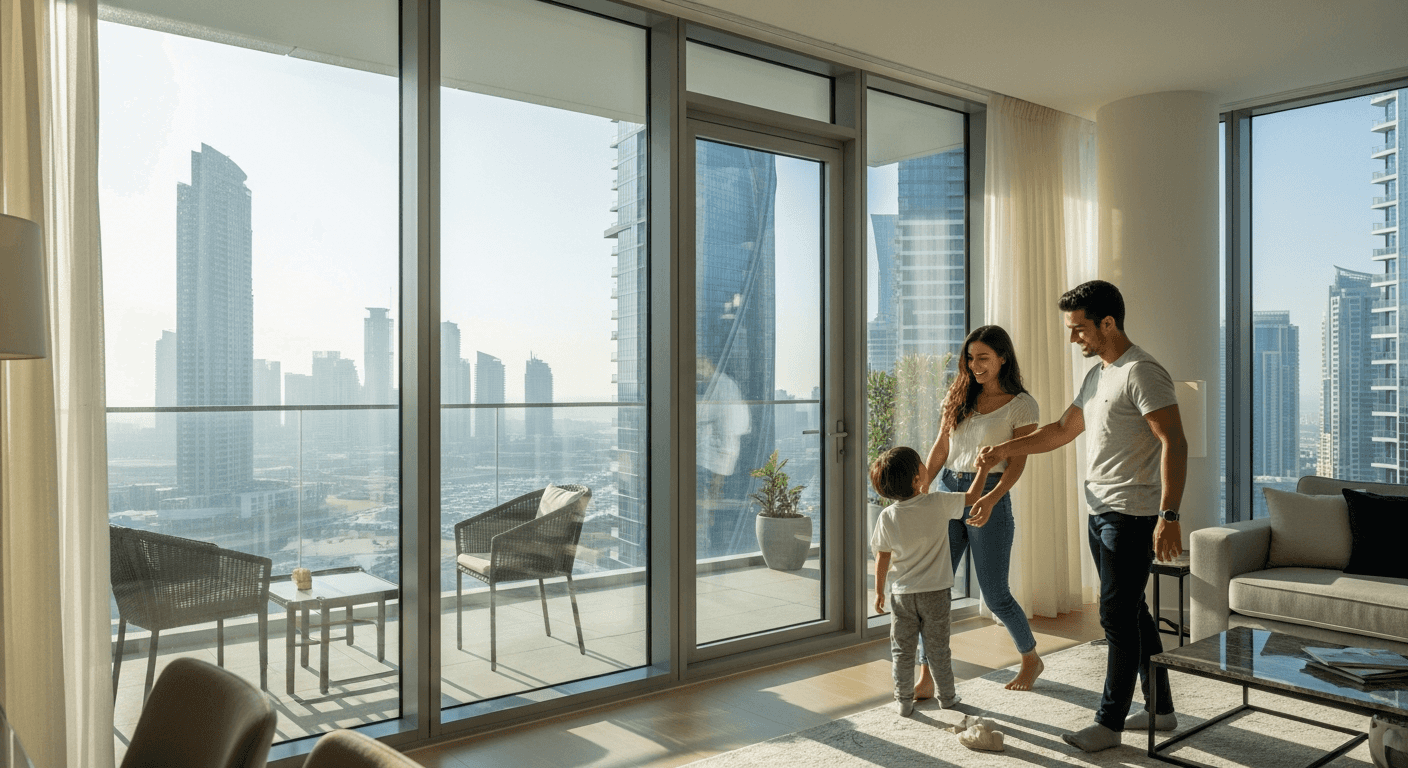
The Light Advantage: A Guide to Dubai's Brightest Apartments
I explore why valuing natural light in apartments is crucial for both lifestyle and investment, breaking down how to analyze layouts for the best window-to-wall ratios.

In the world of Dubai real estate, we are fluent in the language of square feet, bedroom counts, and marina views. Yet, one of the most impactful features of any home — its natural light, is often relegated to a brief mention, if it's discussed at all. This is a massive oversight, in my opinion, for both end-users and investors.
Here is what I'll be analyzing in this guide:
- The concept of Window-to-Wall Ratio (WWR) and why it's a critical metric.
- The tangible financial and wellness benefits of a brighter home.
- How architectural styles have evolved from older communities to new launches.
- The key features to look for in a floor plan that signal excellent light.
- The real-world cost premium for light, including a full cost breakdown.
- How to manage the challenges of an all-glass apartment in Dubai's climate.
- My personal checklist for assessing natural light during a property viewing.
The Unspoken Metric: Why Window-to-Wall Ratio Matters
When we at Gaia Living sit down with a client to review potential properties, the conversation naturally gravitates towards established metrics. We discuss price per square foot, service charges, expected yield, and the developer's track record. All are vital. But I always make a point to introduce another, more qualitative yet equally important factor: the quality and quantity of natural light. The most direct way to begin quantifying this is through the Window-to-Wall Ratio, or WWR. In simple terms, WWR is the percentage of a building's facade that is covered by glazing. A solid brick wall has a WWR of 0%; a pure glass curtain wall has a WWR of 100%. While this is an architectural term, its implications for the resident are profound.
For years, this metric lived in the domain of architects and energy modelers, but I believe it's time for buyers to adopt it. Why? Because the amount of glass in your walls directly dictates the character of your home. An apartment with a low WWR — think smaller, punched-in windows set into large expanses of concrete, will feel fundamentally different from one with a high WWR, such as a modern apartment with a floor-to-ceiling glass facade. The latter creates a sense of openness, blurring the line between inside and out. It can make a compact 700-square-foot one-bedroom feel expansive and airy, while the former might make a 1,000-square-foot unit feel constrained and dim. This is the magic of light: it manipulates our perception of space more effectively than almost any other design element.
This isn't just about aesthetics. The connection between natural light and human well-being is well-documented. Exposure to natural light helps regulate our circadian rhythms, which in turn affects sleep quality, energy levels, and even mood. A home that is flooded with daylight from morning to evening is a home that supports a healthier lifestyle. I've had clients walk into two identically sized apartments in the same tower; one facing a courtyard with limited light and the other a corner unit bathed in it. The reaction is visceral and immediate. The bright unit invariably elicits a more positive emotional response. People stand taller, they speak more animatedly, they begin to imagine their life there. That feeling is the starting point for `valuing natural light in apartments`, not as a luxury, but as a core component of well-being.
Beyond Aesthetics: The Financial & Wellness Case for Light
 Featured project
A commitment to finding a `bright apartment Dubai` isn't an act of indulgence; it's a savvy financial and personal decision. Let's move beyond the feeling of a space and talk about concrete benefits. The most obvious financial saving comes from reduced energy consumption. In a city where the sun shines almost every day, it's illogical to rely heavily on artificial lighting. A well-designed, light-filled apartment may only require artificial lights to be switched on after sunset, leading to a noticeable reduction in your monthly DEWA bill. While it might seem like a small saving on its own, it accumulates over years and contributes to a lower total cost of ownership.
However, the more significant financial impact, in my view, is on the property's capital appreciation and rental appeal. For the secondary market, properties need a 'wow' factor to stand out. An abundance of natural light is a powerful one. When we list a property for sale, photos of sun-drenched living rooms and bright, airy bedrooms perform significantly better. During viewings, these apartments present themselves far more effectively than their darker counterparts. Buyers are more likely to overlook minor imperfections when they are captivated by the overall brightness and positive energy of a space. This translates into more enquiries, more viewings, and ultimately, a stronger negotiating position for the seller. A brighter apartment can often achieve a quicker sale and command a price premium over a comparable but dimmer unit in the same building.
From an investor's perspective, this logic extends directly to the rental market. Tenants, just like buyers, are drawn to light. When a potential tenant is viewing multiple apartments in a day, the one that feels the most open and inviting is the one they will remember. A bright, cheerful apartment rents faster, reducing void periods and maximizing your annual return. I've seen two-bedroom apartments in an area like Dubai Marina sit vacant for weeks, only for a slightly more expensive but significantly brighter unit next door to be snapped up in days. The small premium in rent is a price many are willing to pay for a superior living environment. The `apartment design natural light` is not a footnote; it's a primary driver of desirability and, therefore, of yield.
“In the Dubai market, we obsess over square footage and views, but the quality of light is the invisible hand that shapes how a home truly feels.”
A Tale of Two Architectures: Old vs. New Dubai
The evolution of `apartment layouts light` in Dubai is a story of changing technology, aesthetics, and market expectations. If you look at some of the city's pioneering freehold communities, like the original six towers in Dubai Marina or the early phases of Jumeirah Beach Residence (JBR), you see a different architectural language. Built in the early to mid-2000s, these buildings often feature a more traditional design with a lower window-to-wall ratio. The layouts were typically more enclosed, with separate kitchens and living areas. Windows were functional openings in a solid wall rather than the wall itself. This was partly a function of the available construction technology and glass performance of the time, and partly an architectural choice that prioritized solidity and shade.
There is a certain charm and practicality to these older buildings. The thicker walls provide excellent thermal and acoustic insulation, and the smaller window openings naturally limit the solar heat gain, which was a major concern before the widespread adoption of modern high-performance glazing. However, the result is that many of these apartments can feel darker, particularly in the core of the unit. Hallways can be long and windowless, and rooms that don't face the primary facade might rely entirely on artificial light. Finding a truly bright apartment in these developments often means seeking out a prized corner unit or one on a high floor with unobstructed views.
Now, contrast this with the new wave of development across the city. Look at what master developers like Emaar Properties are building in Creek Harbour or what Meraas has created at City Walk and Bluewaters Island. The default is now floor-to-ceiling, wall-to-wall glass. Advances in glazing technology — specifically double and triple glazing with low-emissivity (Low-E) coatings, have made it possible to have vast expanses of glass without crippling air conditioning costs. Developers understood that buyers in a city famous for its skyline want to see it. This shift has fundamentally changed apartment design. Open-plan living is now standard, allowing light from the main facade to penetrate deep into the apartment. Kitchens have been integrated into living spaces, benefiting from the same light and views. The `window-to-wall ratio Dubai` has become a competitive feature.
This trend is visible across the board, from the ultra-luxury towers in Business Bay by developers like AHS Properties to the thoughtfully designed mid-market buildings in communities like Dubai Hills. Developers like Select Group have made a name for themselves in the Marina by consistently delivering towers with exceptional glass facades and bright layouts. The market has spoken: buyers and tenants are `valuing natural light in apartments` more than ever, and the architecture of the city is reflecting that demand. The challenge now is not just about maximizing glass, but doing so intelligently.
Anatomy of a Light-Filled Floor Plan
Long before you step foot inside an apartment, the 2D floor plan can tell you almost everything you need to know about its potential for natural light. As an apartment specialist, I spend a significant part of my day analyzing these layouts, and I can tell you that some patterns immediately signal a superior design. For any prospective buyer, learning to read these cues is an invaluable skill. It allows you to quickly sift through hundreds of listings and focus your energy on the properties with the best bones.
First and foremost, seek out corner units. This is the single most effective way to guarantee abundant natural light. A corner apartment has at least two exterior walls, meaning it can have windows on multiple sides (aspects). This provides not only more light but also a more dynamic quality of light that changes throughout the day. A unit with east and south-facing windows, for example, will be bathed in bright morning light and then receive a softer, warmer glow in the afternoon. This is a huge advantage over a standard mid-line unit which typically has all its windows on a single facade. These mid-line units can still be bright, but they lack the all-day luminosity of a corner apartment.
Beyond the corner-unit jackpot, here are the hallmarks of a floor plan designed for light:
- Dual-Aspect or 'Through' Layouts: In slimmer buildings, you can find apartments that stretch from the front to the back of the building, with windows on both sides. This creates cross-ventilation and allows light to enter from two different directions, illuminating the entire space.
- Minimal and Wide Hallways: Long, narrow, windowless entrance corridors are 'light killers'. They create a dark, uninviting first impression. Look for layouts where the front door opens into a wider foyer or directly into the living space.
- Open-Plan Living: A combined living, dining, and kitchen area with a large glazed facade allows light to flood the entire social heart of the home. A wall separating the kitchen from the living room can instantly cut off a valuable light source.
- Shallow Room Depths: A living room that is 12 meters deep but only has windows at one end will have a dark, unusable space at the back. Look for layouts where the main rooms are wide but relatively shallow, ensuring light can reach every corner.
- Strategic Column Placement: In concrete-frame towers, structural columns are a necessity. A poor design places them right in the middle of a potential window line, breaking up the glass and obstructing the view. A good design integrates them into solid walls or places them discreetly, maximizing the uninterrupted span of glass.
When you're browsing properties on our website, I encourage you to download the floor plans. Spend time tracing the path of light from the windows into the home. Identify the 'dark zones'. Compare a corner unit's layout to a standard one in the same building. This analytical approach to `apartment layouts light` will transform your property search from a game of chance to a calculated exercise in finding the best possible home.
The Glass Box Dilemma: Managing Heat and Privacy
While I am a vocal advocate for maximizing natural light, it would be irresponsible not to address the significant challenges that come with a high window-to-wall ratio in Dubai's climate. An all-glass apartment can be a dream, but it can also become an uncomfortable and expensive greenhouse if not designed and managed correctly. The primary adversary is, of course, solar heat gain. Glass is a less effective insulator than a solid, insulated wall. Every square meter of glazing is a potential entry point for the sun's powerful infrared radiation, which can rapidly heat up an interior space and send your air conditioning unit into overdrive.
This is why the quality of the glass is paramount. A single-pane window, common in older constructions, is completely inadequate for a modern Dubai apartment. The current standard is double-glazing, which consists of two panes of glass separated by a sealed air or gas-filled gap. This gap acts as an insulating layer, slowing the transfer of heat. However, the real game-changer is the addition of a Low-E (low-emissivity) coating. This is a microscopically thin, transparent metallic layer applied to one of the glass surfaces. It's designed to reflect thermal radiation — keeping heat out in the summer and, in colder climates, keeping heat in during the winter. A building that offers 'floor-to-ceiling windows' but has cheap, non-Low-E glass is not a feature; it's a liability that will be paid for every month on your DEWA bill.
Orientation is the other critical factor. An apartment with a north-facing glass facade is often ideal. It receives consistent, indirect, and glare-free light throughout the day without being subjected to the direct, intense rays of the sun. East-facing is great for morning people who enjoy sunrise, but the heat is manageable. South-facing receives strong light all day, which needs to be managed with good blinds and high-performance glass. The most challenging orientation is west-facing. A wall of west-facing glass will be bombarded by the intense, low-angle sun from mid-afternoon until sunset, precisely when outdoor temperatures are at their peak. This can make the apartment uncomfortably hot and create intense glare. When assessing a glass-heavy apartment, you must know which way it faces.
Finally, there's the issue of privacy. In dense urban environments like Downtown Dubai or Business Bay, your beautiful glass wall might be looking directly into your neighbour's beautiful glass wall just 30 meters away. This necessitates an investment in high-quality window treatments — blinds, shades, or curtains. Sheer curtains can preserve light and views during the day while providing a degree of privacy, while blackout blinds are essential for bedrooms. This should be factored into your furnishing budget, as outfitting an entire apartment's worth of floor-to-ceiling windows can be a significant expense. The dream of a `bright apartment Dubai` must be tempered with the practical realities of climate and urban density.
Quantifying the Premium: The Cost of Light
So, does a brighter apartment with a superior layout actually cost more? The simple answer is yes. The market consistently places a premium on these units. While it's difficult to isolate 'light' as a single variable from other factors like view, floor height, and finish, it is a significant component of the overall value proposition. A corner unit in a tower will almost always be listed at a higher price than an interior unit of the same size on the same floor. This premium can range from 5% to as much as 15% or more, depending on the building and the quality of the alternative units.
Let's put this into a practical, real-world example. Imagine we're looking at two-bedroom apartments in a new, high-quality tower in Dubai Hills. The building has great amenities and a prime location. We find two units for sale:
- Apartment A: A standard mid-line unit. 1,300 sq. Ft. All windows face northeast. It's a perfectly good apartment. Price: AED 2,500,000.
- Apartment B: A corner unit on the same floor. 1,350 sq. Ft. (the extra space is in the living area). It has a wrap-around balcony and windows facing both northeast and southeast, flooding the apartment with light all morning. Price: AED 2,750,000.
Apartment B is AED 250,000, or 10%, more expensive for a marginal increase in size. The bulk of that premium is for the corner position, the superior layout, and the resulting abundance of natural light. My argument is that for an end-user who will live in the home, this premium is often worth paying for the dramatic improvement in quality of life. For an investor, the higher rental income and stronger capital appreciation potential can justify the additional upfront cost.
To understand the full financial picture, let's break down the upfront costs of purchasing Apartment B, the brighter unit. This is crucial for any serious buyer to budget correctly. These figures are based on standard fees mandated by the Dubai Land Department (DLD) and typical market rates.
Line-by-Line Cost Breakdown for Apartment B:
- Purchase Price: AED 2,750,000
- Dubai Land Department (DLD) Transfer Fee (4% of price): AED 110,000
- DLD Admin Fee: AED 4,200 (fixed fee for properties over AED 500k)
- Property Registration Fee (to Trustee Office): AED 4,200 (fixed fee)
- Gaia Living Agency Fee (2% of price + 5% VAT): AED 57,750
- NOC (No Objection Certificate) Fee from Developer: Approx. AED 1,000 - AED 5,000 (variable)
- Mortgage Registration Fee (if applicable, 0.25% of loan): Assuming an 80% loan (AED 2,200,000), this would be AED 5,500
Total Upfront Cost (excluding mortgage-related bank fees): Approximately AED 3,000,000+
This breakdown shows that the additional AED 250,000 in purchase price also increases your DLD and agency fees. It's a significant financial decision. However, in my experience helping clients make these choices, very few who opt for the brighter, more expensive unit ever regret it. The daily enjoyment it provides is a return that can't be captured on a spreadsheet.
My Pre-Viewing Checklist for Natural Light
By now, you should be convinced of the importance of `apartment design natural light`. But how do you apply this knowledge in the field? When you're out on viewings, it's easy to get distracted by staging, views, or a charismatic agent. You need a systematic approach to cut through the noise and objectively assess the light. Over the years, I've developed a mental checklist that I run through for every apartment I inspect. I encourage you to adopt it as your own.
Before you even schedule a visit, do your homework. Get the floor plan and the unit number. Use an online map service to find the building. Pinpoint which side of the building the unit is on and determine its orientation (north, south, east, west). Check for neighbouring buildings — how close are they? How tall are they? A new tower under construction next door could completely change the light dynamics in two years. This five-minute digital reconnaissance is the most important step.
When you are at the property, here is your mission. I've compiled this into a practical checklist you can use:
1. View at Different Times: If you are serious about a property, you must see it at least twice, at different times of the day. A morning viewing and a late afternoon viewing will reveal its true character. A north-facing apartment will look consistent; a west-facing one will transform dramatically. 2. Lights Off Challenge: As soon as you enter a room, ask for all the artificial lights to be turned off. This is non-negotiable. You need to see the baseline level of natural light. Be wary if an agent is hesitant; they may be trying to mask a dark space with strategically placed lamps. 3. Assess the 'Light Blockers': Look for elements that reduce the light. Does the apartment have a very deep balcony or a large structural overhang above the windows? These can be great for providing shade but will also reduce the amount of light entering the room. 4. Look At, Not Just Out Of, the Windows: Check the quality of the windows themselves. Are they double-glazed? Do they look clean and well-maintained? Can any of them open to allow for fresh air? Also, press your face to the glass and look straight up and down. Is there a large slab or balcony edge from the floor above or below that intrudes on your view and light? 5. The Proximity Test: Stand at the main window and assess your relationship with the building opposite. How close is it really? Does it have reflective glass that could cause glare? Is it a blank, featureless wall that will feel oppressive? 6. Walk the Core: Pay attention to the 'forgotten' spaces. How bright is the kitchen? What about the master bathroom — does it have an external window? (A rare and prized feature!). How long and dark is the corridor connecting the bedrooms? The quality of light in these secondary spaces contributes significantly to the overall feel of the home.
Following this checklist will arm you with the objective data you need to make an informed decision. It moves the assessment of natural light from a vague 'feeling' to a concrete analysis, ensuring the apartment you choose is one you'll love living in for years to come.
While floor-to-ceiling glass is a modern design hallmark, the smartest buyers look deeper, analyzing floor plan efficiency, orientation, and building density to find apartments where natural light is a true asset, not a thermal liability. The premium paid for a corner unit or a superior layout is often the best money you can spend, delivering returns in daily well-being that far exceed the initial investment.
Sources
- Dubai Land Department (DLD) - for transfer fees and registration processes: https://dubailand.gov.ae
- UAE Government Portal - for information on residency and utilities: https://u.ae/en
Questions, answered
- What is a good window-to-wall ratio for an apartment?
- There's no single 'perfect' ratio, as it depends on climate and design. In Dubai, modern premium apartments often feature ratios of 60% or higher, especially on primary facades, but this must be balanced with high-performance glazing to manage heat gain.
- Do apartments with more natural light have better resale value?
- In my professional experience, yes. A bright, well-lit apartment is more attractive to potential buyers and tenants, which can lead to faster sales, higher offers, and better rental yields compared to a similar dark unit in the same building.
- Which apartment layouts get the most sun in Dubai?
- Corner units and 'through' apartments with dual aspects are superior for capturing light throughout the day. The ideal orientation is often north-facing for consistent, indirect light without the harsh afternoon sun and heat.
- Are floor-to-ceiling windows a good idea in Dubai?
- They can be fantastic, provided the building uses high-quality, double-glazed, low-emissivity (Low-E) glass to mitigate solar heat gain. Without this technology, the high cooling costs and glare can outweigh the aesthetic benefits.
- How can I check an apartment's natural light before viewing?
- Start by studying the floor plan for window placements and room depth. Use online maps to check the building's orientation and identify any nearby towers that could cast a shadow. Ask us for a virtual tour video taken at midday to get a preliminary feel.
- Which areas in Dubai are known for bright apartments?
- Many new developments excel, such as those in Emaar Beachfront, Creek Harbour, and City Walk. That said, you can find brilliantly lit apartments in almost any community, from Dubai Marina to Dubai Hills, if you know what layout to look for.

Ravi lives and breathes apartment living — from studio yields in JVC to branded residences on the Palm. Floor plans, service charges, and view lines are his love language.
Related stories
Right-Sizing Your Dubai Villa for a New Chapter
As an empty nester or active retiree, your idea of the perfect Dubai home shifts. I explore the best villa communities that prioritise lifestyle and low-maintenance living over sheer size.
Dubai's AC Dilemma: The Real Cost of Cooling
Your apartment's air conditioning is more than just a utility—it's a major factor in your monthly budget and comfort. I'll break down the real costs and benefits of Dubai's two main cooling systems, helping you choose your next home wisely.
Managing Multiple Offers: A Dubai Seller's Playbook
Receiving multiple offers on your Dubai property is an excellent problem to have, but handling it incorrectly can cost you time and money. Here’s my strategic playbook for managing competitive bids to secure the best possible outcome.
Echoes, in your inbox
One thoughtful email a month. Market insight, new launches, no spam.