

The Landlord's Guide to High-ROI Upgrades in Dubai
As a landlord in Dubai, not all property upgrades are created equal. I'll break down which renovations actually increase rental income and reduce vacancy, and which are simply a waste of your capital.

As a landlord, the question isn't just *if* you should upgrade your property, but *how* that capital expenditure translates into measurable returns. In Dubai's dynamic rental market, a strategic renovation can be the difference between a high-performing asset and a liability that suffers from long vacancies and stagnant yields. This is about making calculated business decisions, not just aesthetic ones.
Here's what we'll explore in this analysis:
- The critical distinction between upgrading for rental yield versus upgrading for a capital gain on sale.
- A framework for calculating the payback period on any renovation.
- The specific, high-ROI upgrades for kitchens and bathrooms that tenants value most.
- Lower-cost, high-impact improvements that offer the quickest returns.
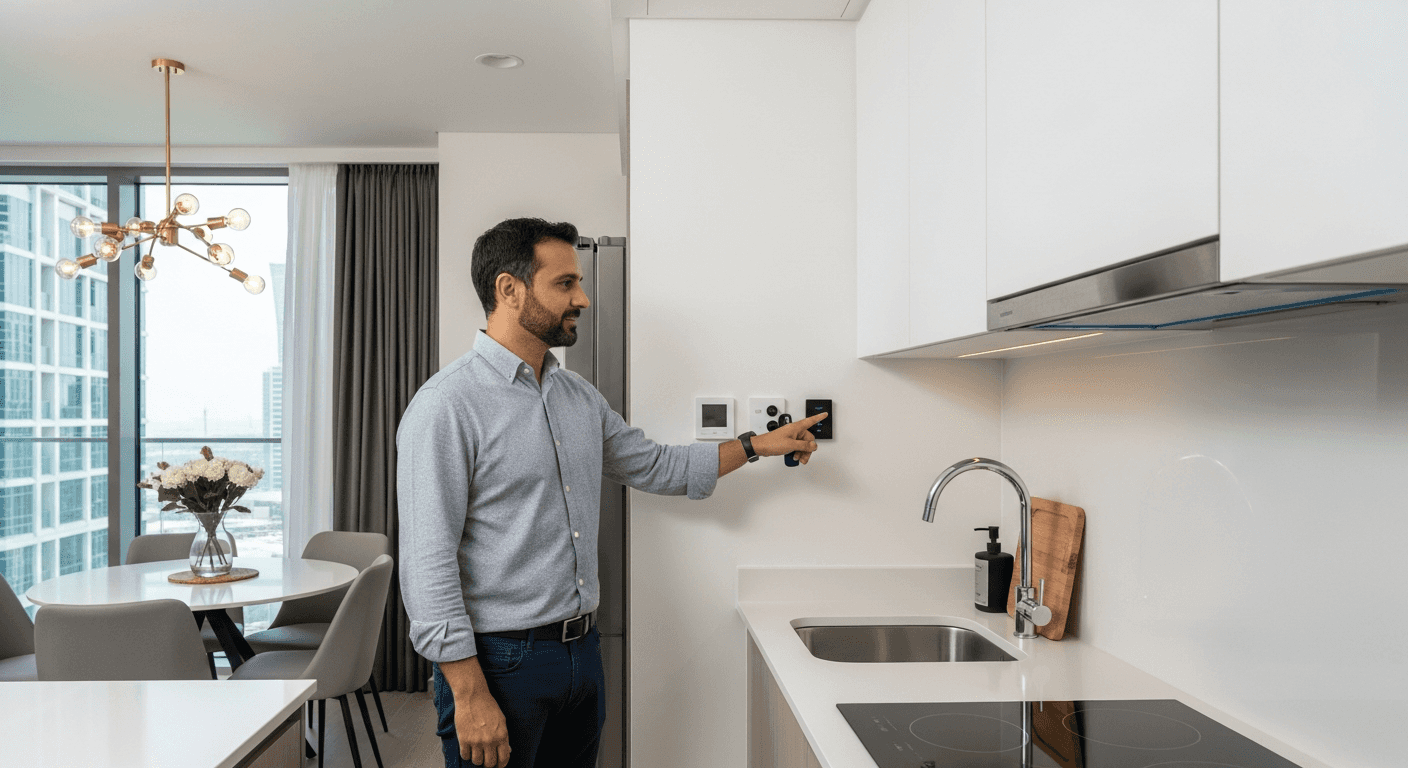
- The role of smart home technology as a modern differentiator.
- Essential upgrades for villas to maximize family appeal.
- The common ROI traps and upgrades landlords should absolutely avoid.
- How to navigate the necessary approvals and NOCs in Dubai.
- A detailed case study with a full cost and return breakdown.
The "Upgrade for Yield" vs. "Upgrade for Sale" Mindset
Many landlords I speak to make a fundamental error: they renovate their investment property with the same mindset they would use for their own home, or for a property they intend to flip. These are two entirely different objectives with conflicting financial logic. Upgrading for a sale is about maximizing a one-time capital gain. You might spend AED 200,000 on a complete overhaul of a villa in Emirates Hills because you believe it will add AED 500,000 to the sale price. The payback is immediate upon transfer. This approach justifies higher-cost, more extensive interventions.
Upgrading for yield is a different discipline. The goal is to increase annual rental income and/or reduce costly vacancy periods. The return isn't a single lump sum; it's a small, incremental increase in monthly cash flow. Therefore, the payback period is the single most important metric. If you spend AED 50,000 on upgrades, and those upgrades allow you to increase the annual rent by AED 10,000, your payback period is five years. In the world of rental investment, that's a long time. The ideal renovation for a rental property has a payback period of under 36 months, and ideally closer to 18-24 months.
This mindset shift forces you to be surgical with your budget. It's not about creating the most beautiful apartment in Downtown Dubai; it's about creating the most profitable one. This means focusing on upgrades that have a disproportionately high impact on a tenant's perception of value, cleanliness, and modernity. A tenant doesn't care if your kitchen countertops are Italian marble or a good quality quartz from a local supplier. They care that the countertop is clean, modern, and unstained. That difference in material choice could be AED 30,000, which you will likely never recoup in additional rent. The focus must always be on the `ROI property upgrades Dubai` landlords can count on, not on personal taste.
Quantifying the Impact: The Dubai Rental Uplift Matrix
 Featured project
Before spending a single dirham, you need a framework to evaluate the potential return. Gut feeling isn't good enough. At Gaia Living, we guide our landlord clients through a simple but powerful analysis. The core of this is the payback period calculation, which is essential for understanding landlord renovation value.
Payback Period (in months) = Total Renovation Cost / Additional Monthly Rent Achieved
To make this calculation work, you need two key inputs: an accurate cost estimate and a realistic projection of the rental uplift. Getting the cost is straightforward: obtain at least three detailed quotes from vetted contractors. The rental uplift is more nuanced. This involves researching the market for direct comparables. Look at listings for identical layouts in the same building or community. Find units that have been recently renovated and compare their asking rents to older, tired units. The gap between them is your potential uplift.
For example, in a popular tower in Dubai Marina, a standard two-bedroom apartment might rent for AED 150,000 per year. You might notice that recently modernized units in the same tower, with updated kitchens and bathrooms, are listed and successfully renting for AED 170,000. This AED 20,000 annual difference (AED 1,667 per month) is your target. If you can achieve a similar renovation for AED 30,000, your payback period is just 18 months (30,000 / 1,667). This is an excellent investment. If the renovation costs AED 60,000, the payback period doubles to 36 months. It's still a viable investment, but the case is less compelling.
This analysis also helps you avoid over-investing. If the maximum rent for your property type, according to the RERA Rental Index and market comparables, is AED 175,000, then no amount of renovation will allow you to legally or practically achieve AED 200,000. The market sets a ceiling. Your job is to spend just enough to reach the top of that specific market band, not to try and break into a new one. This data-driven approach is the cornerstone of any strategy focused on increasing rental income renovations.
The Big Wins: High-ROI Kitchen and Bathroom Renovations
When tenants view a property, their decision is often heavily influenced by the kitchen and bathrooms. These are the functional heart of a home, and if they look old, dirty, or dated, it creates a powerful negative impression that no amount of fresh paint in the living room can erase. Consequently, these two areas offer the most significant ROI for a targeted investment.
For kitchens, a full gut renovation is rarely necessary or financially prudent for a rental. The key is a cosmetic refresh that feels like a major upgrade. Start with the countertops. If the unit has old laminate or chipped tiles, upgrading to a clean, simple quartz is a game-changer. You can source good quality quartz in Dubai for a reasonable price. Pair this with a new, modern backsplash — simple white subway tiles are timeless, affordable, and appeal to everyone. The final touch is updating hardware. Replacing dated cabinet handles and pulls with modern, brushed metal or matte black options costs a few hundred dirhams but makes the entire kitchen feel new. You've transformed the space without the cost and complexity of replacing all the cabinetry.
Bathrooms follow the same principle. The biggest visual offenders in older Dubai apartments are often grimy grout, dated vanities, and old-fashioned shower curtains. A deep, professional regrouting or even a simple grout pen can make old tiles look brand new. Replace a bulky, dated vanity with a modern floating one to create a sense of space. Change out old, tarnished taps and showerheads for contemporary models. And critically, replace any shower curtain with a clear glass screen or door. This single change instantly modernizes the bathroom and makes it feel brighter and larger. A full bathroom refresh like this can often be completed for under AED 5,000 and can be a deciding factor for a tenant.
Consider a typical 10-year-old apartment in a community like Jumeirah Village Circle (JVC). The original developer finish is likely tired. A strategic kitchen and bathroom refresh can be the most effective way to compete with newer buildings. The `rental property upgrade benefits` are twofold: you can command a higher rent, and your property will likely be leased faster than a comparable but un-renovated unit next door, minimizing vacancy loss.
Cost-Effective Property Improvements: The Low-Hanging Fruit
While kitchens and bathrooms offer big wins, there is a category of upgrades that offers an even faster payback period due to their low cost. These are the quick fixes that should be considered non-negotiable between tenancies. They are the most `cost-effective property improvements` a landlord can make.
First and foremost is paint. A fresh coat of paint is, without question, the highest ROI upgrade in real estate. It costs relatively little but has a total and immediate impact on the property's appeal. It erases years of wear and tear, covers scuffs and marks, and makes the entire space feel clean and new. The key is to choose the right colours. Stick to modern neutrals like light greys, off-whites, or warm beiges. These colours have broad appeal and create a bright, airy feel that allows tenants to envision their own furniture in the space. A bold feature wall might seem like a good idea, but it's a personal taste that can alienate a significant portion of potential tenants. A full repaint of a two-bedroom apartment in Dubai typically costs between AED 4,000 and AED 6,000, an investment you can often recoup in just two to three months of increased rent.
Second is lighting. Many older Dubai properties, particularly those built between 2005 and 2015, suffer from poor lighting — often a single, dim, central fixture in each room. For a modest investment, you can transform the ambiance. Replacing dated chandeliers or 'boob lights' with modern LED spotlights or stylish, simple pendant lights makes a huge difference. Good lighting makes a space feel larger, cleaner, and more premium. This is a subtle upgrade that has a major psychological impact on prospective tenants during a viewing.
Finally, don't overlook the small details. Go through the property and replace all old, yellowed plastic light switches and electrical sockets with crisp, new white ones. Change out all the interior door handles for a modern, uniform style. These are minor costs, perhaps AED 1,500-2,000 for an entire apartment, but they contribute to a cohesive and well-maintained impression. When a tenant sees that even the small details have been attended to, it sends a powerful signal that the landlord is professional and cares for the property, which can lead to a longer, more stable tenancy.
Integrating Smart Technology: A Differentiator for Tenants
In an increasingly connected world, smart home technology is transitioning from a luxury novelty to an expected feature, especially among the professional and expatriate demographic in Dubai. For a landlord, a small investment in a few key smart devices can be a powerful differentiator, helping your property stand out in a crowded market like Business Bay or JLT, where tenants have many similar options to choose from. This isn't about creating a fully automated, futuristic home; it's about providing tangible convenience and efficiency that tenants value.
The most impactful and cost-effective smart home upgrade is a smart thermostat, such as a Google Nest or Ecobee. These devices learn a tenant's schedule and optimize cooling, which can lead to significant savings on their DEWA bills. For a tenant, this is a direct financial benefit. When you can advertise your property as having a Nest thermostat that will lower their cooling costs, it becomes a compelling selling point. The cost of a device and installation is typically under AED 1,500, an investment that pays for itself quickly through reduced vacancy and its appeal to a wider tenant pool.
Another highly valued feature is a smart lock. For a tenant, the convenience of keyless entry, being able to grant temporary access to a cleaner or a friend via their smartphone, and the enhanced security are significant advantages. For a landlord, it simplifies handovers between tenancies — you can simply reset the access codes without worrying about duplicate keys. The cost is again relatively low, typically between AED 1,000 and AED 2,000, but it adds a layer of modern convenience that older properties lack.
It's important to be selective. You don't need smart blinds, smart refrigerators, or complex multi-room audio systems. The ROI on these is poor for a rental. The goal is to focus on practical technologies that offer clear benefits in daily life. A smart thermostat for utility savings and a smart lock for convenience are the two most logical starting points. These upgrades signal that the property is modern and well-equipped, which can justify a modest rental premium and, more importantly, attract high-quality tenants and persuade them to sign the lease faster.
Exterior Appeal and Outdoor Space for Villas
For landlords of villas and townhouses, the investment calculus extends beyond the four walls of the property. In family-oriented communities like Arabian Ranches or Dubai Hills Estate, the outdoor space is just as important as the interior. A neglected, sandy, or overgrown garden can be an immediate deal-breaker for a family with children. Investing in basic landscaping and creating a usable outdoor area offers a tremendous return on investment.
The goal is not to create a complex, award-winning garden. The priority should be a clean, low-maintenance, and functional space. This usually means installing durable turf or high-quality artificial grass to create a play area for children. Add a simple, robust irrigation system to keep it green with minimal effort. Planting a few hardy, drought-tolerant trees and shrubs around the perimeter provides privacy and a touch of green. The cost for a basic but transformative landscaping job on a standard townhouse plot might range from AED 15,000 to AED 30,000. While this is more than an apartment repaint, the rental uplift can be substantial, as families will actively compete for homes with good, usable gardens.
Creating shade is also critical in Dubai's climate. A simple, modern wooden or aluminum pergola over a patio area can transform it from an unusable patch of sun-baked tiles into a genuine outdoor living or dining room for eight months of the year. This adds significant perceived living space and value for a tenant. A well-constructed pergola is a one-time investment that adds immense appeal for years to come. These are the kinds of `rental property upgrade benefits` that directly translate to higher demand from the target demographic.
One area where landlords should exercise extreme caution is swimming pools. While a pool is a desirable feature, the ROI of installing one from scratch in a rental villa is almost always negative. The upfront cost is significant (often AED 80,000 to AED 120,000+), and you also take on the liability and cost of ongoing maintenance, cleaning, and safety compliance. It is very difficult to increase the rent enough to achieve a reasonable payback period on this scale of investment. The exception might be in ultra-prime villa communities like on the Palm Jumeirah or in Jumeirah Golf Estates, where a private pool is an expectation for the rental price point. For most other rental villas, it's a financial trap. It is far better to invest a fraction of that cost in excellent landscaping and a shaded patio.
“A landlord's renovation budget is a tool for yield, not a canvas for personal expression. If an upgrade doesn't increase the rent or reduce vacancy, it's a cost, not an investment.”
The ROI Traps: Which Upgrades Should Landlords Avoid?
Just as important as knowing where to invest is knowing where *not* to. I have seen many landlords sink significant capital into upgrades that add zero to the monthly rent, effectively turning a potential investment into a pure cost. Being a successful landlord is about ruthless financial discipline. Here are the most common ROI traps to avoid.
First is over-personalization. Your personal taste is irrelevant in a rental property. The goal is to create a clean, neutral, and modern canvas that appeals to the widest possible audience. Avoid bold accent walls, quirky tile patterns, unusual colour schemes, or anything that reflects a specific design trend. That bright blue kitchen you saw in a magazine might look fantastic to you, but it will be an immediate turn-off for 80% of prospective tenants. Stick to a classic, neutral palette: whites, greys, and natural wood or stone tones. This strategy minimizes the risk of alienating tenants and ensures your property has timeless appeal.
Second, avoid major structural changes. Knocking down walls to create an open-plan living space, moving doorways, or reconfiguring a floor plan is almost always a financial mistake in a rental property. These changes are extremely expensive, require complex permits from developers like Emaar Properties and the Dubai Municipality, and cause significant downtime for the property. While it might make the space more functional in your eyes, the incremental rent you can charge will never justify the AED 100,000+ cost and months of lost rent. Focus on cosmetic upgrades that improve the existing layout.
Third, resist the temptation of high-end brands. A tenant in a standard apartment does not need, nor will they pay extra for, a Sub-Zero refrigerator or a Miele washing machine. They need clean, reliable, and functional appliances from a reputable mid-range brand like Bosch, Siemens, or LG. The rental premium for ultra-luxury brands is virtually zero in the vast majority of Dubai's rental market. The same logic applies to materials. There is no need for solid hardwood or marble flooring in a rental. A high-quality Luxury Vinyl Tile (LVT) or a durable porcelain tile offers 90% of the aesthetic for 30% of the cost and is far more durable and easier to maintain — a key consideration for a rental asset.
Navigating the Process: NOCs, Permits, and Finding Contractors
Undertaking renovations in Dubai isn't as simple as just hiring a contractor and starting work. The process is regulated to ensure the safety, integrity, and aesthetic uniformity of buildings and communities. As a landlord, failing to follow the correct procedure can result in fines, work stoppages, and disputes with your developer or owners' association. Understanding the requirements is a critical part of planning any upgrade.
The most important document you will need is a No Objection Certificate (NOC) for alterations. This is issued by your property's master developer (e.g., Nakheel, Damac Properties) or the building's owners' association management company. You will need to submit a formal application detailing the exact scope of work, often including drawings, material specifications, and your chosen contractor's trade license. The developer reviews the plans to ensure they comply with the building's rules and regulations.
Generally, you will require an NOC for any of the following works:
- Any changes to plumbing or electrical systems.
- Replacing flooring.
- Replacing kitchen cabinets or countertops.
- Removing or altering internal partitions (even non-structural ones).
- Any work that affects the exterior of the property.
Cosmetic work like repainting or replacing light fixtures usually does not require an NOC, but it's always best to check your community's specific rules. For more extensive works, particularly those involving structural or major MEP (Mechanical, Electrical, Plumbing) changes, you may also need separate approvals from government bodies like the Dubai Municipality or DEWA. Your contractor should be able to guide you on this. A reputable contractor will not start work without a valid NOC in hand.
Finding that reputable contractor is the next challenge. The market has a wide range of options, from one-man operations to large-scale firms. It is essential to get at least three itemized quotations to compare costs. Do not simply go with the cheapest. Ask for the contractor's trade license, proof of insurance, and references from past clients. Go and see their completed work if possible. A professional contract that clearly outlines the scope, timeline, payment schedule, and materials is non-negotiable. At Gaia Living, we often help our landlord clients by connecting them with a shortlist of vetted and trusted contractors we have worked with previously, which can save a lot of time and mitigate risk.
Case Study: Upgrading a 2-Bedroom Apartment in JLT
Let's put this all together with a real-world example. This is the kind of analysis I perform regularly for our clients to demonstrate the power of `increasing rental income renovations`.
The Property: A 1,450 sqft two-bedroom apartment in a 12-year-old tower in Jumeirah Lakes Towers. The unit was in its original condition. The Problem: The landlord was struggling to rent the unit. It had been vacant for two months. The last tenant paid AED 110,000 per year. Comparable, but newly-renovated, units in the same building were leasing quickly for AED 130,000-135,000.
"Before" State Analysis: - Original beige paint, heavily scuffed. - Dark wood-effect laminate kitchen cabinets with a dated granite top. - Bulky vanities and old-fashioned bathroom fixtures. - Dim, yellow lighting from single central fixtures. - Visible wear and tear on door handles and light switches.
The Strategic Renovation Plan & Budget: The goal was a cosmetic refresh targeting the key areas tenants care about, with a strict budget and a focus on neutral, modern finishes. This is the exact breakdown:
- Full Interior Repaint: Professional painting with a modern, light grey (Jotun's 'Elegant Grey'). Cost: AED 5,500
- Kitchen Refresh: Kept cabinet carcasses. Replaced doors with new white MDF ones. Installed a new white quartz countertop and a simple white subway tile backsplash. New matte black handles. Cost: AED 13,000
- Bathroom Refresh (x2): Replaced both vanities with modern floating units from a local supplier. Installed new mirrors, mixer taps, and rain showerheads. Replaced old shower curtains with glass screens. Cost: AED 9,000
- Lighting Upgrade: Replaced all central fixtures with modern LED spotlights in the living area and bedrooms. Cost: AED 4,500
- Fixtures & Finishing: Replaced all light switches, sockets, and door handles with a consistent, modern style. Professional deep clean of existing tile flooring and grout. Cost: AED 2,500
Total Investment: AED 34,500
The Results & ROI Calculation: The renovation took three weeks to complete. The property was transformed. It looked bright, modern, and brand new. We listed it for rent, and within one week, we had multiple offers. We signed a new tenant at AED 135,000 per year.
- Old Annual Rent: AED 110,000
- New Annual Rent: AED 135,000
- Annual Rent Increase: AED 25,000
- Monthly Rent Increase: AED 2,083
- Payback Period: AED 34,500 (Total Cost) / AED 2,083 (Monthly Increase) = 16.5 months
This is a fantastic result. For an investment of less than AED 35,000, the landlord not only secured a high-quality tenant quickly (eliminating vacancy costs) but also increased the asset's annual yield significantly. The property is now positioned at the very top of its market segment and will be easier to rent for years to come. This case study perfectly illustrates the financial logic of targeted, `ROI property upgrades Dubai`.
For landlords in Dubai, the most profitable upgrades are not the most expensive. A surgical, cost-conscious approach focused on kitchens, bathrooms, paint, and lighting delivers the best returns. By calculating the payback period for every dirham spent, you can turn your renovation budget into a powerful tool for increasing rental yield and reducing vacancy, maximizing the performance of your real estate asset.
## Sources - Dubai Land Department (DLD): dubailand.gov.ae
Questions, answered
- What is the single most cost-effective upgrade for a Dubai rental property?
- A professional repaint in a modern, neutral colour is by far the best investment. For a relatively low cost (e.g., AED 4,000-6,000 for a two-bedroom apartment), it instantly makes a property feel fresh, clean, and modern, directly impacting its rentability and perceived value.
- Do I need a permit or NOC to renovate my rental apartment in Dubai?
- Yes, for many types of renovations. You will almost always need a No Objection Certificate (NOC) from the building's developer or owners' association. For work involving structural, electrical, or plumbing changes, you may also need permits from authorities like the Dubai Municipality or DEWA.
- How much can I realistically increase the rent after renovating my property?
- This depends on the scale of the renovation and the property's location, but a common outcome for a well-executed cosmetic refresh (kitchen, bathrooms, paint) is a 5-15% increase in annual rent. Your new rent must still be in line with the RERA Rental Index for comparable properties in your area.
- Are smart home upgrades a good investment for a rental property?
- Yes, if implemented strategically. Cost-effective additions like a smart thermostat (e.g., Nest) or smart door locks can be a powerful differentiator in a competitive market. They may not command a huge rental premium on their own, but they can significantly reduce vacancy by attracting tech-savvy tenants.
- Is it worth upgrading the kitchen in my Dubai rental apartment?
- A kitchen refresh typically offers one of the best returns. You don't need a full demolition; focus on cost-effective changes like replacing laminate countertops with quartz, adding a modern backsplash, and updating cabinet handles. This can transform the space for AED 10,000-20,000 and justify a higher rental price.
- Should I install a private pool in my rental villa to increase its value?
- In most cases, no. The high upfront cost (often exceeding AED 80,000-100,000) and ongoing maintenance expenses make the payback period from increased rent far too long. It's generally a poor ROI decision for a rental property, unless it's in a super-prime community where a pool is a standard expectation.

Marcus is all about cash flow — gross vs net yields, short-term vs long-term lets, and the RERA rental index. He writes for landlords and income investors.
Related stories
Dubai's Established Charm: The Case for Older Homes
In a city focused on the future, I believe the smartest move for many buyers is to look back. Dubai's seasoned communities offer space, character, and surprising value that new builds often can't match.
The True Cost of Owning a Dubai Property
Beyond the purchase price, your annual budget for a Dubai home must account for service charges, utilities, and maintenance. I'll break down every ongoing expense you need to plan for.
Calculating ROI on Dubai Rental Upgrades
As a landlord in Dubai, you can't just follow trends. I'll show you how to calculate the precise ROI of minor property upgrades to genuinely increase your rental yield.
Echoes, in your inbox
One thoughtful email a month. Market insight, new launches, no spam.