

The Handover Test: Choosing a Dubai Villa Developer
The moment of handover reveals everything about a developer's promises. As your communities correspondent, I'll guide you through what Dubai villa handover quality tells you about choosing the right builder for your family's future home.

For all the glossy brochures, architectural renders, and soaring promises made in a sales centre, the true test of a developer comes down to a single moment: the handover. This is the point where the vision becomes your reality, the investment becomes your home. As a communities correspondent, I’ve walked through hundreds of newly finished villas across Dubai with clients, and I can tell you that the quality of that final product speaks volumes about the company that built it.
Here's what we'll explore in this guide to navigating the crucial final stages of your villa purchase:
- The 'moment of truth' and what it reveals about a developer's DNA.
- Assessing the track records of Dubai's legacy master developers.
- Understanding the challenger brands and boutique builders shaping the market.
- A practical guide to conducting your pre-handover inspection, or 'snagging'.
- Your legal protections under the Defect Liability Period (DLP).
- The importance of post-handover support and community management.
- A line-by-line breakdown of the true costs associated with buying a quality villa.
- My final verdict on how to choose a developer with total confidence.
The Handover Moment of Truth
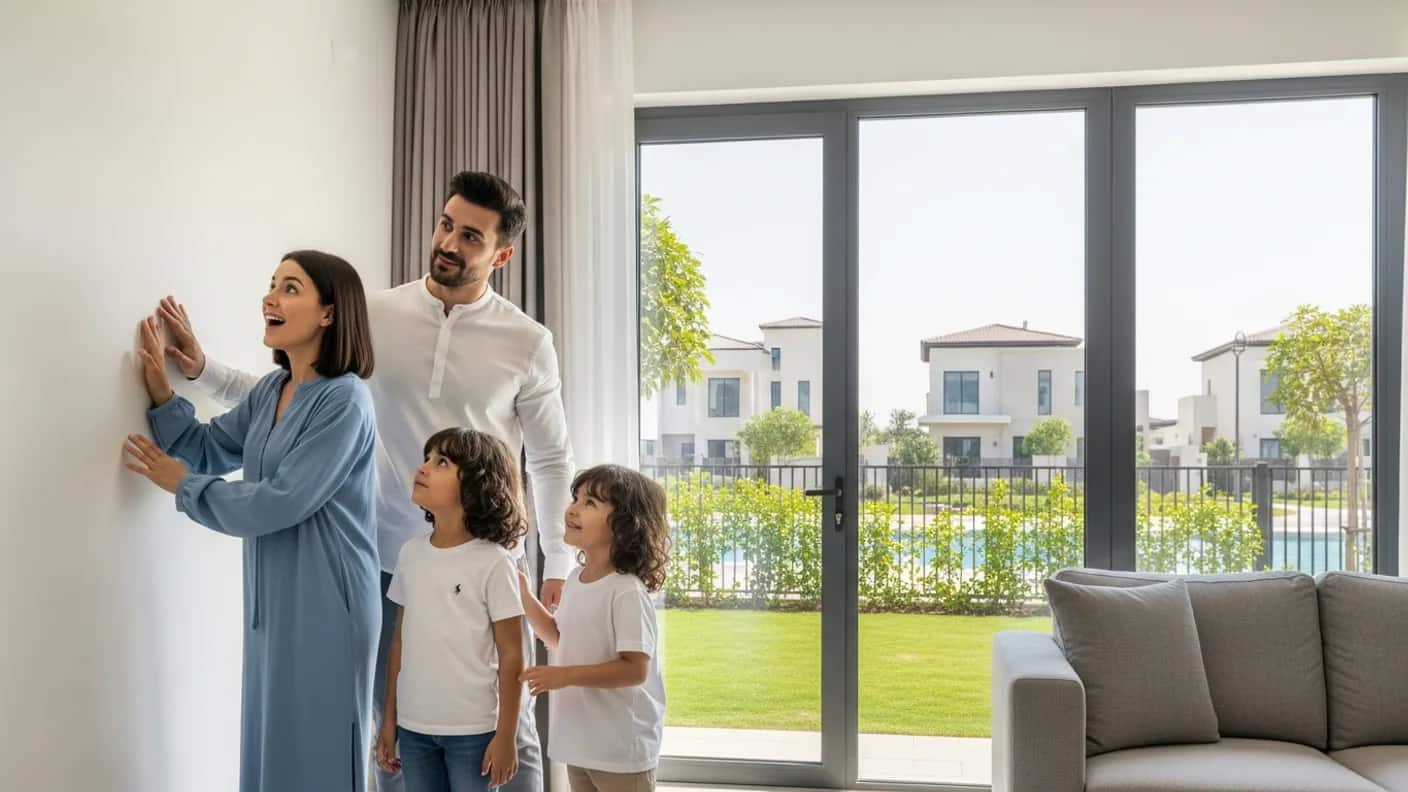
Handover is far more than a transactional formality of picking up the keys. It's the culmination of what is often a multi-year journey, especially for an off-plan launches purchase. It's the day you finally step into the space you’ve pictured your family living in, the garden where your children will play, the kitchen where you'll share meals. It’s an emotional day, which is precisely why it requires a cool head and a sharp eye. The smallest details in a finished property — the alignment of tiles, the smooth closing of a door, the quality of the paint finish, are a direct reflection of the developer’s commitment, their choice of contractor, and their internal quality control processes. A developer who gets these details right is one who respects their customer and their own reputation.
I remember walking a family through their new five-bedroom villa in a budding community. They were overjoyed, already mentally placing furniture. But as we walked, I gently pointed out the subtle signs of a rushed job. A misaligned cabinet door in the kitchen, a slight dip in the flooring on the upper landing, a window that didn't seal perfectly. Individually, they were minor snags. Collectively, they told a story of a contractor under pressure and a developer whose final quality assurance checks were not as rigorous as they should have been. This is where the `Dubai villa handover quality` becomes the most important metric you have.
Conversely, I’ve seen handovers from developers like Sobha Realty, who famously champion their 'backward integration' model, controlling everything from design to manufacturing their own fittings. The resulting consistency is palpable. When you walk into one of their properties, the sense of precision is immediate. The weight of the doors, the flawless grouting, the perfect seal on the windows — it all communicates a deep-seated philosophy of quality. This isn't just about aesthetics; it’s about longevity. A well-finished home is less likely to cause you headaches with plumbing, electrical, and structural issues down the line, saving you money and stress. This is the story the handover tells, and it’s the most honest one you’ll get.
Decoding Developer Tiers: The Legacy Builders
 Featured project
When looking for a family villa in Dubai, your search will inevitably start with the city's foundational developers. These are the companies that haven't just built homes, but have built entire suburbs, complete with the infrastructure that makes them communities. Understanding their individual reputations is key.
First is Emaar Properties, arguably Dubai’s most recognised developer. Their name is synonymous with master-planned communities that deliver a complete lifestyle. Think of the mature, leafy streets of Arabian Ranches or the sprawling, modern family haven of Dubai Hills. Emaar's strength lies in its ecosystem. They don't just sell you a villa; they sell you a life surrounded by pristine parks, good schools, retail centres, and world-class community management. In my experience, their handover quality is generally very consistent and reliable. They have refined their processes over decades. While no developer is perfect and snagging is always necessary, an Emaar handover rarely springs major surprises. The finishes are typically to a high standard for the price point, and the underlying build quality is solid. Their communities are a safe bet for families who value stability and a proven track record.
Then there's Nakheel, the visionary developer behind some of Dubai's most audacious projects, most notably the iconic Palm Jumeirah. For years, Nakheel has delivered some of the city's most desirable villa addresses, from the Garden Homes on the Palm to the family-centric districts of Jumeirah Park and Jumeirah Islands. The `villa developer reputation Dubai` for Nakheel is one of ambition and scale. When assessing their new projects, it's wise to look at their most recent handovers. The company has undergone a significant transformation, and its newer communities reflect a renewed focus on delivery and quality. Their villas often feature generous plot sizes and practical layouts that appeal to families. The key is to do your due diligence on the specific phase or project you're interested in, as quality and finishing palettes can evolve between launches.
Finally, within this top tier, I'd place Meraas (now part of Dubai Holding). While they are perhaps better known for high-end, design-led apartment districts like City Walk and Bluewaters Island, their influence on the market's expectation for quality is immense. When they do venture into villas, such as in the Nad Al Sheba Gardens, the emphasis is on contemporary architecture and premium finishes. A Meraas project signals a certain aesthetic — a blend of modern design with a focus on creating vibrant, walkable environments. They have pushed the entire market to elevate its game for the `quality finishes Dubai villas` offer. For a buyer, a Meraas handover usually means excellent materials, thoughtful design, and a property that feels current and stylish. Their reputation is built on delivering a premium, curated experience.
The Challengers and Specialists: Who Else Builds Great Villas?
Beyond the established giants, a dynamic group of challengers and specialist developers offer compelling alternatives for families. These builders often carve out a niche by focusing on a specific design philosophy, price point, or lifestyle concept. Understanding their strengths is crucial for any discerning buyer.
Damac is one of the most prolific developers in the city, known for its ambitious marketing and large-scale communities like Damac Hills and Damac Hills II. These projects offer an incredible array of amenities, from golf courses designed by legends to wave pools and equestrian centres. Damac's strategy often involves providing a wide range of property types and price points within a single master plan. My advice to clients looking at Damac is to be specific in their research. Quality can vary between different clusters and phases handed over at different times. Visit the exact type of villa you are considering in a recently completed phase. Speak to residents. The value proposition is strong, especially for the amenities on offer, but it requires a hands-on approach to due diligence to ensure the final product meets your expectations.
Another major player to watch is Aldar. While traditionally the dominant force in Abu Dhabi's real estate market with a stellar reputation for quality in communities like Yas Island and Saadiyat, their recent expansion into Dubai is a significant market event. Aldar has a reputation for delivering extremely well-built properties and meticulously maintained communities, backed by a strong, stable ownership structure. Their first projects in Dubai are being watched with great interest. For buyers, Aldar represents a new source of high-quality inventory, bringing a different perspective and proven expertise from the capital. Their track record in Abu Dhabi suggests a strong focus on build quality and resident satisfaction, which is a promising sign for their Dubai ventures.
Then you have the true specialists. Al Barari is in a class of its own. It's less a housing development and more an arboreal paradise. This developer's philosophy is rooted in biophilic design, creating low-density communities awash in lush, mature landscaping. The handover quality of an Al Barari villa is exceptional, with a focus on space, privacy, and integration with nature. The developer's commitment to creating a green sanctuary is evident in every aspect of the community. On the other end of the specialist spectrum is Sobha Realty. As I mentioned, their backward integration model gives them unparalleled control over quality. They manufacture many of their own components and manage their own construction, which results in a remarkably consistent and high-quality finish. Their Hartland community is a sign of this, offering both villas and apartments with a level of precision that is hard to match.
The Pre-Handover Inspection: Your Role in Ensuring Quality
This brings us to the most practical step in the process: the pre-handover inspection, known in the industry as 'snagging'. This is your contractual right and your single best opportunity to ensure the villa you're receiving is the one you were promised. Do not be rushed. Do not be intimidated. This is your future home, and you have every right to inspect it meticulously. You can do this yourself, but for an investment of this magnitude, I strongly recommend hiring a professional snagging company. They bring specialized tools — like thermal cameras to detect poor insulation or moisture meters to find hidden leaks, and a trained eye that will spot defects you would likely miss. Their detailed, time-stamped report becomes an official record and a powerful tool in ensuring the developer addresses every issue.
Whether you hire a professional or do it yourself, the process is the same. It requires a systematic, room-by-room approach. I advise my clients to arm themselves with a checklist, a roll of low-tack painter's tape (to mark snags without damaging surfaces), a phone for photos, and a notepad. The goal is to be exhaustive.
Here’s a basic checklist to get you started on your snagging inspection:
- General Finishes:
- Walls & Ceilings: Look for cracks, nail pops, uneven paint, and any signs of water stains.
- Flooring: Check tiles for chips, cracks, or 'lippage' (uneven height). Inspect wood or laminate floors for scratches and gaps.
- Grouting & Sealant: Ensure it's neat, complete, and not cracked around tiles, sinks, and tubs.
- Doors & Windows:
- Operation: Open and close every single door and window. Do they operate smoothly? Do they lock properly?
- Seals: Check for intact rubber seals. A poor seal means higher AC bills and potential water ingress.
- Glass: Inspect for scratches or condensation between panes (a sign of a failed seal).
- Joinery & Cabinetry:
- Kitchen & Wardrobes: Open all cabinets and drawers. Check for alignment, smooth operation of runners, and any chips or scratches on the finish.
- Countertops: Run your hand over stone or solid surfaces to feel for cracks or poor joins. Check for stains.
- MEP (Mechanical, Electrical, Plumbing):
- Electrical: Test every single light switch and power socket. A simple phone charger is a great tool for this.
- Plumbing: Turn on every tap and shower. Check for hot water, good pressure, and proper drainage. Flush all toilets. Look under all sinks for any signs of leaks.
- HVAC: Turn the air conditioning on in every zone. Let it run. Does it cool effectively? Are there any strange noises?
- External Areas:
- Façade: Check the external paint or cladding for cracks and inconsistencies.
- Garden & Paving: Ensure the ground is graded away from the villa to prevent water pooling. Check for broken pavers.
- Garage: Test the automatic garage door multiple times.
Document everything. For each snag, take a wide shot to show location and a close-up of the issue. A well-prepared snagging report, complete with photos and clear descriptions, leaves no room for ambiguity. This is the foundation for a smooth handover process and a defect-free home.
The Defect Liability Period (DLP): Your Safety Net
Once the handover is complete and you've moved in, the developer's responsibility doesn't end. In the UAE, you are protected by a Defect Liability Period (DLP), which is typically 12 months from the handover completion date. This is a crucial safety net. While snagging aims to catch issues before you take possession, the DLP covers defects that may only become apparent once you are living in the property. Think of a hairline crack that widens over time, a slow leak that appears under a sink, or an AC unit that fails after a few months of use.
It’s vital to understand the distinction between a 'defect' and 'wear and tear'. The DLP covers faults in workmanship and materials. It does not cover damage caused by you or issues arising from a lack of maintenance (like not cleaning your AC filters). The developer is also typically responsible for major structural defects for a period of 10 years, a protection that provides significant peace of mind for such a large asset. The process for making a DLP claim is a key part of assessing `post-handover support Dubai`.
A reputable developer will have a clear, streamlined process for this, often through a dedicated customer service portal or app. When a defect arises, you should document it immediately with photos and a clear description, and log it through the official channel. This creates a time-stamped paper trail. How a developer responds to these DLP claims is, in my opinion, an even greater test of their character than the initial handover quality. Do they respond promptly? Do they send a competent team to assess the issue? Is the repair work done to a high standard?
This is where speaking to existing residents in a developer's community becomes invaluable research. Ask them about their experience with the DLP. A developer who is responsive, professional, and honours their obligations without argument is a developer you can trust. A company that ignores emails, sends unqualified technicians, or disputes every claim is a major red flag. In my experience, the premium master developers like Emaar generally have very robust and professional post-handover teams because they are not just building a single project; they are managing a long-term community and its reputation. Their business model depends on resident satisfaction, which incentivizes them to manage the DLP process effectively. This is a critical factor that often gets overlooked in the excitement of a new purchase.
Measuring the Intangibles: Community and Post-Handover Support
Beyond the physical structure of your villa lies the intangible quality of the community itself. A developer’s job isn’t finished when they hand over the last property; it's only just beginning. The long-term quality of life in a community is determined by the standard of its management. This includes everything from the cleanliness of the parks and swimming pools to the efficiency of security and the responsiveness of the management office.
In most master-planned communities, this is handled by a subsidiary of the developer (for example, Emaar Community Management or Nakheel Community Management). The quality of this service is funded by your annual service charges. These fees are a crucial part of your budget and are calculated in AED per square foot of your villa’s built-up area. For most Dubai villa communities, you can expect this to be in the range of AED 3 to AED 6 per sqft. Before buying, always ask for the estimated service charges and review the proposed budget if available. According to the Dubai Land Department (DLD), all service charges must be approved by RERA, and owners have a right to see how their money is being spent. A well-managed community with fair service charges is a hallmark of a good developer.
“The truest measure of a developer isn't the gloss of the sales brochure, but the silence of a well-built home and the responsiveness of their team a year after you've moved in.”
Post-handover support extends beyond just fixing defects. It's about the ease of living in the community. How simple is it to get a No-Objection Certificate (NOC) if you want to make alterations to your garden or add a pergola? Is the community portal user-friendly for paying fees and booking amenities? Are community events organized to help foster a sense of belonging? These elements may seem secondary, but they profoundly impact your day-to-day happiness. This is where visiting a developer's established communities and speaking to residents is research you cannot afford to skip. Ask them directly: “How is the community management? Are they responsive? Do you feel the service charges represent good value?” Their answers will be more revealing than any sales pitch.
This long-term stewardship is what separates a great developer from a mere builder. A builder constructs houses. A developer builds communities and, in doing so, builds a long-term reputation. The best developers in Dubai understand that their brand value is tied to the lived experience of thousands of families in their projects years after the sales contracts have been signed. Choosing a developer with a proven track record in excellent community management is a way of future-proofing the enjoyment and value of your family home.
A Worked Example: Calculating the True Cost of Quality
It’s easy to be tempted by a lower sticker price, but quality, or the lack thereof, has a real, quantifiable cost over the lifetime of your ownership. A well-built villa from a reputable developer may have a higher initial purchase price, but it often translates to lower running costs and fewer expensive surprises. Let’s break down the typical upfront costs for a quality four-bedroom villa, to illustrate that the purchase price is only one part of the equation.
Let’s assume a purchase price of AED 7,000,000 for a villa in a sought-after community from a developer known for high standards.
Upfront Purchase Costs Breakdown:
- Purchase Price: AED 7,000,000
- Dubai Land Department (DLD) Transfer Fee: 4% of the purchase price = AED 280,000
- DLD Registration Fees: Approximately AED 4,200 (for properties over AED 500k)
- Real Estate Agency Fee: 2% of the purchase price + 5% VAT = AED 140,000 + AED 7,000 = AED 147,000
- Trustee Office Fee: Approximately AED 4,200 (for processing the title deed transfer)
- If Mortgaged (assuming 75% Loan-to-Value):
- Down Payment (25%): AED 1,750,000
- Mortgage Registration Fee: 0.25% of the loan amount (0.25% of AED 5,250,000) = AED 13,125
- Bank Arrangement/Processing Fee: Can be up to 1% of the loan amount, but often negotiable. Let's assume 0.5% = AED 26,250
- Property Valuation Fee: Approximately AED 3,000 - AED 3,500
Total Estimated Upfront Cost (with mortgage): ~AED 7,477,775 (AED 1,750,000 down payment + AED 727,775 in fees).
This demonstrates that the fees alone add nearly 10% to the purchase price. Now, consider the long-term implications. A villa with poor insulation, cheap window seals, and an inefficient AC system might have higher DEWA bills every single month. A property with shoddy plumbing could lead to a catastrophic leak, costing tens of thousands of dirhams in repairs not covered by the DLP. Conversely, the villa that cost more upfront due to superior materials and build quality saves you money and stress year after year. The `quality finishes Dubai villas` are not just for show; they are an investment in lower maintenance and better performance. When you are comparing properties, think in terms of total cost of ownership, not just the initial price tag.
My Verdict: How to Choose with Confidence
After years of guiding families through this exact process, my conviction is this: choosing a developer is as important as choosing the house itself. The developer’s integrity, commitment to quality, and post-handover service will define your experience as a homeowner long after the initial excitement has settled. There is no single 'best' developer for everyone; the right choice depends on your family's priorities, budget, and appetite for risk. For some, the proven, all-encompassing ecosystem of an Emaar community is the perfect fit. For others, the unique design philosophy of a boutique builder like Al Barari is worth the premium. The key is to make an informed decision with your eyes wide open.
Your due diligence should be multifaceted. Start with the basics: research the developer's history, the projects they've completed, and their financial stability. But don't stop there. Go to the source. Visit their existing communities, not just on a weekend, but on a weekday. See what they feel like when life is happening. Are the common areas well-maintained? Does it feel safe and vibrant? Most importantly, talk to the people who live there. Ask them about the build quality, the snagging process, their experience with the DLP, and the responsiveness of the community management. Residents are your most honest source of information.
To empower your decision, here is my final checklist of questions to ask yourself and the developer before you sign anything:
- Track Record: Have you visited at least two of the developer's other communities, including one handed over in the last 1-2 years?
- Resident Feedback: Have you spoken to at least three different residents in an established community by this developer?
- The Process: Have you received, in writing, the developer's official process for snagging, defect reporting, and the DLP?
- The Fine Print: Who is the designated community management company? What are the projected annual service charges, and what do they include?
- The Master Plan: What is the long-term vision for the community? Where are the future schools, parks, retail outlets, and transport links planned?
Choosing a developer is about finding a long-term partner for your family's life in Dubai. Look beyond the initial price and the glossy renders. The real value is found in the quality of the final product, the integrity of the post-handover support, and the strength of the community they build around you. A developer who delivers on these fronts is one worth investing in.
At Gaia Living, we believe our role is to provide this deeper context. We help our clients navigate these complexities, using our on-the-ground knowledge of how different developers perform in the real world. Finding that perfect villa is a journey, and we're here to help you make it with clarity and confidence. If you're ready to start exploring, you can browse properties for sale on our website or reach out to one of our community specialists.
## Sources - Dubai Land Department (DLD): https://dubailand.gov.ae - Real Estate Regulatory Agency (RERA): Part of the DLD, regulations accessible via the main portal. - UAE Government Portal (Property Laws): https://u.ae
Questions, answered
- What is 'snagging' in Dubai real estate?
- Snagging is the formal inspection you conduct on a new property before handover. It's your opportunity to identify any defects, or 'snags' — like cracks, scratches, or non-working fixtures, and create a report for the developer to rectify before you move in.
- How long is the Defect Liability Period (DLP) for a new villa in Dubai?
- Under UAE law, the standard Defect Liability Period (DLP) is 12 months from the date of handover. During this time, the developer is legally responsible for fixing any structural or finishing defects that appear, not including general wear and tear.
- Which developers are known for the best quality villas in Dubai?
- Legacy developers like Emaar and Nakheel have a long track record for master community planning and consistent quality. For ultra-luxury and unique designs, specialists like Al Barari and Sobha Realty are highly regarded, with the latter known for controlling its entire construction process.
- Are professional snagging services worth the cost in Dubai?
- In my view, yes, especially for a large family villa. A professional snagging company has the expertise and specialist tools to find issues an untrained eye might miss, such as thermal inefficiencies or hidden leaks. Their detailed report provides powerful use when dealing with the developer.
- What do typical service charges for a Dubai villa cover?
- Service charges cover the maintenance and operation of all communal areas. This includes landscaping for parks and green spaces, swimming pool maintenance, security personnel and systems, waste management, and the upkeep of community roads and facilities. They are usually calculated in AED per square foot of your property's built-up area.
- Can I get a Golden Visa by buying a villa in Dubai?
- Yes, you can. If you purchase a property worth at least AED 2 million, you are eligible to apply for a 10-year renewable Golden Visa. This applies to both ready and certain off-plan properties from approved developers, making it a significant benefit of home ownership in Dubai.

Sophia profiles Dubai's villa communities — schools, commute times, green space, and the intangible feel of a neighbourhood. She writes for families putting down roots.
Related stories
Dubai's Established Charm: The Case for Older Homes
In a city focused on the future, I believe the smartest move for many buyers is to look back. Dubai's seasoned communities offer space, character, and surprising value that new builds often can't match.

The True Cost of Owning a Dubai Property
Beyond the purchase price, your annual budget for a Dubai home must account for service charges, utilities, and maintenance. I'll break down every ongoing expense you need to plan for.

Calculating ROI on Dubai Rental Upgrades
As a landlord in Dubai, you can't just follow trends. I'll show you how to calculate the precise ROI of minor property upgrades to genuinely increase your rental yield.
Echoes, in your inbox
One thoughtful email a month. Market insight, new launches, no spam.