

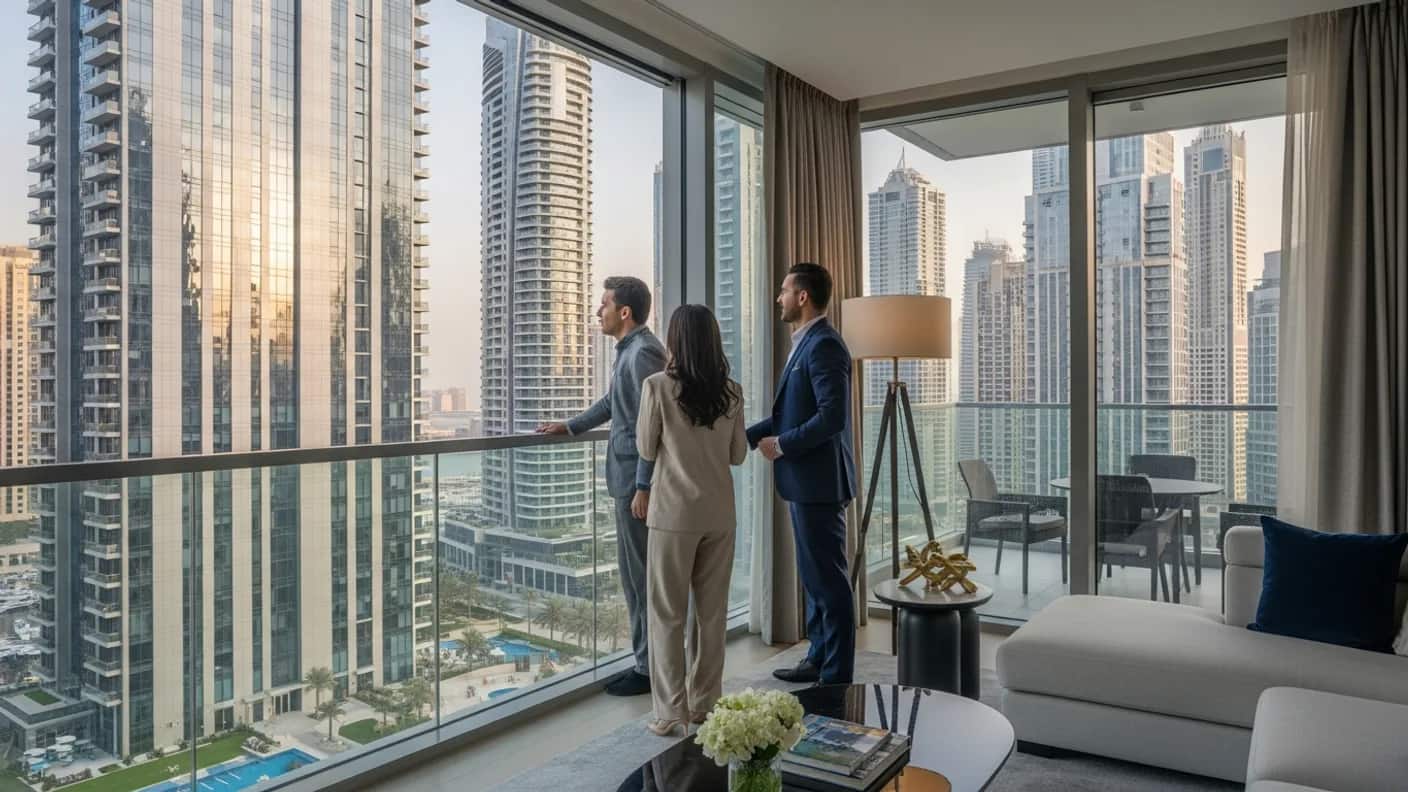
The Furnished Premium: A Dubai Investor's Guide
Is furnishing your Dubai investment property worth the cost? As an apartments specialist, I'll break down the strategies, budgets, and tenant profiles that determine whether furnishing will truly maximize your rental income.

The question lands on my desk at Gaia Living almost weekly: “Ravi, should I furnish my new apartment?” It comes from seasoned investors and first-time buyers alike, and my answer is always the same: it depends. Furnishing an investment property in Dubai isn’t a simple decorative choice; it’s a core business decision that can define your tenant pool, your yield, and your management overhead for years to come. Get it right, and you can unlock a significant rental premium and attract a higher calibre of tenant. Get it wrong, and you’ll find yourself with a capital-intensive headache and furniture that depreciates faster than it earns its keep.
Here's what we'll explore:
- The fundamental choice: Furnished vs. Unfurnished in the Dubai market.
- Pinpointing your ideal tenant and furnishing to their specific needs.
- The strategy for long-term lets: focusing on durability and timeless appeal.
- The strategy for short-term rentals: creating an experience to maximize rates.
- A detailed cost analysis: what it really costs to furnish a property, line by line.
- Evaluating turnkey solutions like developer packs versus independent designers.
- The practicalities of sourcing, quality control, and logistics in Dubai.
- Accounting for the hidden costs of maintenance and depreciation.
- My final verdict on the 'sweet spot' for furnishing to maximize returns.
The Great Debate: Furnished vs. Unfurnished
For decades, the default for annual rentals in Dubai was unfurnished. The model was built around residents who were putting down roots, bringing their own possessions in shipping containers. But the city has changed. Today’s rental market is increasingly driven by a transient, global workforce, corporate relocations, and digital nomads who want to land and start living immediately. This shift has created a powerful, and profitable, niche for the right kind of furnished property.
The primary argument for furnishing is, of course, to maximize rental income Dubai. In my experience, a well-executed furnished apartment in a prime location like Dubai Marina or Downtown Dubai can achieve a rental premium of 15% to 25% over its unfurnished counterpart. For a one-bedroom apartment renting for AED 100,000 a year unfurnished, that’s an additional AED 15,000 to AED 25,000 in gross income. This premium helps offset the initial furnishing cost and can significantly improve your net yield over the long run. Furnished properties also tend to attract a specific type of tenant — often corporate-sponsored, who is less price-sensitive and more focused on convenience.
However, this premium isn't automatic. The argument against furnishing is grounded in cost and complexity. It represents a significant upfront capital outlay, which I'll detail later. This isn't just a few thousand dirhams; for a quality setup, you are looking at a serious investment. This capital is then tied up in depreciating assets. Unlike the property itself, which may appreciate, a sofa or a mattress has a finite lifespan and will need to be replaced. This is a crucial part of the `landlord furnishing guide Dubai` that many new investors overlook. They see the higher rent but forget to budget for the inevitable replacement cycle.
Beyond that, being a landlord of a furnished property means you are not just managing real estate; you are in the furniture and appliance business. You are responsible for the repair of the washing machine, the replacement of the scratched coffee table, and resolving disputes over what constitutes “normal wear and tear.” According to the rules overseen by Dubai's Real Estate Regulatory Agency (RERA), landlords are responsible for major maintenance, and in a furnished unit, this scope expands. A leaking pipe is clear-cut. A faulty dishwasher? That’s on you. This added management burden is a real cost, whether you measure it in your own time or in fees paid to a property manager.
Defining Your Tenant Persona
 Featured project
Before you buy a single cushion or contemplate a colour palette, the first and most critical step in any `furnishing investment property Dubai` strategy is to define your target tenant. Furnishing without a specific end-user in mind is like trying to sell a product without knowing your customer. The needs of a single finance professional in DIFC are worlds apart from those of a young family in Dubai Hills or a tourist on Palm Jumeirah. The location of your property offers the first clue. At Gaia Living, we always begin our advisory process by analysing the specific demographics of a neighbourhood.
Let’s break down a few common tenant personas in Dubai:
- The Young Professional / Couple: This is the bread and butter of the one- and two-bedroom apartment market in areas like JVC, Business Bay, and the more accessible parts of Dubai Marina. They are tech-savvy, value style, and absolutely require a turnkey solution. For them, a dedicated, well-lit workspace is no longer a 'nice-to-have'; it's essential. The furnishing should be modern, functional, and durable. Think clean lines, smart storage, and robust connectivity. They are likely working for a major corporation or a dynamic startup and expect their home to reflect a contemporary, urban lifestyle.
- The Corporate Executive / Relocation: This tenant is often on a generous housing allowance and is looking for a premium, hassle-free experience in a top-tier location. They gravitate towards high-end towers in DIFC, Downtown, or City Walk. Quality is paramount. They expect premium appliances, a king-sized bed with a high-quality mattress, blackout curtains, and a kitchen equipped to a high standard. For this profile, you are not just providing furniture; you are providing an executive-level serviced living experience. The premium they are willing to pay is high, but so are their expectations.
- The Family: Families, particularly those with young children, have traditionally favoured unfurnished villas and townhouses in communities like Arabian Ranches or those developed by Emaar Properties in Dubai Hills. They typically arrive with their own belongings or prefer to choose items that suit their specific family needs. Furnishing for this market is risky. If you do, the focus must be on safety, durability, and practicality. Think washable fabrics, rounded corners, and ample storage for toys and school supplies. In most cases, however, offering a family home unfurnished provides the broadest appeal.
- The Holidaymaker / Short-Term Guest: This is a completely different ballgame, primarily focused on high-demand tourist zones like the Palm, Jumeirah Beach Residence, or Bluewaters Island. The 'wow' factor is everything. Your property is competing on platforms like Airbnb and Booking.com, where photos are king. The design needs to be bright, inviting, and 'Instagrammable'. You must provide absolutely everything a tourist would need, from beach towels and a Nespresso machine to a reliable, high-speed internet connection for posting their vacation photos. This is the essence of `short-term rental furnishing Dubai`: it's hospitality design, not residential furnishing.
Strategy for the Long-Term Let
When furnishing for an annual (long-term) lease, your mantra should be: “classic, durable, and neutral.” You are not decorating for your own taste or to win a design award. You are creating a clean, high-quality canvas that a tenant can personalize and live in comfortably for one, two, or even three years. The goal is to minimize maintenance, maximize the lifespan of your investment, and appeal to the widest possible segment of your target demographic.
My primary advice to landlords is to invest in the 'bones' of the apartment. This means focusing on items that are used daily and subject to the most wear. A cheap, flimsy sofa might look good for a viewing, but it will look tired and saggy after six months of use, leading to tenant complaints and premature replacement. Instead, opt for a mid-range sofa with a solid wood frame and removable, washable covers in a forgiving colour like grey, beige, or navy. Similarly, invest in a quality mattress. A tenant who sleeps well is a happy tenant, and this is an area where quality is immediately noticeable. Choose a reputable brand and always use a high-quality mattress protector.
For appliances, reliability trumps features. Choose well-known international brands like Bosch, Siemens, or LG that have strong local service centres in the UAE. Nothing sours a landlord-tenant relationship faster than a broken washing machine that takes weeks to fix because parts are unavailable. Ensure the kitchen has the core essentials: a good-sized refrigerator, an oven with a hob, a microwave, and a washing machine. A dishwasher, once considered a luxury, is now an expected standard in mid-to-high-end apartments and is a major plus for tenants. These core items are what tenants inspect closely, and quality here signals a well-maintained property.
One of the biggest mistakes I see landlords make is over-furnishing. Less is often more. You need to provide the essential, large-ticket items, but leave room for personalization. Here's a sensible checklist for a long-term let:
- Living Room: Sofa, armchair (if space allows), coffee table, media unit, rug, curtains/blinds.
- Dining Area: Dining table and chairs appropriate for the apartment size (e.g., 4 chairs for a 1-bed, 6 for a 2-bed).
- Bedroom: Bed frame with headboard, quality mattress, two bedside tables with lamps, a chest of drawers or dresser, and ensuring there is adequate built-in wardrobe space.
- Key Appliances: Refrigerator/freezer, cooker, washing machine (a washer/dryer combo is a bonus), microwave.
Critically, you should *not* typically provide items like cutlery, crockery, bedding, or towels for a standard long-term let. These are personal items, and tenants prefer to bring their own. Providing them adds to your initial cost, your inventory management, and your cleaning/replacement burden between tenancies. The exception is for high-end corporate lets, where a fully-equipped 'move-in ready' state is part of the premium service.
Strategy for the Short-Term Rental Play
The world of `short-term rental furnishing Dubai` operates under a completely different set of rules. Here, you are not just a landlord; you are a hotelier. Your property is a product being sold on a nightly basis, and your competition includes not just other apartments but also the thousands of hotel rooms across the city. Success in this space is driven by occupancy and daily rates, both of which are heavily influenced by the quality and completeness of your furnishing.
Unlike the 'less is more' approach of long-term lets, the short-term strategy is 'more is mandatory'. Your guest, whether they are in Dubai for a three-day holiday or a two-week business trip, expects everything to be provided. They will not be shipping their personal effects. The goal is to create a smooth, hotel-like experience with the comfort and space of a home. This means thinking through every detail of a guest's stay. The kitchen can't just have an oven; it needs pots, pans, cooking utensils, a full set of cutlery and crockery (I recommend enough for 1.5x the maximum occupancy), a coffee machine (Nespresso is the standard), a kettle, and a toaster. The bedroom needs multiple sets of high-quality linens, a choice of pillows, and, crucially, excellent blackout curtains.
“The aesthetic of a short-term rental is a marketing tool. The first battle is won online, and your photos need to stand out.”
Design is a critical differentiator. While a long-term let benefits from neutrality, a short-term let thrives on personality. It needs to be 'Instagrammable'. Think about a feature wall, a unique piece of art, stylish balcony furniture, or a bold light fixture. These elements create a memorable impression and justify a higher nightly rate. In areas like the Palm Jumeirah or near the beachfront at JBR, the design should feel light, airy, and coastal. In a trendy area like City Walk, it might be more urban and edgy. The key is to create a cohesive theme that looks fantastic in professional photographs.
However, this focus on style must be balanced with extreme durability and replaceability. The turnover of guests is high, and so is the rate of wear, tear, and accidental damage. That beautiful, delicate glass vase will be broken. The pristine white towels will be stained with makeup. It's a fact of the business. For this reason, you should avoid 'precious' or irreplaceable items. Source your decor, glassware, and even some smaller furniture items from accessible retailers like IKEA, Home Centre, or Zara Home, so that a replacement is quick and affordable. Your operations will require a locked owner's closet stocked with backup supplies — linens, towels, light bulbs, batteries, and common crockery items, to allow for swift changeovers between guests. Managing this inventory is a key part of running a successful holiday home.
A Line-by-Line Furnishing Budget
Talking about furnishing in the abstract is one thing; seeing the numbers is another. To make this tangible, I’ve put together a realistic cost breakdown for furnishing a typical 750 sq. Ft. one-bedroom apartment in Dubai. It's crucial to understand that this is a significant capital investment, and under-budgeting is a common and costly mistake. I've separated the costs into two tiers: a 'Good Quality Long-Term Let' focused on durability, and a 'Stylish Short-Term Let' which includes the complete inventory needed for holiday homes.
These figures are based on sourcing from a mix of mid-range Dubai retailers (like West Elm, Crate & Barrel for key pieces, and Home Centre or IKEA for others) and are exclusive of any design fees or project management costs. They represent the cost of the goods themselves.
Scenario 1: Furnishing for a Good Quality Long-Term Let
- Living & Dining Area:
- 3-Seater Sofa: AED 4,000 - 7,000
- Coffee Table & Side Table: AED 1,500 - 3,000
- TV/Media Unit: AED 1,500 - 2,500
- Rug (160x230cm): AED 800 - 1,500
- Dining Table with 4 Chairs: AED 2,500 - 5,000
- Curtains (Custom-made, blackout lined): AED 2,000 - 3,500
- *Sub-total: AED 12,300 - 22,500*
- Bedroom:
- King Bed Frame & Headboard: AED 2,500 - 5,000
- Quality King Mattress: AED 3,000 - 6,000
- Bedside Tables (x2): AED 1,000 - 2,000
- Chest of Drawers/Dresser: AED 1,500 - 3,000
- Curtains (Custom-made, blackout lined): AED 1,500 - 2,500
- *Sub-total: AED 9,500 - 18,500*
- Appliances & Electronics:
- 55" Smart TV: AED 2,000 - 3,500
- Refrigerator/Freezer: AED 2,500 - 4,000
- Washing Machine (or Washer/Dryer): AED 2,000 - 4,000
- Electric Oven/Hob: AED 1,500 - 3,000
- Microwave Oven: AED 400 - 800
- Kettle & Toaster: AED 300 - 600
- *Sub-total: AED 8,700 - 15,900*
- Miscellaneous:
- Lighting (Lamps, etc.): AED 1,000 - 2,000
- Basic Decor (Art, a few plants): AED 1,000 - 2,500
- Delivery & Assembly Fees: AED 500 - 1,500
- *Sub-total: AED 2,500 - 6,000*
- Total Estimated Cost (Long-Term): AED 33,000 - 62,900
Scenario 2: Additional Costs for a Stylish Short-Term Let
For a short-term let, you need everything above, *plus* a complete home setup. This is where costs escalate.
- Kitchen & Dining Ware:
- Full Cutlery, Crockery, Glassware (for 6 people): AED 1,500 - 3,000
- Pots, Pans, & Cooking Utensils: AED 1,000 - 2,000
- Nespresso Machine: AED 600 - 1,200
- Linens & Soft Furnishings:
- Bed Linens (3 sets): AED 1,500 - 3,000
- Pillows & Duvet: AED 800 - 1,500
- Towels (Bath, hand, face, beach - multiple sets): AED 1,500 - 2,500
- Extra Decorative Cushions & Throws: AED 500 - 1,200
- Amenities & Extras:
- Hairdryer, Iron, Ironing Board: AED 500 - 1,000
- Vacuum Cleaner: AED 400 - 800
- Balcony Furniture (if applicable): AED 1,500 - 4,000
- Enhanced Decor (more art, mirrors, plants): AED 2,000 - 5,000
- Additional Cost for Short-Term: AED 11,800 - 25,200
- Total Estimated Cost (Short-Term): AED 44,800 - 88,100+
As you can see, the initial outlay is substantial. An investor must weigh this cost against the potential 15-25% rental premium. If your furnishing costs AED 60,000, and you gain an extra AED 20,000 in annual rent, your payback period on the furniture alone is three years — before accounting for depreciation and replacement.
Turnkey Solutions: Developer Packs vs. Independent Designers
For many overseas or time-poor investors, the logistics of furnishing a property in Dubai are daunting. This has given rise to a market for turnkey solutions, primarily falling into two camps: furniture packs offered by developers and services provided by independent interior design or furnishing companies. Each has distinct pros and cons.
Developer furniture packs are often presented as the path of least resistance, particularly with off-plan launches. Major developers like Damac and Emaar frequently offer them. The proposition is compelling: you tick a box, pay a fee (which can sometimes be bundled into the property price and mortgage), and on handover day, you receive the keys to a fully furnished apartment. This eliminates the headache of sourcing, delivery scheduling, and installation. The design is usually pre-approved to match the building's aesthetic, ensuring a consistent look. It’s the definition of a hands-off investment.
However, convenience comes at a price, and not just a financial one. In my experience, the quality of developer packs can be inconsistent. The furniture often looks better in the showroom than it feels in reality, with a focus on aesthetics over long-term durability. You are paying a premium for the convenience, and a detailed breakdown of the items often reveals that the pack is overpriced compared to retail. Beyond that, you get zero customization. Every apartment with the pack looks identical, removing any opportunity to create a unique selling proposition. My advice is to always request a detailed inventory list with specifications and brands, and if possible, visit a show unit to physically inspect the quality before committing.
The alternative is to engage an independent interior designer or a specialized turnkey furnishing company. This is the route I recommend for investors who want a higher quality, more personalized result but still need professional management. These firms offer a spectrum of services, from a simple furniture package to a full interior design consultation. The key advantage is expertise and customization. A good designer will work with you to understand your target tenant and budget, creating a bespoke scheme that maximizes the property's appeal. They have established trade relationships, access to a wider range of suppliers than the average consumer, and — most importantly, they handle the entire project management nightmare of procurement, delivery consolidation, installation, and snagging. This is their core business.
Of course, this professional service comes with a fee, typically charged as a percentage of the total furnishing budget (10-20%) or as a fixed project fee. While this adds to the upfront cost, a good firm can often save you money through trade discounts and by avoiding costly mistakes. They will create a product that stands out in the rental market, potentially leading to faster leasing and a higher premium. The key is due diligence. Ask to see a portfolio of their completed projects for similar properties, speak to their former clients, and ensure you have a very clear, itemized contract and budget before work begins.
Sourcing, Quality, and Logistics
For the hands-on investor willing to take on the project themselves, Dubai offers a vast and varied landscape for sourcing furniture. Your success will depend on your ability to navigate these options and, crucially, to manage the often-frustrating logistics of getting everything into the apartment. The city caters to every budget and style, from mass-market retailers to bespoke artisan workshops.
Your first port of call for budget-conscious, comprehensive solutions will be the giants like IKEA, Home Centre, and Pan Emirates. They offer the significant advantage of being a one-stop-shop where you can get everything from a sofa to a spatula, often with integrated delivery and assembly services. This is particularly useful for kitting out a short-term rental where you need a large volume of smaller items. The style is contemporary and the price is right, but be selective about quality. While some of their ranges are surprisingly robust, others are not built to withstand the rigors of rental life.
For investors looking to create a more premium feel, a move up the value chain to stores like Crate & Barrel, West Elm, and Pottery Barn is a smart move. I often advise clients to use a "high-low" strategy: spend your money on the key 'touchpoint' pieces like the sofa, the dining table, and the master bed from these mid-to-high-end stores. These are the items that convey quality and durability. You can then supplement with more affordable decor, lighting, and side tables from less expensive retailers. This blended approach creates a premium feel without an exorbitant budget.
For true luxury properties in postcodes like Emirates Hills or penthouses on the Palm, the sourcing game changes again. Here, you would be looking at high-end showrooms on Sheikh Zayed Road or exploring the bespoke workshops and design houses in Al Quoz and the Dubai Design District (d3). This is where you find unique, statement pieces that can define a luxury space. However, this is a world of long lead times and high costs, usually navigated with the help of a professional interior designer.
Regardless of where you shop, the real work begins with logistics. Every building in Dubai has its own rules for move-ins and deliveries, almost always requiring a No-Objection Certificate (NOC) from the building management, which can take a day or two to process. You cannot simply show up with a truck. Coordinating multiple deliveries from different suppliers to arrive within a specific timeframe is a complex task. Assembly is another hurdle; while some retailers offer it, many do not, leaving you to find reliable handymen. This logistical challenge is the single biggest argument for using a turnkey furnishing company, whose entire business is built around solving these problems efficiently.
Maintenance, Depreciation, and Hidden Costs
The final, and most frequently ignored, piece of the furnishing puzzle is accounting for the future. The initial purchase price of your furniture is not its true cost. These are depreciating assets with a finite lifespan, and you must budget for their ongoing maintenance and eventual replacement. A landlord who fails to do this will see their initial investment eroded and their property become less competitive over time.
As a rule of thumb, I advise my clients to set aside 5-10% of the property's annual rental income specifically for a furniture maintenance and replacement fund. For an apartment generating AED 120,000 in rent, that's AED 6,000 to AED 12,000 per year that should be ring-fenced. This fund will cover the cost of professional cleaning of upholstery and rugs between tenancies, repairing appliances that are out of warranty, and replacing items that have reached the end of their life. A sofa might last five years, a mattress three to five, a washing machine five to seven. These are not one-time purchases; they are recurring operational expenses.
Understanding the legal distinction between “normal wear and tear” and “tenant damage” is also critical. This is a common point of contention during the deposit refund process. Normal wear and tear refers to the expected decline in an item's condition due to normal, everyday use — think minor scuffs on a wall, gentle fading of sofa fabric, or light scratches on a wooden floor. The cost of rectifying this is the landlord's responsibility. Tenant damage, on the other hand, is the result of negligence or abuse, a large wine stain on a rug, a broken chair leg, a burn mark on a kitchen counter. The cost of repairing this can be deducted from the tenant's security deposit, provided you have a thorough, photo-documented entry and exit report to prove the damage occurred during their tenancy. The Dubai Land Department's rental dispute settlement centre is the ultimate arbiter here, and clear documentation is your best friend.
For short-term lets, this entire process is amplified. With high guest turnover, the rate of wear and tear is much faster. You should expect to replace all your glassware and a good portion of your crockery annually. Towels and linens, even high-quality ones, will likely need to be replaced every 12-18 months. Small appliances like kettles and toasters have a surprisingly short life in a holiday home environment. These are not 'hidden' costs; they are predictable, operational expenses that must be factored into your nightly rate and financial projections. Successful holiday home operators are masters of this financial modelling, balancing the cost of maintaining a pristine guest experience against the revenue it generates.
Furnishing a Dubai investment property is a strategic tool, not a decorative afterthought. The decision to furnish should be driven entirely by your target tenant and location, with a clear-eyed analysis of the costs, management overhead, and potential rental premium. For most investors, the sweet spot lies in creating a durable, stylish, and neutral environment for the long-term rental market in high-demand professional hubs, capturing a solid premium without the intense operational demands of short-term letting.
Ultimately, a well-presented property, whether furnished or not, will always lease faster and to a better tenant than a neglected one. In a competitive market like Dubai, quality always wins. Whether you engage us at Gaia Living to find you the right property, or you're looking to optimize one you already own, approaching it with a clear strategy is the first and most important step to maximizing your returns.
Sources
- Dubai Land Department (DLD): https://dubailand.gov.ae/en/
- Real Estate Regulatory Agency (RERA): Integrated within the DLD's functions and website.
- UAE Government Portal - Tenancy Rules: https://u.ae/en/information-and-services/housing/renting-a-home
Questions, answered
- How much extra rent can I charge for a furnished property in Dubai?
- A well-furnished property can typically command a 15-25% rental premium over an unfurnished equivalent. This premium varies based on the location, quality of the furnishings, and target tenant profile.
- What is the average cost to furnish a one-bedroom apartment in Dubai?
- The cost varies significantly with quality. Budget around AED 40,000 to AED 70,000 for a good quality long-term let, and AED 55,000 to AED 90,000+ for a fully-equipped short-term rental that includes everything from cutlery to linens.
- Is it better to furnish for long-term or short-term rentals?
- It depends on your investment goals. Long-term furnishing focuses on durability for a stable income, while short-term requires a more complete, 'Instagrammable' setup for higher potential nightly rates but also involves more management and faster wear and tear.
- Are developer furniture packs a good value?
- Developer packs offer convenience, as the property is ready at handover. However, they can be generic and sometimes overpriced for the quality provided. It's wise to compare the cost and contents against sourcing furniture independently or through a design firm.
- What's the difference between 'wear and tear' and 'damage' for a furnished rental?
- Normal wear and tear, like minor scuffs or fading, is the landlord's responsibility and a cost of doing business. Damage, such as a broken piece of furniture or a large stain, is caused by tenant negligence and can typically be deducted from the security deposit, as per RERA guidelines.

Ravi lives and breathes apartment living — from studio yields in JVC to branded residences on the Palm. Floor plans, service charges, and view lines are his love language.
Related stories
Right-Sizing Your Dubai Villa for a New Chapter
As an empty nester or active retiree, your idea of the perfect Dubai home shifts. I explore the best villa communities that prioritise lifestyle and low-maintenance living over sheer size.
Dubai's AC Dilemma: The Real Cost of Cooling
Your apartment's air conditioning is more than just a utility—it's a major factor in your monthly budget and comfort. I'll break down the real costs and benefits of Dubai's two main cooling systems, helping you choose your next home wisely.
Managing Multiple Offers: A Dubai Seller's Playbook
Receiving multiple offers on your Dubai property is an excellent problem to have, but handling it incorrectly can cost you time and money. Here’s my strategic playbook for managing competitive bids to secure the best possible outcome.
Echoes, in your inbox
One thoughtful email a month. Market insight, new launches, no spam.