

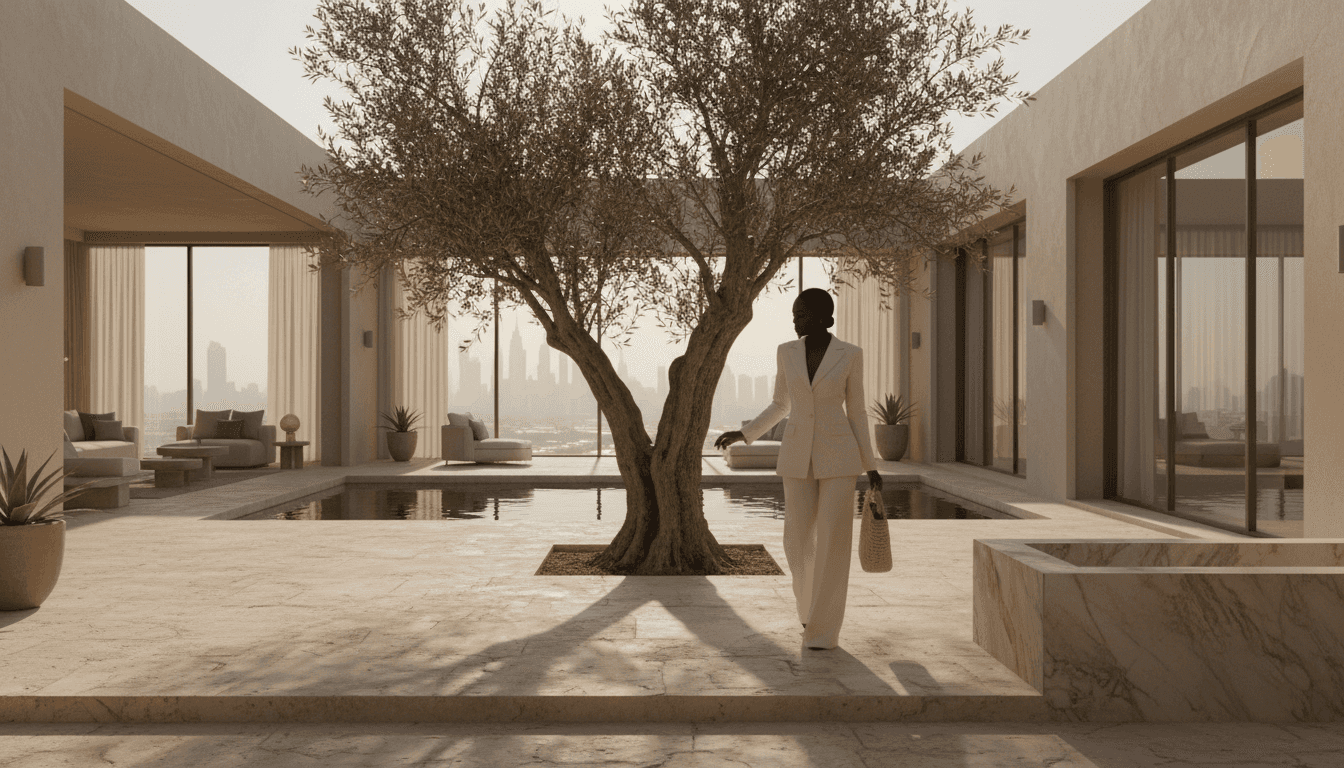
The Art of Selling a Legacy Dubai Home
Selling an older or uniquely customised home in Dubai requires a different strategy than marketing a new launch. I'll walk you through how to turn your property's history and unique character into its greatest selling points.

In a city defined by the new and the next, what happens to the properties that came before? Selling an older or uniquely customised home in Dubai presents a challenge I find fascinating. It requires a different playbook from the one we use for off-plan launches or brand-new towers. Here, you’re not just selling square footage; you're selling a story, a location, and a character that can't be replicated.
Here’s the strategic approach we'll cover:
- The real definition of a 'legacy property' in the Dubai context.
- The crucial psychological shift: reframing 'old' as 'heritage'.
- Strategic pre-listing investments and where your money is best spent.
- The documentation deep dive for older and modified homes.
- How to price your unique asset without falling into the comparison trap.
- The art of storytelling in your marketing to find the right buyer.
- How to anticipate and navigate common buyer objections.
- The final steps for closing your deal smoothly.
What is a 'Legacy Property' in Dubai?
When I use the term 'legacy property', I’m not just talking about age. In a city where 'old' can mean a building from 2005, the definition is relative. A legacy property is one that has a story, established character, and a location that has matured over time. These are the homes that form the bedrock of Dubai's most beloved communities. They are the antithesis of the identikit glass boxes that have come to dominate recent construction cycles. This category includes a wide spectrum, from a 1990s villa in Jumeirah to an early-2000s apartment in Dubai Marina, or a home that has been significantly, and personally, customised by its owner.
Think of the original villas in Arabian Ranches, developed by Emaar Properties. When they were built, they were on the edge of the desert. Today, they are at the heart of a thriving, green, and self-sufficient community. A villa there isn't just a structure; it's a home surrounded by mature trees, established schools, and a palpable sense of neighbourhood. This is a key selling point that a new villa in a developing area simply cannot offer. The same applies to apartments in the first six towers of Dubai Marina or in older parts of Downtown Dubai. These buildings often feature more generous layouts and prime positions that were secured long before the surrounding land became so intensely developed.
Another critical type of legacy property is the custom-built home. These are often found in freehold villa communities where owners purchased a plot and built to their own specifications. They might feature unique layouts, specialist materials, or extensive modifications that deviate from the developer's standard model. This could be a basement cinema, a professionally landscaped garden with a specific theme, or a major internal reconfiguration. While these features represent a significant investment and personal attachment for the seller, their value in the open market can be subjective. The challenge — and the opportunity, in a selling custom built Dubai transaction is to translate that personal value into a compelling market proposition.
The Psychological Shift: From 'Old' to 'Heritage'
 Featured project
Words matter immensely in real estate. The single most important strategic shift you must make when preparing for a legacy home sale Dubai is to banish the word 'old' from your vocabulary. 'Old' implies decay, obsolescence, and problems. It puts you on the defensive. Your property isn't 'old'; it's 'established', 'mature', 'classic', or has 'heritage'. This isn't just marketing spin; it's a fundamental reframing that repositions your property's key attributes as strengths, not weaknesses. You are selling something with a proven track record, in a location that has stood the test of time.
Consider the buyer psychology. The buyer for a brand-new apartment is often chasing a trend, a specific view, or a developer's promise of a certain lifestyle. The buyer for a legacy property is often looking for something different: space, stability, and character. They might be a family that values a large garden with shade from 20-year-old trees, something impossible to find in a new development. They could be a professional couple who dislikes the 'shoebox' feel of some newer apartments and craves the more spacious, separated layouts common in buildings from the early 2000s. These buyers exist, but they are a specific niche. Our job is not to try and convince the 'new-build' buyer, but to find and captivate the 'character' buyer.
This reframing must be consistent across every touchpoint. In your property listing description, you don't say, "An older villa in need of some updates." You say, "A classic villa in the heart of the original Meadows community, offering a generous plot and mature landscaping rarely found in Dubai." You’re not hiding the age; you are contextualising it as a positive. The photographs should lean into this, capturing the dappled light through the mature trees, the sense of privacy, and the unique architectural details. The goal is to build a narrative where the property's age is synonymous with quality, substance, and a lifestyle that is both authentic and sought-after.
When we take on a listing for what some might call a selling vintage Dubai home, we begin by identifying these core 'heritage' strengths. Is it the plot size? The specific community phase known for better build quality? The irreplaceable view that can never be built out? The unique floor plan before open-plan became the only option? We build the entire marketing campaign around these pillars. It’s a targeted approach that attracts buyers who appreciate these specific qualities and are willing to pay for them, rather than trying to compete on price with the latest high-tech tower down the road.
Strategic Pre-Listing Investments: Spend Wisely
When preparing an older property for sale, sellers often face a critical question: how much should I invest in upgrades? Many fall into one of two traps. The first is doing nothing, listing a tired, cluttered home and hoping a buyer will 'see the potential'. This is a recipe for lowball offers and a long time on the market. The second trap is over-capitalising — spending a fortune on a full-scale renovation that reflects your personal taste but fails to deliver a return on investment. The key is to be strategic, focusing on high-impact, low-cost improvements that address common buyer turn-offs and enhance the property's best features.
My advice is almost always to resist the urge for a major overhaul. A brand-new kitchen or bathroom might cost you AED 150,000, but it’s unlikely to add that much to the final sale price. Buyers have specific tastes; they might hate the countertop you chose and mentally factor in the cost of replacing it anyway. Instead, focus your budget on 'neutralising' and 'refreshing' the space. This allows potential buyers to project their own vision onto the home. Here is my go-to checklist for sellers of older properties:
- Professional Deep Cleaning: This is non-negotiable. Hire a professional company to clean everything from windows and grout to AC vents and light fittings. It signals that the home has been well-maintained. Cost: AED 1,000 - 3,000.
- A Fresh Coat of Paint: Paint is the single most cost-effective upgrade. Choose a warm, neutral colour like white, soft grey, or beige. A fresh coat instantly makes a space feel brighter, cleaner, and larger. Avoid bold feature walls. Cost: AED 5,000 - 15,000 for a typical villa.
- Modernise Fixtures: You can modernise the feel of a kitchen or bathroom for a fraction of the cost of a renovation. Swap out dated cabinet handles, old faucets, and builder-grade light fixtures for contemporary, stylish alternatives. This small detail has a huge psychological impact. Cost: AED 2,000 - 5,000.
- Declutter and Depersonalise: This is free, but it's where most sellers struggle. Your treasured family photos, collections, and oversized furniture make it difficult for buyers to see themselves in the space. Rent a temporary storage unit and be ruthless. A minimalist, staged home always sells faster and for more.
- Curb Appeal and Garden Tidy-Up: For villas, the first impression is everything. Ensure the garden is tidy, the lawn is green, and the entrance is welcoming. Prune overgrown trees, add some fresh flowers in pots, and pressure-wash the driveway. This sets a positive tone before the buyer even steps inside. Cost: AED 1,000 - 4,000.
“The goal of pre-listing investment isn't to create your dream home; it's to create a blank canvas that appeals to the broadest possible audience, allowing them to envision their own dream.”
I recently worked with a client selling a 15-year-old villa in Al Barari. The home was structurally sound but felt dated, with dark wood finishes and heavy drapery. The owner was considering a full AED 400,000 renovation. We advised against it. Instead, they spent around AED 60,000 on our recommended strategic refresh: painting all the dark wood white, replacing the heavy curtains with light linen blinds, updating all the lighting to modern LEDs, and professionally staging the main living areas. The villa sold within three weeks for a price that far exceeded what a 'tired' version would have achieved, and the owner saved over AED 300,000 in unnecessary renovation costs. This is the power of strategic, targeted investment.
Documentation Deep Dive for Older and Modified Homes
One of the most critical, yet often overlooked, aspects of an older villa sale Dubai is the paperwork. For a straightforward, unmodified property, the process is simple. But for a home that has seen upgrades, extensions, or structural changes over the years, a clean and complete document file is paramount. A missing approval or certificate can delay or even derail a sale at the final hurdle, causing immense stress and potential financial loss. Before you even think about listing, you must conduct a thorough audit of your property's legal and technical documentation.
The starting point for any property sale in Dubai is the Title Deed. This is your proof of ownership. Alongside it, you will need your passport and Emirates ID. However, for a modified property, the list gets longer. The key document is the Affection Plan, which is an official site plan from the Dubai Municipality that shows your plot boundaries. If you have made any changes to the footprint of your villa — such as extending a room or adding a structure in the garden, you must have the paperwork to prove these changes were approved by both the master developer (e.g., Nakheel or Emaar) and the relevant authorities like Dubai Municipality or Trakhees.
Here’s a typical documentation checklist you should assemble before going to market with a modified legacy property:
- Title Deed: The original document proving your ownership.
- Passport/Emirates ID: Valid copies for all registered owners.
- Affection Plan: The official plot plan from Dubai Municipality.
- Developer NOCs for Modifications: Any and all No Objection Certificates from the master developer for changes made, such as extensions, adding a pool, or altering the facade.
- Authority Completion Certificates: The final inspection reports and completion certificates from Dubai Municipality, Trakhees, or other relevant bodies for all approved modifications.
- Up-to-Date Service Charge Statements: Proof that all community service charges are paid in full.
- DEWA Bill: A recent bill, required for the final DEWA transfer.
If you are missing any of these approval documents, you must start the process of rectifying this immediately. This can sometimes involve a process called 'regularisation', where you retroactively seek approval for unpermitted works. This can be time-consuming and may require architectural drawings and even minor remedial work to bring the modification up to current code. It’s far better to resolve this before a buyer is involved. When we at Gaia Living onboard a legacy property, this documentation review is one of the very first things we do. Finding a problem early gives us time to fix it; finding it after you’ve signed a sales agreement (MOU) can put you in breach of contract.
This is especially crucial for financing. A buyer who requires a mortgage will find that their bank will conduct a thorough valuation and inspection of the property. If the valuer notes unpermitted extensions or modifications, the bank will likely refuse to lend against the property, causing the deal to collapse. By having all your paperwork in perfect order from day one, you de-risk the transaction for both yourself and the buyer, creating a smoother, faster, and more secure sale.
Pricing Your Unique Asset: The Comparison Trap
Pricing a legacy property is more art than science. While data is crucial, you cannot rely solely on a simple price-per-square-foot comparison with neighbouring properties. This is the biggest mistake sellers make. Your uniquely maintained or customised home is, by definition, not the same as the standard unit next door. A property portal's algorithm can't understand that your villa has a professionally landscaped garden worth AED 200,000, or that your apartment has a rare, unobstructed view of the Burj Khalifa that can never be blocked. Falling into the simple comparison trap will almost certainly lead to you leaving money on the table, or worse, overpricing your home and having it languish on the market.
The correct approach is to build a valuation from the ground up. We start with a baseline: what have standard, unmodified properties of the same type and size in your immediate area sold for in the last 3-6 months? This data, sourced from the Dubai Land Department's REST app and our own transaction records, gives us a solid foundation. From there, we begin to layer in the value of the unique attributes. This is where an experienced agent's judgment is invaluable. We quantify the 'unquantifiable' by looking at it through a buyer's eyes. How much more would a discerning buyer pay for a corner plot? For a high floor with a sea view? For a tastefully upgraded kitchen versus an original one?
Let’s take a practical example for a unique maintenance property Dubai. Imagine two identical 4,000 sq. Ft. villas in the same cluster in Jumeirah Islands. The baseline price for a standard unit is AED 8 million. Villa A is standard. Villa B, however, has had its garden completely redesigned by a famous landscape architect, its pool upgraded, and features a high-end smart home system. The owner of Villa B cannot simply add their AED 700,000 in upgrade costs to the AED 8 million base price and list for AED 8.7 million. The market doesn't work that way. Instead, we would assess the premium the market is willing to pay for these *types* of features. A stunning garden might add a 5% premium, and a top-tier smart home system perhaps another 2-3%. The price might land closer to AED 8.5 million — a significant uplift, but a realistic one.
Conversely, some customisations can unfortunately detract from value. A very niche or personal design choice — like converting two bedrooms into one massive master suite in a family-oriented community, can narrow your pool of potential buyers. In these cases, we have to be honest with the seller. The price might need to be adjusted downwards to reflect the cost a new owner might incur to revert the change. The key is a frank, data-informed conversation that balances the property's unique strengths against market realities. It’s about finding that sweet spot where the price is ambitious enough to reflect the home's special character but realistic enough to attract serious offers.
The Art of Storytelling in Your Marketing
Once you have the pricing strategy nailed down, the focus shifts to marketing. For a legacy property, this is not a numbers game. You are not just listing features; you are telling a story. The goal is to create an emotional connection with the right buyer before they even set foot in the property. Your marketing materials — the photography, the video, the written description, must work together to convey the unique narrative of your home. Who is this home for? What kind of life can one live here? This is what we need to communicate.
Photography is the sharp end of the spear. Standard, wide-angle real estate photos won't cut it. For a property with character, we need 'lifestyle' photography. This means capturing details: the way the morning light hits the breakfast nook, the texture of the stone in the garden, the view from the reading corner on the balcony. It’s about selling a feeling, not just a space. For an older apartment in Jumeirah Beach Residence (JBR), we would focus on the walkability, the sound of the sea, the established community feel on The Walk — elements that newer, more isolated developments lack. We are selling the 'why' behind the property.
The written description is equally important. Instead of a boring list of rooms and measurements, we craft a narrative. For example, when selling an older home in Jumeirah, we might start with: "Set on a quiet street just a short walk from the beach, this classic Jumeirah villa offers a rare blend of privacy and community. The mature garden, with its soaring ghaf trees, creates a private oasis perfect for family gatherings, a world away from the city's hustle." This language immediately appeals to a specific buyer profile. We are painting a picture of a life, not just describing a building. Every word is chosen to reinforce the 'heritage' frame we established earlier.
Digital marketing allows us to be incredibly targeted. We don’t just put the listing on property portals and hope for the best. We identify the likely buyer demographic and target them directly. Is it a European family looking for a garden and proximity to top schools? We can target ads to that demographic on social media. Is it a high-net-worth individual looking for a unique penthouse with classic charm? We can use our network and specific wealth-focused media. For a selling older property Dubai campaign to succeed, it must be precise and intelligent, focusing its firepower on the small segment of the market that will truly appreciate what makes your home special.
Navigating Buyer Objections
When buyers view an older property, they often come armed with a set of predictable concerns. As a seller, your best strategy is to anticipate these objections and prepare compelling, honest answers. Being caught off guard or appearing defensive can quickly erode a buyer's trust. By proactively addressing potential issues, you demonstrate transparency and confidence in your property's value.
The most common objection is, of course, maintenance. Buyers will worry about the condition of the air conditioning, plumbing, and electrical systems. They will ask, "How old is the AC?" or "Have there been any leaks?" The worst response is "I don't know." The best response is a file of evidence. This is where meticulous record-keeping pays dividends. Be ready with a folder containing maintenance contracts, receipts for recent servicing, and any warranties for replaced equipment. If you can show a 15-year history of annual AC servicing by a reputable company, you instantly transform a potential negative into a positive, proving the home has been cared for.
Here’s a breakdown of how to prepare for common objections:
- Objection: "The DEWA bills must be high in a house this size/age."
- Poor Response: "It depends on how you use it."
- Strong Response: "That's a fair question. Here are the DEWA bills from the last 12 months. As you can see, we average around AED X per month, which is quite efficient for a home of this size, partly due to the new AC units we installed two years ago and the mature trees that provide excellent shade."
- Objection: "The kitchen/bathrooms look dated."
- Poor Response: "Well, you can always renovate it."
- Strong Response: "We priced the home with that in mind. This allows the new owner the flexibility and budget to create a space that perfectly suits their own taste, rather than paying a premium for a renovation they might not love."
- Objection: "The service charges seem high."
- Poor Response: "They are what they are."
- Strong Response: "Let me show you what's included. The charge covers the maintenance of the two community pools, the gym, the extensive landscaping, and 24-hour security. In our experience, communities with these robust amenities and high standards of upkeep tend to hold their value far better over the long term. You're investing in the entire community's quality."
For properties with significant customisations, the objection might be more personal: "This layout is a bit strange." It is vital not to get offended. Your unique home office might be a buyer's future nursery. Acknowledge their point of view and gently reframe. For example: "Yes, the owner who built it was a writer and needed a quiet space. It's a very flexible room; we've had other viewers mention it would make a perfect playroom or even a guest suite." By providing alternative uses, you help them see past your personal choices and envision their own life in the space.
Closing the Deal: Managing the Final Steps
Once you’ve accepted an offer, the journey isn't over. The closing process for a legacy or modified property can have a few extra steps, and managing them efficiently is key to a successful completion. This final phase is all about clear communication, proactive administration, and managing expectations on both sides of the transaction. The goal is to prevent any last-minute surprises that could jeopardise the deal.
The first step after a verbal agreement is the signing of the Memorandum of Understanding (MOU), or Form F as it's known in the Dubai Land Department system. This legally binding document outlines the terms of the sale, including the price, payment schedule, and completion date. It's crucial that the MOU accurately reflects any specific conditions related to the property's age or modifications. For instance, if the sale is conditional on the buyer obtaining a satisfactory inspection report, this must be clearly stated.
Next comes the No Objection Certificate (NOC) process. As the seller, you are responsible for obtaining the NOC from the master developer. This certificate confirms that all service charges and any other fees due to the developer have been paid and that they have no objection to the transfer of ownership. For a modified property, this is the stage where the developer will check their records for the modification approvals we discussed earlier. If your paperwork is not in order, the developer can refuse to issue the NOC, halting the entire sale. This is why the upfront documentation audit is so critical. Assuming all is in order, the NOC fee typically ranges from AED 500 to AED 5,000, depending on the developer.
Finally, the transfer takes place at the offices of a Registration Trustee, appointed by the Dubai Land Department (DLD). Both buyer and seller (or their legal representatives with Power of Attorney) must be present. The buyer will submit the manager's cheques for the property price and the 4% DLD transfer fee. The seller will hand over the keys and access cards. The Trustee will process the transaction, and the DLD will issue the new Title Deed in the buyer's name. It's a transparent and secure process, but it requires all parties to have their ducks in a row. A good agent will manage this entire sequence, coordinating with the developer, the bank's valuers, and the registration trustee to ensure a smooth conclusion to your sale.
Selling a legacy property in Dubai is a specialised craft. It’s not about competing with the new; it's about confidently showcasing the value of the established. By reframing 'old' as 'heritage', investing strategically, pricing intelligently, and telling a compelling story, you can attract the right buyer who sees the unique character of your home not as a flaw, but as its greatest asset. It's a process that rewards preparation and strategic thinking, turning what could be a challenge into a highly successful sale.
Sources
- Dubai Land Department (DLD): dubailand.gov.ae
- Real Estate Regulatory Agency (RERA): rera.gov.ae
- Dubai REST App: dubairest.gov.ae
- UAE Government Portal (Property Laws): u.ae
Questions, answered
- Is it harder to sell an older property in Dubai?
- It's not harder, but it requires a different strategy. While Dubai's market is drawn to newness, older properties in established communities like The Meadows or Arabian Ranches offer mature landscaping, larger plots, and a sense of community that many buyers actively seek. The key is to price it correctly and market its unique story.
- Should I renovate my older Dubai villa before selling?
- Not necessarily a full renovation. Focus on high-impact, low-cost upgrades: a professional deep clean, fresh neutral paint, modernising light fixtures and handles, and decluttering. Major kitchen or bathroom overhauls rarely provide a 100% return and are better left to the new owner's taste.
- What is the biggest mistake when selling a custom-built home in Dubai?
- The biggest mistake is overvaluing your personal customisations. While a feature might have been expensive or meaningful to you, a buyer may not see the same value. It's crucial to price the home based on its core assets — location, size, and condition, and treat unique features as a bonus, not the primary driver of an inflated price.
- What documents do I need for a property with modifications?
- In addition to standard documents like the Title Deed and your passport, you'll need the Affection Plan from Dubai Municipality and, most importantly, completion certificates and approvals for all modifications. If you've extended a room or altered the structure, you must have the relevant permits from the developer and authorities to secure a No Objection Certificate (NOC) for the sale.
- How do you price an older apartment with a great view?
- Pricing involves comparing it to recent sales of similar-sized units in the same building or cluster. However, you can command a premium for a superior view (e.g., a full sea view in Dubai Marina vs. A partial view). This premium is determined by current market demand and recent transactions for units with comparable views, which a good agent can analyse for you.

Lena writes exclusively for owners looking to sell. Staging, listing timing, agent selection, and how to read a lowball offer — she's in the seller's corner.
Related stories

Selling Land in Dubai: A Complete Process & Cost Guide
A comprehensive guide for owners on the process, costs, and strategies for successfully selling a vacant plot in Dubai's dynamic real estate market.
Mixed-Use Service Charges: Who Really Pays?
In Dubai's dynamic mixed-use developments, the method used to allocate service charges between residential, retail, and commercial units can significantly impact a homeowner's costs. I unpack the complexities of fair allocation and what it means for your bottom line.

The Commuter's Edge: Dubai's Secretly Connected Hubs
Forget the car-city myth. I'm revealing the Dubai neighbourhoods with surprisingly brilliant public transport links that offer a smarter, more cost-effective lifestyle.
Echoes, in your inbox
One thoughtful email a month. Market insight, new launches, no spam.