

Mixed-Use Service Charges: Who Really Pays?
In Dubai's dynamic mixed-use developments, the method used to allocate service charges between residential, retail, and commercial units can significantly impact a homeowner's costs. I unpack the complexities of fair allocation and what it means for your bottom line.

The allure of living in a vibrant mixed-use community is a cornerstone of the modern Dubai lifestyle. Yet for residential property owners, the financial mechanics underpinning these sophisticated ecosystems are often opaque, particularly for the annual service charges. My analysis suggests that the methods used for *common area allocation Dubai* are not just an accounting detail; they are a critical factor that can disproportionately inflate costs for homeowners if not structured with precision and transparency.
Here's what we will explore:
- The fundamental principles of Dubai's service charge framework under RERA.
- The unique challenges presented by mixed-use architecture.
- How costs are, or should be, allocated between residential, retail, and commercial components.
- A deep dive into real-world examples in communities like DIFC and Business Bay.
- The tools and due diligence required for buyers to protect their interests.
The Bedrock: RERA, Owners Associations, and Service Charges
Before dissecting the complexities of mixed-use properties, it is essential to ground our understanding in the legal framework that governs all jointly owned properties in Dubai. The Real Estate Regulatory Agency (RERA), an arm of the Dubai Land Department (DLD), provides the regulatory oversight. The core principle is that owners of individual units within a building or community collectively own the common areas and are therefore collectively responsible for their upkeep. This is managed through an Owners Association (OA).
In practice, developers typically appoint an affiliated or third-party OA management company to handle the day-to-day operations. This company prepares an annual budget for all anticipated common area expenses, which must be submitted for approval via the DLD's Mollak system. This system was introduced to bring greater governance and *service charge transparency Dubai* to the market. Once RERA auditors review and approve the budget, the total cost is divided among the unit owners. The amount each owner pays is based on their 'participation quota' or 'unit area factor' — essentially, the size of their unit relative to the total area of all units in the property. This ensures that the owner of a large penthouse pays a proportionally higher share than the owner of a small studio.
These funds cover a wide range of essential services. A typical service charge budget for a standard residential tower includes costs for security personnel, cleaning of common areas (lobbies, hallways, pools), landscaping, general maintenance (plumbing, electrical), elevator servicing, and waste management. It also includes major operational expenses like the building's share of DEWA (electricity and water for common areas) and the master community fee if the building is part of a larger development like Arabian Ranches or Dubai Hills Estate. Finally, a portion of the service charge — typically 10-15% of the total budget, is allocated to a 'Sinking Fund'. This is a long-term savings account designed to cover major capital expenditures in the future, such as façade replacement, roof repairs, or chiller plant upgrades, preventing owners from facing sudden, massive one-off bills.
The Mixed-Use Complication: A Tale of Three Users
 Featured project
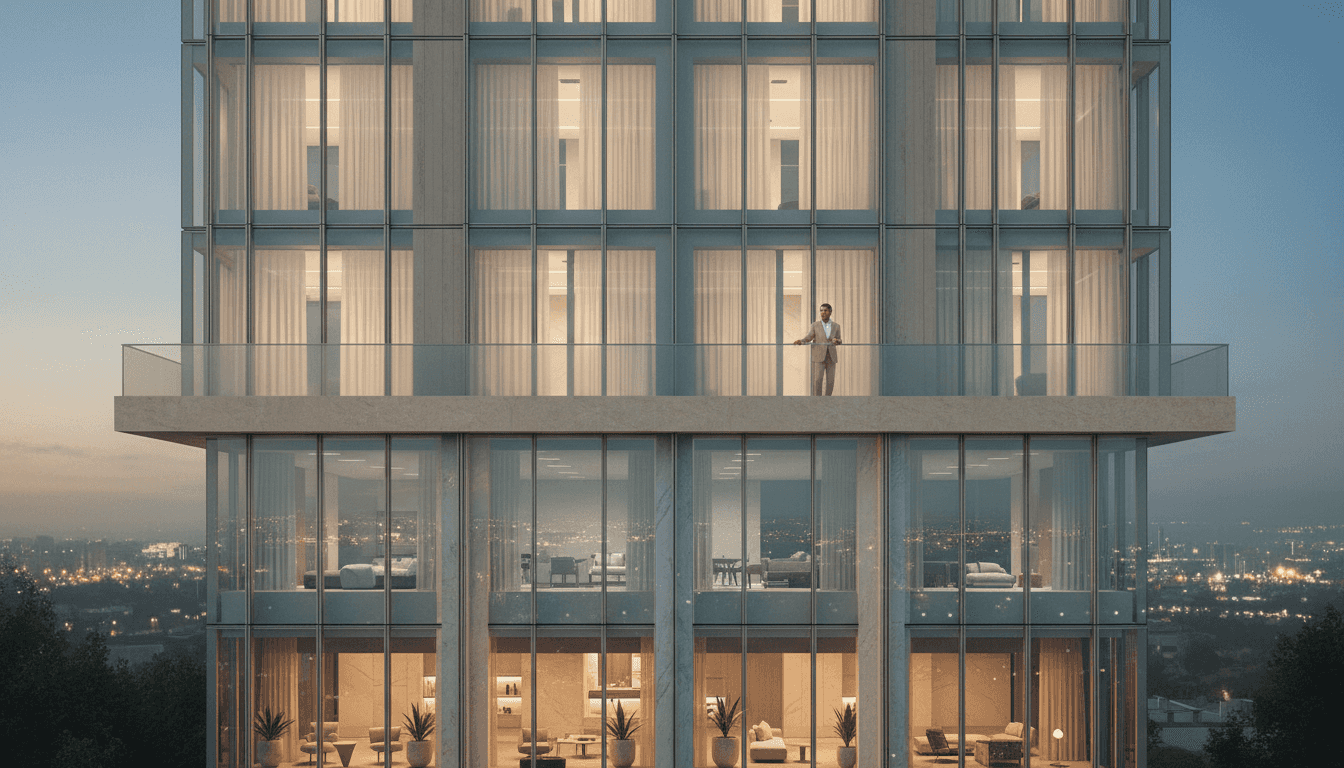
The straightforward model of a single residential tower becomes vastly more complex in a mixed-use environment. Consider a typical high-rise in Business Bay or Dubai Marina: it might contain residential apartments on the upper floors, corporate offices on the middle floors, and a retail podium with cafes, supermarkets, and clinics on the ground floor. These three components — residential, commercial, and retail, have fundamentally different usage patterns, operational needs, and impact on the building's infrastructure. This is the central challenge of the *Dubai mixed-use service charge* system.
The retail component, for instance, experiences high public footfall, requiring more intensive cleaning, security, and air conditioning in its dedicated areas. The commercial offices may operate on a 9-to-5 basis, with peak elevator usage during specific hours, while residential usage is spread more evenly throughout the day and night. A high-end restaurant in the podium might have specific requirements for ventilation, gas lines, and waste disposal that have no bearing on the apartments 40 floors above. If a single, blended budget is applied to the entire building based purely on square footage, the residential owners inevitably end up subsidising the higher operational costs of the commercial and retail tenants. This is where a fair and logical allocation model is paramount.
An effective governance structure for a mixed-use building must legally separate these different 'components' or 'use-types'. The DLD's framework for Jointly Owned Property allows for the creation of sub-communities or component-level budgeting. A well-managed building will have at least three distinct service charge budgets: one for residential, one for commercial, and one for retail. This is complemented by a 'master' budget that covers the 'General Common Areas' — the infrastructure truly shared by all, such as the building's main structure, foundation, roof, and main utility connections. Costs associated with 'Limited Common Areas', those exclusive to one component, like a residents-only swimming pool or office-only washrooms, are then billed solely to the owners within that component. This separation is the only way to ensure equitable *residential fees mixed development Dubai*.
Anatomy of Allocation: General vs. Limited Common Areas
Understanding the distinction between General Common Areas (GCA) and Limited Common Areas (LCA) is the key to decoding a mixed-use service charge budget. This classification, outlined in the property's Jointly Owned Property Declaration (JOPD), is the legal basis for *common area allocation Dubai*. Getting this wrong, whether by accident or design, is the primary source of disputes and financial strain on residential owners.
Let's break it down with a practical example. Imagine a 50-storey tower with a ground-floor supermarket, 15 floors of offices, and 34 floors of apartments. Each component has its own entrance lobby.
- General Common Areas (GCA): These are costs shared by everyone. The building's structural columns, the main façade, the roof, the central chiller plant that serves the entire tower, the main fire safety system, and the building's master insurance policy. The cost of maintaining these is pooled and then allocated to each of the three components (residential, office, retail) based on an agreed-upon weighting — often, but not always, pure square footage.
- Limited Common Areas (LCA): These are costs specific to one user group.
- Residential LCA: The residential lobby, residential elevators, hallways on residential floors, the residents-only gym and pool, and residential garbage chutes. The cost of cleaning, securing, and maintaining these should *only* appear in the residential service charge budget.
- Commercial LCA: The office lobby, office elevators, and common washrooms on office floors. These costs are the sole responsibility of the office unit owners.
- Retail LCA: The public-access corridors of the retail podium, customer parking, and specific loading bays for deliveries. These costs belong to the retail unit owners.
Where do the problems arise? The grey areas. What about the main car park entrance ramp that serves all three components? That's a GCA. But what if the parking levels are strictly segregated? Then P1-P2 for retail might be a retail LCA, P3-P10 for offices an office LCA, and P11-P15 for residents a residential LCA. The cost of cleaning, lighting, and securing each section should be isolated. Another common point of contention is elevator maintenance. A tower might have 12 elevators. If four are high-speed shuttles to the offices, four serve only residential floors, two are service elevators used by all, and two serve the retail podium and basement parking, a simple division of the total maintenance contract by square footage is grossly unfair. The contract cost must be broken down and allocated according to the specific elevators serving each component.
“The most significant financial risk for a residential buyer in a mixed-use tower is not a high service charge, but an unfairly allocated one. Scrutinising the division between general and limited common areas is non-negotiable due diligence.”
Case Study: High-Intensity Mixed-Use in DIFC
The Dubai International Financial Centre (DIFC) is the quintessential example of a high-density, high-value mixed-use ecosystem. Towers in this district often combine premium residential apartments, Grade A office space, art galleries, fine-dining restaurants, and retail outlets, all within a single structure. The *owner costs mixed-use property* here are among the highest in Dubai, and the complexity of service charge allocation is magnified.
DIFC operates under its own legal jurisdiction with its own property laws, but the principles of fair allocation remain the same. Consider a well-known tower like Index Tower or Central Park Towers. These are complex vertical cities. The residential component enjoys amenities like private pools and gyms, but the buildings also house major corporate headquarters. The operational load from the commercial side is immense: high-capacity cooling to handle office equipment, robust IT infrastructure backbones, and significant security demands for high-profile tenants. The retail and dining outlets at the base generate constant public traffic, requiring a level of cleaning and maintenance far beyond what a purely residential building would need.
A residential owner in such a tower should expect to see a highly detailed service charge budget. It shouldn't be a single page of summary figures. A transparent budget will clearly show the master budget for GCA, and then a separate, detailed budget for the residential component's LCA. For example, the total cost for the building's chiller plant (a GCA) would be apportioned, with the residential section taking its share based on its calculated cooling load or area. But the cost for cleaning the residential corridors should appear *only* in the residential budget, with zero allocation to the office or retail owners. I have seen budgets where residential owners were unknowingly paying for the valet parking service of a ground-floor restaurant or the deep cleaning of office-floor common areas. These are precisely the kinds of cross-subsidies that diligent buyers must watch for.
When we advise clients looking at properties in DIFC, we insist on reviewing the JOPD and the last two years of audited service charge accounts. We look for the logical separation of costs. Are utilities for the retail podium separately metered? If not, how is the usage estimated and billed? Is the security cost fairly split between guarding the private residential entrance versus the open-access office lobby? These are the questions that reveal the quality of the *property management mixed-use Dubai* and the long-term financial health of the investment. A service charge of AED 25 per sq. Ft. in a well-managed, truly segregated budget can be better value than a charge of AED 20 per sq. Ft. in a poorly allocated one.
Case Study: Master Community Dynamics in Business Bay
Business Bay presents a slightly different but equally relevant set of challenges. While it has many standalone mixed-use towers similar to DIFC, it is also a master community developed by multiple sub-developers. This introduces another layer of fees. An owner in a residential tower here often pays two service charges: one to their own building's OA for vertical community costs, and a second to the master developer (Emaar Properties in many parts of the area) for the upkeep of the master community.
This master community fee covers the maintenance of shared infrastructure that benefits everyone in Business Bay — the canal promenade, public parks, area-wide road networks, lighting, and landscaping. The allocation of this master fee is generally less contentious, as it's spread across a vast number of developments. The real complexity returns to the individual towers themselves, which often follow the residential/office/retail model. The key here is to ensure there is no 'double-dipping', where a service is charged for at both the master community level and the building level.
Let's analyse a hypothetical but realistic cost breakdown for a 1,000 sq. Ft. apartment in a mid-range mixed-use tower in Business Bay. The building has a small retail component on the ground floor.
Example: Annual Service Charge for a 1,000 sq. Ft. Apartment
1. Building Service Charge: * Basis: Approved budget of AED 16 per sq. Ft. for the residential component. * Calculation: 1,000 sq. Ft. x AED 16/sq. Ft. = AED 16,000 * *This AED 16,000 should cover:* Your share of security, cleaning (residential LCA), pool/gym maintenance, residential elevator contracts, and your allocated portion of the GCA (structure, chillers, master insurance).
2. Master Community Fee: * Basis: Approved master community fee of AED 2.50 per sq. Ft. of plot area, which translates to the building's GFA (Gross Floor Area). Let's assume this works out to AED 1.80 per sq. Ft. for your unit's internal area. * Calculation: 1,000 sq. Ft. x AED 1.80/sq. Ft. = AED 1,800 * *This covers:* Landscaping along the canal, maintenance of public walkways, street lighting, and community-wide security patrols.
3. Total Annual Service Charge: AED 16,000 + AED 1,800 = AED 17,800
This total of AED 17,800 per year (or AED 1,483 per month) seems reasonable. However, the risk lies within that AED 16,000 figure. Was it calculated correctly? If the retail shops on the ground floor generate a large amount of waste, is the building paying for a larger waste management contract and spreading that cost across all owners, or are the retail units billed separately for their excess waste collection? If the building's chillers are working overtime to cool a supermarket with open refrigerators, are residents paying a higher share of the DEWA bill than they should? A good OA manager will have sub-meters installed to monitor and bill such high-consumption users directly.
Buyer Due Diligence: Your Pre-Purchase Checklist
For any potential buyer of a residential unit in a mixed-use development, undertaking thorough due diligence on service charges is as crucial as a structural survey. The excitement of a stunning view or high-end finishes can quickly fade when faced with unexpectedly high or unfair annual fees. At Gaia Living, we guide our clients through a rigorous check of these ongoing liabilities.
Here is a practical checklist for assessing the financial health and fairness of a mixed-use building’s service charge regime before you sign the MOU:
- Request Key Documents: Ask the seller or agent for the last two years of RERA-audited service charge accounts for the property. Also, request the current year's approved budget. A refusal to provide these is a major red flag.
- Scrutinise the Allocation Method: Read the notes in the audited accounts. Look for any mention of the allocation policy. Does it explicitly state that costs are segregated between residential, retail, and commercial components? Is there a clear distinction between GCA and LCA?
- Benchmark the Rate: Compare the total AED per square foot rate with similar-quality buildings in the same area. But do not stop there. A lower rate is not always better if it results from under-budgeting for the sinking fund or essential maintenance, which will lead to problems later.
- Interrogate the Major Cost Centres: Look at the biggest line items. These are typically utilities (DEWA), maintenance contracts (MEP), and staffing (security/cleaning). Question how these are split. For DEWA, ask if the retail and commercial areas have their own sub-meters for common area consumption. For security, is the cost of guards in the office lobby billed only to office owners?
- Check the Sinking Fund: A healthy sinking fund is a sign of good long-term management. Check the annual contribution and the total accumulated balance. A low balance in an older building could signal a large special levy is on the horizon for major repairs.
- Talk to the OA Manager: If possible, schedule a call with the Owners Association management company. Ask them directly about their allocation methodology. Their ability to answer clearly and confidently is a good indicator of their professionalism.
- Review the JOPD: For the most detailed investigation, a lawyer can review the Jointly Owned Property Declaration. This document is the constitution for the building and legally defines the common areas and the basis for cost allocation.
The Future of Mixed-Use Governance
As Dubai's urban landscape matures, the prevalence of sophisticated mixed-use projects will only increase. We are seeing this trend not just in high-density hubs like Downtown Dubai but also in emerging master communities. Developers like Nakheel and Emaar are increasingly integrating retail, hospitality, and residential components into their projects from the outset. This makes robust and transparent governance more critical than ever.
The DLD and RERA have made significant strides with the Mollak system, which has brought a much-needed layer of standardised reporting and auditing to the sector. However, the system's effectiveness in a mixed-use context still relies heavily on the quality of the data and the integrity of the allocation methodology submitted by the OA management company. The next evolutionary step, in my view, will involve more granular regulatory checks specifically for mixed-use properties. This could include mandatory sub-metering for utilities in all new mixed-use buildings and more stringent auditing of LCA/GCA cost apportionment.
Technology will also play a role. Smart building management systems (BMS) can now monitor energy consumption, footfall, and utility usage with incredible precision. A modern BMS can automatically provide the data needed to fairly allocate costs for air conditioning or elevator usage between different building components, removing the need for estimation. As a buyer, asking about the building's BMS capabilities can be a surprisingly effective way to gauge its operational sophistication. Buildings that have invested in such technology are typically better managed overall.
Ultimately, the responsibility also lies with owners. An engaged Owners Association, with a board of committee members who actively scrutinise budgets and question the OA manager, is the best defence against unfair charges. In a mixed-use building, it is particularly valuable to have a residential representative on the board who is financially literate and willing to champion the interests of homeowners. Proactive participation in the community's governance is not just a civic duty; it's a vital part of protecting your investment.
The financial appeal of a residential property in a mixed-use development hinges on the fairness of its service charge allocation. A lower headline rate can be deceptive if it conceals a flawed model where residents subsidise commercial operations. Rigorous due diligence, focusing on the clear separation of costs for General and Limited Common Areas, is the only way to ensure your investment is financially sustainable for the long term. The quality of property management is as important as the quality of the apartment itself.
Sources
- Dubai Land Department (DLD): https://dubailand.gov.ae/en/
- Real Estate Regulatory Agency (RERA): Rules and regulations concerning Jointly Owned Property and the Mollak system.
- UAE Government Portal (u.ae): Information on property laws and regulations in the UAE.
Questions, answered
- What is a mixed-use development in Dubai?
- A mixed-use development is a single property or a master community that combines residential units (apartments, villas) with other components like retail spaces, offices, hotels, or leisure facilities. Prominent examples in Dubai include DIFC, Business Bay, and Dubai Marina.
- How are service charges allocated in Dubai's mixed-use buildings?
- Service charges are allocated based on a property's 'participation quota' or 'unit area factor'. In mixed-use projects, this is complex as costs for shared infrastructure must be fairly divided between residential, commercial, and retail components, often requiring separate budgets for each.
- Why are service charges often higher in mixed-use developments?
- They can be higher due to more extensive and costly amenities like interconnected retail malls, high-spec cooling systems, complex security, and high-speed elevators servicing many floors. If cost allocation isn't meticulously managed, residential owners might unfairly subsidise high-traffic commercial areas.
- Can I dispute my service charge in a mixed-use building?
- Yes. Owners have the right to review the audited financial statements and query charges. If you believe the allocation is unfair or the costs are inflated, you can raise the issue with the Owners Association and, if unresolved, file a formal complaint with the Dubai Land Department (DLD) or RERA.
- What is a 'common area' in a mixed-use context?
- There are three types: General Common Areas used by all (e.g., main building structure, master community roads), Limited Common Areas used by a specific component (e.g., residential-only swimming pool), and Private Areas (the unit itself). Correctly classifying these areas is the key to fair service charge allocation.
- How can I assess service charge risk before buying in a mixed-use project?
- Request the last two years of audited service charge accounts and the current approved budget from the seller or Owners Association Manager. Scrutinise the allocation methodology, look for large 'miscellaneous' items, and compare the AED per square foot rate to similar buildings. Pay close attention to how utility costs for common areas are metered and billed.

Amara translates DLD transaction data, supply pipelines, and macro signals into clear calls on where Dubai's market is heading. She writes the numbers most brokers only feel.
Related stories

The Art of Selling a Legacy Dubai Home
Selling an older or uniquely customised home in Dubai requires a different strategy than marketing a new launch. I'll walk you through how to turn your property's history and unique character into its greatest selling points.

Selling Land in Dubai: A Complete Process & Cost Guide
A comprehensive guide for owners on the process, costs, and strategies for successfully selling a vacant plot in Dubai's dynamic real estate market.

The Commuter's Edge: Dubai's Secretly Connected Hubs
Forget the car-city myth. I'm revealing the Dubai neighbourhoods with surprisingly brilliant public transport links that offer a smarter, more cost-effective lifestyle.
Echoes, in your inbox
One thoughtful email a month. Market insight, new launches, no spam.