

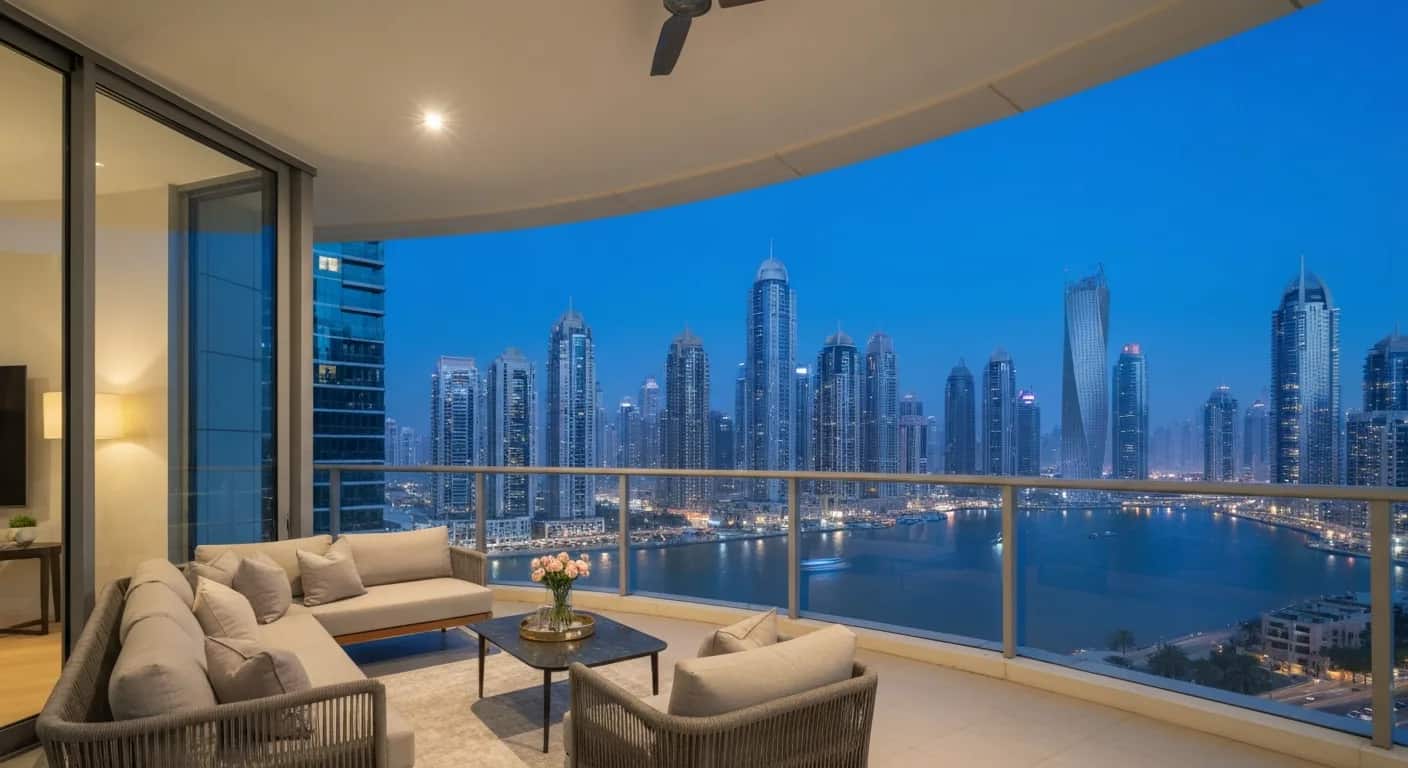
Staging a Dubai apartment to sell: what moves the needle
Staging a Dubai apartment to sell is less about pretty cushions and more about solving buyer doubts: clarity of layout, neutral luxury, and timing near launch windows. This playbook gives sellers the tactical steps that consistently speed sales and lift offers.

Staging a Dubai apartment to sell is not decoration; it's a strategic sales tool. As a seller's strategist at Gaia Living I focus on the elements that actually change offers and timelines in Dubai's diverse submarkets.
Clear thesis: staging is salescraft, not interior design
Staging a Dubai apartment to sell succeeds when it removes buyer friction and answers the unspoken questions that stop offers. In Dubai that means three things: proving usable living space in compact floorplans, matching finish level to neighbourhood expectations, and mitigating recurring-cost worries like service charges or building maintenance. Put plainly, buyers in Dubai buy certainty. They want to know the apartment will rent, or live comfortably, without surprises that erode perceived value.
That thesis changes how you invest in staging. A neutral, well-lit two-bedroom in Business Bay needs a different playbook to convert investors than a two-bedroom on the Palm, which must read as luxury and leisure. In both cases, the aim is the same: reduce time on market and increase buyer confidence to the point that they bid competitively. If staging doesn't do that, it's decoration — and decoration seldom changes price or speed.
Staging also works as a marketing amplifier in Dubai's visually driven property listings. Professional photography, twilight exteriors for marina or skyline views, and virtual walk-throughs are the distribution layer that turns a clean, staged flat into a booked viewing. With buyers often filtering listings by community — Downtown Dubai, Dubai Marina, JBR, Palm Jumeirah, Business Bay, Jumeirah Village Circle — your staging must match the promise of the neighbourhood, otherwise you get clicks without qualified viewings.
Finally, staging must integrate with legal and transaction realities in the UAE. Buyers weigh operating costs (service charges), developer reputation (Emaar, Nakheel, Damac, Meraas) and paperwork rhythm (Oqood for off-plan contracts, DLD registration for transfers). A staged apartment that also presents a transparent dossier of building documents and cost expectations wins trust and narrows negotiation levers. Staging that ignores transaction clarity is a missed opportunity.
Know your buyer: profile by community and intent
 Featured project
The first tactical decision in staging is a buyer profile. Dubai's buyer pool is segmented: cash investors seeking rental yield, overseas buyers pursuing a second home or Golden Visa eligibility, local families upgrading, and short-term rental operators chasing furnished yields. Each buyer reads a staged apartment differently. An investor focused on yield in Dubai Marina will prioritise turnkey rental readiness and low management friction. An end-user in Downtown Dubai expects refined finishes and hospitality-grade appliances. The staging approach must speak to those priorities on sight.
Community signals are powerful. A compact one-bedroom in JVC will sell differently than the same layout in Palm Jumeirah because buyer expectations about amenities, finishes, and lifestyle differ. In JVC and Discovery Gardens, buyers often accept simpler fixtures and pragmatic layouts; in Waterfront communities and Palm properties they expect curated luxury. Use this to align finishes: neutral, resilient materials and clear circulation for community-first markets; higher-end textures, accent lighting and lifestyle vignettes for premium pockets.
Another axis is buyer intent—long-term owner-occupier versus investor. Owner-occupiers care about spatial flow, storage and finish quality. Investors care about immediate rentability and furniture packages that appeal to tenants. For investors, staging should illustrate rental setups (living/dining zoning, home office corner, and family-friendly layouts) that match typical tenant profiles in the building. For owner-occupiers, staging should instead create aspirational but believable setups that reflect daily routines: breakfast nooks for families, calm bedrooms for professionals, and practical kitchens for residents who cook.
Finally, consider origin and cultural expectations. GCC buyers often value grand entrances and hospitality spaces; Western expats often prioritise light, storage and neutral palettes. Tailor accessories and furniture scale accordingly. The strategic goal is to reduce buyer translation effort: when someone walks into the apartment they should immediately say, "Yes, this is for me," not "This is nice, but I'd have to redo it."
First impressions: building, lobby and the entry sequence
In Dubai, buyers are judging more than the flat. The building and arrival sequence — lobby, security, elevator, parking and corridor — are part of the staged narrative. A great apartment in a worn common area loses perceived value. Before you stage inside, reset the external stage. That means coordinating with the building management and owner associations to ensure a clean lobby, polished elevators, clear directional signage and well-maintained landscaping. If your building has concierge or valet services (common in Downtown, Palm and Marina towers), showcase them during viewings.
Work closely with the building management on low-cost wins: a fresh plant in the lobby, discreet signage pointing to your unit, temporary removal of personal items in hallways, and fixing broken lights in common areas. These investments lift perceived building quality and reduce buyer objections tied to ongoing maintenance costs. If the building’s service charge is high or there are known maintenance issues, be proactive: present an accurate summary and maintenance plan. Buyers in Dubai often include service charge scrutiny in their offer calculus; staging that hides building weaknesses is a short-term tactic that backfires during due diligence.
For apartments with assigned parking or private storerooms, make sure these areas are accessible and clean for inspections. Demonstrating a clear parking spot in a high-demand community like Dubai Marina or Downtown Dubai can feel like a luxury to buyers. If your building requires NOC or specific visitor rules, prepare documentation in advance so the viewing process is smooth. The difference between a clumsy visit and a streamlined one often shows in buyer sentiment and in how soon they put forward an offer.
Finally, time your viewings to capitalise on natural advantages: morning light for east-facing Marina apartments, golden-hour dusk for Downtown or Palm skyline views. Coordinate with building management about external lighting or pool area access for evening showings. Your opening impression is not just the door: it's the whole arrival narrative.
Inside the apartment: layout, neutralisation and sensory control
Once buyers enter, they evaluate three things instinctively: space, light, and potential. Your staging must make those elements read as large, bright and useful. Decluttering is not an aesthetic choice; it's a functional one. Remove excess furniture to clarify circulation paths and demonstrate scale. In many Dubai apartments, especially developments with compact footprints, the perception of space can change the offer by making the flat feel suitable for families or sharable for roommates.
Neutralisation is about more than beige walls. It means using a consistent, market-appropriate palette and removing polarising personal items — family photos, themed décor, bold art. In Dubai's cosmopolitan market a neutral, high-contrast look (light walls, darker wood or metal accents) photographs universally well and permits buyers to overlay their lifestyle mentally. Kitchens should present as clean and serviceable: clear counters, staged high-use items that suggest functionality (a kettle, minimalist dish rack) and a tidy pantry. For high-end kitchens in Marina or Palm units, present premium appliances and simple, elegant accessories to justify the premium positioning.
Control the senses: lighting, smell, and small maintenance details. Replace burnt-out bulbs with daylight-balanced lamps to reduce the "cave" effect that kills offers. Use discreet scenting — neutral, fresh rather than floral — and ensure HVAC filters are clean to avoid mustiness. Repair squeaky doors, re-grout tiles and service faucets. Buyers in Dubai expect a move-in-ready condition. Minor mechanical or cosmetic issues create a chain of doubt about hidden problems and enable buyers to push on price.
Storage is another non-negotiable. Many Dubai apartments suffer from perceived lack of storage. Stage wardrobes partially open to show hanging and shelf space, and show stowed items in kitchen and bathroom cupboards to reassure buyers. If the unit lacks built-in storage, propose simple, stylish solutions — floating shelves or modular storage — that buyers can picture keeping. The aim is to remove the "where will I put my stuff?" objection before offers are written.
Furnish or depersonalise: staging playbooks by price band and strategy
Staging options range from a rapid declutter to full furniture rental. Your choice should be driven by price band and buyer type. In premium communities — Palm Jumeirah, Downtown Dubai, and select Marina towers — buyers expect a lifestyle proposition. Full furniture staging with high-quality textiles, accent lighting, and curated art supports aspirational pricing and quickens decisions from end-users and premium investors. These packages must be cohesive: coordinated colour story, luxury-grade linens and subtle lifestyle props (books, coffee-table arrangements) that photograph beautifully.
In mid-market areas such as Business Bay, Dubai Marina mid-towers and JVC, the sweet spot is turnkey practicality. Furnished staging that demonstrates a rental-ready set-up appeals to investors while still being tasteful enough for buyers wishing to live in the apartment themselves. In these communities, prioritise functional furniture, durable fabrics, and smart storage solutions. Demonstrate multi-use spaces: a home-office corner in the living room, a dining setup that doubles as workspace, or a fold-down bed system for studios. Tenants and investors will value practicality; owner-occupiers will value adaptability.
For older buildings and budget segments, consider virtual staging and targeted refreshes rather than full furniture rental. Virtual staging is a cost-effective way to show how a space can be used, provided the photos are realistic and the agent discloses virtual elements to stay compliant with advertising standards. Combine virtual staging with physical interventions like a fresh paint, new cabinet handles, and staged soft furnishings to create a believable result. In off-plan or partially completed units where Oqood or developer finishing variations exist, clear visualisation through realistic renderings helps buyers commit earlier in the sales cycle.
Photographic strategy is inseparable from staging. Invest in professional photography, use wide-angle lenses judiciously (avoid distortion), shoot at times that showcase views — dawn light for Palm water, dusk for skyline shots in Downtown and Business Bay — and include community amenity shots to sell lifestyle. Drone photography works for waterfront and villa districts but is unnecessary for inner-city studios. Always match your staging level with the photography quality: amateur photos undo premium staging fast.
Costs, ROI and launch timing: what moves offers, not just attention
Sellers often ask about staging costs. Think of staging as a marketing investment with three returns: reduced days on market, higher probability of full-price offers, and fewer price reductions. The optimal spend depends on your target uplift and the market segment. In premium submarkets, higher staging budgets can be justified because they validate asking prices. In mid-tier segments, a focused staging budget that emphasises key rooms (living area, master bedroom, kitchen) delivers the most efficient return. If you can't afford full staging, prioritise photography and declutter; these two interventions move the needle most reliably.
Timing matters. Dubai's market has observable cycles tied to global liquidity, regional travel seasons, and local events. For many sellers, launching a staged apartment near peak buying windows — after the summer slowdown and around key trade and lifestyle events that attract international buyers — results in stronger competition. Coordinate your staging and photography to create a condensed pre-launch period; listings that stay on the market for months attract price-conscious buyers looking for discounts. A tight, well-executed launch window preserves perception of demand.
Transparency on running costs also impacts offers. Be prepared to provide buyers with recent service charge statements, building reserve fund status and any planned major works. Buyers often reduce offers to compensate for unknowns in recurring costs. Staging that includes a one-page buyer pack with recent utility bills, service charge overview and any maintenance receipts cuts negotiation leverage from buyers who would otherwise lower their price to account for uncertainty.
Finally, staging should be integrated with pricing strategy, not an afterthought. Work with your agent to set an asking price that reflects the staged condition, comparable sales in the community, and current demand. Overpricing a staged apartment signals desperation; underpricing wastes the marketing advantage. The goal is to invite the right buyers into a well-constructed viewing experience and then convert competition into offers.
Common seller mistakes and how to avoid them
The first mistake I see is confusing taste with buyer appeal. Sellers often stage to their own preferences — bold colours, heavy personal collections — which can alienate buyers. The remedy is objective staging: neutral palettes, minimal personal items, and a focus on the apartment’s strongest features. Remember that buyers need to see themselves in the space. The more personalised the staging, the narrower the pool of buyers who can imagine living there.
Second, underinvesting in photos. In Dubai, initial impressions are made online. Poor photos cause good apartments to be skipped. Even modest budgets reallocate best to a half-day with a professional photographer and a twilight exterior if you have a view. Agents who use smartphone snaps or over-filtered images reduce buyer trust. High-quality imagery is especially important in high-visibility markets like Downtown and Marina where listings compete on presentation.
Third, ignoring building-level weaknesses. Sellers hide defects in hopes of negotiating later. In Dubai, this backfires because buyers undertake fast due diligence and developers/buildings have visible reputational impacts. Be proactive: disclose issues, present remediation plans, and stage to demonstrate that the apartment functions despite broader building problems. A transparent approach reduces buyer scepticism.
Fourth, staging too late or too long. Staging should be ready before launch and photography done in the first few days. If a property is listed as vacant and empty for weeks, it accumulates negative perceptions. Conversely, overly prolonged staging that locks furniture in place for months damages ROI. Use staged periods strategically around launch and open house dates, not perpetually.
Fifth, neglecting the seller experience during showings. In Dubai, many buyers arrange viewings through agents or via online booking. Ensure the viewing process is smooth: organise keys, provide parking, and prepare documentation if a buyer wants to fast-track an offer. A clumsy showing process costs you offers even when staging and price are correct.
“Staging converts doubt into decision; if your staging doesn't answer the buyer's first three questions — "Can I live here? Will this hold value? Is it move-in ready?" — it won't influence the price.”
A four-week staged launch playbook for sellers (practical checklist)
Week 1: Audit and clean. Conduct a seller audit with your agent and a staging consultant. Identify mechanical issues, necessary paint touch-ups, and lighting replacements. Request recent service charge statements and collect copies of NOC procedures and title documents. Start decluttering: remove 50–70% of personal items, digitise paperwork and store excess furniture. Liaise with building management for lobby and elevator touch-ups, and book a professional cleaner. This week sets the foundation — visibility issues at this stage create friction later.
Week 2: Targeted interventions and rental furniture. Prioritise rooms that move offers: the main living area, master bedroom, and kitchen. Bring in rented furniture if you are targeting high-end buyers or investors who need turnkey proof. For mid-market listings, open shelving, new cabinet handles and high-quality linens can transform perception without a full furniture package. Schedule staging delivery late in the week so that the property looks fresh for weekend photographers. Also order signage and prepare the one-page buyer pack with service charge, recent maintenance, and building contact details.
Week 3: Photography, virtual tours and agent training. Book a professional photographer for the best light window — coordinate times that showcase community views. Capture a mix: wide-angle interior shots, amenity imagery, twilight skyline photos and a short video walkthrough. If you're using virtual staging, ensure the final images reflect realistic furniture scale and are disclosed in the listing. Train your listing agents on narratives: who the likely buyer is, key selling points (allocated parking, storage, immediate rental yield potential), negotiation boundaries, and which concessions are acceptable.
Week 4: Launch and open house. Publish the listing across major platforms with the staged photography and buyer pack. Run a focused open house within the first ten days of listing and invite targeted investor groups and relocation brokers who specialise in renting and selling in your community. Track metrics closely — viewing-to-offer ratios, online engagement, and feedback — and be ready to adjust. If feedback repeatedly flags a single issue (for example, lack of storage), deploy a quick fix: a modular shelving unit staged in-situ or a temporary wardrobe intervention.
Final verdict and strategic checklist for sellers
Staging a Dubai apartment to sell is not optional if you want market speed and leverage. The market rewards clarity and punishes ambiguity. Your staging must answer buyer questions about space, lifestyle and ongoing costs before they write an offer. Done correctly, staging is a sales multiplier: it reduces time on market, increases perceived value and removes negotiation levers tied to uncertainty.
Use buyer profiling to determine staging depth, prioritise key visual assets (photography and lighting), and align staging with community expectations — Palm Penthouses require a different language than JVC family units. Coordinate staging with transparent building documentation and a disciplined launch window to convert attention into offers. Avoid common seller mistakes: overpersonalisation, poor photos, and ignoring building-level issues.
If you follow the four-week playbook, your listing will arrive at market with a clear narrative, minimal friction and maximum visual appeal. That combination is what actually moves the needle in Dubai: not trends or fads, but tightened buyer confidence and frictionless transaction flow.
Staging converts buyer uncertainty into decisive offers: prioritise neutral, community-appropriate presentation, invest in professional photography, disclose building costs upfront and launch in a tight window to maximise competition and price realisation.
— Lena Fischer, Seller's Strategist, Gaia Living
Questions, answered
- What is the primary purpose of staging an apartment in Dubai for sale?
- The primary purpose is to remove buyer friction and answer unspoken questions, proving usable living space, matching finishes to neighbourhood expectations, and mitigating recurring cost worries to speed up sales and lift offers.
- How should staging be tailored for different Dubai communities like Business Bay versus Palm Jumeirah?
- Staging must match the promise of the neighbourhood; for Business Bay, it might focus on investor appeal and rental readiness, while for Palm Jumeirah, it must convey luxury and leisure to attract end-users.
- Should staging cater to investors or owner-occupiers in Dubai?
- It depends on the target buyer: investors prioritize turnkey rental readiness and low management friction, while owner-occupiers expect refined finishes and aspirational setups reflecting daily routines.
- How important are a building's common areas when staging an apartment in Dubai?
- Extremely important. Buyers judge the entire narrative, including the lobby, elevators, and parking; a clean, well-maintained common area enhances perceived value and buyer confidence.
- How can staging address common buyer concerns about recurring costs like service charges in Dubai?
- A staged apartment should also present a transparent dossier of building documents and cost expectations, proactively addressing service charge scrutiny and building maintenance plans to build trust.
- Does professional photography play a crucial role in staging a Dubai apartment for sale?
- Yes, professional photography, twilight exteriors, and virtual walk-throughs are essential distribution layers that turn a clean, staged flat into booked viewings and attract qualified buyers online.

Lena writes exclusively for owners looking to sell. Staging, listing timing, agent selection, and how to read a lowball offer — she's in the seller's corner.
Related stories

Dubai's AC Dilemma: The Real Cost of Cooling
Your apartment's air conditioning is more than just a utility—it's a major factor in your monthly budget and comfort. I'll break down the real costs and benefits of Dubai's two main cooling systems, helping you choose your next home wisely.
Managing Multiple Offers: A Dubai Seller's Playbook
Receiving multiple offers on your Dubai property is an excellent problem to have, but handling it incorrectly can cost you time and money. Here’s my strategic playbook for managing competitive bids to secure the best possible outcome.

Gifting Property to Family in Dubai
Thinking of transferring a Dubai property to a family member? Learn how to navigate the DLD's rules for gifting to first-degree relatives and significantly reduce your transfer costs.
Echoes, in your inbox
One thoughtful email a month. Market insight, new launches, no spam.