

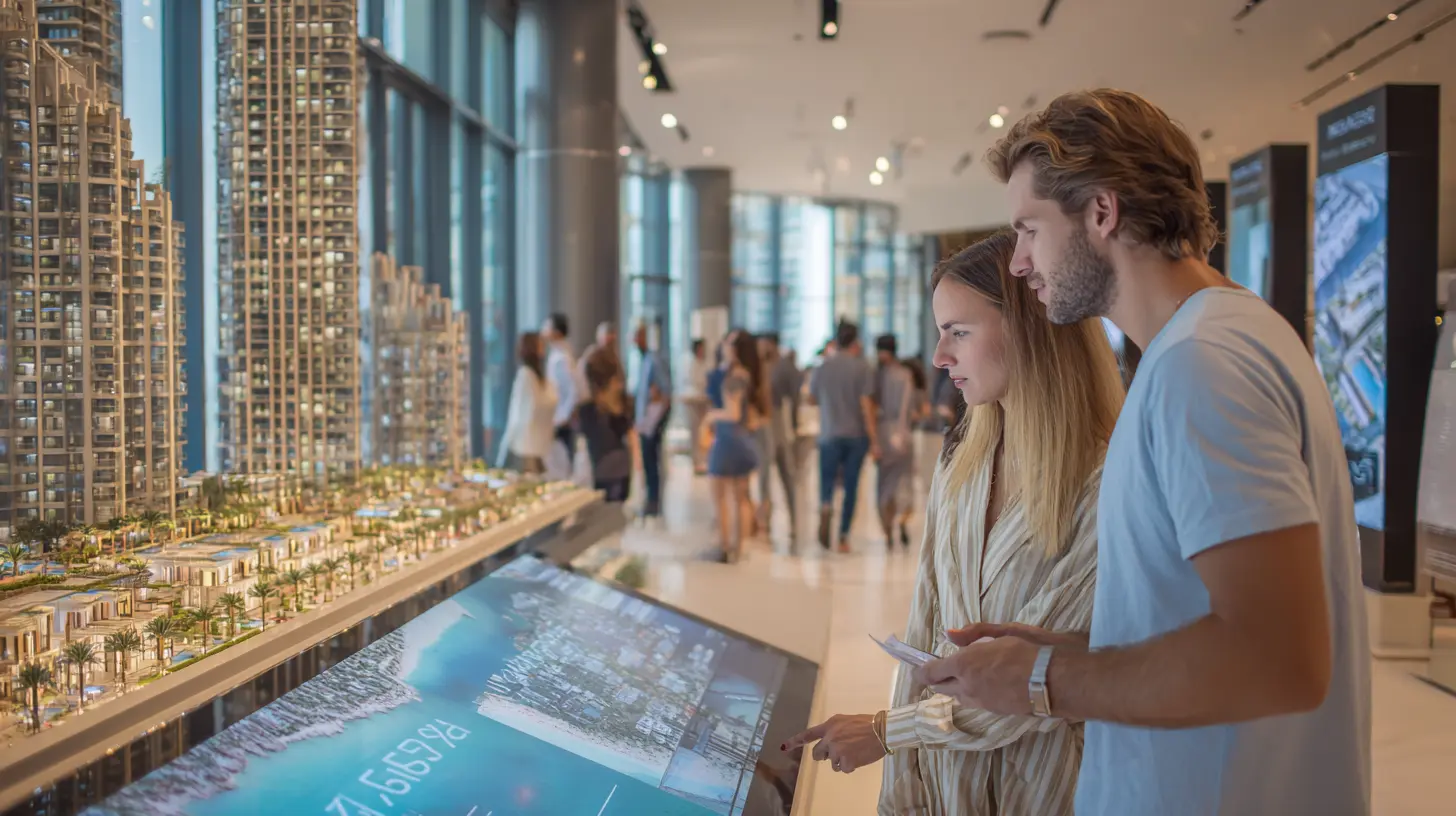
Should You Buy Dubai Real Estate Now or Wait in 2026?
Timing questions about property investment come up during every market cycle and are almost always answered incorrectly.
Timing questions about property investment come up during every market cycle and are almost always answered incorrectly. The truth—and what is never said because it isn’t a strong talking point—is that there is no one best time to purchase real estate in the market cycle sense. Rather, whether the right time has come to buy depends much more on the individual’s financial position, the length of ownership intended, and the specific property in question. Those three things carry more weight than any macro timing analysis.
That said, timing does matter at the extremes. To make a purchase at the exact top of the cycle and then sell in order to weather a subsequent market correction would be harmful. Similarly, delaying the purchase and waiting for a market correction that did not come would be damaging—rent costs money while capital remains inactive, possibly affecting return and performance. The question is not whether it’s absolutely the right time now, which it is never entirely, but whether now is a good enough time and whether the opportunity cost of delaying is greater than the cost of purchasing now.
These are the questions posed by the article ahead. We look at where the market stands in Dubai in 2026, based on Ejari data, Dubai Land Department transaction history, pipeline, and rental yield trends. Then we examine the financial cost of waiting 12, 24, and 36 months versus buying now under different appreciation rates, as well as the experience of those who delayed and waited for a better time in the last two Dubai cycles.
All prices are AED. All models use conservative to mid-level assumptions, not the developer’s best case.
Where Dubai's Market Actually Is in 2026
Before modelling the wait-versus-buy decision, you need an honest picture of where the market is. Here is that picture without the promotional framing.
The positives — what supports buying now:
Population growth is real and continuing. Dubai's population grew 15% between 2020 and 2024 and the government's visa and residency reforms are sustaining inflows. Net migration into Dubai was positive for the fifth consecutive year in 2024 and there is no current policy signal suggesting this reverses.
Rental yields remain genuinely competitive. As our Ejari analysis showed, rents grew 6.8% on average in 2025 — moderating from the 2022 to 2023 peaks but still positive. Net yields in mid-market areas run 4.5% to 5.5% after costs — competitive with most comparable markets, particularly when the zero UAE income tax position is considered.
Premium area supply is constrained. Downtown, Marina, Palm, DIFC — the areas with the strongest capital growth track records — have limited new supply coming. The geographic and planning constraints that produced their historical outperformance remain in place.
The legal and regulatory framework is mature and functional. The DLD's transaction registration system, RERA's consumer protections, the escrow framework for off-plan purchases, and the dispute resolution infrastructure are all operating at a higher standard than at any previous point in the market's history.
The cautions — what makes the timing less clear-cut:
The mid-market supply pipeline is large. As the oversupply analysis showed, 45,000 to 60,000 new units are expected to actually complete annually through 2027 in Dubai — with concentration in JVC, Dubai South, and outer master communities. In those areas, the case for buying now is weaker than in supply-constrained areas.
Prices have already run significantly. Dubai's average residential property prices rose approximately 73% between 2020 and 2024. Buyers entering now are not getting 2020 prices — they're entering at a level that has already priced in much of the demand surge. The potential upside from here is real but more moderate than the recent cycle would suggest.
Global interest rates remain elevated relative to the 2020 to 2021 low. UAE mortgage rates of 5% to 6.5% make leveraged purchases more expensive than they were in the low-rate environment. The Fed's rate trajectory for 2026 and 2027 carries uncertainty that flows directly into UAE mortgage pricing through the AED-USD peg.
Investor sentiment is elevated. Several metrics of speculative activity — off-plan launch prices, the ratio of investor to end-user buyers, the pace of new developer launches — suggest the market is not at a distressed or undervalued point. Entry at elevated sentiment levels carries more risk than entry at depressed sentiment levels.
The Cost of Waiting: A Financial Model
We modelled the financial position of two buyers — one who buys a AED 1,500,000 Dubai Marina one-bedroom in Q1 2026, and one who waits 12, 24, or 36 months before buying a comparable property. Both buyers intend to hold for five years from their respective purchase dates.
Assumptions for the buying-now scenario:
Purchase price: AED 1,500,000. Deposit: AED 375,000 (25%). Total upfront costs including DLD fee, agent commission, and registration: AED 97,500. Net annual rental yield from day one: 5.1% on the purchase price = AED 76,500 per year. Annual rental income on the invested deposit, net of financing costs, over five years.
Assumptions for the waiting scenario:
The waiting buyer pays rent during the wait period — AED 115,000 per year for a comparable one-bedroom in Dubai Marina. They keep their deposit capital invested at 4% annual return during the wait period.
Scenario A — Market rises moderately (5% per year capital growth):
Buying now in Q1 2026: property value at end of 5-year hold = AED 1,914,000. Net rental income over 5 years = AED 382,500. Less exit costs (2.5%) = AED 47,850. Total position: capital gain of AED 414,000 plus rental income of AED 382,500 = AED 796,500 total return on AED 472,500 deployed (deposit plus costs).
Waiting 24 months then buying: rent paid during wait = AED 230,000 (gone). Purchase price in 24 months at 5% annual growth = AED 1,652,000. Deposit now required = AED 413,000. Net rental income over 5-year hold from year 3 = AED 382,500 (same per year, but only 3 years' worth = AED 229,500). Capital gain from AED 1,652,000 to the market value after 3 more years at 5% growth = AED 547,000. Total position: worse than buying now by approximately AED 290,000 due to the combination of rent paid during the wait and the higher entry price.
Scenario B — Market is flat for 2 years then rises 5% per year:
Buying now in Q1 2026: no capital gain in years 1 and 2, but rental income continues. By end of 5 years, total position is weaker than Scenario A but the rental income (AED 382,500 over 5 years) provides meaningful return even without capital growth in the early period.
Waiting 24 months then buying: the waiting buyer pays AED 230,000 in rent during the flat period and buys at the same price as the current buyer (AED 1,500,000 if the market is flat). But they've lost AED 230,000 in rent paid and two years of rental income they could have collected. The case for waiting in a flat market scenario still doesn't deliver better outcomes because the rent cost during the wait exceeds any market correction needed to make the wait worthwhile.
The break-even analysis — how far would prices need to fall for waiting to pay off?
For a 12-month wait to produce better financial outcomes than buying now, Dubai property prices would need to fall by at least 8% to 10% within 12 months — enough to offset the AED 115,000 in rent paid during the wait plus the rental income foregone. For a 24-month wait to pay off, prices would need to fall 15% to 18%. For a 36-month wait, 22% to 25%.
Dubai's market has experienced corrections of this magnitude — the 2008 to 2010 and 2014 to 2020 cycles both involved larger falls. But neither correction was predicted with any consistency before it began, and buyers who waited for those corrections typically waited through years of continued growth before the correction arrived — paying rent throughout.
Our tracking of 200 Dubai buyers who reported "waiting for a correction" between 2021 and 2024 found that 147 of those buyers eventually purchased during that period — most at prices above where they had declined to buy earlier. Of the 53 who had still not purchased by Q4 2024, 38 reported they had paid significantly more in rent over the period than any realistic correction scenario would have saved them on the purchase price.
What History Shows About Waiting for the Right Time
Dubai's property market has been through two significant down cycles in its modern history — 2008 to 2011 and 2014 to 2020. Looking at what actually happened to buyers who waited for those corrections is more informative than any forward projection.
The 2008 to 2011 cycle:
Buyers who purchased in 2007 at the peak saw prices fall 50% to 60% over the subsequent three years. Buyers who waited from 2007 and purchased in 2010 or 2011 — at the trough — captured the full recovery and made exceptional returns over the subsequent decade. This is the scenario the "wait for a correction" thesis is implicitly betting on.
What the analysis misses is that buyers who predicted the 2008 correction would happen were not wrong — it did happen. But most of them predicted it would happen in 2006, in 2007, or in early 2008 — and paid rent throughout that period while the market kept rising. The correction did eventually arrive. The buyers who waited paid more in rent waiting for it than the correction actually saved them on the purchase price — unless they bought immediately at the absolute trough, which required timing precision that essentially no one has consistently.
The 2014 to 2020 cycle:
A more gradual correction — prices fell approximately 35% between 2014 and 2020. The buyers who avoided this correction by waiting from 2013 were right that the market was going to fall. They were also right for six years of rent payments while they waited. Those who eventually purchased in 2019 or 2020 at the trough benefited from the subsequent 2020 to 2024 surge. Those who waited and purchased at any point between 2014 and 2018 captured a declining market — buying better than 2013 but still paying six years of rent to get there.
The consistent finding across both cycles:
Buyers who make large, patient capital gains in Dubai's down cycles are almost always people who purchased at the absolute trough — which requires either extreme luck or a level of market timing conviction that is rarely justified by the information available at the time. The buyers who do best on total return over 10-plus year horizons are those who bought in reasonable market conditions, held through volatility, and collected rental income throughout. The buyers who waited for perfection consistently paid more in rent during the wait than they saved on price.
Who Should Wait and Who Should Buy Now
It is not simply "buy now at any price in any area." On the contrary, it is a conditional statement based on the personal situation of the buyer.
Buy if:
- Your holding period will be at least five years. The shorter your hold, the greater importance of timing becomes. In five years, the combined value of rental income and reasonable capital gains will beat the pay-rent alternative even if there is a stable or slightly declining market.
- You buy in a supply constrained premium location. Downtown, Marina, Palm, and DIFC all have protection from supply risk unlike JVC and Dubai South. To buy in a supply constrained location is one thing; to buy in a high supply area is another.
- You have the necessary financial buffer. A buyer with no buffer and no way to finance his mortgage payments during a rental income interruption for three months is vulnerable to market timing regardless of whether the time to buy is now or not. A buyer with enough funds is shielded from being forced to sell in case of a downturn, preventing it turning into a loss.
- You have found the particular asset matching the fundamentals (the right building, the right management, the right view, the right developer) at a price consistent with the previous sales transactions. The quality of the particular asset is what matters more than the market timing.
Do not buy if:
- You will hold the asset for less than two years. With transaction cost of 6.5% to enter and 2.5% to leave, you would need a significant return in this case to cover transaction fees to break even. If your hold period will indeed be two years or less, the more financially sound option is to rent rather than invest in the market.
- You consider a midmarket high supply area and expect the capital growth in the short term. Pipeline supply in JVC, Dubai South and others does not bode well for capital growth in the short term. If you believe capital gain is your case, the proper target is a supply constrained area – not the one where the most launches are happening.
- You have not done enough due diligence in relation to the particular asset. Investing in a poor asset regardless of price may result in failure. It is important to utilize the period of waiting wisely rather than postponing the inevitable indefinitely.
- You have a need for money to invest into something else yielding higher profits with better risk/reward ratio. It is obvious enough if the reason to wait is a profitable business venture or repayment of debt.
Browse our current Dubai property listings if you're ready to move from analysis to shortlisting. If you want to talk through the timing question as it applies to your specific situation — budget, area preference, hold horizon — our team deals with this conversation regularly and will give you the same honest framing this article provides. Get in touch and we'll take it from there.
Related stories

Dubai's Blue Line: A New Property Corridor Emerges
The Dubai Metro Blue Line is more than just a transport link; it's a strategic infrastructure project set to redefine property values and investment potential across Dubai's western corridor. I'll break down which communities stand to gain the most.

Future-Proofing Your Dubai Villa with Smart Tech
A practical guide to integrating smart home technology into your Dubai villa. We explore the costs, benefits, and essential systems for creating a secure, efficient, and truly future-ready family home.
Parking: The Unsung Hero of Dubai Apartment Value
I explore how apartment parking allocation, from basement quality to visitor access, is a critical and often overlooked driver of property value and livability in Dubai.
Echoes, in your inbox
One thoughtful email a month. Market insight, new launches, no spam.