

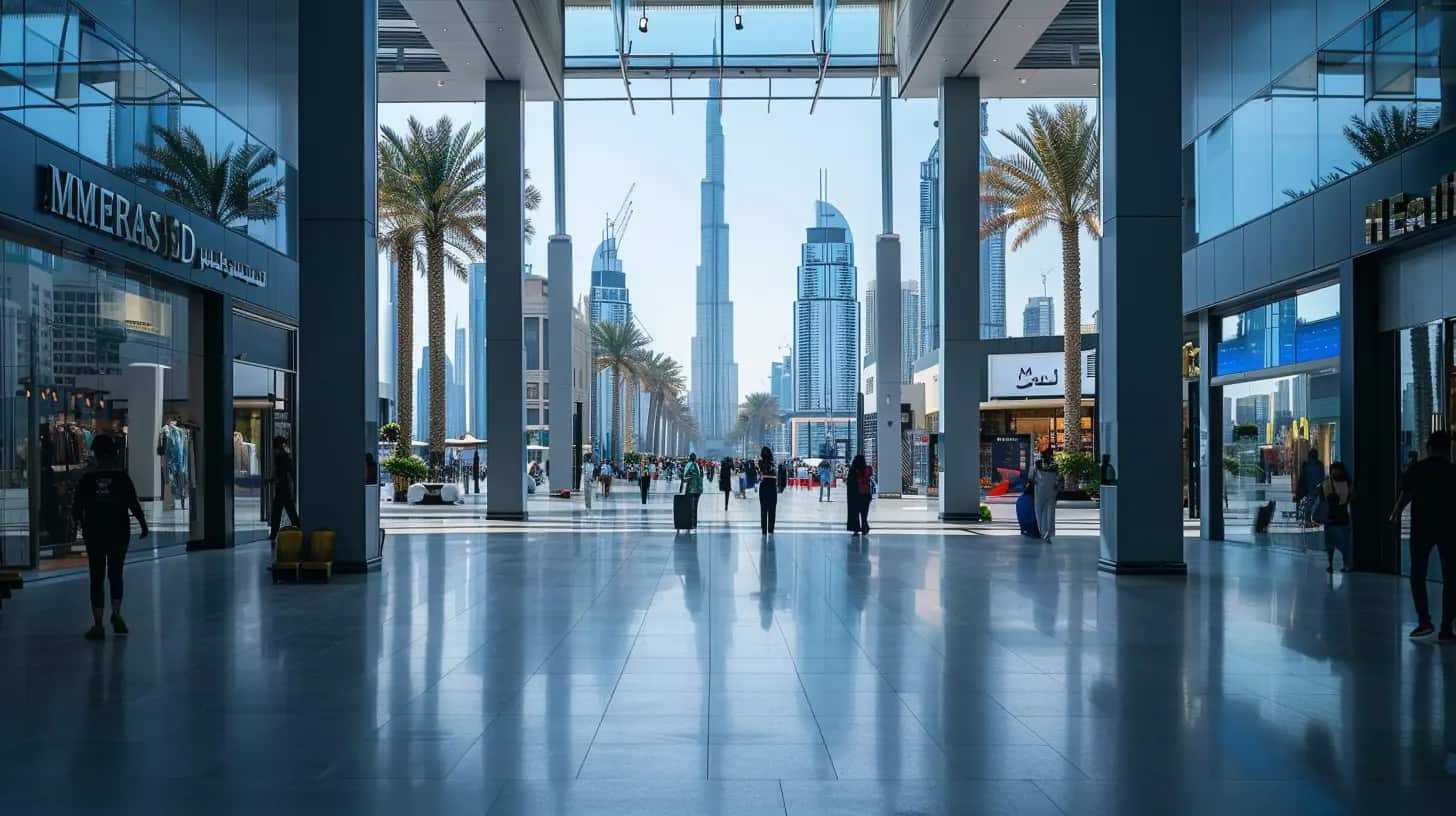
Dubai South in 2026: What the Airport Expansion Means for Property
Dubai South is still an extensively discussed area when it comes to its future potential rather than its current status. This story is pretty well known by now.
Dubai South is still an extensively discussed area when it comes to its future potential rather than its current status. This story is pretty well known by now. There is the development of the world's biggest passenger airport, the Al Maktoum International Airport (DWC). This project will bring about a great transformation of southern Dubai. The real estate prices should reflect the growth in infrastructure related to the airport. The Dubai South region is considered a next major player. It is recommended to buy before other people realize its potential.
There is indeed some truth in the above statement and some false information. The expansion is real and significant. It is planned to increase the capacity up to 260 million passengers per year upon completion of the construction. That makes it even bigger than any airport currently in existence. The relocation process has been officially announced, and work has started. There is no doubt that there is a large amount of investments directed to Dubai South's infrastructure.
But there are some details about this story that need elaboration, especially in relation to the real estate opportunities in Dubai South in 2026. Some of the communities are more likely to benefit than the others. Also, it is crucial to know the real timetable for completing this project, and it takes many years from announcing to the actual realization of the project. Finally, current Dubai South real estate market already incorporates the benefits of the airport expansion project in its prices.
Over the last several years, we have seen how buyers invest into different Dubai South communities and what they can expect from the area in reality. In our honest opinion, Dubai South is a good place for investment in 2026; however, the reason for buying here is more complex than a straightforward statement "the airport is developing." There are many specificities depending on a particular sub-community, a product, investment period, and expectations of a buyer.
This article aims to explain Dubai South, the project and timetable of the airport expansion, current prices, the best sub-communities to invest, yield and rental potential, risks, and an unbiased analysis comparing Dubai South to other options.
What Dubai South Actually Is in 2026
Dubai South covers an enormous area at the southern edge of the emirate, occupying roughly 145 square kilometres of land that sits between Sheikh Mohammed bin Zayed Road, the existing DWC airport footprint, and the future Expo 2020 legacy district. The area is divided into multiple districts, each with a distinct purpose.
The Residential District is where most of the residential property currently sits. This includes The Pulse, MAG City, Urbana, Skycourts, and several other communities developed over the past decade. The area has matured into something resembling a real residential community, with retail nodes, schools, and basic infrastructure in place.
The Business District contains commercial buildings, the headquarters of various aviation and logistics companies, and the supporting infrastructure for businesses operating in the broader Dubai South ecosystem. This district has grown steadily but remains less developed than the residential side.
Expo Living and Expo City Dubai represent the legacy of Expo 2020. The post-Expo redevelopment has converted much of the original site into mixed-use residential and commercial property, with continued infrastructure investment expected through the late 2020s.
The Logistics District serves the airport and the freight operations. This is where most of the cargo, distribution, and logistics company activity is concentrated. Residential property within this district is limited.
The Aviation District directly supports the airport operations and includes most of the future expansion footprint. Residential property is again limited and focused on accommodation for aviation industry workers.
The total population of Dubai South across all districts is currently around 70,000 to 90,000 residents, with projections for substantial growth as the airport expansion progresses and additional residential and commercial inventory is delivered. The area is structurally a long-term investment story rather than a short-term play, and buyers entering Dubai South in 2026 should understand they're buying into a community that will look meaningfully different in 2030 than it does today.
Average price per square foot for residential property in the Residential District sits at around AED 950 to AED 1,250 in early 2026, depending on sub-community and product type. That's up roughly 25% to 35% from where the area sat in early 2024, driven by the combination of airport expansion announcements, broader Dubai market strength, and continued infrastructure delivery.
What the Al Maktoum Airport Expansion Actually Involves
Understanding the airport expansion in detail matters because the timing and scope drive much of the investment thesis for the area.
The current Al Maktoum International Airport (DWC) opened in 2010 and has operated as a secondary airport to DXB for most of that time. Cargo operations have been substantial. Passenger operations have been more limited, with various airlines using DWC for low-cost flights and select international routes.
The announced expansion was formally outlined in April 2024 by Sheikh Mohammed bin Rashid Al Maktoum. The headline targets are striking. Total passenger capacity at completion of 260 million per year. Five runways. Four terminal buildings. Total project cost estimated at AED 128 billion (USD 35 billion). The planned area covers 70 square kilometres.
The phasing is what most buyers underestimate. Construction has begun on the first phase, which is expected to be operational sometime in the late 2020s, with full completion of all phases targeted for the 2030s. The timeline is genuinely long. According to Dubai Aviation Engineering Projects' published timelines, the first major phase of new passenger capacity is targeted for operational status in approximately 2028 to 2029, with subsequent phases extending well into the next decade.
The relocation of DXB operations to DWC is a separate but linked process. Emirates Group has formally committed to relocating its primary hub operations from DXB to DWC over the coming decade. flydubai's relocation plans have also been announced. The airport infrastructure must be operational at sufficient scale to support these relocations, which gates the practical timing of when DWC becomes the primary Dubai aviation hub.
For property buyers, the implications are several:
- The airport will not be operating at scale for several more years. Buying for immediate yield uplift driven by airport activity is unlikely to work
- Infrastructure spending around the airport will continue throughout the build-out period, which provides ongoing positive momentum for area pricing
- Residential demand from aviation, logistics, and aerospace workers will grow steadily but gradually, not in a single step change
- Connectivity infrastructure (roads, metro extensions, public transport) will improve in stages
- The Etihad Rail UAE network, when operational, will provide additional connectivity benefits to Dubai South
The honest investor framing is that Dubai South in 2026 is a 5 to 10-year investment thesis driven by the steady build-out of the airport and surrounding infrastructure, not a 1 to 2-year flip story. Buyers should underwrite their investment accordingly.
Where Current Pricing Sits Across Dubai South Sub-Communities
The pricing picture across Dubai South sub-communities is more varied than a single area average suggests.
The Pulse Beachfront, MAG City, Urbana, and the established Residential District communities have appreciated 25% to 35% over 2022 to 2025. This reflects the mainstream residential market within Dubai South.
Expo City Dubai and the surrounding post-Expo developments have appreciated more modestly because they are still being built out and the inventory has expanded substantially. Prices have firmed but not dramatically.
The Aviation District and Logistics District residential is limited and pricing reflects the more specialised tenant pool. These are not typical investor purchase areas for retail buyers.
Newer launches across Dubai South have been pricing aggressively, often AED 1,200 to AED 1,500 per square foot for premium product, which is approaching the lower end of more central Dubai postcodes.
Representative price points for 2026 across Dubai South residential:
- 1-bedroom apartment in established sub-community: AED 600,000 to AED 850,000
- 2-bedroom apartment in established sub-community: AED 950,000 to AED 1.4M
- 3-bedroom townhouse in The Pulse or MAG City: AED 1.7M to AED 2.6M
- 4-bedroom townhouse in mid-tier Dubai South community: AED 2.4M to AED 3.4M
- 4-bedroom villa in Dubai South: AED 3.0M to AED 4.5M
- Newer luxury villa product where available: AED 4.5M to AED 8M+
- 1-bedroom in Expo City Dubai apartment: AED 750,000 to AED 1.1M
- 2-bedroom in Expo City Dubai apartment: AED 1.1M to AED 1.6M
Rental rates have moved up but more modestly than sales pricing, which has compressed yields somewhat. A 1-bedroom that was renting for AED 45,000 in 2023 is asking AED 55,000 to AED 70,000 today. A 3-bedroom townhouse that rented for AED 110,000 in 2023 is now AED 140,000 to AED 175,000. Tenant demand has been steady but not explosive.
The pricing discount Dubai South offers relative to more central Dubai is genuinely meaningful. A 3-bedroom townhouse at AED 2.2M in Dubai South would cost AED 4.5M to AED 5.5M in Dubai Hills. A 1-bedroom apartment at AED 750,000 would cost AED 1.4M+ in JVC. The discount reflects current location remoteness and infrastructure maturity, but it also represents the entry point that justifies the long-term appreciation thesis if the airport build-out delivers.
Original Research: Dubai South Yield Performance and Tenant Tenure 2024 to 2025
We tracked rental performance across 64 Dubai South units we either managed directly or had visibility into through partner property managers during 2024 and 2025. The aggregate gross yield came in at 7.2% across the sample. Net yield, after service charges, agency fees, and a realistic vacancy assumption of 5 weeks per year (slightly higher than other Dubai postcodes due to longer time-to-let), landed at 5.6%.
Sub-community level breakdown:
- The Pulse and MAG City apartments: gross yields 7.4% to 8.2%, net 5.8% to 6.4%
- The Pulse and MAG City townhouses: gross yields 6.4% to 7.0%, net 4.8% to 5.4%
- Urbana and Skycourts apartments: gross yields 7.6% to 8.4%, net 6.0% to 6.6%
- Expo City Dubai apartments: gross yields 6.8% to 7.4%, net 5.2% to 5.8%
- Mid-tier Dubai South villa product: gross yields 5.8% to 6.4%, net 4.4% to 5.0%
The yield performance is genuinely strong relative to most Dubai postcodes. The trade-off is on the demand side. Tenant turnover and time-to-let have been higher in Dubai South than in central postcodes. The tenant pool is more dependent on industry-specific demand (aviation, logistics, Expo and government workers) and less broadly diversified than in postcodes like JVC or Business Bay.
Specific data points from 2025 tracking:
- A 1-bedroom apartment in The Pulse rented at AED 60,000 against a purchase price of AED 720,000, hitting 8.3% gross
- A 3-bedroom townhouse in MAG City rented at AED 145,000 against a purchase price of AED 2.0M, hitting 7.3% gross
- A 2-bedroom apartment in Urbana rented at AED 75,000 against a purchase price of AED 920,000, hitting 8.2% gross
- A 4-bedroom townhouse in a newer Dubai South community rented at AED 175,000 against a purchase price of AED 2.7M, hitting 6.5% gross
- A 1-bedroom apartment in Expo City Dubai rented at AED 65,000 against a purchase price of AED 920,000, hitting 7.1% gross
What's worth noting on the tenant side. Average tenancy in our managed Dubai South portfolio was 22 months in 2024 to 2025, which is similar to the citywide average. Tenant retention is solid once you have tenants in place, but the time to find tenants when units come vacant is meaningfully longer than in central postcodes. Investors should budget for 5 to 7 weeks of average vacancy per year rather than the 3 to 4 weeks typical of more central areas.
According to Property Monitor's market data, Dubai South residential transaction volume has grown roughly 40% year-on-year in 2024 and 2025, which is among the strongest growth rates of any Dubai sub-market. The volume growth supports the case that buyers are increasingly recognising the area, even if pricing has not yet fully caught up to the opportunity.
Who Dubai South Property Actually Suits in 2026
The buyer profile that does best in Dubai South is more specific than for most Dubai postcodes. The area suits some buyers genuinely well and is a poor fit for others.
Dubai South is genuinely well-suited for:
- Long-term investors with 5 to 10-year hold horizons who want to capture the airport expansion appreciation cycle
- Yield-focused investors comfortable with slightly higher vacancy risk in exchange for stronger gross yields
- Aviation industry professionals, government workers, and logistics employees who work in or near Dubai South
- First-time UAE property buyers wanting maximum value for their capital and meeting visa eligibility thresholds
- Buyers wanting newer product (most Dubai South residential is 2018+) at meaningfully lower entry pricing than central Dubai
- Investors specifically positioning for the eventual relocation of Emirates Group operations to DWC
- Buyers with patience for the area to mature and willingness to accept current infrastructure limitations
Dubai South is genuinely not well-suited for:
- Buyers wanting central location, walkable urban lifestyle, or beach access
- Investors looking for short-term yield uplift driven by immediate airport activity
- Buyers wanting deep, mature community amenities (retail diversity, restaurant scene, established schools, full medical infrastructure)
- Families with school-age children who specifically prioritise the established Dubai school landscape
- Buyers concerned about commute time to central Dubai for work or social activities
- Investors uncomfortable with longer time-to-let when units come vacant
- Short-term rental investors. Dubai South STR performance is significantly below central Dubai postcodes
We've had clients buy in Dubai South and be very happy with the long-term appreciation outcome, particularly those who bought 2020 to 2022 before the airport expansion was formally announced. We've also had clients buy in Dubai South and be frustrated by the slower lifestyle infrastructure development, the longer-than-expected commutes, and the limited entertainment options. The lifestyle fit matters meaningfully here.
For families specifically, the school landscape in Dubai South is improving but still less developed than in central postcodes. South View School, GEMS Founders School Dubai South, and a handful of other schools have opened in or near Dubai South. The choice is more limited than in Dubai Hills or even in JVC. Families with specific curriculum or school preferences should confirm options before committing.
What's Changed in Dubai South Over the Last 24 Months
Several shifts in Dubai South matter for buyers in 2026.
The airport expansion announcement in April 2024 was the single biggest event for the area's investment narrative. While the expansion construction will unfold over years, the formal announcement and accompanying capacity figures repositioned Dubai South from "secondary airport area" to "future primary aviation hub" in market perception. Pricing absorbed a meaningful share of this shift over 2024 and 2025.
Infrastructure delivery has continued. Roads have improved. The Expo 2020 legacy has been formally transitioned to Expo City Dubai with continued investment in the area. Schools and basic retail have expanded. The community has become more functional even if it's still not at central Dubai standards.
New residential launches have continued at pace. Multiple developers have launched product across Dubai South sub-communities, expanding inventory but also putting some pressure on pricing for older inventory in less premium locations.
Connectivity has improved. Dubai Metro Route 2020, which was built for Expo, now serves part of Dubai South and provides public transport connectivity that wasn't present in the area five years ago. Future metro extensions are planned to better connect Dubai South to central Dubai.
The Etihad Rail network is making progress and, when operational, will provide rail connectivity from Dubai South to other Emirates and key destinations. The timing of operational launch matters and has been subject to revision over the years.
The Expo City Dubai post-event redevelopment has continued and is now functioning as a mixed-use community rather than a temporary event site. This has added inventory and gradually expanded the lifestyle infrastructure available in the broader Dubai South area.
According to CBRE's UAE Real Estate Market Outlook, Dubai South's transaction volume growth has been among the highest of any Dubai sub-market in 2024 and 2025. Pricing growth has been strong but remains lower than the most active central postcodes, which reflects both the long timeline for the airport story to fully play out and the continued infrastructure development needed for the area to mature.
Mohammed Al Hashimi, vice chairman of the Dubai South Properties group, has spoken publicly about how "Dubai South is being positioned as a long-term anchor for the next phase of Dubai's growth." That framing accurately captures the investment thesis, even if the timing extends well beyond what most short-term investors prefer.
Risks Worth Acknowledging Before Investing in Dubai South
A few risks worth understanding clearly before committing to Dubai South.
Timing risk is real. The airport expansion is happening but the timeline extends years into the future. Buyers underwriting an investment based on near-term yield uplift driven by airport activity will likely be disappointed. The investment thesis works on a 5 to 10-year horizon, not on a 1 to 2-year timeline. Plan accordingly.
Infrastructure risk is real. Roads, schools, and amenities continue to develop. Specific sub-communities are still building out. Buyers committing to property near construction zones should expect some short to medium-term disruption.
Tenant pool concentration risk is real. Dubai South tenant demand depends meaningfully on aviation, logistics, government, and Expo-related employment. While these sectors are generally stable, the concentration is greater than in postcodes serving broader Dubai economic activity. Investors should consider whether their underwriting accounts for this concentration.
Resale liquidity risk is moderate. The property market in Dubai South is functional but the time-to-sale for fairly-priced units is typically longer than in central postcodes. Investors needing to exit quickly may find the market less accommodating than in Marina, Business Bay, or Downtown.
Pricing has already moved. The 25% to 35% price growth over 2022 to 2025 means current entry pricing is meaningfully higher than it was when the airport story was still mostly speculative. The risk-reward profile of buying at 2026 prices is different from buying at 2022 prices, and buyers should not assume the next 3 years will repeat the last 3 years' returns.
Currency and global aviation risk affects the airport thesis. The DWC build-out depends on continued global aviation growth, sustained Emirates Group commitment to the relocation, and stable funding for the infrastructure investment. None of these are guaranteed in absolute terms, even if they appear well-supported currently.
How Dubai South Compares to Real Alternatives in 2026
A serious 2026 buyer looking at Dubai South should also be looking at three alternatives.
Dubailand offers similar pricing to Dubai South but with a different lifestyle proposition focused on master-planned communities and theme park infrastructure. Yields are similar. The trade-off is that Dubailand is also still maturing but has less of a defining long-term anchor like the airport expansion. Best for buyers wanting newer product at lower pricing but without committing to a single long-term thesis.
The Valley by Emaar offers brand-new community product at similar pricing with strong build quality and the Emaar reputation. Less developed currently but with strong forward momentum. Best for families and end-users prioritising community design and developer reliability.
JVC offers more central location at similar pricing, with a much more mature community, deeper rental demand, and stronger short-term resale liquidity. Yields are competitive. The trade-off is that JVC has less of a single transformative future anchor like the DWC airport. Best for buyers wanting current functionality and yield over long-term thesis-driven appreciation.
A short comparison for buyers wanting a quick read:
- Dubai South: long-term airport thesis, lowest entry pricing, longer time-to-mature
- Dubailand: similar pricing, masterplanned communities, less defining anchor
- The Valley: premium new community, brand reliability, focused on family lifestyle
- JVC: central location, mature community, stronger current liquidity
The Bottom Line on Dubai South Property in 2026
Dubai South, in 2026, represents a compelling investment market for the right buyer, despite the unique risks involved that require patience and clarity of vision regarding exactly what it is being purchased.
Long-term investors, with a holding period of 5 to 10 years, have a compelling thesis-driven appreciation story in Dubai South. The expansion of DWC Airport is underway, there is significant infrastructure development, and there will be increasing demand for tenants as the airport builds out. At present, the pricing is only partially reflective of future value, leaving potential for appreciation if the buildout occurs as expected.
Yield-oriented investors, willing to tolerate slightly higher vacancy rates and hands-on management, can achieve yield of 5.8% to 6.6% in Dubai South net, competitive with top yield areas in central Dubai. Established neighborhoods, such as The Pulse, MAG City, Urbana, and comparable neighborhoods, present a compelling yield economic story, even before considering future appreciation possibilities.
First-time UAE property buyers and visa-oriented purchasers now have the most accessible path to buying Dubai real estate. Pricing of studios at AED 600,000, one-bedroom apartments at AED 750,000, corresponds to recently lowered visa costs and represent an affordable entry point for capital-limited buyers.
End-users benefit from the area for some buyer profiles (aviation industry professionals, civil service workers, family groups who seek a new product offering at reasonable prices), but it is not ideal for those seeking proximity to downtown, mature community amenities, or beach access. The lifestyle, although practical and quieter than central locations, offers less diversity than mature postcodes, a feature that suits some households but not others.
Short-term investors and flippers are better off looking elsewhere, as Dubai South is appreciating at a moderate pace, and it takes longer to resell than in central Dubai. Quick exit strategies do not align with the market dynamics here.
Concluding thoughts. Plan your underwriting based on realistic timeframes (5 to 10 years to fully realize the airport impact, not 1 to 2 years). Determine the exact neighborhood you are acquiring and how it relates to the airport expansion plans and infrastructure investments. Ensure that schools are a consideration before purchasing, especially if you have school-aged children. Factor in the need for slightly higher vacancy rates than central Dubai. Realize that the rent market is dependent on specific industries that are stable but more focused than mature mixed-use neighborhoods.
Dubai South represents a compelling long-term story, and the expansion of the airport ranks among the largest infrastructure projects Dubai has ever undertaken. It offers a genuine investment opportunity, but with a particular focus. If you want an analysis of specific neighborhoods within Dubai South with current pricing, yield numbers, and an honest assessment of the products available for purchase, we conduct these discussions weekly. Browse what's currently available in Dubai South or reach out and we'll take it from there.
Related stories
Dubai's Established Charm: The Case for Older Homes
In a city focused on the future, I believe the smartest move for many buyers is to look back. Dubai's seasoned communities offer space, character, and surprising value that new builds often can't match.
The True Cost of Owning a Dubai Property
Beyond the purchase price, your annual budget for a Dubai home must account for service charges, utilities, and maintenance. I'll break down every ongoing expense you need to plan for.
Calculating ROI on Dubai Rental Upgrades
As a landlord in Dubai, you can't just follow trends. I'll show you how to calculate the precise ROI of minor property upgrades to genuinely increase your rental yield.
Echoes, in your inbox
One thoughtful email a month. Market insight, new launches, no spam.