

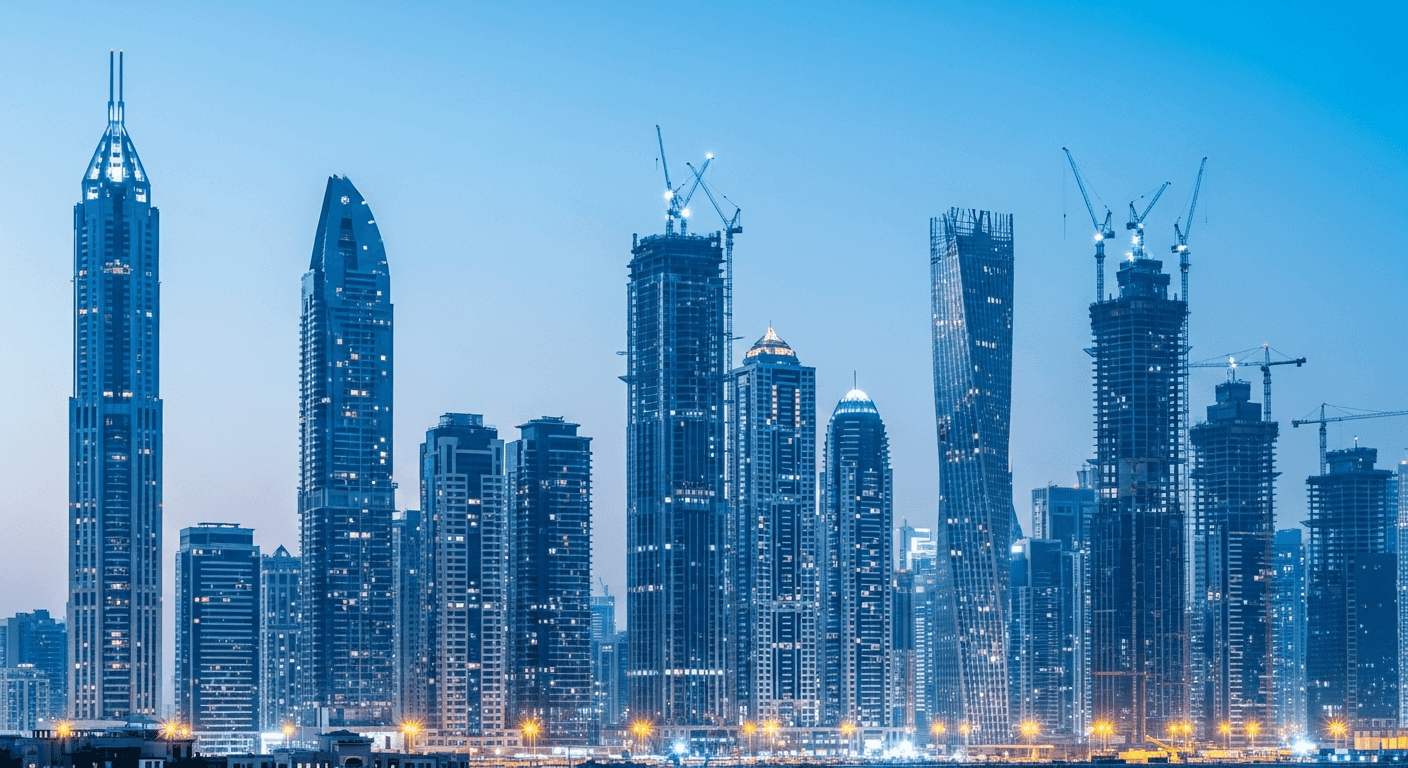
Off-Plan vs. Secondary: A Data-Driven Market Verdict
A data-driven analysis comparing the performance, risks, and rewards of investing in Dubai's off-plan versus secondary property markets. We break down the true costs, potential returns, and market liquidity for both strategies.

The perennial debate in Dubai real estate — off-plan versus secondary, is not about which is 'better', but which is better for *you*. A data-led approach reveals the distinct risk-reward profiles that align with specific investor goals, time horizons, and capital structures. As an analyst, I see investors achieve success with both, but they are entirely different instruments requiring different strategies.
Here's the framework we'll use to dissect the two markets:
- Defining the battleground: Off-plan vs. Secondary.
- The Financials: A deep dive into the true costs, pricing, and payment structures.
- Capital Appreciation: Tracking where historical and future growth lies.
- Rental Yield Performance: The clash between immediate income and future potential.
- Risk & Mitigation: A clear-eyed look at delays, market shifts, and quality control.
- Market Liquidity: The reality of entering and exiting your investment.
- The Golden Visa Factor: How residency rules influence the decision.
- My Verdict: Crafting a portfolio strategy that works for you.
The Two Faces of Dubai's Property Market
To make an informed decision, we must first clearly define the two markets. The secondary property market Dubai analysis starts with understanding that these are established, completed properties. You can walk through them, inspect the quality, and assess the views. You buy from another owner, not a developer. Data here is transparent and abundant; the Dubai Land Department (DLD) provides a clear title deed history, and tools like the REST app offer visibility on past transactions and current service charges. This market represents maturity and predictability. When you buy an apartment in a 10-year-old tower in Dubai Marina or a villa in an established community like Arabian Ranches, you are buying a known quantity. The infrastructure is in place, the community is alive, and the rental demand is demonstrable.
In stark contrast, the off-plan market consists of properties sold directly by developers before or during construction. You are buying a promise, a floor plan, and a vision illustrated by glossy brochures and elaborate show homes. Your contract, the Sales and Purchase Agreement (SPA), is registered with the DLD as an 'Oqood', which secures your claim to the future property. This market is the engine of Dubai’s expansion, driven by master developers like Emaar Properties and Nakheel, alongside a dynamic cohort of private firms such as Binghatti and Select Group. This is where new districts are born and skylines are redrawn. Investing here is an act of faith in Dubai’s future growth trajectory.
As a market researcher, I closely watch the transaction volumes in both segments. A market dominated by secondary sales, as we saw in the initial post-pandemic recovery, often indicates strong end-user demand from people looking for a home to live in *now*. A surge in off-plan sales, which has characterized more recent market phases, signals high investor confidence and a bullish outlook on future capital appreciation. The health of the overall real estate cycle depends on a dynamic interplay between the two. The secondary market provides the bedrock of stability and proven value, while the off-plan market injects new supply and captures future-facing ambition. Neither can thrive for long without the other.
The Financials: Deconstructing the True Cost
 Featured project
The most significant practical difference between the two strategies lies in their cost structures and cash flow implications. A common mistake I see is comparing only the headline purchase price. The total acquisition cost and the payment schedule are far more important. Let’s break down a realistic scenario for a property valued at AED 2.5 million to illustrate the cash you need upfront.
For a ready property investment Dubai, the costs are front-loaded and substantial. If you are a cash buyer, your outlay is immediate. If you're using a mortgage, you must meet the UAE Central Bank's down payment requirements — typically a minimum of 20% for expatriate residents on a first property under AED 5 million.
Typical Secondary Market Purchase Costs (AED 2.5M Property): - Property Price: AED 2,500,000 - DLD Transfer Fee (4%): AED 100,000 - Real Estate Agency Fee (2% + 5% VAT): AED 52,500 - Trustee Office Fee: approx. AED 4,200 - Developer No Objection Certificate (NOC) Fee: Varies, approx. AED 1,000 - AED 5,000 - Estimated Total Cost (Cash Buyer): ~AED 2,657,700 - If mortgaged (80% LTV): Your upfront cash would be the 20% down payment (AED 500,000) plus all the associated fees, totaling around AED 657,700.
Now, let's contrast this with a Dubai off-plan investment. The developer’s payment plan is the central feature. These plans defer the bulk of the payment over the construction period, and sometimes even for years after handover. This dramatically lowers the initial barrier to entry.
Typical Off-Plan Purchase Costs (AED 2.5M Property): - Property Price: AED 2,500,000 - Upfront Down Payment (e.g., 20%): AED 500,000 - DLD Transfer Fee (4%): AED 100,000 (usually paid with the down payment) - Oqood/Admin Fee: approx. AED 5,250 - Estimated Total Upfront Cost: ~AED 605,250
The rest of the purchase price is then paid in instalments, for example, 40% during construction and the final 40% upon handover (a 60/40 plan). Or, in an increasingly popular post-handover payment plan, you might pay 60% up to completion and the final 40% over 2-3 years after you've received the keys. This financial use is the single biggest draw of the off-plan model. It allows an investor to control a AED 2.5 million asset with an initial outlay of just over AED 600,000, freeing up capital for other investments. However, this benefit comes with the absolute obligation to meet every single scheduled payment, regardless of what happens in the wider market.
Unpacking Capital Appreciation Potential
The core promise of a Dubai off-plan investment vs resale is capturing appreciation during the construction phase. The theory is simple: you buy at today's price, often at a discount to comparable ready properties, and by the time the project is completed in 2-4 years, its value has risen due to market growth, the maturity of the surrounding community, and the premium attached to a brand-new building. Early investors in now-thriving master communities like Dubai Hills or Emaar Beachfront are case studies in this strategy's success. They bought into a vision when it was sand and scaffolding and realised substantial gains as the parks, schools, and retail precincts came to life around them.
However, this appreciation is not a law of physics. It is highly sensitive to the timing of your purchase within the broader property cycle. Buying off-plan at the peak of a market boom is a high-risk endeavour; by the time your property is handed over, the market may have corrected, leaving you with an asset worth less than your total purchase price. This is the crucial risk that the attractive payment plan can obscure. The most successful off-plan investors I know are not just buying a property; they are taking a multi-year view on the direction of the Dubai economy and its real estate market.
Capital appreciation in the secondary market behaves differently. It's typically slower, more stable, and less speculative. Growth is tied to broader fundamentals: inflation, population growth, infrastructure upgrades, and the enduring appeal of the location. A prime villa on Palm Jumeirah or an apartment overlooking the fountains in Downtown Dubai will see its value move with the overall health of the premium market. Its growth path is more of a steady climb than the volatile rocket launch that off-plan investors hope for. For buyers who prioritise wealth preservation and steady, predictable growth over speculative gains, the secondary market offers a more comfortable journey.
Rental Yields: Immediate Income vs. Future Promise
This is where the two strategies diverge most sharply. The paramount advantage of the secondary market is immediate cash flow. A ready property investment Dubai can be listed on the rental market the day after the title deed is in your name. This income stream — your rental yield, is the foundation of a buy-to-let investment strategy. It begins servicing your investment from day one, covering your service charges, maintenance costs, and potentially part of your mortgage payments. The ability to generate immediate returns provides a tangible floor to your investment's performance.
Calculating yield is straightforward, but it’s crucial to look at net, not gross, figures. For example, a one-bedroom apartment in JVC purchased for AED 1,000,000 might rent for AED 75,000 per year. That’s a 7.5% gross yield. However, you must deduct annual service charges (e.g., AED 15,000) and an allowance for maintenance (e.g., AED 3,000). Your net rental income becomes AED 57,000, for a more realistic net yield of 5.7%. This figure is the true measure of your investment's income-generating power.
Off-plan investments, by definition, produce zero income during the 2-4 year construction period. This is a significant opportunity cost. While your capital is tied up in stage payments, it is not generating any cash flow. The argument from developers and off-plan proponents is that upon completion, the brand-new property will command a premium rent, resulting in a superior yield calculated on your lower, original purchase price. For instance, an off-plan apartment bought for AED 2 million might rent for AED 160,000 upon handover three years later, an 8% gross yield on your cost. A similar, but older, ready property today might cost AED 2.3 million and rent for AED 165,000, a 7.2% gross yield. The off-plan investor achieves a higher yield *on paper*, but only after sacrificing three full years of rental income. This trade-off must be at the heart of your calculations.
“The liquidity of an off-plan property is a direct function of market sentiment. In a bull run, it’s a sprinter; in a downturn, it’s chained to the floor.”
Analysing Risk & Mitigation Strategies
No investment comes without risk, and it’s critical to approach both markets with a clear understanding of the potential pitfalls. The risks associated with off-plan are more acute and project-specific. The most common is construction delay. While major developers have improved their track records, delays still happen and can throw off your financial projections by extending the non-income-generating period. Another risk is a quality deficit, where the finished apartment or villa doesn't quite live up to the luxurious standards promised in the marketing materials. Snagging the property professionally before handover is essential.
The most serious, though now rarer, risk is developer failure. Dubai’s regulatory framework has matured significantly to protect buyers. The Real Estate Regulatory Agency (RERA) mandates that all buyer funds for an off-plan project must be held in a secured escrow account. The developer can only withdraw funds from this account to pay for construction costs after hitting specific, independently verified completion milestones. This system, while not infallible, provides a powerful safeguard against outright developer default and misuse of funds.
Secondary market risks are of a different nature. With older properties, the primary concern is the building's physical condition. Hidden issues with MEP (mechanical, electrical, plumbing) systems can lead to unexpected and costly repairs. This is why a comprehensive, professional inspection before purchase is not an optional extra; it's a necessity. Another key risk is escalating service charges. Before buying into a building, you must conduct due diligence on the Owner's Association's financial health. Review past budgets, check for outstanding debts, and understand the planned capital expenditures. A sudden hike in service fees can severely erode your net rental yield and make the property harder to sell.
To mitigate these risks, your strategy must be due diligence. For off-plan, this means: - Developer Due Diligence: Prioritise established master developers with a long history of successful deliveries. For private developers, scrutinise their track record, the quality of their past projects, and their financial stability. - Project Due Diligence: Visit the site. Understand the master plan. Is the promised infrastructure (metros, malls, parks) actually being built? - Contract Due Diligence: Have a lawyer review the SPA. Understand the clauses related to delays, penalties, and handover procedures.
Market Liquidity and Your Exit Strategy
Market liquidity Dubai real estate refers to how quickly and easily you can convert your property back into cash at a fair market price. This is an often-overlooked factor that is critical to your overall investment success. Generally speaking, the secondary market offers superior liquidity. In established, popular communities, there is a constant and deep pool of potential buyers, including end-users seeking a home and investors looking for a rental asset. The process is standardised, and buyers can readily access mortgages, which broadens the potential market for your property significantly.
Liquidity in the off-plan sector is a far more complex and volatile beast. Your ability to exit an off-plan investment before handover depends on the secondary off-plan market, colloquially known as 'flipping'. This involves selling your purchase contract (your Oqood) to another investor. To do this, you typically need the developer's permission (an NOC) and must have paid a minimum percentage of the property's price, often between 30% and 50%. The new buyer then takes over your payment plan and pays you a premium for the contract, assuming the market value has risen.
This market for off-plan flips is intensely cyclical. In a rising market with strong positive sentiment, it can be incredibly liquid, with contracts changing hands rapidly as speculators chase capital gains. However, in a flat or declining market, this liquidity can evaporate almost overnight. Potential buyers would rather purchase directly from the developer, who can offer fresh incentives and more attractive payment plans. An investor looking to exit in a down market may be forced to sell at a discount or, worse, be unable to find a buyer at all, leaving them legally obligated to continue making their stage payments on a depreciating asset. This binary nature of off-plan liquidity — either 'on' or 'off', is perhaps its single greatest risk.
The Role of the Golden Visa and Other Incentives
Government policies can significantly shape investment flows, and the UAE's Golden Visa program is a prime example. The ability to obtain a 10-year renewable residency visa through a property investment of AED 2 million or more has become a major driver of demand. As confirmed by the UAE Government Portal, this threshold applies to both ready and off-plan properties, and can even include mortgaged assets, provided the owner's equity (the amount paid to date) meets the AED 2 million minimum.
This policy has created a strong anchor for demand in the AED 2 million-plus segment across both markets. Developers are now explicitly designing and marketing entire projects around their Golden Visa eligibility, knowing it attracts a global pool of investors seeking a long-term foothold in Dubai. For many international buyers, the visa is as valuable as the property itself, making it a key consideration in their investment decision. This has, in my view, added a layer of stability and resilience to this price bracket.
Beyond this strategic incentive, the off-plan market is also characterised by tactical offers from developers. These can include waivers on the 4% DLD fee, several years of free service charges, or even furnished apartments. While attractive, these incentives should be viewed as sweeteners, not the main course. A DLD waiver on a poor investment is still a poor investment. It is essential to analyse the underlying value of the property, its location, and the developer's quality, separate from these marketing promotions. The secondary market, by contrast, is a 'what you see is what you get' environment; the agreed price is the price, and such incentives are not part of the transaction.
The optimal Dubai property strategy is not a rigid choice between off-plan and secondary, but a dynamic allocation based on your personal capital, risk appetite, and time horizon. Stability and income favour the secondary market, while use and high-growth potential define the best off-plan opportunities.
My Verdict: A Hybrid Approach for the Savvy Investor
After years of analysing transaction data and advising clients at Gaia Living, my conclusion is that there is no single 'correct' answer in the off-plan vs. Secondary debate. Declaring one superior to the other is a gross oversimplification. The right choice is entirely dependent on the investor's individual circumstances and objectives.
For a first-time investor in Dubai, or anyone whose primary goal is generating a stable, predictable income stream with lower risk, I almost always recommend starting with the secondary market. A ready property investment Dubai in a mature community with proven rental demand and established infrastructure — think Business Bay for apartments or Town Square for family homes, provides immediate returns and a clearer, data-rich path. The risks are known and manageable through diligent inspection and financial review.
Conversely, for a more experienced investor with a higher risk tolerance, a longer time horizon, and a keen eye on maximising capital gains, a selective off-plan investment can be a powerful tool. The key word here is 'selective'. This strategy is not about buying any new launch; it's about identifying the best property to buy Dubai off-plan from a top-tier developer in a location with genuine, long-term growth catalysts, such as the areas around Al Maktoum International Airport in Dubai South or the final prime plots in a master community like Creek Harbour. The financial use offered by payment plans, if managed wisely, can amplify returns significantly.
Ultimately, the most sophisticated investors I encounter don't limit themselves to one strategy. They build a balanced portfolio. They may have a core of stable, income-producing secondary properties that provide a reliable cash flow base. Then, they allocate a portion of their portfolio — the portion they can afford to expose to higher risk, to carefully chosen off-plan ventures. This hybrid approach allows them to capture the best of both worlds: the stability and income of the present, and the potential for the leveraged growth of the future. The real question isn't 'which market to choose?', but 'what is the right blend for me?'
Sources
- Dubai Land Department (DLD): https://dubailand.gov.ae/
- Real Estate Regulatory Agency (RERA): https://www.rera.gov.ae/
- UAE Government Portal (Golden Visa Information): https://u.ae/en/information-and-services/visa-and-emirates-id/residence-visas/golden-visa
Questions, answered
- Is it better to buy off-plan or ready property in Dubai?
- Neither is universally 'better'. Off-plan offers potential for higher capital growth and staggered payments, suiting long-term investors. Ready properties provide immediate rental income and greater stability, making them ideal for income-focused or risk-averse buyers.
- What are the main risks of buying off-plan property in Dubai?
- The primary risks are construction delays, which postpone your returns; market downturns before completion, which can erase your equity; and potential discrepancies between the promised and final product quality. Sticking to top-tier developers and understanding the market cycle are key risk mitigation strategies.
- What are the upfront costs for buying a secondary property in Dubai?
- Beyond the property price, budget for approximately 7-8% in additional costs. This includes the 4% Dubai Land Department (DLD) transfer fee, 2% agency fee (+VAT), trustee fees, and potentially mortgage arrangement fees and a No Objection Certificate (NOC) from the developer.
- Can I get a Golden Visa by buying an off-plan property?
- Yes. A property purchase of AED 2 million or more makes you eligible for the 10-year renewable Golden Visa. This applies to both off-plan and ready properties, and can include mortgaged properties provided your paid-up equity meets the threshold.
- How liquid is the Dubai property market?
- The secondary market, especially in established communities, is generally quite liquid with a steady stream of buyers. Off-plan liquidity is more volatile; it's high in a rising market where 'flipping' is profitable but can become very low in a flat or falling market, making it harder to exit before handover.
- Are developer payment plans a good deal for off-plan investments?
- Payment plans are a powerful tool for use, allowing you to control an asset with a smaller initial capital outlay. However, you must be confident in your ability to meet all future instalments. Post-handover payment plans can be particularly attractive as they allow you to start earning rent while still paying off the developer.

Amara translates DLD transaction data, supply pipelines, and macro signals into clear calls on where Dubai's market is heading. She writes the numbers most brokers only feel.
Related stories

Dubai's Big Squeeze: Smaller Plots, Denser Living
Dubai real estate is undergoing a fundamental shift towards smaller plot sizes and higher density. We analyse the economic drivers, the impact on property values, and what this new era of compact urban living means for both homebuyers and investors.

Resort Living as Your Dubai Reality
Explore how to trade temporary staycations for a permanent home with five-star amenities in Dubai. I'll break down the real costs, best communities, and lifestyle trade-offs of embracing high-end resort living every day.

Finding Your Tribe in Dubai's Villa Communities
I explore which of Dubai's renowned villa communities attract specific expat nationalities and lifestyle groups, offering insights to help you find a place that feels like home.
Echoes, in your inbox
One thoughtful email a month. Market insight, new launches, no spam.