

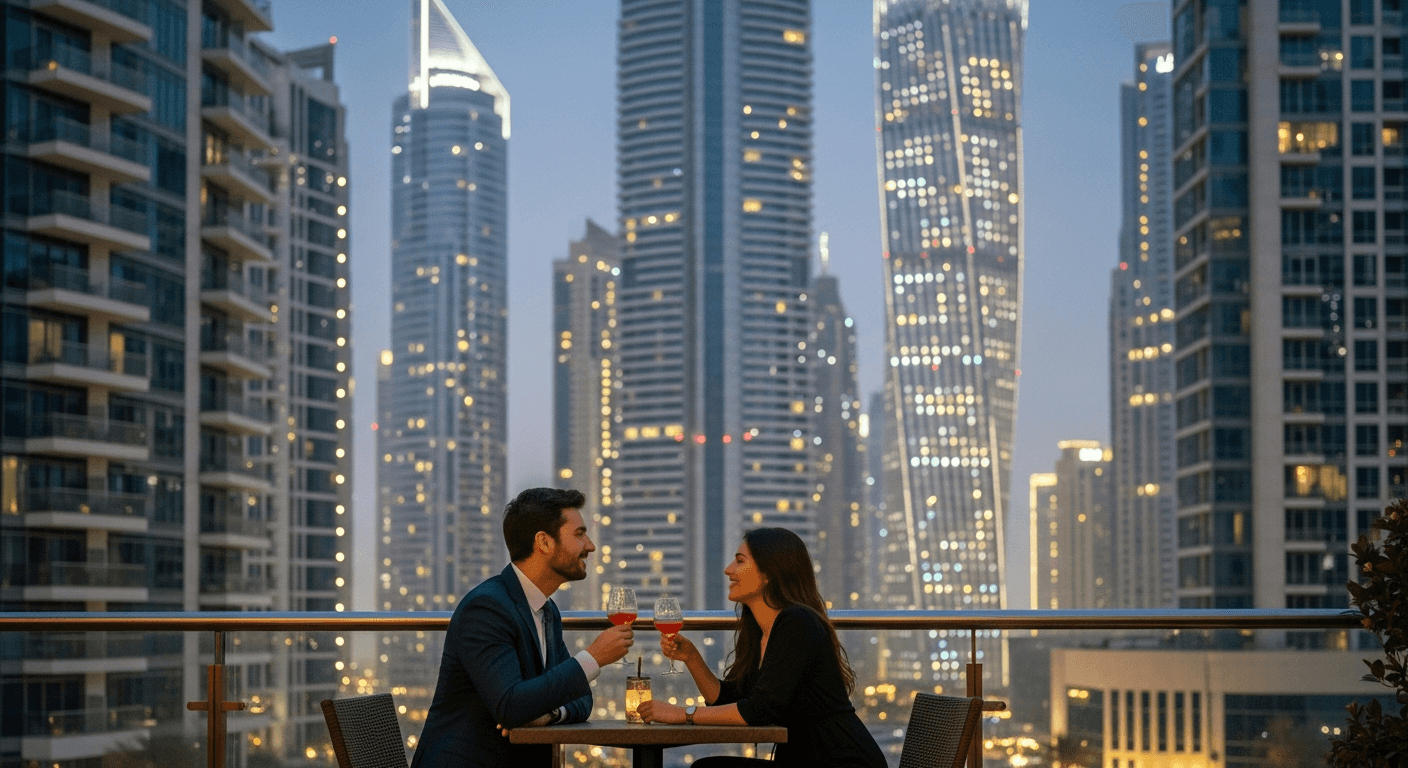
Living in DIFC: A Guide for Dubai Professionals
Discover what it's truly like to live in Dubai's financial heart. My guide covers everything from the most sought-after towers and rental costs to the unique lifestyle benefits of DIFC apartments.

As a residential choice, the Dubai International Financial Centre polarises opinion, and I find that fascinating. For some, it’s the ultimate expression of urban convenience; for others, it’s a beautiful but sterile world of glass and steel. My work at Gaia Living has given me a front-row seat to its evolution, and I can tell you the reality is far more nuanced. It is a true vertical city, an ecosystem meticulously designed for a very specific lifestyle.
Here's what we'll explore in this detailed guide:
- The unique appeal of DIFC as a residential address, not just a business hub
- A deep dive into the key residential towers: Index Tower, Central Park Towers, and the Gate Village residences
- The real costs: A full breakdown of buying and renting in DIFC, including service charges
- The DIFC rental market and what it means for tenants and landlords
- Lifestyle and connectivity: The reality of 'walkability' in a vertical city
- The legal framework: Why the DIFC's separate jurisdiction matters for residents
- My final verdict on who DIFC living is truly for
The Dual Identity of DIFC: More Than Just a Workplace
When DIFC first launched, the vision was clear: create a global financial hub to bridge the time zones between London and Hong Kong. Residential living felt like an afterthought, a functional necessity for the bankers and lawyers who would work there. I remember walking through the area in its early days; it had an imposing, almost monolithic, quietness after 7 p.m. Fast forward to today, and that perception is entirely outdated. The district has undergone a profound transformation, cultivating a vibrant identity that extends far beyond the trading floor. It's a change I've witnessed firsthand, both in the physical environment and in the conversations we have with clients who are increasingly drawn to DIFC as a full-time home, not just an office address.
The catalyst for this shift was a deliberate focus on creating a 'place'. The development of Gate Avenue, a sprawling, climate-controlled retail and pedestrian spine, was a game-changer. It stitched together the district's disparate towers into a cohesive whole, creating a fluid path from office to restaurant to apartment lobby. Suddenly, the district had a heart. This was complemented by the organic growth of a world-class culinary and arts scene. Gate Village is not just a collection of office buildings; it’s home to internationally acclaimed art galleries and a concentration of fine-dining restaurants — LPM, Zuma, Coya, to name a few, that is unmatched anywhere else in Dubai. This isn't just a place to live; it's a place to experience culture.
This evolution sets DIFC apart from other purpose-built business districts. Where some areas can feel soulless once the workday ends, DIFC buzzes with energy. The evenings are for gallery openings, terrace drinks, and leisurely dinners. Weekends see residents enjoying the quiet, uncongested streets or brunching just an elevator ride away from their homes. This dual identity is its core strength. It offers the efficiency and prestige of a global business hub combined with the sophisticated lifestyle of a prime urban neighbourhood. For many professionals considering `corporate housing Dubai`, DIFC presents a compelling proposition that blurs the line between work and life in the most smooth way possible, creating a self-contained world where every need is anticipated and catered for.
Anatomy of a DIFC Residence: The Key Towers
 Featured project
When we talk about `luxury apartments DIFC`, we're primarily talking about a handful of iconic towers, each with its own distinct character and appeal. As an apartment specialist, I've spent countless hours in these buildings, analysing floor plans, assessing finishes, and understanding the subtle differences that define their resident experience. They are not interchangeable. Choosing between them is about aligning the building’s personality with your own lifestyle priorities. At the top of the list, you have the two titans: Index Tower and Central Park Towers. They are the twin pillars of residential life in the district, yet they offer surprisingly different propositions.
Index Tower is the architectural landmark. Designed by the legendary Foster + Partners, its colossal exoskeleton isn't just a visual statement; it's a functional element of structural engineering that allows for largely column-free interiors. From a resident’s point of view, this means clean, flexible layouts and breathtaking, unobstructed views. Having been completed for over a decade, the building has settled well. The quality of the original construction is evident. The residential lobby is separate and discreet from the commercial entrance, a crucial design choice that maintains a sense of privacy. The apartments themselves range from well-proportioned studios to magnificent duplex and triplex penthouses. In my experience, clients are drawn to Index for its architectural purity, its direct connection to the Gate Avenue spine, and the sheer prestige of the address. It feels like living inside a piece of modern art.
On the other side of the district stands Central Park Towers, offering a different, perhaps more liveable, take on urban luxury. Its key differentiator is space — not just within the apartments, but around the building itself. The tower complex includes a generous landscaped park, a rare patch of green in this dense urban environment. This makes it particularly appealing to residents with pets or those who simply crave a connection to nature. The location on the periphery of DIFC also means slightly easier road access to Sheikh Zayed Road. The amenity deck is one of the best in the area, with a large resort-style pool and extensive fitness facilities. While Index feels integrated into the core of DIFC's commercial buzz, Central Park feels like a residential retreat set within it. The choice between the two often comes down to this: do you want to be in the absolute centre of the action, or adjacent to it with a bit more breathing room?
Beyond these two giants, there are the more boutique, but no less prestigious, options within The Gate Village itself. Buildings like Limestone House and The Residences offer a different scale of living. These are low to mid-rise towers, directly integrated with the art galleries and restaurants that give the area its character. Living here is akin to living in a sophisticated urban village. You step out of your lobby directly into the heart of the cultural scene. The apartments often feature larger terraces and unique layouts, commanding a premium for their prime location and exclusive atmosphere. More recently, the arrival of ultra-luxury branded residences on the fringes of DIFC, such as the Four Seasons and forthcoming projects, signals the next chapter. These developments are pushing the boundaries of service and amenity, catering to a global elite who demand hotel-level living in a residential setting. They affirm DIFC's status as a Tier 1 global address, constantly evolving and refining its residential offer.
The True Cost of Living: A Detailed Financial Breakdown
Understanding the allure of DIFC is one thing; affording it is another. As your advisor, my role is to bring absolute clarity to the numbers. The prestige and convenience of a DIFC address come with a premium price tag, and it's essential to go in with your eyes wide open, accounting for every single cost. Vague estimates are unhelpful, so let's break down the precise, line-by-line costs for purchasing a property in this prime district. We'll use a realistic example of a two-bedroom apartment, a popular choice for professionals and small families, with a hypothetical purchase price of AED 4,000,000.
When you agree on a price, that's just the headline figure. The associated upfront costs, mandated by Dubai's regulatory bodies, are significant. Here is what you must budget for:
- Purchase Price: AED 4,000,000
- Dubai Land Department (DLD) Transfer Fee: 4% of the purchase price, which is AED 160,000. This is the largest single fee and is non-negotiable.
- DLD Admin Fee: A fixed fee, currently AED 4,200 (including VAT).
- Real Estate Agency Fee: Typically 2% of the purchase price, plus 5% VAT. On our example, this would be AED 80,000 + AED 4,000 VAT = AED 84,000.
- Property Registration Trustee Fee: Approximately AED 4,200 (including VAT).
- No Objection Certificate (NOC) Fee: This is paid to the developer to issue the NOC for the title deed transfer. It varies but is typically between AED 1,000 and AED 5,000. Let's budget AED 5,000.
- Total Upfront Cost (without mortgage): Adding these up, your total initial outlay would be approximately AED 4,253,200.
If you're using a mortgage, there are additional costs. The Central Bank of the UAE mandates a minimum down payment of 20% for a first-time expatriate buyer on a property under AED 5 million, so you'd need AED 800,000 in cash for the down payment. Also, you must pay a mortgage registration fee to the DLD, which is 0.25% of the loan amount. For a loan of AED 3,200,000, that's an extra AED 8,000. These figures, sourced from official regulations by bodies like the Dubai Land Department (DLD) and the Central Bank of the UAE, are not guidelines; they are fixed costs of transacting property in Dubai.
Ownership doesn't end with the purchase. The ongoing cost I always urge clients to scrutinise is the service charge. In DIFC's premium towers, these are substantial, and for good reason. They cover the maintenance of the state-of-the-art gyms, swimming pools, 24/7 concierge and security, cleaning of the complex facades, and the running of the sophisticated building management systems. A realistic range for a high-quality DIFC tower is between AED 25 and AED 35 per square foot per year. For a 1,500 sq. Ft. two-bedroom apartment, you should budget for an annual service charge of AED 37,500 to AED 52,500. This is a significant recurring expense that must be factored into your total cost of ownership calculations. It's the price of the convenience, security, and luxury that define the DIFC lifestyle.
Navigating the DIFC Rental Market
For many professionals, renting is the entry point to the DIFC lifestyle. The `DIFC rental market` is a distinct sub-market within Dubai, characterised by a specific tenant profile, high expectations, and, consequently, strong rental yields for savvy investors. Understanding its dynamics is key, whether you're a prospective tenant wanting the best value or a landlord looking to maximise your asset's performance. The market is overwhelmingly geared towards `DIFC apartments for professionals`. The typical tenant is a high-earning individual or couple working in finance, law, or management consulting within the district or in the immediate vicinity.
This specific tenant demographic shapes the entire market. They are time-poor and value convenience above all else. This translates into a strong demand for high-quality, well-managed properties. Furnished apartments, particularly those with stylish, modern interiors, command a premium and are often leased quickly. Many leases are also signed as corporate tenancies, where a company rents the apartment for an executive. This is a positive for landlords, as corporate tenants are generally reliable and financially secure. However, the expectations are commensurately high. A non-functioning appliance or a slow response from building management, which might be tolerated in other areas, can be a major issue for a busy executive paying a premium rent. As a landlord in DIFC, investing in professional property management isn't a luxury; in my view, it's a necessity to meet tenant expectations and protect your investment.
From a tenant's perspective, the annual rents reflect the premium nature of the location. As of our latest market analysis, you can expect to see one-bedroom apartments renting for between AED 150,000 and AED 200,000 per year. Two-bedroom units typically range from AED 250,000 to AED 350,000, while larger three-bedrooms and penthouses can easily exceed AED 400,000. When budgeting, tenants must also account for standard upfront costs: a 5% security deposit, a 5% agency commission, and the cost of setting up utilities (DEWA) and registering the tenancy contract with Ejari, as per RERA guidelines. The high demand and professional tenant base result in attractive rental yields for investors, often in the 5-7% gross range. This is stronger than in many suburban villa communities and is a key reason why DIFC properties remain a blue-chip asset class for investors seeking income. The stability of the tenant pool provides a degree of security that is highly attractive in a dynamic property market like Dubai's.
“DIFC's walkability isn't a marketing slogan; it's a core feature of its engineering. In August, the ability to walk from your desk to your door in a climate-controlled environment is the ultimate luxury.”
The Promise of Walkability and Ultimate Connectivity
One of the most frequently used terms when discussing DIFC is 'walkability'. In a city like Dubai, which is largely designed around the automobile, this concept is often more of a marketing aspiration than a practical reality. In DIFC, however, I can confirm it is an engineered and fundamental part of the living experience. The `walkability DIFC apartments` offer is arguably the most authentic in the entire city, thanks to a single, critical piece of infrastructure: the network of air-conditioned walkways, most notably Gate Avenue.
This climate-controlled corridor is the artery that gives the district life. It connects the major office buildings like the Gate and ICD Brookfield Place with residential towers like Index Tower and Central Park Towers, and with the retail and dining of Gate Village. This means that for the majority of the year, and crucially, during the intense heat of the summer, a resident can leave their apartment, go to the office, attend a meeting, have lunch, go to the gym, and pick up groceries without ever stepping outside into the heat. This is a profound lifestyle advantage that cannot be overstated. It eliminates the time, stress, and cost of a daily car commute. It transforms the journey between work, home, and leisure from a chore into a pleasant, smooth transition. This level of integration is what elevates DIFC from a collection of buildings into a truly cohesive urban ecosystem, comparable to other hyper-convenient districts like City Walk or Bluewaters Island, but with a direct link to a global business hub.
Of course, connectivity extends beyond the district's borders. DIFC's strategic location fronting Sheikh Zayed Road provides immediate access to Dubai's main arterial highway. This means that getting to Downtown Dubai and the Dubai Mall is a five-minute drive. Dubai International Airport (DXB) is a mere 15 minutes away, a critical factor for the frequent-flying professionals who live here. For those who prefer public transport, the Financial Centre Metro Station is directly accessible via the walkway network, putting the entire city within easy reach. This combination of internal walkability and external connectivity is a powerful one. You can exist entirely within the DIFC bubble for days on end, enjoying its curated environment, but the moment you need to venture out, access is effortless. It's this balance that provides the best of both worlds: the self-contained convenience of a village and the easy mobility required in a sprawling metropolis.
The DIFC Authority: A Unique Legal Framework
For any serious buyer or investor, one of the most compelling — and often misunderstood, features of DIFC is its unique legal and regulatory status. DIFC is not just a geographical location; it's an independent jurisdiction. It operates as a financial free zone with its own civil and commercial laws, its own court system, and its own regulators. This framework is based on English Common Law, a system familiar to the international finance and legal professionals it was designed to attract. This legal independence has profound and positive implications for residents and property owners, offering a level of certainty and protection that is a significant part of its value proposition.
The most tangible benefit for property owners is the DIFC Wills Service. As I always explain to my clients, particularly expatriates, planning for the future is paramount. In the broader UAE, which operates under a Civil Law system with influences from Sharia principles, inheritance can be a complex matter for non-Muslims. The DIFC Wills Service provides a clear solution. It allows non-Muslims who own assets in Dubai (even assets outside the geographical boundaries of DIFC) to register a will under common law principles. This legally binding document ensures that your property and other assets are distributed according to your specific wishes, rather than defaulting to local inheritance laws. For anyone investing their life savings into a home, this provides invaluable peace of mind and is a powerful reason to consider the DIFC ecosystem. It’s a mechanism for legal certainty that we at Gaia Living always highlight as a key part of due diligence.
This special jurisdiction also governs relationships and disputes within the centre. While property titles are registered with the main Dubai Land Department (DLD) to ensure they are part of the emirate's unified property register, disputes related to contracts or tenancies within DIFC can be adjudicated by the DIFC Courts. These courts, with their English-language proceedings and reliance on international legal precedent, provide a familiar and trusted forum for dispute resolution for international investors and residents. The DIFC Authority also has its own Real Estate Regulatory arm that works in tandem with Dubai's main RERA. This creates a robust, multi-layered regulatory environment that promotes transparency and protects stakeholders. It’s an infrastructure of trust, built on a world-class legal foundation, that underpins the value of every square foot of real estate in the district.
My Verdict: Is a DIFC Apartment Right for You?
After walking through the towers, breaking down the costs, and exploring the unique lifestyle and legal benefits, we arrive at the ultimate question: Who is DIFC for? Having guided countless clients through this decision, my answer is that DIFC is a choice. It's a deliberate decision to prioritise certain lifestyle elements — convenience, prestige, and connectivity, above others, like sprawling space or suburban quiet. It is, in my professional opinion, one of the most successful master-planned communities in Dubai, but its success lies in its unapologetic focus on a specific demographic.
To help you decide, let's summarise the key advantages and potential drawbacks in a straightforward list:
Pros of Living in DIFC:
- Unmatched Convenience: The ability to live, work, and socialise within a single, climate-controlled, walkable ecosystem is the primary benefit.
- Prestigious Address: A DIFC address carries significant weight, both professionally and socially.
- Strong Rental Yields: For investors, the stable, high-income tenant base provides consistent demand and attractive returns.
- World-Class Amenities: From fine dining and art galleries to state-of-the-art fitness centres, everything is at your doorstep.
- Legal Security: The common law jurisdiction and the DIFC Wills Service offer significant peace of mind for expatriate owners.
- Superb Connectivity: Direct access to Sheikh Zayed Road and the Dubai Metro makes getting around the city effortless.
Potential Cons:
- High Cost: Both purchasing and renting in DIFC carry a significant premium compared to many other Dubai neighbourhoods.
- Limited Green Space: While Central Park Towers is an exception, DIFC is a resolutely urban, high-density environment.
- Less Suited for Families: The focus on professionals means fewer family-oriented amenities like schools and large playgrounds compared to communities like Dubai Hills.
- The 'Bubble' Effect: The self-contained nature can feel isolating for those who crave a more diverse, sprawling neighbourhood feel.
So, who is the ideal DIFC resident? It is the high-achieving professional, the power couple, the global executive for whom time is the most valuable commodity. It's the individual who defines luxury not by the size of their garden, but by the shortness of their commute. It's for the person who wants their life curated and streamlined, who wants to finish a late meeting and be at a world-class restaurant in five minutes, or in their own living room in ten. It's also a prime choice for the astute property investor who understands the value of a blue-chip location with a captive, high-quality tenant pool. Conversely, it is probably not the ideal choice for a large family seeking a backyard and a community feel centred around schools and parks. For them, a community like Arabian Ranches or Jumeirah Golf Estates would be a better fit.
Living in DIFC is the ultimate trade-off: you exchange sprawling gardens for unparalleled convenience and a commute measured in footsteps. For the right professional, it's not just a good choice; it's the only one that makes sense.
Sources
- Dubai Land Department (DLD): https://dubailand.gov.ae/en/
- Central Bank of the UAE: https://www.centralbank.ae/en/
- UAE Government Portal: https://u.ae/en/
Questions, answered
- Are apartments in DIFC freehold?
- Yes, Dubai International Financial Centre (DIFC) is a designated freehold area. This means non-GCC nationals can purchase property with full ownership rights, which they can then sell, lease, or inherit.
- What are the average service charges in DIFC towers?
- Service charges in DIFC are at the premium end, typically ranging from AED 25 to AED 35 per square foot annually. These fees cover the high-end amenities, 24/7 security, and meticulous maintenance of the buildings.
- Is DIFC a good place for families with children?
- DIFC is primarily tailored for professionals and couples. While some buildings like Central Park Towers offer more green space, families often prefer villa communities with more schools and parks. For families prioritizing an urban lifestyle, it can work, but it's not its primary design.
- Can I get a mortgage for a property in DIFC?
- Yes, all major UAE banks offer mortgages for properties in DIFC, as it is a prime freehold district. Foreign residents can typically borrow up to 75-80% of the property's value, as per Central Bank of the UAE regulations, requiring a 20-25% down payment.
- How is the rental demand for DIFC apartments?
- The rental demand for DIFC apartments is consistently strong, particularly for one and two-bedroom units. The tenant base is dominated by high-income professionals from the finance, legal, and consulting sectors, making it a stable market for landlords.
- What makes the legal system in DIFC unique for property owners?
- DIFC operates on an independent, common-law judicial system. For property owners, the DIFC Wills Service is a significant advantage, allowing non-Muslims to register a will that ensures their assets are distributed according to their wishes, providing crucial legal certainty.

Ravi lives and breathes apartment living — from studio yields in JVC to branded residences on the Palm. Floor plans, service charges, and view lines are his love language.
Related stories
Right-Sizing Your Dubai Villa for a New Chapter
As an empty nester or active retiree, your idea of the perfect Dubai home shifts. I explore the best villa communities that prioritise lifestyle and low-maintenance living over sheer size.
Dubai's AC Dilemma: The Real Cost of Cooling
Your apartment's air conditioning is more than just a utility—it's a major factor in your monthly budget and comfort. I'll break down the real costs and benefits of Dubai's two main cooling systems, helping you choose your next home wisely.
Managing Multiple Offers: A Dubai Seller's Playbook
Receiving multiple offers on your Dubai property is an excellent problem to have, but handling it incorrectly can cost you time and money. Here’s my strategic playbook for managing competitive bids to secure the best possible outcome.
Echoes, in your inbox
One thoughtful email a month. Market insight, new launches, no spam.