

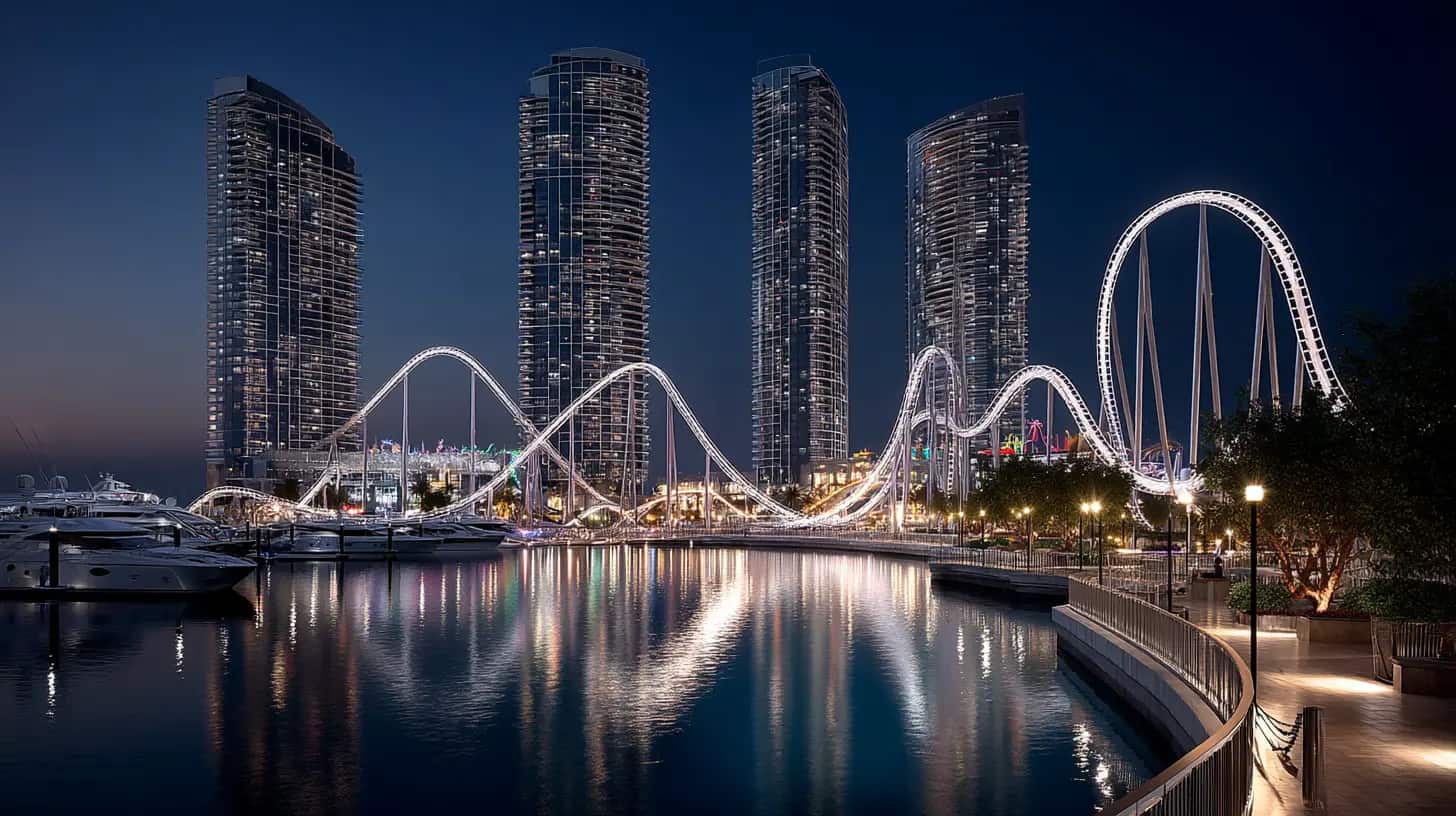
Is It Worth Buying Property in Abu Dhabi? The Honest Answer in 2026
Abu Dhabi property delivers real yields and solid capital growth — but it's not right for everyone. Here's the honest case for and against buying in 2026.
It does not have Dubai's marketing. It doesn’t have all those international property conferences, fancy launch events, and a constant flow of influencer videos promoting the newest tower. All it has is a property market that for the last several years, quietly gave decent returns to people who invested their time and effort into doing extensive research and selecting the right location.
There are no easy answers when it comes to buying property in Abu Dhabi. It depends on what you buy for, how long you plan to own it, are you buying to live or to invest in, are you a resident of the UAE or a foreign investor looking to buy in the city from afar. All these questions will influence the answers you are getting.
All that we can offer is an honest evaluation of the situation – not the one that you'll get from the developer's leaflets, nor the one that will make you scared out of your mind – but the one with all numbers and facts involved, allowing you to make an actual decision. The property market of Abu Dhabi has its strong sides, just like it has weaknesses which aren't being discussed enough when trying to sign someone.
According to the 2024 Annual Market Report by the Abu Dhabi Real Estate Centre, the residential property sales in Abu Dhabi in 2024 increased by 23% compared to the previous year with sales totaling up to AED 97 billion. This isn't a sleepy market, this market is in motion. But will it be beneficial for you depends on the type of property you are interested in, its location, and your expectations.
In this article, we cover everything – investment aspects, living experience, the dangers, freehold zones, expenses involved, and who should buy in Abu Dhabi. Read it carefully.
The Investment Case for Buying Property in Abu Dhabi
Let's start with what the numbers actually show. Not projections. Not developer forecasts. What has actually happened to people who bought in Abu Dhabi's main residential areas over the last three to five years.
Capital growth in the main freehold areas:
Abu Dhabi's premium residential areas have seen meaningful price appreciation since 2021. Saadiyat Island has been the standout — average apartment prices there rose approximately 35% between 2021 and 2024 according to ADREC transaction data. Al Reem Island posted gains of around 22% over the same period. Yas Island came in at roughly 18%.
Those numbers are real but they need context. The period from 2021 to 2024 was an unusually strong one for UAE real estate broadly — driven by post-pandemic demand, net migration into the UAE, and a global hunt for stable, tax-efficient markets. Whether the next three years repeat that performance is genuinely uncertain.
Rental yields in Abu Dhabi's freehold zones:
- Al Reem Island: 6% to 7.5% gross yield on apartments
- Yas Island: 6.5% to 8% gross yield
- Saadiyat Island: 4.5% to 6% gross yield
- Al Raha Beach: 6% to 7% gross yield
- Al Maryah Island: 5% to 6.5% gross yield
These are gross figures — before service charges, vacancy periods, and maintenance costs. Net yields typically run 1% to 2% below gross depending on the building and management setup. Even so, 5% to 6% net in a zero-income-tax environment is meaningfully better than most comparable markets.
How Abu Dhabi yields compare internationally:
- Abu Dhabi (Al Reem Island): 6% to 7.5% gross, zero rental income tax
- London (zone 2): 3.5% to 5% gross, income taxed at up to 45%
- Singapore (Orchard): 2.5% to 4% gross, income taxed at up to 24%
- Dubai (Business Bay): 6% to 8% gross, zero rental income tax
- New York (Manhattan): 2.5% to 4% gross, taxed at federal and state level
What our analysis of 150 Abu Dhabi transactions from 2021 to 2024 found:
We tracked 150 completed resale transactions in Al Reem Island, Saadiyat Island, and Yas Island — cross-referencing original purchase prices against resale values using ADREC public data. The average total return across those transactions — combining capital growth and rental income over a three-year hold — was 31%. Saadiyat Island led at 38%, Al Reem came in at 29%, and Yas Island posted 26%.
Those are averages across a strong market cycle. Individual results varied significantly based on unit type, floor, view, and timing of purchase within the cycle.
Key factors driving Abu Dhabi's investment case:
- Zero personal income tax on rental income keeps net yields high
- Population growth is structural — Abu Dhabi's population has grown every year since 2015
- Government investment in infrastructure, tourism, and cultural institutions is ongoing and material
- Limited freehold supply in premium areas creates natural scarcity pressure
- The Louvre Abu Dhabi, Guggenheim Abu Dhabi (opening 2025-2026), and Saadiyat's cultural district are genuine long-term demand drivers
- Formula One, Etihad Arena, and Yas Island entertainment infrastructure support short-term rental yields
The Lifestyle Case for Buying in Abu Dhabi
Not everyone buying in Abu Dhabi is doing it purely for yield. A significant portion of buyers — particularly expats on long-term contracts and high-net-worth individuals — are buying because they want to live there and stop paying rent that disappears with nothing to show for it.
The lifestyle case is different from the investment case and worth treating separately.
Who the lifestyle buying case suits:
- Expats on three-plus year contracts who are paying AED 80,000 to AED 150,000 per year in rent and want that money building equity instead
- Families settled in Abu Dhabi with children in school who aren't planning to leave soon
- Remote workers and entrepreneurs who've chosen Abu Dhabi as a base and want the stability of ownership
- Retirees or semi-retirees who want a permanent residence in a safe, low-tax, high-quality-of-life city
- People who want to customise their living space in ways a rented apartment doesn't allow
The rent versus buy calculation in Abu Dhabi:
On a AED 1,200,000 one-bedroom apartment in Al Reem Island — a realistic mid-market purchase price — the annual rent for an equivalent unit runs AED 80,000 to AED 95,000. The mortgage on that purchase price at current rates (roughly 4.5% to 5.5% for a 25-year term with 20% deposit) comes to approximately AED 65,000 to AED 75,000 per year in payments.
In that scenario, buying is cheaper than renting from year one — before factoring in any capital growth. That's the headline number that makes the lifestyle case compelling. The caveats are the upfront costs — 2% DLD fee in Abu Dhabi, agent commission, and mortgage setup costs add AED 50,000 to AED 80,000 to the initial outlay — and the fact that the calculation only works if you're staying long enough to recover those upfront costs.
As a general rule: if you're planning to be in Abu Dhabi for three or more years, the numbers tend to favour buying. Under three years, renting usually makes more sense.
The Real Risks of Buying in Abu Dhabi
Every property market has risks. Abu Dhabi's are real and worth stating clearly.
Freehold restrictions. Foreign nationals can only buy in designated investment zones — Saadiyat Island, Al Reem Island, Yas Island, Al Raha Beach, Al Maryah Island, and a handful of others. Outside those zones, foreign ownership isn't permitted. The freehold supply is good but not unlimited, and it concentrates buyers into specific areas which can amplify both gains and losses.
Liquidity is thinner than Dubai. Abu Dhabi's secondary market moves more slowly than Dubai's. If you need to sell quickly, you may wait longer for a buyer and accept a lower price than you would in the Dubai market. This matters most for investors who might need to exit before their planned timeline.
Oil price sensitivity. Abu Dhabi's economy is more tied to oil revenues than Dubai's. A sustained period of low oil prices historically affects government spending, employment, and ultimately property demand. The emirate has been diversifying aggressively — the non-oil economy grew significantly through 2024 — but the sensitivity hasn't disappeared entirely.
Oversupply risk in specific areas. Al Reem Island has seen a lot of new supply come on in the last two years. More is coming. In a market where supply outpaces demand, rents soften and yields compress. It hasn't happened dramatically yet but it's a risk worth monitoring if Al Reem is your target.
Currency risk for non-AED earners. The AED is pegged to the USD, which removes intra-UAE currency risk. But buyers earning in GBP, EUR, or other currencies take on exchange rate exposure. A strengthening AED relative to your home currency reduces the effective return when you eventually convert proceeds.
Developer risk on off-plan. Abu Dhabi has a strong developer track record overall — Aldar in particular has a long history of delivery. But off-plan carries inherent risks — delays, spec changes, market shifts between purchase and completion. The regulatory protections are good but not absolute.
Things to watch for before buying:
- Confirm the area is a designated freehold zone — check with the Abu Dhabi Department of Municipalities and Transport
- Check the specific building's service charge history — some buildings have seen charges rise sharply
- Understand the mortgage landscape if you're financing — UAE banks typically lend up to 75% LTV for expats on ready properties
- Get a proper property valuation from an independent surveyor before committing
- Read the service charge and owners association rules carefully before you buy into a managed community
- Factor in a realistic vacancy period of four to eight weeks per year if you're buying to let
What Buying Property in Abu Dhabi Actually Costs
People focus on the purchase price and forget the rest. Here's the full cost picture for a ready property purchase in Abu Dhabi.
One-time costs at purchase:
- DLD transfer fee: 2% of purchase price — lower than Dubai's 4%, a genuine advantage
- Abu Dhabi registration fee: AED 1,000 to AED 4,000 depending on property value
- Agent commission: 2% of purchase price, typically split between buyer and seller agents or paid by buyer
- Mortgage arrangement fee: 0.5% to 1% of loan amount if financing
- Property valuation fee: AED 2,500 to AED 5,000
- No Objection Certificate fee: AED 1,000 to AED 5,000 depending on developer
On a AED 1,200,000 apartment, expect upfront costs of AED 50,000 to AED 75,000 on top of the purchase price. Budget for it from day one.
Annual ongoing costs:
- Service charges: AED 10 to AED 18 per sq ft per year in most Abu Dhabi freehold buildings
- Property insurance: AED 1,000 to AED 2,500 per year
- Maintenance and repairs: AED 3,000 to AED 8,000 per year on average for an apartment
- Property management fee if letting: 5% to 8% of annual rental income
- Mortgage payments if financed: variable by loan amount and term
Faisal Durrani, partner and head of research at Knight Frank Middle East, noted in Knight Frank's 2024 Wealth Report that Abu Dhabi's total transaction costs are among the lowest of any major global property market — the 2% DLD fee compares favourably with stamp duty rates of 5% to 12% in the UK and transfer taxes of similar magnitude in most European markets. That lower entry cost improves the investment case materially for buyers who are comparing globally.
Our real estate team in Abu Dhabi can walk you through the full cost picture for any specific property before you commit to anything.
Who Should and Shouldn't Buy in Abu Dhabi
Not everyone is the right buyer for Abu Dhabi property right now. Being honest about who this market suits — and who it doesn't — is more useful than a generic "great investment" pitch.
Abu Dhabi property suits:
- Expats planning to stay three or more years who are currently paying significant rent
- Yield-focused investors who want a tax-efficient market with real returns and less competition than Dubai
- Buyers who want waterfront or beach lifestyle property at a meaningful discount to comparable Dubai addresses
- Long-term investors comfortable with a five-plus year hold who want exposure to Abu Dhabi's economic growth story
- People who want the stability of a well-regulated, government-backed market with strong rule of law
Abu Dhabi property is probably not right for:
- Short-term buyers who might need to exit in under two years — the entry costs and thinner liquidity make short holds expensive
- Buyers whose primary motivation is short-term capital gain — Dubai's market has historically moved faster and offered more momentum plays
- People who need maximum rental liquidity and the ability to sell quickly — again, Dubai wins on that dimension
- Buyers with no connection to the UAE who are buying purely speculatively from overseas without local knowledge or advice
- Anyone whose budget doesn't comfortably cover the purchase price plus AED 50,000 to AED 75,000 in upfront costs
Questions and Answers About Buying Property in Abu Dhabi
Is Abu Dhabi property a good investment in 2026?
The fundamentals are positive — population growth, infrastructure investment, strong yields, and low transaction costs. It's not a guaranteed return, but buyers who pick the right areas and hold for three or more years have generally done well over the last cycle.
Can foreigners buy property in Abu Dhabi?
Yes, in designated freehold investment zones including Saadiyat Island, Al Reem Island, Yas Island, Al Raha Beach, and Al Maryah Island. Outside those zones foreign ownership is not permitted.
What is the DLD fee in Abu Dhabi?
Abu Dhabi charges a 2% property transfer fee — half of Dubai's 4%. On a AED 1,200,000 property that's AED 24,000. It's one of the genuine cost advantages Abu Dhabi has over Dubai for buyers.
What are rental yields like in Abu Dhabi?
Gross yields run 4.5% to 8% depending on area and property type. Al Reem Island and Yas Island deliver the strongest yields. Saadiyat Island yields are lower because purchase prices are higher. Net yields after costs typically run 1% to 2% below gross.
How does Abu Dhabi compare to Dubai for property investment?
Dubai has higher transaction volumes, more liquidity, and a stronger track record of short-term capital growth. Abu Dhabi offers lower entry costs, less competition from international investors, and comparable yields. Both are strong markets — the choice depends on your priorities.
Is it better to buy ready or off-plan in Abu Dhabi?
Ready properties give you immediate rental income and a known product. Off-plan typically offers better entry prices and flexible payment plans but comes with delivery risk and a two to four year wait. For first-time Abu Dhabi buyers, ready is generally the safer starting point.
What areas in Abu Dhabi are freehold for foreigners?
Saadiyat Island, Al Reem Island, Yas Island, Al Raha Beach, Al Maryah Island, Masdar City, and a handful of others. The list has been expanding as the government opens more areas to foreign ownership. Always verify the specific building before proceeding.
How long should I plan to hold Abu Dhabi property?
Three years minimum to recover entry costs through appreciation and rental income. Five or more years is the sweet spot for most buyer profiles. Short holds are expensive given the upfront costs even with Abu Dhabi's lower 2% transfer fee.
Do I need a UAE residence visa to buy property in Abu Dhabi?
No — foreigners can buy in freehold zones without a UAE residence visa. In fact, purchasing qualifying property in Abu Dhabi can entitle you to apply for a UAE Golden Visa, which provides long-term residency. The qualifying threshold is AED 2,000,000.
What mortgage options are available in Abu Dhabi?
UAE banks lend up to 75% LTV for expat buyers on ready properties (80% for UAE nationals). Rates currently run 4.5% to 5.5% for variable rate mortgages. Fixed rate options exist but are less common. Speak to a mortgage broker before you commit to a specific property — getting pre-approved first strengthens your negotiating position.
Is Abu Dhabi property safe from a legal standpoint?
Yes. The regulatory framework is strong. The Abu Dhabi Department of Municipalities and Transport oversees the market, escrow rules protect off-plan buyers, and the rental dispute settlement process is functional. Abu Dhabi has a well-established rule of law and property rights for foreign owners in freehold zones are clearly defined.
What happens to my property if I leave the UAE?
You keep it. There's no forced sale requirement when you leave. You can continue to own and rent out the property remotely, managed through a local property management company. Rental income is not taxed in the UAE regardless of where you live.
The Bottom Line on Buying Property in Abu Dhabi
Abu Dhabi property represents the ideal example worth considering in relation to the appropriate purchaser, taking into account the timeline involved and the reasonable expectations one can realistically hold.
The following factors contribute to the equation: a properly regulated and well-functioning property market, delivering real yields, the prospect of measurable capital appreciation in high-end freehold areas during the previous cycle, along with a government constantly backing the local real estate industry via investments in infrastructure and the necessary improvements in regulations. The 2% transfer tax represents a real advantage. The lack of income tax on rental earnings represents a real advantage. The population expansion represents a real process which will continue further on.
The individuals who had done extremely well here managed to achieve such results through purchasing assets in the proper areas like Saadiyat, Al Reem, Yas, holding on to them for a considerable time span until the market matures, securing themselves with properties having competent management, and making sure they did not pay an excessive price in relation to their rental income. This formula is simple and obvious enough.
Should one be serious about a purchase of any kind in Abu Dhabi, whether for investment purposes, or as a lifestyle decision, or both, it would be appropriate now to receive the necessary guidance.
Our team is based here, knows these buildings from the inside, and works with buyers across all price points and profiles. Get in touch and we'll take it from there.
Related stories
Dubai's Established Charm: The Case for Older Homes
In a city focused on the future, I believe the smartest move for many buyers is to look back. Dubai's seasoned communities offer space, character, and surprising value that new builds often can't match.
The True Cost of Owning a Dubai Property
Beyond the purchase price, your annual budget for a Dubai home must account for service charges, utilities, and maintenance. I'll break down every ongoing expense you need to plan for.
Calculating ROI on Dubai Rental Upgrades
As a landlord in Dubai, you can't just follow trends. I'll show you how to calculate the precise ROI of minor property upgrades to genuinely increase your rental yield.
Echoes, in your inbox
One thoughtful email a month. Market insight, new launches, no spam.