

How Safe Is Dubai, Really? Crime, Healthcare, and Daily Life for Expats in 2026
Dubai enjoys high ranking among global safety indices. In particular, this state has been rated consistently within the top five of the Numbeo Crime Index for some time already.
Dubai enjoys high ranking among global safety indices. In particular, this state has been rated consistently within the top five of the Numbeo Crime Index for some time already. Moreover, it regularly makes into lists of the world's safest cities to live in. Experiential perception of safety among expats and residents tends to correspond to these statistics, with many foreigners noticing greater safety levels in comparison with their home cities.
This is only a brief summary, but let us take a look at the full picture of safety in Dubai.
First of all, the city is truly one of the safest when it comes to personal safety concerns. Violent crime rates are negligible here. There are no cases of mugging, robberies or street harassment in Dubai that can be expected in many large Western cities. The feeling of safety of women walking around alone in the middle of the night is notably higher in Dubai compared to New York, London, or Paris. Statistics confirm these impressions made by residents and expats.
At the same time, it would be unfair to characterize safety in Dubai as an absolute notion. The city is definitely among the safest in the context of personal safety problems, while its traffic records can be considered problematic. Dubai demonstrates excellent results in ensuring residents' physical safety, while personal liberties present some issues since the legislation which contributes to crime prevention is rather restrictive when it comes to personal freedoms and rights. Private healthcare is highly professional and advanced; public healthcare system can be described as inadequate. The safety of workers in construction sector is far from being ideal.
This paper reviews safety conditions in Dubai with respect to various aspects.
Crime: The Numbers and What They Mean
The statistics are clear. Dubai has one of the lowest crime rates of any major city in the world. Let's look at what that actually means in practice.
The Numbeo Crime Index 2024:
Dubai scored 14.5 out of 100 on the Numbeo Crime Index in 2024 — one of the lowest scores in the database of over 450 cities globally. For context, London scored 54.2, New York 47.8, and Sydney 39.4. Cities typically considered "safe" by Western standards score 30 to 45. Dubai's 14.5 puts it in a category that most Western cities can't reach.
What specifically is rare in Dubai:
- Mugging and street robbery: extremely rare — most expats report never witnessing or experiencing it
- Pickpocketing: significantly lower than comparable tourist-heavy cities like Barcelona, Rome, or Paris
- Violent assault: low rates across all resident demographics
- Sexual assault in public: lower than most comparable global cities, though not absent
- Burglary and home break-ins: very rare — one of the lowest rates globally
- Car theft: extremely low — the car ownership culture combined with GPS tracking makes this a minor risk
Why crime rates are low — the honest analysis:
Dubai's low crime rates reflect several reinforcing factors. The city has a comprehensive CCTV network — one of the densest of any city in the world. The legal consequences for crime are severe and consistently applied. The predominantly expat population is self-selected toward people who came to work and earn, not people in difficult socioeconomic circumstances (the latter group — construction and domestic workers — has a different and more complex experience, addressed below). And the cultural and religious context of the UAE creates social norms around public behaviour that reduce the kind of situational crime common in nightlife-heavy Western cities.
What isn't as rare:
Financial fraud and online scams are growing concerns in Dubai as they are globally — investment fraud, rental scams, and employment scams targeting new arrivals are reported regularly. The Dubai Police's cybercrime unit is active but the volume of cases is rising. New arrivals — particularly those searching for apartments or jobs remotely before arriving — are the most vulnerable group.
Traffic accidents. This is Dubai's real safety problem and it gets significantly less attention than the low crime statistics. The UAE road accident fatality rate is substantially higher than most Western European countries — approximately 10 deaths per 100,000 population per year versus 3 to 4 in the UK or Germany. Aggressive driving, high speeds, and mobile phone use behind the wheel are endemic. More expats are seriously injured or killed in traffic accidents in Dubai than in all other categories of crime combined. This is the risk that the safety rankings don't capture and that new arrivals consistently underestimate.
According to the Dubai Statistics Centre's 2024 Annual Report, reported crime rates in Dubai fell a further 8% year-on-year in 2024, continuing a consistent downward trend over the previous decade. The category showing the largest reduction was property-related crime. The category showing the smallest reduction — and the one requiring ongoing attention — was traffic-related incidents.
The Legal Landscape: What "Safe" Comes With
Dubai's low crime rate and the legal framework that produces it are the same thing. Understanding what behaviours are illegal in the UAE — many of which are legal in Western countries — is not optional for expats. It's essential.
Things that are legal in most Western countries but illegal or heavily restricted in Dubai:
- Cohabitation without marriage: UAE law prohibits unmarried couples of the opposite sex living together. Enforcement has varied over time and the law was updated in 2021 to decriminalise some previously prohibited conduct — but the formal legal position remains relevant and the risk of enforcement, while low for most expats in established residential buildings, is not zero
- Alcohol: legal but strictly controlled. Alcohol can only be consumed in licenced premises — hotels, some clubs, certain restaurants. Consuming alcohol in public or being visibly intoxicated in public is illegal. Drink driving has zero tolerance — any alcohol in the blood while driving is an offence
- Public displays of affection: kissing and embracing in public can result in a fine or arrest. This is enforced inconsistently but the law exists and has been applied
- Criticism of the UAE government, rulers, or royal family on social media or in any public form: this is a serious offence. Social media posts made in Dubai — or sometimes made outside Dubai but accessible there — have resulted in criminal charges and deportation. This is one of the most consistent sources of legal trouble for expats who don't understand the boundaries
- Drug possession: the UAE has zero tolerance on drugs. Possession of any quantity of illegal drugs — including drugs found in your system from consumption before arrival — can result in imprisonment and deportation. Several expats have been arrested at Dubai airport after testing positive for cannabis use that occurred legally in their home country before travel
- Bounced cheques: writing a cheque that bounces remains a criminal matter in the UAE despite reforms in recent years. Rent cheques are the most common context — a bounced rent cheque can result in criminal complaint from the landlord
The practical reality for most expats:
The vast majority of expats in Dubai navigate these rules without incident — not because the rules don't exist but because their lifestyle naturally stays within the boundaries. People who drink, drink in licenced venues. People who want to criticise governments do so about governments that aren't the UAE. The legal landscape feels restrictive on paper and largely invisible in daily practice.
The expats who run into trouble are usually those who either didn't know the rules or assumed they wouldn't be enforced. Neither assumption is safe.
Healthcare: World-Class Where It Matters, Uneven Where It Doesn't
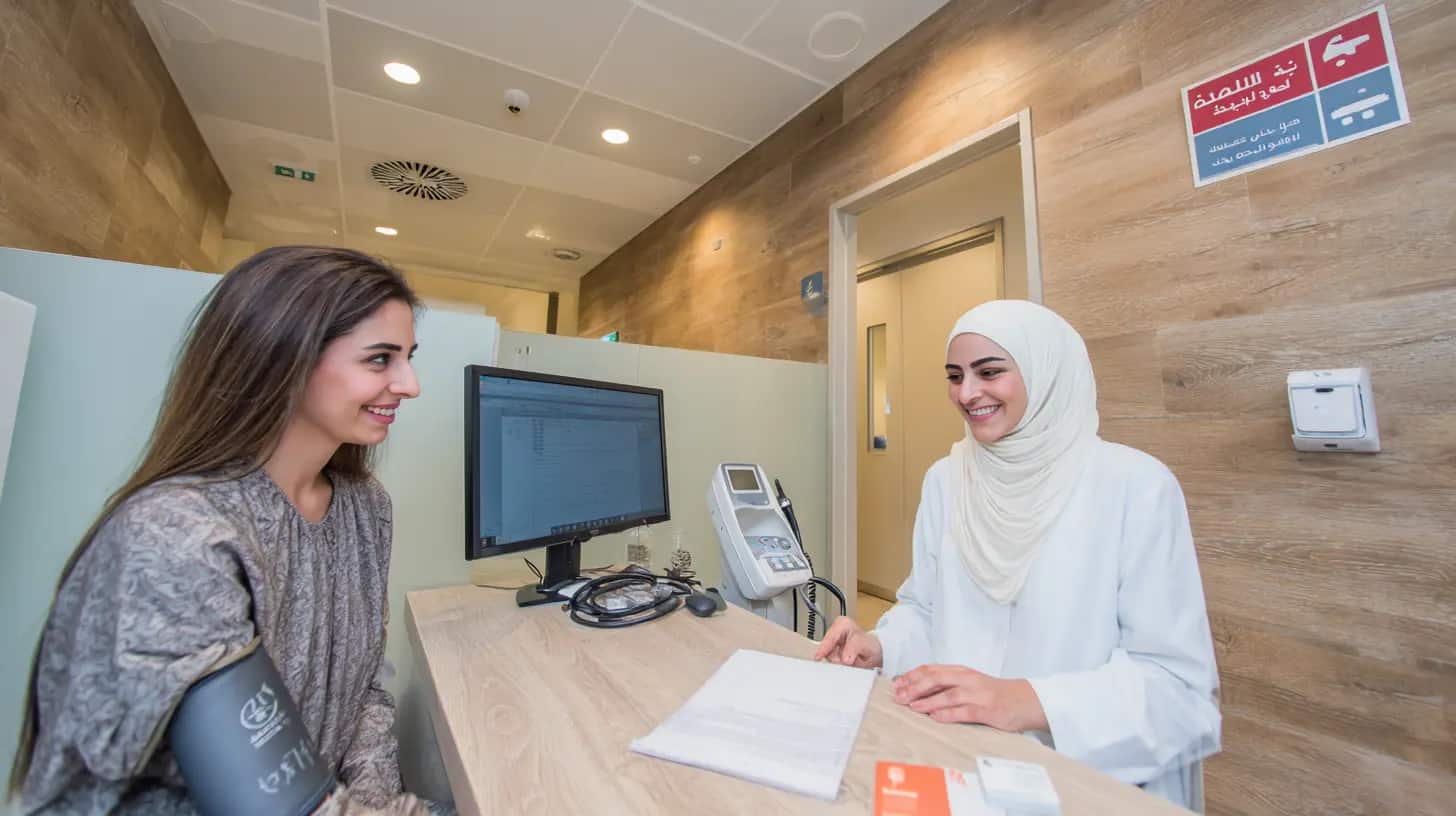
Dubai's private healthcare system is genuinely excellent. The public healthcare system — available to UAE nationals and to expats with the right insurance coverage — is adequate but variable. Understanding how the system works and ensuring you have the right coverage before you need it is one of the most important practical steps for any expat arriving in Dubai.
The private sector:
Dubai has a dense network of high-quality private hospitals and clinics. Mediclinic, American Hospital Dubai, Cleveland Clinic Abu Dhabi (accessible from Dubai), and a growing number of international hospital groups operate facilities that compete with the best private healthcare in the UK, Europe, or the US. Specialist consultants at these facilities are often internationally trained, waiting times are short by global standards, and the physical environments are consistently high quality.
Emergency care at private hospitals in Dubai is immediate and high-standard. If you're in a serious accident or medical emergency, the ambulance response times and emergency department quality at Dubai's main private hospitals are genuinely comparable to the best trauma centres in Western countries.
The insurance imperative:
Private healthcare in Dubai is expensive without insurance. An A&E visit can cost AED 500 to AED 2,000. A specialist consultation runs AED 400 to AED 1,200. A night in a private hospital can exceed AED 5,000 to AED 15,000. Serious illness or injury without comprehensive insurance is financially catastrophic.
Dubai law requires all employers to provide health insurance to their employees. In practice, the quality of employer-provided insurance varies significantly — some employers provide comprehensive coverage including dental, optical, and specialist care. Others provide minimum compliance policies that cover basic outpatient and inpatient care but have significant exclusions. Review your policy carefully before you need it. Know your deductible, your network of covered hospitals, and whether pre-existing conditions are covered and from when.
Specific healthcare considerations for expats:
- Mental health: coverage for mental health conditions including therapy and psychiatry is improving but still inconsistent across Dubai insurance policies. If mental health support is important to you, verify coverage explicitly before accepting an employer's insurance package
- Dental: frequently excluded from basic policies or covered only for emergencies. Factor in the cost of private dental care — approximately AED 300 to AED 600 for a consultation, AED 800 to AED 2,500 for a crown
- Maternity: maternity coverage is heavily variable. Some policies cover full maternity including prenatal, delivery, and postnatal care. Others exclude it entirely or apply waiting periods of 12 months. For families planning children, this is one of the most important coverage questions to ask
- Pre-existing conditions: many Dubai health insurance policies exclude pre-existing conditions for the first 6 to 12 months of coverage. If you have a chronic condition requiring ongoing treatment, understand the exclusion period before you arrive
Pharmacies and medications:
Dubai has excellent pharmacy coverage — pharmacies are numerous, many are open 24 hours, and a wide range of medications are available without prescription that would require a doctor's visit in many Western countries. Some medications that are legal and prescribed in your home country are controlled substances in the UAE — bring a certified translation of any prescription and check the UAE's controlled substance list before travelling with any regular medication.
The public system:
UAE nationals receive public healthcare free of charge. Expats can access public hospitals and clinics but typically pay and claim through insurance. Quality at public facilities is generally lower than the private sector — longer waiting times, larger patient volumes, and older facilities are the consistent themes in expat feedback on public healthcare.
Our property listings in Dubai cover areas across all the main residential communities — if proximity to specific hospitals or clinics matters to your area choice, our team can help map that against your shortlist.
Road Safety: The Honest Risk Assessment
This section deserves more space than it usually gets in Dubai safety articles.
The UAE's road fatality rate is consistently among the higher ones in the developed and developing world when adjusted for population. The combination of high speeds on well-engineered roads, aggressive driving culture, mobile phone use, and a road network that encourages fast driving creates accident risk that is genuinely elevated relative to what most Western expats are accustomed to.
The specific risks:
- Tailgating at very high speeds on major highways (Sheikh Zayed Road, Emirates Road) is endemic — drivers routinely travel at 140km/h with a car length between vehicles
- Lane changing without signalling is standard practice rather than exception
- Mobile phone use while driving is extremely common despite significant fines
- Pedestrian safety at crossing points is lower than in most European cities — the road network prioritises cars over pedestrians in its design
- Fatigue driving: Dubai's work culture involves long hours and late social events — tired driving is a real risk
What reduces the risk:
The Metro eliminates road exposure for the corridors it covers. Ride-hailing apps (Careem, Uber) mean you're not always the driver. Dubai's speed camera network is extensive and fines are significant — this creates real incentives for speed compliance even if not for all driving behaviours.
The practical advice:
Drive defensively. Maintain more distance than feels necessary. Avoid highways in the period from 11pm to 2am when the combination of speed and impaired driving peaks. Use the Metro for the routes it covers. Consider ride-hailing for social events where you'd be driving home late.
Daily Life Safety: The Nuanced Picture
Beyond crime statistics and road safety, there are several specific aspects of daily life in Dubai where the safety picture is more complex than the headline numbers suggest.
Summer heat:
Dubai's summer (June to September) creates genuine heat stress risk. Temperatures regularly reach 44 to 48 degrees with high humidity. Heat-related illness — heat exhaustion and heat stroke — is a real risk for anyone spending extended time outdoors during peak heat hours. Outdoor workers — construction, landscaping, delivery workers — are the most exposed. For expats, the risk is primarily one of self-management: staying indoors or in air-conditioned transport during the hottest hours, staying hydrated, and recognising the symptoms of heat stress. The government has mandatory outdoor work restrictions during the hottest afternoon hours in summer — but enforcement is uneven.
Food and water safety:
Tap water in Dubai is technically safe to drink — it meets WHO standards — but is desalinated and has a taste that most residents find unappealing. The vast majority of residents and restaurants use bottled water. Food safety standards at licensed restaurants and supermarkets are consistently enforced. Street food — less prevalent in Dubai than in other major Asian or Middle Eastern cities — carries the same variable risk as anywhere.
Air quality:
Dubai's air quality is affected by desert dust storms (shamal) that can significantly reduce visibility and air quality for days at a time. For people with respiratory conditions — asthma, COPD — the dust season (typically spring and early summer) requires proactive management. Dubai's PM2.5 levels are higher than WHO guidelines on average, primarily due to natural dust rather than industrial pollution.
Workplace safety:
For white-collar expats in office environments, workplace safety standards are broadly comparable to international norms. For blue-collar workers — construction, hospitality, domestic work — the picture is significantly more complex. Construction worker safety is an area where independent reporting and NGO accounts tell a different story from official statistics. This is relevant context for any expat who wants a complete picture of what "Dubai is safe" means across the city's full population.
Questions and Answers About Safety in Dubai for Expats
Is Dubai safe for women living alone?
Yes, consistently — Dubai is one of the safest cities in the world for women in terms of street crime, harassment, and personal safety. Women report feeling significantly safer walking alone at night in Dubai than in most Western cities. The cultural norms and legal environment strongly deter street harassment. CCTV coverage is extensive.
What is the biggest actual safety risk for expats in Dubai?
Traffic accidents by a significant margin. More expats are seriously injured or killed on Dubai's roads than in all other safety categories combined. The driving culture — high speeds, tailgating, phone use — creates genuine risk that the city's low crime statistics don't capture.
Is healthcare in Dubai good enough if something serious happens?
Private hospital care in Dubai is genuinely excellent — comparable to the best private hospitals in Western countries. The critical requirement is comprehensive health insurance. Without it, the cost of serious illness or injury is financially devastating. Review your insurance coverage carefully and ensure it covers your specific needs.
What happens if I post something critical about Dubai on social media?
If the post criticises the UAE government, rulers, or royal family, it can result in criminal charges under UAE cybercrime and defamation laws. This has happened to expats. The safest approach is to be aware that what you post in Dubai — or what is accessible in Dubai — is subject to UAE law, not the laws of your home country.
Can unmarried couples live together in Dubai?
Formally, cohabitation without marriage remains against UAE law. In practice, the majority of expat couples do cohabit and enforcement in established residential buildings is extremely rare. The legal risk is low in practice but not zero. This is an area where the law and the lived experience diverge significantly.
Is Dubai safe during Ramadan?
Yes — Ramadan changes behaviour patterns (no eating in public during daylight hours, adjusted business hours) but does not change the safety profile. If anything, the reduced nightlife activity during Ramadan lowers the already-low incidents of intoxication-related behaviour.
How good is the ambulance and emergency response in Dubai?
Emergency response times in Dubai are good by global standards. The ambulance service (Dubai Corporation for Ambulance Services) is well equipped and staffed. Major private hospital emergency departments are well-resourced. For life-threatening emergencies, the quality of care is comparable to major Western cities.
Are there areas of Dubai that are less safe?
Dubai is uniformly safe across its main residential and commercial areas. There is no neighbourhood equivalent to high-crime areas in many Western cities. The variation in Dubai is more about amenity and quality of life than safety — no part of Dubai that expats typically inhabit presents meaningful crime risk.
What medications do I need to declare or avoid bringing to Dubai?
Some medications legal in Western countries are controlled substances in the UAE — including some codeine-based painkillers, certain ADHD medications, and some antidepressants. The UAE Ministry of Health publishes a controlled substance list. Bring a prescription and certified translation for any regular medication, and check the list before travelling.
Is the water safe to drink in Dubai?
Tap water meets WHO safety standards but most residents use bottled water due to taste. Water delivered through building plumbing systems can have variable quality depending on tank maintenance. Bottled water is inexpensive and universally available. The practical recommendation is to use bottled or filtered water for drinking.
What should I do if I have a medical emergency in Dubai?
Call 998 (Dubai ambulance) for a life-threatening emergency. For non-emergency care, go to the emergency department of the nearest private hospital in your insurance network. Keep your insurance card and emergency contact numbers accessible — the American Hospital, Mediclinic, and Saudi German Hospital are among the most established private networks.
Is Dubai safe for LGBTQ+ expats?
Same-sex relationships are illegal under UAE law. LGBTQ+ individuals live and work in Dubai — the expat community is diverse and privately there is significant community — but public expression is not possible and any public displays of same-sex affection carry legal risk. This is a personal risk assessment that individuals need to make based on their own circumstances. The lived experience of LGBTQ+ expats in Dubai varies significantly depending on their specific context, community, and risk tolerance.
The Bottom Line on Safety in Dubai
Dubai can be described as one of the safest places to live in by using what would usually constitute the measures of the term "safety." It has very little violent crime. Street harassment is not a problem. Women feel much safer in Dubai compared to other equally developed metropolises around the world. There is an extensive CCTV surveillance system, the penalties for crimes are quite strict and imposed, and the culture of the place frowns heavily on public order violations.
There are three caveats that should be noted. First, there is a very high traffic hazard that is often overlooked by those who come to the city; defensive driving and the use of other means of transportation should be considered accordingly. Second, the laws of the land are rather strict concerning what would constitute regular behavior in other countries; the understanding of these limits prior to visiting the place cannot be considered paranoid. Lastly, the health care system in the country works great in the private sector; however, you need to have extensive coverage, and failing to do so may prove expensive.
In conclusion, the safety situation in the country is good enough for almost everyone coming to work, study or visit the place. The shift from the city where people look behind their backs at night to the city where no such thing needs to happen is truly remarkable.
Drive carefully. Know the rules of the land. Have decent insurance coverage. Everything else is up to the rankings.
If you're looking at Dubai property and want to understand which areas and buildings are right for your family's specific safety and lifestyle needs, our team is based here and knows these neighborhoods personally. Get in touch and we'll take it from there.
Related stories

Dubai's Established Charm: The Case for Older Homes
In a city focused on the future, I believe the smartest move for many buyers is to look back. Dubai's seasoned communities offer space, character, and surprising value that new builds often can't match.
The True Cost of Owning a Dubai Property
Beyond the purchase price, your annual budget for a Dubai home must account for service charges, utilities, and maintenance. I'll break down every ongoing expense you need to plan for.

Calculating ROI on Dubai Rental Upgrades
As a landlord in Dubai, you can't just follow trends. I'll show you how to calculate the precise ROI of minor property upgrades to genuinely increase your rental yield.
Echoes, in your inbox
One thoughtful email a month. Market insight, new launches, no spam.