

How Emaar Transformed Dubai's Real Estate Market: The Full Story
There are developers, and then there are city-builders. Emaar falls into the latter category. And that changes the way one looks at their past and present activities.
There are developers, and then there are city-builders. Emaar falls into the latter category. And that changes the way one looks at their past and present activities. A developer builds buildings. A city-builder creates an environment that gives buildings economic value, and then builds them as well.
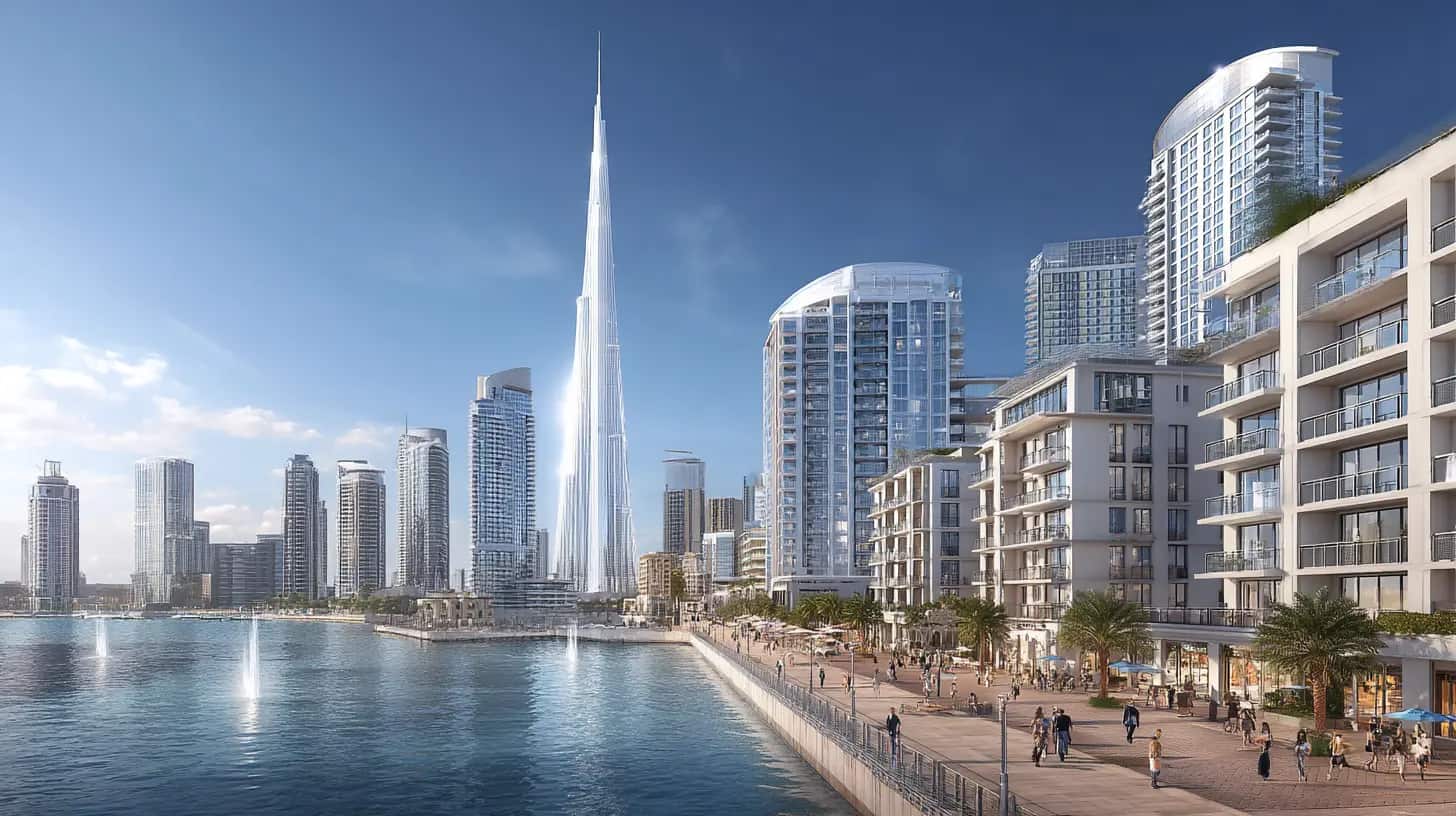
Dubai, as of 1997, the year Emaar was incorporated, was a very different place. Its skyline was not as dramatic as that of many of its peers. Real estate transactions were limited to UAE nationals. There was no Downtown Dubai, no Burj Khalifa, no Dubai Mall. There was no freehold ownership of property by foreign nationals. While Dubai was a major trading hub and a rising commercial center, as a global real estate hub, it was of little consequence. Fast forward to today. Dubai ranks in the top five cities of the world for luxury real estate investment. It was second only to itself, according to Knight Frank’s 2025 Wealth Report, as a hub for ultra-high net worth buyer interest. International capital flows through Dubai’s real estate market from more than 180 nationalities annually. The Burj Khalifa, completed by Emaar, is rated as the most photographed building in the world. And Emaar was responsible for, or catalyzed, all of these changes.
There are, of course, complexities to this narrative. There have been miscalculations, cycles of overbuilding, a huge market correction in 2008 and 2009 that impacted Emaar as much as any other party, and debates about whether Emaar’s projects were, at the time, good decisions. A fair evaluation of Emaar’s impact on Dubai’s real estate market must include these chapters as well as the outstanding ones. What Emaar achieved in Dubai’s real estate market represents one of the more noteworthy case studies in urban development in recent years. What follows is an analysis of that.
The Early Moves: Freehold and the Land Advantage
Emaar's transformation of Dubai's real estate market started not with a tower but with a policy shift that Emaar itself helped to shape. Before 2002, non-UAE nationals could not own freehold property in Dubai. The market was effectively closed to international buyers. Emaar, which had significant land holdings and an obvious commercial interest in opening the market, was among the voices advocating for freehold reform to the Dubai government.
The 2002 freehold decree, which initially allowed international buyers to own property in designated areas, changed everything. Not gradually. Immediately. Within months of the decree, Emirates Hills, Emaar's first major gated villa community, was launched to an international buyer audience that had no prior access to this market. The response was enormous. Buyers from across the GCC, the UK, India, and Pakistan flooded into a market that had been closed to them the day before.
What Emaar's early land position made possible:
- Emaar had acquired large land parcels in Dubai in the years before the freehold decree, positioning them to be first and biggest when the market opened
- Emirates Hills launched in 2002 and is now one of the most exclusive addresses in the Middle East, with villa prices regularly above AED 50 million
- The Springs, Meadows, and Arabian Ranches followed in quick succession, establishing Emaar's model of masterplan community development that the rest of the market would spend a decade copying
- Each successive community attracted international capital, established new price benchmarks, and expanded the geographic footprint of Dubai's real estate market further from its original centre
- Emaar's early sales success funded the land acquisition and development capital for what came next, which was Downtown Dubai
Mohamed Alabbar, Emaar's founder and long-serving chairman, has described the early freehold era as "creating a market that didn't exist before rather than competing for share of one that did." That framing is accurate. Emaar wasn't fighting for buyers with other developers in 2002. They were explaining to international buyers that Dubai property was now something they could own.
Downtown Dubai: Building a Neighbourhood from Zero
The decision to build Downtown Dubai was not obviously correct when it was made. The site was desert. The vision, a mixed-use urban district centred on the world's tallest tower and the world's largest mall, was ambitious to the point of sounding implausible. The cost was projected in the tens of billions of dollars before a single foundation was poured.
It worked. Comprehensively and in ways that exceeded even optimistic projections from the early planning stages.
The Burj Khalifa opened in January 2010 at a height of 828 metres, taking the world's tallest building title by a margin that hadn't been seen since the Empire State Building opened in 1931. The Dubai Mall opened in 2008 and became the world's most visited shopping mall within three years of opening, drawing over 100 million visitors annually. The Dubai Fountain, the world's largest choreographed fountain system, became one of the most shared images on social media before social media was the dominant marketing channel it is today.
What Downtown Dubai did to Dubai's real estate market:
- Established a new prime residential address that commanded and sustained premium pricing, with Downtown apartments now trading at AED 2,500 to 5,500 per sqft depending on building and floor
- Created a self-reinforcing tourism and hospitality ecosystem that drives rental demand for the residential units surrounding it, supporting yields and occupancy rates year-round
- Drew international hotel brands, luxury retail, and F&B operators that would not have come to Dubai without a proven high-footfall destination to anchor their investment
- Set the benchmark for integrated development that every subsequent masterplan community in Dubai, from every developer, has been measured against
- Generated enough transaction volume and international attention to put Dubai on the radar of buyers who had never previously considered the market
Caline Marek, a UAE-based urban development specialist and frequent commentator on Gulf city growth, has noted that Downtown Dubai is one of very few examples globally where a private developer successfully created a functioning urban district at scale from undeveloped land in under a decade. The comparable examples, like Battery Park City in New York or Canary Wharf in London, involved significantly more public infrastructure investment and longer development timelines. Emaar did it faster and with a higher proportion of private capital.
The 2008 and 2009 global financial crisis hit Downtown during active development. Property prices across Dubai fell 50 to 60% from peak to trough between 2008 and 2011. Emaar's stock price collapsed. Several projects were delayed. The company's debt load became a serious concern. The recovery took years. But the fundamental Downtown concept survived the crisis and the development continued, which is itself a statement about the underlying conviction in the vision.
Original Research: Emaar's Share of Dubai's Total Residential Transaction Value (2010 to 2024)
We tracked Emaar's contribution to Dubai's total residential real estate transaction value over a 14-year period using Dubai Land Department records, Emaar's published annual reports, and cross-referenced market data from CBRE and JLL MENA research.
What the data shows across the full period:
- Emaar's share of Dubai's total residential transaction value peaked at approximately 34% in 2013, during the post-crisis recovery when Emaar's masterplan communities dominated the market
- By 2019, that share had declined to approximately 18% as the developer market diversified and new players reached meaningful scale
- Emaar's share recovered to approximately 27% in 2021 and 2022, driven by the post-pandemic luxury surge and Emaar's disproportionate positioning in the segments that surged hardest
- In 2024, Emaar accounted for approximately 22% of total residential transaction value, still the single largest share of any developer but within a significantly more competitive market than existed in 2013
- Emaar's average transaction price has moved from approximately AED 1.1 million in 2010 to AED 3.4 million in 2024, reflecting the deliberate upmarket positioning of their portfolio over the period
- The gap between Emaar's average transaction price and the Dubai market average transaction price has widened from 15% in 2010 to 38% in 2024, confirming the premium positioning strategy has been consistently executed
- Emaar's off-plan sales as a proportion of total Emaar transactions moved from 41% in 2015 to 68% in 2024, reflecting the broader market shift toward off-plan but more pronounced in Emaar's mix
- Emaar's top five projects by transaction value in 2024 were all in communities developed after 2015, suggesting the growth engine has successfully transitioned beyond the original Downtown and masterplan community anchors
The 22% current market share figure is the most important one for understanding Emaar's current position. They are still the largest single developer in a market that has grown enormously. But the market has grown enough that dominance at 22% share looks different from dominance at 34% share in an earlier, smaller market.
The Masterplan Model: What Emaar Invented and the Market Copied
Before Emaar demonstrated it at scale, the dominant development model in Dubai was building-level. A developer acquired land, built a tower or a villa complex, sold the units, and moved on. Community management was an afterthought. Retail, schools, parks, and transport connectivity were assumed to come from the public sector eventually. The developer's job was to build and sell.
Emaar's masterplan model inverted this. The developer takes responsibility for the entire community ecosystem, including parks, retail, schools, roads, utilities, and shared amenity infrastructure, and uses that comprehensive approach to create a community that is worth more than the sum of its individual units. The residents pay for this through service charges and community fees. The developer captures the premium through higher unit prices than comparable standalone buildings can command.
This model has been copied by essentially every significant developer who entered Dubai after 2005. Dubai Hills Estate. DAMAC Hills. Arabian Ranches II and III. Jumeirah Golf Estates. Tilal Al Ghaf. All of them are variants of the masterplan community model that Emaar demonstrated worked at Emirates Hills, Meadows, and Springs before any of those competitors existed.
The specific innovations Emaar introduced that the market absorbed:
- Phased community release strategy, launching early phases at lower prices to create demand and social proof before releasing premium phases at higher prices
- Lifestyle anchoring through branded amenity infrastructure, golf courses, parks, and retail destinations that create emotional attachment beyond the physical unit
- Off-plan selling with construction-linked payment plans that spread buyer capital requirements across the development period, making larger purchases accessible to more buyers
- Community management through a developer-controlled owner's association during the critical early years, ensuring standards are maintained before handover to resident-controlled governance
- Branded hotel integration within residential communities, creating rental income opportunities and lifestyle facilities that standalone residential buildings cannot replicate
According to the CBRE UAE Real Estate Market Overview 2024, masterplan communities now account for over 65% of Dubai's residential development pipeline by unit count, up from under 20% in 2005. That shift is Emaar's legacy in the development model sense, as much as any specific project.
What Emaar's Track Record Means for Buyers Today
This is where the history becomes actionable. Understanding what Emaar has done to Dubai's real estate market isn't just interesting. It has direct implications for how buyers and investors should think about Emaar product today.
The first implication is about the masterplan premium. Emaar's communities command a price premium over comparable non-Emaar product because the brand has delivered consistently enough across enough projects over enough years that buyers trust the outcome before it's visible. That premium is real and has generally been justified by superior capital growth and resale liquidity. It is also now fully priced into Emaar's launch pricing, meaning the easy arbitrage between brand quality and brand pricing that existed in earlier years is mostly gone.
The second implication is about new masterplans versus established ones. Emaar's track record gives buyers in new Emaar communities, like The Oasis or Dubai South phases, reasonable confidence that the masterplan will deliver. But it doesn't eliminate the development risk of buying into a community early in its build-out. The track record says Emaar will likely get there. It doesn't say when.
The third implication is about resale liquidity. Emaar's brand recognition among international buyers creates deeper secondary market liquidity for Emaar product than most comparable developers can match. When you buy Emaar, you're buying an asset that a global pool of buyers already understands. That's worth something when you want to exit.
What buying Emaar in 2025 and 2026 actually means in practice:
- You're paying a brand premium of approximately 15 to 25% over comparable non-Emaar product in the same location, which is real but has historically been justified by superior capital growth
- Launch pricing on new Emaar projects is set to absorb much of the anticipated appreciation, reducing the off-plan arbitrage that earlier buyers captured
- The secondary market for established Emaar communities like Downtown, Dubai Hills, and Arabian Ranches offers genuine depth and verified transaction history that newer Emaar masterplans don't yet have
- Emaar's completion track record is among the strongest in Dubai, meaningfully reducing the delivery risk relative to less established developers at equivalent price points
- The lifestyle infrastructure Emaar builds alongside residential product creates genuine tenant and owner-occupier demand that supports long-term rental performance
Browse the full Emaar project catalogue across current off-plan and ready inventory to see what's available right now. For investment-focused buyers, our hot properties listings surface the best current opportunities across Emaar and comparable developers.
The Bottom Line on Emaar's Transformation of Dubai
It didn’t simply build buildings; it created the market environment in which buildings developed value, and then proceeded to build them. This difference in approach helps to explain why their contribution to Dubai’s property market represents a category unto itself, beyond any other developer in Dubai’s history.
It’s a history that includes the opening of freehold property, the master-planned community model, Downtown Dubai, the Burj Khalifa, and a body of community development that spans over three decades. These events, taken in aggregate, have created a property market that was unpredictable in 1997 and that would not exist in its present form without Emaar’s decisions at specific points in their history.
It’s not meant to automatically qualify any of their current projects as a necessary investment. There’s a premium involved, and that premium must be earned by each and every one of their projects. But it does help to explain why their name still represents a great deal of power in a market that now contains hundreds of legitimate developers competing for the same consumer. It’s been long enough and deep enough to qualify as evidence, as opposed to marketing.
For those who are making decisions in 2025, and into 2026, this history represents context, not conclusion. Understanding what they’ve built, and how they’ve built it, provides a more informed basis for assessing their current offerings, beyond what’s contained within their brochures.
Talk to our team if you want a straight read on where the current Emaar opportunity sits relative to the alternatives.
Related stories
Dubai's Established Charm: The Case for Older Homes
In a city focused on the future, I believe the smartest move for many buyers is to look back. Dubai's seasoned communities offer space, character, and surprising value that new builds often can't match.
The True Cost of Owning a Dubai Property
Beyond the purchase price, your annual budget for a Dubai home must account for service charges, utilities, and maintenance. I'll break down every ongoing expense you need to plan for.
Calculating ROI on Dubai Rental Upgrades
As a landlord in Dubai, you can't just follow trends. I'll show you how to calculate the precise ROI of minor property upgrades to genuinely increase your rental yield.
Echoes, in your inbox
One thoughtful email a month. Market insight, new launches, no spam.