

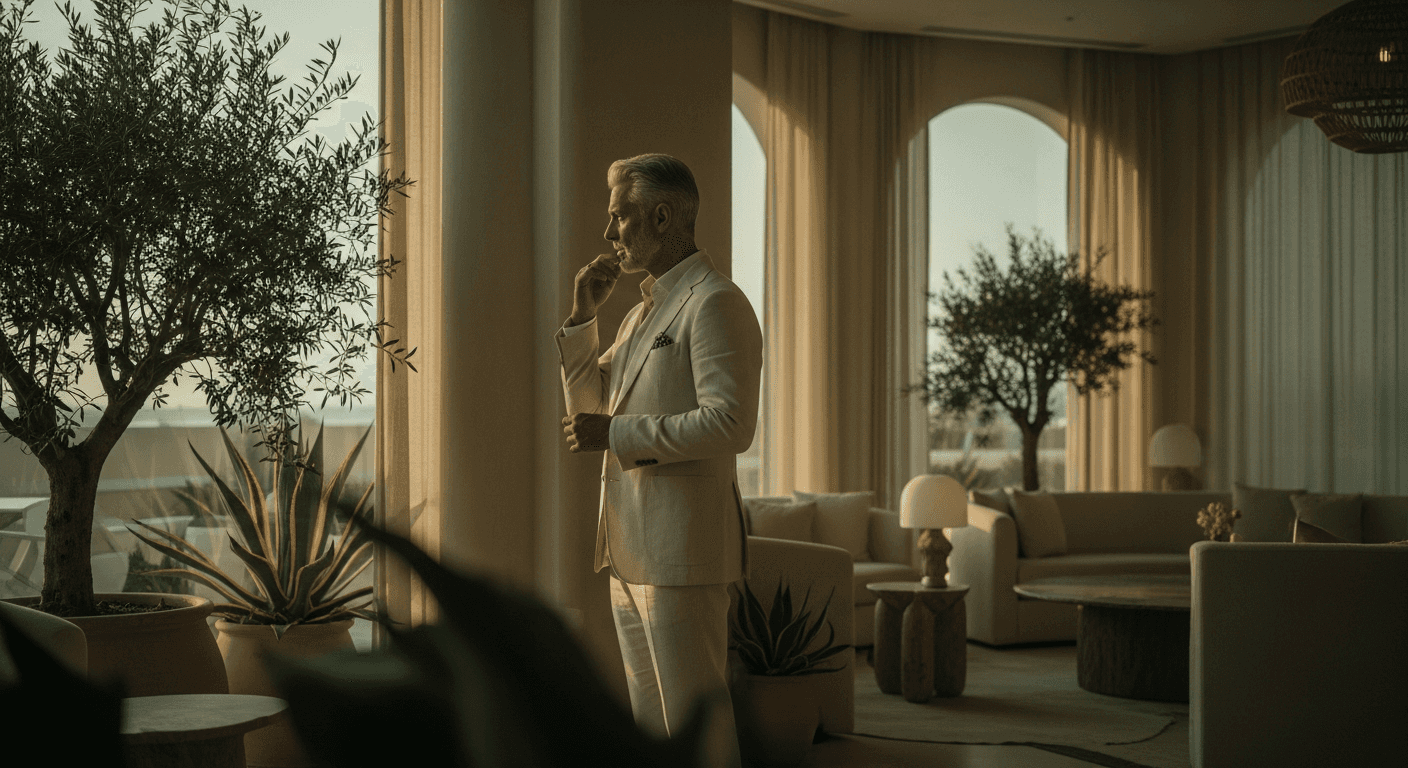
Homes with Soul: Dubai's Architectural Gems
Beyond the glass towers, Dubai is home to neighbourhoods with profound architectural character. We explore the design-led communities that offer a distinctive living experience, from modern Arabian interpretations to leafy, avant-garde enclaves.

When clients first come to us at Gaia Living, many hold a specific image of Dubai in their minds: a skyline of glass and steel, impressive in its scale but perhaps uniform in its expression. It’s a city famous for breaking records, for building taller, bigger, and faster. Yet, the question I get asked with increasing frequency, often in a hopeful whisper, is: “Where are the homes with soul?”
Here’s what I'll explore with you:
- What "architectural soul" really means in Dubai's dynamic context.
- Al Barari: The original blueprint for green, design-forward living.
- AlJurf Gardens: A coastal reinterpretation of nature and Emirati heritage.
- Jumeirah Bay: Where ultra-luxury meets world-class sculptural design.
- Beyond the villa: Finding character in Dubai’s unique apartment buildings.
- The tangible cost of character: A line-by-line price and fee breakdown.
- My final verdict on whether the design premium is truly worth paying for.
What is Architectural Soul in Dubai?
Let’s start by defining our terms. “Soul” in architecture is a deeply personal and subjective quality, but for me, it transcends mere aesthetics. It's the feeling a place imparts. It’s found in the thoughtful use of materials that age gracefully, the way light is captured and directed throughout the day, and the smooth transition between a private home and the nature or community surrounding it. A home with soul is one designed for the human experience, not just for a striking photo on a brochure. It considers the climate, the culture, and the daily rituals of the people who will live there. In a city as forward-looking as Dubai, this quality is not about recreating the past, but about building a thoughtful future.
For years, the dominant narrative was one of rapid expansion. The focus was on delivering units at scale, which often led to a certain homogeneity in the suburbs. But that story has been changing for some time. A growing number of discerning buyers, both local and international, are seeking more than just square footage and a postcode. They are looking for a `distinctive property Dubai` can be proud of, a place that tells a story. This has catalysed a movement towards `design-led homes Dubai`, where the developer’s first conversation is with an architect of vision, not just an accountant. It’s a shift from a product mindset to an experiential one.
This search for authenticity has led to a flowering of `unique architecture Dubai` can now showcase with confidence. We see it in the revival and reinterpretation of `modern Arabian architecture`, which moves beyond cosmetic arches and embraces the core principles of the style: privacy through screening, cooling through courtyards and water features, and community through shared, shaded spaces. We also see it in bold, contemporary statements that are in dialogue with our unique environment — the desert and the sea. The soul of Dubai’s architecture today is not one singular style, but a rich, pluralistic conversation between heritage, landscape, and daring modernity. You just have to know where to look.
Al Barari: The Original Green Masterpiece
 Featured project
Long before “biophilic design” became a buzzword, there was Al Barari. To call it a residential community is to do it a disservice; it's a botanical project on an epic scale that just happens to have homes within it. When it was launched, the concept was radical for Dubai: a development where 80% of the masterplan would be dedicated to green space, landscaped gardens, lakes, and streams. It was an audacious bet on a different kind of luxury, one defined by space, privacy, and nature rather than proximity to a mall or a skyscraper. Driving into Al Barari for the first time is a sensory reset. The temperature feels like it drops a few degrees. The air is thick with the scent of jasmine and the sound of flowing water, not traffic. This commitment to the landscape is the foundation of its architectural soul.
The homes themselves are designed to complement this green immersion. The original villas, in collections like The Residences and The Reserve, are magnificent in their scale. These are sprawling, multi-level properties built around internal courtyards, with vast roof terraces and private gardens that merge into the surrounding waterways and foliage. The architectural language is a clean, contemporary take on desert living, with an emphasis on natural stone, expansive glass to frame the garden views, and deep overhangs for shade. They were some of the first `bespoke homes Dubai` offered at such a grand scale, allowing owners significant leeway in interior customisation, creating truly personal sanctuaries.
As the community has matured, its architectural offering has diversified, demonstrating a thoughtful evolution. The Nest introduced smaller, more contemporary villas aimed at families, but without sacrificing the core principles of privacy and garden space. Then came the apartments, which could have easily broken the spell. Instead, projects like Ashjar and Seventh Heaven reinvented apartment living. Ashjar’s low-rise buildings are scattered like clusters of trees, with cascading terraces and a 'treehouse' feel. Seventh Heaven offers a sweeping, terraced design where every unit has a vast outdoor space, blurring the line between apartment and villa. But this soul comes at a price. Villas in Al Barari command a significant premium, with prices starting in the multi-millions and rising steeply. The service charges, which cover the immense cost of maintaining this botanical wonderland, are among the highest in Dubai, often in the range of AED 25-35 per square foot for apartments. For residents, it's a price they willingly pay for an unparalleled living experience.
AlJurf Gardens: Heritage Reimagined on the Coast
If Al Barari is an inland oasis, AlJurf Gardens is its coastal, heritage-inspired counterpart. Located along a pristine stretch of coastline between Dubai and Abu Dhabi, this project by IMKAN is one ofthe most soulful and thoughtfully conceived masterplans in the UAE. Its philosophy is rooted in the site itself: a 'coastal desert' environment with a unique ecosystem of ghaf trees, acacia, and a preserved natural coastline. The entire project is an exercise in `modern Arabian architecture`, drawing deep inspiration from Emirati heritage, not as a pastiche, but as a set of living principles. The name 'AlJurf' itself refers to the carved-out cliffs along the shoreline, a sign of the developer's commitment to working with, not against, the natural landscape.
The architecture, master-planned by a team of world-class designers, is beautifully restrained and context-driven. The design is based on traditional concepts like the 'rawda' (a central garden or clearing) and the 'jiwar' (the intimate social fabric of a neighbourhood). Villas are arranged in clusters that encourage a sense of community while maintaining individual privacy. The aesthetic is elegantly simple: clean lines, cubic forms, and a palette of materials drawn from the earth — natural stone, wood, and textured plaster in sandy hues. The design plays with light and shadow, creating shaded walkways (sikkas) and private courtyards that provide refuge from the sun, a core tenet of traditional desert homes.
What makes AlJurf a standout example of `unique architecture Dubai` buyers are drawn to is this deep-seated authenticity. The different villa types, such as Joud and Budoor, offer variations on this theme, but all share a common language of understated luxury. There are no grand, flashy statements here. The luxury is in the quality of the space, the texture of the materials, and the profound connection to the surrounding nature and coastline. It's a place designed for a slower, more considered way of life. For buyers seeking a `distinctive property Dubai` and Abu Dhabi's markets don't typically offer, AlJurf presents a compelling alternative. It represents a long-term vision, a legacy project that values permanence and heritage over fleeting trends, attracting a clientele that understands and appreciates that quiet confidence.
Jumeirah Bay: Sculptural Villas and Branded Brilliance
At the absolute opposite end of the spectrum from AlJurf's earthy restraint lies the polished, high-fashion glamour of Jumeirah Bay Island. If you want to understand what happens when a visionary master developer, a global luxury brand, and a world-renowned architect collaborate, this seahorse-shaped island is the result. Developed by Meraas, a company with a stellar track record for creating design-led destinations like City Walk and Bluewaters, Jumeirah Bay is perhaps their magnum opus. The island itself is a feat of engineering and a statement of intent — a piece of sculpture rising from the Arabian Gulf, with prime views of the Downtown Dubai skyline.
The island's architectural soul is inextricably linked with the Bvlgari brand. The Bvlgari Resort and Residences, designed by the famed Italian architecture firm Antonio Citterio Patricia Viel, set the aesthetic standard for the entire island. The style is pure, refined modernism with a distinctly Italian flavour. Think clean, horizontal lines, extensive use of travertine marble (reminiscent of Roman monuments), black granite, and warm woods, all executed with meticulous precision. The design isn't just a facade; it's a complete ecosystem, from the architecture of the hotel and residences to the furniture and the landscaping. It’s the ultimate expression of a branded residence, where the promise of the brand is delivered through exceptional, uncompromising design and quality.
Beyond the Bvlgari residences, the island offers a limited number of freehold plots, making it one of the most exclusive addresses in the world to create truly `bespoke homes Dubai` has ever seen. This is where we, as brokers, have seen some of the most breathtaking private residences in the city come to life. While owners must adhere to certain design guidelines to maintain the island's cohesive aesthetic, the canvas is there for architectural masterpieces. We've seen villas that are like private art galleries, with soaring double-height spaces, incredible cantilevered structures, and basement levels that house car collections worthy of a museum. This is architectural expression at the highest level, backed by a location and an address that is second to none. The cost is, of course, stratospheric. Land plots alone trade for hundreds of millions of dirhams. But for the UHNWIs who operate in this rarefied air, the ability to build a unique architectural statement on a private island, minutes from the city centre, is a proposition that transcends mere price.
“True architectural character isn't just about how a building looks, but how it makes you feel — and these homes are designed to make you feel like you belong.”
Beyond Villas: Character in High-Rise Living
It’s a common misconception that true architectural character in Dubai is reserved for sprawling villas and exclusive island communities. While those projects are often the most dramatic examples, a keen eye can find soul and design integrity in vertical living, too. You just have to look past the generic glass towers that populate some areas and seek out the buildings where the developer and architect have dared to do something different. These are the projects that prove density doesn’t have to mean anonymity, and they offer a compelling alternative for those who prefer the convenience and views of apartment life.
One of the most prominent examples is Park Gate Residences in Wasl 1, developed by the government-backed wasl properties. Its most striking feature is the cantilevered bridge that appears to float between the four towers, creating a dramatic 'gate' and an iconic silhouette against the backdrop of Zabeel Park. This isn't just a gimmick; it's a powerful architectural gesture that provides a function (housing amenities and penthouses) while creating a memorable identity for the project. The design thoughtfully frames views of the park on one side and the city skyline on the other, making the location an integral part of the living experience. It’s a large-scale project that manages to feel bespoke.
On a more boutique scale, I often point clients to Zaya Hameni in Jumeirah Village Circle. JVC has a reputation for cookie-cutter buildings, but Hameni, by developer Zaya, stands as a sign of what’s possible when design is prioritised. It distinguishes itself with a focus on wellness, superior build quality, and a distinctive facade that incorporates slatted wooden elements, providing texture, shade, and a warmth that is often lacking in its neighbours. The layouts are more generous and thoughtful than the area average, and the communal amenities are genuinely geared towards a better lifestyle. It proves that even within a high-density, price-sensitive area, a developer can choose to create a `distinctive property Dubai` residents will appreciate, and be rewarded for it. Other developers are also making their mark through consistent architectural language. The crisp, minimalist towers of Select Group in Dubai Marina, or the unmistakable latticed facades of Binghatti across the city, demonstrate that even in high-rise development, a unique and recognisable identity is achievable.
The Tangible Cost of Architectural Soul
It’s wonderful to appreciate these buildings as works of art, but as a property advisor, my role is to ground this appreciation in financial reality. Architectural soul is not an abstract virtue; it comes with a very real, quantifiable cost. When you choose to buy a `design-led home Dubai` offers, you are paying a premium. It's crucial to understand what that premium consists of so you can make an informed decision. The higher price tag is a direct result of several factors that are often invisible to the end-user but are fundamental to creating a unique property.
First, there are the upfront creative and land costs. A prime, one-of-a-kind location like Jumeirah Bay or a masterplan requiring decades of terraforming and planting like Al Barari involves immense initial investment. Hiring a world-renowned architecture firm like Antonio Citterio Patricia Viel or Foster + Partners commands significant fees. Second, the cost of materials and construction is substantially higher. Standard developments might use ceramic tiles; a design-led project will specify book-matched Italian marble. Standard windows become floor-to-ceiling, high-performance glazed panels. Simple concrete structures become complex cantilevers and curved facades that require specialised engineering and labour. Third, there's the cost of what's *not* built. Lower density, a hallmark of communities like Al Barari and AlJurf, means the developer is generating revenue from fewer units on a large plot of land, so each unit must carry a greater share of the land cost. All these factors are baked into the initial purchase price.
Let’s walk through a tangible example of the upfront costs for purchasing a hypothetical design-led two-bedroom apartment. These are the mandatory fees you need to budget for, over and above the property price, based on the regulations set by the Dubai Land Department (DLD).
Sample Cost Breakdown for a AED 3,500,000 Apartment:
- Purchase Price: AED 3,500,000
- DLD Transfer Fee (4%): AED 140,000
- DLD Admin Fee: AED 4,200 (a fixed fee, inclusive of VAT)
- Property Registration Fee: AED 4,200 (a fixed fee, inclusive of VAT)
- Agency Fee (2% + 5% VAT): AED 70,000 + AED 3,500 = AED 73,500
- Developer NOC Fee: AED 500 - 5,000 (variable, let's budget AED 1,500)
- Total Upfront Cost (excluding property price): AED 223,400
- Total Outlay on Day One (Cash Buyer): AED 3,723,400
This doesn't even account for ongoing costs. Service charges are significantly higher in these buildings because the things that create the 'soul' — extensive water features, lush gardens, immaculate marble lobbies, state-of-the-art gyms, all require constant, expensive maintenance. A standard building in JVC might have service charges of AED 14 per sqft. An apartment in Al Barari could be AED 30 per sqft. For a 1,500 sqft apartment, that's a difference of AED 24,000 every single year. You are paying for the lifestyle, the maintenance, and the exclusivity.
My Verdict: Is the Design Premium Worth Paying?
After exploring the artistry, the philosophy, and the cold, hard numbers, we arrive at the final question: is it worth it? Is paying a significant premium for a home with architectural soul a wise decision in the pragmatic world of Dubai real estate?
My answer, after years of guiding clients through this exact dilemma, is a nuanced but firm “yes” — for the right type of buyer. If you are an end-user, someone buying a home to live in and create a life in, the value proposition is immense. The premium you pay is not just for marble and brand names; it’s an investment in your own daily wellbeing. It’s the quiet satisfaction of living in a space that is not just functional but beautiful. It's the pleasure of a layout that flows, of materials that feel good to the touch, and of light that energises your mornings. These are the intangible returns that don’t appear on a spreadsheet but have a profound impact on your quality of life. For this buyer, a home is more than an asset; it’s a sanctuary. The premium is justified every single day.
For the pure investor, the calculation is more complex and must be approached with less emotion. The higher purchase price and heavier service charges can compress net rental yields compared to a more generic, high-yielding unit in a mass-market area. However, the story doesn't end there. In my experience, a `distinctive property Dubai` offers has several key advantages in the long run. Firstly, capital appreciation potential can be stronger. Unique, well-designed properties are less of a commodity. In a crowded market, they stand out, and their scarcity creates its own demand, insulating them somewhat from the market's broader fluctuations. Secondly, they attract a higher calibre of tenant — tenants who are often willing to pay a premium for quality, are more likely to care for the property, and may stay for longer terms. This reduces vacancy periods and turnover costs, shoring up the investment over time.
Ultimately, the rise of these architecturally significant homes and neighbourhoods is a powerful sign of Dubai's maturity as a global city. It shows a market that is moving beyond the transient and the purely functional, and is now building for permanence, for legacy, and for a deeper sense of place. It's a recognition that the most valuable properties are not just built from concrete and glass, but from ideas, vision, and a little bit of soul.
Investing in a home with architectural soul is a bet on quality and distinction. While the upfront and running costs are higher, the rewards in lifestyle and long-term value retention make it a compelling choice for discerning buyers in a maturing Dubai market.
Sources
- Dubai Land Department (DLD): https://dubailand.gov.ae
- UAE Government Portal (Fees and charges): https://u.ae
- Central Bank of the UAE (Mortgage regulations): https://www.centralbank.ae
Questions, answered
- Which areas in Dubai are known for unique architecture?
- Neighbourhoods like Al Barari, known for its lush landscaping and contemporary villas, Jumeirah Bay Island with its Bvlgari-designed residences, and AlJurf Gardens offer unique architectural styles that stand out from mainstream developments. Even certain buildings, like Wasl 1, offer distinctive high-rise design.
- Is property in architecturally unique areas more expensive?
- Yes, there is typically a premium. This is due to factors like higher land costs, renowned architect fees, superior materials, and lower density. Service charges are also often higher to maintain the unique features and extensive landscaping.
- What is modern Arabian architecture?
- Modern Arabian architecture blends traditional regional design principles — like courtyards, wind towers (barjeel), and shaded walkways (sikkas), with contemporary materials, forms, and a minimalist aesthetic. It prioritizes privacy, natural cooling, and a connection to the local environment in a modern context.
- Are there apartments in Dubai with strong architectural character?
- Absolutely. While villas often come to mind, developments like Wasl 1's Park Gate Residences, the Zaya Hameni tower in JVC, and the apartments in Al Barari (Ashjar and Seventh Heaven) prove that high-rise living can also be design-led and distinctive.
- Do design-led homes hold their value better?
- In my professional opinion, they often do. A unique, high-quality property is less of a commodity and can have greater appeal to discerning buyers, potentially leading to stronger value retention and better rental prospects over the long term, though this is not guaranteed.

Yusuf writes about how Dubai actually lives — waterfront mornings, community dining, walkability, and the lifestyle premium built into an address.
Related stories
Off-Plan vs Ready: The Dubai Investor's Guide
A detailed comparison for apartment investors in Dubai, weighing the capital appreciation potential of off-plan against the immediate returns of ready properties.
Clearing Disputes for a Smooth Dubai Sale
Unseen property disputes or financial encumbrances can derail your Dubai property sale. I'll share my strategic playbook for identifying and resolving these issues before they cost you time and money.
Selling Inherited Property in Dubai: The Complete Guide
Navigating the sale of an inherited property in Dubai requires a clear understanding of the specific legal and financial steps. This guide covers the entire process, from obtaining a succession certificate to the final transfer.
Echoes, in your inbox
One thoughtful email a month. Market insight, new launches, no spam.