

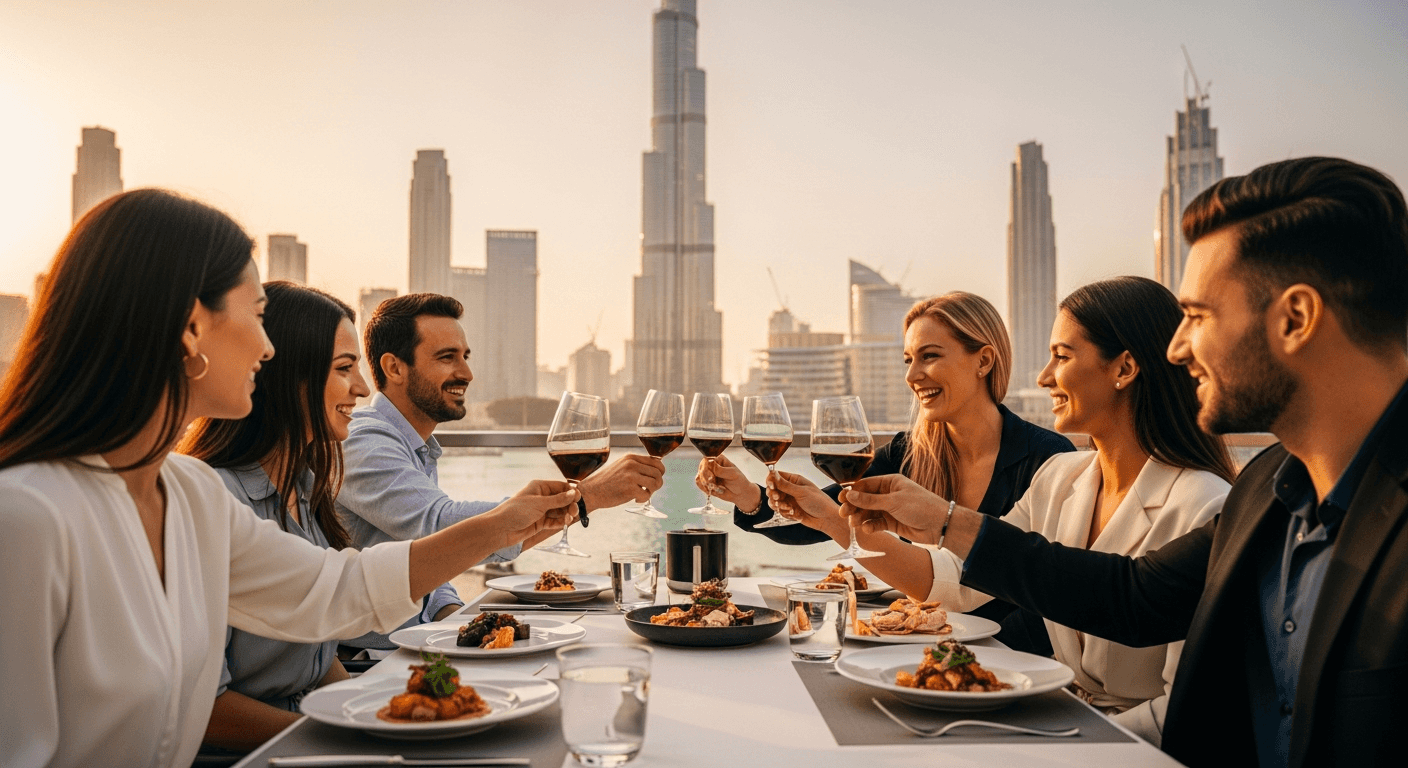
Gourmet at Your Doorstep
I explore what it truly means to live a foodie lifestyle in Dubai, analysing the city's premier culinary neighbourhoods and what you can expect to pay for the privilege of having the world's best cuisine a short walk away.

For many of our clients at Gaia Living, a home is more than just an address. It's the anchor for a specific way of life. And for a growing number of discerning buyers, that life is defined by one glorious pursuit: exceptional food.
Here’s what I'll explore from a foodie's perspective:
- The key ingredients that make a neighbourhood a true culinary destination.
- A deep dive into Downtown Dubai & DIFC: the pinnacle of fine dining.
- Exploring Dubai Marina & JBR: where waterfront views meet global flavours.
- Analysing Palm Jumeirah: the world of resort-based, branded gastronomy.
- A look at Dubai Hills Estate: the new model for family-friendly gourmet living.
- The real cost of culinary convenience, with a detailed price breakdown.
- My final verdict on the best foodie neighbourhood for your palate and portfolio.
The Anatomy of a Foodie Neighbourhood
When I talk about *foodie lifestyle homes Dubai*, I’m not simply talking about proximity to a five-star hotel. A truly great culinary neighbourhood is an ecosystem. It’s a delicate balance of ingredients that combine to create a vibrant, accessible, and constantly engaging dining scene. For years, I’ve walked these streets, eaten in these restaurants, and advised clients on how the character of a place impacts its long-term value. In my experience, the best culinary postcodes are built on four pillars: variety, quality, access, and atmosphere.
Variety is the spice of life, and in Dubai, it's the bedrock of our culinary identity. A top-tier neighbourhood can’t just have one or two great restaurants. It needs layers. It needs the show-stopping Michelin-starred venue for a special occasion, the bustling bistro for a Tuesday night, the hidden-gem ramen shop, the authentic trattoria, and the artisanal bakery for your morning sourdough. It needs to cater to every craving, from a Peruvian tasting menu to a perfectly crafted flat white. This diversity ensures the neighbourhood never feels stale and provides residents with a world of flavours on their doorstep. This is the essence of the *diverse dining districts Dubai* has become famous for.
Quality, of course, is non-negotiable. This isn’t just about accolades and celebrity chefs, though areas like DIFC and Downtown Dubai certainly have those in spades. Quality extends to the produce in the local gourmet supermarket, the freshness of the seafood at the waterfront cafe, and the skill of the barista at the neighbourhood coffee spot. It’s an overarching commitment to excellence that you can taste. When developers like Emaar Properties or Meraas curate the retail mix in their communities, they are increasingly focused on attracting high-quality, proven F&B operators, understanding that this directly enhances the lives of residents and, by extension, the value of the properties.
Finally, there's access and atmosphere. How easy is it to enjoy this culinary wonderland? Is it a walkable neighbourhood where you can spontaneously decide to go for dinner, or does every meal require a car journey? Walkability is the magic ingredient. The ability to stroll from your apartment along a promenade, browse menus, and settle on a terrace as the sun sets is a luxury that commands a significant premium in Dubai. This is where communities like Dubai Marina and City Walk excel. The atmosphere — the buzz of a busy restaurant strip, the clinking of glasses, the murmur of conversation in a dozen languages, is the intangible that turns a collection of restaurants into a true destination.
Downtown Dubai & DIFC: The Epicentre of Fine Dining
 Featured project
If your idea of food heaven involves crisp white tablecloths, world-renowned chefs, and a Gault&Millau guide in your glove compartment, then the contiguous districts of Downtown Dubai and the Dubai International Financial Centre (DIFC) are your undisputed home ground. This is the heart of corporate and luxury Dubai, and its dining scene is a direct reflection of its demographic: sophisticated, international, and with a healthy appetite for the best. For those seeking *restaurant access property Dubai*, this is the city's ground zero.
This area is, without exaggeration, one of the most formidable *Dubai culinary destination neighbourhoods*. Within a square mile, you have an unparalleled concentration of culinary firepower. Think of the celebrity chef outposts in the shadow of the Burj Khalifa, the lauded Japanese and Italian concepts within the Gate Village, and the endless stream of new, ambitious openings. Names like Zuma, La Petite Maison, Coya, and a host of Michelin-starred venues are not just places to eat; they are global institutions. Living here means a casual weeknight dinner could be at a restaurant that foodies in other cities plan vacations around. It’s a lifestyle of unparalleled culinary convenience, where the biggest challenge is not finding a good restaurant, but choosing between a dozen exceptional ones.
The property landscape here is dominated by high-rise, high-spec apartment towers, many of them branded residences attached to luxury hotel flags like Address, Armani, or Waldorf Astoria. This creates a smooth living experience where room service might come from a world-class steakhouse. The architecture is bold, the views are iconic, and the amenities are second to none. Developers like Emaar Properties have master-planned Downtown into a highly walkable urban core. You can leave your apartment in Burj Vista or Opera Grand and walk to the Dubai Mall, stroll along the Boulevard, and be at a table in DIFC via the pedestrian link bridge in 20 minutes. This level of integrated urban living is rare and highly sought after.
The trade-off, naturally, is price. You are paying a significant premium for the address and the access. A two-bedroom apartment with a Burj Khalifa view can easily command prices upwards of AED 3.5-5 million, with service charges to match, often in the AED 28-35 per square foot range. This covers the immaculate maintenance, resort-style pools, and grand lobbies, but it's a significant annual cost. My view is that for a certain buyer profile — the high-flying professional, the couple who thrives on urban energy, or the international investor who values a blue-chip asset, the premium is justified. You're not just buying an apartment; you're buying a front-row seat to the best of Dubai.
Dubai Marina & JBR: Waterfront Feasting, Casual Cool
If Downtown is the suited-and-booted executive of Dubai’s dining scene, Dubai Marina and its beachfront neighbour, Jumeirah Beach Residence (JBR), are its stylish, sun-kissed cousin. This is where the foodie lifestyle unbuttons its collar and kicks off its shoes. The atmosphere is more relaxed, the dress code is more casual, but the commitment to flavour is just as intense. This sprawling, man-made marina is a masterclass in creating a vibrant, walkable community, and its F&B offering is arguably the most diverse in the city.
The sheer scale and variety here are staggering. The 7km Marina Walk is lined with hundreds of cafes and restaurants offering everything from Lebanese to Mexican to Japanese. The Beach at JBR and the newer Bluewaters Island (a short walk or monorail ride away) add another layer of licensed, beach-front dining options, from casual burger joints to high-end concepts by celebrity chefs. Unlike the formal intensity of DIFC, the joy of the Marina is in discovery and spontaneity. It’s about grabbing a gelato and strolling along the water, having a long, lazy weekend breakfast at a cafe overlooking the yachts, or enjoying fresh seafood with your feet almost in the sand. This is one of the original and still one of the best *gourmet dining communities Dubai* has to offer, especially for those who prize views and variety over formal awards.
Property here is almost exclusively high-rise apartments. The original Emaar six towers set the standard, and dozens have followed, creating a dramatic, glittering skyline. The key difference in value and experience often comes down to the view — a full marina view or a sea view commands a significant premium over a partial or community view. Many buildings have been exceptionally well-maintained, but some of the earlier towers are showing their age, so due diligence on the building's condition and the activeness of its owner's association is crucial. Service charges are also a key consideration, typically ranging from AED 22-30 per square foot, reflecting the costs of maintaining pools, gyms, and the extensive waterfront promenades.
For a foodie, the appeal is undeniable. You can live in a tower like Marina Gate or a classic like the Select Group developments and have a supermarket, a coffee shop, a pizzeria, and a fine-dining Indian restaurant all within a five-minute walk. The rental market is incredibly strong, fueled by perennial demand from expats who want the quintessential Dubai lifestyle. Buying here means investing in a mature, established community with proven appeal. A good quality two-bedroom apartment with a partial marina view might trade in the AED 2.5-3.5 million range. While you might not have as many Michelin stars per square kilometre as Downtown, the sheer breadth of choice, the waterfront ambience, and the unparalleled walkability make Dubai Marina a world-class contender for the title of Dubai’s best foodie neighbourhood.
“In real estate, we often say 'location, location, location'. For a certain kind of buyer, that mantra is now 'location, walkability, and a really great bakery'.”
Palm Jumeirah: Resort Living, Global Brands
There is no address more globally recognized in Dubai than Palm Jumeirah. This man-made marvel is a sign of Dubai's ambition, and living here is a unique proposition. From a foodie's perspective, the Palm offers a very distinct flavour of culinary lifestyle, one that is intrinsically linked to the world of five-star hospitality. The primary developer, Nakheel, effectively created a string of resorts, and the dining scene has grown up around them.
The 'trunk' of the Palm is where you'll find the apartment buildings and the newly developed Nakheel Mall and Palm West Beach, a vibrant, pedestrian-friendly promenade that has been a game-changer for the area. This strip offers a fantastic collection of beach clubs and licensed restaurants with stunning skyline views. It’s here that the Palm has truly come into its own as a walkable dining destination. However, the heart of the Palm's fine-dining scene lies within the luxury hotels that dot the 'fronds' and the 'crescent' — Atlantis, One&Only, Jumeirah Zabeel Saray, and dozens more. These hotels are home to internationally acclaimed restaurant brands, from Nobu and Hakkasan to Gordon Ramsay and Giorgio Locatelli.
Living on the Palm means your 'local' restaurants are often world-famous outposts. The lifestyle is less about spontaneous street-side cafes and more about planned, destination dining. It's about valet parking at a grand hotel lobby for a spectacular brunch or a celebratory dinner. For residents of the shoreline apartments on the trunk or the villas on the fronds, this access is a key part of the appeal. However, it’s a less walkable, more car-dependent experience than Marina or Downtown, especially if you live on one of the fronds and want to dine on the crescent. The exception is the burgeoning West Beach area, which has created a new, more casual and accessible hub for residents.
The properties themselves are a mix of luxury apartments on the trunk, offering incredible sea and skyline views, and sprawling, private villas on the fronds, many with their own private beach access. The premium for a Palm Jumeirah address is significant. Signature villas can trade for tens of millions of dirhams, while a two-bedroom apartment on the shoreline can range from AED 3 million to well over AED 5 million depending on the view and finish. Service charges are also at the higher end. The trade-off for this price is exclusivity, privacy (especially in the villas), and a resort-style living experience 365 days a year. My take is that the Palm is for the foodie who appreciates the glamour and polish of hotel-based dining and values the prestige and waterfront lifestyle above the gritty, urban energy of other neighbourhoods.
The Surprise Contender: Dubai Hills Estate
For years, the conversation about *Dubai's culinary destination neighbourhoods* has revolved around the high-density coastal strip. But a new model has emerged, one that brilliantly caters to a demographic that was previously underserved: the foodie family. Dubai Hills Estate is my surprise contender, and in many ways, it represents the future of suburban living in Dubai. It proves that you don't need to be in a skyscraper to have a rich and rewarding culinary life.
Developed by Emaar Properties, Dubai Hills is a master-planned community built around a championship golf course. It’s green, spacious, and designed for families. But where it truly excels is in its thoughtfully curated amenities. The developer understood that modern families don't want to drive 20 minutes for a decent coffee or a quality family dinner. The result is Dubai Hills Mall and a collection of community retail centres that are packed with high-quality, mid-range dining options. You'll find beloved local chains like Reif Kushiyaki and Pitfire Pizza alongside popular international brands and excellent cafes. The focus is less on Michelin stars and more on consistency, quality, and convenience.
The lifestyle here is different. It’s about weekend farmers' markets, food truck festivals in the park, and being able to pop down to the local centre for a fantastic meal with the kids in tow. It's a more relaxed, community-focused version of a foodie lifestyle. The walkability is internal; you might walk from your villa or apartment to the local park and shops, but you will likely drive to the larger mall. The vast green spaces, cycling tracks, and family-friendly atmosphere are the primary draws, but the quality of the F&B offering is the secret ingredient that elevates the entire experience.
Property options are diverse, from apartments overlooking the central park to townhouses and sprawling mansions backing onto the golf course. The value proposition is compelling. A brand new two-bedroom apartment might be in the AED 2-2.5 million range, significantly less than a comparable unit in Downtown or the Marina. Villas offer space and greenery that are impossible to find in the city's core. Service charges are also more moderate, typically in the AED 18-22 per square foot range for apartments. For a young family that loves good food but also wants space, schools, and parks, Dubai Hills presents an almost perfect balance. It's a sign of how the definition of a *gourmet dining community in Dubai* is expanding and evolving.
The Cost of Culinary Convenience: A Breakdown
It’s clear that living in a neighbourhood with a vibrant dining scene comes with a price tag. This 'culinary premium' isn't just a vague concept; it's a measurable factor in property prices and ongoing costs. To illustrate this, let's compare the upfront and running costs of purchasing a hypothetical two-bedroom, 1,200 sq. Ft. apartment in two of the neighbourhoods we've discussed: the high-density, prime-location Downtown Dubai versus the family-focused, suburban-style Dubai Hills Estate.
Let's be clear: these are illustrative figures based on current market conditions and can fluctuate. The purpose is to demonstrate the scale of the financial commitment and the key cost components you must factor into your budget. The primary regulation governing the transfer of property is set by the Dubai Land Department (DLD), which mandates the 4% transfer fee.
Scenario 1: Buying in Downtown Dubai
This is the heart of the action. You're buying into an iconic postcode with unparalleled access to fine dining and entertainment.
- Purchase Price: AED 3,500,000
- Down Payment (20% for residents as per Central Bank of the UAE mortgage cap): AED 700,000
- Dubai Land Department (DLD) Fee (4% of price): AED 140,000
- DLD Registration Trustee Fee: ~AED 4,200 (incl. VAT)
- Agency Fee (2% of price + 5% VAT): AED 73,500
- Total Upfront Cash Required: AED 917,700
*Ongoing Annual Costs:* - Annual Service Charge (estimated AED 30/sq.ft.): 1,200 sq.ft. X 30 = AED 36,000
Scenario 2: Buying in Dubai Hills Estate
Here, you're opting for a more spacious, green environment with high-quality, family-friendly dining.
- Purchase Price: AED 2,200,000
- Down Payment (20% for residents): AED 440,000
- Dubai Land Department (DLD) Fee (4% of price): AED 88,000
- DLD Registration Trustee Fee: ~AED 4,200 (incl. VAT)
- Agency Fee (2% of price + 5% VAT): AED 46,200
- Total Upfront Cash Required: AED 578,400
This direct comparison makes the financial trade-offs crystal clear. The upfront cash required for the Downtown apartment is nearly 60% higher than for the one in Dubai Hills. Annually, the service charges in Downtown could be over 30% more expensive for the same size unit. This is the tangible cost of living at the epicentre.
My Verdict: Matching the Palate to the Postcode
After walking the promenades, studying the menus, and analysing the market, where does that leave a discerning buyer? The best foodie neighbourhood is not a one-size-fits-all answer. It depends entirely on your personal definition of culinary happiness and, crucially, your lifestyle and budget. My job is to help clients find the perfect intersection of all three.
If you are a 'Fine Dining Purist' — someone who thrives on the energy of the city, entertains clients, and wants the world’s best chefs on speed dial, then Downtown Dubai and DIFC are your natural habitat. The premium you pay is for unparalleled access and a globally recognised, blue-chip address. The lifestyle is sophisticated, fast-paced, and utterly convenient. It’s an investment in a certain kind of urban dynamism, and for the right person, it’s worth every dirham.
If you're a 'Social, Scene-Loving Omnivore' — someone who loves variety, waterfront views, and a buzzing atmosphere, then Dubai Marina and its neighbours JBR and Bluewaters are hard to beat. You sacrifice some of the high-end formality for incredible diversity and a permanently-on-vacation vibe. It’s perfect for the active individual or couple who wants to be able to walk out their door and choose from dozens of options, from a quick coffee to a lively dinner with friends. It remains one of the most successful master communities in the world for a reason.
If you're a 'Resort Connoisseur' — valuing privacy, exclusivity, and the glamour of five-star hotel brands, then Palm Jumeirah is your sanctuary. It’s a more curated, car-centric lifestyle, but the rewards are private beaches, iconic views, and access to some of the biggest names in global gastronomy. The new West Beach development has added a brilliant layer of walkability, but the essence of the Palm remains its resort-like exclusivity.
And finally, if you're a 'Modern Family Foodie' — seeking a balance of green space, community feel, and high-quality, accessible dining, then Dubai Hills Estate is, in my professional opinion, the most compelling new option on the market. It represents a shift in Dubai's development, proving that suburban living can be sophisticated and convenient. It’s the choice for those whose culinary life now includes finding a great brunch spot with a playground nearby.
Choosing a home based on your foodie profile is one of the smartest ways to guarantee your long-term happiness in a property. The premium paid for a neighbourhood with a thriving dining scene is not just for the restaurants themselves; it’s an investment in walkability, community, and a richer daily life.
Ultimately, the best *foodie lifestyle homes Dubai* has to offer are the ones that cater to your specific tastes. Before you look at a single property, my advice is to spend time in these neighbourhoods. Have a coffee, walk the streets, eat a meal. See which one feels like home. Then, when you're ready, we at Gaia Living can help you find the perfect table — and the home that comes with it.
Sources
- Dubai Land Department (DLD): https://dubailand.gov.ae
- Central Bank of the UAE: https://www.centralbank.ae
- UAE Government Portal: https://u.ae
Questions, answered
- Which Dubai neighbourhood has the most Michelin-starred restaurants?
- The combined area of Downtown Dubai and DIFC has the highest concentration of Michelin-starred and Gault&Millau-rated restaurants in the city, making it the epicentre for fine dining enthusiasts.
- Are properties in 'foodie neighbourhoods' more expensive?
- Yes, generally. High demand for prime locations with excellent amenities, including world-class dining, leads to a price premium for both sales and rentals. This premium reflects the value of the lifestyle and convenience on offer.
- What are typical service charges in these prime areas?
- Service charges can vary significantly. Expect a range of AED 18-22 per square foot annually in communities like Dubai Hills, rising to AED 25-35+ per square foot in premium towers in Downtown Dubai or Dubai Marina for the higher level of amenities.
- How much should I budget for upfront costs when buying a property in Dubai?
- As a rule of thumb, you should budget for around 7-8% of the property's purchase price to cover fees. This includes the 4% Dubai Land Department transfer fee, trustee fees, and agency fees, and is separate from your mortgage down payment (typically 20-25%).
- Is walkability a key factor for a foodie lifestyle in Dubai?
- Absolutely. In master-planned communities like Dubai Marina, Downtown, City Walk, and JBR, walkability is a central part of the appeal, especially during the cooler six months of the year. It transforms restaurant access from a drive into a stroll.
- Can I find good food in newer, more affordable communities?
- Yes. Developers have recognised the importance of F&B, and many newer communities like Town Square or even JVC are being planned with curated retail and dining pavilions. While they may not have Michelin-starred venues, they offer excellent casual and family-friendly options.

Yusuf writes about how Dubai actually lives — waterfront mornings, community dining, walkability, and the lifestyle premium built into an address.
Related stories
Dubai's Established Charm: The Case for Older Homes
In a city focused on the future, I believe the smartest move for many buyers is to look back. Dubai's seasoned communities offer space, character, and surprising value that new builds often can't match.
The True Cost of Owning a Dubai Property
Beyond the purchase price, your annual budget for a Dubai home must account for service charges, utilities, and maintenance. I'll break down every ongoing expense you need to plan for.
Calculating ROI on Dubai Rental Upgrades
As a landlord in Dubai, you can't just follow trends. I'll show you how to calculate the precise ROI of minor property upgrades to genuinely increase your rental yield.
Echoes, in your inbox
One thoughtful email a month. Market insight, new launches, no spam.