

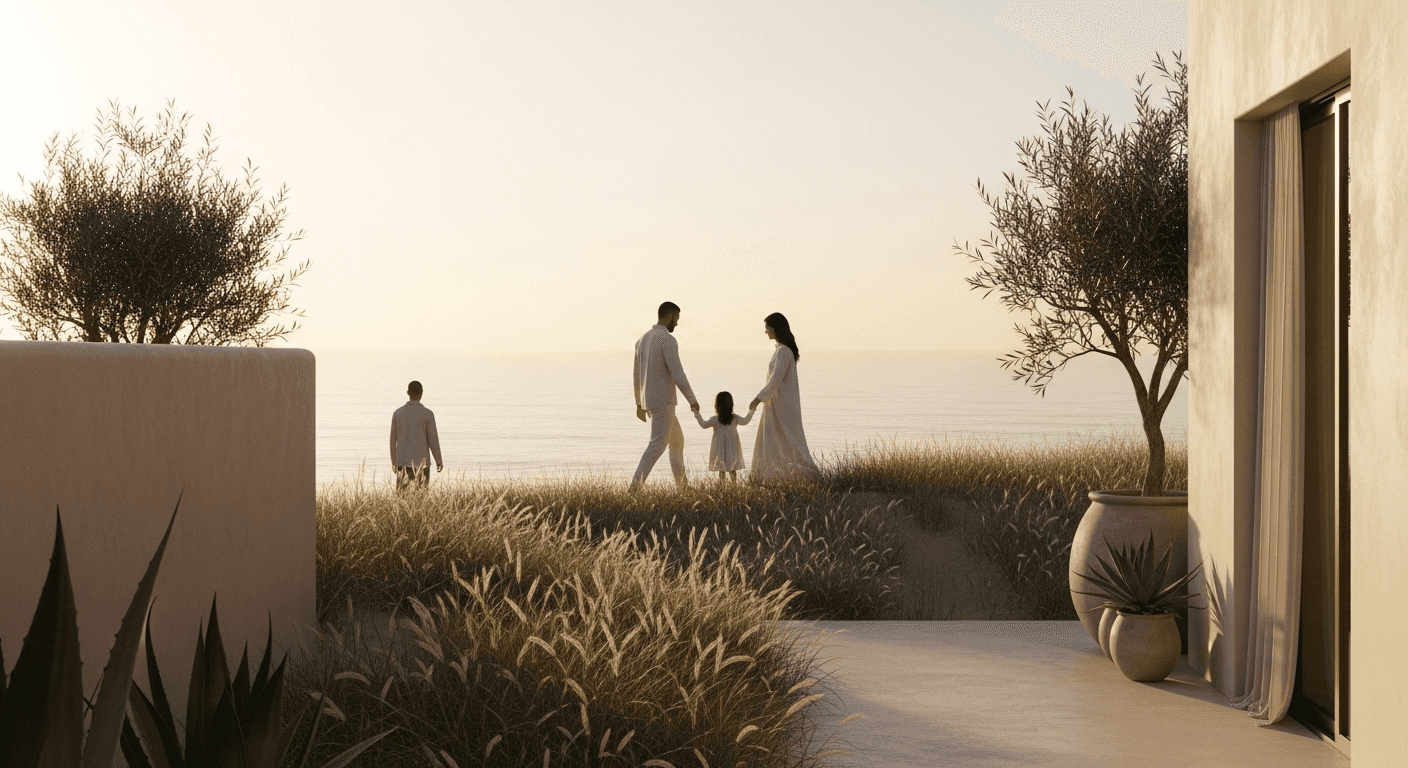
Gallop Home: Dubai's Premier Equestrian Estates
A deep dive into the rarefied world of Dubai's equestrian properties, exploring the unique lifestyle, communities, and true costs of owning a home where the horse is king.

For many, Dubai conjures images of shimmering towers and waterfront penthouses. But there is another side to the emirate’s luxury property market, one defined by the scent of hay, the thud of hooves, and wide-open green spaces. This is the world of Dubai's premier equestrian estates, a rarefied niche where a passion for horses shapes every aspect of life.
Here’s what we'll explore in this guide to Dubai’s horse country:
- The unique appeal of equestrian life in a global city
- What truly defines a horse-centric community
- A deep dive into the original: Arabian Ranches and its club
- The pinnacle of polo living at Al Habtoor Polo Resort
- Other notable equestrian-friendly areas
- A full, line-by-line breakdown of the costs involved
- The practical side of horse ownership in the desert
- My final verdict on whether this lifestyle is worth the premium
The Allure of Equestrian Living in a Modern Metropolis
I’ve always found that the most compelling properties aren’t just about architecture; they’re about the lifestyle they enable. And few lifestyles are as distinct and deeply rooted as the one found in Dubai’s equestrian communities. In a city that relentlessly pushes towards the future, these neighbourhoods offer a connection to something more elemental. They trade the verticality of the skyline for the horizontal expanse of a polo field. They swap the hum of the highway for the quiet nicker of a horse at dawn. This is the essence of their appeal: providing a sense of rural living in Dubai without sacrificing the conveniences of one of the world's most dynamic cities.
The vision for these communities was never just to build houses near a stable. It was to create a fully integrated ecosystem for people whose lives revolve around horses. This is a crucial distinction. It’s the difference between a suburb with a riding school and a community where bridle paths are as fundamental to the master plan as roads for cars. This philosophy is deeply intertwined with the UAE’s cultural heritage, where horsemanship is a revered tradition. The ruling families have long been patrons of the sport, from endurance racing to show jumping, and this passion has filtered down into the very fabric of the city’s luxury real estate offerings.
For the clients we at Gaia Living work with, the attraction is multifaceted. For some, it’s about having world-class facilities on their doorstep. They might be competitive riders or polo players who need to be close to their horses and training grounds. For others, it’s about the environment for their families. They want their children to grow up with space, fresh air, and a connection to animals — a stark contrast to the apartment-living norm in many other prime areas. The social fabric of these communities is also a significant draw. It’s a self-selecting group of people who share a common passion, leading to a level of camaraderie and community spirit that can be hard to find elsewhere.
Defining a True Equestrian Community
 Featured project
A property listing can say “equestrian-friendly,” but what does that mean in practice? In my experience, a true equestrian community is built on four pillars: integrated facilities, dedicated infrastructure, a distinct architectural identity, and a vibrant community culture. Without all four, you simply have a nice villa that happens to be near a place where horses are kept. The magic lies in the smooth integration of the equestrian world into the residential one. This is what sets the premier horse riding communities in Dubai apart from anything else in the region.
First, integrated facilities are non-negotiable. This means more than just a few paddocks. We’re talking about a central, professionally managed club with multiple arenas (for dressage, show jumping, and schooling), extensive stabling with proper veterinary and farrier support, and coaching staff for all levels. The Dubai Polo & Equestrian Club in Arabian Ranches and the Al Habtoor Polo Resort are the gold standards. They are destinations in their own right, hosting international competitions and offering members a full suite of amenities, including restaurants, gyms, and pools. The property is an extension of the club, and the club is an extension of the home.
Second is the infrastructure. This is where the master planning by developers like Emaar Properties truly shines. It’s the network of dedicated bridle paths that allow residents to ride their horses from the stables around the community safely, away from traffic. It’s the thoughtful landscaping that provides shade and visual appeal. It’s the generous plot sizes that give homes a sense of privacy and space, mimicking a countryside estate. This physical infrastructure is what allows the equestrian lifestyle to be lived daily, not just visited on weekends. It transforms horse riding from a hobby into a part of your routine, like walking the dog or going for a run.
Finally, there’s the architecture and the culture. The homes in these communities often feature designs that complement the equestrian theme — think Spanish, Portuguese, or Andalusian influences with terracotta roofs, arched doorways, and spacious courtyards. This creates a cohesive and charming aesthetic. This shared architectural language reinforces the sense of place. This environment, in turn, fosters a unique culture. The polo club becomes the de facto community centre. Neighbours don’t just meet at the supermarket; they meet at morning schooling sessions or during weekend polo matches. It’s a social life built around a shared passion, creating bonds that are often stronger than those in a typical residential suburb.
The Original: Arabian Ranches and the Equestrian Centre
When people talk about established, family-friendly villa communities in Dubai, Arabian Ranches is always one of the first names mentioned. Launched by Emaar in the early 2000s, it was a pioneering concept for Dubai: a self-contained, desert-themed suburb focused on outdoor living. At its heart, both geographically and spiritually, lies the Dubai Polo & Equestrian Club. This isn't just an amenity; it's the community's anchor, the reason for its existence and the source of its unique character. It set the blueprint for all subsequent Dubai equestrian properties.
Walking through Arabian Ranches, particularly the original Phase 1, you can feel how the design was influenced by the club. The properties in sub-communities like Mirador and Saheel, with their Spanish-style architecture and large plots, feel intrinsically connected to the club's aesthetic. Many of these homes have direct views of the polo fields or the surrounding paddocks. The community was designed for a life lived outdoors. The bridle paths are well-used, and it’s not uncommon to see riders out for a hack in the cooler morning hours. This is what I meant by integrated infrastructure; the lifestyle is designed into the very layout of the streets and pathways.
From a property perspective, Arabian Ranches offers a relatively diverse range of options, though all fall within the premium villa category. You have everything from two and three-bedroom townhouses in Palmera and Al Reem up to sprawling six and seven-bedroom mansions in sub-communities like Hattan and La Coleccion. The most sought-after are, of course, the villas that directly border the polo club, offering uninterrupted views of the action. These properties command a significant premium. A standard five-bedroom villa in Mirador might sell for around AED 8-10 million, but a similar-sized home with a prime polo field view could easily ask for 20-30% more. This premium has held firm over the years, demonstrating the enduring value buyers place on this specific lifestyle.
What I believe Arabian Ranches does better than almost any other community in Dubai is foster a genuine sense of belonging. It has matured over two decades. The trees are tall, the gardens are lush, and the community centres are bustling. It feels lived-in and authentic. The Polo Club acts as the social hub, with its restaurants, steakhouse, and terrace bar being popular spots for residents to gather, whether they are horse-owners or not. It hosts brunches, social events, and major polo tournaments like the Cartier International Dubai Polo Challenge, which brings a touch of glamour and excitement. This blend of relaxed family life and high-end sporting spectacle is the unique magic of Arabian Ranches.
The Pinnacle of Polo: Al Habtoor Polo Resort & Club
If Arabian Ranches is the established, family-centric original, the Al Habtoor Polo Resort & Club is its glamorous, five-star counterpart. Opened in 2017, this development took the concept of polo properties in Dubai and infused it with the DNA of a luxury hotel. Located in Dubailand, further out from the city's traditional centre, it was designed from the ground up to be a world-class destination for professional polo. The residential component, a collection of 126 Andalusian-style villas, feels less like a suburb and more like the private residential wing of an exclusive resort.
Everything here is on a grander scale. The resort offers three professional-grade polo fields, a dedicated polo academy, and stabling for over 500 horses. The central feature is the St. Regis hotel, which anchors the development and provides residents with access to its restaurants, spa, and services. The villas themselves are beautifully designed by Nakheel, with whitewashed walls, private pools, and high-end finishes. They range from three to five bedrooms, and the most desirable ones offer direct, front-row views of the main polo field. Waking up and watching the polo teams practice from your terrace is a reality for owners here.
In my view, the experience of living in Al Habtoor is quite different from that of Arabian Ranches. It’s more polished, more international, and perhaps a little less 'neighbourly' in the traditional sense. The social life is spectacular but can feel more transient, revolving around the high-goal polo season which attracts players and patrons from around the world. It’s an electrifying atmosphere if you’re a fan of the sport. For a serious polo enthusiast, there is simply no better address in the Middle East. You are living amidst the sport at its highest level. These are true luxury stable homes, even if the stables are a short golf-cart ride away.
From a real estate standpoint, the villas at Al Habtoor Polo Resort represent a very specific, ultra-niche asset class. Prices for a four-bedroom villa typically start around AED 5-6 million, while the larger five-bedroom villas with prime polo field frontage can trade for upwards of AED 10-12 million. The rental market is also strong, particularly for short-term lets during the peak polo season from October to April. The association with the St. Regis brand adds a layer of prestige and ensures the entire development is maintained to an impeccable five-star standard. It's a turnkey luxury solution for someone who wants to immerse themselves in the sport without any of the associated logistical hassles.
Beyond the Obvious: Other Equestrian Hotspots
While Arabian Ranches and Al Habtoor are the headline acts, Dubai's equestrian scene is not limited to these two master-planned communities. For those seeking a different flavour of horse-centric living, several other areas offer excellent facilities and a connection to the lifestyle, albeit in a less integrated fashion. These options often appeal to buyers who prioritise privacy or a different community feel but still want world-class equestrian amenities within easy reach. Understanding these alternatives is key to providing a complete picture for our clients at Gaia Living.
One of the most notable is Al Barari. Known for its incredible botanical gardens and ultra-luxurious, contemporary villas, Al Barari is a sanctuary of green in the desert. While not purpose-built around horses, it has its own private, high-end stable called The Farm. This facility is smaller and more boutique than the large polo clubs, catering primarily to the residents of Al Barari. The lifestyle here is less about the sporting and social spectacle of polo and more about the personal pleasure of riding through the community's lush, landscaped surroundings. A buyer choosing Al Barari is likely prioritising the greenery and architectural distinction first, with the excellent on-site equestrian facilities being a significant bonus.
Another important hub is the Sharjah Equestrian & Racing Club. While technically in the neighbouring emirate, it's just a short drive from many of Dubai's northern residential areas like Mirdif. For decades, it has been a cornerstone of the UAE's equestrian community, offering extensive facilities for everything from racing and show jumping to a riding academy. People living in villa communities in and around Mirdif often use these facilities. This represents a more 'a la carte' approach to the equestrian lifestyle — you choose your home in a community you like for other reasons, and then you commute a short distance to the stables. It offers flexibility and often a more accessible price point for both property and stabling.
Finally, one cannot overlook the existence of vast, private estates in areas like Al Khawaneej or even further out towards the desert. These are not gated communities but sprawling individual properties, sometimes covering several acres, owned by prominent local families or serious international equestrians. Here, owners build their own private stables, training arenas, and staff accommodation. This is the ultimate expression of rural living in Dubai, offering unparalleled privacy and customisation. These properties rarely come on the open market and trade on a very private basis. They represent the pinnacle of luxury stable homes, where the entire estate is a personal equestrian paradise.
“The true value of these properties isn't measured per square foot, but by the richness of the life they enable just beyond the front door.”
The True Cost: A Line-by-Line Breakdown
Embracing the equestrian lifestyle is an investment in both property and passion. The idyllic image of a morning ride carries a significant financial commitment that goes far beyond the purchase price of the villa. As part of our advisory role at Gaia Living, we believe it’s crucial to be transparent about the full spectrum of costs. Let's break down what it takes to acquire and maintain a home in one of Dubai's premier equestrian communities. We'll use a hypothetical example of purchasing a AED 7,000,000 villa in Arabian Ranches.
First, the upfront acquisition costs. The sticker price is just the beginning. In Dubai, several mandatory fees apply to any property transaction. These are regulated by the Dubai Land Department (DLD) and are non-negotiable. Here's a typical breakdown:
- Purchase Price: AED 7,000,000
- DLD Transfer Fee (4%): AED 280,000
- DLD Admin Fees: Approx. AED 4,200
- Property Registration Fee: AED 4,000
- Real Estate Agency Fee (2% + VAT): AED 147,000
- Mortgage Arrangement & Valuation Fees (if applicable): Approx. AED 10,000 - 15,000
- No Objection Certificate (NOC) Fee from Developer: Approx. AED 1,000 - 5,000
Total Upfront Cost (approx.): AED 7,447,200
This calculation doesn't include the significant cash down payment required if you are using a mortgage. As per Central Bank of the UAE regulations, expatriate buyers typically need a minimum of 20-25% of the purchase price in cash. For our AED 7 million villa, that’s a down payment of at least AED 1,400,000. So, the total initial cash outlay is substantial.
Next are the ongoing costs. These include standard homeownership expenses plus the unique costs associated with the equestrian lifestyle. Annual service charges in villa communities like Arabian Ranches typically range from AED 3 to AED 5 per square foot of the built-up area. For a 5,000 sq. Ft. villa, this could be AED 15,000 - AED 25,000 per year, covering landscaping, security, and maintenance of communal areas. Then comes the cost of the horse itself. Full livery at a top club like the Dubai Polo & Equestrian Club can range from AED 3,500 to AED 5,500 per month per horse. This covers stabling, basic feed, bedding, and grooming. Over a year, that’s AED 42,000 to AED 66,000. This does not include vet bills, farrier services (shoeing), insurance, or specialised training, which can easily add another AED 15,000 - 25,000 per year. In total, owning the home and keeping one horse can easily incur annual running costs of AED 70,000 to AED 115,000, before even considering your own utility bills and home maintenance.
The Practicalities of Horse Ownership in Dubai
Beyond the finances, prospective residents must understand the practical realities of keeping horses in a desert climate. While Dubai’s equestrian facilities are among the best in the world, they have been specifically engineered to overcome the challenges of the local environment. The summer months, from May to September, present the most significant hurdle. The intense heat and humidity mean that outdoor riding is restricted to the very early morning or late evening. The rest of the day, the horses’ well-being is paramount, and this is where the quality of the facilities truly matters.
Modern stables in Dubai are marvels of climate control. The best facilities, like those at Al Habtoor or the Dubai Polo Club, feature air-conditioned stable blocks to keep the horses comfortable and healthy during the hottest parts of the day. They also have indoor, air-conditioned riding arenas, allowing training and exercise to continue year-round. This is a critical feature to look for. Also, management protocols are rigorous, with staff ensuring horses are properly hydrated, receive electrolyte supplements, and are monitored closely for any signs of heat stress. When we advise clients, we always recommend a thorough inspection of the stable facilities and a conversation with the stable manager about their summer protocols.
Importing a horse to the UAE is another practical consideration for many international buyers. The process is well-regulated and straightforward, managed by the Ministry of Climate Change and Environment. It involves a series of health checks, vaccinations, and paperwork in the country of origin, followed by a quarantine period upon arrival in the UAE. The major equestrian clubs are well-versed in this process and can provide significant assistance or recommend reputable shipping agents to handle the logistics. According to the official UAE Government Portal (u.ae), all imported animals require an import permit and must meet specific health standards. It's a process that requires planning and expert guidance but is routinely and successfully done.
Finally, the support ecosystem for horse health is excellent. Dubai has a number of world-class equine veterinary hospitals and clinics, staffed by international specialists. Access to top-tier diagnostics, surgery, and general care is readily available. The same goes for farriers, equine dentists, and nutritionists. This comprehensive network of professionals ensures that horse owners have access to the same level of care they would expect in any major global equestrian hub like Wellington, Florida, or Newmarket in the UK. This robust support system is a key reason why Dubai has been so successful in establishing itself as a credible and serious centre for international equestrian sports.
The Resident Profile: Who Buys These Homes?
Over the years I've spent walking these communities, from the polo-side villas to the more modest townhouses, a clear picture emerges of the type of resident drawn to this lifestyle. It’s a diverse group, but they are united by a desire for space, a connection to nature, and, of course, a shared passion for horses. These are not speculative investors looking for a quick flip; the vast majority of buyers in Dubai’s equestrian communities are end-users. They are buying a home and a lifestyle, often with a long-term vision for their family.
One of the largest demographics is families with children. For them, the appeal is obvious. Communities like Arabian Ranches offer a safe, green environment that feels worlds away from the hustle of the city. The large gardens, community pools, and parks are a huge draw. The presence of the equestrian club adds another dimension — it provides a healthy, character-building activity for children and a ready-made social circle for the parents. Many of the families we work with at Gaia Living specifically cite the desire for their children to learn to ride and be around animals as a primary reason for choosing these areas.
Another significant group is, naturally, serious equestrians. This includes amateur and professional polo players, show jumpers, and dressage riders from all over the world. For them, the proximity to world-class facilities is the main driver. The ability to live minutes from where their high-value horses are stabled and trained is a logistical dream. The Al Habtoor Polo Resort, in particular, attracts this clientele, with many renting or buying villas for the winter season to compete in the prestigious Gold Cup series. This international crowd brings a dynamic, cosmopolitan energy to the community during the peak season.
Finally, there is a segment of high-net-worth individuals who may not be active riders themselves but are drawn to the prestige, privacy, and unique ambiance of the equestrian lifestyle. They appreciate the aesthetics of the polo fields, the sense of space, and the exclusive social scene. For them, owning a polo-side villa is a status symbol, much like a penthouse in Downtown Dubai or a beachfront villa on Palm Jumeirah. The property itself is a unique trophy asset, and its value is underpinned by the irreplaceable lifestyle and amenities it offers. The eligibility for the Golden Visa through property investment is an added incentive, providing these owners with a long-term residency solution in the UAE.
Dubai's equestrian estates offer a compelling and unique proposition: a genuine countryside lifestyle built around a passion for horses, without sacrificing the benefits of a global city. While the financial and practical commitments are significant, for the right buyer, the investment yields a quality of life that is simply unmatched in any other type of community.
My Verdict: Is the Equestrian Premium Worth It?
After years of exploring every corner of Dubai’s property market, I can say with confidence that the city’s equestrian communities offer something truly special. The question of whether the undeniable price premium is 'worth it' comes down to a simple, personal calculation: how much do you value the lifestyle? If you are simply looking for a large villa, there are other communities that might offer more square footage for your money. But if the idea of integrating a passion for horses into your daily life resonates with you, then the premium is not just justified; it's a bargain for the world it unlocks.
In my opinion, the choice between the main communities comes down to your priorities. For families and those seeking a deep-rooted, authentic community feel, Arabian Ranches remains the undisputed champion. It’s a proven concept, a mature and welcoming neighbourhood where the equestrian club is a genuine social hub for everyone. It represents a balanced, livable version of the equestrian dream. The property values have proven resilient over time, underpinned by the consistent demand from end-user families.
For the serious, competitive equestrian, particularly the polo player or aficionado, the Al Habtoor Polo Resort is in a league of its own. The facilities are unparalleled in the region, and the lifestyle is one of complete immersion in the high-goal polo scene. It is less of a traditional neighbourhood and more of a five-star sporting resort that you can live in. It’s an investment in your sport as much as it is in real estate. The connection to the St. Regis brand also provides an assurance of quality and service that appeals to a specific tier of global buyer.
Ultimately, these communities succeed because they are authentic. They were born from a genuine, local passion for horsemanship. They provide a powerful antidote to the anonymity of high-rise living. They offer a rare combination of rural tranquility and urban access, of sporting excellence and family life. For those who hear the call of the equestrian world, these properties are more than just homes. They are the key to a life less ordinary, lived under the expansive blue skies of the Dubai desert.
## Sources - Dubai Land Department (DLD): https://dubailand.gov.ae/ - Central Bank of the UAE: https://www.centralbank.ae/en/ - The UAE Government Portal: https://u.ae/
Questions, answered
- What are the main equestrian communities in Dubai?
- The primary purpose-built equestrian communities in Dubai are Arabian Ranches, centered around the Dubai Polo & Equestrian Club, and the Al Habtoor Polo Resort & Club. Other areas like Al Barari and some private estates also offer equestrian facilities.
- Can I have a private stable at my home in Dubai?
- Yes, but it's very rare. Some of the largest, most exclusive estates in communities like Arabian Ranches or within the Al Habtoor Polo Resort may offer private stables. More commonly, residents use the high-end livery services at the community's central equestrian club.
- How much does it cost to keep a horse in Dubai?
- Livery costs at a top Dubai equestrian club typically range from AED 3,500 to over AED 5,000 per month per horse. This usually includes stabling, basic feed, and grooming, but excludes veterinary care, farrier services, and training.
- Are equestrian properties in Dubai a good investment?
- These properties occupy a niche, high-end market segment, valued for their unique lifestyle. While they have shown solid capital appreciation, their primary appeal is for end-users. As with any property, investment potential depends on market conditions and the specific asset.
- Can foreigners buy equestrian properties in Dubai?
- Yes, the main equestrian communities like Arabian Ranches and the Al Habtoor Polo Resort are located in freehold zones. This means foreign nationals can purchase property there with full ownership rights, as registered with the Dubai Land Department.
- What is the lifestyle like in a Dubai equestrian community?
- It's a unique blend of tranquil, rural-style living with access to world-class amenities. The lifestyle is social and active, centered around the equestrian club, polo matches, and community events, offering a strong sense of community for families and horse lovers.

Yusuf writes about how Dubai actually lives — waterfront mornings, community dining, walkability, and the lifestyle premium built into an address.
Related stories
Dubai's Established Charm: The Case for Older Homes
In a city focused on the future, I believe the smartest move for many buyers is to look back. Dubai's seasoned communities offer space, character, and surprising value that new builds often can't match.
The True Cost of Owning a Dubai Property
Beyond the purchase price, your annual budget for a Dubai home must account for service charges, utilities, and maintenance. I'll break down every ongoing expense you need to plan for.
Calculating ROI on Dubai Rental Upgrades
As a landlord in Dubai, you can't just follow trends. I'll show you how to calculate the precise ROI of minor property upgrades to genuinely increase your rental yield.
Echoes, in your inbox
One thoughtful email a month. Market insight, new launches, no spam.