

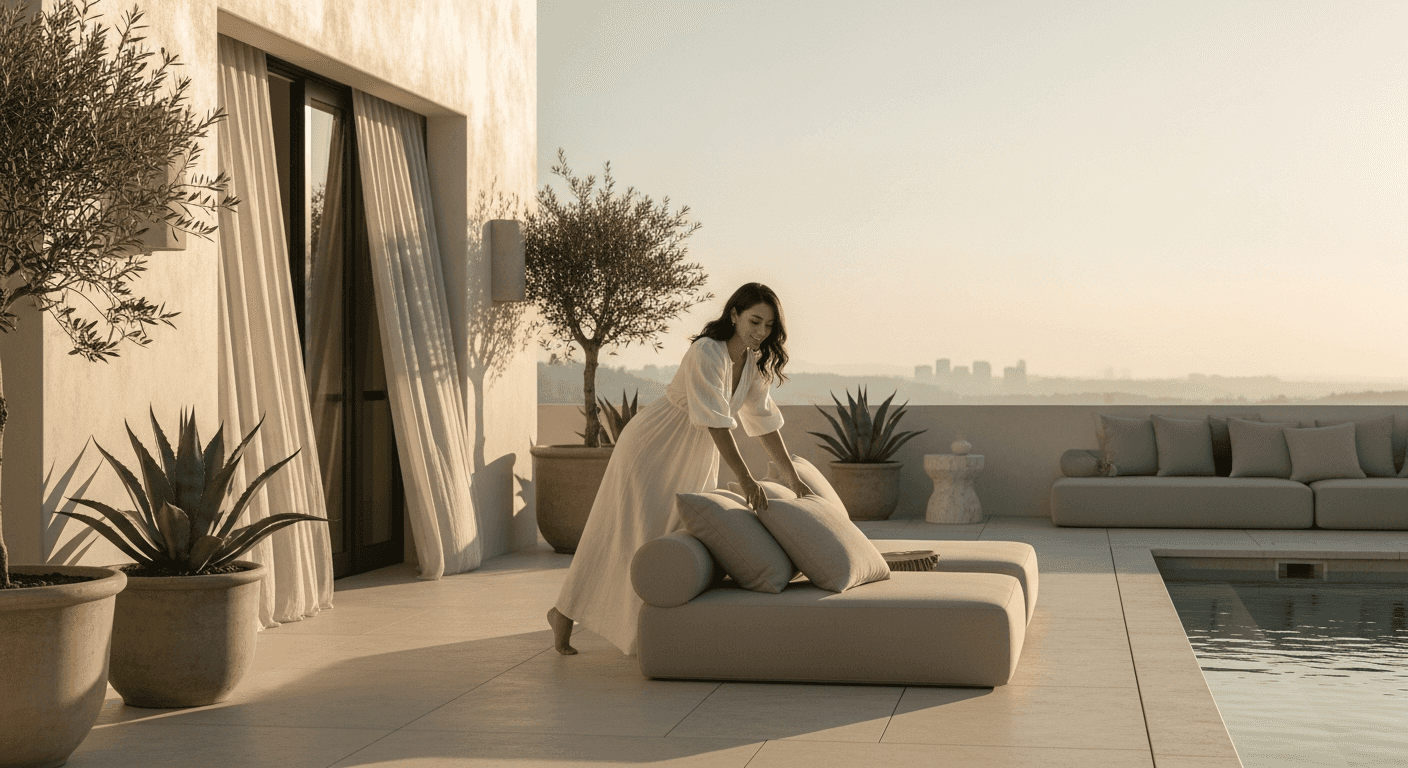
Furnishing Your Dubai Apartment: A Guide
Moving to Dubai? I'll walk you through everything you need to know about budgeting for and sourcing furniture for your new home, from IKEA runs to custom fit-outs.

One of the most exciting moments after securing your new home in Dubai is the thought of making it your own. But that excitement can quickly turn to anxiety when you're faced with an empty apartment and a long shopping list. As a first-time buyer and renter specialist at Gaia Living, I’ve guided countless expats through this exact process. The questions are always the same: How much will it all cost? Where should I even begin? And how do I make this feel like home?
Here’s what we'll explore in this definitive guide:
- The critical first decision: furnished vs. Unfurnished rentals.
- Three distinct furnishing approaches, from budget to luxury.
- Detailed budget breakdowns for different apartment sizes.
- My personal directory of the best furniture stores in Dubai.
- The pros and cons of shipping your furniture from home.
- When to hire a professional designer or fit-out contractor.
- Practical checklists to ensure you don't miss a thing.
First Things First: Furnished vs. Unfurnished?
Before you can even think about colour palettes or sofa styles, you need to make a fundamental choice that will define your entire setup experience: renting a furnished or unfurnished apartment. In Dubai, these terms have specific implications that might differ from your home country, and the right choice depends entirely on your timeline, budget, and personal priorities.
An 'unfurnished' apartment in Dubai is often a completely blank slate. You can expect flooring, painted walls, a bathroom suite, and kitchen cabinets. Many newer buildings, particularly from top-tier developers like Emaar Properties or Meraas, will include a built-in oven and hob. But that’s usually it. You will be responsible for providing all other 'white goods' — the refrigerator, washing machine, and dishwasher, along with every single piece of furniture, lighting, and decor. This offers ultimate freedom but comes with a significant upfront cost and effort.
'Furnished' apartments, on the other hand, are designed for convenience. They aim to be move-in ready, containing all the essential furniture and appliances. The quality and style of these furnishings can vary dramatically. At the lower end, you might find basic, durable furniture from brands like IKEA or Home Centre. In premium buildings, such as those in Downtown Dubai or on Bluewaters Island, you might find apartments kitted out with high-end designer pieces as part of a branded residence. The trade-off for this convenience is a higher monthly rent, less personal style, and sometimes, living with furniture that's seen better days.
So, which is right for you? In my experience, if you're on a short-term corporate contract (one or two years) and your priority is a smooth, hassle-free move, a furnished apartment is a logical choice. It eliminates the daunting task of an `expat home setup Dubai` from scratch. For anyone planning to stay in Dubai for three years or longer, or for families putting down roots, I almost always recommend going unfurnished. The initial financial sting is real, but the long-term benefits are substantial. You pay less in rent over the years, you get to live in a space that truly reflects your taste, and you own the assets you've purchased. The process of choosing your own things is what transforms a temporary residence into a real home.
Defining Your Approach: Three Tiers of Furnishing
 Featured project
Once you’ve got your empty apartment, the next step is to decide on your strategy. I find it helpful to break this down into three distinct approaches, or tiers. Your choice will be guided by your budget, your timeline, and how much you value customisation. There's no right or wrong answer; it’s about finding the path that aligns with your circumstances.
Tier 1: The Quick Start (Budget-Conscious) This approach is all about getting your home functional as quickly and affordably as possible. The goal here isn't to create a magazine-worthy interior, but to have a comfortable and liveable space without breaking the bank. The primary shopping destinations are the big-box retailers known for value: IKEA, Home Centre, and Home Box. You’ll also lean heavily on online marketplaces like Dubizzle and community Facebook groups for second-hand bargains. This is the go-to strategy for young professionals on a budget, new arrivals who want to save their cash for other experiences, or those who see their first Dubai apartment as a temporary stepping stone. It’s practical, efficient, and gets the job done. The downside is a more generic look and potentially lower-quality items that may not last for years.
Tier 2: The Curated Home (Mid-Range & Style-Focused) This is the sweet spot for most expats and the approach I recommend most often. The 'Curated Home' is about being intentional with your choices, mixing and matching pieces to create a home that is both stylish and personal. You might invest in a high-quality, comfortable sofa from Crate & Barrel or West Elm, and a great mattress from a specialised store, but save money on a side table from IKEA or a rug from an online retailer. This tier allows you to prioritise where you spend your money. It’s for those who plan to stay in Dubai for a few years and want to come home to a space they genuinely love. It takes more time and thought than the Quick Start, but the result is a home that feels uniquely yours. This is very popular with residents in established communities like Arabian Ranches or Dubai Hills.
Tier 3: The Full Fit-Out (Luxury & Custom) This is the premier league of home setup. The 'Full Fit-Out' approach involves bringing in professionals — an interior designer, a fit-out contractor, or a full-service design-and-build firm, to create a completely bespoke living environment. This goes far beyond just `buying furniture Dubai`. It can include custom-built joinery like wardrobes and media units, sophisticated lighting plans, wall treatments, and sourcing high-end furniture from designer brands in Italy or Scandinavia. This is the path taken by homeowners in luxury properties on the Palm Jumeirah or those who have purchased a shell-and-core villa and want a turnkey solution. The `interior fit-out Dubai budget` for this tier is substantial, but it delivers a truly unique, professionally executed home tailored to your exact specifications.
The Big Question: What's the Real Furnishing Cost?
This is the number one question I get from clients. The honest answer is: it depends entirely on your choices. However, after years of helping people set up their homes, I can provide realistic budget ranges for each of the three tiers. The `furnishing Dubai apartment cost` is a critical part of your moving budget, and you should plan for it just as you would for your rent deposit and agency fees.
Here are some typical budget estimates based on apartment size and furnishing approach. These figures assume you are starting from absolute zero and need everything from a sofa and bed to cutlery and a vacuum cleaner.
- Tier 1: The Quick Start (Budget-Conscious)
- Studio Apartment: AED 10,000 — AED 15,000
- 1-Bedroom Apartment: AED 15,000 — AED 25,000
- 2-Bedroom Apartment: AED 25,000 — AED 40,000
- Tier 2: The Curated Home (Mid-Range & Style-Focused)
- Studio Apartment: AED 25,000 — AED 40,000
- 1-Bedroom Apartment: AED 40,000 — AED 70,000
- 2-Bedroom Apartment: AED 60,000 — AED 100,000+
- Tier 3: The Full Fit-Out (Luxury & Custom)
- This tier is much harder to estimate as it's bespoke. Costs typically start around AED 100,000 for a small apartment and can easily run into several hundred thousand or even millions for large villas. Professionals in this space often quote on a per-square-foot basis, which can range from AED 250 to over AED 1,000 per sq. Ft. for a high-end fit-out.
To make this more concrete, let's create a line-by-line sample budget for a 1-bedroom apartment using the Tier 2 'Curated Home' approach. This is a realistic scenario for a professional couple or individual moving into a community like JVC or Business Bay.
Sample 1-Bedroom 'Curated Home' Furnishing Budget (AED):
- Living Room:
- 3-Seater Sofa (West Elm/Crate & Barrel): 5,500
- Coffee Table: 1,200
- TV Media Unit: 1,500
- Area Rug (8x10 ft): 1,000
- 65-inch Smart TV: 3,000
- Curtains & Rods (professionally installed): 1,200
- Floor Lamp & Side Table Lamp: 800
- *Subtotal: 14,200*
- Bedroom:
- King Bed Frame & Quality Mattress: 5,000
- Two Bedside Tables: 1,000
- Dresser/Chest of Drawers: 2,000
- Bedding (Duvet, pillows, 2 sets of sheets): 1,500
- Blackout Curtains & Rods: 1,000
- *Subtotal: 10,500*
- Kitchen & Appliances (White Goods):
- Refrigerator (e.g., Samsung, LG): 2,500
- Washing Machine (front-loader): 2,000
- Microwave Oven: 400
- Kettle, Toaster, Nespresso Machine: 800
- Cookware, Cutlery, Crockery, Glassware: 2,500
- *Subtotal: 8,200*
- Miscellaneous & Hidden Costs:
- Dining Table & 4 Chairs: 2,500
- Home Office Desk & Chair: 1,500
- Delivery & Assembly Fees: 1,000
- Vacuum Cleaner, Iron, Cleaning Supplies: 1,000
- Decor (Art, plants, cushions, throws): 3,000
- Buffer for the unexpected: 2,000
- *Subtotal: 11,500*
Estimated Grand Total: AED 54,400
This breakdown shows how quickly costs add up, even when making sensible choices. It's a realistic reflection of what it takes to create a comfortable, well-appointed home in Dubai today.
Where to Shop: Your Dubai Furniture Black Book
Knowing your budget is half the battle; knowing where to spend it is the other. Dubai's retail scene is vast and can be overwhelming. To help you navigate it, I've compiled a list of my go-to stores, categorized by the furnishing tiers we've discussed. Think of this as your personal directory for `home decor Dubai` and furniture sourcing.
For the Quick Start (Budget-Friendly): * IKEA: The undisputed king of budget-friendly furnishing. Located in Dubai Festival City and Jebel Ali (Festival Plaza), it's a one-stop-shop for everything. My advice: pay for delivery and assembly. It's worth every fil. * Home Centre: A regional favourite, slightly more traditional in style than IKEA, but excellent value. You'll find them in most major malls, including Mall of the Emirates and City Centre Mirdif. * Home Box: The value-oriented sibling of Home Centre. The prices are incredibly competitive, making it a great place for starter items or furnishing a second bedroom. * Second-Hand Marketplaces: Platforms like Dubizzle and Facebook groups ('Dubai Second Hand Furniture', 'Buy It, Sell It, Swap It Dubai') can be goldmines. You can find high-quality pieces from expats who are leaving the country for a fraction of their original price. Always inspect items in person before paying and be wary of scams. * Dragon Mart: A massive wholesale market where you can find almost anything. It requires patience and a willingness to haggle. The quality can be very hit-or-miss, so this is a 'buyer beware' option, but it's an excellent source for lighting, rugs, and decor items if you're on a tight budget.
For the Curated Home (Mid-Range): * Crate & Barrel / West Elm / Pottery Barn: These three (all part of the same group) are the cornerstones of this tier. Located in Dubai Mall and Mall of the Emirates, they offer contemporary, high-quality furniture that will last. Their seasonal sales are fantastic, so it pays to be patient. * The One: A homegrown brand with beautiful, slightly more eclectic and glamorous pieces. They have large showrooms on Sheikh Zayed Road and in other key locations. Their restaurants are also excellent for a post-shopping meal. * Marina Home Interiors: Known for its larger-scale, rustic, and sophisticated pieces. If you're looking for a statement dining table or a solid wood bed frame, this is a great place to start. * Maison du Monde: A French brand that has recently opened in Mall of the Emirates, offering a huge variety of styles from industrial to bohemian at a reasonable price point. Excellent for decor, textiles, and smaller furniture items.
For the Full Fit-Out (High-End & Designer): * Dubai Design District (d3): This is the epicentre of design in the region. Here you'll find the showrooms for world-renowned brands like Vitra, Cassina, and Minotti. It's a place for inspiration as much as it is for shopping. * The Odd Piece: A beautiful boutique in Alserkal Avenue that specialises in unique vintage finds and custom-made furniture. Perfect for finding that one-of-a-kind statement item. * Finasi: A major player in the luxury market, representing high-end Italian brands like Molteni&C and Armani/Casa. Their showroom is a sign of luxury living. * Individual Brand Showrooms: Many luxury brands have standalone showrooms along Sheikh Zayed Road or Jumeirah Beach Road. A drive along these routes reveals a world of high-end design for those with the budget to match.
The DIY Route: Shipping Your Belongings to Dubai
For many expats, the question of whether to ship their existing furniture is a big one. You might have pieces you love, heirlooms, or a complete household that seems wasteful to sell and re-buy. While it's certainly possible to ship your life to Dubai, my professional advice is to approach this decision with extreme caution and a calculator.
The process itself is straightforward, if lengthy. You'll need to contact several international moving companies for quotes. They will typically offer services ranging from a full pack-and-ship (where they do everything) to a simple container rental. The key benefit, according to the official UAE Government Portal (u.ae), is that used personal household effects are generally exempt from the standard 5% customs duty upon import, provided you have a valid UAE residence visa. You will need to provide a detailed inventory list and copies of your passport and visa.
The real deterrent is the cost. Shipping a 20-foot container (enough for a small 1-2 bedroom apartment) from Europe or North America to Dubai can easily cost between $5,000 and $10,000 (AED 18,000 - AED 37,000), and a 40-foot container can be double that. When you compare this to our sample furnishing budget of around AED 55,000 for brand new, curated items, you start to see the issue. Unless your furniture is of extremely high monetary or sentimental value, it is often not financially sensible to ship it.
There are also practical considerations. Large, heavy furniture from older homes in Europe or the US may not physically fit through the doorways or into the elevators of modern Dubai apartment buildings. Electrical items will have different voltages and plugs; while you can use converters and adapters, it's often a clumsy solution, especially for major appliances. My advice is this: be ruthless. Sell your large, generic items like sofas, beds, and dining tables back home. Use the money to fund your new furniture budget in Dubai. Only ship the irreplaceable items: artwork, heirlooms, a specific designer chair you adore. This hybrid approach gives you the best of both worlds — a personal touch from home without the exorbitant cost and logistical headache of shipping everything.
“Your apartment in Dubai is more than just a place to sleep; it's your anchor in a new city. Budgeting for furniture isn't an expense, it's an investment in your own well-being.”
Hiring Help: Interior Designers vs. Fit-Out Contractors
For those who have the budget but lack the time or confidence to furnish their home, or for those embarking on a more ambitious 'Tier 3' project, bringing in professional help is a wise move. In the Dubai market, it’s important to understand the distinction between two key roles: the interior designer and the fit-out contractor.
An Interior Designer is your creative partner. Their job is to understand your vision, lifestyle, and budget, and translate that into a cohesive design plan. They focus on the aesthetics and functionality of the space. Their services typically include creating floor plans and furniture layouts, developing mood boards with colour schemes and material palettes, sourcing and specifying all furniture, lighting, and decor, and finally, styling the completed space. They are the 'what' and 'why' of the project. Designers usually charge in one of three ways: a fixed project fee, an hourly rate, or a percentage of the total project budget (often 10-20%). For a Tier 2 project where you just need guidance on sourcing, hiring a designer for a few hours of consultation can be a fantastic investment.
A Fit-Out Contractor is your technical expert. They are the ones who physically build and execute the design. Their work involves the 'hard' elements of an interior: building partitions, installing custom joinery (wardrobes, kitchens, shelving), managing electrical and plumbing works, painting, and flooring. They are the 'how' of the project. In Dubai, it is absolutely critical that any fit-out contractor you hire is properly licensed and insured. Any structural changes to an apartment require a No Objection Certificate (NOC) from both the developer (e.g., Damac, Nakheel) and the relevant authority, often managed through the Dubai Land Department's (DLD) systems. A reputable contractor will manage this entire permissions process for you.
Many larger firms in Dubai now offer a 'design-and-build' service, which provides a single point of contact for the entire project, from initial concept to final handover. This can be a very efficient way to manage a large-scale renovation or a full fit-out of a new property. When choosing a professional, always ask to see a portfolio of their completed work, speak to at least two of their former clients, and ensure you have a clear, detailed contract outlining the scope of work, timeline, and payment schedule. This due diligence is essential for a smooth and successful project.
The Nitty-Gritty: Essential Checklists for Your New Home
Even with a solid plan, the process of moving into an empty apartment can feel chaotic. To bring some order to the madness, I always give my clients two simple checklists. They help you prioritise and ensure you don't forget something crucial in the rush.
First is the "First Night Survival Box." This isn't furniture, but it's just as important. This is a box or suitcase you keep with you, separate from any main shipment or delivery. It contains everything you need to be comfortable for the first 24-48 hours in your new, empty home before the big items arrive.
- First Night Survival Box Checklist:
- Important documents (passports, visa, tenancy contract/Ejari)
- Phone chargers and a power bank
- Basic toiletries and any essential medications
- A towel for each person
- A change of clothes
- Toilet paper
- Instant coffee or tea bags, a mug, and a kettle (buy this on day one!)
- Bottled water and some snacks
- A box cutter for opening deliveries
- A simple tool kit (screwdriver, hammer)
Second is the Room-by-Room Essentials Checklist. This is your master shopping list. I advise clients to buy these items first, and then live in the space for a few weeks before adding layers of decor. This allows you to understand the natural light and how you actually use each room.
- Room-by-Room Essentials Checklist:
- Living Area: A comfortable sofa, a coffee table or side table, a media unit (if you have a TV), and curtains or blinds for privacy.
- Bedroom: A good quality bed frame and mattress (do not skimp on this!), pillows, a duvet, at least two sets of bed linens, and blackout curtains. Blackout curtains are non-negotiable for sleeping well in bright and early Dubai.
- Kitchen/Utility: Refrigerator, washing machine, microwave. A basic set of pots and pans, cooking utensils, plates, bowls, cutlery, and glasses. Don't forget a trash bin and recycling bin.
- Bathroom: Shower curtain, bathmat, towels, and a toilet brush.
- General Household: A vacuum cleaner, an iron and ironing board, a basic cleaning kit (all-purpose spray, cloths, etc.), and light bulbs.
This list represents the foundation of your home. Once these items are in place, you can take a breath and enjoy the more creative process of adding art, plants, rugs, and personal touches that truly make the space your own.
My Verdict: Investing in Your Dubai Home
Setting up a home in a new country is a significant undertaking, both financially and emotionally. The single biggest mistake I see new expats make is underestimating the `furnishing Dubai apartment cost`. It's a substantial, one-time expense that must be factored into your relocation budget from day one, right alongside your security deposits and initial rent cheques. Trying to do it on the cheap after you've already stretched your budget can lead to stress and a home that never quite feels right.
In my professional opinion, for the vast majority of expats planning to build a life in Dubai for at least a few years, the 'Tier 2: Curated Home' approach offers the ideal balance. It's a mindful strategy that respects your budget while allowing you to create a high-quality, comfortable, and personal sanctuary. It's about investing in key pieces that improve your daily life — a great sofa for relaxing, a supportive mattress for restorative sleep, a proper dining table for sharing meals, while being savvy with secondary items. This approach ensures you don't overcapitalize on a rental property, but you also don't condemn yourself to years of living with uncomfortable, subpar furniture.
My final piece of advice is to be patient. Resist the urge to have everything perfect on day one. Start with the absolute essentials from your checklist. Live in your new apartment. See where the morning sun hits. Understand how you move through the space. You might discover that the corner you'd planned for a reading chair is actually the perfect spot for a small home office, or that the dining area needs a round table instead of a rectangular one. Furnishing a home is a marathon, not a sprint. Enjoy the process of layering and evolving your space over time. It's this journey that will ultimately connect you to your new city and make your Dubai apartment truly feel like home.
The cost of furnishing a Dubai apartment is a major and often underestimated expense. Budgeting realistically from the start, adopting a 'curated' approach of mixing high and low-end items, and prioritising key pieces for comfort and quality is the most effective strategy for creating a home you'll love for years to come.
Sources
- UAE Government Portal (Customs Rules and Regulations): u.ae
Questions, answered
- What is the average cost to furnish a 1-bedroom apartment in Dubai?
- The cost to furnish a 1-bedroom apartment in Dubai varies greatly. A budget-friendly setup can be done for AED 15,000-25,000, while a comfortable, mid-range 'curated' approach typically costs between AED 40,000 and AED 70,000 for quality furniture and appliances.
- Is it cheaper to rent a furnished or unfurnished apartment in Dubai?
- Unfurnished apartments have a lower monthly rent, but require a significant upfront investment in furniture, which can be costly. Furnished apartments are convenient for short-term stays with no initial furnishing outlay, but the monthly rent is higher and you have less personal choice in style.
- Can I bring my own furniture to Dubai from my home country?
- Yes, you can ship your furniture to Dubai, and used personal belongings are typically exempt from customs duty. However, international shipping is very expensive, and you should consider if your furniture's value justifies the cost, and if it will fit in a typical Dubai apartment.
- What appliances are usually included in unfurnished Dubai apartments?
- This varies by building. Most modern apartments will include a built-in oven and stovetop. However, you will almost always need to purchase your own refrigerator, washing machine, and microwave. Always confirm with the landlord or agent before signing your lease.
- Where are the best places to buy furniture in Dubai?
- For budget shopping, IKEA, Home Centre, and Home Box are excellent. For mid-range, stylish pieces, look at Crate & Barrel, West Elm, and The One. For high-end luxury furniture, you can explore stores in the Dubai Design District (d3) or dedicated showrooms along Sheikh Zayed Road.

Hana demystifies the buying journey for first-timers and expats — mortgages, visas, escrow, and the paperwork. No jargon, no assumptions.
Related stories
Dubai's New Demographics: Reshaping Property Demand
Dubai's population is not just growing, it's changing profoundly. I'll break down how new resident profiles are shifting demand from studios to larger family homes, and what this means for investors and homebuyers.

A First-Timer's Guide to Vetting Dubai's Developers
Buying off-plan in Dubai requires more than just loving the renders. This guide walks you through the essential steps for vetting a developer's track record to protect your first property investment.

Living in the Limelight: Dubai's Cultural Neighbourhoods
Discover the premium you'll pay and the lifestyle you'll gain when you buy a home near Dubai's top arts and culture hubs. From Al Quoz to Downtown, we explore what it truly costs to live a creative life.
Echoes, in your inbox
One thoughtful email a month. Market insight, new launches, no spam.