

Family Offices & Dubai: The New Legacy Builders
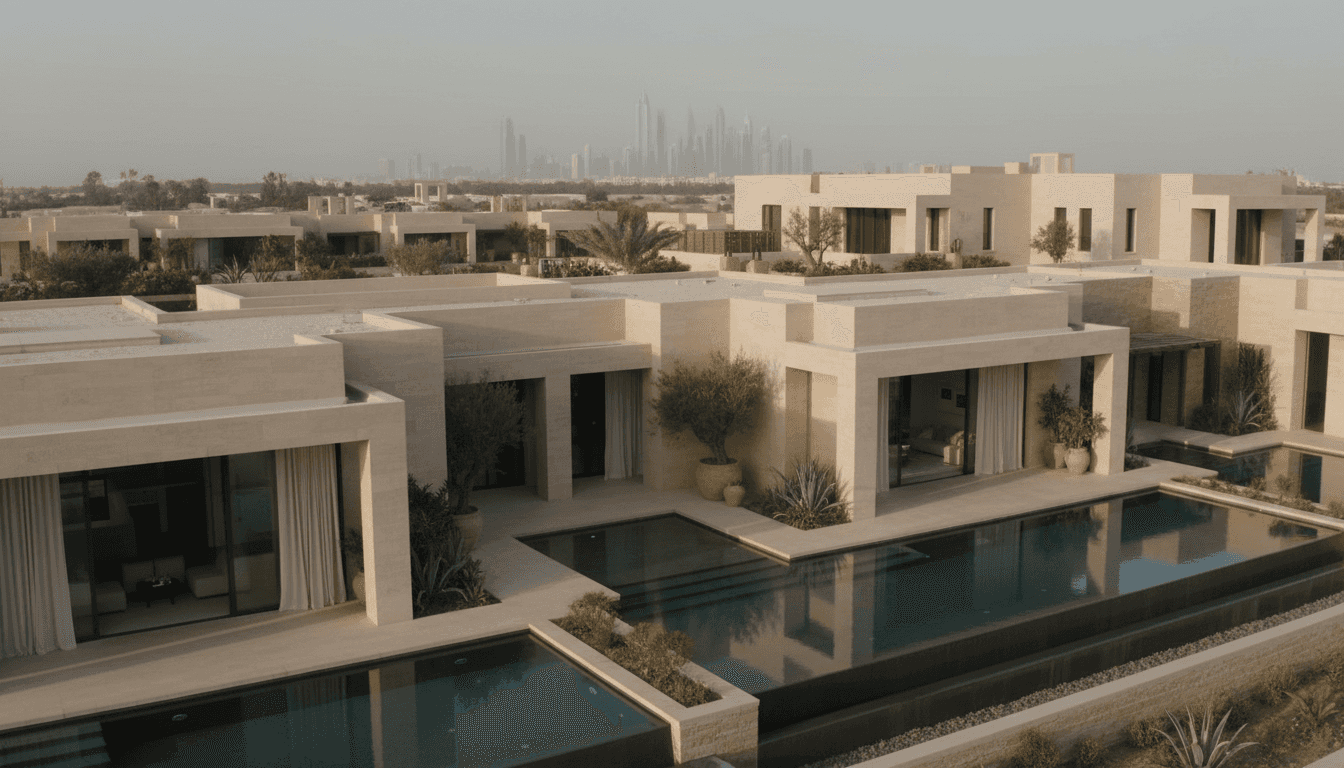
Family offices are no longer passive investors in Dubai property. I explore their strategic shift towards acquiring legacy assets and even entire developments, fundamentally reshaping the city's premium market.

A subtle but powerful shift is underway in Dubai's property market. The quiet capital of family offices, once a secondary force, is now a primary driver of demand at the very highest end. It's a change I've observed not just in transaction volumes, but in the nature of the transactions themselves. The era of simply buying a trophy penthouse is evolving into a more strategic, institutional approach focused on long-term wealth preservation through real estate.
Here's what we'll explore:
- The changing profile of family office investment in Dubai.
- What constitutes a 'legacy asset' in their discerning view.
- The sophisticated legal and financial structures they employ.
- Where this capital is being deployed across the city.
- How their presence impacts individual UHNW investors.
- My forecast for the future of this influential market segment.
The Maturation of Quiet Capital
For years, `Dubai family office investment` was often synonymous with discreet, one-off purchases. A principal might acquire a villa on the Palm Jumeirah for personal use or a full floor in a Downtown tower as a portfolio diversifier. These were significant transactions, but they were fundamentally passive. The strategy was to buy and hold a finished product. Today, the dynamic is different. We are seeing a new class of family office acting more like a private equity fund or a boutique developer, engaging in active asset management, development, and large-scale `premium asset acquisition Dubai`.
What is a family office? In its simplest form, it's a private wealth management advisory firm that serves ultra-high-net-worth (UHNW) families. A Single-Family Office (SFO) serves one family, while a Multi-Family Office (MFO) manages the wealth of several. Dubai, particularly through the Dubai International Financial Centre (DIFC), has actively courted these entities. The DIFC's robust regulatory framework, based on English common law, and specific regulations for family offices have made it a globally competitive hub. This has attracted a wave of international wealth seeking a stable, well-regulated base, and real estate is a primary beneficiary.
The shift I'm observing is from passive consumption to active creation of value. Instead of just buying a villa, a sophisticated family office might now seek to acquire an entire street of villas directly from a developer pre-launch. Instead of one apartment, they might look to purchase multiple floors or even an entire 'shell and core' building to fit out and operate as a high-yield, single-tenanted asset. This is a more patient, more complex, and ultimately more influential form of capital. It’s a move that signals a deep-seated belief in the long-term trajectory of Dubai and a desire to build a lasting footprint, a core tenet of `wealth preservation Dubai property` strategies.
Defining the 'Legacy Asset'
 Featured project
The term 'luxury' is overused in Dubai to the point of being meaningless. For family offices, the focus is not on fleeting luxury but on permanent value. They hunt for what I call 'legacy assets'. A legacy asset is defined by its irreplaceability and enduring desirability. It's a property whose value proposition is so strong that it transcends market cycles. Think of a corner townhouse in Belgravia or a pre-war apartment overlooking Central Park; these are assets whose scarcity and location create a gravitational pull for wealth. Family offices are now applying this same logic to identify and acquire future legacy assets in Dubai.
What qualifies? Scarcity is the primary ingredient. This can manifest in several ways. It could be a beachfront plot on Jumeirah Bay, an island colloquially known as 'Billionaire's Island', where the number of plots is finite and can never be increased. It could be one of the very few private villas on Bluewaters Island, with its direct views of the Ain Dubai and the Marina skyline. In the vertical world, it could be the top two floors of a landmark branded residence, where the combination of altitude, view, brand, and privacy creates a one-of-a-kind offering.
Beyond scarcity, these assets must possess a collection of quality attributes. This includes the reputation of the master developer — think of Emaar Properties or Nakheel, the quality of the build, the calibre of the community management, and the surrounding infrastructure. A `legacy property Dubai investment` is not a speculative bet on an emerging area; it is a calculated acquisition in a location with proven, blue-chip fundamentals. The investment thesis is simple: in a growing city with a constant influx of wealth, the demand for the absolute best and rarest properties will always outstrip supply. Owning these assets is not just about capital appreciation; it's about securing a piece of the city's premier real estate fabric for generations.
Structuring the Investment: The SPV Advantage
Family offices rarely buy high-value property in a personal name. The scale and complexity of their activities demand a more formalised approach, mirroring the methods of `institutional investment Dubai real estate`. The most common vehicle for this is the Special Purpose Vehicle (SPV), typically established within a financial free zone like the DIFC or Abu Dhabi's ADGM. This structure provides a layer of legal separation and liability protection between the ultimate beneficial owner (UBO) and the asset itself.
Setting up an SPV in a free zone is a deliberate choice. It offers several key advantages for `ultra-high-net-worth real estate Dubai` investment:
- Legal Framework: Both DIFC and ADGM operate under English Common Law, which is familiar and trusted by international investors. This provides clarity and predictability in dispute resolution, a critical factor for large-scale capital.
- Ownership: These SPVs can be 100% foreign-owned and can, in turn, own property in Dubai's designated freehold areas. This sidesteps any requirements for local partners, providing the family office with complete control.
- Succession Planning: An SPV structure simplifies inheritance. Ownership is held as shares in the company. Transferring these shares through a will or trust is far more straightforward than navigating the property transfer process for a portfolio of individual assets.
- Confidentiality: While UBO registers exist to prevent illicit activity, the day-to-day ownership structure offers a degree of privacy that is highly valued by UHNW families.
However, this sophistication comes at a cost. Establishing and maintaining such a structure is a significant undertaking. The initial setup process involves legal counsel, registration fees, and meeting substance requirements. Annual running costs include compliance, registered agent fees, and accounting. A family office must weigh these expenses against the benefits of control, liability protection, and succession planning. For a single AED 10 million villa, it might be overkill. For a portfolio worth hundreds of millions, or for an active development project, it is an essential tool of professional wealth management.
The Anatomy of a Large-Scale Acquisition
How does a `premium asset acquisition Dubai` by a family office actually work? The process is markedly different from a standard individual purchase. It begins not with a property search on a portal, but with a strategic mandate. The office's investment committee might decide to allocate, for example, AED 500 million to income-generating residential assets in Dubai. Their in-house team, or a trusted advisory like ours at Gaia Living, is then tasked with sourcing and executing on this mandate.
Sourcing is often off-market. We might approach a developer like Omniyat or Sobha Realty (the developer behind Sobha Hartland and Sobha Hartland II) with a proposal to acquire all the three-bedroom apartments in a new tower before it's even launched to the public. The appeal for the developer is clear: a guaranteed bulk sale de-risks their project, reduces marketing costs, and provides immediate cash flow. For the family office, the benefits are securing the best units at a favourable price point and having a concentration of assets that is easier to manage.
Due diligence is rigorous and institutional in its scope. It goes far beyond a simple snagging report. It involves legal review of the title, technical assessment of the building plans, financial modelling of potential yields and service charges, and a deep dive into the developer's track record and financial stability. This is where the lines between a family office and a private equity firm begin to blur. They are not just buying a home; they are underwriting an investment. The process involves lawyers, accountants, and real estate advisors working in concert to vet the opportunity from every angle. This level of scrutiny is something the Dubai market is adapting to, and it's pushing developers to be more transparent and professional.
Let's consider a hypothetical cost structure for a bulk acquisition of 10 apartments valued at AED 15 million each, for a total of AED 150 million:
- Purchase Price: AED 150,000,000
- Dubai Land Department (DLD) Transfer Fee: 4% of purchase price = AED 6,000,000
- DLD Registration Fees: Approx. AED 4,200 per unit x 10 = AED 42,000
- Agency Fee: Typically 2% of purchase price = AED 3,000,000 (often negotiable on large transactions)
- SPV Setup & Legal Advisory: AED 250,000 - AED 500,000 (depending on complexity)
- Initial Upfront Cost (Approx.): AED 159,300,000
This simplified breakdown excludes financing costs, as many family office transactions are cash-based, but it illustrates the scale. The initial outlay is substantial, and that's before considering furnishing, letting fees, and ongoing operational costs like service charges, which for prime buildings can range from AED 25 to AED 40 per square foot annually.
Hotspots: Where is the Capital Flowing?
Family office capital is discerning and tends to concentrate in a few key areas that meet their criteria for scarcity and long-term value. These are not necessarily the areas with the highest transaction volumes, but those with the highest barriers to entry and the most resilient demand profiles.
Prime waterfront locations remain the undisputed top tier. The 'fronds' of the Palm Jumeirah are a perennial favourite for signature villas. We're seeing family offices acquire multiple adjacent plots to create sprawling private compounds, a trend that speaks to a multi-generational view of wealth. Similarly, the ultra-exclusive Jumeirah Bay has become a global benchmark for UHNW living, with record-breaking land and villa sales driven by this buyer profile. The finite nature of these island communities makes them ideal for wealth preservation.
Beyond villas, branded residences are a major focus. Developments associated with elite hospitality brands in areas like Business Bay, the Marina, and Downtown offer a turnkey solution that appeals to family offices. The brand provides a promise of quality management, superior service, and global recognition, which helps to secure both high rental yields and strong tenant profiles. Here, the strategy is often to acquire entire floors to create a 'vertical family compound' or a portfolio of easily-managed rental units. The work of developers like Omniyat, known for their partnership with the Dorchester Collection, is a prime example of the product that attracts this capital.
“The most sophisticated family offices are no longer just buying property in Dubai; they are buying the optionality that comes with it — the option to develop, to operate, and to create an entire ecosystem around their assets.”
Perhaps the most interesting trend is the move into boutique development. Instead of buying finished products, some of the most forward-thinking family offices are acquiring land or older buildings in established areas like Jumeirah or Al Barsha for redevelopment. They might build a small collection of ultra-luxury townhouses or a bespoke low-rise apartment building. This is the ultimate expression of active investment. It allows them to control the entire process from design to completion, creating a product perfectly tailored to their long-term vision. This is a complex undertaking, requiring deep local knowledge and partnerships, and it is a sign of the ultimate commitment to the Dubai market.
The Ripple Effect on Individual Investors
The growing influence of family offices has significant implications for individual UHNW buyers. On one hand, it creates a more competitive landscape. When a family office engages in a bulk purchase of the best units in a new launch before it even hits the market, it reduces the available inventory for everyone else. This can drive up prices for the remaining premium units and create a sense of scarcity, which we have seen play out in several high-profile launches by developers like Emaar.
This competition forces individual investors to be more decisive and better prepared. In the past, a buyer might have had weeks to deliberate on a high-value purchase. Now, for the most sought-after properties, that window can be a matter of hours. To compete effectively, an individual buyer needs to have their financing in order, their legal advisor on standby, and a clear investment thesis. They need to operate with the same speed and professionalism as a small institution. This is where working with a well-connected brokerage becomes critical, as access to pre-launch information and developer relationships can provide a crucial edge.
On the other hand, the presence of institutional-grade family office capital is a massive vote of confidence in the market's maturity and stability. Their rigorous due diligence and long-term investment horizon help to validate the fundamental value of an area or a project. When a family office commits hundreds of millions of dirhams to a building, it sends a powerful signal to the rest of the market about its perceived quality and future prospects. This can have a positive 'halo effect', lifting the value and desirability of adjacent properties. For an individual who owns a property in a building or community where a family office has a significant stake, it provides a degree of assurance that the asset is being professionally managed and its long-term value is being protected.
The Future Outlook: From Acquisition to Operation
Looking ahead, I believe the trend of family office involvement in Dubai real estate will only accelerate and deepen. We are moving from a phase of pure acquisition to one of active operation and development. The next frontier will be family offices not just buying residential blocks, but also acquiring and managing income-generating commercial assets like boutique hotels, private schools, and niche retail developments. This diversification into operational real estate is a natural evolution for entities focused on creating long-term, stable cash flow for `wealth preservation Dubai property`.
We may also see the emergence of more 'club deals' and co-investment platforms. This is where several family offices pool their capital and expertise to undertake larger and more complex projects than any single office could manage alone. These partnerships allow for risk diversification and access to a wider range of opportunities. The DIFC and ADGM are well-positioned to act as hubs for these co-investment structures, providing the legal and regulatory framework for them to flourish.
For developers, the rise of the family office as a key client group will require a change in mindset. They will need to think more about creating products that appeal to a long-term, institutional owner. This means a greater focus on build quality, energy efficiency, realistic service charges, and robust community management. The short-term focus on maximizing sales velocity will need to be balanced with a long-term focus on creating enduring value. Developers who can successfully make this pivot will be the ones who attract this significant and influential stream of capital in the years to come.
The growing dominance of family offices is a sign of Dubai's evolution into a mature global city. Their institutional approach, focus on legacy assets, and long-term commitment are raising standards across the premium market. For developers, advisors, and individual investors, understanding and adapting to this powerful new force is no longer optional; it is essential for success in the city's next chapter of growth.
Sources
- Dubai Land Department (DLD): dubailand.gov.ae
- Dubai Financial Services Authority (DFSA) within DIFC: difc.ae
- UAE Government Portal (Property Laws): u.ae
Questions, answered
- What kind of Dubai properties do family offices typically invest in?
- Family offices increasingly target 'legacy assets' which offer long-term value and scarcity. This includes entire residential floors or buildings, boutique hotels, large land plots for bespoke development, and unique branded residences in prime locations like Palm Jumeirah or Jumeirah Bay.
- How are family offices changing the Dubai real estate market?
- They are introducing a more institutional, long-term perspective. Their focus on large-scale acquisitions and direct development raises the bar for quality and sophistication, creating a competitive environment for individual ultra-high-net-worth investors and driving demand for truly unique properties.
- Is a family office a good vehicle for investing in Dubai real estate?
- For significant wealth, a family office provides a structured, professional framework for managing large and diverse property portfolios. It allows for strategic tax planning, succession management, and access to off-market deals, but involves significant setup and operational costs.
- What is a 'legacy asset' in the context of Dubai property?
- A legacy asset is a property defined by its irreplaceability, scarcity, and potential for multi-generational wealth preservation. Examples include a waterfront villa on Palm Jumeirah's fronds, a full floor in a landmark tower, or a rare plot of land in an established, prime community.
- What legal structures do family offices use to buy property in Dubai?
- They often use Special Purpose Vehicles (SPVs) established within financial free zones like DIFC or ADGM. These structures offer legal protection, tax efficiency, and operational flexibility, allowing them to hold multiple assets under a regulated and compliant framework.
- How much does it cost to set up a family office in Dubai?
- Setup costs in a free zone like DIFC can range from approximately AED 180,000 to over AED 350,000, covering registration, legal advisory, and initial substance requirements. Annual operating costs for staff, compliance, and administration are significant and can easily run into the hundreds of thousands of dirhams.

Amara translates DLD transaction data, supply pipelines, and macro signals into clear calls on where Dubai's market is heading. She writes the numbers most brokers only feel.
Related stories
Furnished vs. Unfurnished: A Seller's Guide to Maximising Price
I’ll break down whether selling your Dubai property furnished or unfurnished will achieve a higher price, examining the strategic factors that influence the best choice for your specific home.

Unlocking Your Dubai Property Equity
Your Dubai property has likely grown in value. Here's my practical guide on how to access that equity to fund your next investment, step by step.
The Real Taste of Dubai: Dining & Property Value
I explore how a neighbourhood's local, everyday dining scene—not just its Michelin stars—is a powerful and often overlooked driver of property value and desirability in Dubai.
Echoes, in your inbox
One thoughtful email a month. Market insight, new launches, no spam.