

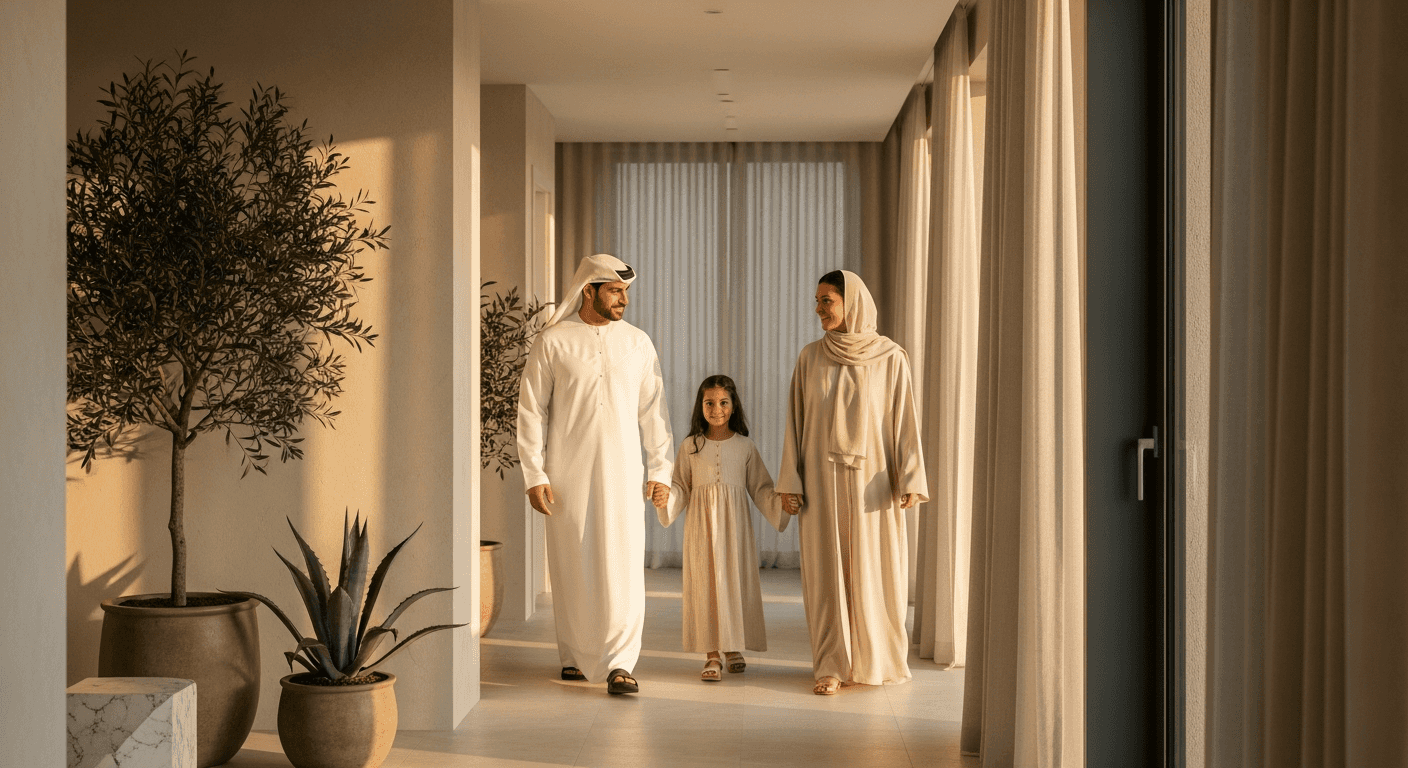
Freehold vs Leasehold: A Dubai Property Guide for Expats
Understanding the difference between freehold and leasehold ownership is the first step for any expat buying property in Dubai. I'll break down what each means for your rights, your finances, and your future in the UAE.

As a first-time buyer specialist at Gaia Living, the first question I always tackle with my clients is the most fundamental: What kind of ownership are you actually buying? In Dubai, the answer isn't always as simple as it is back home. The market is built on two distinct pillars, freehold and leasehold, and the difference between them is everything. It defines your rights, your long-term costs, and ultimately, the nature of your investment in this city.
I’m Hana Suzuki, and in this guide, I’ll walk you through this crucial distinction. My goal is to give you the clarity and confidence you need to make the right choice for your family and your future. For the vast majority of expats putting down roots here, one of these paths is clearly superior, but a true understanding of both is non-negotiable.
Here is what we'll explore together:
- The fundamental difference: Freehold vs. Leasehold explained in simple terms.
- The 2002 law that changed everything for expat property buyers.
- A deep dive into freehold ownership: your rights and responsibilities.
- Understanding leasehold: what you own and for how long.
- The map of opportunity: Exploring Dubai's designated freehold areas.
- A full cost comparison: How ownership type affects upfront and running costs.
- Which is right for you? A framework for making your decision.
- My final verdict for first-time expat buyers in Dubai.
The Big Shift: How Expats Gained the Right to Own
To really understand the system we have today, you have to look back just a couple of decades. Before 2002, the dream of an expat owning property in Dubai was just that — a dream. The market was, with few exceptions, restricted to UAE and GCC nationals. Foreign nationals could live, work, and rent here, but they couldn't own a piece of the city they were helping to build. This created a permanent sense of transience for a large portion of the population. You were always a guest, never a stakeholder.
The turning point was the landmark decision in 2002, later codified into law (specifically Law No. 7 of 2006 concerning Real Property Registration in the Emirate of Dubai), that permitted foreign nationals to buy property. This wasn't a blanket opening, however. It was a carefully designed policy that introduced the concept of designated areas Dubai property. These are specific, master-planned zones where expats could be granted full ownership rights. The government, in a visionary move, effectively created a new market overnight. This single policy shift is arguably the biggest catalyst for Dubai's transformation into the global hub it is today. It sent a powerful message: you can build a life *and* a legacy here.
This new framework for expat property ownership rights Dubai was built on a foundation of security and transparency, overseen by key government bodies. The Dubai Land Department (DLD) became the central registry, the ultimate authority recording every transaction and issuing the all-important Title Deed that proves ownership. Its regulatory arm, the Real Estate Regulatory Agency (RERA), was established to set the rules for developers, brokers, and owners' associations, ensuring a fair and orderly market. This regulated environment is precisely what gives buyers from London, Mumbai, Beijing, and everywhere in between the confidence to invest millions of dirhams into Dubai real estate. It replaced uncertainty with a clear, government-backed system of rights and responsibilities.
Freehold Property in Dubai Explained: Your Asset, Forever
When we talk about buying property in Dubai, what most people envision is freehold ownership. It’s the concept that most closely matches the idea of homeownership in many parts of the world. Put simply, freehold property Dubai explained means you own the property and the land it sits on, outright and forever. There is no time limit. Your name is registered on the Title Deed at the Dubai Land Department, and that ownership is absolute. It can be passed down to your heirs, securing a piece of Dubai for your family's future.
This is the gold standard of ownership. Your rights as a freehold owner are comprehensive. You have the right to sell your property to whomever you choose, at any time, at a price the market will bear. You have the right to lease it out to a tenant and earn rental income. You can choose to live in it yourself. You even have the right to make alterations or improvements to the interior of your property, though you'll need to respect the rules set by the developer and the owners' association for any external changes or major structural work. In essence, it's yours to do with as you wish within the established community guidelines.
One of the most powerful benefits tied to freehold ownership today is its link to long-term residency. Under the current rules, purchasing a freehold property with a value of at least AED 2 million makes you eligible to apply for the UAE Golden Visa. This is a 10-year, renewable residency visa that doesn't require you to be sponsored by an employer. For many of my clients, this is a game-changer. It transforms a property purchase from a simple financial investment into a strategic life decision, providing stability and a clear path to a long-term future in the UAE for them and their families. This visa benefit alone is a major driver of demand for freehold properties in communities like Downtown Dubai and Palm Jumeirah.
Of course, with ownership comes responsibility. As a freehold owner, you are liable for annual service charges. These fees are collected by the owners' association management company to cover the costs of maintaining the common areas of your building or community. This includes security, cleaning, landscaping, swimming pool maintenance, gym upkeep, and general building repairs. Service charges are calculated per square foot of your property's area and can range significantly, from perhaps AED 12 per square foot in more affordable communities to over AED 30 per square foot in premium, high-service towers. It is a recurring cost that must be factored into your annual budget, but it's also what keeps Dubai's communities looking pristine and functioning perfectly.
Leasehold Unpacked: Long-Term Rent with Ownership Perks?
Now let's turn to the other side of the coin: leasehold. It's a term that often causes confusion for first-time buyers, so it's important to be perfectly clear. With leasehold, you are not buying the property outright. Instead, you are buying the right to use the property for a fixed, long-term period. This is typically for 99 years, though other terms like 50 or 30 years can exist. You are essentially paying a large sum upfront for a very long-term rental agreement. The crucial point is that you do not own the land; the land remains the property of the freeholder, who might be a developer, a government-related entity, or a historic land-owning family.
At the end of the lease term, the ownership of the property automatically reverts to the freeholder. Your right to use it expires. This is the single biggest difference between leasehold vs freehold Dubai, and it carries significant financial implications. The value of a leasehold property is intrinsically linked to the number of years remaining on the lease. A property with 95 years left on its 99-year lease is highly valuable and will trade at a price comparable to a similar freehold unit. However, a property with only 25 years left on its lease is a much riskier and less valuable proposition. Its value will have decreased substantially, and securing a mortgage against it will be extremely difficult, if not impossible.
This phenomenon is known as 'lease decay'. As the lease term shortens, the value of the asset erodes, accelerating as it gets closer to the expiration date. This is something many buyers from freehold-only countries fail to account for. While you can sell your leasehold interest to another buyer, they are only buying the remaining years on your lease. A savvy buyer will pay much less for a property with a shorter lease, and this is a critical factor to consider if you are thinking about long-term capital appreciation. While the initial purchase price for a leasehold property might sometimes be lower than a comparable freehold one, this isn't always the case, and any potential saving needs to be weighed against the certainty of future value erosion.
In Dubai's modern residential market, particularly in the designated areas popular with expats, true leasehold properties are far less common than freehold. The vast majority of apartments and villas for sale in master communities developed by major players like Emaar Properties or Nakheel are sold on a freehold basis. You may encounter leasehold structures more frequently in some older commercial districts, in certain industrial zones like Dubai Investment Park, or for plots of land in specific projects. It's essential to have your agent and lawyer confirm the exact nature of the title before you proceed. Never assume; always verify the Title Deed and the DLD records.
For most expats planning a future in Dubai, the choice is clear: freehold ownership isn't just about property, it's about putting down roots.
Mapping Your Future: Dubai's Designated Freehold Areas for Expats
So, where exactly can an expat buy a freehold property? The ability to own is not city-wide; it is confined to specific, government-approved master communities known as freehold areas Dubai for expats. This zoning approach was a deliberate strategy to concentrate development, infrastructure, and amenities, creating world-class living environments that would attract global talent and investment. Today, there are dozens of these designated zones across the city, offering a huge variety of lifestyles and price points. From glittering skyscrapers to tranquil, tree-lined suburbs, there is a freehold community for every taste and budget.
When clients ask me where to start their search, I often categorize the main areas by lifestyle. This helps narrow down the options from a list of over 50 potential locations to a manageable shortlist. Think about the life you want to live in Dubai, and there will be a freehold area to match.
Here are some of the most popular freehold destinations we see at Gaia Living:
- Iconic Urban Living: For those who want to be in the heart of the action, with dazzling views and everything at their doorstep, I always point to Dubai Marina and Downtown Dubai. The Marina offers a vibrant, waterfront lifestyle surrounded by restaurants and yachts, while Downtown is the cultural and entertainment core, home to the Burj Khalifa and Dubai Mall. Both are dominated by high-rise apartments and command premium prices for their location and prestige.
- Prime Beachfront: If the dream is to live by the sea, Palm Jumeirah is the global icon, offering a mix of ultra-luxury villas, townhouses, and apartments. Newer beachfront hotspots include Emaar Beachfront and Bluewaters Island, which offer modern apartments with direct beach access and stunning sea views.
- Family-Centric Suburbs: For families seeking more space, greenery, and a strong sense of community, the villa communities are unparalleled. Dubai Hills Estate is a personal favorite of mine for its central location, championship golf course, and excellent schools. Arabian Ranches was one of the original pioneers of this concept and remains incredibly popular, while communities like Jumeirah Golf Estates appeal to keen golfers and those who appreciate lush, green landscapes.
- Emerging & Value-Oriented: Not every freehold property comes with a seven-figure price tag. Dubai's market has matured to offer excellent quality at more accessible price points. Areas like Jumeirah Village Circle (JVC) and Town Square offer a wide range of affordable apartments and townhouses. Dubai South, the area around the Al Maktoum International Airport and the Expo City site, is another key growth zone with many new, competitively priced freehold options from top developers.
These are just a handful of examples. The map of freehold Dubai is constantly expanding, with new communities and even entire 'cities' being launched. The key takeaway for any expat buyer is that your choice is vast. You are not limited to one or two towers; you can choose from dozens of fully-formed communities, each with its own distinct character, amenities, and price structure. The crucial first step is to confirm that any property you are considering falls within one of these designated freehold zones.
The Bottom Line: A Full Cost Comparison
Understanding the financial reality of a property purchase is paramount. Beyond the headline price, there are a number of associated costs you must budget for. These fees apply to most transactions in Dubai, but let's break them down in the context of a typical freehold purchase, which is what the majority of my clients undertake. The upfront costs for a leasehold transaction would be broadly similar, as the registration process with the DLD still incurs fees, but the long-term financial picture is very different due to lease decay.
Let’s walk through a realistic, line-by-line cost breakdown for an expat buying their first property with a mortgage. This is the most common scenario I encounter. We'll use a hypothetical freehold apartment in a popular community like JVC or Business Bay as our example.
Worked Example: Buying an AED 2,000,000 Freehold Apartment with a Mortgage
- Property Purchase Price: AED 2,000,000
- Down Payment: According to Central Bank of the UAE regulations, for a first property under AED 5 million, an expat must pay a minimum of 20% down. However, many banks have slightly stricter criteria, and it's wise to budget for 25%. So, 25% of AED 2,000,000 = AED 500,000
- Dubai Land Department (DLD) Transfer Fee: This is a mandatory 4% of the purchase price. 4% of AED 2,000,000 = AED 80,000
- Agency Fee: The standard fee for a real estate broker in Dubai is 2% of the purchase price, plus 5% VAT on the fee. 2% of AED 2,000,000 is AED 40,000. 5% VAT on that is AED 2,000. Total = AED 42,000
- Mortgage Registration Fee: The DLD charges a fee to register your mortgage against the property's Title Deed. This is 0.25% of the loan amount. Your loan is AED 1,500,000 (80% LTV), so the fee is AED 3,750.
- Bank Fees: Your lender will charge fees for processing the mortgage. This can include an arrangement/processing fee (often up to 1% of the loan amount, so ~AED 15,000) and a property valuation fee (AED 2,500 - AED 3,500). Let's budget AED 18,500.
- Trustee Office Fee: When buying a property with a mortgage, the transaction must be handled by a DLD-approved Registration Trustee. Their fees are fixed. For a property over AED 500,000, this is AED 4,000 + 5% VAT = AED 4,200.
- No Objection Certificate (NOC) Fee: This is a fee paid to the developer to certify that there are no outstanding service charges on the property. It can range from AED 500 to AED 5,000, but a typical fee is around AED 1,000.
Total Upfront Cash Required: Let's add it all up: AED 500,000 (Down Payment) + AED 80,000 (DLD Fee) + AED 42,000 (Agency Fee) + AED 3,750 (Mortgage Reg Fee) + AED 18,500 (Bank Fees) + AED 4,200 (Trustee Fee) + AED 1,000 (NOC) = AED 649,450.
As you can see, to buy an AED 2 million property, you need nearly AED 650,000 in cash on hand. A good rule of thumb is to budget for approximately 8% of the property value in additional fees on top of your down payment. This transparency is vital. There are no hidden costs, but you must be prepared for them. The long-term financial implication for freehold is that while you have these upfront costs and ongoing service charges, the asset you hold has the potential for uncapped capital appreciation. With leasehold, you face the same transaction costs but are buying an asset with a built-in expiration date and depreciating value over its lifecycle.
Making the Choice: A Framework for Expat Buyers
Now that you understand the mechanics of freehold and leasehold, the costs involved, and the map of available areas, how do you decide what's right for you? As with any major life decision, it comes down to your personal circumstances and long-term goals. I guide my clients through this by asking a few simple but crucial questions. Your answers will almost always point you clearly in one direction.
First, what is your time horizon in Dubai? Are you here for a specific project for 2-3 years, or do you see yourself and your family living in the UAE for the next 10, 15, or even 20 years? If your horizon is long-term, the case for freehold becomes overwhelming. You want the security of a permanent asset, the freedom to renovate and make it truly your own, and the ability to pass it on. The risk of lease decay on a leasehold property becomes a major issue over a 15+ year timeline.
Second, what is your primary goal for this purchase? Is it a home for your family to live in and grow? Is it a pure investment asset to generate rental income and capital gains? Or is it a strategic move to secure long-term residency via the Golden Visa? If it's a family home, stability and perpetuity are paramount, again favoring freehold. If it's purely for investment, the math gets more complex, but the vast majority of stable, high-quality residential investment opportunities with strong rental demand, like those in Dubai Hills or Creek Harbour, are freehold. And if the Golden Visa is a key driver, the answer is simple: the property must be freehold to qualify, with a value of AED 2 million or more.
Finally, what is your appetite for complexity and risk? Freehold is straightforward. You own it. The concept is simple, financing is standardized, and the resale market is liquid and easy to understand. Leasehold introduces complexity. You need to understand the remaining term, model the lease decay, scrutinize the terms of the lease agreement, and accept that your asset has a finite life. For a first-time buyer, especially an expat navigating a new market, I believe simplicity is a virtue. The regulated and transparent freehold system in Dubai's designated areas was designed specifically to remove complexity and provide peace of mind.
Key takeaway: For nearly every expat residential buyer in Dubai — whether you're looking for a family home, a solid investment, or a path to the Golden Visa, freehold ownership is the superior choice. It offers security, simplicity, and a true stake in the future of the city, without the inherent depreciation of a leasehold asset.
My Verdict: Why Freehold is the Gold Standard for Expats
After years of guiding hundreds of expats through their first property purchase in Dubai, my conclusion is unequivocal. For the residential buyer, the leasehold vs freehold Dubai debate has a clear winner: freehold is the gold standard, and it's not even close.
My advice to my clients is almost always to focus their search exclusively on freehold properties. The advantages are simply too compelling to ignore. You get ownership in perpetuity, an asset you can pass down through generations. You get full control to sell, lease, or renovate as you see fit (within community rules). You gain access to a straightforward and competitive mortgage market from a wide range of banks. You unlock the potential for uncapped capital appreciation as Dubai continues to grow. And, crucially, you get a clear pathway to long-term residency with the Golden Visa, providing a level of stability that was once unimaginable for foreign nationals in the region.
This is not to say that leasehold has no place. It exists for valid reasons in certain commercial, industrial, or historical contexts. But for the family looking for a villa in Arabian Ranches, the young professional buying an apartment in JBR, or the investor seeking a high-yield unit near Expo City, the complexities and financial risks of leasehold — specifically the inevitable depreciation of lease decay, far outweigh any perceived benefit. The very foundation of Dubai's global property appeal is built upon the security and transparency of its freehold system. It’s what provides international buyers with the confidence to invest here.
Buying your first home in a new country is a monumental step. It's my job to make that process as clear and secure as possible. By focusing on freehold properties in Dubai's well-regulated designated areas, you are not just buying a home; you are making a sound, strategic investment in your future. It's the smartest way to put down roots and build equity in one of the most dynamic cities in the world. Here at Gaia Living, we are ready to guide you through every step of that journey, from identifying the right freehold community to handing you the keys to your new home.
Sources
- Dubai Land Department (DLD): https://dubailand.gov.ae/
- Central Bank of the UAE (CBUAE): https://www.centralbank.ae/en/
- UAE Government Portal: https://u.ae/en/
Questions, answered
- Can a foreigner buy a house in Dubai and own it forever?
- Yes, a foreigner can buy and own a house forever in Dubai through freehold ownership. This is permitted in specific 'designated freehold areas' where you get full ownership of the property and the land it's on, registered in your name with the Dubai Land Department.
- What is the main difference between freehold and leasehold in Dubai?
- The main difference is perpetual ownership versus a fixed term. With freehold, you own the property and land outright, forever. With leasehold, you only have the right to use the property for a long but finite period (e.g., 99 years), after which ownership reverts to the freeholder.
- Is it better to buy freehold or leasehold property in Dubai?
- For most expats, especially those looking for a long-term home or investment, freehold is significantly better. It offers permanent ownership, greater control, eligibility for the Golden Visa, and avoids the value depreciation ('lease decay') that affects leasehold properties as their term shortens.
- What happens when a 99-year lease expires in Dubai?
- When a 99-year lease expires, the right to the property reverts to the original freeholder (the landlord). The leaseholder's ownership ceases. While lease renewals may be possible, they are not guaranteed and would require a new agreement and payment.
- How much does it cost to buy a freehold property in Dubai besides the price?
- On top of the property price, you should budget for an additional 7-8% in upfront costs. This typically includes the 4% Dubai Land Department (DLD) transfer fee, 2% agency fee (+VAT), trustee and admin fees, and mortgage-related costs if you are financing.
- Does buying a freehold property in Dubai give you residency?
- Yes, it can. If you purchase a freehold property with a value of AED 2 million or more (without a mortgage or with a mortgage on the amount above 50% of the property value), you become eligible to apply for a 10-year renewable Golden Visa, which is a significant benefit for expats.

Hana demystifies the buying journey for first-timers and expats — mortgages, visas, escrow, and the paperwork. No jargon, no assumptions.
Related stories
Dubai's Established Charm: The Case for Older Homes
In a city focused on the future, I believe the smartest move for many buyers is to look back. Dubai's seasoned communities offer space, character, and surprising value that new builds often can't match.
The True Cost of Owning a Dubai Property
Beyond the purchase price, your annual budget for a Dubai home must account for service charges, utilities, and maintenance. I'll break down every ongoing expense you need to plan for.
Calculating ROI on Dubai Rental Upgrades
As a landlord in Dubai, you can't just follow trends. I'll show you how to calculate the precise ROI of minor property upgrades to genuinely increase your rental yield.
Echoes, in your inbox
One thoughtful email a month. Market insight, new launches, no spam.