


Exit Strategy: The Key to Total Return in Dubai Property
Many investors focus only on annual rental yield. I'll explain why your exit strategy and understanding total return are far more critical for a successful Dubai property investment.

Every week, I speak with investors drawn to Dubai by headlines promising spectacular rental yields. But fixating on gross annual yield is one of the biggest mistakes you can make. It’s an incomplete, often misleading, vanity metric that ignores the single most important factor in your investment's success: your exit.
Here’s a more realistic framework for thinking about your investment's performance. We'll explore:
- Why gross yield is a flawed metric and how to calculate your true net yield.
- The critical difference between rental income and long-term capital appreciation.
- A detailed breakdown of the real costs you'll face when it's time to sell your property.
- How your investment timeline dramatically impacts your returns.
- The concept of liquidity and why it should shape your purchase decision.
- Crafting a deliberate Dubai property exit strategy from day one.
The Seduction of Gross Yield
It’s easy to see the appeal. An agent shows you a one-bedroom apartment in Jumeirah Village Circle (JVC) for AED 900,000 that rents for AED 72,000 a year. A quick calculation on your phone shows an 8% gross yield. Compared to returns from traditional asset classes in other parts of the world, this sounds phenomenal. Many investors stop their due diligence right there. This is a foundational error.
Gross yield is simply the annual rent divided by the purchase price. It tells you nothing about your actual cash flow or ultimate profit. It's a marketing number, not an investment metric. To get closer to reality, you must focus on net yield. This figure accounts for all the recurring expenses you will incur as a landlord. These costs are not trivial and they directly eat into your returns.
Service charges are the most significant recurring cost. These fees, paid to the owners' association, cover the maintenance of common areas, security, swimming pools, and building insurance. In Dubai, they can range from as low as AED 12 per square foot in more affordable communities to over AED 30 per square foot in premium towers with extensive amenities, like those in Dubai Marina. On a 1,000 sq. Ft. apartment, that’s a difference of AED 18,000 per year. Suddenly, that 8% gross yield looks very different. You also need to factor in property management fees (typically 5-7% of rent), potential vacancies, and minor maintenance costs.
But even a carefully calculated net yield is only half the story. It represents the operational cash flow of your asset, but it completely ignores the other, often larger, component of your return: capital appreciation. The total return real estate Dubai investors should be chasing is a combination of net rental income over the holding period *plus* the change in the property's value when they sell. And to calculate that final number, you have to subtract the costs of selling, which are substantial. Without considering the end of the investment lifecycle, you're flying blind.
Deconstructing Yield: From Gross to Net Reality
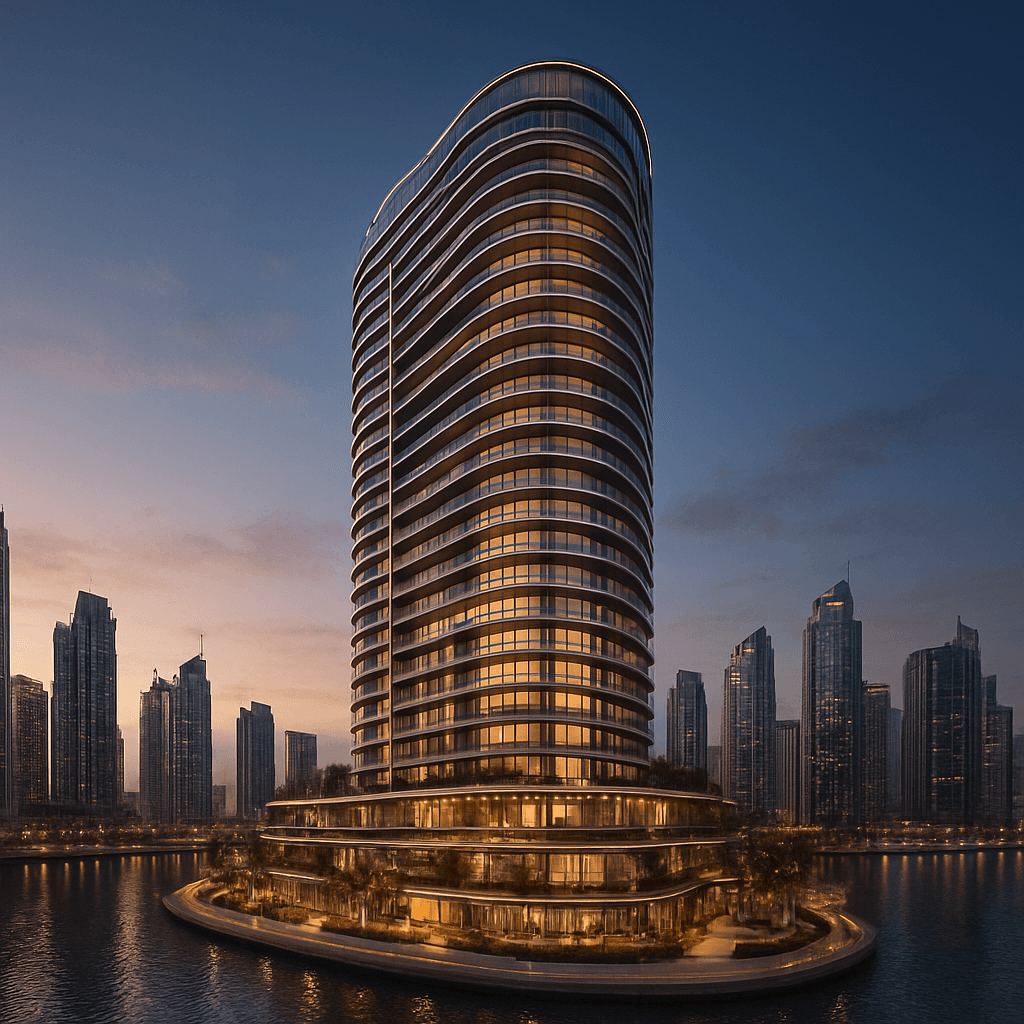 Featured project
Let's get pragmatic and work through the numbers. A clear understanding of your true, in-pocket return is the first step towards making a sound investment decision. The gap between the advertised gross yield and the actual net yield can be shockingly wide. It is essential to build a realistic financial model before you sign any contract.
Let’s use our example of the one-bedroom apartment in JVC. We'll assume a purchase price of AED 900,000 and an annual rent of AED 72,000. This gives us the attractive 8.0% gross yield.
Now, let's inject a dose of reality by calculating the net yield. Here are the typical annual running costs a landlord in Dubai can expect: - Service Charges: JVC has moderate service charges. A reasonable estimate for a decent building might be AED 16 per sq. Ft. For an 800 sq. Ft. one-bedroom unit, this comes to AED 12,800 per year. - Property Management: Unless you live in Dubai and want to handle tenant calls yourself, you'll hire a manager. A standard fee is 5% of the annual rent. On AED 72,000, that’s AED 3,600. - Vacancy/Contingency: Even in a strong market, you should budget for small gaps between tenants or unexpected repairs. A conservative budget of 2% of the rent (AED 1,440) is prudent.
Let’s total these annual costs: AED 12,800 (Service Charges) + AED 3,600 (Management) + AED 1,440 (Contingency) = AED 17,840.
Now, we subtract these costs from your gross rental income: AED 72,000 - AED 17,840 = AED 54,160 (Net Rental Income).
To find the net yield, we divide this net income by the purchase price: (AED 54,160 / AED 900,000) * 100 = 6.02% Net Yield.
That 8% figure has quickly dropped to 6%. This is still a very respectable return, but it’s a full 25% lower than the headline number. This single calculation demonstrates why you can't take advertised yields at face value. In more premium areas with higher service charges, the difference can be even more pronounced. An apartment in Downtown Dubai might offer a 5% gross yield, but with service charges at AED 25 per sq. Ft., the net yield could easily fall below 3%. This is the basic arithmetic every serious investor must do.
The Real Cost of Selling Your Dubai Property
The most overlooked aspect of an investment plan is the cost of exiting it. While investors spend weeks analysing purchase costs, they often assume selling is a simple, low-cost process. In Dubai, this assumption is dangerously wrong. The selling costs impact investment Dubai returns significantly, and failing to budget for them can erase a surprising amount of your hard-won capital gains.
Let’s assume you hold the JVC apartment for five years and its value appreciates by 30% to AED 1,170,000. Your gross capital gain is AED 270,000. A fantastic result. But you don't get to keep all of it. Before you see a dirham, you must settle the transaction costs associated with the sale. These are mandated by Dubai's regulatory framework and are largely non-negotiable.
Here’s a line-by-line breakdown of what it will cost to sell that AED 1,170,000 apartment:
- Dubai Land Department (DLD) Transfer Fee: 4% of the sale price. This is the largest single cost. (4% of 1,170,000 = AED 46,800). While typically split between buyer and seller in theory, market practice often sees the buyer cover this. However, for a conservative total return calculation, you should understand it exists and could be a point of negotiation.
- Agency Fee: 2% of the sale price + 5% VAT. This is the commission you pay to the real estate agency that finds you a buyer. (2% of 1,170,000 = AED 23,400. VAT on fee = AED 1,170. Total = AED 24,570).
- Trustee Office Fee: This is a fixed fee for handling the administrative transfer process. It's typically around AED 4,200 (including VAT).
- Developer No-Objection Certificate (NOC) Fee: Before you can sell, the master developer (in this case, likely Nakheel or another) must issue a certificate confirming you have no outstanding service charges. Fees range from AED 500 to AED 5,000. Let's budget a conservative AED 1,500.
- Mortgage Settlement Fee (if applicable): If you have a mortgage, your bank will charge an early settlement fee, usually 1% of the outstanding balance, capped at AED 10,000. For our example, let's assume you're a cash buyer to keep it simple.
Total Estimated Exit Costs: `AED 46,800 (DLD) + AED 24,570 (Agency) + AED 4,200 (Trustee) + AED 1,500 (NOC) = AED 77,070`
Suddenly, your AED 270,000 gross profit is reduced by over AED 77,000. Your net capital gain is actually AED 192,930. These exit costs have consumed more than 28% of your profit. This is why a short-term 'flip' strategy is so risky in Dubai. Unless you achieve massive capital appreciation in a very short time, the fixed transaction costs on both entry (4% DLD fee, 2% agency fee) and exit can wipe out your entire gain.
Weaving It All Together: Calculating Total Return
Now we have all the components: net rental income, capital appreciation, and exit costs. We can finally calculate the metric that truly matters: Total Return on Investment (ROI). This figure tells you the complete story of your investment's performance over its entire lifecycle.
Let's continue with our JVC apartment example, held for a five-year period.
1. Total Net Rental Income: We calculated the annual net rental income to be AED 54,160. Over five years, assuming no rent increases for simplicity, this totals: 5 x AED 54,160 = AED 270,800.
2. Net Capital Gain: We calculated the gross gain was AED 270,000 and the exit costs were AED 77,070. So, the net gain is: AED 270,000 - AED 77,070 = AED 192,930.
3. Total Net Profit: This is the sum of the net rental income and the net capital gain. AED 270,800 + AED 192,930 = AED 463,730.
This is the actual profit in your pocket after five years, before considering any financing costs or taxes in your home country. To find the total ROI, we compare this profit to your initial total investment. Remember, your initial investment wasn't just the AED 900,000 purchase price. You also paid acquisition costs.
Initial Investment Costs: - Purchase Price: AED 900,000 - DLD Fee (4%): AED 36,000 - Agency Fee (2% + VAT): AED 18,900 - Trustee Fee: ~AED 4,200 - Total Initial Outlay: AED 959,100
Now, we can calculate the Total ROI: (Total Net Profit / Total Initial Outlay) * 100 (AED 463,730 / AED 959,100) * 100 = 48.35% over five years.
To annualise this, a simple average would be 9.67% per year. This is a powerful and realistic number. It is far more meaningful than the 8% gross yield we started with. It's also clear from this calculation that both streams of return — rent and appreciation, were vital. Relying on one alone would have produced a much weaker result. This comprehensive calculation is the only way to accurately compare different properties and strategies.
The Critical Role of Your Investment Horizon
The previous calculation highlights an essential variable: time. The investment horizon rental yield Dubai dynamic is crucial because of the high fixed transaction costs. As we saw, buying and selling a property in Dubai can cost you a combined 10-12% of the property's value in fees. To overcome this hurdle, you need to give your investment enough time to perform.
Consider a short-term flip. Imagine you buy the same JVC apartment and the market has a great year, with the value rising 15% to AED 1,035,000. Your gross gain is AED 135,000. Your entry costs were ~AED 59,100. Your exit costs would be ~AED 67,000. Your total transaction costs are therefore ~AED 126,100. Your net profit on the capital gain is a mere AED 8,900. You've also collected one year of net rent (AED 54,160). Your total profit is AED 63,060 on an investment of nearly a million dirhams. The risk you took for that return was immense.
A longer investment horizon changes the entire equation. Over five or ten years, the impact of those fixed entry and exit costs is amortised over a much larger base of accumulated rent and, hopefully, more substantial capital growth. The market has time to go through cycles, and your property has time to mature in value. A five-year hold, as in our main example, is a reasonable minimum for a rental property investment in Dubai. A ten-year horizon is even better, especially for well-located assets in master-planned communities by developers like Emaar Properties or Meraas.
This long-term view should influence the type of property you buy. If you're planning to hold for a decade, you should prioritise quality of construction, the reputation of the developer, and the long-term appeal of the community. An apartment in a sought-after area like Al Barari or a villa in Arabian Ranches may offer a lower net yield today compared to a cheaper unit in a peripheral area. However, its potential for long-term, stable capital appreciation is likely far greater due to its enduring desirability for end-users. Short-term thinking leads to chasing high yields in secondary locations, which can backfire if the area doesn't mature as expected.
Liquidity: Can You Sell When You Want To?
Profit on paper is meaningless if you can't convert it to cash. This brings us to the concept of liquidity rental property Dubai. Liquidity refers to how quickly and easily you can sell your asset at or near its fair market value. In real estate, this is paramount. A lack of liquidity can trap your capital, force you to sell at a discount, and completely derail your exit strategy.
Not all Dubai properties are created equal in this regard. The most liquid assets are typically standard-configuration apartments and townhouses in large, well-established, and popular communities. Think of a two-bedroom apartment in Dubai Marina, a one-bedroom in Downtown, or a three-bedroom townhouse in Arabian Ranches. There is a deep, constant pool of both end-user and investor buyers for these properties. When you decide to sell, you can be confident that, if priced correctly, you will have multiple offers within a few weeks.
On the other end of the spectrum are unique, niche, or ultra-luxury properties. A massive custom-built villa on Palm Jumeirah with bespoke finishes, a full-floor penthouse, or a property in a small, obscure project has a much smaller pool of potential buyers. These assets are illiquid. They may take six months, a year, or even longer to sell. To exit, you might be forced to accept an offer significantly below what you believe is the market value simply to free up your capital. This illiquidity risk must be priced into your investment decision.
“The best investment properties are often 'boring'. They are standard, in-demand layouts in highly popular communities. These are the assets that give you the most crucial advantage: the flexibility to exit on your own terms.”
This is also a critical consideration for off-plan launches. An off-plan unit from a top-tier developer like Emaar in a master community like Creek Harbour is generally very liquid, even before handover. There's a robust secondary market for these contracts. However, an off-plan unit from a lesser-known developer in an isolated location with no existing infrastructure carries immense liquidity risk. If the market softens, or the developer's reputation falters, you may find it impossible to sell your contract (an 'assignment sale') without taking a significant loss. Always ask yourself: Who is my buyer in five years? If the answer isn't immediately obvious, you may be looking at a liquidity trap.
Crafting Your Exit Strategy from Day One
A Dubai property exit strategy isn't something you think about when it's time to sell. It's something you must have clearly defined before you even start looking at properties to buy. Your exit plan dictates the type of property you buy, the location you choose, the investment horizon you set, and how you structure the purchase. It is the beginning, not the end, of your investment journey.
There are several common exit strategies for Dubai real estate investors. Each has its own risk profile and is suited to different types of properties and market conditions.
1. Long-Term Hold for Rental Income & Appreciation: This is the classic, most common strategy, which we have modelled throughout this article. You buy a property in a quality, high-demand area, rent it out for an extended period (5-15 years), and then sell to realise your capital gains. This strategy works best with prime and near-prime assets in established communities. Your exit is timed based on reaching a financial goal or a change in life circumstances, rather than trying to time the market peak.
2. Off-Plan Flip (Assignment Sale): This is a higher-risk, shorter-term strategy. You buy a property off-plan directly from a developer, often with an attractive payment plan. The goal is to sell the contract to another buyer before the project is completed and the final, larger payments are due. Success depends on buying in a sell-out project in a prime location and a rising market. If the market stagnates, you could be forced to complete the purchase yourself or sell at a loss. The key here is securing a No-Objection Certificate (NOC) from the developer, which they typically only grant after 30-40% of the price has been paid.
3. Renovate and Sell ('Fix-and-Flip'): This strategy is less common in Dubai due to the abundance of new-build properties, but it can be effective. It involves buying an older, dated property in a prime location — like a villa in The Meadows or an apartment in the original six towers of Dubai Marina, renovating it to modern standards, and selling it for a premium. This requires expertise in project management and local construction costs. The risk lies in over-capitalising, where your renovation costs exceed the value they add.
Your chosen strategy must align with your financial situation and risk tolerance. A cash buyer with a long-term outlook can comfortably pursue the first strategy. A younger investor with less capital might be tempted by an off-plan payment plan, but they must fully understand the liquidity and market risks involved. Before you buy, write down your plan: "I am buying this property with the intention of holding it for 7 years and selling to fund my retirement. My target sale price is X, and I will reconsider my position if the net yield drops below Y%." This simple exercise brings discipline and clarity to your decision-making.
Your property's gross yield is a starting point, not a conclusion. True investment analysis requires calculating the net yield after all running costs, modelling your total return over a realistic investment horizon, and ruthlessly accounting for the high transaction costs of both buying and selling. The most successful investors in Dubai are not just buyers; they are strategic sellers from the moment they acquire an asset.
At Gaia Living, our role is to help clients with this complete, 360-degree view. We don't just find you a property; we help you analyse its potential for total return real estate Dubai, understand its liquidity, and build a pragmatic exit strategy that aligns with your long-term financial goals. It’s this disciplined, numbers-first approach that separates speculation from genuine investment.
## Sources - Dubai Land Department (DLD): dubailand.gov.ae - Real Estate Regulatory Agency (RERA): dubailand.gov.ae/en/about-dld/our-sectors/real-estate-regulatory/ - UAE Government Portal (Property Laws): u.ae/en/information-and-services/business/dubai-business-law/property-and-real-estate-legislation-in-dubai
Questions, answered
- What is 'total return' in Dubai real estate?
- Total return is the complete profit or loss on an investment over its entire lifetime. It includes your net rental income (rent minus all costs) plus your capital appreciation (the profit from selling), minus all transaction costs for both buying and selling.
- How much does it cost to sell a property in Dubai?
- Expect selling costs to be around 6-7% of the property's sale price. This typically includes the 4% Dubai Land Department transfer fee, a 2% agency fee, and miscellaneous fees for the Trustee office, NOC, and mortgage settlement if applicable.
- Is it better to focus on rental yield or capital appreciation in Dubai?
- Neither should be viewed in isolation. A balanced strategy targeting both strong net rental yields and the potential for capital appreciation usually provides the best total return. High-yield areas may have lower appreciation, while prime areas may have lower yields but stronger long-term growth.
- What is a good investment horizon for a Dubai rental property?
- A medium to long-term horizon of 5-10 years is generally advisable. This allows you to ride out market cycles, accumulate significant rental income, and ensure your capital appreciation is substantial enough to comfortably cover the high entry and exit transaction costs.
- How does liquidity affect my Dubai property investment?
- Liquidity is how quickly you can sell your asset for cash. A standard, well-priced apartment in a popular community like Dubai Marina is highly liquid. A unique, ultra-luxury villa or a property in a less-developed area has lower liquidity, meaning it may take longer to sell, impacting your ability to exit at your desired price and time.
- Can I sell my Dubai property before it's completed?
- Yes, you can sell an off-plan property in Dubai once you have paid a certain percentage of the purchase price (typically 30-40%) and have your Oqood registration. This is known as an assignment sale, but it comes with its own set of risks and developer approvals (NOC).

Marcus is all about cash flow — gross vs net yields, short-term vs long-term lets, and the RERA rental index. He writes for landlords and income investors.
Related stories
Buying in Dubai By Selling Assets Abroad
A detailed guide on how to strategically sell your international property or investments to fund your home purchase in Dubai. I'll walk you through the entire process, from legal and tax considerations to transferring funds and proving their origin.

The Professional's Retreat: Dubai Villas for Work & Family
For professionals balancing careers and family, finding the right Dubai villa is crucial. I explore the communities that masterfully blend dedicated home offices with exceptional family living.

Mastering the Deal: Negotiating Beyond Price in Dubai
As a seller, the final price is just one part of the deal. True mastery lies in negotiating favorable terms that can save you time, money, and stress, creating a much more profitable outcome.
Echoes, in your inbox
One thoughtful email a month. Market insight, new launches, no spam.