

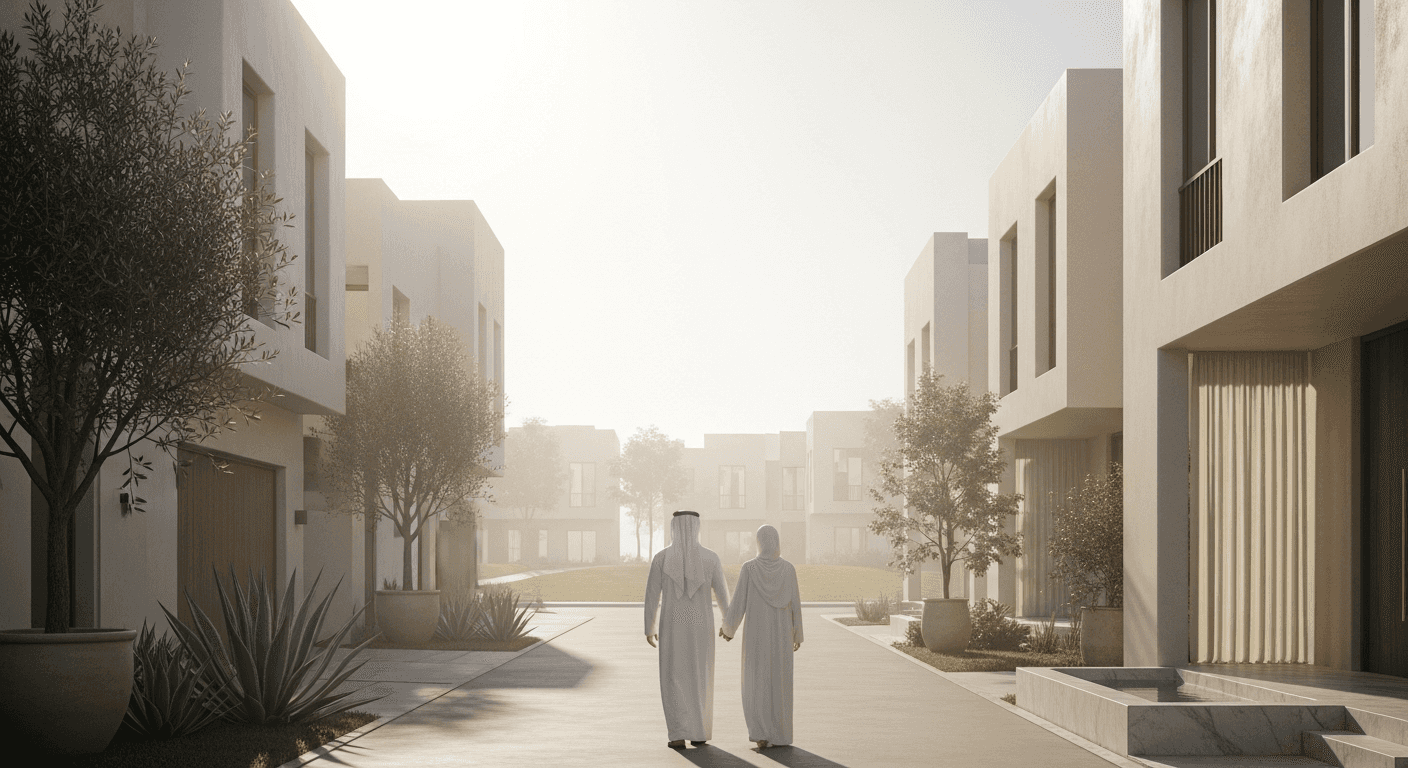
Emaar’s New Strategy: Beyond Downtown
I'm decoding Emaar’s latest master-planned community launches. This isn't just about new properties; it's a fundamental shift in Dubai real estate strategy, moving from iconic towers to sprawling lifestyle destinations.

As a market observer, I've learned that when Emaar Properties makes a move, it's not just a ripple; it's a signal of a coming tide. Their latest series of high-profile, large-scale launches represents one of the most significant strategic pivots I've seen from the master developer in years. We're witnessing a deliberate shift away from the model that defined them — the singular, world-beating skyscraper, and towards something more expansive, more integrated, and, frankly, more ambitious.
Here's what we'll explore in this analysis:
- Emaar's foundational role in shaping modern Dubai.
- The core of their strategic pivot: from vertical icons to horizontal cities.
- Case Study 1: The Oasis, and the new definition of 'ultra-luxury'.
- Case Study 2: Rashid Yachts & Marina, reimagining waterfront living.
- Emaar's expansion beyond Dubai's borders, particularly in Ras Al Khaimah.
- The financial mechanics that power these mega-launches.
- My take on what this developer launch analysis reveals about Dubai's future.
- A final verdict on who stands to benefit from this new chapter.
Emaar's Enduring Legacy: The Foundation of Modern Dubai
To understand where Emaar is going, we must first acknowledge where they've taken Dubai. It’s impossible to discuss the city’s real estate landscape without placing Emaar at the very center. They didn't just build properties; they built the postcodes that define the modern city. Think of Downtown Dubai. It wasn't just about building the Burj Khalifa; it was about creating an entire ecosystem around it — the Dubai Mall, the Opera District, the Fountains, and a dense network of premium residential towers. They took a patch of sand and engineered a global landmark, a place that is as much a tourist destination as it is a prime residential address. This ability to create a 'center of gravity' is the core of their DNA.
Then there's Dubai Marina, a masterclass in creating a lifestyle out of thin air. They dredged a canal, lined it with promenades, cafes, and more than 200 towers, and created one of the most vibrant and sought-after communities in the world. It set the global benchmark for man-made waterfront living. In parallel, for families seeking a different pace, they developed Arabian Ranches. This project pioneered the concept of the gated, suburban villa community in Dubai, complete with golf courses, schools, and community centers. It offered a vision of tranquil family life that became a blueprint for countless other developments across the city.
This trifecta — Downtown for urban spectacle, the Marina for waterfront dynamism, and the Ranches for suburban tranquility, formed the pillars of Emaar's brand. Each was a master-planned community in its own right, but they were also distinct concepts targeted at different demographics. The common thread was quality of execution, long-term master planning, and an unerring ability to deliver on a vision. This track record is Emaar's most valuable asset. It's the source of the immense brand equity that allows them to launch multi-billion dirham projects and attract buyers, often sight-unseen. When you buy into an Emaar project, you're not just buying a property; you're buying a piece of that proven legacy. And it's this very legacy they are now using to embark on their next, even grander, phase.
The Strategic Pivot: From Vertical Density to Horizontal Cities
 Featured project
The Emaar of today is making a calculated departure from its past successes. The strategy that gave us the world's tallest building is being complemented, and in some ways superseded, by a focus on sprawling, low-density 'cities within the city'. This is the core of the Emaar new projects strategy. It's a move from vertical icons to horizontal integration. Instead of a single, jaw-dropping centerpiece, the new vision is the entire landscape itself — the network of lagoons, parks, wellness centers, and community hubs that form a cohesive whole. Why this shift, and why now? I see a confluence of several powerful market drivers.
First, the pandemic fundamentally altered our relationship with our homes. The demand for more space — both private and public green space, is no longer a luxury but a core expectation for many buyers, especially at the premium end of the market. Lockdowns and remote work made us all acutely aware of the limitations of our immediate surroundings. A balcony became prime real estate. Proximity to a park became a non-negotiable amenity. Emaar has clearly read these signals, and their new master-planned communities Dubai are a direct response. They are selling space, serenity, and a connection to nature, which are the new currencies of luxury living. This caters directly to the influx of high-net-worth families who have moved to Dubai seeking a higher quality of life.
Second, Dubai's demographic profile is maturing. The Golden Visa program has been a game-changer, encouraging long-term residency and attracting a more settled, family-oriented population. These are not transient expats on two-year contracts; these are people putting down roots. They are planning for schools, looking for community, and thinking in terms of decades, not years. This demographic needs more than just a slick apartment in a tower. They need the full suite of life's amenities — schools, clinics, retail, and recreation, within a single, trusted community. Emaar's strategy is to capture this entire lifecycle. They are building the places where families will grow, creating a stickiness that goes far beyond a simple property transaction.
Finally, there's the simple matter of land. Emaar has access to vast, strategic land banks on the periphery of the current city limits. Developing these parcels allows them to control the entire environment from the ground up, ensuring their vision is executed without compromise. It’s more efficient and ultimately more profitable to be the master planner, the developer, the community manager, and the retail landlord for an entire district than to compete for single plots in a crowded, established area. This pivot is as much a brilliant real estate strategy as it is a response to market demand. It allows Emaar to set the terms, control the quality, and build the next generation of Dubai's iconic addresses from scratch.
Deep Dive 1: The Oasis — Redefining Luxury at the Edge
If you want to understand the new direction of Emaar, look no further than The Oasis. Announced with significant fanfare and a projected investment value in the tens of billions of dollars, this project isn't just a new villa community; it's a statement of intent. Located in a new southern corridor, adjacent to Dubailand and with easy access to major transport arteries, its positioning is itself a strategic move, pushing the boundaries of what is considered 'prime' Dubai. Emaar is not just following the city's expansion; it is actively directing it. The scale is staggering: over 100 million square feet, with a focus on water and greenery that is unprecedented for a desert city.
The central concept of The Oasis revolves around an intricate network of canals, lakes, and water features that wind through the community, with a reported 25% of the land dedicated to recreational areas, parks, and green open spaces. This is a direct challenge to the traditional notion of luxury, which often focused on interior opulence. Here, the luxury is the environment itself — the view of the water from your garden, the sound of flowing streams, the ability to walk through lushly landscaped parks. The target market is unambiguously the ultra-high-net-worth individual (UHNWI). The initial launches have focused exclusively on mansions and large villas, with price points starting in the high single-digit millions and going well beyond. This is a space designed for privacy, exclusivity, and a resort-like living experience, 365 days a year.
What I find most interesting is how The Oasis contrasts with Dubai's original bastion of luxury, Emirates Hills. While Emirates Hills was about securing a plot of land and building your own unique architectural statement around a golf course, The Oasis is about buying into a fully curated, homogenous environment. Emaar is not just selling land; it's selling a meticulously designed lifestyle. The architecture, the landscaping, and the amenities are all part of a single, cohesive vision. This approach reduces the variables for the buyer and guarantees a certain standard of quality and aesthetic across the entire development. It's less about individual expression and more about collective perfection.
For an investor or end-user, the proposition is clear but comes with caveats. The promise is a level of tranquility and integrated luxury that is difficult to find elsewhere. However, this is a long-term project. Early buyers are investing in a vision that will take years, possibly a decade or more, to fully materialize. They must be comfortable with the construction timeline and the fact that they are moving to an area that is, for now, on the urban fringe. The potential upside is significant capital appreciation as the community matures and the 'center' of Dubai continues to shift southwards. It's a bold play, but one that Emaar has successfully executed before.
Deep Dive 2: Rashid Yachts & Marina — A New Riviera in Old Dubai
While The Oasis represents Emaar's push into new territories, Rashid Yachts & Marina showcases their ability to masterfully execute urban regeneration. This project is a completely different animal, yet it shares the same underlying DNA of creating an integrated lifestyle destination. Located at Port Rashid, a site steeped in Dubai's maritime history, this development is not about creating something from nothing on empty sand. It’s about breathing new life into a storied part of the city, blending its heritage with a new vision of sophisticated waterfront living. The collaboration with P&O Marinas, a subsidiary of the global trade giant DP World, immediately lends it a sense of authenticity and maritime credibility.
Unlike the sprawling, low-density villas of The Oasis, Rashid Yachts & Marina is focused on a more European, 'Riviera' style of living. The residential offerings are predominantly low-to-mid-rise apartment buildings and townhouses, all oriented towards the central marina and the stunning skyline of Downtown Dubai in the distance. The hero of the story here is the marina itself — a state-of-the-art facility for superyachts, surrounded by a public promenade, floating restaurants, and a curated selection of retail and dining outlets. It's a powerful contrast to the high-rise intensity of Dubai Marina or the resort-like feel of Emaar Beachfront. The vision here is more intimate, more refined, and perhaps more connected to the real soul of the sea.
“This pivot isn't just about building bigger; it's about building smarter ecosystems that capture a resident's entire lifestyle, creating long-term value that a standalone tower simply cannot match.”
I see the target audience for Rashid Yachts & Marina as distinct from Emaar's other waterfront communities. It will appeal to yacht owners and maritime enthusiasts, of course, but also to those who appreciate the charm of 'Old Dubai' yet desire modern amenities and construction quality. It’s for buyers who might find the non-stop buzz of the Marina overwhelming or the manufactured perfection of the Palm a bit too sterile. This project offers a sense of place and history, a connection to the city's trading roots, which is a unique selling proposition. The planned inclusion of a 'floating' Queen Elizabeth 2 as a permanent hotel and tourist attraction is a stroke of marketing genius, anchoring the development in its maritime heritage.
From an investment perspective, this type of urban regeneration project can be very powerful. By revitalizing an underused but historically significant area, Emaar is effectively creating a new prime market. Early investors are betting that this new 'Riviera' will become a destination in its own right, commanding premium prices and strong rental demand from a discerning clientele. The finite nature of the development — it is constrained by the existing port, also suggests a level of scarcity that may not be present in the vast desert corridors, potentially supporting long-term value retention. It's a sophisticated play, demonstrating Emaar's versatility and its ability to tailor a specific lifestyle vision to a specific location.
Beyond Dubai: Emaar's Pan-UAE Expansion
An essential part of decoding Emaar's current strategy is looking beyond the borders of Dubai. For years, Emaar was synonymous with Dubai, its identity inextricably linked to the emirate's growth. But their recent moves, particularly in Ras Al Khaimah and Abu Dhabi, signal a broader, pan-UAE ambition. This developer launch analysis would be incomplete without examining this geographic diversification. It's a calculated strategy to mitigate risk, capture new growth markets, and use their powerful brand across the entire country.
Ras Al Khaimah is the most prominent example. Emaar's significant investment on Al Marjan Island is a direct play on the northern emirate's burgeoning tourism and residential market. The announcement of the Wynn resort, which will house the UAE's first licensed gaming facility, has acted as a massive catalyst for RAK's property market. Emaar, alongside other major developers like Aldar and local champion Al Hamra, is moving quickly to capitalize on this momentum. They are launching luxury residential and hospitality projects that aim to capture the influx of investment and tourism that the casino is expected to generate. By establishing a foothold now, Emaar positions itself as a key player in what could become a major international leisure destination.
This expansion is not just about chasing the buzz of a new casino. It's a strategic recognition that different emirates offer different value propositions. Ras Al Khaimah offers a more relaxed, nature-focused lifestyle with its mountains and pristine beaches, appealing to a different demographic of tourists and residents than the high-octane energy of Dubai. Emaar is not trying to build a 'new Dubai' in RAK; it is tailoring its product to the local environment. Similarly, their projects in Abu Dhabi are designed to compete in a market with its own unique dynamics, dominated by established players and a strong governmental presence. By entering these markets, Emaar is demonstrating its adaptability and its confidence that its brand's promise of quality and master-planning will resonate with buyers across the UAE.
For investors, this expansion opens up new avenues. It allows for portfolio diversification within the UAE itself. An investor might hold a high-yield apartment in Dubai Marina for short-term rental income, while also investing in a beachfront villa in Ras Al Khaimah as a long-term capital appreciation play tied to tourism growth. Emaar’s presence in these new markets provides a seal of quality and a level of assurance that can be comforting for buyers unfamiliar with the local landscape. It shows a company that is not content to rest on its laurels in its home market but is actively seeking out and shaping the next frontiers of growth in the region.
The Financial Blueprint: How Emaar Structures Its Launches
Understanding Emaar's strategy requires a close look at the financial engineering that underpins their off-plan launches. The product and the vision are only half the story; the payment plan is the engine that drives sales velocity and makes these mega-projects viable. Emaar has perfected the art of the developer payment plan, structuring it in a way that is attractive to both end-users and investors, effectively broadening their addressable market. Typically, these plans involve a relatively low initial down payment, followed by installments spread over the construction period, with a final significant payment due on handover.
A common structure we see is a 90/10 plan. This means 90% of the property's value is paid in installments from the time of booking until construction is complete, and the final 10% is paid upon receiving the keys. This is highly attractive for several reasons. For end-users, it acts as a forced savings plan, allowing them to secure a property at today's price and pay for it over three to four years. For investors, it creates significant use. They can control a high-value asset with a relatively small initial capital outlay, hoping to benefit from capital appreciation during the construction period. It's this financial structure that fuels the queues and sell-out launches that have become Emaar's hallmark.
To make this concrete, let's break down the typical upfront costs for buying an off-plan villa in a new Emaar community. It's crucial for buyers to understand that the headline price is not the final number.
- Illustrative Off-Plan Villa Purchase in Dubai
- Agreed Purchase Price: AED 7,500,000
- Initial Down Payment (10% to Emaar): AED 750,000
- Dubai Land Department (DLD) Fee (4% of Purchase Price): AED 300,000
- DLD Admin Fee: AED 4,000
- Oqood (Off-Plan Registration) Fee: AED 1,575
- Total Initial Outlay: AED 1,055,575
This breakdown, based on DLD regulations, shows that a buyer needs to prepare for roughly 14% of the property value upfront, not just the 10% deposit. The 4% DLD fee is a significant cost that must be factored into any budget. It's also worth noting that agency fees are typically not paid by the buyer on direct-from-developer purchases, which is a key advantage of buying at launch. The subsequent 80% of the purchase price would then be paid in installments over the construction phase, as detailed in the Sales and Purchase Agreement (SPA). This structure makes multi-million dirham properties accessible to a wider pool of capital.
For prospective buyers, preparing for a launch requires diligence. Here is a simplified checklist of what we at Gaia Living advise our clients to have ready:
- Launch Day Preparation Checklist
- Expression of Interest (EOI): Submit your EOI with a refundable deposit cheque to get priority access.
- Passport Copy: For all named buyers.
- Emirates ID (if resident): For all named buyers.
- Updated Contact Information: Phone number and email address are crucial for communication.
- Token Cheque/Manager's Cheque: Have a cheque ready for the initial down payment, made out to the specified Emaar entity.
- Financial Readiness: Ensure the funds for the DLD fees and initial deposit are liquid and accessible.
Being prepared is key. Popular Emaar launches can sell out within hours, and having your documentation and initial funds in order is the difference between securing a unit and being left disappointed.
My Analysis: Reading the Tea Leaves of Emaar's Strategy
After examining the new projects, the geographic expansion, and the financial structures, a clear picture of Emaar's overarching strategy emerges. In my view, this is a calculated and intelligent evolution, moving from being a premier *developer* to becoming a dominant *lifestyle platform*. They are not just selling square footage anymore; they are selling a fully integrated, service-rich living experience. This is a much deeper and more defensible business model than simply building and selling towers. It’s a shift towards creating long-term, annuity-style revenue streams and fostering a captive audience.
Think about the master-planned community model. Emaar is the master planner, the developer, and through its subsidiaries, often the community manager, the facilities manager, and the retail landlord. In The Oasis or Rashid Yachts & Marina, residents will live in an Emaar property, pay service charges to an Emaar-affiliated entity (like Emaar Community Management), shop at Emaar-owned retail centers (Emaar Malls), and enjoy amenities maintained by Emaar. This creates a powerful, closed-loop ecosystem. The initial property sale is just the beginning of the customer relationship, not the end. The recurring service charge revenues from thousands of units across these vast communities will generate a stable and predictable income stream for decades to come.
This Dubai real estate strategy also creates a significant competitive moat. It's one thing for a smaller developer to build a single, beautiful tower. It's another thing entirely to orchestrate a 100-million-square-foot community with lakes, schools, clinics, and retail infrastructure. The sheer scale, capital investment, and planning expertise required create barriers to entry that few can overcome. By focusing on these mega-projects, Emaar is competing on a playing field where it has few, if any, equals. They are using their core competencies in a way that solidifies their market leadership for the long term.
Beyond that, this strategy aligns perfectly with the broader economic vision of Dubai and the UAE. The government's goal is to attract and retain talent, families, and wealth. To do that, the city needs not just jobs and tax incentives, but a world-class living environment. Emaar is, in effect, a key partner in delivering this vision. Their new communities are purpose-built to offer the quality of life that the world's top talent and wealthiest individuals now demand. It’s a symbiotic relationship: Dubai’s growth fuels Emaar’s projects, and Emaar’s projects enhance Dubai’s appeal as a global hub for living and business.
The Verdict: Who Should Buy into Emaar's New Vision?
So, what does this all mean for you, the potential buyer or investor? Emaar's new focus on sprawling, integrated communities presents a compelling but nuanced opportunity. The right choice depends entirely on your personal circumstances, financial goals, and time horizon.
For end-users, particularly families, the proposition is incredibly strong. These new communities promise a quality of life that is difficult to replicate. The emphasis on green space, security, world-class amenities, and a built-in sense of community is a powerful draw. If you are planning to put down roots in Dubai and your lifestyle aligns with the vision Emaar is selling — be it the resort-like tranquility of The Oasis or the nautical charm of Rashid Yachts & Marina, then buying into one of these projects at an early stage can be a very rewarding decision. The primary considerations are budget and patience. These are premium products with premium price tags, and you must be prepared for a multi-year wait as the community is built out around you. For those with the means and the long-term perspective, it's an opportunity to secure a home in what will likely become one of Dubai's most desirable future addresses.
For investors, the calculation is different. The Emaar brand is as close to a blue-chip stock as you can get in the Dubai property market. Their master communities have a proven track record of holding their value and commanding premium rents upon completion. The attractive payment plans also allow for leveraged returns on capital. However, the sheer scale of these launches introduces a key risk: supply. When thousands of similar units are handed over in the same timeframe, it can create downward pressure on rental yields and sales prices in the short to medium term. The days of flipping an Emaar off-plan property for a 30% profit before handover are largely behind us. An investment in these new mega-projects should be viewed as a long-term play on Dubai's continued growth and Emaar's ability to create a premium, desirable destination. The returns will likely come from steady rental income and gradual capital appreciation over a five-to-ten-year horizon, not from quick speculative gains.
Emaar's strategic shift to massive, integrated communities is a confident, long-term bet on Dubai's future as a permanent home for a global population. For end-users, this offers an unparalleled lifestyle proposition. For investors, it's a stable, long-haul investment in a blue-chip developer, not a short-term speculative flip. The key to success is aligning your personal goals with the long-term timeline of these ambitious projects.
Sources
- Dubai Land Department (DLD): dubailand.gov.ae
- UAE Government Portal (Property Laws & Regulations): u.ae
- Central Bank of the UAE (Mortgage Regulations): centralbank.ae
Questions, answered
- What is Emaar's new real estate strategy in Dubai?
- Emaar is shifting its focus from building standalone iconic towers to developing vast, integrated master-planned communities. These new projects, like The Oasis and Rashid Yachts & Marina, are designed as self-sufficient lifestyle destinations with a heavy emphasis on green space, water features, and community amenities.
- Are Emaar's new projects a good investment?
- In my view, they represent a strong long-term investment. The Emaar brand commands a premium, and their master communities historically hold value well. However, the large scale of these launches means significant supply, which could temper short-term rental yields, making it more of a long-haul play on Dubai's growth.
- What kind of properties are in Emaar's new master-planned communities?
- The new communities feature a range of properties targeting different segments. The Oasis focuses on ultra-luxury mansions and large villas for high-net-worth individuals. Rashid Yachts & Marina offers low- to mid-rise apartments and townhouses with a waterfront, marina-centric lifestyle.
- What are the typical costs for buying an off-plan Emaar property?
- Beyond the property price, you must budget for a 4% Dubai Land Department (DLD) transfer fee and associated administrative fees, which total around AED 5,000. Emaar's payment plans typically require a 10% down payment, with subsequent installments spread over the construction period and sometimes after handover.
- Where are Emaar's new major projects located?
- Emaar's latest flagship projects are strategically placed. The Oasis is located in a new southern corridor, near Dubailand, signifying expansion into new land banks. Rashid Yachts & Marina is in a historic part of Dubai, focusing on urban regeneration and creating a new waterfront destination near Port Rashid.
- Is Emaar only building in Dubai?
- No, Emaar is increasingly expanding its operations across the UAE. It has significant projects in Ras Al Khaimah, such as on Al Marjan Island, and in Abu Dhabi. This diversification strategy allows Emaar to tap into different market dynamics and tourism drivers across the country.

Omar tracks the announcements that move the market — new launches, regulation, mega-projects, and developer moves — and tells you what they actually mean for buyers.
Related stories
Dubai's Established Charm: The Case for Older Homes
In a city focused on the future, I believe the smartest move for many buyers is to look back. Dubai's seasoned communities offer space, character, and surprising value that new builds often can't match.
The True Cost of Owning a Dubai Property
Beyond the purchase price, your annual budget for a Dubai home must account for service charges, utilities, and maintenance. I'll break down every ongoing expense you need to plan for.
Calculating ROI on Dubai Rental Upgrades
As a landlord in Dubai, you can't just follow trends. I'll show you how to calculate the precise ROI of minor property upgrades to genuinely increase your rental yield.
Echoes, in your inbox
One thoughtful email a month. Market insight, new launches, no spam.