

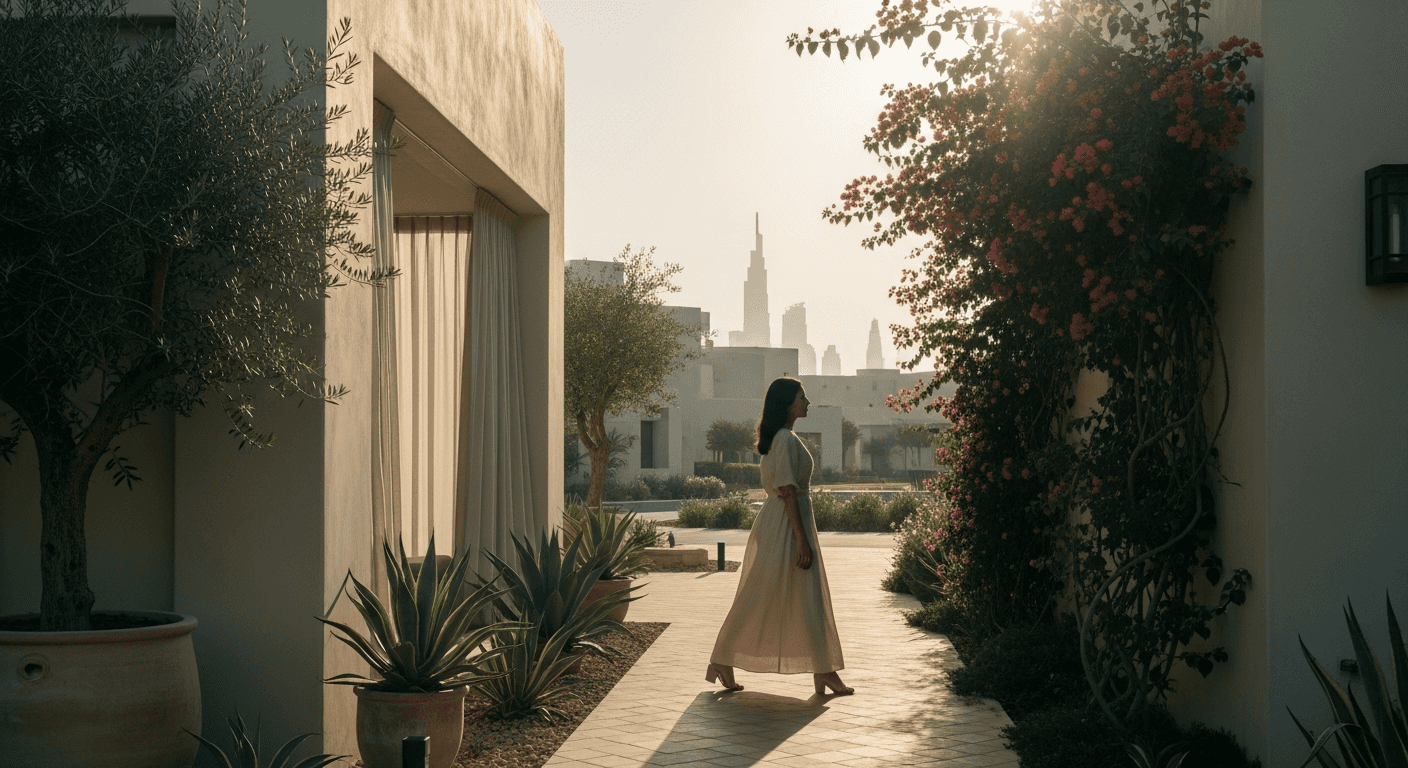
Dubai's Villas with Enduring Architectural Charm
Beyond the sleek lines of modern Dubai lie villa communities with timeless architectural character. I explore the heritage-inspired and European-style enclaves that offer families a genuine sense of place.

In a city defined by its ambition for the future, it’s easy to focus on the gloss of the new. But for many of us seeking a true family home, the real magic lies in communities with a past, with a soul. I'm talking about places where the distinctive villa architecture Dubai is known for tells a story, creating a unique and enduring sense of place.
Here's what we'll explore in this guide to Dubai's most charming enclaves:
- The meaning of 'timeless architecture' in the context of Dubai's property market.
- A deep dive into the desert-themed living pioneered by Arabian Ranches.
- The European-inspired elegance of communities like Jumeirah Golf Estates and The Villa.
- The original, eclectic charm of established areas like Jumeirah and The Meadows.
- How architectural style impacts long-term value and desirability.
- The practical side: maintenance, service fees, and renovation potential.
- A detailed, line-by-line cost breakdown for buying your own character-filled villa.
- My personal verdict on where to find the best blend of charm, community, and value.
The Soul of a Community: What is 'Timeless' Architecture in Dubai?
When people think of Dubai architecture, they often picture glass towers scraping the sky or minimalist, white-box villas that are undeniably modern. There's a place for that, of course. But there's a growing appreciation for something different, for what I call 'timeless' design. This isn't about being old-fashioned. It's about an architectural approach that prioritizes human scale, thoughtful details, and a cohesive aesthetic that feels authentic to its environment. These are the communities that mature like a fine wine, their appeal deepening as the landscaping fills in and a genuine neighbourhood spirit takes root.
This idea of building a complete lifestyle, not just rows of houses, was a key differentiator for master developers like Emaar Properties in the early days of Dubai's freehold market. They understood that creating a 'sense of place' was paramount. This is achieved through a deliberate and consistent architectural language. Whether it's the warm, earthy tones of a desert-inspired community or the stately elegance of a Mediterranean enclave, this visual consistency is the bedrock of community character Dubai residents crave. It’s the difference between living in a subdivision and living in a neighbourhood with a heart.
So, what are the elements of these timeless villa designs? They often include features rooted in traditional architecture, adapted for modern life. Think shaded courtyards that encourage airflow, arched windows that frame views, the use of natural materials like stone and terracotta, and a layout that fosters a connection between indoor and outdoor living. It's an architecture that responds to the climate rather than fighting it. These homes feel grounded and permanent. They offer a comforting sense of history, even if that history was master-planned just a couple of decades ago. This is the foundation of the enduring appeal we see in some of Dubai’s most beloved villa communities.
The Original Blueprint: Arabian Ranches and the Rise of Desert-Themed Living
 Featured project
If you want to understand the genesis of the themed villa community in Dubai, you have to start with Arabian Ranches. Launched by Emaar in the early 2000s, it set the standard for family-centric, master-planned living and remains, in my opinion, one of the most successful examples to this day. Its success isn't just about the amenities or the golf course; it’s deeply rooted in its consistent and well-executed architectural vision. The community was a pioneer of heritage-inspired communities Dubai has become famous for, offering a romantic yet highly functional vision of Arabian life.
The architecture across Arabian Ranches draws heavily from Spanish, Portuguese, and traditional Arabic design. You see it in the low-pitched terracotta roofs, the arched doorways and windows, the decorative ironwork, and the sandy, earthy colour palettes that blend smoothly with the surrounding landscape. Sub-communities like Mirador feature grander, two-storey homes with a distinct Spanish influence, while Saheel offers beautiful single-storey layouts that are perfect for those wanting to avoid stairs. Alvorada villas, with their arched 'portes-cochères' and courtyard-style layouts, feel particularly authentic. These are not just aesthetic choices; they are practical. The designs incorporate features that provide shade and encourage cross-ventilation, lessons learned from centuries of building in hot climates.
What truly elevates Arabian Ranches, however, is its maturity. Walking through the community today, you are surrounded by lush, established greenery. The trees planted nearly two decades ago now provide a dense canopy of shade over walkways and gardens, something you simply can't replicate in a new development overnight. This maturity softens the architecture and creates a peaceful, settled atmosphere. It feels like a proper suburb, a place where families have put down roots. This combination of distinctive villa architecture and established landscaping is why a four-bedroom villa in a community like Saheel or Mirador consistently attracts strong interest and commands prices typically in the AED 5.5 million to AED 7.5 million range. It represents a known quantity and a proven lifestyle, making it a perennial favourite among the charming family homes in Dubai.
A Touch of Europe: Mediterranean & Tuscan Elegance
While Arabian Ranches perfected the desert-chic aesthetic, another group of communities found their inspiration on the sun-drenched coasts of Europe. These enclaves, with their Mediterranean and Tuscan-inspired architecture, offer a different kind of timeless charm — one that speaks of rustic elegance, stately homes, and a life connected to green landscapes. The most prominent and luxurious example of this is, without a doubt, Jumeirah Golf Estates.
JGE is a masterclass in thematic design. The community is built around two Greg Norman-designed championship golf courses, Fire and Earth, and the architectural styles of the villas reflect this. The 'Earth' course is surrounded by villas with a more Mediterranean and Tuscan feel — think stone-clad exteriors, terracotta-tiled roofs, classical columns, and expansive terraces overlooking the rolling fairways. Districts like Lime Tree Valley and Olive Point are prime examples, where homes feature rustic textures, wrought-iron balustrades, and lush gardens with olive and citrus trees. This isn't just a superficial style; the homes are designed with grandeur in mind, featuring double-height ceilings, large open-plan living spaces, and a smooth flow to outdoor entertaining areas. It’s a vision of luxury that feels both opulent and deeply rooted in classical design principles. A five-bedroom villa here can range anywhere from AED 8 million to over AED 20 million, reflecting its premium status and golf-side location.
For those who love this European aesthetic but are looking for something with perhaps more space for the money or a bit more flexibility, The Villa project in Dubailand is a fantastic alternative. Developed by Dubai Properties and featuring villas built by various contractors including Mazaya, The Villa is known for its generous plot sizes and distinct Spanish-inspired courtyard homes. The community is divided into four areas — The Ponderosa, The Haciendas, The Aldea, and The Centro, each offering variations on the theme. The Hacienda villas, in particular, with their focus on central courtyards, are wonderful examples of this style. They offer immense privacy and a unique indoor-outdoor living experience. Because of the larger plots, many homeowners have built stunning gardens and pool areas, creating private oases. While JGE is defined by the golf course, The Villa is defined by its sense of space and privacy, with a five-bedroom home typically trading between AED 6 million and AED 9 million. Both communities prove that a strong, well-executed architectural theme creates an environment that residents fall in love with and value for the long term.
“In a city famous for the future, the most desirable homes are often those that feel rooted in a timeless past.”
The Enduring Appeal of Jumeirah and The Meadows' Originals
Long before the rise of the master-planned freehold community, the heart of residential Dubai was along the coast in Jumeirah and Umm Suqeim. These areas, which are not freehold and thus primarily available for rent to expatriates, possess an eclectic and undeniable charm that is very different from the curated uniformity of newer developments. Driving through the quiet, leafy streets of Jumeirah 1 or Umm Suqeim 2 reveals a mix of unique, individually designed villas, each with its own story. There is no single developer or architectural review board here; instead, you find an organic collection of homes built over decades.
The classic 'Jumeirah' villa is often a low-rise, white-washed structure, sometimes with modernist influences from the 70s and 80s, sometimes with more traditional Arabic touches. They are almost always hidden behind high walls, creating intensely private garden and pool areas. Because these are individual plots, the sizes are often far more generous than what you might find in a newer community. The lack of uniformity is the key to their appeal. One street might have a sprawling single-storey ranch-style home next to a quirky, art-deco-inspired villa. This variety creates a rich, authentic streetscape that feels lived-in and real. The downside, of course, can be inconsistent maintenance and older infrastructure, but for many, the location, privacy, and sheer character are worth it.
Recognizing the appeal of this low-rise, green, and spacious living, Emaar took this DNA and formalized it in one of its earliest and most successful freehold villa projects: The Meadows. Located adjacent to Emirates Hills and The Springs, The Meadows offered a master-planned version of the Jumeirah lifestyle. The villas, while following a set number of layouts and styles, are thoughtfully designed with a simple, elegant aesthetic that has aged remarkably well. They are arranged in clusters around serene lakes and parks, and like Arabian Ranches, the community now benefits from nearly two decades of mature landscaping. The trees are tall, the parks are shady, and the atmosphere is tranquil and established. For families wanting that sense of space and greenery combined with the security and amenities of a master community, The Meadows has always been, and remains, a top choice. It’s a perfect bridge between the organic charm of old Dubai and the structured convenience of the new.
The Financials of Charm: Does Architectural Style Affect Value?
As a real estate professional, I’m often asked if a home’s aesthetic is just a matter of personal taste or if it has a real, measurable impact on its financial value. My answer, based on years of experience in Dubai’s market, is unequivocal: a distinctive and well-executed architectural style absolutely contributes to a property's long-term value and price stability. In a market flooded with new projects that can sometimes look homogenous, character is a powerful differentiator.
Think of it in terms of supply and demand. The number of villas in truly unique, character-filled communities like Jumeirah Golf Estates or the original Arabian Ranches is finite. They are not making any more of them. As Dubai grows and the landscape becomes more populated with contemporary designs, these established communities with their mature greenery and coherent architectural themes gain a scarcity value. They appeal to a specific and often discerning buyer who is looking for more than just square footage; they are looking for a lifestyle and a sense of belonging. This dedicated demand for charming family homes helps insulate their prices from the volatility that can affect the broader market.
Beyond that, these homes possess what we call 'good bones'. The underlying design is strong, the proportions are pleasing, and the connection to the garden or surrounding landscape is well-conceived. This makes them ideal canvases for renovation and personalization. A buyer can invest in updating a kitchen, renovating bathrooms, or modernizing the interiors with confidence, knowing that the home's essential character will still shine through. We've seen clients at Gaia Living achieve remarkable transformations in villas in The Meadows or The Villa, creating stunning modern homes that retain their original soul. This potential for value-add renovation is much higher than in a generic villa where there is less inherent character to build upon. Ultimately, a home with timeless appeal is less likely to feel 'dated', ensuring it remains desirable to a wide pool of buyers for decades to come.
Practical Realities: Service Charges, Maintenance, and Upkeep
While the romantic appeal of a Tuscan-style villa or a charming Arabian courtyard home is undeniable, living in one of these communities comes with practical considerations. It’s essential for any potential buyer to understand the ongoing costs and responsibilities beyond the purchase price. At Gaia Living, we always advise our clients to look closely at service charges and potential maintenance needs.
Service charges are an annual fee paid to the community management company (often a subsidiary of the master developer, like Emaar Community Management). These fees cover the upkeep of all common areas: landscaping, security personnel, maintenance of community pools, parks, and roads. In villa communities, these charges are almost always calculated based on the total plot area, not the built-up area (BUA) of the house itself. This is an important distinction. The rates can vary, but a typical range for a quality community like Arabian Ranches or The Meadows would be between AED 2.50 and AED 5.50 per square foot of the plot, per year. It is crucial to get the exact rate for the specific property you are considering. For example:
- Sample Service Charge Calculation:
- Villa Plot Size: 7,000 sq ft
- Service Charge Rate: AED 3.75 per sq ft/year
- Annual Service Charge: 7,000 sq ft * AED 3.75/sq ft = AED 26,250
Beyond service charges, the specific architectural style can have its own maintenance implications. The beautiful terracotta roof tiles that define Mediterranean homes can crack under the intense summer sun over many years and may need periodic replacement. The intricate wooden mashrabiya or pergolas found in some Arabian-style homes require regular staining or treatment to protect them from the elements. For older, renovated villas in non-master-planned areas like Jumeirah, it's wise to conduct a thorough inspection of the plumbing and air conditioning systems, as these may not have been part of the cosmetic upgrade. On the plus side, the build quality from top-tier developers like Emaar and Nakheel in their signature communities is generally excellent, meaning the core structures of these homes are incredibly solid and have aged very well.
A Step-by-Step Cost Breakdown: Buying Your Timeless Villa
To make the dream of owning a character home a reality, it’s vital to have a clear picture of all the associated upfront costs. The sticker price is just the beginning. The UAE's property transfer process is transparent and regulated, primarily by the Dubai Land Department (DLD), but involves several fees that buyers must budget for. Let's walk through a realistic example of purchasing a resale villa in a community like Arabian Ranches.
Hypothetical Purchase: A 4-bedroom resale villa for AED 6,000,000. We'll assume the buyer is a UAE resident eligible for an 80% mortgage.
Here is a line-by-line breakdown of the approximate upfront costs you would need to prepare for:
- Purchase Price: AED 6,000,000
- Mortgage Down Payment (20% for residents on first property under AED 5M, 20% on value up to 5M and 35% on remainder): Let's use 20% for simplicity. 20% of AED 6,000,000 = AED 1,200,000
- Dubai Land Department (DLD) Transfer Fee (4% of purchase price): 4% of AED 6,000,000 = AED 240,000
- DLD Administrative Fees: Approximately AED 4,200 (this is a fixed fee).
- Property Registration Fee (Title Deed Issuance): AED 4,000 + 5% VAT = AED 4,200
- Real Estate Agency Fee (2% of purchase price + 5% VAT): (2% of AED 6,000,000) + 5% VAT = AED 120,000 + AED 6,000 = AED 126,000
- Mortgage Arrangement Fee (Can be up to 1% of the loan amount + 5% VAT): On a loan of AED 4.8M, this could be up to AED 48,000 + AED 2,400 = AED 50,400. This is often negotiable with the bank.
- Mortgage Valuation Fee: The bank will require a valuation of the property, which typically costs between AED 2,500 and AED 3,500 + 5% VAT.
- Trustee Office Fee (Handles the transfer process): Approximately AED 4,000 + 5% VAT = AED 4,200
- Developer No Objection Certificate (NOC) Fee: To issue the title deed, the developer must provide an NOC. The fee varies but is typically between AED 1,000 and AED 5,000 + VAT. Let's budget AED 1,575.
Total Estimated Upfront Cash Required: Approximately AED 1,632,075
This total represents the cash you would need on hand to complete the transaction. It's roughly 27% of the purchase price in this scenario. Understanding these costs is the most critical step in moving from browsing properties for sale to confidently making an offer.
My Verdict: Where to Find True Character in Dubai's Villa Market
After years of walking through countless homes and helping families find their perfect spot, my conviction has only deepened: the communities with the strongest architectural identity offer the most rewarding living experience. They provide a backdrop for life that is rich, comforting, and authentic. While the sleek minimalism of a brand-new contemporary villa has its allure, the enduring charm of a home with character, set within a mature and green community, is, for me, unmatched.
For an all-around fantastic family life, it's hard to look past the original Arabian Ranches and The Meadows. Both are Emaar-built, which guarantees a certain standard of quality and community management. They offer a superb balance of distinctive architecture, world-class amenities (from schools and clinics to retail centres), and that priceless, settled feeling that comes from mature landscaping. They feel safe, green, and neighbourly — the very definition of a suburban ideal. They are, quite simply, proven concepts that have delivered a high quality of life for thousands of families over two decades.
If your priorities lean towards more grandeur, privacy, and a lifestyle centered around sport and luxury, then Jumeirah Golf Estates is in a class of its own. The scale of the homes and the beauty of the golf course setting are breathtaking. It represents the pinnacle of this European-inspired aesthetic. For those who crave that Mediterranean feel but also want the freedom of a larger plot to create their own private resort, The Villa offers an exceptional and often undervalued proposition. Each of these communities provides a powerful antidote to the anonymous. They offer homes that are not just places to live, but places to belong.
While contemporary designs dominate new launches, Dubai's architecturally distinctive villa communities like Arabian Ranches and Jumeirah Golf Estates offer enduring charm, a strong sense of place, and proven value retention that makes them a superior choice for family living in my professional view.
Exploring these neighbourhoods is one of the great joys of my job. If you feel drawn to the idea of a home with character, we at Gaia Living would be delighted to show you what makes these Dubai communities so special.
## Sources - Dubai Land Department (DLD): https://dubailand.gov.ae - UAE Government Portal (u.ae)
Questions, answered
- Which Dubai communities have the most distinctive architecture?
- Communities like Arabian Ranches (Arabian/Spanish style), Jumeirah Golf Estates (Mediterranean/Tuscan), The Villa (Spanish), and the original homes in Jumeirah offer some of Dubai's most distinctive villa architecture, moving beyond the common contemporary look.
- Are villas with traditional architecture a good investment in Dubai?
- In my experience, yes. These homes often hold their value well due to their unique character, mature landscaping, and established community feel. Their scarcity compared to new contemporary villas can make them highly sought-after, particularly by end-user families.
- What are typical service charges for a villa in Arabian Ranches or JGE?
- Service charges in these communities are typically calculated on the plot area, not the built-up area. You can expect a range of AED 2.50 to AED 5.50 per square foot of your plot annually. For a 7,000 sq ft plot, this would be roughly AED 17,500 to AED 38,500 per year.
- What is the difference between Arabian Ranches and Jumeirah Golf Estates?
- The primary difference is lifestyle and architectural theme. Arabian Ranches, by Emaar, offers a family-centric, desert-themed community with Arabian and Spanish-style homes. Jumeirah Golf Estates is a more premium, golf-focused community with larger, European-inspired villas set around championship courses.
- Can I renovate an older villa in a community like The Meadows?
- Absolutely. Villas in established communities like The Meadows are prime candidates for renovation. They have 'good bones' and a fantastic location, allowing homeowners to update interiors to modern standards while retaining the home's original charm and benefiting from the mature, green surroundings.
- What are the upfront costs of buying a resale villa in Dubai?
- Besides the down payment (typically 20% for residents), you must budget for the 4% DLD transfer fee, 2% agency fee (+VAT), and various administrative, trustee, and mortgage fees. In total, these upfront costs usually amount to around 7-8% of the property's purchase price.

Sophia profiles Dubai's villa communities — schools, commute times, green space, and the intangible feel of a neighbourhood. She writes for families putting down roots.
Related stories
Dubai's Established Charm: The Case for Older Homes
In a city focused on the future, I believe the smartest move for many buyers is to look back. Dubai's seasoned communities offer space, character, and surprising value that new builds often can't match.
The True Cost of Owning a Dubai Property
Beyond the purchase price, your annual budget for a Dubai home must account for service charges, utilities, and maintenance. I'll break down every ongoing expense you need to plan for.
Calculating ROI on Dubai Rental Upgrades
As a landlord in Dubai, you can't just follow trends. I'll show you how to calculate the precise ROI of minor property upgrades to genuinely increase your rental yield.
Echoes, in your inbox
One thoughtful email a month. Market insight, new launches, no spam.