

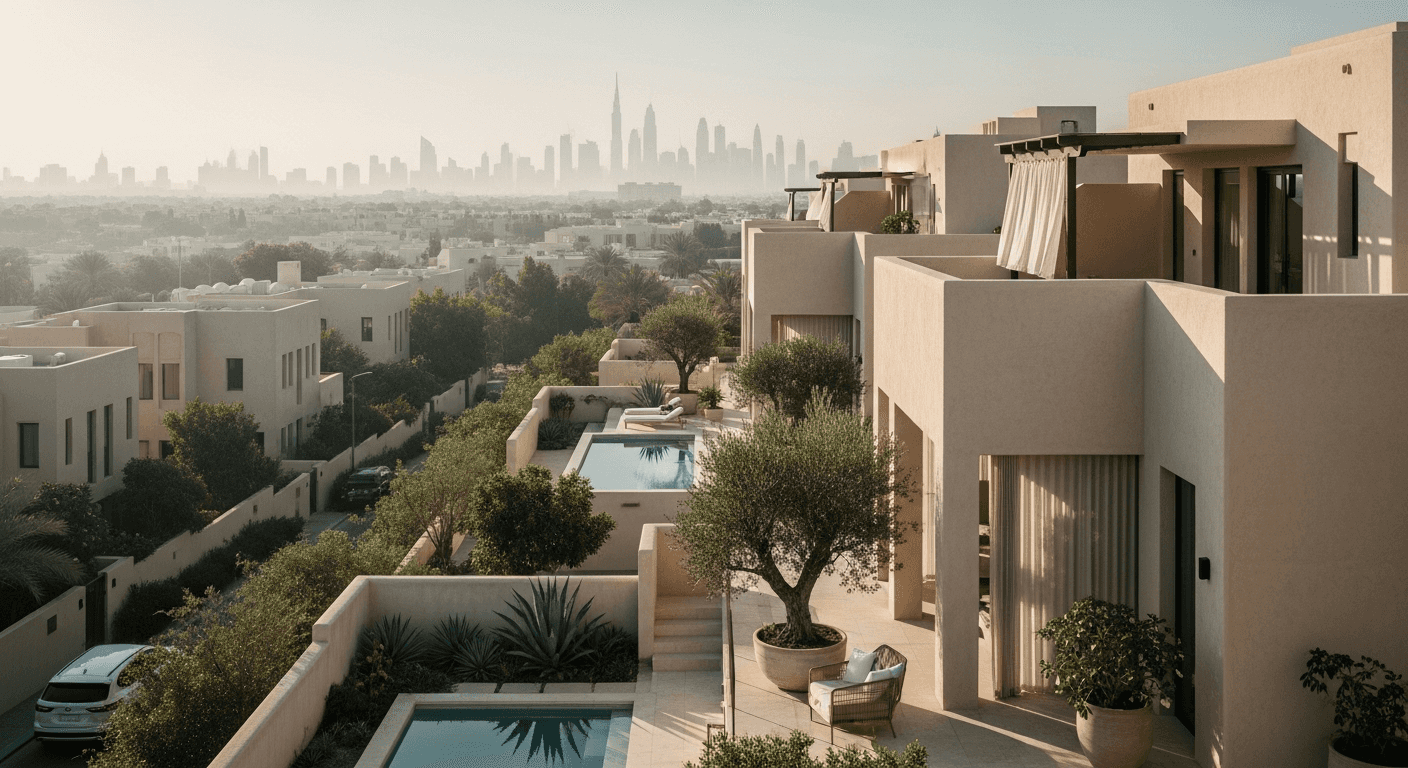
Dubai's Tourism Engine: How it Drives Property Demand
A deep dive into how Dubai's ambitious tourism expansion directly shapes residential property demand, from the growth of the holiday home market to the subtle impact of new infrastructure on property values.

As a market analyst, I’m trained to look for the fundamental drivers of value. In Dubai, few drivers are as powerful or as deeply woven into the city’s economic fabric as tourism. The relationship between the flow of visitors and the demand for residential property is far more intricate than a simple correlation; it's a complex, symbiotic mechanism that shapes investment opportunities across the emirate. Understanding this dynamic is key to making informed decisions in this market.
Here’s the framework we'll use to dissect this topic:
- The direct link between tourism targets and housing needs.
- How hotel development patterns influence residential property.
- The explosive growth of the holiday home market.
- The MICE sector's role in driving corporate and long-stay demand.
- New tourism infrastructure and its effect on nearby property values.
- A case study: The impact of integrated resorts on local real estate.
- The risks and challenges for investors banking on tourism.
- My verdict: Where the most durable opportunities lie.
The Direct Correlation: Tourism Targets and Residential Demand
At its core, the connection is straightforward arithmetic. Dubai's economic blueprint, the D33 Agenda, sets ambitious goals that heavily rely on a thriving visitor economy. These are not abstract targets; they translate into concrete requirements for accommodation, services, and, crucially, people. When the government aims to attract millions more tourists, it is simultaneously signing off on the need for thousands of new jobs in hospitality, aviation, retail, and entertainment. Each of these jobs represents a person or a family needing a place to live. This creates a foundational layer of demand for residential property that spans the entire spectrum of the market, from co-living spaces for cabin crew to luxury villas for senior executives.
This process creates a virtuous cycle. Tourists arrive, drawn by world-class attractions and marketing. The infrastructure built to serve them — from airport expansions to theme parks, requires a significant workforce. This workforce, in turn, fuels demand for long-term rentals and, eventually, end-user sales in communities across Dubai. We see this clearly in the strategic development of areas like Dubai South, which was planned not just around the airport but as a complete ecosystem to house the people who power it. The demand generated is not monolithic; it's highly segmented. A new luxury hotel on the Palm might create demand for high-end apartments in Dubai Marina for its management team, while also driving the need for more affordable housing in inland communities like JVC or Arjan for its operational staff.
Beyond this direct employment effect, tourism functions as the city's most effective marketing campaign. Every visitor is a potential future resident. The experience of a smooth, safe, and dynamic city is a powerful advertisement. In my experience at Gaia Living, it's a common pattern: a client first visits for a holiday, returns for a longer stay, and within a year or two, is sitting with us to browse properties for sale. The introduction of flexible residency options, like the Golden Visa, has only accelerated this conversion from tourist to resident. This channel is particularly effective at attracting high-net-worth individuals who may not have considered Dubai otherwise. They experience the lifestyle firsthand and recognise the value proposition, creating a steady influx of capital into the premium segment of the property market.
Hotel Development and its Ripple Effect on Residential Real Estate
 Featured project
The construction of new hotels is one of the most visible signs of a growing tourism sector, but its impact on the residential market is often underestimated. The trend of branded residences is a perfect example of the blurring lines between hospitality and residential living. Major developers like Emaar Properties with its Address and Vida brands, or hotel operators themselves, are increasingly attaching a residential component to their flagship properties. These homes offer buyers the prestige of the hotel brand, access to its five-star amenities, and a full suite of services, from concierge to in-room dining. This creates a super-premium asset class that appeals to a global elite seeking a turnkey, high-service lifestyle. Projects like the Address Residences in Downtown Dubai or on Palm Jumeirah consistently command higher prices per square foot than their unbranded neighbours for this very reason.
This `hotel development residential impact Dubai` extends beyond just branded projects. New hotels act as powerful neighbourhood anchors. The development of a major resort or a cluster of hotels in an emerging area signals confidence and brings a critical mass of amenities, including high-end restaurants, spas, and beach clubs. This, in turn, makes the surrounding residential property more attractive. People want to live near the action. A prime example is the evolution of Bluewaters Island by Meraas. While the Ain Dubai wheel was the visual icon, the presence of luxury hotels on the island was critical in establishing it as a premier destination, which directly supported the values of its residential apartments. The hotel creates the 'place', and the residential component benefits from it.
Dubai's master planners understand this synergy well. Unlike in older cities where development can be haphazard, new districts in Dubai are often conceived from the ground up as integrated ecosystems. Look at a project like Creek Harbour. The master plan does not treat hotels and residential towers as separate entities. They are woven together, along with retail, leisure, and public spaces, to create a cohesive and self-sustaining community. This strategic co-location ensures that the tourism infrastructure directly enhances the quality of life for residents, which in turn underpins the long-term value of their properties. This is a deliberate strategy to ensure that the massive investment in tourism assets generates a positive ripple effect across the entire real estate landscape, rather than existing in a silo.
The Holiday Home Market: A Paradigm Shift for Investors
Perhaps the most direct consequence of Dubai's tourism boom on property investment has been the phenomenal `Dubai holiday home market growth`. What was once a niche segment has matured into a professionally managed, regulated, and highly attractive asset class for investors seeking higher yields. The key catalyst for this was the establishment of a clear regulatory framework by Dubai’s Department of Economy and Tourism (DET). By creating a formal licensing process, setting quality standards, and providing a transparent system for owners and operators, the government has fostered trust and stability in the market. This professionalisation has drawn in both individual investors and larger corporate operators, transforming the sector.
The appeal is obvious: yields. A well-managed holiday home in a prime location can generate significantly higher gross rental income than a standard annual lease. However, 'gross' is the operative word. Aspiring investors must understand that this is not a passive investment. It comes with a host of additional costs and operational demands that are absent from the long-term rental model. These include furnishing costs, higher utility bills (as they are usually included in the daily rate), marketing, guest communication, and regular cleaning and maintenance. Most significantly, professional management is almost a prerequisite for success, and their fees typically range from 15% to 20% of the gross revenue. This active management is what separates a profitable holiday home from a costly headache.
To illustrate the financial reality, let's break down the numbers for a hypothetical one-bedroom apartment in a popular tourist hub like Jumeirah Beach Residence (JBR). This provides a clear-eyed look at the real costs involved:
Hypothetical 1-BR Apartment in JBR as a Holiday Home
- Purchase & Upfront Costs:
- Property Purchase Price: AED 2,200,000
- DLD Transfer Fee (4%): AED 88,000 (governed by the Dubai Land Department)
- Agency Fee (2% + VAT): AED 46,200
- Registration Trustee Fee: ~AED 4,200
- NOC Fee from Developer: ~AED 1,500
- Total Upfront Investment Cost: ~AED 2,339,900
- Setup Costs:
- High-Quality Furnishing & Electronics: AED 60,000
- Holiday Home Permit & Setup Fees: AED 5,000
- Total Setup Cost: AED 65,000
- Annual Operating Analysis:
- *Projected Revenue:*
- Average Daily Rate (ADR): AED 650
- Projected Occupancy Rate: 75% (274 nights)
- Gross Annual Revenue: AED 178,100
- *Operating Expenses:*
- Holiday Home Management Fee (18% of revenue): AED 32,058
- Property Service Charges (~AED 20/sqft for 900 sqft): AED 18,000
- Utilities (DEWA, Chiller, Internet): AED 22,000
- Maintenance & Cleaning Fund (5% of revenue): AED 8,905
- Tourism Dirham & VAT on services: ~AED 7,500
- Total Annual Expenses: AED 88,463
- Net Return Calculation:
- Net Operating Income (NOI): AED 178,100 - AED 88,463 = AED 89,637
- Net Yield on Purchase Price: (AED 89,637 / AED 2,200,000) = 4.07%
By comparison, the same apartment might achieve an annual rent of AED 120,000 on a long-term lease. After deducting the service charge (AED 18,000), the net yield would be (AED 102,000 / AED 2,200,000) = 4.63%. In this specific, conservative scenario, the long-term lease actually offers a slightly higher and far more passive return. The potential for short-term rentals to outperform this hinges entirely on achieving higher occupancy rates and daily rates, which is possible in peak seasons but carries the risk of vacancies in slower months. This demonstrates that while the `Dubai tourism property investment` angle is compelling, it requires careful financial modelling.
The MICE Sector: Powering Corporate and Extended Stays
While leisure tourists are the most visible visitors, the MICE sector — Meetings, Incentives, Conferences, and Exhibitions, is an equally potent force driving `MICE sector real estate demand Dubai`. This segment is a cornerstone of Dubai's strategy to position itself as a global business hub. Major venues like the Dubai World Trade Centre (DWTC) and the new Expo City are magnets for international business travellers, delegates, and event staff. Unlike leisure tourists who may stay for a few days, MICE visitors often stay for a week or more, creating sustained demand for accommodation.
This demand profile is perfectly suited for serviced apartments and high-quality holiday homes. Corporate clients often prefer the space, privacy, and amenities (like a kitchen and workspace) that an apartment offers over a standard hotel room, especially for extended stays. This has created a robust sub-market for furnished rentals in districts with easy access to the main exhibition centres. For events at DWTC, properties in DIFC and along Sheikh Zayed Road are in perennial demand. For the growing calendar of events at Expo City, communities in Dubai South and nearby areas like Jumeirah Golf Estates are seeing a direct benefit.
What makes MICE-driven demand particularly attractive to property owners is its character. It is often less seasonal than leisure tourism, helping to smooth out the occupancy troughs seen during the hotter summer months. Bookings are frequently made by corporations, which can mean higher rental rates and more reliable tenants. The continued expansion of Dubai's event calendar, attracting major global congresses and trade shows, provides a predictable pipeline of demand that property investors can strategically target. In essence, by investing in a property that serves this market, you are not just betting on tourism, you are betting on Dubai's continued success as a global centre for commerce and innovation.
New Tourism Infrastructure: A Catalyst for Property Value Appreciation
One of the most powerful, albeit indirect, ways tourism shapes the property market is through the development of supporting infrastructure. The government's commitment to creating a world-leading destination means it invests billions in projects that enhance the visitor experience. These projects — new metro lines, expanded road networks, public beaches, parks, and cultural institutions, have a profound and lasting impact on the value of nearby residential property. This relationship between `tourism infrastructure property value` is a fundamental tenet of the Dubai real estate market.
“In Dubai, infrastructure is not a consequence of growth; it is the deliberate cause of it. The government builds the destination, and the market follows.”
A classic example is the Route 2020 extension of the Dubai Metro, built to serve the Expo 2020 site. This single piece of infrastructure dramatically improved the connectivity of several communities along its path, including Al Furjan and Discovery Gardens. Before the metro, these areas were seen as more car-dependent. After, they became viable options for residents who rely on public transport, broadening their appeal and supporting property value appreciation. The infrastructure wasn't just for the six-month event; it was a permanent upgrade that continues to deliver value to residents and property owners today.
We see the same dynamic at play with "soft" infrastructure. The development and enhancement of public beachfronts like JBR The Beach or La Mer by Meraas did more than just create attractions for tourists; they transformed the lifestyle offering of the surrounding districts. Properties with walking access to these vibrant, amenity-rich destinations saw their desirability — and their prices, climb. Similarly, the creation of new tourism-focused developments like Emaar Beachfront or the upcoming islands off the coast are not just about building apartments with a view. They are about creating entire ecosystems, complete with marinas, retail, and F&B, that become destinations in their own right. For an investor, identifying the path of future infrastructure development is one of the most effective ways to anticipate future growth corridors.
Case Study: The 'Gaming Resort' Effect in Ras Al Khaimah
To see this entire dynamic in a concentrated, real-time experiment, we only need to look north to the neighbouring emirate of Ras Al Khaimah. The announcement of the multi-billion dollar Wynn integrated resort on Al Marjan Island, which will include the UAE's first licensed gaming facility, has been a dramatic catalyst for its property market. While not in Dubai, it serves as a perfect microcosm of how a single, transformative piece of tourism infrastructure can reshape real estate demand and investor sentiment. The impact was immediate and profound, validating the principles we've discussed.
Almost overnight, land prices on Al Marjan Island surged. Developers who had land banks there, like Aldar and Al Hamra, saw their off-plan launches sell out in hours. The market was flooded with investors anticipating the resort's ripple effects. The logic behind this frenzy is a textbook application of tourism-led property investment theory. First, the anticipation of millions of new visitors creates massive demand for short-term rental accommodation. Investors are betting that apartments on the island will command premium nightly rates and high occupancy once the resort is operational. Second, the project is expected to create an estimated 10,000 direct and indirect jobs, generating a huge new requirement for long-term staff housing in and around the island.
This has triggered a full-scale development boom. We're seeing a new wave of branded residences, such as those from WOW Resorts, explicitly designed to cater to the high-end market the Wynn resort will attract. The entire ecosystem, from luxury apartments to more affordable housing in the surrounding areas, is rapidly expanding to meet the anticipated demand. The Al Marjan Island case study demonstrates the sheer force of a single, state-backed tourism anchor project. It shows how quickly capital flows towards the promise of future tourist footfall and validates the strategy of investing ahead of major infrastructure delivery. It is a powerful lesson for anyone looking to understand the mechanics of `Dubai tourism property investment`.
Risks and Realities: Navigating the Tourism-Linked Market
For all its potential, a strategy focused on tourism-driven property demand is not without its risks. A clear-eyed, analytical approach requires acknowledging the potential downsides. The most significant risk, as in any rapidly developing market, is that of oversupply. If the construction of new hotels and holiday homes outpaces the growth in visitor numbers, it can lead to increased competition, lower occupancy rates, and pressure on rental yields. At Gaia Living, we advise our clients to look beyond the headline numbers and analyse the specific supply pipeline in their target micro-market. A property in a boutique building in an established area with limited new supply is better insulated than one in a district where thousands of similar units are due to be handed over.
Seasonality is another critical factor, particularly for the holiday home market. Dubai's leisure tourism demand peaks during the cooler winter months and troughs during the summer. This directly impacts occupancy and the daily rates you can charge. A successful investor must budget for these fluctuations and not extrapolate peak-season earnings across the entire year. This is where the MICE sector and business travel can act as a valuable hedge, as conferences and corporate travel often continue through the summer, providing a more stable demand floor.
Beyond that, the operational intensity of short-term rentals cannot be overstated. It is not passive income. It is a hands-on business that requires constant attention to marketing, pricing, guest services, and maintenance. Many first-time investors are unprepared for this reality. This is why engaging a reputable, DET-licensed holiday home management company is, in my view, essential. While their fees (typically 15-20%) eat into the gross yield, they provide the professional expertise needed to maximise revenue and protect the asset. Finally, the regulatory environment, while currently favourable, can evolve. Investors must stay informed about any changes to licensing fees, taxes, or zoning regulations by consulting official sources like the Dubai Land Department (DLD) and the DET portal, available via Visit Dubai.
My Verdict: Where to Find Durable Value
After analysing the various channels through which tourism influences the residential market, my conclusion is nuanced. The link is undeniable and forms a core part of the long-term investment thesis for Dubai. For investors with a higher risk tolerance and a willingness to engage in active management, the `Dubai holiday home market growth` presents a compelling opportunity for superior yields. The key to success here is location. A premium property on the beachfront of Palm Jumeirah or with a direct view of the Burj Khalifa in Downtown Dubai will always have a competitive advantage in attracting tourists and commanding premium rates.
However, for most investors, particularly those with a longer time horizon and a preference for more stable returns, I believe the more prudent strategy lies in a slightly more indirect approach. The most durable value is found not necessarily by owning the holiday home itself, but by owning the high-quality residential property that the tourism-driven economy's permanent workforce wants to live in. As the tourism sector expands, it creates tens of thousands of well-paying jobs. The people who fill these roles need homes for their families. They are looking for communities with good schools, parks, amenities, and connectivity.
While the high yields of short-term rentals are attractive, the most resilient long-term strategy is to invest in quality residential communities that absorb the population growth driven by the tourism economy, capturing both end-user and long-term rental demand. Think of established, family-friendly communities like Dubai Hills or Arabian Ranches. These areas benefit from the overall economic growth that tourism generates, but their demand is steadier, rooted in the fundamental need for quality housing. This strategy captures the upside of the city's growth story with a lower risk profile than being on the front lines of the highly competitive short-term rental market. The government's unwavering investment in tourism is the ultimate guarantee of continued population growth, and it is this growth that provides the most solid foundation for residential property values over the long term.
## Sources - Dubai Land Department (DLD): https://dubailand.gov.ae/en/ - Dubai's Department of Economy and Tourism (DET), via Visit Dubai: https://www.visitdubai.com/en/ - UAE Government Portal (u.ae) for visa information: https://u.ae/en/
Questions, answered
- How does tourism growth in Dubai affect residential property prices?
- Tourism growth drives property demand in two main ways: directly, by increasing demand for short-term rentals (holiday homes), and indirectly, by creating jobs that attract new residents who need long-term housing. This dual demand supports both rental yields and capital appreciation, especially in well-located communities.
- Are holiday homes in Dubai a good investment?
- They can be, offering potentially higher gross yields than annual rentals. However, they are operationally intensive and come with costs like management fees (15-20%), furnishing, and higher utility bills. Profitability depends heavily on location, property quality, and professional management.
- Which areas in Dubai are best for property investment linked to tourism?
- For direct short-term rentals, prime areas like Palm Jumeirah, Dubai Marina, and Downtown Dubai are top choices due to their proximity to attractions. For long-term growth driven by the tourism economy, consider master-planned communities that attract the growing workforce, such as Dubai Hills or areas near major infrastructure hubs like Dubai South.
- What is the impact of new hotels on nearby residential property?
- New hotels act as destination anchors, bringing in amenities, restaurants, and a general 'buzz' that increases the desirability of nearby residential properties. This often leads to value appreciation. The rise of branded residences, which combine hotel services with private ownership, further blurs this line and creates a premium market segment.
- What are the main risks of investing in Dubai's holiday home market?
- The main risks include potential oversupply compressing yields, seasonality affecting occupancy rates, regulatory changes, and underestimating the high operational costs and hands-on management required. A property in a prime location with professional management can mitigate many of these risks.
- How does Dubai's MICE sector influence the property market?
- The MICE (Meetings, Incentives, Conferences, Exhibitions) sector drives significant demand for short-term and extended-stay accommodation around venues like the Dubai World Trade Centre and Expo City. This creates a steady stream of corporate tenants, often at premium rates, benefiting furnished apartments and serviced residences in areas like DIFC and Business Bay.

Amara translates DLD transaction data, supply pipelines, and macro signals into clear calls on where Dubai's market is heading. She writes the numbers most brokers only feel.
Related stories
Dubai's Established Charm: The Case for Older Homes
In a city focused on the future, I believe the smartest move for many buyers is to look back. Dubai's seasoned communities offer space, character, and surprising value that new builds often can't match.
The True Cost of Owning a Dubai Property
Beyond the purchase price, your annual budget for a Dubai home must account for service charges, utilities, and maintenance. I'll break down every ongoing expense you need to plan for.
Calculating ROI on Dubai Rental Upgrades
As a landlord in Dubai, you can't just follow trends. I'll show you how to calculate the precise ROI of minor property upgrades to genuinely increase your rental yield.
Echoes, in your inbox
One thoughtful email a month. Market insight, new launches, no spam.