

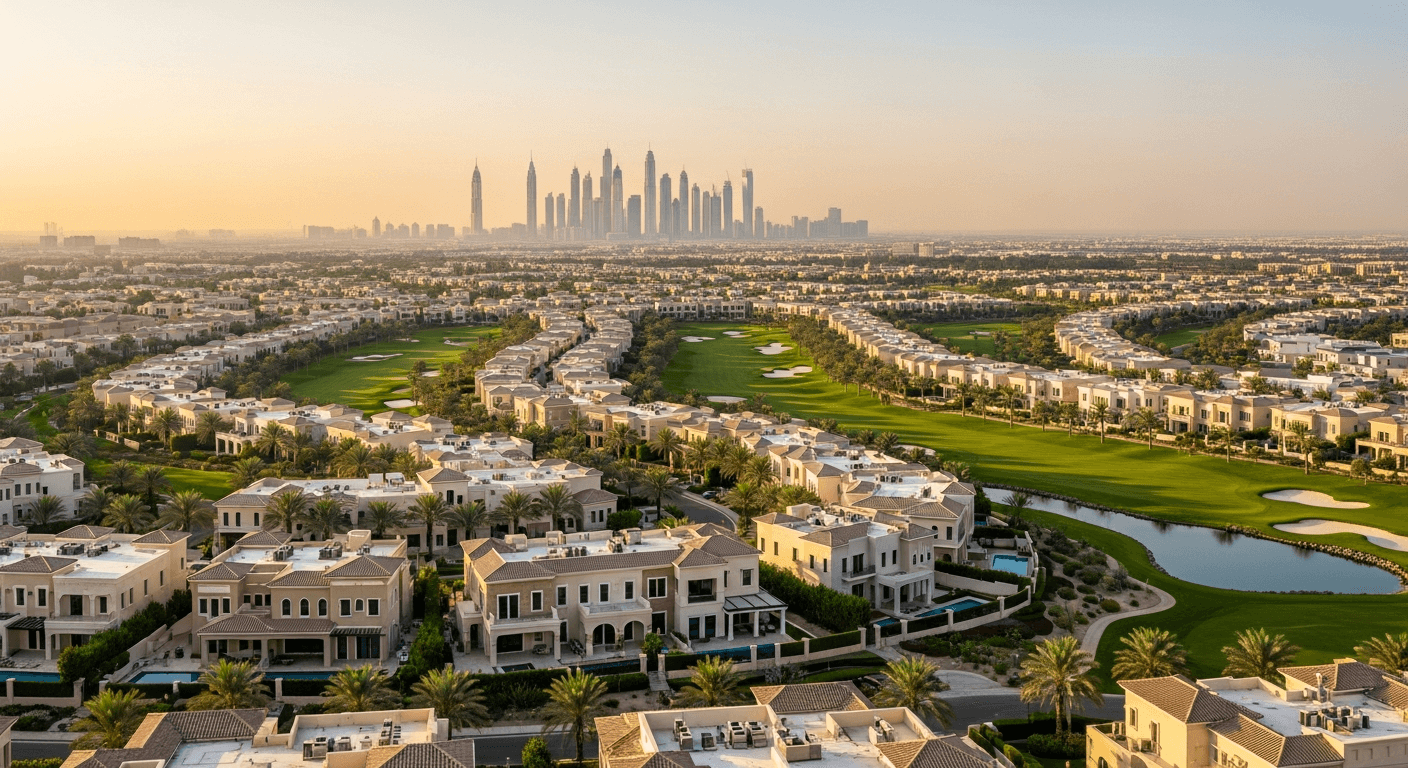
Dubai's Rental Market: Beyond the Boom
A deep analysis of the fundamental demographic and economic shifts providing new stability to Dubai's long-term rental market, and what it means for investor yields.

The narrative of the Dubai property market is often one of dramatic cycles. Yet, as we look at the state of the Dubai long term rental market today, I see a different story emerging. The recent period of rapid rental growth is giving way to a new, more sustainable equilibrium, one founded not on transient speculation, but on profound demographic and structural shifts. This is a market maturing before our eyes, rewarding insight over opportunism.
In this analysis, we will explore the forces shaping this new phase. Here's what I'll cover:
- The post-Expo demographic reality and how it's creating a stickier tenant base.
- A granular breakdown of rental yields, moving from misleading gross figures to the net reality for investors.
- The full, line-by-line upfront cost of acquiring a buy-to-let property in Dubai.
- The qualitative factors that now command a rental premium in a competitive market.
- A forecast for the rental market, weighing the impact of new supply against sustained demand.
- Which specific communities are best positioned to capture long-term rental demand.
- A practical guide to navigating the essential regulations and processes for new landlords.
The Demographic Anchor: How Policy is Reshaping Tenancy
For years, a core characteristic of the Dubai rental market was its transience. The typical tenancy was tied to a two-year work contract, creating a constant state of flux. This model is now being fundamentally altered by deliberate and forward-thinking government policy. The introduction and expansion of long-term residency options — most notably the 10-year Golden Visa, the 5-year Green Visa, and various freelance and entrepreneur permits, are the primary catalysts. In my view, these reforms are the single most important factor underwriting the future stability of the rental market.
These visas are not just extensions; they represent a paradigm shift in the relationship between Dubai and its expatriate population. They sever the direct link between employment and residency, giving individuals and families the confidence to put down deeper roots. A professional holding a Golden Visa is no longer thinking in two-year increments. They are planning for five, ten, or even more years. This has a direct and powerful impact on expat rental trends Dubai. The conversation I have with investor clients has changed; we are no longer just talking about yield, but about the quality and longevity of the tenant profile they can attract. A tenant who sees Dubai as a long-term home is a different proposition entirely. They are more likely to care for the property, seek stability in their community, and renew their lease, significantly reducing costly vacancy periods and turnover costs for landlords.
This shift is also reshaping demand patterns. The transient professional might have been content with a basic apartment close to the office. The long-term resident, however, is making a life, not just a living. They are looking for communities. This means demand is increasingly focused on properties with access to good schools, parks, healthcare, and retail. It elevates the importance of master-planned communities like Dubai Hills or Arabian Ranches, which are designed for family life. It also means that even for single professionals or couples, the quality of the building's amenities and the vibrancy of the surrounding neighbourhood — the 'lifestyle' component, become much stronger drivers of choice. Landlords who own property in well-managed buildings with a strong sense of community are finding it easier to retain tenants, even in a competitive market. The focus is shifting from a purely transactional rental to a relationship-based one, a change that benefits both stable tenants and discerning landlords.
Decoding Rental Yields: Gross, Net, and the Reality of Costs
 Featured project
One of the most common questions we get at Gaia Living from aspiring investors is about rental yields. It’s also one of the areas most clouded by misleading marketing. It is critical for any serious investor to understand the difference between Gross Yield and Net Yield. Gross Yield is the simple, often-quoted figure: the total annual rent divided by the property's purchase price. While easy to calculate, it’s a fiction. It tells you nothing about the actual return you will see in your bank account.
Net Yield is the only number that matters. It is the real return on your investment after all associated costs have been deducted from your rental income. Calculating this figure requires diligence and an understanding of the local market. The primary deduction is the annual service charge, levied by the developer or owners' association to cover the maintenance of common areas, security, pools, and other facilities. These are not negligible. In Dubai, service charges can range from as low as AED 10 per square foot in basic buildings to over AED 30 per square foot in premium, full-service towers. Forgetting to factor this in can wipe out a significant portion of your profit. Thankfully, investors can now check these fees for any building via the Dubai REST app from the Dubai Land Department (DLD), a level of transparency we strongly encourage clients to use.
To illustrate the importance of this calculation, let’s run the numbers on a typical investment property. This is the kind of analysis we do for our clients every day to ensure their expectations are grounded in reality. The goal is to understand the true long term rental yield Dubai investors can expect.
Calculating Net Yield: A 2-Bedroom Apartment in JVC
- Property Type: 2-bedroom apartment in a mid-range tower in JVC
- Assumed Purchase Price: AED 1,500,000
- Assumed Annual Rent: AED 110,000
- Gross Yield Calculation: (110,000 / 1,500,000) = 7.33% (This is the attractive number you might see in a brochure.)
Now, let's calculate the reality. We'll deduct the necessary annual costs:
- Service Charges: Assuming a 1,250 sq. Ft. apartment at an average of AED 18 per sq. Ft., this comes to AED 22,500 per year.
- Property Management Fee: If you hire a professional firm to handle tenant sourcing, Ejari registration, maintenance, and rent collection, a typical fee is 7% of the annual rent. That's AED 7,700.
- Maintenance Buffer: Even with service charges covering common areas, you are responsible for maintenance inside your apartment (AC, plumbing, appliances). A prudent budget is 5% of the annual rent: AED 5,500.
- Vacancy Provision: It's wise to budget for at least two weeks of vacancy between tenants. This equates to roughly AED 4,600 in lost rent.
- Total Annual Costs: 22,500 + 7,700 + 5,500 + 4,600 = AED 40,300
- Net Annual Rental Income: 110,000 - 40,300 = AED 69,700
- Net Yield Calculation: (69,700 / 1,500,000) = 4.65%
As you can see, the realistic net yield is 4.65%, a far cry from the gross yield of 7.33%. This is still a very healthy return in a global context, especially in a stable, tax-free income environment. But it underscores the absolute necessity of doing your homework. An investor who buys based on a gross yield figure without understanding the associated costs is setting themselves up for disappointment.
The Investor's Purchase: A Line-by-Line Cost Breakdown
Understanding your net yield is a crucial part of the puzzle. But before you can even begin to earn rental income, you must navigate the significant upfront costs associated with purchasing a property in Dubai. Many first-time investors focus solely on the property’s sticker price, but the transaction costs are substantial and must be budgeted for in cash. These are not costs that can typically be rolled into a mortgage. Underestimating them can jeopardise the entire transaction.
The largest single cost is the Dubai Land Department (DLD) transfer fee, which is set at 4% of the property purchase price. This is the government tax for registering the change of ownership. On a AED 2 million property, that’s an AED 80,000 cost right at the outset. This is non-negotiable. Also, there are smaller administrative fees payable to the DLD and fixed fees for the Registration Trustee, who facilitates the transfer process. These can add another AED 8,000 to AED 10,000 to the bill. Then there is the real estate agency fee, which is customarily 2% of the purchase price, plus 5% VAT on that fee.
If you are financing the purchase with a mortgage, you must also account for bank-related fees. The Central Bank of the UAE mandates a minimum down payment, which is 20% for expatriate residents on a first property valued under AED 5 million, and 25% for non-residents. On top of this cash down payment, banks will charge a mortgage arrangement fee (often up to 1% of the loan amount), a valuation fee, and other processing charges. To provide a clear picture, here is a detailed, line-by-line breakdown of the typical upfront costs for purchasing a ready property intended for the rental market.
Upfront Costs for a AED 2,000,000 Rental Property (for a non-resident investor)
- Property Purchase Price: AED 2,000,000
- Down Payment (25%): AED 500,000
Fees & Costs (Payable in Cash): - DLD Transfer Fee (4% of price): AED 80,000 - DLD Admin Fee: ~AED 4,200 (this is a fixed fee) - Registration Trustee Fee: AED 4,200 - Real Estate Agency Fee (2% + VAT): AED 42,000 (AED 40,000 fee + AED 2,000 VAT) - Mortgage Arrangement Fee (0.5% + VAT on AED 1.5M loan): AED 7,875 - Mortgage Valuation Fee: ~AED 3,150 - Title Deed Issuance Fee: ~AED 580 - No Objection Certificate (NOC) Fee from Developer: AED 500 - AED 5,000 (varies greatly)
- Total Upfront Cash Required (Down Payment + Fees): Approximately AED 642,105
This breakdown doesn't even include potential initial costs like furnishing an unfurnished apartment to make it rent-ready, which can add tens of thousands of dirhams. This detailed financial planning is essential. An investor who approaches a purchase with a budget of exactly AED 2 million will find they cannot complete the transaction. At Gaia Living, a core part of our advisory service is ensuring our clients have a complete and transparent picture of all costs involved, from day one. This prevents surprises and builds a foundation for a successful long-term investment.
Beyond the Numbers: The Qualitative Factors Driving Rental Premiums
While a rigorous financial analysis is the bedrock of any sound property investment, the rental market analysis Dubai offers teaches us that numbers alone don't tell the whole story. In an increasingly mature and competitive market, qualitative factors play an enormous role in determining a property's rental appeal, its ability to attract and retain high-quality tenants, and ultimately, its long-term value. Investors who grasp these nuances can achieve outsized returns and lower vacancy rates.
At the top of the list is the reputation of the developer. A building by a top-tier master developer like Emaar Properties, Meraas, or Nakheel often commands a rental premium. Why? Tenants have come to associate these names with a certain standard of build quality, finishing, and, crucially, ongoing community management. They have confidence that the pools will be clean, the security professional, and the common areas immaculate. This perception of reliability is something tenants are willing to pay for. Conversely, a property in a building with a poor reputation for maintenance or a dysfunctional owners' association will struggle to attract good tenants and will likely see higher turnover, even if it's in a prime location.
“The debate over supply is a red herring. The real question isn't how many units are coming, but where they are and who they are for.”
Location remains paramount, but our understanding of 'prime location' is evolving. It's no longer just about being on Sheikh Zayed Road. With the demographic shift towards long-term residents and families, proximity to social infrastructure is key. A property within walking distance of a good school, a park, a supermarket, and a metro station holds immense appeal. Consider the difference between two identical apartments: one in an isolated tower and another in a community like Town Square or City Walk, which are designed around a pedestrian-friendly lifestyle with integrated retail and leisure. The latter will almost always command a higher rent and have a longer waiting list of potential tenants. Connectivity to business hubs like DIFC or Dubai Media City is still vital for the professional demographic, but the definition of a desirable location has broadened to encompass the entire living experience.
The quality and breadth of amenities are also a major differentiator. In the past, a simple pool and gym were sufficient. Today's tenants, especially in the mid to high-end segments, expect more. They are looking for co-working spaces within the building, resident's lounges, cinema rooms, high-quality children's play areas, and even pet-friendly policies and facilities. These are no longer nice-to-haves; they are decision-making factors. An investor choosing between two otherwise similar properties should pay close attention to the amenity stack. A building that offers a superior lifestyle experience will not only achieve higher rent but will also be more resilient during softer market conditions, as its tenants will be more reluctant to leave.
Rental Market Analysis Dubai: Supply, Demand, and Future Trajectories
No discussion of the Dubai rental market is complete without addressing the perennial question of supply. For years, analysts have pointed to Dubai's ambitious construction pipeline as a potential risk. It is true that a significant number of new properties are handed over each year. However, I believe a simplistic view of supply is misleading and fails to capture the dynamics of the current market. The critical factors are not the absolute number of units, but their type, quality, and location, weighed against the powerful drivers of demand.
The demand side of the equation is, in my professional opinion, more robust than at any point in Dubai's history. The Dubai 2040 Urban Master Plan outlines a goal to grow the city's population to 5.8 million by 2040. This isn't just an aspiration; it's a strategic objective supported by a wide range of economic and social initiatives. The city's successful handling of the global pandemic, its safe-haven status in a volatile region, and its pro-business policies continue to attract talent and capital from around the world. Population growth is the primary engine of rental demand, and all indicators point towards sustained, healthy growth for the foreseeable future. This provides a strong fundamental floor for the market.
On the supply side, we need a more nuanced analysis. A significant portion of the new supply is concentrated in emerging, outlying areas. While this increases the overall housing stock, it doesn't necessarily compete directly with established, premium communities. A new building in Dubailand does not have the same impact on rents in Downtown Dubai as a new tower next door would. What we are seeing is a flight to quality. Tenants and buyers are increasingly discerning, and demand remains highly concentrated in well-located, well-managed communities with superior infrastructure and amenities. This creates a bifurcated market: while secondary locations with generic products might see pricing pressure, prime assets in locations like Dubai Marina or Palm Jumeirah are likely to hold their value and rental rates far more effectively.
This brings us to the Dubai residential rent forecast. After the extraordinary rental increases seen in 2022 and 2023, a period of moderation and stabilisation is not only expected but healthy. The pace of growth will slow. We are unlikely to see the 20-30% year-on-year increases that became common. Instead, I anticipate a return to more sustainable, single-digit growth in prime areas, broadly in line with inflation and wage growth. In some secondary areas where supply is more plentiful, rents may flatten or even see minor corrections. This is not a market crash; it is the sign of a market maturing and finding its natural level. For long-term investors, this stability is far more valuable than short-term volatility.
Community Spotlight: Where is the Long-Term Rental Demand Concentrated?
For an investor, theory is only useful when it can be translated into a specific, actionable strategy. Understanding which communities are best positioned to capture the new wave of long-term rental demand is key to making a successful investment. At Gaia Living, we constantly analyze on-the-ground demand, and clear patterns have emerged, catering to distinct tenant demographics.
For families, the focus is unequivocally on established master-planned communities that offer a complete ecosystem. Dubai Hills is perhaps the prime example. Its combination of high-quality villas and apartments, a championship golf course, its own mall, and, most importantly, several highly-regarded schools within the community, makes it a magnet for families putting down long-term roots. Similarly, a community like Arabian Ranches continues to be a perennial favorite for its spacious homes, green parks, and strong community feel. For investors, buying a townhouse or villa in these areas means tapping into a stable, affluent tenant base that prioritizes quality of life and is less price-sensitive. The leases are typically longer, and the tenants often invest in the community, making them ideal long-term partners.
For the vast and growing demographic of young professionals and couples, the criteria are different but just as specific. Connectivity, lifestyle, and relative affordability are the main drivers. Dubai Marina remains the quintessential choice for those seeking a vibrant, waterfront lifestyle with easy access to the metro, restaurants, and the beach. While yields have compressed due to high capital values, the demand is constant and vacancy is almost non-existent. For investors seeking a better balance of yield and location, areas like Jumeirah Village Circle (JVC) and Business Bay have become hotspots. JVC offers a wide range of modern apartments at a more accessible price point, attracting a huge tenant pool. Business Bay’s appeal lies in its proximity to Downtown and the financial district, making it ideal for professionals who want to be close to work but also enjoy the canal-side lifestyle. Investing in a well-finished one or two-bedroom apartment in these areas is a reliable strategy for capturing this core segment of the rental market.
At the very top of the market, the ultra-luxury segment is driven by a quest for exclusivity, privacy, and brand prestige. Palm Jumeirah leads the pack, particularly for its signature villas and branded residences like those at the Atlantis Royal. These properties attract a global elite who demand the best and are willing to pay for it. Emirates Hills remains the address for those seeking sprawling, custom-built mansions and ultimate privacy. A more contemporary choice is Al Barari, which offers a unique proposition of lush, tropical-inspired living in stunningly designed modern villas. Investing here is less about calculating net yield — though the returns can be substantial, and more about acquiring a trophy asset in a supply-constrained area with a built-in global appeal. The tenant base is C-suite executives, celebrities, and high-net-worth individuals, often on corporate leases or seeking a primary residence in Dubai.
The Landlord's Toolkit: Navigating RERA, Ejari, and Property Management
Acquiring the right asset is only half the battle. To be a successful landlord in Dubai, you must also master the regulatory landscape and operational aspects of renting out your property. Fortunately, Dubai has a clear and well-established legal framework, governed by the Real Estate Regulatory Agency (RERA), designed to protect both landlords and tenants.
At the heart of this system is Ejari. The name, which means 'My Rent' in Arabic, refers to the mandatory online registration of all tenancy contracts with the Dubai Land Department. This is not optional. Registering your tenancy contract via the Ejari system is a legal requirement. The process creates an official record of the agreed rent, contract duration, and terms, making the contract legally binding and admissible in case of any disputes. For the tenant, an Ejari certificate is essential for setting up DEWA (water and electricity), obtaining internet services, and sponsoring family visas. For the landlord, it provides a legal framework to enforce the terms of the lease. The process is straightforward and can be done online via the Dubai REST app or through approved service centers.
Another critical tool for landlords is the RERA Rental Index and the associated Rental Increase Calculator. This is a powerful mechanism that brings predictability and fairness to the renewal process. Landlords cannot arbitrarily increase rent. Any increase upon renewal must be in accordance with the official RERA calculator, which determines the permissible increase based on a property's current rent compared to the average market rent for similar units in the same area. If your rent is already at or above the market average, you may not be entitled to any increase. If it's significantly below, a tiered percentage increase is allowed. This system prevents price gouging, fosters tenant retention, and allows investors to forecast future income with greater accuracy. Before you even think about renewing a contract, your first step should always be to check the official calculator on the DLD website.
Landlord's Essential Document Checklist for a New Tenancy
To ensure a smooth and legally compliant rental process, a new landlord should have the following documents prepared and collected:
- From the Landlord:
- Copy of the property Title Deed
- Copy of the landlord's Passport and Emirates ID (if a resident)
- Bank account details for receiving rent cheques
- From the Tenant:
- Copy of the tenant's Passport with valid UAE Residence Visa page
- Copy of the tenant's Emirates ID (front and back)
- Transactional Documents:
- Signed and completed Tenancy Contract (the standard blue form is common)
- Security Deposit cheque (typically 5% of annual rent)
- Post-dated rent cheques (the number of cheques is negotiable, but 1-4 is common)
Once these are in hand, you or your property manager can proceed with Ejari registration. This checklist forms the basis of a secure and professional tenancy. Many investors, particularly those based overseas, choose to appoint a professional property management company. While this comes at a cost — typically 5-8% of the annual rent, it can be invaluable. A good manager handles everything from marketing the property and vetting tenants to registering Ejari, collecting rent, and managing maintenance requests. For many, this fee is a small price to pay for peace of mind and the assurance that their valuable asset is being managed professionally and in full compliance with local laws.
The Dubai long-term rental market has entered a new phase of mature stability. The era of purely speculative, transient-driven demand is waning, replaced by a market anchored by long-term residents and families. For investors, this means success is no longer about timing a volatile market but about a fundamental-led strategy: acquiring high-quality assets in well-managed, amenity-rich communities. While headline rental growth will cool from its recent peaks, the underlying demand from sustained population growth and positive economic sentiment remains exceptionally strong. Calculating your true net yield, after all costs, is essential. The most successful investors will be those who prioritise tenant quality and retention over chasing short-term gains, positioning themselves for steady, tax-free income and long-term capital appreciation in one of the world's most dynamic cities.
## Sources - Dubai Land Department (DLD): https://dubailand.gov.ae/ - Dubai REST App Information: https://dubairest.ae/ - Central Bank of the UAE (CBUAE): https://www.centralbank.ae/ - UAE Government Portal: https://u.ae/en
Questions, answered
- What is a realistic long-term rental yield in Dubai?
- While gross yields can be advertised at 6-8%, a realistic net rental yield for a long-term let in Dubai is typically between 3.5% and 5.5% after factoring in service charges, maintenance, and potential vacancies. The exact figure depends heavily on the property type, location, and management.
- Is the Dubai rental market expected to crash?
- In my analysis, a crash is unlikely. While the rapid rental growth of past years will moderate, strong population growth, economic diversification, and new long-term visa policies are providing a solid foundation of demand that should support current price levels and prevent a sharp correction.
- How are rental increases regulated in Dubai?
- Rental increases upon contract renewal are regulated by the Real Estate Regulatory Agency (RERA). Landlords can only increase rent if the current rent is more than 10% below the average for similar properties in the area, as determined by the official RERA Rental Index Calculator.
- What are the main costs for a landlord in Dubai?
- The main ongoing costs for a landlord, aside from any mortgage payments, are annual service charges (which cover building maintenance, security, and amenities), a budget for ad-hoc maintenance within the unit, and a property management fee if you choose to use an agency (typically 5-8% of the annual rent).
- How do new visa rules affect the Dubai rental market?
- Recent visa reforms, such as the 10-year Golden Visa and 5-year Green Visa, are having a profound effect. They encourage expats to plan longer-term stays, creating a more stable tenant base, reducing vacancy rates, and shifting demand towards higher-quality family homes and well-amenitised communities.
- What is Ejari and why is it important?
- Ejari is the mandatory online system provided by the Dubai Land Department (DLD) to register all tenancy contracts. It legalises the agreement, protecting the rights of both landlord and tenant, and is required for setting up utilities, sponsoring family members, and resolving any rental disputes through official channels.

Amara translates DLD transaction data, supply pipelines, and macro signals into clear calls on where Dubai's market is heading. She writes the numbers most brokers only feel.
Related stories
Dubai's Established Charm: The Case for Older Homes
In a city focused on the future, I believe the smartest move for many buyers is to look back. Dubai's seasoned communities offer space, character, and surprising value that new builds often can't match.

The True Cost of Owning a Dubai Property
Beyond the purchase price, your annual budget for a Dubai home must account for service charges, utilities, and maintenance. I'll break down every ongoing expense you need to plan for.
Calculating ROI on Dubai Rental Upgrades
As a landlord in Dubai, you can't just follow trends. I'll show you how to calculate the precise ROI of minor property upgrades to genuinely increase your rental yield.
Echoes, in your inbox
One thoughtful email a month. Market insight, new launches, no spam.