

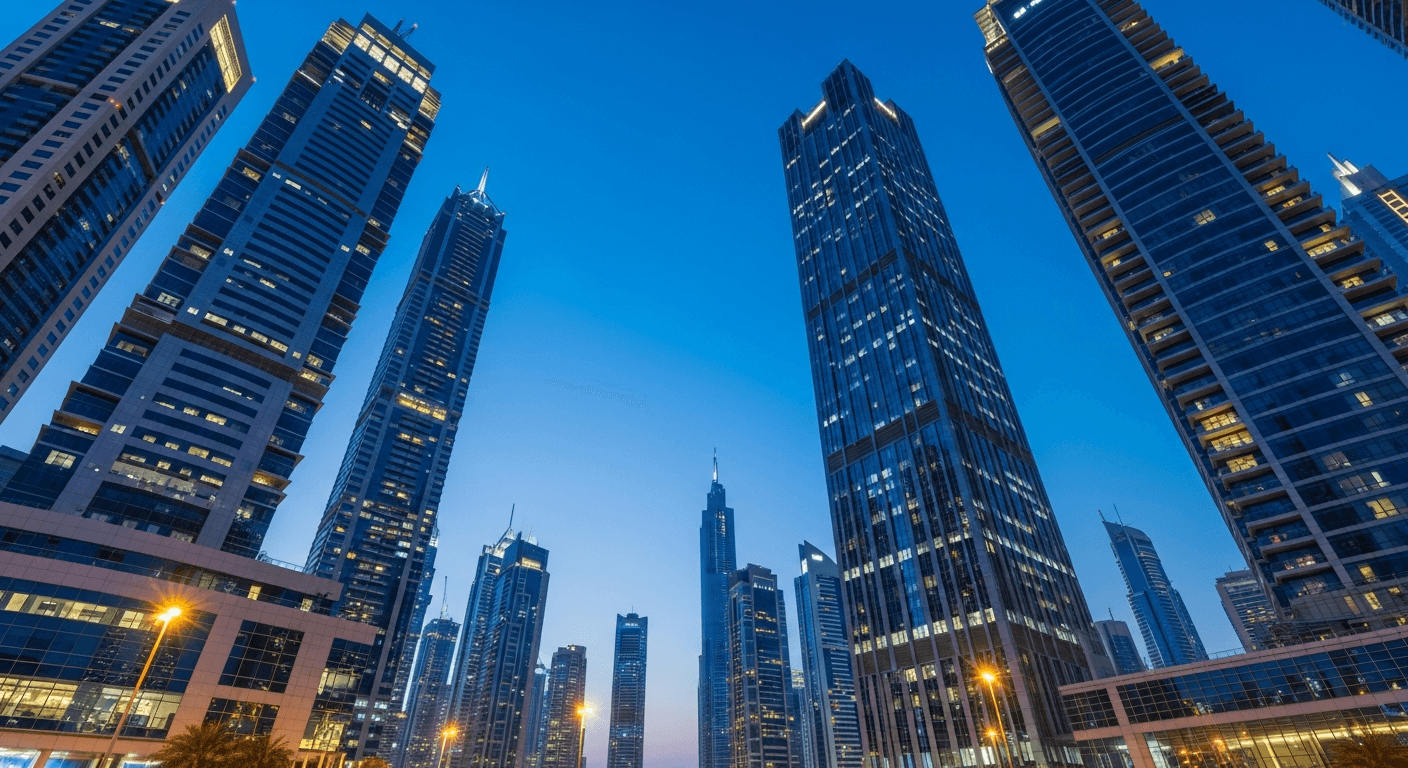
Dubai's Office Market: The Real Engine of Growth
Soaring office occupancy rates and a rush for Grade A space are more than just commercial trends; they are powerful signals for Dubai's economic health and the future of its residential property market.

As a market analyst, I’ve learned that the most insightful data points are often not the most obvious ones. While the world watches Dubai’s residential price indices, my attention is increasingly fixed on a different, arguably more predictive, barometer of the emirate’s health: the commercial office market. The story of Dubai's economic trajectory and the next phase of its property cycle is being written right now in lease agreements, occupancy rates, and the frantic search for premium office space. In my view, the current strength in the commercial sector is the single most important leading indicator for sustained growth in residential demand.
Here is the core logic we will explore:
- The fundamental drivers behind Dubai's commercial real estate rebound since 2021.
- Why the widening gap between Grade A and Grade B office stock is so significant.
- A deep dive into Dubai's key commercial districts, from established hubs to emerging frontiers.
- An assessment of the new supply pipeline and whether it can satisfy voracious demand.
- The direct economic spillover from new business setups to job creation and housing needs.
- How the corporate “flight to quality” mirrors trends in the prime residential market.
- A practical cost breakdown for leasing a mid-size office in a prime Dubai location.
- My final verdict on what these commercial signals mean for residential investors and homeowners.
The Thesis: Why Commercial Real Estate is a Crystal Ball
It’s a common misconception to view the real estate market as a single, monolithic entity. In reality, it’s a complex ecosystem of interconnected, yet distinct, sectors. The conventional narrative often places residential real estate at the forefront, with sales figures and rental yields seen as the primary gauge of market sentiment. I argue for a different perspective. I believe that for a hub economy like Dubai, the office market acts as a powerful *leading* indicator, foreshadowing trends in the residential space by six to eighteen months. The logic is simple and causal: businesses precede people. Before a family seeks a villa in Arabian Ranches or a young professional rents a flat in Dubai Marina, a company must first make the decision to establish or expand its presence in the city.
This process begins with a commercial lease. A new hedge fund, tech startup, or multinational corporation signing for office space is not just a transaction; it's a forward-looking commitment. It signals confidence in Dubai's economy, its regulatory framework, and its long-term prospects. This decision triggers a cascade of economic activity. The most immediate effect is job creation. That new office needs to be staffed, leading to the hiring or relocation of employees, from senior executives to junior support staff. Each of these new employees becomes a participant in the residential market, seeking a place to live. This is the fundamental mechanism linking the two sectors. A surge in office absorption today directly translates into increased demand for apartments and villas tomorrow. This is the core of our Dubai office market analysis.
What has made this link so potent in Dubai's recent cycle is the confluence of proactive government policy and global macroeconomic shifts. Initiatives like the expansion of the Golden Visa program, the introduction of 100% foreign business ownership outside of free zones, and a range of business-friendly reforms have acted as a powerful magnet for capital and talent. These policies effectively rolled out the red carpet for global enterprise precisely when other parts of the world were becoming less certain or more restrictive. The result was not just a recovery, but a structural shift in Dubai's appeal as a global business hub. The companies flocking here are not just setting up satellite offices; many are moving significant headcounts and decision-making centres, embedding themselves into the local economy. Therefore, watching office occupancy isn't just about commercial trends; it’s about tracking the primary engine of population growth and, by extension, housing demand.
Decoding the Rebound: The Surge in Occupancy and Rents
 Featured project
The recovery of Dubai's office market from the pandemic-induced slowdown has been nothing short of remarkable. It wasn't a slow, gradual climb but a sharp, V-shaped resurgence that caught many by surprise. By late 2021, the market was already showing strong signs of life, and this momentum has only accelerated since. The most telling statistic is the city-wide occupancy rate, which has climbed steadily across the board. While precise figures vary by data provider and submarket, the consensus in the market is that prime buildings in core locations are now effectively full, with occupancy rates consistently pushing above 95%. This is a landlord's market, a scenario we haven't seen with such intensity for many years.
This tightening of supply has had an inevitable impact on rents. The increases have been most dramatic in the top tier of the market. For prime Grade A office space in the Dubai International Financial Centre (DIFC), rental rates have surged. It is not uncommon to see headline rents in the range of AED 300 to over AED 450 per square foot for the best units in the most sought-after towers. Even high-quality buildings in Business Bay now command rents well over AED 200 per square foot, a significant jump from just a few years ago. In contrast, older, lower-quality Grade B and C stock in less central areas like Deira or Bur Dubai might still be available for under AED 100 per sqft, but this is not where the demand is focused. The market is bifurcated, and all the energy is at the premium end.
What’s driving this demand? It’s a multi-faceted influx of businesses. We are seeing a significant number of new market entries, particularly from the financial services sector — hedge funds, private equity firms, and wealth management companies, drawn by the DIFC's robust legal framework and ecosystem. The technology sector is another major driver, with fintech, AI, and software development companies establishing regional headquarters. Simultaneously, existing corporations that paused expansion plans are now confidently growing their footprint. This isn't just about international firms; local and regional companies are also expanding. This broad-based demand is a key signal of the economy's underlying health and diversification, forming one of the critical Dubai economic indicators real estate investors should watch.
The Great Divide: Grade A Scarcity and the Flight to Quality
One of the most defining characteristics of the current Dubai office market is the phenomenon known as the “flight to quality.” This isn't just a preference; it’s a non-negotiable demand from the world’s leading companies for the very best office environments. This has created a stark and widening divide between the top tier of the market (Grade A) and everything else (Grade B and C). Understanding this distinction is crucial to understanding the entire commercial landscape and its subsequent impact on residential property. The demand is not for just any office; it's for a specific type of high-performance workspace, and there simply isn't enough of it to go around.
So, what constitutes Grade A office space in Dubai? The definition has evolved. It’s no longer just about a good address. Today, a Grade A building must offer a holistic package:
- Prime Location: Situated in a major business hub like DIFC, Downtown Dubai, or a well-connected part of Sheikh Zayed Road.
- Modern Specifications: High-efficiency floor plates, state-of-the-art HVAC systems, high-speed elevators, and robust IT infrastructure.
- Premium Amenities: Access to high-end F&B, fitness centres, conference facilities, and concierge services within the building or complex.
- ESG Credentials: Increasingly, tenants demand strong environmental, social, and governance bona fides, such as LEED or WELL certifications, which signal a commitment to sustainability and employee wellbeing.
- Excellent Connectivity & Parking: Ample and efficient parking is a must, as is proximity to metro stations and major road networks.
This flight to quality is driven by a global battle for talent. In a post-pandemic world, the office is a tool for attraction and retention. Companies know that to attract and keep the best people, they need to offer an environment that is not just functional but aspirational. It’s a physical manifestation of their brand and culture. A prime office in a building like ICD Brookfield Place or Uptown Tower sends a powerful message to employees and clients alike. This is why these buildings have achieved near-total occupancy at premium rents while older, less-equipped buildings struggle to attract tenants even with significant discounts. This intense competition for scarce premium assets is the core dynamic of the commercial real estate Dubai outlook.
“The health of Dubai's residential market isn't just written in housing prices; it's drafted in the commercial lease agreements being signed today.”
The scarcity of true, internationally recognized Grade A stock is the market's biggest challenge. For years, Dubai’s development focus was heavily weighted towards residential and retail. The pipeline for world-class office towers was comparatively thin. As a result, when this wave of corporate demand arrived, it quickly absorbed the available prime inventory. This has created a landlord-favourable environment where there are often multiple bidders for a single available floor. This supply-demand imbalance at the top end of the market will continue to drive rents higher and force some companies to pre-lease space in buildings that are still under construction, locking in commitments years in advance. This underlying scarcity is a powerful force that underpins the entire commercial market's strength.
A Tale of Three Districts: DIFC, Business Bay, and New Frontiers
To truly grasp the dynamics of the Dubai office market, we must look at its key geographies. The demand is not uniform; it's concentrated in specific nodes, each with its own character and appeal. The undisputed epicentre for finance, law, and wealth management is the Dubai International Financial Centre (DIFC). It is more than just a collection of office buildings; it is a complete ecosystem. As a free zone with an independent, common-law judicial system and its own regulator, it offers a level of legal certainty and operational familiarity that is invaluable to global financial institutions. The network effect is powerful here — banks want to be near law firms, who want to be near asset managers. This has created an environment where vacancy for prime space is functionally zero. Companies wanting a DIFC address are now often relegated to waiting lists or considering subleases at a premium.
The city's largest and perhaps most diverse commercial district is Business Bay. Spanning a vast area adjacent to Downtown Dubai, it offers a wide spectrum of office quality, from ultra-modern towers like Opus by Zaha Hadid to more standard commercial buildings. Its scale means it can accommodate a broader range of businesses, including large multinational corporations, regional headquarters, and professional services firms. Its central location, excellent connectivity via Sheikh Zayed Road and the Dubai Metro, and relative affordability compared to DIFC make it a compelling choice. Developers like Emaar Properties have been instrumental in shaping its master plan. The ongoing development of the Dubai Canal has also enhanced its appeal, adding a lifestyle element to the commercial hub. Business Bay represents the workhorse of the Dubai office market, absorbing a huge volume of demand.
Beyond these central hubs, a fascinating story is unfolding in specialized zones and emerging business parks. These areas are designed to foster industry-specific clusters and are creating localized economic engines across the city. For example, the business parks within Dubai Hills Estate, also an Emaar community, are attracting a mix of tenants who want a high-quality environment away from the density of the central business district. The success of these parks has a direct and immediate impact on residential demand within Dubai Hills itself, as employees seek the convenience of living close to work. Similarly, Dubai South is rapidly evolving into a global logistics and aviation hub, anchored by Al Maktoum International Airport and the Expo City site. This is drawing in a different profile of companies and creating a self-sustaining economic zone with its own unique housing requirements. Other established zones like Dubai Media City, Dubai Internet City, and Dubai Science Park continue to thrive, proving the success of the city's cluster strategy. These frontiers are crucial for accommodating future growth and diversifying the city's commercial footprint.
The Supply Pipeline: Can Dubai Build Fast Enough?
With demand for high-quality office space reaching a fever pitch, the most pressing question for the market's long-term stability is whether the supply side can respond. The simple answer, in my opinion, is that in the short to medium term, it will be a significant challenge. The development cycle for a large-scale, Grade A office tower is long and complex, typically taking three to five years from design to delivery. This is a far more protracted process than for a residential building. The current scarcity is, in part, a legacy of the previous market cycle where the focus was overwhelmingly on residential projects, leaving the commercial pipeline relatively lean.
Currently, there are only a handful of major Grade A office projects under construction that will deliver significant new inventory in the near future. Uptown Tower in JLT was a recent major addition, and it was absorbed by the market with incredible speed. Other projects are in the pipeline, but the volume is unlikely to be enough to quench the current thirst for premium space. This supply constraint is the primary factor that will keep rents for prime properties on an upward trajectory. Landlords of existing, high-quality buildings are in an enviable position, able to be highly selective with tenants and command premium terms. For tenants, this means increased competition and the need for forward planning, often involving pre-leasing space in buildings that are still concrete skeletons.
This supply-demand mismatch creates an interesting dynamic for the commercial real estate Dubai outlook. It may force some companies to re-evaluate their real estate strategies. Some might choose to locate in emerging submarkets where new, high-quality stock is becoming available, such as the business parks in master communities. Others might consider refurbishing and upgrading older Grade B spaces to meet their standards, although this comes with its own costs and challenges. We could also see a rise in mixed-use developments where developers like Meraas or Select Group integrate boutique office components into their residential or retail projects to cater to localized demand. From an investment perspective, this supply bottleneck makes existing Grade A assets exceptionally valuable. Their scarcity provides a strong moat against competition, ensuring their continued relevance and rental-growth potential. The key will be to watch for new project announcements from major developers and the Dubai government, as this will be the clearest signal of how the city plans to address this critical need.
The Ripple Effect: From Office Leases to Apartment Rents
This is where the two sides of the market, commercial and residential, explicitly converge. The link is direct, measurable, and is the primary driver of the sustained demand we are seeing in the housing sector. Every major office lease agreement acts like a stone thrown into a pond, creating ripples that spread throughout the residential market. The business growth impact on property in Dubai is not an abstract concept; it is a tangible force that shapes neighbourhood demographics and price points. Let's trace the journey from a corporate decision to its residential consequences with a clear, practical example.
Imagine a European asset management firm decides to open a major hub in Dubai to cover the MEASA region. They lease 20,000 square feet of prime office space in the DIFC. This space will accommodate approximately 100-150 employees. A significant portion of these will be senior-level relocations: partners, portfolio managers, and senior analysts. This demographic has specific housing needs. They will likely seek high-end, spacious apartments or penthouses in close proximity to their new office. They will be the prime audience for luxury properties in Downtown Dubai, City Walk, or even premium villas in Jumeirah. Their budgets are substantial, and they value convenience and lifestyle, putting immediate upward pressure on rents and sales prices in these top-tier districts. They are the buyers for properties listed by firms like AHS Properties or in Emaar's most exclusive towers.
Now, consider the rest of the 150 employees. This will be a mix of mid-career professionals, analysts, and support staff, some relocated and some hired locally. Their housing search will be more varied, driven by a combination of budget, family needs, and lifestyle preferences. A young, single analyst might look for a one-bedroom apartment with good amenities in JVC or Business Bay. A family with children might prioritize a townhouse or small villa in a community with good schools, like Dubai Hills Estate or Town Square. The collective demand from this single corporate move is now dispersed across multiple neighbourhoods and price points. Multiply this effect by the hundreds of new companies that have set up in Dubai over the past few years, and you begin to understand the sheer scale of the induced residential demand. It's a continuous, powerful inflow of new tenants and buyers into the system, all sparked by activity in the commercial sector.
A Practical Cost Breakdown: Leasing a Small Office in Dubai
To make this discussion more concrete, it's useful to break down the real-world costs associated with setting up a physical business presence. This is a crucial step for any company entering the market and illustrates the significant upfront investment involved, which is another proof of corporate confidence. Let's create a hypothetical scenario for leasing a modest 1,500 sqft office in a good quality, but not ultra-prime, Grade B+ building in a free zone like Jumeirah Lakes Towers (JLT) or a mainland area like Business Bay. The costs are illustrative and can vary widely, but this provides a realistic baseline.
Here is a line-by-line estimate of the primary upfront and annual costs:
- Annual Rent: Assuming a mid-range rental rate of AED 180 per sqft for a fitted or semi-fitted unit.
- 1,500 sqft x AED 180/sqft = AED 270,000 per year
- Security Deposit: This is typically refundable at the end of the lease, but it's an upfront cash outlay. It's usually 5-10% of the annual rent.
- 5% of AED 270,000 = AED 13,500
- Agency Fee: A standard fee paid to the real estate brokerage that facilitated the lease, typically 5% of the first year's rent.
- 5% of AED 270,000 = AED 13,500
- Ejari Registration Fee: Mandatory registration of the lease contract with the government.
- Approximately AED 220 (managed through approved centres)
- DEWA Deposit & Connection: For electricity and water services, this is a refundable deposit.
- Approximately AED 2,000 - AED 4,000 depending on the unit size.
- VAT on Commercial Rent: Value Added Tax is applicable at 5% on commercial leases.
- 5% of AED 270,000 = AED 13,500 per year
- Fit-Out Costs: This is the most variable and often underestimated expense. Even for a 'fitted' office, a company will have costs for branding, furniture, IT cabling, and partitions. For a shell-and-core unit, this can be enormous.
- Low-end (basic furnishing): AED 100/sqft = AED 150,000
- High-end (custom design): AED 500+/sqft = AED 750,000+
These figures don't even include the costs of the trade license, visa processing, and other administrative setups, which can easily add another AED 20,000 to AED 50,000+. The total initial cash outlay for just securing and preparing a modest office can therefore range from around AED 200,000 to well over AED 1,000,000 before the first day of business. This significant financial commitment underscores the long-term view that companies are taking. They are not making frivolous or short-term plays; they are investing substantial capital, which is a powerful vote of confidence in the Dubai economy. It's also important for any new business to be aware of regulations from authorities like the Dubai Land Department (DLD) and RERA which govern these commercial contracts.
My Verdict: Reading the Signals for Future Investment
Having laid out the evidence, my conclusion is clear: the robust health of Dubai’s office market is not a sideshow to the residential story; it is the prologue and the driving force. For anyone looking to understand the future trajectory of the emirate's property market, my advice is to look beyond the headline residential sales figures and pay close attention to the commercial real estate indicators. These metrics provide a less-hyped, more fundamental view of the underlying economic health and, crucially, the future pipeline of housing demand.
In my view, as long as Dubai continues its successful strategy of attracting global businesses, capital, and talent, the demand for high-quality housing will remain strong. The 'flight to quality' we observe so clearly in the office sector has a direct parallel in the residential market. The executives moving here to work in state-of-the-art offices are the same people driving demand for branded residences, premium waterfront apartments on Palm Jumeirah or Emaar Beachfront, and family villas in exclusive, well-amenitised communities. The two markets are intrinsically linked by a shared demographic of discerning, affluent end-users.
For investors and homebuyers, this means that the key signals to watch are not just property-specific. Keep an eye on the office vacancy rates published by major consultancies, especially for Grade A stock. Track the announcements of new companies establishing headquarters in Dubai, which are often covered by the Dubai Chamber of Commerce. Pay attention to pre-leasing activity in new commercial towers, as this is a direct measure of forward-looking demand. These data points collectively tell a story about job creation and population influx, which are the ultimate foundations of a sustainable real estate market. The current signals from the office market are overwhelmingly positive, suggesting that the demand side of the residential equation is set to remain strong for the foreseeable future.
The strength and depth of the Dubai office market, particularly the intense demand for Grade A space, serves as the most reliable leading indicator for sustained demand and capital appreciation in the prime residential sector. Investors should view a healthy commercial market as the bedrock of their residential investment thesis.
Sources
- Dubai Land Department (DLD): https://dubailand.gov.ae/
- Real Estate Regulatory Agency (RERA): Part of the DLD structure.
- Dubai Statistics Center (DSC): https://www.dsc.gov.ae/
- Central Bank of the UAE: https://www.centralbank.ae/
- UAE Government Official Portal: https://u.ae/
- Dubai Chamber of Commerce: https://www.dubaichamber.com/
Questions, answered
- What is Grade A office space in Dubai?
- Grade A office space in Dubai refers to the highest quality commercial buildings. They are typically defined by their prime location (like DIFC or Downtown), modern construction, premium amenities, high-end finishes, ample parking, and often, green building certifications like LEED.
- How does the office market affect residential property prices in Dubai?
- A strong office market signifies job creation and corporate relocations. New employees moving to Dubai require housing, which directly increases demand for rental properties and, subsequently, for properties to buy, putting upward pressure on prices, especially in areas near major business hubs.
- Which areas have the highest demand for office space in Dubai?
- Demand is highest in prime central business districts. The Dubai International Financial Centre (DIFC) leads for financial and legal firms, followed by Business Bay and areas along Sheikh Zayed Road. Specialized zones like Dubai Media City and Dubai Science Park also see strong, industry-specific demand.
- Are office rents increasing in Dubai?
- Yes, office rents in Dubai have seen significant increases, particularly for Grade A and prime Grade B properties. A shortage of high-quality new supply combined with strong demand from new and expanding businesses has driven rental rates to new highs in the most desirable locations.
- Is buying commercial property in Dubai a good investment?
- Investing in Dubai's commercial property can offer attractive yields, but it requires careful analysis. Prime, well-located office space with long-term tenants can provide stable income, though it involves different considerations like longer vacancy periods and fit-out costs compared to residential property. We always advise seeking expert guidance.
- What are the main costs when leasing an office in Dubai?
- The main costs include the annual rent, a security deposit (typically 5-10% of annual rent), agency fees (around 5%), and government fees for contracts like Ejari. You must also budget for utility connections (DEWA), potential service charges or chiller fees, and significant fit-out costs to prepare the space for your business.

Amara translates DLD transaction data, supply pipelines, and macro signals into clear calls on where Dubai's market is heading. She writes the numbers most brokers only feel.
Related stories
Dubai's Big Squeeze: Smaller Plots, Denser Living
Dubai real estate is undergoing a fundamental shift towards smaller plot sizes and higher density. We analyse the economic drivers, the impact on property values, and what this new era of compact urban living means for both homebuyers and investors.
Resort Living as Your Dubai Reality
Explore how to trade temporary staycations for a permanent home with five-star amenities in Dubai. I'll break down the real costs, best communities, and lifestyle trade-offs of embracing high-end resort living every day.
Finding Your Tribe in Dubai's Villa Communities
I explore which of Dubai's renowned villa communities attract specific expat nationalities and lifestyle groups, offering insights to help you find a place that feels like home.
Echoes, in your inbox
One thoughtful email a month. Market insight, new launches, no spam.