

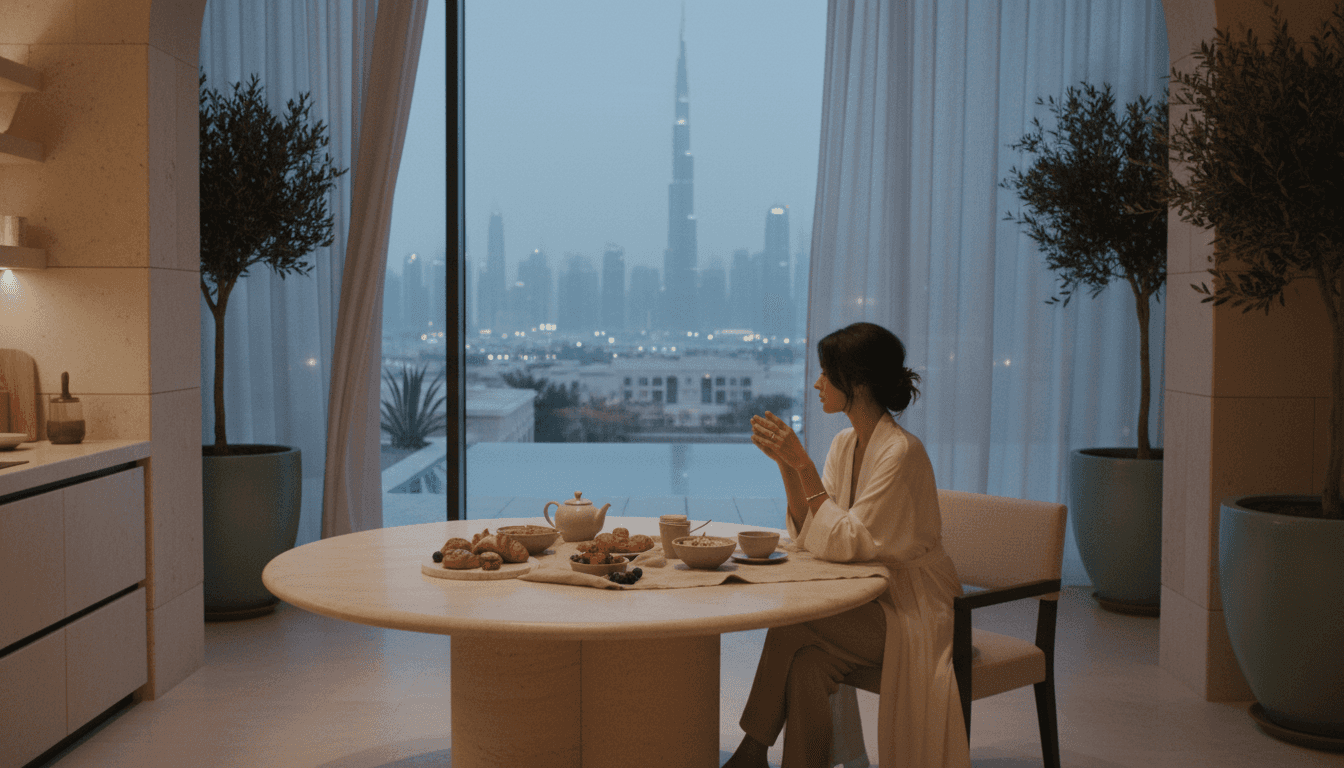
Dubai's Off-Plan Market: Beyond the Boom
I explore the nuanced reality behind Dubai's headline-grabbing off-plan market, analysing where demand is truly concentrating and which developer strategies are succeeding.

The narrative of Dubai's property market is often one of relentless, uniform growth. Yet, as I analyse the data, I see a more complex and, frankly, more interesting picture emerging in the off-plan sector. The dynamics have shifted; we are past the point where any new launch was guaranteed to sell out on day one.
Here's what we'll explore:
- The myth of uniform demand: Where capital is *really* flowing in the off-plan market.
- The playbook of success: What separates a sell-out launch from a slow-burner.
- Developer strategies: Contrasting the master-planners with the boutique visionaries.
- The true cost of entry: A line-by-line breakdown of off-plan purchase fees.
- Payment plans: How their role is changing in a maturing market.
- Future supply hotspots: Identifying the next generation of Dubai communities.
- My verdict on navigating this sophisticated market for the years ahead.
Unmasking the Concentration of Demand
The most critical trend I see is the intense concentration of Dubai off-plan demand. While transaction volumes remain historically high, the capital is not being spread evenly across the city. Instead, it is clustering in specific micro-markets, often defined not just by geography but by developer reputation, project concept, and perceived scarcity. The days of a rising tide lifting all boats are behind us. Today, the market is a collection of strong currents, and investors who fail to identify them risk being left in stagnant waters.
We see this clearly when comparing launches. A project by a trusted master developer like Emaar Properties in an established community will generate a frenzy of interest, often oversubscribed within hours. Think of the recent launches in Arabian Ranches or Emaar Beachfront. In parallel, a project from a lesser-known developer in a less established area might struggle to gain traction, even with attractive pricing. The market has become far more discerning. Buyers are no longer just purchasing a property; they are buying into a developer's track record, a community's established infrastructure, and a specific lifestyle promise.
This concentration is most pronounced at the luxury end of the market. Branded residences, a segment once considered niche, now regularly command the highest premiums and sell-out speeds. Projects associated with world-renowned hospitality or fashion brands, particularly in prime locations like Palm Jumeirah or along the Dubai Water Canal, are attracting a global pool of ultra-high-net-worth individuals. They aren't just buying real estate; they are acquiring a status symbol with the added assurance of hotel-level service and management. This is a flight to quality, but also a flight to brand equity, a factor that is becoming a dominant driver of value.
The New Playbook for Project Success
 Featured project
So, what are the new project success factors in Dubai? Based on my analysis of the most successful launches, I've identified a clear playbook that goes far beyond just location and price. It’s a multi-faceted strategy that the most astute developers are executing with precision. The market has matured to a point where simply building apartments is not enough. Success is now engineered through a combination of brand, community, and scarcity.
Here are the core pillars I've observed in sell-out projects:
- A Compelling Master Plan: Buyers are investing in a vision. Developers who can articulate a clear, attractive, and deliverable master plan for a whole community — complete with schools, retail, parks, and unique amenities, are winning. Sobha Hartland and Sobha Hartland II is a prime example. The developer, Sobha Realty, didn't just sell villas and apartments; they sold the idea of a green, family-centric sanctuary minutes from Downtown. They built the schools and infrastructure concurrently with the residences, demonstrating commitment and building trust.
- Genuine Scarcity: The most sought-after projects create a sense of irreplaceability. This can be through a unique location, like the direct beach access at Emaar Beachfront, or through limited-edition unit types. Developers are becoming masters of phasing their releases to maintain pricing tension and the perception that 'this is the last chance' to acquire a specific type of property in a certain location. The relaunch of Palm Jebel Ali by Nakheel masterfully used this, releasing a finite number of villas on a globally unique landmark.
- Brand Equity and Trust: A developer's track record is paramount. In a market with hundreds of active developers, a history of on-time delivery, high-quality finishes, and well-maintained communities is the most valuable currency. This is where giants like Emaar have a formidable advantage. However, boutique developers like Omniyat have also built immense brand equity in the ultra-luxury space by consistently delivering architecturally significant and flawlessly executed buildings, justifying their premium pricing.
- An Integrated Lifestyle Proposition: It’s no longer about the four walls of the apartment. It's about the life you can live there. Is there a community running club? A farmer's market? Co-working spaces? Pet-friendly parks? Developers who integrate these lifestyle elements into the fabric of their communities are creating 'sticky' ecosystems where residents want to stay and new buyers are desperate to get in. This is a key differentiator in areas with high supply, such as Jumeirah Village Circle (JVC), where the more thoughtful projects are significantly outperforming the rest.
“The most successful developers in Dubai today aren't just selling square footage; they are curating communities and manufacturing scarcity.”
Developer Strategy: Titans vs. Trailblazers
The current developer strategy Dubai landscape can be broadly divided into two camps: the master-plan 'Titans' and the niche 'Trailblazers'. Understanding the difference in their approach is key to understanding where the market is headed. Each plays a vital, but distinct, role in the city's growth.
The Titans — principally Emaar Properties and Nakheel, and increasingly Aldar with its expansion into Dubai, are city-builders. Their strategy is built on scale. They acquire vast land banks and develop entire ecosystems over decades. Their competitive advantage lies in their ability to control every aspect of the environment, from the road layout and public parks to the retail mix and community management. This creates a predictable and high-quality living experience that appeals to a broad range of buyers, particularly end-user families. Their launches, like Valia at The Valley by Emaar, are designed to create self-sustaining suburbs, offering a complete lifestyle package that de-risks the purchase for buyers. They don't just build a tower; they build the neighbourhood around it.
On the other side are the Trailblazers. These are the boutique and specialist developers who thrive by identifying and dominating specific niches. Think of Omniyat in the ultra-luxury branded residence space, known for its partnerships with Zaha Hadid and Foster + Partners. Or consider smaller, design-led firms that focus on creating unique, high-quality mid-rise buildings in up-and-coming areas like Jumeirah Village Circle (JVC) or Arjan. Their strategy is not about scale but about differentiation. They cannot compete with the Titans on land bank or marketing budget, so they compete on design, specificity of product, and a relentless focus on a particular customer profile. They might build a tower targeted specifically at young professionals with innovative co-working spaces, or a low-rise building focused on wellness with exceptional gym and spa facilities. This focused approach allows them to achieve premium pricing within their chosen sub-market.
At Gaia Living, we advise clients that there is no 'better' strategy to back. The choice depends entirely on the investor's goals. Investing with a Titan offers the security of a proven ecosystem and a likely stable, if not explosive, capital appreciation path. It's a blue-chip investment. Investing with a successful Trailblazer can offer higher potential returns, as they are often creating a new market or bringing a superior product to an underserved one. However, it requires more due diligence on the developer's execution capability and the specific project's unique selling proposition. The key is to understand which game you are playing and to choose the developer that has proven they can win it.
The Real Cost of Buying Off-Plan
One of the most common questions our clients ask is about the true cost of an off-plan purchase. The advertised price is just the beginning, and understanding the associated fees is crucial for accurate budgeting. These costs are non-negotiable and set by government entities, primarily the Dubai Land Department (DLD). Let's break down a typical purchase for a hypothetical AED 2,000,000 apartment.
This is a critical step that many first-time buyers overlook. While developers' payment plans make the purchase price feel manageable, these upfront government and administrative fees are due at the time of signing the Sales and Purchase Agreement (SPA). Forgetting to budget for what amounts to an additional 6-7% of the property value can cause significant financial strain.
Here is a line-by-line breakdown of the mandatory upfront costs:
- Property Base Price: AED 2,000,000
- Initial Down Payment (20%): AED 400,000 (This is the first instalment of the payment plan, paid to the developer).
- DLD Transfer Fee (4% of Price): AED 80,000 (Paid to the Dubai Land Department to register the transfer of ownership).
- Oqood Registration Fee: Approximately AED 5,250 (This is the fee for registering the off-plan property in the DLD's interim register, known as Oqood. The fee is AED 5,000 plus a 5% VAT).
- Real Estate Agency Fee (2% of Price): AED 40,000 (Plus 5% VAT on the fee, so AED 42,000 total). This is our standard fee at Gaia Living for sourcing the property and managing the entire transaction process.
- Total Upfront Cash Outlay: AED 527,250 (This is the sum of the down payment and all associated fees).
It's crucial to note that the DLD fee is calculated on the total Sale and Purchase Agreement (SPA) value, not just the down payment. All these payments must be made via Manager's Cheques to the respective parties — the developer, the DLD, and the real estate agency. The process is rigorously controlled to protect all parties, with funds for the property itself typically held in a RERA-approved escrow account until construction milestones are met. This system, mandated by Dubai's real estate regulators, is one of the key pillars of trust in the market. It ensures that a buyer's funds are used specifically for the construction of the project they have invested in.
The Evolving Role of Payment Plans
The payment plan has long been a cornerstone of the off-plan market trends in Dubai. For years, generous post-handover payment plans (PHPPs) — where a significant portion of the price is paid over several years after the buyer moves in, were a primary tool for developers to attract investors and end-users. However, in the current market, I am observing a significant shift in this dynamic.
Top-tier developers with sell-out launches are increasingly moving away from PHPPs. When demand far outstrips supply for a project, there is simply no commercial incentive for the developer to offer generous credit terms. They can command more capital upfront. A typical payment plan for a high-demand launch from a developer like Emaar might now be structured as 80/20 or 90/10, where 80-90% of the property price is paid in instalments during the construction period, and the final 10-20% is due upon handover. This signals a position of strength and confidence in their product.
However, PHPPs are far from extinct. They remain a crucial strategic tool for other segments of the market. Newer developers trying to build a track record, or projects in areas with more competition, continue to use them effectively. A common structure we see is a 60/40 plan, where 60% is paid during construction and 40% is paid over 2-4 years post-handover. For an investor, this can be a powerful tool. It allows them to rent out the property upon handover and use the rental income to service the remaining payments, significantly improving the cash flow profile of the investment. For an end-user, it provides time to save or arrange long-term financing without the immediate pressure of a large mortgage.
When evaluating an off-plan investment, the payment plan should be analysed as carefully as the property itself. A generous PHPP can sometimes mask a higher base price or a less desirable location. Conversely, a demanding payment plan from a top developer might be a strong indicator of the project's desirability and future value. It’s a trade-off between cash flow and asset quality. At Gaia Living, our team helps clients model these scenarios, comparing the total cost of ownership and potential rental yields across different payment plan structures to identify the option that best aligns with their financial strategy.
Identifying Future Supply Hotspots
Looking ahead, a key part of our research at Gaia Living is identifying the future supply hotspots in Dubai. These are the areas where the next wave of development is concentrated, driven by major infrastructure projects and the city's long-term urban master plan. Investing in the early stages of these emerging communities can offer significant potential for capital appreciation, but it requires a long-term perspective and an understanding of the master plan.
One of the most significant growth corridors is Dubai South, the area surrounding Al Maktoum International Airport and Expo City. The government's ambition to make this the world's largest airport and a major new economic hub is driving massive investment in residential and commercial real estate. Developers like Emaar with their Emaar South community are creating a new, affordable city core, offering villas and townhouses that appeal to families working in the logistics and aviation sectors. The long-term vision is compelling, but investors need to be prepared for a multi-decade development timeline.
The expansion of the metro's Blue Line will also unlock new corridors for development. We are closely watching the inland areas that will benefit from this new connectivity, such as Liwan and the residential districts around Dubai Science Park and Arjan. These areas currently offer some of the most attractive price points in the city and are seeing a new wave of projects from quality mid-market developers. As infrastructure improves, I expect these neighbourhoods to mature rapidly, bridging the gap between the established hubs of Al Barsha and the newer suburbs of Arabian Ranches.
Finally, the mega-projects on the coast cannot be ignored. The revival of Palm Jebel Ali and the development of Dubai Islands (formerly Deira Islands) by Nakheel signal a renewed focus on creating iconic waterfront destinations. These are city-scale projects that will introduce thousands of new homes, hotels, and attractions over the next 10-15 years. Early investment here is a bet on Dubai's continued ability to create world-leading destinations from scratch. The scale is immense, and while the potential rewards are high, so is the importance of choosing the right phase and product within these colossal master plans.
The Dubai off-plan market has matured into a sophisticated ecosystem. Success is no longer guaranteed by market momentum alone but is instead engineered by developers who master brand, community, and scarcity. For buyers, this demands a more analytical approach, focusing on developer track record and the specific value proposition of each project, not just the headline price.
My Verdict: Navigating the Market Ahead
My analysis leads me to a clear conclusion: the Dubai off-plan market is healthier and more rational than it has ever been, but it is also more complex. The speculative frenzy of past cycles has been replaced by a more discerning, value-driven approach from buyers. This is a positive development for the long-term stability of the market.
For investors and end-users looking to browse properties for sale, my advice is to focus your due diligence in three key areas. First, scrutinise the developer's track record above all else. Use the DLD's REST app and look at their previously completed projects. Are they well-maintained? Are the service charges reasonable? Have they delivered on their promises? Second, analyse the master plan. Look beyond the renderings for the single building and understand the ecosystem you are buying into. Who is the school operator? What is the retail mix? How much green space is there? Third, do the maths. Work with a trusted advisor to build a complete financial model that includes all fees, potential service charges, and realistic rental income projections based on comparable properties in the area.
We are in a market of micro-climates. A villa in a new launch at Arabian Ranches and an apartment in an emerging area like Al Furjan are subject to different supply-and-demand dynamics, and should be evaluated on their own merits. The key is to have a clear strategy. Are you seeking long-term family stability in a master-planned community, or are you an investor seeking to maximise yield by entering an emerging neighbourhood early? Answering that question honestly is the first and most important step to making a successful off-plan purchase in Dubai today.
Sources
- Dubai Land Department (DLD): https://dubailand.gov.ae/en/
- Real Estate Regulatory Agency (RERA): Part of the DLD, setting regulations for escrow accounts and developer conduct.
- Central Bank of the UAE: https://www.centralbank.ae/ for mortgage regulations and monetary policy.
- UAE Government Portal: https://u.ae/en/ for information on fees and legal frameworks.
Questions, answered
- What is the biggest trend in Dubai's off-plan market right now?
- The key trend is demand concentration. Instead of a uniform boom, capital is flowing into specific projects and micro-markets defined by strong developer reputation, unique community concepts, and perceived scarcity, particularly in the luxury and branded residence segments.
- Are post-handover payment plans still common for off-plan properties in Dubai?
- They are becoming less common for high-demand projects from top-tier developers like Emaar, who can command more capital upfront. However, newer or mid-tier developers still use them as a key incentive to attract buyers, often offering plans like 60/40 where 40% is paid over several years after receiving the keys.
- What are the main upfront costs when buying an off-plan property in Dubai?
- The primary costs include the initial down payment (typically 10-25% of the property value), a 4% Dubai Land Department (DLD) transfer fee, an Oqood registration fee (around AED 5,000 plus VAT), and agency fees (around 2% of the property value). You must budget for these in addition to the property's sale price.
- Which developers are considered the most reliable for off-plan investments?
- Master developers with a long track record of delivering entire communities, such as Emaar Properties and Nakheel, are widely considered the most reliable. Niche luxury players like Omniyat and boutique firms with a focus on quality also command significant trust for their specific market segments.
- Where are the next major areas for off-plan development in Dubai?
- Future supply is concentrating along key growth corridors. Areas like Dubai South (near Al Maktoum International Airport and Expo City), the inland corridor from Arjan towards Dubai Science Park and Liwan, and large-scale coastal revivals like Palm Jebel Ali and Dubai Islands are the primary hotspots to watch.
- What is the 'Oqood' in a Dubai off-plan purchase?
- Oqood is the pre-title registration system for off-plan properties in Dubai. When you buy from a developer, your purchase is recorded in this interim register managed by the Dubai Land Department. This Oqood certificate is your proof of ownership until the property is completed and the final Title Deed is issued.

Amara translates DLD transaction data, supply pipelines, and macro signals into clear calls on where Dubai's market is heading. She writes the numbers most brokers only feel.
Related stories

Apartment Storage in Dubai: A Guide to Maximizing Space
Living in a stunning Dubai apartment often means sacrificing storage space. As an apartment specialist, I'll guide you through the best built-in, custom, and external storage solutions to create a functional and elegant home.

The True Cost of Selling Your Dubai Property
When selling your Dubai home, the agent's commission is just the start. I’ll break down every fee you must budget for, from transfer costs to final settlement bills, so you know your true net proceeds.

Selling a Mortgaged Dubai Property: A Guide
Selling a property in Dubai with an outstanding mortgage is a common scenario that requires a specific, carefully managed process. This guide breaks down the steps for both buyers and sellers to ensure a secure and efficient transaction.
Echoes, in your inbox
One thoughtful email a month. Market insight, new launches, no spam.