

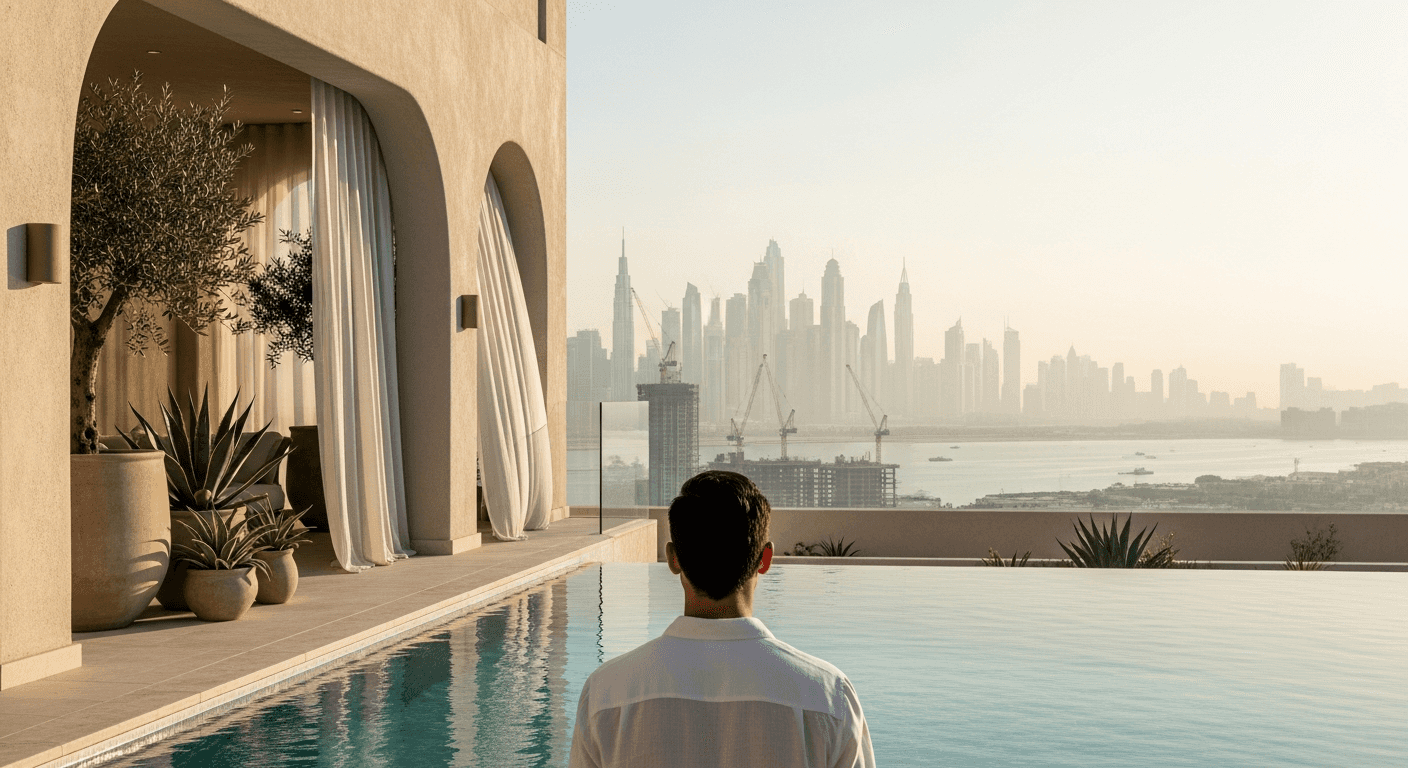
Dubai's New Holiday Home Rules: An Investor's Guide
Dubai's short-term rental market is maturing, with evolving regulations from the DTCM. For investors, understanding these rules is no longer optional—it's the key to profitability and compliance in this high-stakes sector.

Dubai’s short-term rental market has transformed from a niche alternative into a core pillar of the city’s real estate and tourism landscape. The days of informally listing a spare apartment on Airbnb are long gone. Today, this is a sophisticated, regulated, and highly competitive industry. For investors looking to capitalize on the city's powerful tourism engine, understanding the latest Dubai holiday home rules is not just about compliance — it's fundamental to building a viable business model. The regulations set by Dubai's Department of Economy and Tourism (DET) are constantly being refined, and staying ahead of these changes is what separates a profitable venture from a problematic one.
Here's what we'll explore:
- The regulatory landscape and the central role of Dubai's DET (formerly DTCM).
- A detailed, step-by-step guide to securing the mandatory holiday home permit.
- A full breakdown of the costs involved, from purchase to operation.
- The recurring expenses that impact your net yield, including service charges and management fees.
- How to choose the right property and location for short-term rental success.
- The critical decision: professional operator versus self-management.
- A realistic look at the key short-stay property market risks and how to mitigate them.
- My final verdict on whether the holiday home model is still a smart investment in Dubai.
The Regulatory Framework: DET's Central Role
To operate successfully in Dubai's short-term rental market, the first thing an investor must understand is the clear division of regulatory responsibility. While the Dubai Land Department (DLD) and its regulatory arm, the Real Estate Regulatory Agency (RERA), govern property sales, registration, and long-term (annual) contracts, they are not the primary authority for holiday homes. That mandate falls squarely to Dubai's Department of Economy and Tourism (DET), the entity previously known as the Department of Tourism and Commerce Marketing (DTCM). This distinction is crucial. Your relationship as a landlord for an annual tenancy is with RERA; your relationship as a holiday home host is with the DET.
The legal foundation for this framework is Executive Council Resolution No. (41) of 2013, which first established the legislative basis for regulating the holiday home market. The goal was never to restrict the sector but to formalize it. The DET's objectives are threefold: to ensure a consistent level of quality and safety for tourists, to integrate the private rental market into the city's broader hospitality offering, and to protect Dubai's global brand as a premium destination. By requiring permits and setting standards, the DET ensures that a tourist renting an apartment in Dubai Marina has a safe, clean, and professionally managed experience, comparable in standard to a hotel.
In my view, this regulation is a net positive for serious investors. It creates a level playing field, weeds out substandard operators, and builds trust in the market. When tourists know that every legally listed holiday home meets a minimum standard enforced by a government body, they book with more confidence. This elevates the entire ecosystem and supports higher nightly rates and occupancy. The DET acts as a quality gatekeeper, which ultimately protects the long-term value of investments in this sector. The system is designed to professionalize the market, shifting the mindset from a casual side-hustle to a formal hospitality business. This is the new reality of the short-stay property market here.
Securing Your Permit: A Step-by-Step Guide
The DET Holiday Home Permit is the non-negotiable license to operate. Listing a property on any platform, including Airbnb, Booking.com, or your own website, without a valid permit is illegal and can result in significant fines. The process is managed digitally through the DET's online portal, making it relatively straightforward, provided you have all your documentation in order. It's important to remember that the permit is attached to a specific property unit. If you plan to rent out three apartments, you must apply for and maintain three separate permits.
The primary prerequisite is ownership. You must be the legal owner of the property, with a title deed issued by the DLD in your name. If the property is jointly owned, all owners must consent. The process can also be managed by a DET-licensed holiday home operator on your behalf, for which you would provide a formal management agreement. Once you've confirmed eligibility, the next step is to gather the required documents. Precision here is key to avoiding delays.
Here is a typical checklist of what you'll need to submit through the portal:
- A valid copy of your Title Deed as issued by the DLD.
- Passport copy of the property owner (and Emirates ID if a UAE resident).
- A recent DEWA (Dubai Electricity and Water Authority) bill for the property, showing the owner's name and address.
- If appointing an operator, a signed and dated property management agreement.
- A No Objection Certificate (NOC) may be required from the building's owner's association or management company, confirming they approve of short-term rental activity in the unit. While many buildings are short-let friendly, this is a crucial due diligence step.
Once submitted, you'll pay the required fees. These consist of an initial application fee and a classification fee. The DET system requires you to self-classify your property as either 'Standard' or 'Deluxe' based on its quality, furnishings, and amenities. This classification impacts the Tourism Dirham fee you will later collect from guests. The entire process, from application to permit issuance, can take a few days to a couple of weeks. Upon approval, you receive a unique permit number that must be displayed on all online listings for that property. This is your official license to host.
The Full Financial Picture: Costs Beyond the Purchase Price
First-time investors in Dubai's holiday home market often make the mistake of focusing solely on the property's purchase price and the potential gross rental income. This is a recipe for disappointment. A successful investment requires a comprehensive understanding of all associated costs, both upfront and recurring. The sticker price is merely the starting point of a much larger financial equation. A clear-eyed budget is the most important tool you have, and at Gaia Living, we always advise clients to map this out line by line before committing.
Let's walk through a realistic example of the upfront capital required for a one-bedroom apartment in a sought-after area like Jumeirah Beach Residence (JBR), a perennial favourite for tourists. Assuming a purchase price of AED 2,000,000, the initial acquisition costs would look something like this:
- Purchase Price: AED 2,000,000
- DLD Transfer Fee (4%): AED 80,000
- DLD Registration Trustee Fee: approx. AED 4,200 (including VAT)
- Real Estate Agency Fee (2% + VAT): AED 42,000
- NOC Fee (paid to developer): approx. AED 500 - AED 5,000 (variable)
- Subtotal for Property Acquisition: AED 2,126,700
But for a holiday home, the spending doesn't stop there. The property must be turned into a hotel-like product. This involves a second wave of significant upfront costs:
- Furnishing and Fit-Out: This is a major expense. To compete in a prime area like JBR, you need high-quality, durable furniture, appliances, kitchenware, linens, and electronics. A realistic budget for a one-bedroom unit to a 'Deluxe' standard would be between AED 60,000 and AED 100,000.
- DET Permit Fees: The initial cost to obtain the permit from the DET. This includes the application and classification fees, typically amounting to around AED 1,500
- AED 2,000 per unit.
- Initial Utility Deposits (DEWA): You'll need to set up the electricity and water account in your name, which requires a refundable security deposit of AED 2,000 for an apartment.
- Contingency Fund: I always recommend setting aside at least AED 10,000 as an initial float for unforeseen repairs or immediate needs upon takeover.
Adding it all up, the total cash required to purchase and launch our AED 2M apartment as a holiday home is closer to AED 2,200,000. Ignoring the fit-out and setup costs is the single biggest budgeting error an investor can make. It's the difference between the property's asset value and the capital needed to run the business.
Recurring Operational Costs: The Hidden Drain on Yield
Once your holiday home is furnished, permitted, and listed, a new set of costs begins: the monthly and annual operational expenses. These are the figures that determine your actual net yield, and they are far more significant than in a traditional long-term rental where the tenant covers many of the bills. In the short-let model, almost all recurring costs fall on the owner. Managing these expenses effectively is the key to profitability.
The biggest mistake investors make is confusing gross revenue with net profit. In the holiday home business, operational costs can easily consume 30-50% of your total rental income.
The most significant recurring cost is often the Community Service Charge. Levied by the owner's association management company, this fee covers the maintenance of common areas, security, swimming pools, gyms, and the general upkeep of the building. These charges are calculated in AED per square foot of your unit's area and vary dramatically. In a community like Arabian Ranches, service charges for a villa might be AED 8-12 per sqft. In a high-rise tower in Downtown Dubai with extensive amenities, they could be AED 25-35 per sqft. For an 800 sqft apartment at AED 30/sqft, that's an annual bill of AED 24,000 that you must factor into your cash flow.
Next are the utilities. Unlike an annual lease, the DEWA (electricity and water) and district cooling (AC) bills are paid by the owner. These can be substantial, especially during the hot summer months when AC usage is high. A one-bedroom apartment can easily run up AED 1,000-1,500 per month in utilities during peak season. You also have to pay the DEWA Housing Fee, which is 5% of the area's average annual rent as determined by RERA, paid monthly on your DEWA bill. Other costs include internet/TV packages (AED 400-600/month) and a budget for consumables like coffee, tea, and toiletries. Then there's maintenance. The high turnover of guests means more wear and tear. You must budget for frequent deep cleaning between stays (AED 200-300 per turnover) and a sinking fund for repairs — AC servicing, plumbing issues, appliance replacement, and periodic repainting are all inevitable business costs.
Finally, if you're not managing the property yourself, you have the Holiday Home Operator Fee. This is typically a commission of 15-25% of the gross booking revenue. While this seems high, a good operator handles everything: marketing, pricing, guest communication, check-ins, cleaning, and DET compliance, including the collection and remittance of the Tourism Dirham fee. For most investors, especially those based overseas, this fee is the price of a passive, professionally managed investment. When you add up service charges, utilities, maintenance, and management fees, you begin to see how a property that generates AED 20,000 in a given month might only yield AED 10,000 in net income to the owner.
Location, Location, Regulation: Choosing the Right Property
Success in the short-term rental market is disproportionately influenced by location. However, 'location' means more than just a nice view. It's a complex calculation of tourist appeal, proximity to attractions, connectivity, and the specific property's suitability for the holiday home model. Some areas are practically purpose-built for this, while others present more of a challenge. Investors must align their property choice with the demands of the target market.
Unsurprisingly, the prime hotspots remain the holy trinity of Palm Jumeirah, Dubai Marina, and Downtown Dubai. These areas are epicentres of tourism, offering beach access, iconic landmarks like the Burj Khalifa and Dubai Mall, and a high density of restaurants and entertainment. Properties here command the highest nightly rates and enjoy strong year-round occupancy. An apartment in a development by a master developer like Emaar Properties in Downtown or Nakheel on the Palm is a blue-chip holiday home asset. Newer projects like Emaar Beachfront and Bluewaters Island were designed with this market in mind, offering resort-style living that is perfect for short stays. The trade-off, of course, is a higher acquisition cost and steeper service charges.
Beyond the prime core, a secondary tier of highly viable areas has emerged. Business Bay, adjacent to Downtown, offers a slightly lower entry price with excellent access to the city's main attractions. Jumeirah Village Circle (JVC) has seen an explosion of holiday home activity due to its affordable property prices and the availability of modern, well-equipped apartments. While it lacks the walkability and landmark proximity of the prime zones, its value proposition appeals to budget-conscious tourists and families. Similarly, areas like Dubai Hills Estate offer a greener, more suburban experience that can attract families and long-stay tourists, especially those interested in golf. The key is to understand the guest profile you're targeting. A studio in JVC appeals to a different traveller than a three-bedroom villa on the Palm.
Critically, your due diligence must extend to the building level. This is a nuance many investors miss. Even in a freehold area that permits holiday homes, an individual building's Owner Association Management (OAM) can have its own internal rules. Some OAMs are highly supportive of short-term lets, with streamlined processes for access cards and guest registration. Others can be less accommodating, creating administrative friction. Before buying, I always advise clients to investigate the specific building's stance on holiday homes. Speak to residents, check community portals, or have your agent inquire with the OAM. Choosing a building with a proven, friendly track record for short-term lets can save you countless operational headaches.
The Operator vs. Self-Management Dilemma
After selecting the right property, the most critical operational decision an investor will make is how to manage it. This choice fundamentally defines the nature of the investment, splitting it into two distinct paths: a largely passive investment managed by a professional operator, or an active, hands-on business managed by the owner. There are compelling arguments for both, and the right answer depends entirely on the investor's location, available time, and expertise.
The vast majority of overseas investors, and even many Dubai-based ones, opt to partner with a licensed holiday home management company. The appeal is simple: they turn a complex operational business into a relatively hands-off asset. A full-service operator handles every facet of the business. Their scope of work typically includes professional photography, creating and optimizing listings across multiple booking platforms (Airbnb, Booking.com, Vrbo, etc.), implementing dynamic pricing strategies to maximize revenue based on seasonality and demand, managing all guest inquiries and communication 24/7, handling check-in and check-out procedures, and coordinating all cleaning, laundry, and maintenance services. Crucially, they also manage the regulatory compliance, ensuring your DET permit remains valid and that the correct Tourism Dirham fees are collected and remitted to the government. For this comprehensive service, they charge a commission, usually between 15% and 25% of the total booking value. For an investor who values their time and wants to avoid operational complexity, this fee is a worthwhile cost of doing business.
The alternative is self-management. The primary motivation here is financial: by cutting out the middleman, you keep the entire 15-25% commission for yourself, which can dramatically increase your net operating income. However, this path should not be underestimated. It means you are the one responsible for everything. You will be the person receiving a call at 2 am because a guest can't figure out the Wi-Fi. You will need to build your own team of reliable cleaners and maintenance technicians. You are responsible for marketing your property, adjusting prices daily, responding to inquiries within minutes (which is critical for platform algorithms), and personally handling or arranging every check-in. It also means you are solely responsible for all DET compliance. In my professional opinion, self-management is only a realistic option for someone who lives in Dubai, has a deep understanding of the market, and possesses a significant amount of free time and a high tolerance for customer service challenges. The potential for higher returns is there, but so is the potential for burnout, negative reviews from service lapses, and costly compliance mistakes.
Navigating the Short-Stay Property Market Risks
While the returns can be compelling, it's my job to ensure our clients at Gaia Living enter this market with their eyes wide open. Investing in holiday homes is not a guaranteed path to riches; it's a business venture with its own set of risks that must be understood and managed. The landscape is dynamic, and investors must be prepared for potential headwinds. The most prominent risks fall into three categories: regulatory, market, and operational.
First, regulatory risk is an inherent part of any licensed industry. While Dubai's government is famously pro-business, the short-term rental regulations Dubai has implemented are not static. The DET could, in the future, introduce more stringent quality standards, increase permit fees, or require additional compliance measures. The goal of such changes would likely be to further enhance the quality of the city's tourism offering, but they could increase the cost and complexity of operating. The key mitigation here is to stay informed, work with a compliant operator, and maintain your property to a high standard, ensuring you are always ahead of the curve on quality.
Second, and perhaps the most pressing concern for many investors, is market risk, specifically the threat of saturation. The success of the holiday home model has led to a surge in supply. In certain neighbourhoods, particularly those with a high concentration of studios and one-bedroom apartments like JVC and Arjan, the number of listings can sometimes outpace the growth in demand. This leads to increased competition, which can put downward pressure on nightly rates and occupancy levels. To mitigate this, investors should avoid "me-too" properties and focus on assets with a clear unique selling proposition (USP). This could be a breathtaking view, a larger-than-average layout, exceptional interior design, direct beach access, or inclusion in a building with hotel-like amenities. Differentiation is your best defense against commoditization.
Finally, operational risks are constant. The short-term rental business is a customer service business, and your reputation is everything. A string of negative reviews due to slow communication, cleanliness issues, or a malfunctioning AC unit can cripple a listing's visibility and booking potential. This is why professional management is so often the safer bet. Beyond that, the wear and tear on a holiday home is significantly higher than on a long-term rental. Furniture gets damaged, appliances are used heavily, and interiors require more frequent refreshing. A smart investor allocates a portion of their monthly income to a sinking fund specifically for capital expenditures and periodic refurbishments to keep the property looking fresh and competitive. Ignoring this will lead to a declining asset and diminishing returns over time.
My Verdict: Is the Holiday Home Model Still a Smart Play?
After walking through the regulations, the costs, and the considerable risks, the ultimate question remains: is investing in a Dubai holiday home still a smart move? My answer is a qualified yes. It can be an exceptionally rewarding strategy, often outperforming the net yields of the traditional annual rental market. However, the key word is 'qualified'. The market has matured, and the easy wins of the early days are gone. Success today requires a level of professionalism, capital, and strategic thinking that was not necessary five years ago.
This is no longer a passive investment in the traditional sense. It is the active ownership of a small hospitality business. The investors who succeed are those who embrace this mindset. They conduct rigorous due diligence not just on the property but on the building's specific rules. They create detailed financial models that account for every single cost, from the DLD fee down to the last bottle of complimentary water for a guest. They understand that guest experience is paramount and that a 5-star review is a financial asset. They either commit the significant time required to self-manage to a professional standard or they partner with a top-tier operator and treat the management fee as a necessary investment in their success.
Key takeaway: The Dubai short-term rental market offers lucrative returns for serious investors who treat it as a business. Success is no longer about just buying a property; it's about acquiring the right asset in the right location, managing it professionally, and delivering a consistently high-quality guest experience. The regulatory framework, while adding complexity, ultimately supports this professionalized market and protects the value of well-run properties.
For an investor who is prepared to do the work — or hire the right people to do it for them, the numbers can be very attractive. The combination of Dubai's status as a global tourism and business hub provides a deep and diverse demand pool. Properties in prime locations like Palm Jumeirah or near landmarks in Downtown can achieve gross yields well into the double digits. The key is to focus on the 'net', not the 'gross'. If you are considering this path, we at Gaia Living can help you identify properties that have the specific attributes needed to thrive as a holiday home and connect you with the resources to run it successfully. It's a challenging market, but for the right investor, it remains one of the most compelling opportunities in Dubai real estate.
## Sources
- Dubai Land Department (DLD): https://dubailand.gov.ae/en/
- Dubai's Department of Economy and Tourism (DET) / Visit Dubai: https://www.visitdubai.com/en/
- UAE Government Portal (u.ae): https://u.ae/en
Questions, answered
- What is the main government body regulating short-term rentals in Dubai?
- Dubai's Department of Economy and Tourism (DET), formerly known as DTCM, is the primary authority. It issues permits, sets quality standards, and oversees the entire holiday home sector to ensure it aligns with Dubai's tourism goals.
- Do I need a separate license for each property I want to rent out short-term?
- Yes. A Holiday Home Permit is required for each individual unit you intend to operate as a short-term rental. If you own five apartments, you will need to apply for and maintain five separate permits through the DET portal.
- Can a foreign investor own and operate a holiday home in Dubai?
- Absolutely. Foreign nationals can purchase property in any of Dubai's freehold zones and apply for a holiday home permit. You do not need to be a UAE resident, but you must have a legal title deed for the property.
- What are the main costs involved besides the property price?
- Beyond the purchase price and standard DLD fees, holiday home investors must budget for furnishing, a DET permit fee, annual service charges, utilities (DEWA), marketing, and potentially a 15-25% commission if using a professional holiday home management company.
- What is the Tourism Dirham Fee?
- The Tourism Dirham is a nightly fee you must collect from your guests and remit to the DET. The rate is per bedroom, per night, and depends on the property's classification: AED 10 for 'Standard' and AED 15 for 'Deluxe' holiday homes.
- Is using a holiday home management company mandatory?
- No, it is not mandatory to use a management company; you can self-manage your property. However, doing so requires significant time and effort to handle guest communications, cleaning, maintenance, and compliance. For most overseas investors, a professional operator is the more practical choice.

Omar tracks the announcements that move the market — new launches, regulation, mega-projects, and developer moves — and tells you what they actually mean for buyers.
Related stories
Dubai 2040: A Land Use and Investment Blueprint
A deep dive into the Dubai 2040 Urban Master Plan, analysing specific zoning changes and land use designations to reveal the next generation of property investment hotspots.
Beyond the Blueprint: The Retail Value Multiplier
It's a simple truth of Dubai real estate: proximity to quality retail and leisure isn't just a perk, it's a powerful driver of property value. I'll explain how operational hubs are creating measurable premiums for investors and residents.
Your Dubai Home Setup Guide
A step-by-step guide for new Dubai homeowners on connecting utilities, setting up essential services, and integrating into your new community.
Echoes, in your inbox
One thoughtful email a month. Market insight, new launches, no spam.