

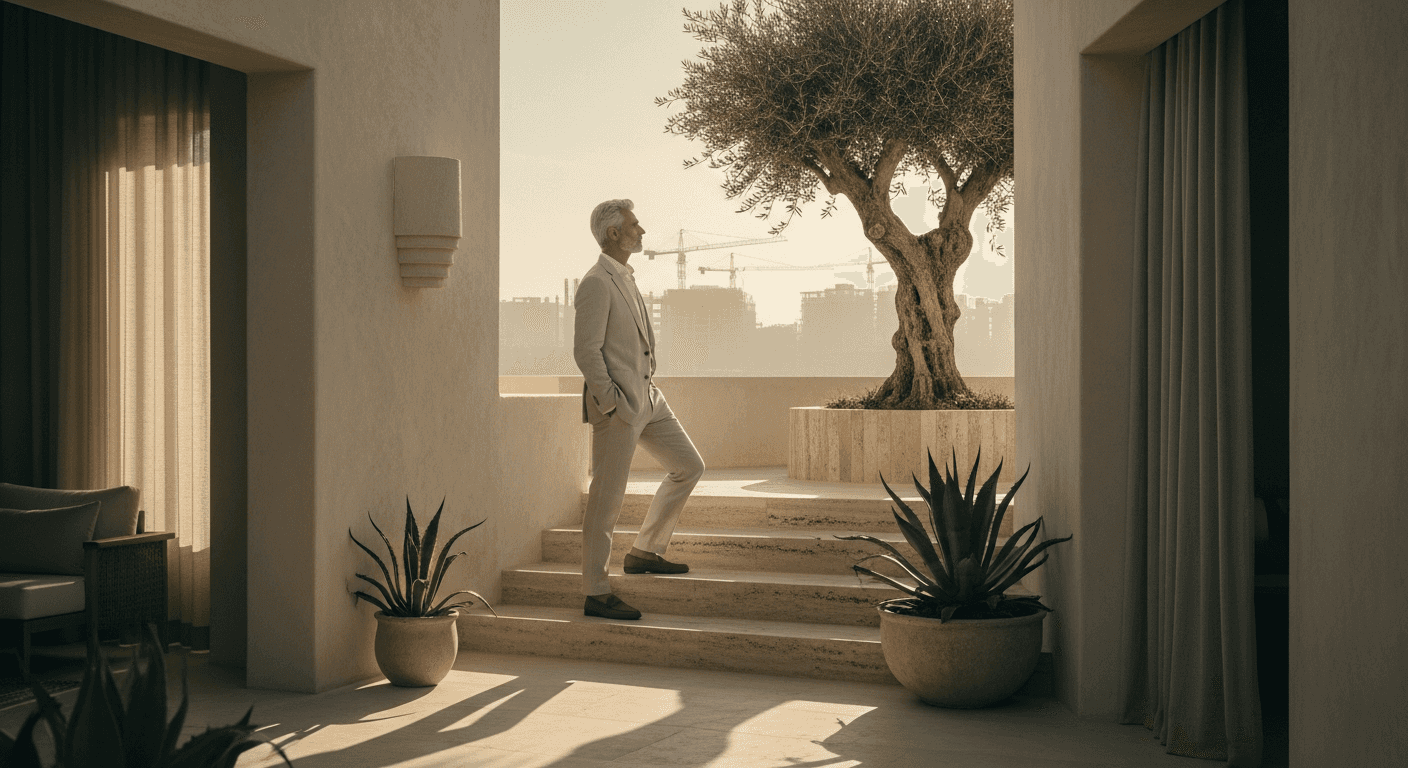
Dubai's New Economy: Future Property Hotspots
Dubai's D33 agenda is rapidly creating new economic hubs. I analyze which emerging sectors—from AI to green tech—are set to fuel the next wave of property demand and pinpoint the residential communities poised to benefit.

For years, the story of Dubai property was tied to two things: oil wealth and tourism. That narrative is now dangerously outdated. To understand where the real estate market is heading, you have to look past the five-star hotels and into the laboratories, design studios, and logistics hubs that form the backbone of Dubai's next chapter. This is about following the talent, not just the tourists.
Here’s what I'll explore:
- The Dubai Economic Agenda (D33) and its real estate implications.
- Tech & AI: The new "digital oil" and its impact on communities near Dubai Internet City and beyond.
- Advanced Manufacturing & Logistics: Why areas near Jebel Ali and Dubai South are critical.
- Green Economy & Sustainability: The rise of eco-conscious living and development.
- Health & Wellness Tourism: The growing demand for wellness-centric communities.
- Creative & Media Industries: Beyond Media City, where the creative class is living.
- The Future of Tourism: Niche markets and branded residences.
- Investor Takeaway: A practical framework for identifying the next growth corridors.
Beyond the Headlines: Decoding the D33 Agenda
At the beginning of 2023, Sheikh Mohammed bin Rashid Al Maktoum announced the Dubai Economic Agenda, or 'D33'. It’s one of the most important documents for any serious property investor in the city today, yet I find many clients haven’t fully grasped its implications. The headlines focused on the big, ambitious number: a plan to double the size of Dubai’s economy to AED 32 trillion over the next decade. But the real story for us in the property sector is *how* the government plans to achieve this. The agenda is a detailed roadmap for a fundamental rewiring of the city's economic engine, and with it, a redrawing of its residential map. This is the bedrock of understanding the `Dubai D33 impact property` connection.
The D33 agenda outlines 100 transformative projects. These aren't just abstract policies; they are concrete plans to become a global leader in specific, high-growth sectors. The focus is squarely on attracting foreign investment, nurturing local SMEs, and bringing 30 cities into the fold as key economic partners. More importantly for real estate, it aims to make Dubai one of the top three global destinations for business and tourism and a top four global financial hub. This goal is impossible to achieve without a massive influx of skilled professionals, entrepreneurs, and their families. They will all need a place to live, and their preferences will dictate which communities thrive and which stagnate.
My analysis is that D33 signals the final, decisive move away from a reliance on traditional sectors. The plan explicitly targets doubling foreign trade and foreign direct investment. It seeks to add 400 cities to Dubai's 'foreign trade map'. This is a clear signal of `economic diversification Dubai real estate` investors must heed. The government is actively building the foundations for industries like advanced manufacturing, health tech, agricultural technology (Agri-Tech), and the digital economy. These industries require specific infrastructure and create clusters of employment. The smart investor's first question should no longer be "Which community has the best view?" but rather, "Which community serves the growing workforce of these new economic engines?" We're moving from a market driven by speculation to one driven by strategic, demographically-backed demand.
Tech & AI: The New Digital Bedrock
 Featured project
The most significant pillar of Dubai's new economy is its ambition to become a global capital for technology and artificial intelligence. The government isn't just paying lip service to this; it's creating the physical and regulatory infrastructure to make it happen. Initiatives like the Dubai Metaverse Strategy and the establishment of dedicated hubs like the Dubai AI and Web 3.0 Campus at the DIFC Innovation Hub are powerful magnets for global talent. These programs are designed to attract thousands of companies and create tens of thousands of high-paying jobs in fields that barely existed a decade ago. This creates a specific and powerful source of `new industry demand Dubai` property investors can target.
So, where will this new digital workforce live? The obvious answer is in communities with easy commutes to the primary tech corridors: Dubai Internet City, Dubai Media City, and the DIFC. This underpins the resilient demand we continue to see in areas like Dubai Marina, Jumeirah Lakes Towers (JLT), and The Greens. These communities offer the lifestyle that tech professionals often seek: modern apartments, walkability, a vibrant F&B scene, and extensive amenities. However, as prices in these prime areas rise, a significant portion of the workforce — especially younger professionals and those in start-ups, will look for value in well-connected adjacent neighborhoods. Areas like Barsha Heights (Tecom), JVC, and even parts of Arjan are benefiting from this spillover effect, offering lower entry points with a commute that remains under 20 minutes.
Beyond that, the Golden Visa program, as detailed on the official UAE Government Portal, has been a game-changer. By offering long-term residency to coders, AI experts, and tech entrepreneurs, Dubai is creating a stable, long-term resident base rather than a transient workforce. These residents are more likely to become buyers, seeking to put down roots and invest in a home. Developers are responding. We're seeing a push from companies like Emaar Properties and Select Group to integrate advanced smart home technology and co-working spaces into their new projects, directly catering to the expectations of this demographic. The demand isn't just for a place to sleep; it's for an integrated, tech-enabled living environment. Investors should look for properties that offer these features, as they will command a premium and attract a higher quality of tenant.
Advanced Manufacturing & Logistics 2.0
While the digital economy grabs headlines, the evolution of Dubai’s industrial and logistics sector is just as critical for the city’s future. This isn't about old-school warehouses and factories. We are talking about Logistics 2.0 — a high-tech ecosystem built around robotics, automated supply chains, 3D printing, and advanced manufacturing. The epicenters of this revolution are the vast `emerging economic zones Dubai` has purposefully developed, primarily the Jebel Ali Free Zone (JAFZA) and the sprawling city-within-a-city, Dubai South. This area, which includes Al Maktoum International Airport and the legacy infrastructure of Expo City, is being positioned as a global hub for aviation, logistics, and light-to-medium industry.
The D33 agenda specifically aims to boost the industrial sector and promote exports, and these zones are the primary tools to achieve that. This strategy attracts not just multinational corporations but also the highly skilled engineers, technicians, and management professionals who run these advanced operations. This creates a powerful, localized demand for housing that is distinct from the demand in the city's coastal leisure hubs. These are not typically short-term renters; they are families and professionals looking for long-term community living, good schools, and accessible amenities. The property market in and around these zones is therefore built on a foundation of stable employment.
This is where investors need to adjust their geographical focus. The residential offerings within Dubai South itself are rapidly expanding, with developers like Emaar launching communities that offer villas, townhouses, and apartments directly catering to this workforce. But the opportunity extends to established communities nearby. Areas like Al Furjan, Discovery Gardens, and The Gardens offer excellent value and are a short drive from JAFZA and Dubai South. Further out, master-planned communities like Damac Hills and Damac Hills II and Arabian Ranches (I, II, and III) become viable options for senior management seeking larger homes and premium lifestyles. The key insight here is that as the economic gravity of Dubai South increases, the residential value proposition of all surrounding communities is lifted. Early investors who recognize this shift stand to benefit from significant capital appreciation over the coming decade.
The Green Economy: Sustainability as a Driver
The UAE's strategic initiative to achieve Net Zero by 2050 is more than an environmental pledge; it's a powerful economic driver that is reshaping the built environment. This commitment, coupled with a growing global consciousness around sustainability, is creating a new and influential factor in property decisions. The `economic diversification Dubai real estate` story now includes a significant green chapter. This trend manifests in two key ways for the property market: top-down, through stricter green building regulations like Dubai's Al Sa'fat system, and bottom-up, through rising consumer demand for healthier, more efficient, and eco-friendly homes. Investors who ignore this are missing a fundamental shift in market values.
On the regulatory side, developers are increasingly required to incorporate sustainable practices into their designs, from energy-efficient cooling systems and solar panels to water recycling and the use of sustainable materials. While this can increase initial construction costs, the long-term benefit for homeowners is a reduction in ongoing operational costs, particularly DEWA bills. These savings on service charges are becoming a significant selling point. At Gaia Living, our clients are asking more pointed questions about a building's energy rating and utility costs, a conversation that was rare just five years ago. This focus on efficiency will create a two-tier market, where older, less efficient buildings may see their value and rental appeal decline compared to their modern, greener counterparts.
On the demand side, we are seeing the rise of the 'wellness-oriented buyer'. This demographic prioritizes access to nature, clean air, and amenities that promote a healthy lifestyle. This has fueled the success of pioneering communities like The Sustainable City and the ultra-luxury enclave of Al Barari, which is renowned for its lush botanical gardens and focus on spacious, nature-integrated living. Major developers have taken note. Emaar Properties has made green spaces, parks, and cycling tracks a cornerstone of its master communities like Dubai Hills, while Nakheel is incorporating vast green corridors into its new vision for projects like Palm Jebel Ali. My advice to investors is to view sustainability features not as a bonus, but as a form of future-proofing their asset. Properties in communities with ample green space, walking trails, and a clear commitment to environmental design will hold their value better and attract a more stable tenant base in the years to come.
Health, Wellness & The Knowledge Economy
Parallel to the green economy, Dubai is making a concerted push to become a global hub for healthcare, medical research, and wellness tourism. This is another key facet of the D33 agenda's focus on building a knowledge-based economy. The city has invested heavily in creating world-class infrastructure to support this ambition, centered around two key `emerging economic zones Dubai` has cultivated: Dubai Healthcare City (DHCC) and Dubai Science Park. DHCC is home to a vast cluster of hospitals, clinics, and medical education facilities, while Dubai Science Park is tailored to the research and development side of the life sciences industry.
This strategy generates a potent stream of property demand from a very specific demographic: highly educated and well-compensated doctors, surgeons, researchers, and biotech professionals. These individuals and their families require quality housing, often with a preference for locations that offer a manageable commute to these specialized zones. This has sustained property values in established areas near DHCC, such as Oud Metha, Garhoud, and the periphery of Downtown Dubai. For those working in Dubai Science Park, communities along Al Khail Road and Hessa Street are particularly popular, including JVC, Arjan, and the premium villas of Dubai Hills.
Beyond the workforce, this economic pillar is also creating a new niche in the property market itself: wellness-centric real estate. This goes beyond a standard gym and pool. We are now seeing developments that integrate comprehensive wellness facilities, such as spas managed by international brands, yoga pavilions, state-of-the-art fitness centers, and even on-site nutritionists and wellness consultants. Developers like Binghatti have partnered with luxury brands on projects that emphasize a holistic lifestyle. This trend also ties into the `tourism growth property impact`, as many of these units are attractive as short-term lets for medical tourists seeking comfortable, private accommodation during their treatment and recovery. An investor looking at this space might consider apartments in developments that explicitly market these wellness features, as they can command higher rental premiums from both long-term residents and short-term visitors.
The Creative Cluster: Beyond Media City
For over two decades, Dubai's creative industries were synonymous with hubs like Dubai Media City and Dubai Studio City. While these zones remain vital, the city's ambition has broadened significantly. The D33 agenda includes a focus on doubling the contribution of the creative economy, which now encompasses a wide spectrum of fields from fashion and industrial design to art, gaming, and content creation. The physical and spiritual heart of this new creative wave is the Dubai Design District, universally known as 'd3'. This purpose-built community by developer TECOM Group has become a magnet for global design houses, architects, fashion labels, and a vibrant community of freelance creatives.
This `new industry demand Dubai` is cultivating has a distinct impact on the property market because the 'creative class' often has different priorities when choosing a place to live. Unlike corporate professionals who might prioritize quiet suburban living, creatives often seek out neighborhoods with character, energy, and a sense of community. They value walkability, independent cafes, art galleries, and spaces that inspire them. This explains the enduring appeal of urban, mixed-use communities developed by masters of placemaking like Meraas. Their projects, such as City Walk and Bluewaters Island, with their curated retail, high-quality public realm, and distinctive architecture, are exceptionally popular with this demographic.
“The property market of tomorrow won't be driven by proximity to a landmark, but by proximity to an industry. Follow the talent, and you'll find the growth.”
Looking ahead, I see this demand influencing areas beyond these prime developments. The industrial-chic aesthetic is gaining traction, leading to increased interest in the warehouse districts of Al Quoz, which are slowly transforming into a hub for art galleries, performance venues, and unique workspaces. While residential options here are still limited, the trend points towards future opportunities. For an investor today, the lesson is to look for properties in neighborhoods that have a strong sense of place and a thriving independent business scene. A standard apartment in a soulless tower will struggle to compete for this tenant base against a property in a vibrant, walkable community like Madinat Jumeirah Living (MJL) or with easy access to the creative energy of d3 and Downtown. It's about investing in a lifestyle, not just square footage.
Tourism Reimagined: Niche Markets & Branded Residences
Tourism has always been a cornerstone of Dubai's economy, but its impact on the property market is undergoing a significant transformation. The `tourism growth property impact` is no longer just about building more hotels. It's about catering to new, more sophisticated niches and the explosive growth of a hybrid asset class: the branded residence. The D33 agenda's goal of making Dubai a top-three global tourism destination involves attracting a wider variety of visitors, from eco-tourists exploring Hatta's mountains to wellness seekers and global connoisseurs of luxury. This diversification is creating new investment opportunities far beyond the traditional hotel room.
The most prominent trend is the boom in branded residences. These are luxury apartments or villas that are associated with a high-end hotel or fashion brand, such as Address, Four Seasons, Baccarat, or Cavalli. For a buyer, they offer the promise of hotel-level services, world-class amenities, and the prestige of a global brand, combined with the security of full property ownership. For developers, it allows them to achieve a significant price premium. For an investor, these properties can be highly lucrative, offering the potential for strong rental yields through the brand's rental pool program, though they come with higher service charges and management fees. Developers like Damac have been pioneers in this space, partnering with fashion houses, while ultra-luxury players like AHS Properties are creating bespoke branded projects for the highest end of the market.
To understand the financial commitment, it's crucial to break down the costs. Buying a branded residence is not just about the sticker price. Here is a realistic, illustrative breakdown for a hypothetical AED 5 million branded apartment:
- Purchase Price: AED 5,000,000
- Dubai Land Department (DLD) Transfer Fee (4%): AED 200,000
- Real Estate Agency Fee (2% + 5% VAT): AED 105,000
- Registration Trustee Fee: AED 4,200 (for properties over AED 500k)
- Title Deed Issuance Fee: AED 580
- Total Upfront Cost (approx.): AED 5,309,780
This calculation, based on standard fees you can verify on the Dubai Land Department (DLD) website, doesn't even include the significant ongoing costs. Service charges in branded residences can be substantially higher than in standard buildings, often ranging from AED 25 to AED 50+ per square foot per year, plus a percentage of rental revenue if placed in the hotel pool. While the returns can be attractive, investors must do their due diligence on these recurring costs. The growth isn't just in Dubai, either. The development of integrated resorts in neighboring emirates, particularly the Wynn resort on Al Marjan Island in Ras Al Khaimah, will create a new tourism hub, stimulating property demand across the northern emirates and providing a new destination for Dubai residents.
Identifying Future Hotspots: An Investor's Framework
With so many moving parts, how can an investor practically identify the `future property hotspots Dubai` is creating? It requires shifting from a reactive mindset — chasing areas that have already seen price surges, to a proactive one grounded in the economic fundamentals I've outlined. It’s about building a simple, repeatable framework to evaluate a neighborhood's long-term potential. At Gaia Living, this is the approach we use to guide our clients, moving beyond short-term trends to identify sustainable growth corridors.
I encourage investors to use the following checklist when assessing any area or project. An opportunity that ticks most of these boxes has a much higher probability of delivering long-term capital appreciation and rental growth.
- Government Master Plan: Is the area a designated priority within the D33 agenda or another major government strategy? Look for official announcements and master plans on sites like the Government of Dubai portal. Areas with state backing receive preferential investment in infrastructure and promotion.
- Infrastructure Investment: Are new metro lines, roads, bridges, or public facilities planned or under construction? The Roads & Transport Authority (RTA) website is a key resource. New infrastructure is a powerful catalyst for value, improving connectivity and livability.
- Anchor Industry: Is there a specific, growing economic sector anchoring the area? A hub for AI, logistics, healthcare, or design creates a stable and growing tenant pool.
- Demographic Shift: Is the area attracting a new, identifiable group of residents? This could be young tech professionals, families seeking good schools, or high-net-worth individuals drawn to a luxury lifestyle. The nature of the demographic dictates the type of property that will be in highest demand.
- Developer Focus: Are top-tier developers with a track record of quality and delivery, like Emaar Properties, Nakheel, Meraas, or Aldar, launching off-plan launches in the area? Their presence is a strong vote of confidence in the location's future.
- Value Gap: Does the area offer demonstrably better value (in AED per square foot) compared to more established, adjacent communities with similar amenities? This gap represents the potential for future price convergence and capital growth.
Applying this framework, an area like Dubai South scores exceptionally well. It is central to the D33 logistics and aviation goals, receiving massive government and infrastructure investment. It is anchored by multiple industries, attracting a diverse workforce. Major developers are highly active there, and it still offers a significant value gap compared to central Dubai. While it's a long-term play, the fundamentals are incredibly strong. This analytical approach allows an investor to build a compelling thesis for an investment, grounded in data and strategy rather than market noise.
My Verdict: From Speculation to Strategy
For the past twenty years, a rising tide lifted all boats in the Dubai property market. An investor could buy almost anywhere and, market cycles permitting, do reasonably well. That era is over. The next decade will be one of differentiation, where success is not accidental but strategic. The single most important force shaping the future of Dubai real estate is the relentless and systematic economic diversification outlined in the D33 agenda. The flow of capital and, more importantly, the flow of human talent will follow this blueprint. For property investors, this is the map to future growth.
The key is to connect the macro story of industrial strategy to the micro decision of buying a specific apartment or villa. When you read that Dubai is investing billions to become an AI hub, your immediate thought should be about the residential needs of the thousands of engineers and data scientists this will attract. When you see a new life sciences campus announced, you should be analyzing the travel times to nearby family communities. This is how you move from speculating on the market to making a strategic, thesis-driven investment. The future of property demand lies in the city's new economic engines.
At Gaia Living, our advisory approach is built on this principle. We look beyond the glossy brochures to the underlying economic drivers that create sustainable value. We analyze infrastructure pipelines, demographic shifts, and industrial growth to provide our clients with a clear-eyed view of the opportunities and risks. The communities that thrive in 2030 will be those that best serve the needs of the people powering Dubai's new economy. My advice is simple: follow the jobs. Follow the talent. That is where you will find the most compelling investment opportunities in the years to come.
To succeed in Dubai's maturing property market, investors must align their strategy with the city's economic agenda. The biggest opportunities for capital growth will be found in residential areas that serve the growing workforce of Dubai's new target industries: technology, advanced manufacturing, green energy, and life sciences. Proximity to these emerging economic zones is the new prime location.
Sources
- Dubai Economic Agenda (D33): Government of Dubai Media Office
- Golden Visa Information: UAE Government Portal
- Real Estate Fees & Regulations: Dubai Land Department (DLD)
- Dubai's Open Data & Statistics: Dubai Pulse
- Macroeconomic Data: Central Bank of the UAE
- Transport & Infrastructure Projects: Roads & Transport Authority (RTA)
Questions, answered
- What is the Dubai Economic Agenda (D33) and how does it affect real estate?
- The D33 agenda is a government strategy to double Dubai's economy by 2033, focusing on sectors like tech, advanced manufacturing, and green energy. This impacts real estate by creating new jobs and attracting skilled talent, which in turn drives demand for housing in specific corridors near these emerging economic zones.
- Which areas in Dubai are likely to grow due to the tech and AI boom?
- Areas with proximity to tech hubs like Dubai Internet City, Media City, and the DIFC Innovation Hub will see sustained demand. This includes established communities like Dubai Marina and JLT, but also well-connected, value-driven areas that appeal to the tech workforce.
- Are there new property hotspots emerging away from the city center?
- Yes, areas like Dubai South are becoming major hubs due to their focus on logistics, aviation, and advanced manufacturing. The residential communities within and around Dubai South offer a strong long-term growth proposition as the area's economic importance increases.
- How does sustainability influence property demand in Dubai?
- Sustainability is a growing factor for buyers and renters. Government initiatives for green buildings and a rising preference for eco-conscious living are increasing the appeal of communities with extensive green spaces, energy-efficient designs, and wellness amenities, such as Al Barari or Dubai Hills Estate.
- Is it better to invest near a new economic zone or in an established prime area?
- This depends on your investment strategy. Established prime areas offer stability and proven rental demand, while investing near emerging economic zones offers higher potential for capital appreciation over the long term, though it may carry more initial risk. A balanced portfolio often includes both.
- What kind of property is in demand from Dubai's new industries?
- Demand is varied. Tech professionals may prefer modern apartments with smart features and community amenities. Families moving for roles in manufacturing or healthcare may seek villas or townhouses in master-planned communities like those in Dubai South or Arabian Ranches. There is no one-size-fits-all answer; it's about matching the property to the demographic of the anchoring industry.
Omar tracks the announcements that move the market — new launches, regulation, mega-projects, and developer moves — and tells you what they actually mean for buyers.
Related stories
Dubai's Established Charm: The Case for Older Homes
In a city focused on the future, I believe the smartest move for many buyers is to look back. Dubai's seasoned communities offer space, character, and surprising value that new builds often can't match.
The True Cost of Owning a Dubai Property
Beyond the purchase price, your annual budget for a Dubai home must account for service charges, utilities, and maintenance. I'll break down every ongoing expense you need to plan for.
Calculating ROI on Dubai Rental Upgrades
As a landlord in Dubai, you can't just follow trends. I'll show you how to calculate the precise ROI of minor property upgrades to genuinely increase your rental yield.
Echoes, in your inbox
One thoughtful email a month. Market insight, new launches, no spam.