

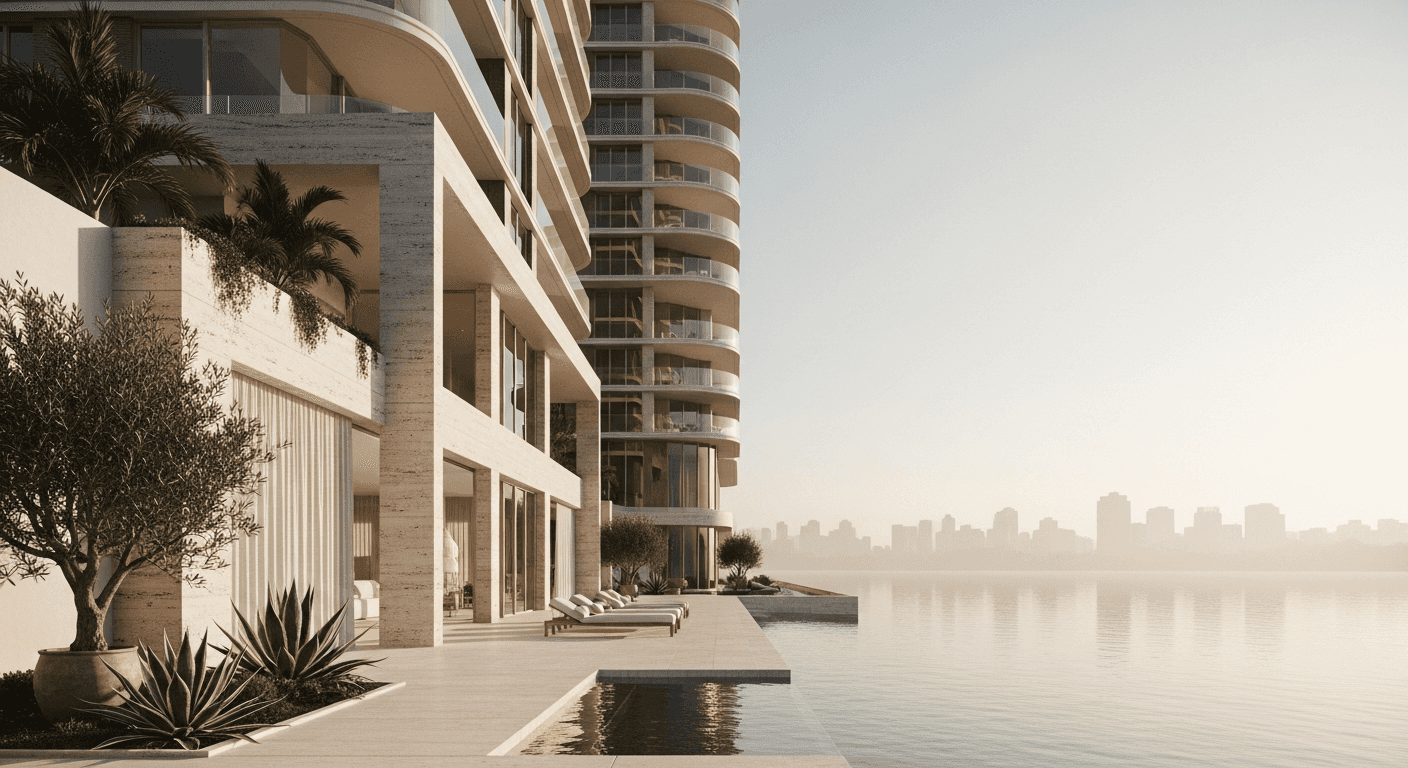
Dubai's New Demographics & Real Estate Demand
Dubai's population is not just growing; it's changing fundamentally. As Head of Market Research, I analyse how these demographic shifts are creating distinct new patterns of property demand across the emirate.

Dubai's population is not just growing; it is evolving in its very composition. For years, the story of Dubai real estate was tied to a transient, cyclical expatriate population. Today, that narrative feels outdated. As Head of Market Research at Gaia Living, my analysis points to a far more structural and permanent shift in the city's demographic makeup, one that is creating powerful and specific currents of demand across the property market.
Here is what I will explore in this report:
- The fundamental demographic shifts reshaping Dubai's resident profile.
- The drivers and property preferences of the long-term family segment.
- How young professionals and digital nomads are redefining the apartment market.
- The unique demands of the ultra-wealthy and the rise of branded residences.
- Why community amenities are now a primary driver of property value.
- A detailed cost breakdown for two distinct buyer profiles.
- My outlook on where the most durable opportunities lie for buyers and investors.
The New Dubai Resident: Beyond the Transient Expat
The most significant change I see in the market is a fundamental shift in residency intent. The stereotype of the expat arriving for a two-year contract and then leaving is being replaced by a new cohort of residents who view Dubai as a long-term home. This isn't just an anecdotal observation; it's a trend underpinned by deliberate government policy and profound economic changes. The introduction and expansion of visa categories like the 10-year Golden Visa, the 5-year Green Visa, and various freelance and remote work permits have provided something crucial: stability and a clear pathway to long-term settlement. These initiatives, detailed on the official UAE Government Portal, act as an anchor, encouraging residents to move beyond the rental cycle and commit to ownership.
This psychological shift from renter to owner is a powerful catalyst for the market. When people see a future in a city, their housing calculus changes. The focus moves from temporary convenience to long-term value, from a simple roof over one's head to a home embedded in a community. We are seeing this play out in the demand for larger properties, the prioritisation of school proximity, and a greater willingness to invest in upgrades and personalisation. The Dubai 2040 Urban Master Plan itself anticipates a population of 5.8 million by 2040, but the story isn't just the number — it's the nature of that population. It is expected to be more skilled, more invested, and more permanent.
The economic context further reinforces this trend. Dubai's maturing economy, with its growing tech, finance, and creative sectors, is attracting a different kind of talent. These are not just project-based workers but career professionals and entrepreneurs building businesses and lives here. This growing permanence is the bedrock of the end-user market, creating a stable layer of demand that is less susceptible to short-term global economic shocks. Understanding this shift in the Dubai resident demographics property nexus is, in my view, the single most important factor for any serious investor or homebuyer in the market today.
The End-User Family: Space, Schools, and Stability
 Featured project
Nowhere is this demographic evolution more apparent than in the explosive family housing demand Dubai has witnessed. This segment, comprised of both new arrivals and long-term residents choosing to raise their children here, has a very specific and non-negotiable set of requirements. Their search is not for a generic asset; it's for a home that facilitates a certain quality of life. The primary demand is for space: three, four, and five-bedroom townhouses and independent villas have become the most sought-after asset class, leading to significant price appreciation in communities that offer them.
Location for this group is defined less by proximity to the financial district and more by proximity to world-class schools and nurseries. The 'school run' is a major logistical consideration, making communities with their own educational facilities or those located near the school corridors of Umm Suqeim, Al Barsha, and Nad Al Sheba particularly attractive. Developers like Emaar Properties understood this early, building entire ecosystems like Arabian Ranches and Dubai Hills Estate around this very concept. These master-planned communities offer not just houses, but a complete family-oriented lifestyle with parks, playgrounds, clinics, and retail centres, creating a 'sticky' environment that residents are reluctant to leave.
Other communities like Damac Hills and Damac Hills II by Damac, and areas like Al Furjan and Jumeirah Golf Estates, cater to this demand with a variety of villa and townhouse options. What they all have in common is an emphasis on green space and community. A small patch of garden, a safe street for children to ride their bikes, and a community pool are no longer optional extras; they are fundamental requirements. This has created a supply-demand imbalance for quality, well-maintained family homes in mature communities, which has consistently supported their capital values. Investors who dismiss this segment in favour of higher-yielding small apartments are missing the most stable and structural growth story in Dubai real estate.
Young Professionals & Creatives: The 15-Minute City Beckons
At the other end of the demographic spectrum is a vibrant and rapidly expanding cohort of young, skilled professionals, entrepreneurs, and creatives. This group, often singles or couples, is drawn to Dubai's dynamic economy and unparalleled lifestyle. Their housing needs are a mirror image of the family segment. For them, the priority is not a large garden but connectivity, convenience, and access to lifestyle amenities. This is the core of the young professional housing market, and they are the driving force behind demand in Dubai's dense, urban cores.
This demographic overwhelmingly prefers one and two-bedroom apartments in locations that function as '15-minute cities' — where work, life, and leisure are all within a short walk or metro ride. Areas like Dubai Marina, Downtown Dubai, and Jumeirah Beach Residence (JBR) remain perennial favourites. These neighbourhoods offer a turnkey lifestyle: a constant buzz of cafes, restaurants, and retail, coupled with stunning views and direct access to the beach or major landmarks. More recently, projects like City Walk by Meraas have refined this concept, offering a more curated, low-rise European-style streetscape that strongly appeals to this demographic.
However, affordability is a key consideration. As prices in prime areas have climbed, a significant portion of this market has gravitated towards emerging neighbourhoods that offer a similar amenity-rich lifestyle at a more accessible price point. Jumeirah Village Circle (JVC) is the prime example. While it lacks the polish of Downtown, its abundance of new apartment buildings, coupled with growing retail and park infrastructure, has made it a hub for young professionals. Developers in these areas are competing fiercely on amenities. A standard gym and pool are no longer enough. The new benchmark includes co-working spaces within the building, high-end fitness centres with classes, cinema rooms, and rooftop lounges. For this group, the building's amenities are an extension of their living space, and they are willing to pay a premium in rent or purchase price for a superior offering.
The HNWI Influx: Branded Residences and Trophy Assets
Dubai's success in attracting a significant number of the world's High-Net-Worth Individuals (HNWIs) has carved out another distinct and influential segment of the property market. These buyers operate on a different plane of decision-making, where price is often secondary to exclusivity, prestige, and service. Their demand has fuelled an unprecedented boom in the ultra-luxury sector, particularly in branded residences. These are properties affiliated with and managed by five-star hospitality brands like Bvlgari, Four Seasons, or Atlantis, offering residents hotel-level service and amenities in a private residential context.
For this clientele, the appeal is multifaceted. It's the assurance of quality and meticulous maintenance that comes with a trusted global brand. It's the access to exclusive, hotel-grade facilities — spas, fine-dining restaurants, and concierge services, at a moment's notice. It is also, crucially, a turnkey solution. Many of these buyers own multiple homes globally and value the ability to arrive at a perfectly managed, secure, and serviced residence without any of the typical hassles of property ownership. This has made branded penthouses and villas some of the most desirable, and expensive, real estate in the city.
“The real story of Dubai's property market is one of segmentation. Success now depends on understanding the unique needs of a family in Dubai Hills versus a tech professional in the Marina or a high-net-worth buyer on Jumeirah Bay.”
These trophy assets are concentrated in Dubai's most exclusive enclaves. Palm Jumeirah, with its waterfront vistas, continues to be a magnet, as do ultra-private locations like Jumeirah Bay Island and the limited, high-end offerings on Bluewaters Island. The impact of this segment on the broader market is significant. It pulls the headline price-per-square-foot figures upwards, which can sometimes create a misleading picture of the market as a whole. As an analyst, I caution clients to look beyond the headline-grabbing transactions and focus on the median prices within the specific segment and community they are interested in. While the demand for these trophy assets is a powerful vote of confidence in Dubai, it's a very different market from the one most residents and investors will participate in.
The Deciding Factor: How Community Amenities Drive Property Value
The most critical thread connecting these diverse demographic demands is the elevated importance of community infrastructure. The value proposition of a property is no longer confined to its four walls. Today, the quality, relevance, and management of community amenities property value are what separates a good investment from a great one. This is a direct consequence of the Dubai population shifts real estate is now serving; as residents plan longer-term stays, the environment outside their front door becomes just as important as the space within it.
Amenities are no longer a generic checklist. They must be targeted. For the family segment in a community like Dubai Hills, the high-value amenities are tangible and specific: the vast Central Park, the championship golf course, the proximity of King's College Hospital, the bicycle paths, and the ease of access to Dubai Hills Mall. These are not just 'features'; they are integral components of a family's daily life and leisure. The willingness to pay a premium for a home here is directly linked to this integrated ecosystem. In my experience, properties located closer to these central amenities command higher resale values and rental rates compared to identical units on the periphery of the community.
For the young professional in DIFC or the Marina, the valuable amenities are entirely different. Here, it is about lifestyle curation: a state-of-the-art gym that replaces a costly external membership, an elegant residents' lounge for socialising or remote work, a high-quality pool deck, and, increasingly, curated retail and F&B at the podium level. For an investor, choosing a building with a generic, poorly maintained gym over one with a modern, well-equipped facility is a critical error. The latter will attract higher-quality tenants, command better rents, and experience lower vacancy rates. Even in more affordable areas like JVC or Arjan, developers like Binghatti and Azizi have recognised this, competing on the quality and scale of their pools and fitness centres to attract tenants and buyers. This focus on amenities is a permanent feature of the market, and buyers should scrutinise them — and the associated service charges, with as much diligence as the property itself.
A Tale of Two Budgets: Costing a Family Villa vs. A Professional's Apartment
To make these demographic trends tangible, it is useful to walk through the upfront costs associated with two typical purchases at opposite ends of the market. The figures below are illustrative, based on current market conditions, but they highlight the different capital requirements for entering these segments. According to regulations set by the Dubai Land Department (DLD), the property transfer fee is a standard 4% of the purchase price, which is a key component of any budget.
Let's consider two distinct buyer profiles:
1. Profile A: The End-User Family buying a three-bedroom townhouse in a community like Arabian Ranches. 2. Profile B: The Young Professional buying a one-bedroom apartment in JVC.
Here is a line-by-line breakdown of the estimated upfront costs for each scenario:
Scenario A: 3-Bedroom Townhouse in Arabian Ranches * Purchase Price: AED 2,800,000 * Mortgage Down Payment (20% for residents): AED 560,000 * Dubai Land Department (DLD) Fee (4% of price): AED 112,000 * DLD Registration Trustee Fee: ~AED 4,200 (fixed fee) * Real Estate Agency Fee (2% of price): AED 56,000 * Mortgage Registration Fee (0.25% of loan amount): AED 5,600 * Bank Processing & Valuation Fees: ~AED 8,000 * Total Upfront Cash Required: Approximately AED 745,800
Scenario B: 1-Bedroom Apartment in JVC * Purchase Price: AED 950,000 * Mortgage Down Payment (20% for residents): AED 190,000 * Dubai Land Department (DLD) Fee (4% of price): AED 38,000 * DLD Registration Trustee Fee: ~AED 4,200 (fixed fee) * Real Estate Agency Fee (2% of price): AED 19,000 * Mortgage Registration Fee (0.25% of loan amount): AED 1,900 * Bank Processing & Valuation Fees: ~AED 6,000 * Total Upfront Cash Required: Approximately AED 259,100
These breakdowns, while simplified, clearly illustrate the different financial commitments. A key regulation from the Central Bank of the UAE mandates a minimum 20% down payment for a first-time resident buyer for properties under AED 5 million. This regulation is a cornerstone of market stability. The family buying the townhouse needs nearly three times the upfront capital as the young professional. This financial barrier is a significant factor in shaping demand patterns and reinforces why apartments remain the entry point for many first-time buyers, while the villa market is dominated by more established, higher-income households.
The Developer's Response: Aligning Supply with Shifting Demand
The development community in Dubai is actively responding to these clear demographic signals, though with varying speeds and strategies. The most successful developers are those who have moved away from a generic, one-size-fits-all approach and are instead designing projects for a specific target end-user. The days of building a tower with a vague notion of 'investor demand' are numbered. Today, the crucial question is: *who is this for?*
In response to the strong family housing demand, major developers like Emaar, Nakheel, and Aldar are focusing heavily on expanding their portfolios of villas and townhouses within large-scale master communities. We are seeing new phases launch in proven successes like Dubai Hills and Arabian Ranches, as well as the creation of entirely new suburban communities further inland, such as Emaar's The Valley or Aldar's projects in Abu Dhabi. These projects are explicitly marketed towards families, with brochures and campaigns centred on parks, schools, and a wholesome community lifestyle. This is a direct alignment of supply with the most stable and growing segment of end-user demand.
Simultaneously, a different set of developers is catering to the young professional and HNWI markets. In the urban cores, we see a focus on high-design, high-amenity apartment towers. Developers like Select Group have carved a niche by delivering premium waterfront towers in Dubai Marina that are packed with the lifestyle features this demographic desires. At the very top of the market, boutique firms such as AHS Properties are delivering a handful of ultra-exclusive villas and penthouses, focusing on architectural uniqueness and unparalleled luxury for a specific HNWI clientele. This bifurcation of the market is healthy; it shows a growing sophistication and a response to real, identified needs rather than speculative building.
My Verdict: Where to Find Opportunity in Dubai's Evolving Market
Having analysed these intersecting trends, my conviction is that Dubai's property market is maturing into a complex, multi-layered ecosystem. The overarching story is one of growing stability, driven by a resident population that is increasingly putting down long-term roots. For buyers and investors, this requires a more nuanced approach than ever before. The question is no longer 'should I buy in Dubai?', but rather, 'which part of the Dubai market is right for my goals?'.
In my view, the most compelling long-term value proposition is found in mid-market family housing. The demand for three and four-bedroom townhouses and villas within well-managed, amenity-rich master communities is structural and deep. This demand is driven by non-negotiable life needs — space for a growing family, good schools, a safe environment, and is less prone to speculative bubbles. While the luxury segment captures headlines, the quiet, consistent demand from resident families provides a foundation of stability and sustainable capital appreciation. Communities like Dubai Hills Estate, Arabian Ranches, and the newer, well-planned sub-communities in areas like Meydan and Al Furjan represent the heart of this opportunity.
For investors focused on yield, the young professional apartment market remains a strong contender. However, the bar for success has been raised. It is no longer enough to simply buy a one-bedroom apartment. The key is to identify buildings and micro-locations that offer a distinct lifestyle advantage. This means prioritising walkability, proximity to transport links, and, most importantly, a superior suite of in-house amenities. An apartment in a building with a truly exceptional gym, co-working space, and pool deck will consistently outperform a similar unit in a basic building next door, achieving higher rents and lower vacancy. Areas like JVC and Business Bay offer attractive entry points, but meticulous asset selection is paramount.
Dubai's real estate market is no longer a monolith. It is a collection of distinct sub-markets, each driven by a specific demographic with unique needs. The most successful investments will be those that align perfectly with the demands of one of these key groups: the long-term family, the lifestyle-focused professional, or the ultra-high-net-worth individual.
## Sources - UAE Government Official Portal: u.ae - Dubai Land Department (DLD): dubailand.gov.ae - Central Bank of the UAE: centralbank.ae
Questions, answered
- Which property type is in highest demand in Dubai right now?
- Demand is segmented. Three and four-bedroom villas and townhouses in established communities are seeing intense demand from long-term families. Simultaneously, high-quality one and two-bedroom apartments in amenity-rich, walkable areas are sought after by a growing population of young professionals.
- What are the best areas for families looking to buy property in Dubai?
- Communities known for their schools, green spaces, and family-friendly amenities are most popular. Areas like Dubai Hills Estate, Arabian Ranches, and parts of Al Furjan consistently top the list for family housing demand in Dubai.
- How do new visa rules affect the Dubai property market?
- Reforms like the Golden and Green Visas have been pivotal. They encourage longer-term residency, shifting resident mindset from renting to owning. This structural change underpins the robust demand for end-user properties, particularly family homes.
- Are service charges in Dubai worth it?
- It depends entirely on the value delivered. High service charges are justified if they fund superior amenities, immaculate maintenance, and strong community management that directly enhance lifestyle and preserve property value. Always scrutinise the quality of amenities relative to the fees.
- As a young professional, what should I look for in a Dubai apartment?
- Beyond your budget, prioritise location and lifestyle amenities. Look for properties in vibrant, walkable neighbourhoods with good transport links. In-building amenities like a modern gym, a pool, and co-working spaces are no longer luxuries but essentials that define the young professional housing market.

Amara translates DLD transaction data, supply pipelines, and macro signals into clear calls on where Dubai's market is heading. She writes the numbers most brokers only feel.
Related stories
Dubai's Established Charm: The Case for Older Homes
In a city focused on the future, I believe the smartest move for many buyers is to look back. Dubai's seasoned communities offer space, character, and surprising value that new builds often can't match.
The True Cost of Owning a Dubai Property
Beyond the purchase price, your annual budget for a Dubai home must account for service charges, utilities, and maintenance. I'll break down every ongoing expense you need to plan for.
Calculating ROI on Dubai Rental Upgrades
As a landlord in Dubai, you can't just follow trends. I'll show you how to calculate the precise ROI of minor property upgrades to genuinely increase your rental yield.
Echoes, in your inbox
One thoughtful email a month. Market insight, new launches, no spam.