

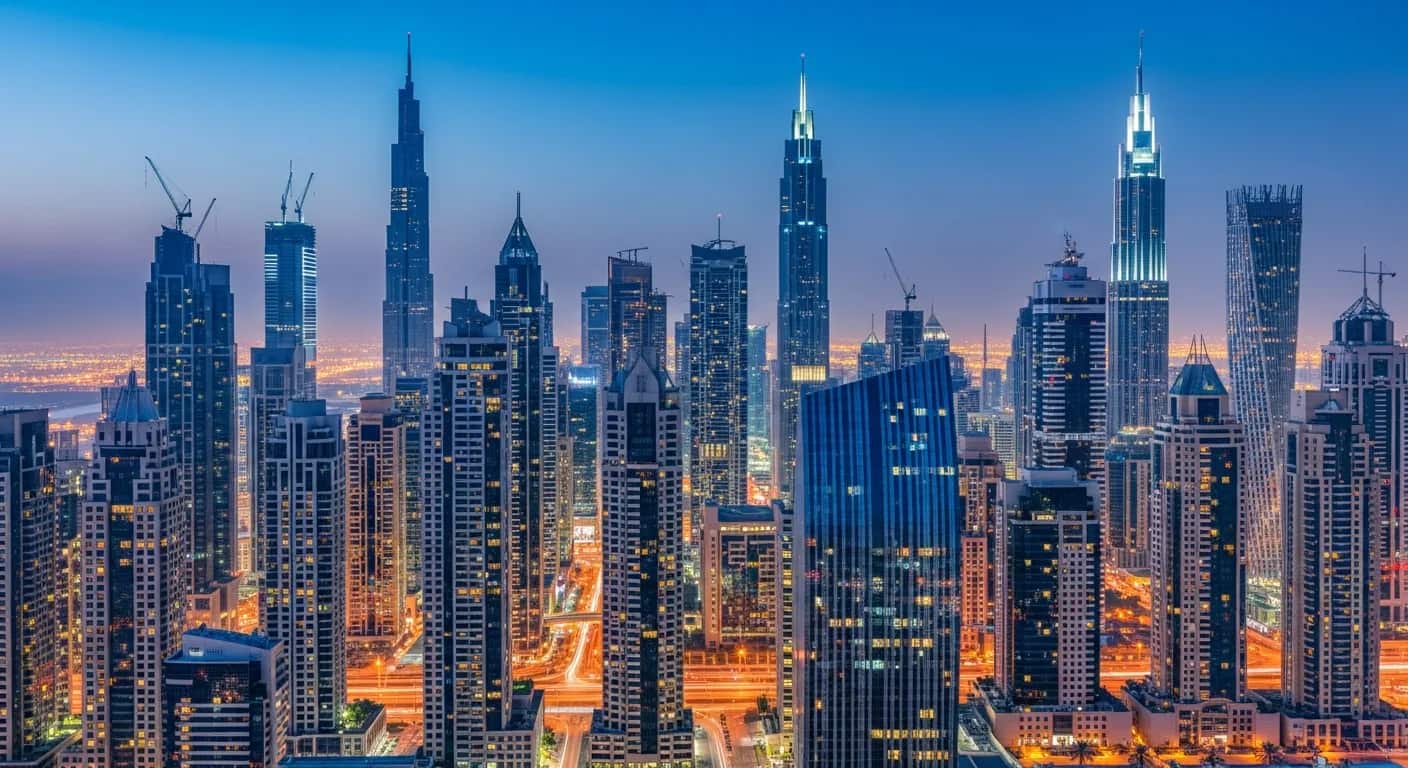
Dubai's New Cycle: Beyond Yield vs. Capital Growth
The classic investor debate of rental yield versus capital growth is becoming a false dichotomy in Dubai's maturing market. A new, more nuanced strategy is required to navigate a landscape where both can be strategically achieved, often in different places.

For years, the Dubai property investment playbook was written around a simple, almost Newtonian, law of opposition: as capital growth accelerates, rental yields compress. This inverse relationship has defined cycles, guided strategies, and set the terms of every investor debate. My research, however, indicates that this model, while not entirely broken, is becoming an increasingly blunt instrument for understanding the market of today and tomorrow. Dubai has entered a new phase of its cycle, one defined by a level of maturity and segmentation that renders the old 'yield vs. growth' dichotomy obsolete.
- The fundamental mechanics of yield and growth, and why their traditional relationship is evolving in Dubai.
- A data-led analysis of where Dubai sits in its current property cycle, arguing for a phase of 'sustained maturity'.
- Yield-hunting hotspots: A deep dive into communities like JVC and Arjan where cash flow remains king.
- The anatomy of appreciation: Identifying the drivers of long-term capital growth in prime and emerging master communities like Dubai Hills.
- The dual role of off-plan launches as a strategic lever for both growth and, eventually, yield.
- My verdict: A forward-looking framework for building a balanced, risk-adjusted Dubai property portfolio for 2026 and beyond.
The Old Playbook Is Obsolete
To understand where we are going, we must first be candid about where we have been. The traditional real estate cycle in a young, rapidly growing city like Dubai was historically characterized by a straightforward dynamic. During recovery and growth phases, an influx of capital would chase asset price appreciation. As more buyers entered the market, prices for properties for sale would rise at a much faster pace than rents. An investor buying a one-bedroom apartment for AED 1 million with a rental income of AED 80,000 had an 8% gross yield. If, a year later, the market price for that same apartment rose to AED 1.3 million while rents only increased to AED 85,000, a new investor buying at that point would see their gross yield fall to 6.5%. This is yield compression in its purest form. This mechanism drove investor behaviour: enter early for growth, and as the market heats up, accept lower yields as the trade-off for anticipated appreciation.
This model was perfectly logical for Dubai's first two major cycles. These were periods defined by huge, monolithic waves of sentiment, driven first by the novelty of freehold ownership and then by the recovery from the global financial crisis. The entire market tended to move in unison. If villas in Arabian Ranches were appreciating, apartments in Dubai Marina were likely doing the same, albeit at different rates. The investor question was primarily one of timing the single, overarching market wave. The strategy was to buy for capital growth and then, as the market plateaued, either sell to lock in gains or hold and accept the now-lower yield as a long-term income stream.
However, the structural foundations of Dubai's economy and its real estate market have fundamentally shifted. The post-2020 cycle is unlike any that came before it. It is not a recovery from a local market crash, but a period of growth fuelled by a global realignment and profound local policy changes. The introduction and expansion of the Golden Visa programme, the UAE's masterclass in handling the pandemic, and its establishment as a global hub for talent and wealth have created a new, more stable demand base. This is not the speculative, short-term demand of the past. This is 'sticky' demand – families relocating, entrepreneurs setting up businesses, and corporations moving regional headquarters. These are end-users and long-term investors, not just traders. This fundamental change in the *nature* of demand means the old, monolithic market cycle is no longer the only story. We are now witnessing the emergence of multiple, parallel micro-markets, each with its own drivers, cycles, and unique balance of yield and growth.
Defining the Current Cycle: A Phase of Sustained Maturity
 Featured project
So, where does that leave us? From my perspective, Dubai is not at a precarious peak, nor is it at the bottom of a cycle. We are in a prolonged phase of sustained maturity. This is a crucial distinction. A 'peak' implies an imminent and sharp correction. 'Maturity', as I define it, suggests a market that has found a new, higher equilibrium level of activity, underpinned by real economic and demographic growth rather than pure speculation. Price growth is moderating from the frantic pace of recent years to more sustainable, single-digit levels in many segments, while rental demand remains exceptionally strong due to continued population inflows. This creates a fascinating and historically rare environment for investors.
What does this 'sustained maturity' look like on the ground? It's a bifurcated market. On one hand, you have prime and super-prime segments, such as waterfront villas on the Palm Jumeirah or penthouses in Downtown Dubai, where global demand for trophy assets continues to drive capital appreciation. Here, yields have compressed significantly, and investors are explicitly and unapologetically betting on scarcity and prestige to deliver future growth. On the other hand, you have affordable, well-amenitised communities that are absorbing the lion's share of the city's new residents. In these areas, price growth has been more moderate, but rental demand is so intense that yields remain robust and compelling. An investor can now make a conscious, strategic choice: am I hunting for a 7% net yield in a thriving suburban community, or am I positioning for 30% capital growth over five years in a prime waterfront project?
This segmentation is the hallmark of a mature market. Think of London, New York, or Singapore. An investor in those cities wouldn't talk about the 'London market' as a single entity. They would differentiate between a high-yield student housing play in a university town, a long-term family home in a leafy suburb, and a prime apartment in a central banking district. Dubai has reached this point. The drivers are now specific and localised. The success of a Business Bay apartment is tied to its proximity to the financial and business hubs of DIFC and the downtown core. The rental demand in Dubai Hills Estate is driven by access to its world-class schools, hospital, and park. The value proposition of a villa in Jumeirah Golf Estates is intrinsically linked to the lifestyle it offers. The conversation has shifted from 'when to buy' in the Dubai market to 'what to buy, and where,' based on a specific investment thesis.
This new market structure is reinforced by developer and government actions. Developers like Emaar Properties are not just building towers; they are curating entire ecosystems. The creation of destinations like Creek Harbour is a long-term play on creating value through infrastructure, amenities, and lifestyle, which in turn supports long-term capital appreciation. Simultaneously, RERA's regulatory framework, including the mandatory escrow accounts (Oqood system) and transparent service charge indices, provides a stable and secure environment that attracts long-term income-focused investors who might have been wary in previous, less-regulated cycles. This combination of granular demand, sophisticated master-planning, and a robust regulatory environment is what defines the current phase of sustained maturity.
The Cash Flow Sanctuaries: Unpacking Yield-Driven Strategies
In this new paradigm, let's first dissect the yield-driven strategy. For an investor whose primary goal is generating consistent, predictable cash flow, Dubai still presents some of the most attractive opportunities globally. The key is to look beyond the glittering headlines of the luxury market and focus on the engine rooms of the city's economy: the affordable, high-density communities that house the majority of its professional and family population. These are the areas where the fundamental equation of purchase price to rental income remains incredibly compelling.
Communities like Jumeirah Village Circle (JVC), Arjan, Town Square, and Remraam are the epicentres of this strategy. What do they have in common? They offer quality, modern housing stock – predominantly studios, one, and two-bedroom apartments – at a price point that is accessible to a vast tenant pool. A young professional earning a mid-range salary cannot afford a three-bedroom apartment in the Marina, but they can comfortably rent a well-appointed one-bedroom in JVC. This creates a deep and resilient demand base. While the luxury market might be sensitive to global wealth flows, the demand in these communities is tied to the much more stable metric of job creation and population growth within Dubai itself.
Let's quantify this. Even as sales prices have appreciated, it's still possible to acquire, for example, a one-bedroom apartment in a newly handed-over building in Arjan or JVC for a price that allows for a gross yield in the 8-9% range. This is a headline figure that you will not find in most mature global property markets. Of course, gross yield is a vanity metric; net yield is what matters. The sophisticated investor must diligently factor in the real costs of ownership. The most significant of these is the annual service charge, which covers the maintenance of the building's common areas, security, and amenities. In these affordable communities, service charges are typically more reasonable, often falling in the range of AED 12-18 per square foot. Other costs to factor in include the 4% Dubai Land Department (DLD) transfer fee and 2% agent commission on purchase, plus ongoing costs like a realistic 5% maintenance budget and potential vacancy periods. Even after these deductions, a well-chosen property in a high-demand building can deliver a net yield of 5.5% to 7%, a truly powerful return in the current global interest rate environment.
“The debate is no longer yield versus growth; it's about identifying which sub-market's cycle you want to ride.”
The success of a yield-focused strategy hinges on meticulous asset selection. It's not enough to simply buy in the right neighbourhood; you must buy the right building. Proximity to a new metro station, the quality of the building's facilities (a modern gym and a well-maintained pool are non-negotiable for tenants), the reputation of the developer, and the efficiency of the building management company all have a direct impact on your ability to attract and retain tenants at a premium rent. In a community with hundreds of buildings, tenants have choices. An apartment in a poorly maintained building might sit vacant for a month or two, devastating your annual net yield, while a unit in a premium building next door could have a waiting list. This is where local market knowledge becomes an investor's most valuable asset.
Anatomy of a Yield Play: A Case Study in Arjan
To make this tangible, let's walk through a realistic, data-grounded example of a yield-focused investment in Arjan. This community, located in Dubailand and known for its proximity to Dubai Miracle Garden and Butterfly Garden, has become a prime target for yield-hunters due to its new building stock, excellent road access, and growing retail and community infrastructure.
Let's imagine an investor is considering a 700-square-foot, one-bedroom apartment in a recently completed, mid-range building in Arjan. The developer, perhaps a reputable private firm like Binghatti or Azizi known for delivering in this segment, has a track record of quality finishes and good facility management. Based on current market data, the purchase price for such a unit is approximately AED 850,000. Now, we begin the calculation:
Upfront Costs: * Purchase Price: AED 850,000 * DLD Transfer Fee (4% of price): AED 34,000 * DLD Admin Fee: approx. AED 4,200 * Real Estate Agency Fee (2% of price): AED 17,000 * Trustee Registration Fee: approx. AED 4,200 * Total Investment Outlay: approx. AED 909,400
This initial calculation is critical. Many novice investors only consider the purchase price, but the associated fees add a significant amount to the initial capital required.
Calculating Gross Yield: Next, we analyze the rental market for this type of unit. Based on current listings on platforms like Gaia Living's properties for rent portal and data from the DLD's rental index, a new, well-located one-bedroom in Arjan can command an annual rent of around AED 70,000. Some premium units might fetch more, less desirable ones slightly less. Using this as our baseline: * Annual Rent: AED 70,000 * Gross Yield = (Annual Rent / Purchase Price) * 100 * Gross Yield = (70,000 / 850,000) * 100 = 8.24%
This 8.24% is the attractive headline figure, but it's not the money that reaches the investor's bank account. Now we must calculate the net yield by deducting annual running costs.
Calculating Net Yield: * Service Charges: This is the largest single deduction. For a mid-range building in Arjan, a service charge of AED 16 per square foot is a realistic estimate. For a 700 sq ft apartment, this amounts to AED 11,200 per year. * Maintenance: Even in a new building, it's prudent to budget for maintenance. A common rule of thumb is 5% of the annual rental income, which would be AED 3,500. * Vacancy/Contingency: No property is tenanted 100% of the time over a decade. A prudent investor budgets for a void period of 2-4 weeks between tenants. Let's be conservative and budget for one month's lost rent every two years, which averages to about 4% of annual rent, or AED 2,800 per year.
Annual Expenses = Service Charges (11,200) + Maintenance (3,500) + Vacancy Fund (2,800) = AED 17,500
Net Annual Income = Annual Rent (70,000) - Annual Expenses (17,500) = AED 52,500
Net Yield = (Net Annual Income / Total Investment Outlay) * 100 Net Yield = (52,500 / 909,400) * 100 = 5.77%
This 5.77% is a far more accurate representation of the investment's performance. It's a robust, healthy cash-on-cash return that is difficult to achieve in most other major world cities today. This detailed breakdown illustrates the process. The strategy is not about chasing the highest possible gross yield, but about finding the asset that delivers the best, most resilient *net* yield after a thorough and conservative accounting of all foreseeable costs.
The Pursuit of Appreciation: Where Capital Growth Reigns Supreme
While a 5.77% net yield is a powerful proposition, a different class of investor has a longer-term horizon and a greater appetite for wealth creation through asset value appreciation. For these investors, the primary metric is not the annual cash flow, but the potential for the property's market price to significantly increase over a 5, 10, or 20-year period. In Dubai's maturing market, the strategy for targeting capital growth has become more refined, focusing on two key pillars: prime locations and master-planned communities.
Prime locations are the traditional hunting grounds for capital growth. Areas like the Palm Jumeirah, Dubai Marina, and Downtown Dubai possess an irreplaceable 'location alpha'. They offer unique features that cannot be replicated: direct beach access, iconic skyline views of the Burj Khalifa, or a berth in a world-class marina. This inherent scarcity acts as a powerful long-term driver of value. While the city can build more towers in emerging areas, it cannot create more Palm Jumeirah fronds or extend the Downtown Boulevard. Investors in these locations are willing to accept lower rental yields (typically in the 3-5% gross range) because they are buying a piece of finite, globally-recognized real estate. The demand here is less about local population growth and more about Dubai's status as a safe harbour for global wealth.
The second, and increasingly important, driver of capital appreciation is the power of the master-planned community. This is a strategy that developers like Emaar Properties, Nakheel, and Meraas have perfected. They acquire a vast tract of land and develop it not just with residential units, but with a full ecosystem of amenities: parks, schools, hospitals, retail centres, and public transport links. Communities like Dubai Hills Estate, Arabian Ranches, and City Walk are prime examples. An investor buying into the early phases of such a community is betting on the developer's ability to execute its vision. As the community matures and the promised amenities are delivered, the desirability of the location increases, pulling property values up with it. The capital growth is not just a function of the market, but of the place-making itself.
This strategy is particularly effective in Dubai due to the scale and ambition of its developers. Take Dubai Hills Estate as a case study. Early investors bought villas and townhouses when the area was largely sand and construction sites. They were buying the promise of a championship golf course, a sprawling central park, a regional mall, and premium schools. As each of these elements was delivered, the community's profile rose, attracting a wealthy end-user demographic of families seeking a premium, self-contained lifestyle. This influx of end-users, who are less price-sensitive and more focused on quality of life, provides a solid floor for prices and drives secondary market demand. The initial investors who shared the developer's vision and held for the long term have seen capital appreciation that has far outstripped the city's average, more than compensating for a modest rental yield along the way.
Branded Residences and Scarcity: The New Frontiers of Growth
Within the broader strategy of targeting capital appreciation, a powerful sub-trend has emerged that is reshaping the pinnacle of the market: the rise of the branded residence. This is a model where a luxury residential development is associated with a high-end hospitality or fashion brand – think Bvlgari, Armani, or The Ritz-Carlton. This is more than just a marketing gimmick; it's a fundamental value proposition that supercharges the potential for capital growth. These properties command a significant price premium over non-branded luxury properties in the same location, often between 20% and 35%, a figure backed by global real estate research.
Why are discerning, high-net-worth investors willing to pay this premium? The answer lies in a blend of tangible and intangible benefits. Tangibly, branded residences typically offer a superior level of service and maintenance. The hotel brand's reputation is on the line, ensuring that the pool, gym, concierge services, and common areas are maintained to five-star standards, preserving the building's value over the long term. This addresses a key concern for absentee owners in the luxury market. Intangibly, the brand confers a level of prestige and a stamp of quality that resonates with a global audience. An investor from Hong Kong or Zurich may not know the local developer, but they know and trust the Four Seasons brand. This global recognition creates a deeper, more liquid market for the asset, making it easier to sell at a premium in the future.
In Dubai, this trend has found fertile ground. Projects developed by firms specializing in the ultra-luxury space, such as AHS Properties, or landmark destinations like Bluewaters Island by Meraas, exemplify this principle of creating value through exceptional quality and branding. The scarcity factor is also deliberately amplified. These are not mass-market towers; they are limited collections of residences. The Address The Bay at Emaar Beachfront, for instance, offers a finite number of apartments with a unique combination of a premium brand, direct beach access, and views of the Palm and Marina skyline. This manufactured scarcity is a core pillar of the capital growth strategy. Investors who secure these units are betting that, as Dubai's global standing continues to rise, the demand for these irreplaceable trophy assets will only intensify, driving their value to new heights.
This focus on scarcity extends beyond branded residences to any property with a truly unique selling proposition. A penthouse with a 360-degree view, a villa with a private beach on a newly created island like those in the Dubai Islands project by Nakheel, or a property directly fronting a signature golf course in Jumeirah Golf Estates — these are all examples of assets where the potential for capital growth is fundamentally linked to their uniqueness. In these segments, the rental yield is almost an afterthought. The investment thesis is pure and simple: to own an asset that is, by its very nature, in limited supply and high demand among the world's wealthiest individuals. This is the ultimate expression of a capital growth-focused strategy in the Dubai market.
The Off-Plan Equation: A Lever for Both Yield and Growth?
The off-plan market is a unique and powerful component of Dubai's real estate ecosystem, acting as a strategic lever that investors can use to target either capital growth or, eventually, high yield. Understanding the mechanics of off-plan launches is crucial for any serious investor, as it offers opportunities—and risks—not typically found in the secondary market. At its core, buying off-plan is an act of faith in the developer and the future direction of the market. You are buying a property that does not yet exist, based on floor plans, renders, and a master plan.
Historically, off-plan was primarily a vehicle for aggressive capital growth. Investors would aim to secure a unit at the initial launch price, often with a highly attractive payment plan (e.g., 10% down, with further instalments spread over the construction period). The strategy, often called 'flipping', was to sell the contract (a process governed by DLD rules requiring a certain percentage of the purchase price to be paid first) to another buyer before the project's completion, hopefully at a significant profit as the market rose and the project moved closer to reality. This strategy is still viable, particularly in a rising market, but it carries considerable risk. If the market softens before completion, the investor may be unable to sell for a profit and will be obligated to complete the purchase, potentially with a property worth less than they paid.
More recently, however, a more sophisticated use of the off-plan market has emerged, driven by the proliferation of Post-Handover Payment Plans (PHPPs). Here, developers like Damac Properties or Azizi often structure deals where only 50-60% of the property's price is due by the time of handover, with the remaining 40-50% payable in instalments over three to five years *after* the investor has taken possession of the keys. This fundamentally changes the investment calculus. It allows an investor to take control of a brand-new, income-generating asset with only a portion of its total cost paid. The rental income generated from the property can then be used to service the remaining post-handover payments. This strategy effectively lowers the barrier to entry and can dramatically amplify the return on the initial equity invested. Moreover, it allows an investor to secure a new asset for a future yield play, locking in today's price and payment plan for a property that will enter the rental market in two to three years.
This dual nature makes off-plan a versatile tool. An investor targeting growth can still buy into the early phases of a landmark project from a master developer like Emaar Properties in a community like Dubai South (near the expanding Al Maktoum International Airport), betting on the long-term transformation of the area. Another investor, more focused on future cash flow, might target a smaller project from a developer like Select Group in a high-rental-demand area like Dubai Marina, using a PHPP to secure a future high-yielding asset. The key to success in the off-plan space is due diligence. The investor must scrutinize the developer's track record of delivering on time and to the promised quality. RERA's regulations, particularly the requirement for developers to hold funds in escrow accounts linked to construction progress, have significantly de-risked the process compared to previous cycles, but the ultimate risk of market fluctuation and developer performance remains with the investor.
In Dubai's current market, the most successful investors will abandon the simplistic 'yield vs. growth' question. Instead, they will build a bifurcated portfolio, pairing a high-yield asset in a stable, affordable community for cash flow with a strategic investment in a prime or emerging master-planned area targeting long-term capital appreciation.
My Verdict: Crafting a Bifurcated Portfolio for 2026
Having analyzed the disparate forces shaping Dubai's property market, my conclusion is clear: we have moved definitively beyond the era of a monolithic market cycle. The strategic question for an investor is no longer a simple binary choice between rental yield and capital growth. To do so is to ignore the rich, segmented, and mature landscape that Dubai now offers. The most astute and successful investors in the coming years will be those who embrace this complexity and adopt a bifurcated or portfolio-based approach.
This means rejecting the notion that one must choose a single strategy. Instead, the goal should be to construct a portfolio that strategically blends assets designed for different purposes. The foundation of such a portfolio could be a core holding of one or two properties in high-demand, high-yield communities like JVC or Al Furjan. These assets, chosen for their superior building quality and proximity to transport links, act as the portfolio's engine, generating consistent, reliable cash flow to cover financing costs, provide passive income, and build a war chest for future investments. This part of the portfolio is defensive, resilient, and grounded in the real, non-speculative need for housing in a growing city.
With this cash-flow-positive base established, the investor can then allocate capital towards a growth-oriented asset. This might be a carefully selected off-plan unit in the next phase of a proven master-planned community like Creek Harbour. Or it could be a secondary market purchase of an apartment with a unique view in a premium location like Jumeirah Beach Residence (JBR), betting on the enduring appeal of beachfront living. This part of the portfolio is more opportunistic. The lower immediate yield is accepted as the price of entry for the potential of significant long-term wealth creation through capital appreciation. This blended approach allows an investor to enjoy the best of both worlds: the immediate gratification and stability of rental income, coupled with the long-term wealth-building potential of asset appreciation.
The specific blend will, of course, depend on the investor's individual risk profile, time horizon, and capital base. A younger investor with a long runway might skew more heavily towards growth assets, while an investor nearing retirement would likely prioritize the predictable income of a yield-focused portfolio. But the underlying principle remains the same: the Dubai market of 2026 is not one market, but many. Success is no longer about timing a single wave, but about learning to navigate multiple currents. By understanding the distinct drivers of value in a cash-flow sanctuary like Arjan versus a capital-growth haven like the Palm Jumeirah, and by strategically combining them, investors can build a robust, balanced, and highly effective property portfolio tailored to the new realities of Dubai's real estate maturity.
Questions, answered
- What is a good net rental yield in Dubai for 2026?
- A good net rental yield in Dubai typically ranges from 4.5% to 6.5% after accounting for service charges and other costs. High-demand, affordable areas like JVC or Arjan can sometimes exceed this, while prime areas like Downtown Dubai will be lower.
- Which areas in Dubai have the best capital growth potential?
- Areas with strong master planning, unique features, and limited supply, such as Palm Jumeirah, Dubai Hills Estate, and emerging waterfront communities like Creek Harbour, tend to have the highest potential for long-term capital appreciation.
- Are off-plan properties better for yield or growth?
- Off-plan properties are primarily a tool for targeting capital growth, especially if you sell before or at handover. However, securing a property at a launch price with a post-handover payment plan can also lock in a high potential rental yield relative to your initial equity investment once the unit is completed.
- How do service charges impact my Dubai property investment?
- Service charges are a significant annual cost that directly reduces your net rental yield. When evaluating an investment, it is crucial to analyze the historical and projected service charges for the building, as high fees (e.g., above AED 20-25 per sq ft in some premium towers) can turn a good gross yield into a mediocre net return.
- Is Dubai's property market in a bubble?
- From a data-led perspective, the current market is not in a classic speculative bubble. It is underpinned by strong economic fundamentals, significant population growth, and genuine end-user demand, unlike previous cycles that were more heavily reliant on speculative, short-term investors.

Amara translates DLD transaction data, supply pipelines, and macro signals into clear calls on where Dubai's market is heading. She writes the numbers most brokers only feel.
Related stories
Dubai's Big Squeeze: Smaller Plots, Denser Living
Dubai real estate is undergoing a fundamental shift towards smaller plot sizes and higher density. We analyse the economic drivers, the impact on property values, and what this new era of compact urban living means for both homebuyers and investors.
Resort Living as Your Dubai Reality
Explore how to trade temporary staycations for a permanent home with five-star amenities in Dubai. I'll break down the real costs, best communities, and lifestyle trade-offs of embracing high-end resort living every day.
Finding Your Tribe in Dubai's Villa Communities
I explore which of Dubai's renowned villa communities attract specific expat nationalities and lifestyle groups, offering insights to help you find a place that feels like home.
Echoes, in your inbox
One thoughtful email a month. Market insight, new launches, no spam.