

Dubai's Most Distinctive Villa Architecture
For many, the phrase ‘Dubai villa’ conjures a specific image: a grand, sand-coloured home with contemporary lines, set neatly on a pristine street.

For many, the phrase ‘Dubai villa’ conjures a specific image: a grand, sand-coloured home with contemporary lines, set neatly on a pristine street. While that picture isn't wrong, it’s a long way from being complete. The real story of Dubai’s residential design is far more interesting.
Here’s what we'll explore:
- The rise of European-themed communities that go all-in on their concept.
- The deep roots and modern interpretation of heritage-style villas.
- The purist appeal of minimalist and modernist desert homes.
- A deep dive into the unique botanical architecture of Al Barari.
- The practicalities of buying and living in these distinctive homes, including a full cost breakdown.
The Mediterranean Escape: Recreating Europe in the Desert
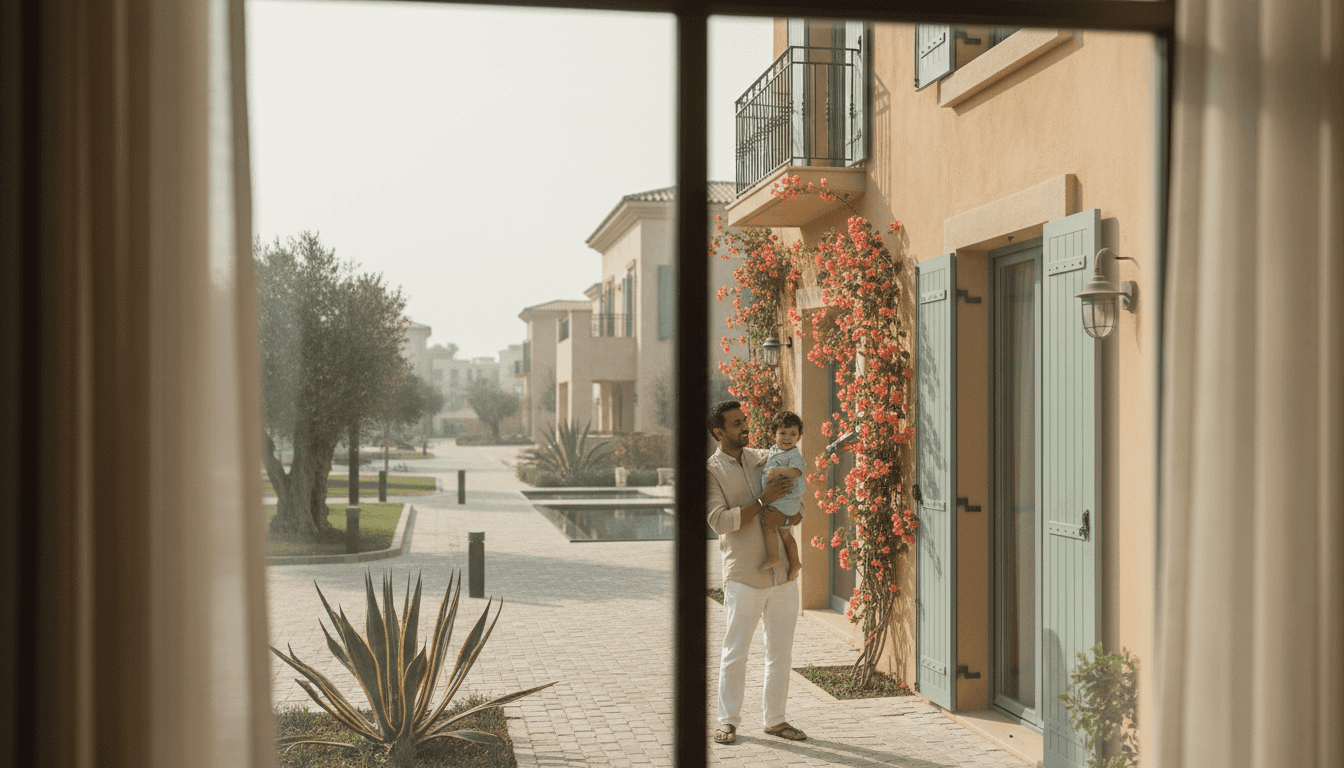
One of the most ambitious trends in Dubai’s recent masterplan developments has been the creation of themed villa communities with unique architectural styles. These are not just clusters with Italian-sounding names; they are genuine attempts to replicate the look, feel, and even the street life of specific European locales. The most prominent example of this is DAMAC Properties' work in DAMAC Hills and Damac Hills II and, most notably, DAMAC Lagoons. Here, the developer has dedicated entire sections of a massive community to mimicking the character of Mediterranean coastal towns. Clusters are named Santorini, Costa Brava, Portofino, and Venice, and the architecture follows suit with surprising commitment.
In the Santorini cluster, for instance, you'll find the iconic whitewashed, soft-edged villas with brilliant blue-domed roofs and matching accents. The design is deliberately organic, avoiding rigid lines to create the impression of a village that has grown over time. In the Portofino section, the colour palette shifts to the warm ochres, terracottas, and pastels of the Italian Riviera. The villas feature wrought-iron balconies, classic shutters, and terracotta-tiled hip roofs. The developer hasn’t just stopped at the buildings; they've integrated the theme into the landscape, with cobbled-style pathways, olive trees, and water features designed to evoke a European coastal atmosphere. It’s a form of architectural storytelling that aims to provide residents with an immersive, holiday-like environment year-round.
I find that this approach resonates particularly well with a segment of the market tired of homogenous design. It appeals to buyers who want their home to have a distinct personality and a sense of place, even if that place is an imported one. The success of this concept depends entirely on the quality of execution. When done well, it creates a powerful sense of community and visual identity. However, when the materials are cheap or the details are overlooked, it can feel more like a theme park than a premium residential area. In my experience, the newer phases in DAMAC Lagoons show a real step up in quality and attention to detail, learning lessons from earlier projects. The focus is on creating a genuine lifestyle, not just a superficial look.
Of course, living in such a distinctively themed community isn't for everyone. It requires a full buy-in to the aesthetic. But for those who are captivated by the romance of a Mediterranean village, these communities offer a chance to live that dream without leaving Dubai. They represent a bold move away from safe, neutral design and a clear sign that developers are now catering to more niche tastes within the broader market. It’s a fascinating experiment in place-making, and one that is proving to be commercially successful, attracting both end-users and investors looking for properties that stand out from the crowd.
Heritage Reimagined: The Modern Arabic Villa
 Featured project
Long before the rise of European themes, Dubai’s original architectural identity was being woven into its master-planned communities. The earliest large-scale villa projects, such as the original Arabian Ranches, established a template for modern Arabic design that remains influential today. Developed by Emaar Properties, these homes were not pastiches but thoughtful interpretations of traditional Gulf architecture, adapted for contemporary family life. You see this in the use of earthy tones, arched windows, and pergolas that provide both shade and aesthetic appeal. The layouts often feature central courtyards or gardens, a nod to the inward-facing nature of traditional Arabic homes, which prioritized family privacy.
However, for a more direct and articulated expression of heritage style villas Dubai, my personal favourite is the Quortaj sub-community within Al Furjan. Developed by Nakheel, Al Furjan offers two main architectural styles, but it is the Quortaj design that truly stands out. The name itself is derived from 'courtyard', and the architecture is a beautiful modern take on North African vernacular design. The villas and townhouses feature stunning green and blue mosaic tilework, white-rendered walls, and elegant tiered roofs. The most striking element, however, is the incorporation of the *barjeel*, or wind tower — a traditional architectural feature used for natural ventilation. While the barjeels in Quortaj are primarily aesthetic, they are a powerful visual link to the region's architectural history.
What I appreciate about the Quortaj style is its authenticity and restraint. It avoids caricature. The decorative elements are carefully integrated and serve to enhance the clean, modern lines of the homes rather than overwhelm them. This Dubai villa community design feels both rooted in place and perfectly suited to a modern lifestyle. The interiors are bright and spacious, with layouts that work for today's families. It proves that heritage-inspired design doesn't have to mean dark, small rooms or outdated fixtures. It’s a style that has aged remarkably well, and these homes remain highly sought-after in the secondary market, precisely because they offer something different from the standard contemporary villa.
This reimagining of heritage is a crucial part of the city’s architectural conversation. It’s a way of building a modern city that acknowledges its own past. As Dubai continues to grow, I believe we'll see more developers exploring this path, finding new ways to blend traditional motifs with cutting-edge design and construction techniques. For many residents, both Emirati and expatriate, living in a home that reflects the culture and history of the UAE is a powerful draw. It offers a sense of connection and belonging that a more generic international style simply cannot provide.
Desert Modernism: The Rise of Minimalist Design
At the opposite end of the stylistic spectrum from ornate heritage designs lies another growing movement in Dubai’s villa landscape: desert modernism. This architectural philosophy champions clean lines, geometric forms, a restrained material palette, and a deep connection between the indoor and outdoor spaces. It strips away ornamentation to focus on form, light, and function. While this style has been present in bespoke, architect-designed homes for years, it is now being adopted by major developers for entire communities, reflecting a sophisticated buyer demand for understated luxury.
Sobha Hartland and Sobha Hartland II is perhaps the best large-scale example of this trend. Located in Meydan, Sobha's villas and townhouses are defined by their crisp, cubist forms, flat roofs, and extensive use of glass. Floor-to-ceiling windows and sliding glass walls are standard, designed to flood the interiors with natural light and erase the boundary between the living room and the private garden. The colour palette is intentionally muted — shades of white, grey, and black dominate, complemented by the natural warmth of wood accents and the green of the landscaping. This is architecture that doesn't shout for attention; it exudes a quiet confidence.
The appeal of this minimalist aesthetic lies in its sense of calm and order. In a city as visually dynamic as Dubai, these homes offer a serene, uncluttered sanctuary. They serve as a neutral backdrop for a resident's own art, furniture, and life. Developers like Omniyat have pushed this concept into the ultra-luxury sphere with projects like The Lana Residences, and we are seeing this influence in many new off-plan launches. The focus is on precision and quality. In minimalist design, there is nowhere to hide flaws. The joints must be perfect, the materials must be of the highest grade, and the finishing must be impeccable. This is why developers known for their high construction standards, like Sobha, excel in this style.
This architectural choice also has practical benefits in this climate. Flat roofs are ideal for installing solar panels, and large, well-insulated glass panels can be specified to be highly energy-efficient, managing heat gain while still providing expansive views. The open-plan layouts typical of modernist design also lend themselves well to the informal, family-centric lifestyle popular in Dubai. For buyers, the choice for a minimalist home is often a conscious rejection of the more decorative styles. It’s a statement of taste that prioritizes space, light, and material honesty over embellishment. As the market matures, I expect the demand for these distinctive homes Dubai to grow, particularly among design-savvy buyers who appreciate the timeless elegance of modernism.
The Botanical Sanctuary: The Case of Al Barari
No discussion of unique villa architecture in Dubai would be complete without a deep dive into Al Barari. This community is in a category of its own. While other developments might incorporate landscaping, Al Barari is landscaping that happens to have villas within it. The entire concept is built around the idea of a botanical haven, a lush, green oasis that feels utterly removed from the surrounding desert. The architecture is a direct response to this vision, designed not to dominate the landscape but to merge with it. It’s perhaps the most singular and uncompromising residential vision ever executed in the city.
The villas themselves are spread across several distinct phases, each with its own architectural character, but all united by a common philosophy. In the original phases, like The Residences and The Reserve, the homes are grand and spacious, with a style that blends Mediterranean and contemporary influences. The key, however, is how they interact with their surroundings. Every villa is enveloped by its own dense, mature garden, creating absolute privacy. Tiered water features, infinity pools that bleed into the greenery, and huge covered terraces are standard. The architecture uses natural materials extensively — stone cladding, rich woods, and flowing water are integral parts of the design, blurring the line between the built structure and the natural world.
More recent launches, like The Nest, offer a more contemporary, minimalist take, but the core principle remains. These smaller (by Al Barari standards) villas feature clean lines and vast glass walls, but they are arranged in a way that every home looks out onto a thicket of trees or a green park, not onto its neighbour. The effect is profound. Driving through Al Barari, you often can't even see the homes for the trees. This commitment to greenery is not just for show; it has a tangible impact on the microclimate. It is noticeably cooler and quieter within the community, and the air quality feels different. This is a level of environmental design that goes far beyond the typical community park.
Living in Al Barari is a lifestyle choice. It appeals to those who prioritize privacy, nature, and well-being above all else. The community has its own destination restaurant (The Farm), a state-of-the-art gym, and wellness facilities, creating a self-contained world. This unique environment comes at a price, however. The service charges in Al Barari are among the highest in Dubai, typically ranging from AED 10 to 14 per square foot of built-up area annually. This is necessary to maintain the incredibly complex and water-intensive landscaping. For residents, this is a price they are willing to pay for an unparalleled living experience. Al Barari is a sign of the power of a singular vision, proving that with enough conviction (and investment), you can create a literal oasis in the desert.
“Al Barari isn't just a community with nice gardens; it's a bold architectural statement where the buildings are secondary to the landscape.”
Weighing the Pros and Cons of Themed Living
Choosing a home in a community with a strong architectural theme is a significant decision that goes beyond simple aesthetics. It has real-world implications for lifestyle, resale value, and personal satisfaction. On the one hand, the advantages are clear. A well-executed themed community offers a powerful sense of place and identity. Your home feels unique, part of a cohesive and visually interesting neighbourhood. This can foster a strong sense of community, as residents are often drawn together by a shared appreciation for the environment they've chosen.
From an investment perspective, this uniqueness can be a major asset. In a market crowded with similar-looking properties, a home in a distinctive community like Al Furjan's Quortaj cluster or one of DAMAC's Mediterranean villages stands out. This can make the property easier to rent and potentially command a premium. Tenants are often willing to pay more for a home with character. When it comes time to sell, this same distinctiveness can attract a specific type of buyer, leading to a quicker sale. The themed villa communities Dubai has to offer are, in essence, a niche product with a dedicated audience, which can insulate them from the broader market's fluctuations to some extent.
However, there are potential downsides to consider. The very uniqueness that makes these communities appealing can also limit their audience. A highly specific architectural style, like the Santorini-inspired villas, might not appeal to a buyer who prefers a minimalist aesthetic. This could, in theory, shrink the pool of potential buyers or tenants compared to a more neutral, contemporary home. There's also the risk of the theme dating. What looks fresh and exciting today might feel kitsch or tired in a decade, although styles like classic Mediterranean and Arabic modernism have proven to have timeless appeal.
Another practical consideration is the potential for restrictive community rules. To maintain the cohesive look and feel, homeowners' associations in themed communities can be quite strict about external modifications. You may find your ability to change the colour of your facade, alter the landscaping, or add extensions is limited. This is done to protect the collective investment and the architectural integrity of the neighbourhood, but it can be frustrating for homeowners who want more creative freedom. Ultimately, the decision comes down to personal preference. If you fall in love with a particular architectural style and the lifestyle it represents, the pros will almost certainly outweigh the cons.
The Financials: Breaking Down the Cost of a Unique Villa
Buying a villa with a distinct architectural identity involves the same fundamental costs as any property purchase in Dubai, but the entry prices and ongoing fees can vary significantly depending on the community's exclusivity and features. It's crucial for buyers to look beyond the headline price and understand the total cost of ownership. Let's create a hypothetical example for a four-bedroom villa in a mid-to-high-end themed community, priced at AED 6,000,000.
First, you have the upfront acquisition costs. These are regulated fees and are consistent across the emirate. The largest of these is the Dubai Land Department (DLD) transfer fee, which is 4% of the property purchase price. You will also need to account for the DLD's administrative fees, which are typically around AED 4,200 for a villa. A Trustee Office fee, required for property transfers, will be approximately AED 4,200. Finally, there is our professional agency fee, which is 2% of the purchase price. These are the standard, non-negotiable costs associated with any property transaction in the secondary market.
Here is a line-by-line breakdown of the upfront costs for our AED 6,000,000 villa:
- Purchase Price: AED 6,000,000
- Dubai Land Department (DLD) Fee (4%): AED 240,000
- Real Estate Agency Fee (2% + 5% VAT): AED 126,000
- Trustee Office Fee: AED 4,200
- DLD Admin Fees: AED 4,200
- Title Deed Issuance Fee: AED 580
- No Objection Certificate (NOC) Fee: Approx. AED 1,000 - 5,000 (varies by developer)
- Mortgage Registration Fee (if applicable, 0.25% of loan amount): Approx. AED 11,250 (on a 75% loan)
- Bank Processing & Valuation Fees (if applicable): Approx. AED 8,000
- Total Upfront Costs (with mortgage): Approximately AED 395,230
Beyond the purchase, the most significant ongoing cost is the annual community service charge. This is where architecturally unique communities can differ dramatically. For a standard contemporary villa community with basic parks and pools, you might expect charges of AED 3 to 6 per square foot of the built-up area per year. For our hypothetical 4,000 sq. Ft. villa, this would be AED 12,000 to AED 24,000 annually. However, in a community like Al Barari, with its incredibly dense and complex landscaping, service charges can be AED 10 to 14 per sq. Ft. or more. For the same 4,000 sq. Ft. villa, this would translate to AED 40,000 to AED 56,000 per year. This is a substantial difference and must be factored into your annual budget. These fees cover everything from security and road maintenance to the upkeep of the specific features — be it botanical gardens or Venetian-style canals, that define the community's unique character.
My Verdict: Why Character is King
After years of walking through countless villa communities across Dubai, my conviction has only deepened: character is king. While the safe, contemporary beige villa will always have its place and serve the market well, the communities that truly capture the imagination and, in my view, hold their value most resiliently are those with a distinct and well-executed architectural soul. Whether it's the quiet modernism of a Sobha villa, the transportive charm of a home in DAMAC Lagoons, or the deep-rooted elegance of Al Furjan's Quortaj, these homes offer more than just shelter. They offer an identity.
This trend towards more diverse and unique villa architecture Dubai is a sign of a maturing market. It shows that both developers and buyers are moving beyond a one-size-fits-all approach. We are seeing a greater appreciation for design, for storytelling, and for the creation of genuine neighbourhoods with a unique feel. This is incredibly exciting. It means more choice for buyers and a richer, more varied urban fabric for the city as a whole. It also allows people to find a home that truly reflects their personality and aspirations.
For anyone looking to browse properties for sale in Dubai, I always recommend looking beyond the spec sheet. Visit these communities in person. Walk the streets. Do you feel a connection to the environment? Does the architectural style speak to you? A home is the biggest investment most of us will ever make, but it's also deeply personal. The practicalities of budget, size, and location are paramount, but the intangible feeling of 'rightness' that comes from a home with character should never be underestimated. In a world of mass production, choosing a home with a unique identity is a powerful statement.
While neutral contemporary villas are a safe bet, communities with a strong, well-executed architectural theme — be it Mediterranean, heritage, or minimalist, often create more passionate demand and a stronger sense of place, making them compelling choices for both end-users and long-term investors.
Sources
- Dubai Land Department (DLD): dubailand.gov.ae
- Real Estate Regulatory Agency (RERA): rera.gov.ae
Questions, answered
- Which Dubai communities have the most unique villa architecture?
- Communities like Al Barari are known for their lush, botanical-themed villas, while parts of DAMAC Lagoons replicate Mediterranean towns. For heritage-inspired designs, Al Furjan's Quortaj style and some clusters in Arabian Ranches offer a modern take on traditional Arabic architecture.
- Are themed villa communities in Dubai a good investment?
- Themed communities can be excellent investments if the developer has a strong track record and the quality is high. Their unique character often creates strong tenant and buyer demand, potentially leading to stable rental yields and capital appreciation, though no returns are ever guaranteed.
- What is 'heritage style' architecture in Dubai villas?
- Heritage style villas in Dubai draw inspiration from traditional Arabic and regional design elements. This can include features like wind towers (barjeel), decorative latticework (mashrabiya), internal courtyards, and an earthy colour palette, all adapted for modern family living.
- Do uniquely designed villas have higher service charges?
- Not necessarily, but it depends on the community's features. A community like Al Barari has higher service charges (around AED 10-14 per sq. Ft.) due to its extensive landscaping and water features, not just the architecture. A themed community with standard amenities may have typical service charges of AED 3-6 per sq. Ft.
- Can I find minimalist villa designs in Dubai?
- Yes, minimalist and modernist architecture is becoming more prominent in Dubai. Communities like Sobha Hartland and developers like Omniyat are known for clean lines, large glass panels, and a focus on natural light and materials, offering a stark contrast to more ornate styles.

Sophia profiles Dubai's villa communities — schools, commute times, green space, and the intangible feel of a neighbourhood. She writes for families putting down roots.
Related stories
RERA's New Clarity Mandate: Dubai Landlords & Tenants Guide
Dubai's Real Estate Regulatory Agency (RERA) is introducing new mandates for rental contract clarity. I break down what these changes mean for landlords and tenants, from unified contracts to dispute resolution.
The Townhouse: Dubai's Secret to Connected Living
For those seeking the space of a private home without the isolation of a villa, Dubai's best townhouse communities offer a compelling, connected alternative. I'll guide you through my top picks and what this lifestyle truly costs.
Your Path to Dubai's Golden Visa via Property
Securing a 10-year Golden Visa through property is a major draw for Dubai residents. I'll walk you through the precise requirements and apartment strategies to make long-term residency a reality.
Echoes, in your inbox
One thoughtful email a month. Market insight, new launches, no spam.