

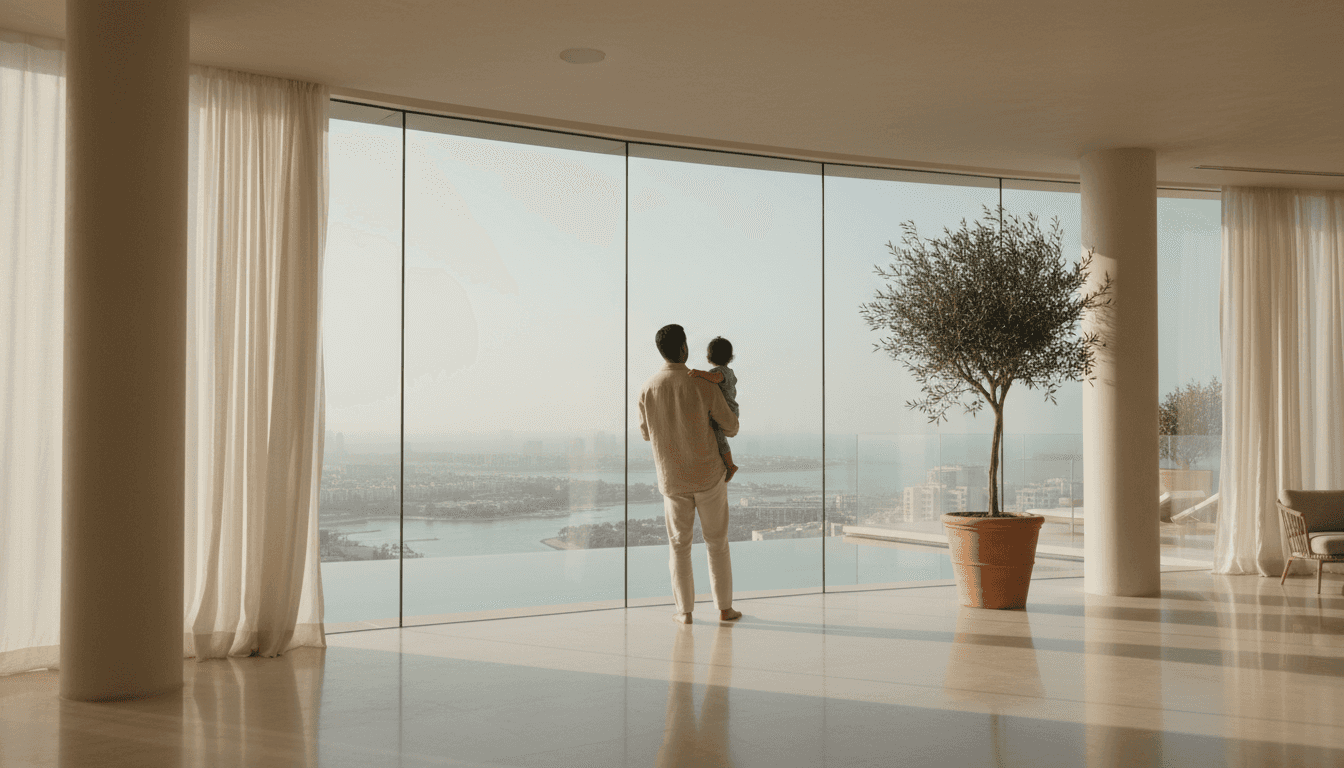
Your Path to Dubai's Golden Visa via Property
Securing a 10-year Golden Visa through property is a major draw for Dubai residents. I'll walk you through the precise requirements and apartment strategies to make long-term residency a reality.

The Dubai Golden Visa has fundamentally altered the conversation around long-term residency in the UAE. For those of us who have built lives and careers here, it transforms the ephemeral nature of a standard work visa into something far more permanent and secure. As an apartment specialist at Gaia Living, the most common question I get is no longer just about yield or capital growth, but about how property ownership can anchor a family’s future in Dubai.
Here’s what we'll explore in detail:
- The official Dubai property visa requirements and the AED 2 million rule.
- Ready vs. Off-Plan: The pros and cons of each path for visa eligibility.
- The full, line-by-line costs you must budget for beyond the property price.
- My top apartment communities for hitting the Golden Visa threshold.
- Mortgaged properties and how they fit into the visa equation.
- The practical steps of the application process itself.
The AED 2 Million Rule: Unpacking the Core Requirement
The foundation of the Golden Visa property Dubai route is straightforward in principle, but the details are what matter. To qualify for the 10-year renewable residency visa as a real estate investor, you must own property in the UAE with a value of at least AED 2 million. It’s a significant update from the previous, shorter-term visas that had lower entry points. This higher threshold is a deliberate government policy designed to attract and retain committed, long-term investors who see Dubai as a home, not just a market.
According to the official guidelines from the Dubai Land Department (DLD) and the UAE government portal, this AED 2 million can be met in several ways. It can be a single property valued at AED 2 million or more, or it can be a portfolio of several properties whose combined value meets the threshold. Crucially, this value refers to the purchase price on your title deed (for a ready property) or the total value on your Sale and Purchase Agreement (SPA) for an off-plan unit. It is not the current market value, which can fluctuate. This provides certainty for buyers; if you buy at AED 2 million, you qualify, regardless of market movements a year later.
The property must be located in one of Dubai's designated freehold zones, which are areas where foreign nationals are permitted to own property outright. This covers most of the modern communities we associate with new Dubai, from Dubai Marina and Palm Jumeirah to Downtown Dubai, JVC, and beyond. Another critical point is that the AED 2 million investment must be in the property itself, not including associated fees. The 4% DLD transfer fee, agent commissions, and other closing costs do not count towards your qualifying investment amount. The funds must be clearly documented as being paid towards the asset. This is why having clean, clear documentation like a title deed or a detailed statement of account from a developer is non-negotiable.
This visa grants more than just the right to reside. It allows you to sponsor your spouse and children, giving them the same 10-year visa validity. It also permits you to sponsor an unlimited number of domestic helpers. One of the most significant long-term visa property benefits Dubai offers is the freedom from the traditional employer-sponsorship model. Your residency is tied to your asset, not your job. This provides a profound sense of security and flexibility, allowing you to change jobs, start a business, or even retire in Dubai without your right to live here being affected. It also removes the old requirement of staying in the country for a minimum number of days per year, offering true global mobility for investors who travel frequently.
Ready vs. Off-Plan Apartments: Which Path is Right for You?
 Featured project
Once you’ve decided to pursue an investor visa through apartment ownership, the first major decision is whether to buy a completed (ready) property or invest in an off-plan project directly from a developer. Both are valid routes to the Golden Visa, but they have different processes, risks, and rewards. My advice to clients is to evaluate this based on their urgency, risk appetite, and financial planning.
Choosing a ready apartment is the most direct path. You find a property you like, pay the price, get the title deed from the DLD, and you can immediately begin your Golden Visa application. The process is transparent. The asset is tangible — you can see it, touch it, and inspect its quality. You know exactly what you are getting, from the view and finishing to the building's amenities and community atmosphere. For buyers who need the visa quickly or who prefer the certainty of a physical asset, this is almost always my recommended approach. You can browse properties for sale on the secondary market that meet the AED 2 million criteria and close a deal within weeks.
However, the off-plan route has become increasingly popular, especially since the DLD clarified the rules. You can now qualify for the Golden Visa by purchasing an off-plan property from an approved developer, provided you have paid at least AED 2 million of the property's total value. For example, if you buy a AED 3 million apartment with a payment plan, you can apply for the visa once your paid instalments reach the AED 2 million mark. To prove this, you need your Oqood (the initial registration certificate for an off-plan property), your SPA, and a comprehensive statement of account from the developer confirming the amount paid. This path is attractive because it often allows you to secure brand-new properties in emerging communities, sometimes with more favourable pricing or attractive post-handover payment plans. Developers like Emaar Properties, Sobha Realty, and Nakheel have numerous off-plan launches that fall into this category.
There are clear trade-offs. The primary advantage of off-plan is financial use and potential for capital appreciation during the construction period. The main disadvantage is the wait. You are paying for a property that may not be ready for another two to three years. While Dubai's real estate regulations, managed by RERA, provide strong protections like mandatory escrow accounts for project funds, construction delays can and do happen. You are also buying based on floor plans and marketing materials, which requires a degree of trust in the developer's track record. My verdict is this: if your primary goal is securing the visa and having a home to live in or rent out immediately, a ready property is superior. If you are an investor with a longer-term horizon and are comfortable with the construction timeline, the off-plan route can offer significant financial upside and access to the latest generation of apartment buildings.
The Full Upfront Cost: Budgeting Beyond the AED 2 Million
A frequent mistake I see buyers make is focusing solely on the AED 2 million property price. The total cash you need upfront is significantly higher. Failing to budget for these ancillary costs can put your entire transaction and visa application at risk. As a rule of thumb, I advise clients to budget for an additional 7% to 8% of the purchase price for a ready property. This covers all the mandatory fees and administrative charges.
Let’s break down the costs for a hypothetical ready apartment purchased for exactly AED 2,200,000. This is a realistic price point for a good quality two-bedroom apartment in a desirable community that would comfortably meet the Dubai property visa requirements.
Here is a line-by-line breakdown of the expected upfront costs:
- Property Purchase Price: AED 2,200,000
- Dubai Land Department (DLD) Transfer Fee: 4% of the price = AED 88,000
- DLD Administrative Fee: AED 4,200 (a fixed fee for properties over AED 500k)
- Property Registration Trustee Fee: AED 4,200 (paid to the trustee office for handling the title deed transfer)
- Real Estate Agency Fee: 2% of the price + 5% VAT = AED 46,200
- Developer No Objection Certificate (NOC) Fee: AED 525 to AED 5,250 (this varies widely by developer, let's use an average of AED 1,500)
- Mortgage Registration Fee (if applicable): 0.25% of the loan amount (we'll ignore this for a cash purchase example)
Total Upfront Cost Breakdown:
- Base Property Cost: AED 2,200,000
- Total Mandatory Fees: AED 139,900 (88,000 + 4,200 + 4,200 + 46,200 + 1,500)
- Grand Total: AED 2,339,900
As you can see, the 'extra' costs add up to nearly AED 140,000. This is cash you need ready at the time of transfer. The DLD fees are non-negotiable and are paid via manager's cheque directly to the department on the day of the transfer. For the Golden Visa application itself, there are further costs for medical tests, Emirates ID application, and the visa stamping, which can amount to several thousand dirhams per person. It’s crucial to have this full financial picture before you begin your property search. Our team at Gaia Living always provides a detailed cost sheet like this to our clients to ensure there are no surprises.
Prime Apartment Communities for Golden Visa Seekers
With the AED 2 million threshold in mind, the key is to find the right balance of value, location, and lifestyle. You’re not just buying a visa qualification; you’re buying an asset that should perform well and a home you’ll enjoy. Based on my experience helping clients with owning apartment with investor visa goals, a few key communities consistently hit the sweet spot.
For those seeking an established, vibrant lifestyle, Dubai Marina remains a top choice. While you won't find many options right at the AED 2 million mark anymore, a budget of AED 2.3 to 2.8 million can secure you a solid two-bedroom apartment in a well-maintained tower. The appeal is undeniable: walkability, endless dining options, beach access, and strong rental demand. The service charges here can be higher, often ranging from AED 18 to AED 25 per square foot annually, but the amenities and prime location justify the cost for many. Look at towers developed by Emaar Properties like the original six towers or those in Marina Promenade for premium quality.
If you prefer a more central location with an urban buzz, Business Bay is an excellent alternative. It offers proximity to Downtown Dubai and DIFC at a more accessible price point. For AED 2 million to 2.5 million, you can find modern one and two-bedroom apartments, many with stunning canal or Burj Khalifa views. Developers like Omniyat have delivered some exceptional, design-led buildings here, though they often command a premium well above the visa threshold. The area is still evolving, but its connectivity and ongoing infrastructure projects, like the expansion of the canal promenade, underpin its long-term value. It’s a fantastic option for professionals who want to be close to the city's commercial heart.
For family-oriented buyers, the options have expanded significantly. While traditionally known for villas, communities like Dubai Hills Estate (a project by Emaar) offer fantastic apartment options that meet the criteria. A spacious two-bedroom unit in Park Heights or Collective can be found around the AED 2-2.5 million mark. The community offers a superb suburban feel with a world-class golf course, a massive central park, and the Dubai Hills Mall. It represents a different pace of life compared to the Marina, focused on green spaces and family amenities. Similarly, Sobha Hartland in Meydan is another standout. Known for its exceptional build quality, Sobha offers premium apartments surrounded by lush greenery and private schools, all just minutes from Downtown. A two-bedroom here would typically start from AED 2.2 million, offering a compelling blend of luxury finishing and community living.
“The Golden Visa isn’t just a transaction; it's a commitment. Choosing the right community is as important as meeting the price point, because this property will be the anchor for your life in Dubai for the next decade.”
The Role of Mortgages in Your Visa Strategy
A common misconception is that you must be a cash buyer to qualify for the Golden Visa. This is not the case. You can absolutely use a mortgage, but the rules are very specific. The key principle is that your *paid-up capital* or *equity* in the property must be at least AED 2 million. The loan amount is not what qualifies you; the money you have personally invested is.
Let’s consider two scenarios. In the first, you buy a property for AED 4 million. You take a mortgage for AED 2 million and pay the remaining AED 2 million as a down payment. In this case, you qualify for the Golden Visa immediately. Your equity is AED 2 million, and you can get a letter from your bank confirming this, which you submit along with your title deed. The Central Bank of the UAE sets the loan-to-value (LTV) limits, which for a first-time resident buyer is typically a maximum of 80%, meaning a 20% down payment is required. So, to have AED 2 million in equity, you'll likely be buying a property valued significantly higher.
In the second, more common scenario, you buy a property for AED 2.5 million. The maximum mortgage you can get is 80%, which is AED 2 million, requiring a down payment of AED 500,000. In this situation, you do not immediately qualify for the Golden Visa because your equity is only AED 500,000. However, as you pay down your mortgage over the years, your equity grows. Once the outstanding loan amount drops to AED 500,000 (meaning you have paid off AED 1.5 million in principal, plus your initial AED 500,000 down payment), your total equity reaches AED 2 million. At that point, you can apply for the Golden Visa. This makes the visa a medium-term goal for many salaried residents who use a mortgage to get on the property ladder.
To prove your eligibility with a mortgaged property, your application file will need a few extra documents:
- Title Deed: Proving your ownership.
- Bank Mortgage Statement: Clearly showing the total loan amount, the amount paid, and the outstanding balance.
- No Objection Certificate (NOC) from the Bank: A letter stating that the bank has no objection to you applying for the Golden Visa based on your equity in the property. They will usually provide an official valuation or statement confirming the equity value.
This route requires patience but is a perfectly viable strategy. It allows you to benefit from property ownership and potential capital appreciation while working towards the long-term security of the Golden Visa.
The Application Process: A Step-by-Step Guide
Navigating the application for your investor visa apartment ownership is a methodical process. Once your property transaction is complete and you have the title deed (or qualifying off-plan documents) in hand, you can begin. While we at Gaia Living always connect our clients with trusted partners to handle the paperwork, it's helpful to understand the steps involved.
First, you need to gather your core documents. This is the most important part, and any missing paperwork will cause delays.
Essential Document Checklist:
1. Property Title Deed / Oqood Certificate: This must be in your name and show a value of at least AED 2 million. 2. Statement of Account (for off-plan): If using an off-plan property, a letter from the developer showing at least AED 2 million has been paid. 3. Letter from the Bank (for mortgaged property): If applicable, confirming your equity of at least AED 2 million. 4. Passport: A clear colour copy and the original. 5. Current Visa: A copy of your current residency visa or tourist visa. 6. Passport-Sized Photograph: With a white background, conforming to UAE standards.
With these documents ready, the application is typically submitted through a DLD-approved service centre, often called a Cube Centre. The process generally follows these steps:
1. Initial Submission: You present your documents at the centre. An official will verify that your property meets the threshold and that your paperwork is in order. 2. Medical Fitness Test: You will be directed to undergo a standard visa medical test at a government-approved health centre. This tests for communicable diseases as per UAE Ministry of Health regulations. 3. Emirates ID Application: You will complete the biometrics (fingerprinting and photo) for your new Emirates ID card. 4. Visa Issuance: Once your medical results are clear and your security check is passed, the General Directorate of Residency and Foreigners Affairs (GDRFA) will issue your new 10-year residency visa. The final step is getting the visa stamped in your passport.
The entire process, from submission to stamping, typically takes between two to four weeks, assuming all your documents are correct. The fees for the visa service itself, medicals, and Emirates ID are separate from the property transaction costs and should be budgeted for accordingly. It’s a remarkably efficient system, and having an expert guide you through it can make it feel almost smooth.
The Golden Visa through property ownership is one of the most powerful tools available for securing your long-term future in Dubai. By choosing the right apartment in a community that fits your lifestyle and carefully budgeting for all associated costs, you can turn a real estate purchase into a decade of stability and opportunity.
Sources
- Dubai Land Department (DLD): https://dubailand.gov.ae/en/
- UAE Government Portal: https://u.ae/en/information-and-services/visa-and-emirates-id/residence-visas/golden-visa
- Central Bank of the UAE: https://www.centralbank.ae/en/
- Ministry of Health and Prevention (MOHAP): https://www.mohap.gov.ae/
Questions, answered
- What is the minimum investment for a Dubai Golden Visa through property?
- You must invest a minimum of AED 2 million in one or more properties. This is the property's value, not the down payment, and must be proven with a title deed or an Oqood certificate plus a statement of account showing AED 2 million paid to the developer.
- Can I get a Golden Visa with a mortgaged property?
- Yes, you can. The key requirement is that your equity (the amount you have paid, not borrowed) must be at least AED 2 million. You'll need an NOC and a statement of account from your bank to prove this.
- Does my spouse get a Golden Visa if I buy a property?
- Yes. As the primary visa holder, you can sponsor your spouse and children. The visa for your dependents will have the same duration as your own 10-year Golden Visa.
- Can I combine off-plan and ready properties to reach the AED 2 million threshold?
- Yes, the rules allow you to combine multiple properties to meet the AED 2 million requirement. You can use a mix of ready properties (with title deeds) and qualifying off-plan properties from approved developers.
- Are there other costs besides the AED 2 million property price?
- Yes. Budget for upfront costs of around 7-8% on top of the property price. This includes the 4% Dubai Land Department transfer fee, agency fees (typically 2%), trustee fees, and various administrative and visa application fees.
- What happens to my Golden Visa if I sell the property?
- If you sell the property that qualified you for the Golden Visa, the visa will be cancelled. To maintain it, you must retain ownership of a property (or properties) with a value of at least AED 2 million for the entire visa duration.

Ravi lives and breathes apartment living — from studio yields in JVC to branded residences on the Palm. Floor plans, service charges, and view lines are his love language.
Related stories
Hyper-Local Yields: Which Apartment Size Wins in Dubai?
A data-driven analysis of whether studios, 1-beds, or 2-beds deliver the best rental yields across Dubai's key investment neighbourhoods, from Marina to JVC.
RERA's New Clarity Mandate: Dubai Landlords & Tenants Guide
Dubai's Real Estate Regulatory Agency (RERA) is introducing new mandates for rental contract clarity. I break down what these changes mean for landlords and tenants, from unified contracts to dispute resolution.
The Townhouse: Dubai's Secret to Connected Living
For those seeking the space of a private home without the isolation of a villa, Dubai's best townhouse communities offer a compelling, connected alternative. I'll guide you through my top picks and what this lifestyle truly costs.
Echoes, in your inbox
One thoughtful email a month. Market insight, new launches, no spam.