

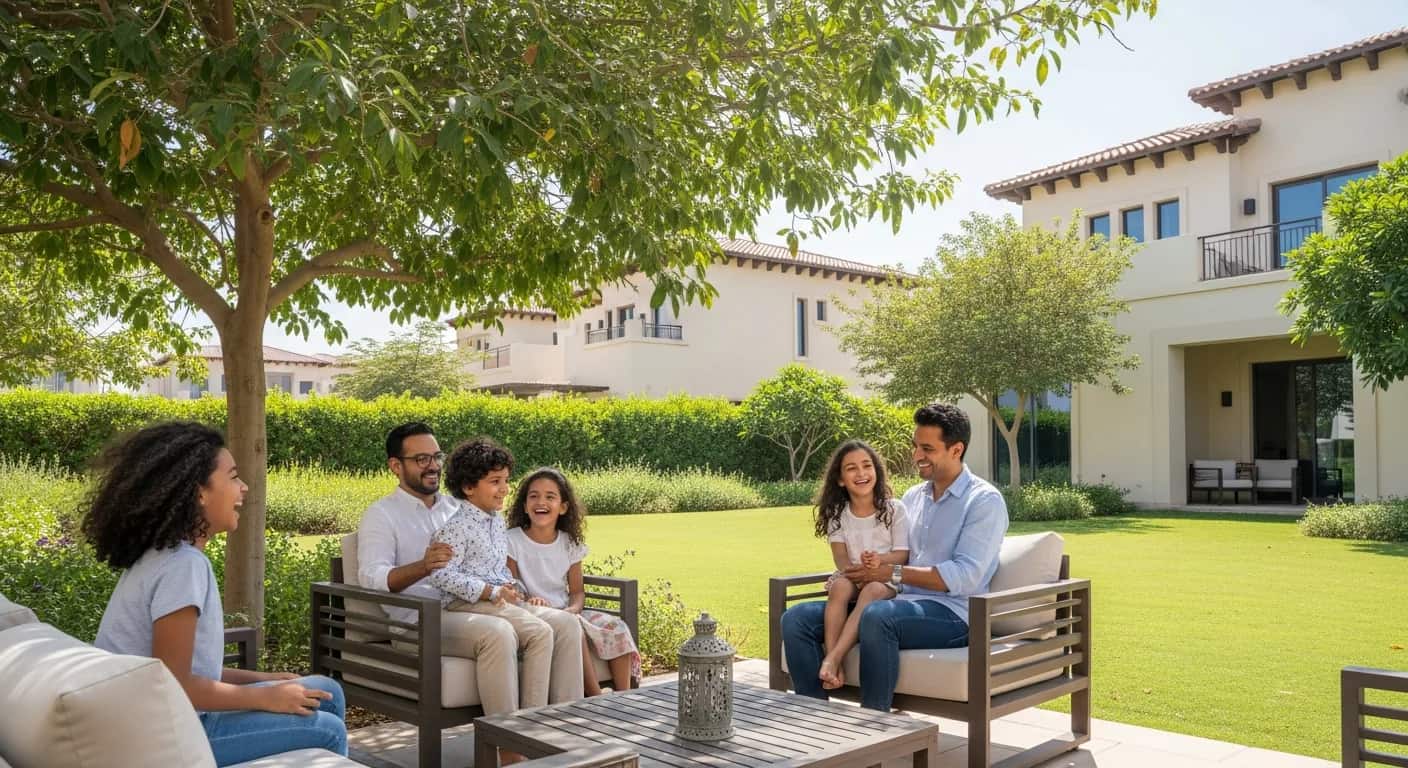
Dubai's Mature Villas: Homes with History and Heart
For families seeking to plant deep roots in Dubai, the city's established villa communities offer a unique blend of character, space, and stability that new launches can't replicate. I explore what makes these areas so special.

In a city celebrated for its futuristic skyline and record-breaking newness, there's a different kind of luxury that I find myself drawn to time and again. It’s the quiet confidence of Dubai’s mature villa communities, places where families aren't just buying property, but are genuinely setting down roots.
Here’s what we will explore in this guide to established family villas in Dubai:
- The unique soul and character of mature communities
- Spotlights on cornerstone neighbourhoods: Arabian Ranches, The Springs & The Meadows, Jumeirah Golf Estates, and Al Barari
- The financial reality: A full breakdown of purchase costs, community fees, and ongoing maintenance
- The lifestyle dividend: Why schools, parks, and neighbours are the real premium
- The renovation opportunity: Turning good bones into a perfect modern home
- My verdict on choosing a home with history for your family's future
The Soul of an Established Community
Every week at Gaia Living, we see the excitement surrounding brand new off-plan launches. The renders are spectacular, the payment plans are attractive, and the promise of being the first to live in a home is powerful. Yet, a significant portion of the families I work with are looking for something else entirely. They are searching for a sense of permanence, a feeling of place that can only be earned over time. This is the unique selling proposition of mature villa communities in Dubai.
What does it mean to have 'roots' in a global city like Dubai? It's the shade from a 20-year-old ghaf tree in your garden that a new villa can't offer for another two decades. It's the friendly nod from neighbours you’ve seen at the community pool for years. It's the reassuring sight of children walking or cycling to a school that has been part of the neighbourhood's fabric since the beginning. These communities possess a character that isn't designed by a marketing team; it’s built by the thousands of little moments of daily life, year after year.
These established neighbourhoods, many of which were visionary projects in the early 2000s, were designed with a generosity of space that is increasingly rare in new developments. The focus was on creating a holistic lifestyle, not just maximizing the number of units. This translates into wider internal roads, sprawling parks, and, most importantly, the coveted garden villas Dubai families dream of — properties with substantial plots that offer genuine privacy and room for children to play freely. The value proposition here isn't about the latest smart-home technology or the trendiest façade; it's about space, nature, and stability.
Spotlight: Arabian Ranches — The Original Blueprint
 Featured project
When you talk about mature villa communities Dubai, the conversation almost always begins with Arabian Ranches. Developed by Emaar Properties, this community wasn't just a housing project; it was a paradigm shift in Dubai's suburban living. Launched in 2004, it set the benchmark for what a self-contained, family-centric community could be. To this day, it remains one of the most desirable addresses for families, and for good reason.
The genius of Arabian Ranches lies in its master plan. It’s a collection of distinct sub-communities, each with its own architectural style — primarily Spanish and Portuguese-inspired, and price point. You have areas like Saheel, with its huge plot sizes and grand luxury villas, Mirador, with its distinct Spanish aesthetic, and smaller, more tightly-knit enclaves like Alvorada and Palmera. This variety means that different types of families can find their fit within the broader Ranches ecosystem. What unites them is the commitment to green space. The entire community is woven together by parks, walking trails, and the immaculate fairways of the Arabian Ranches Golf Club.
From a practical standpoint for families, the infrastructure is completely settled. The community has its own highly-regarded school, Jumeirah English Speaking School (JESS), which is a huge draw. It also has the Arabian Ranches Souk for daily shopping, a medical clinic, and multiple mosques. This self-sufficiency means residents don't *need* to leave the community for their daily needs, fostering a village-like atmosphere that is hard to replicate. The villas themselves, while now two decades old, were built to a high standard. They feature the 'good bones' I often talk about: solid construction, logical layouts, and, most critically, those generous plot sizes that are now a true luxury in Dubai's property market.
Spotlight: The Springs & The Meadows — Waterside Living
If Arabian Ranches established the blueprint for desert-themed suburban life, then The Springs and The Meadows, part of the wider Emirates Living master community also by Emaar, perfected the model for lush, lakeside living. These communities offer a different, but equally compelling, version of established family life in Dubai. They feel wonderfully secluded and green, yet they are remarkably central, located just off Sheikh Zayed Road, making commutes to areas like Dubai Media City or JBR incredibly convenient.
The primary distinction is between The Springs and The Meadows. The Springs consists of smaller attached villas and townhouses, making it a more accessible entry point into the Emirates Living area. It's incredibly popular with young families and first-time villa buyers. The Meadows offers larger, fully detached villas on more substantial plots, catering to families looking for more space and privacy. What connects them all is the landscape. The communities are built around a series of serene, man-made lakes and are crisscrossed with verdant parks and playgrounds. On any given afternoon, you’ll see the paths bustling with joggers, families walking their dogs, and children cycling between friends' houses.
I often tell clients that buying in The Springs or The Meadows is like buying into an ecosystem. You have access to the facilities across the area, including multiple community centres, pools in every enclave, and large town centres with supermarkets, cafes, and restaurants. The presence of top-tier schools like Dubai British School and Emirates International School right on the doorstep is a non-negotiable for many of the families I work with. The villas, much like those in Arabian Ranches, are of an age where they might require some cosmetic updating, but the trade-off is a location and community atmosphere that simply cannot be bought in a new development. It's a proven, stable, and incredibly pleasant place to live.
Spotlight: Jumeirah Golf Estates — The Premium Choice
Slightly newer than the Emaar originals but now firmly in the 'established' category, Jumeirah Golf Estates (JGE) offers a more premium and contemporary take on the mature villa community. From the moment you drive in, you can feel the difference. The scale is grander, the architecture more varied and modern, and the entire community is anchored by the spectacular Fire and Earth championship golf courses, home to the DP World Tour Championship.
JGE is a collection of gated communities, each with its own unique identity and architectural style. You might find Tuscan-style villas in Olive Point, Mediterranean designs in Sienna Lakes, or more contemporary homes in communities like Redwood Avenue. This architectural diversity is a key appeal for buyers who might find the uniformity of older communities a bit repetitive. The common thread is luxury and quality. The villas are generally larger, with higher-end finishes, private pools as standard, and smart-home features integrated from the start. Many homes offer stunning, front-line views of the immaculate golf courses, which is a major part of the lifestyle here.
While the golf courses are the headline attraction, the sense of community at JGE has blossomed over the years. The Clubhouse is a true hub, with multiple restaurants, a pool, and a state-of-the-art gym, hosting regular events that bring residents together. The landscaping, a mix of arid and lush planting, has had over a decade to mature, giving the neighbourhood a settled, verdant feel. For families, the opening of the European Tour Performance Institute and proximity to schools in neighbouring areas like Dubai Sports City and JVC have made it an increasingly practical, as well as aspirational, choice. It strikes a fantastic balance between the spaciousness of a mature community and the modern luxuries of a newer build.
“The true value of a mature community isn't in the price per square foot; it's in the shade of a 20-year-old tree, the wave from a familiar neighbour, and the sound of children playing in an established park.”
Spotlight: Al Barari — The Green Sanctuary
Then there is Al Barari. In a category of its own, Al Barari is less a villa community and more a botanical paradise that you can happen to live in. It is the ultimate expression of the garden villas Dubai concept, and for a certain type of buyer who prioritizes nature, tranquility, and wellness above all else, there is simply no substitute. Developed by the Zaal family, it was a passion project from the start, and that personal commitment is evident in every corner of its lush, sprawling grounds.
Walking through Al Barari is an experience. Over 80% of the development is dedicated to green space, including stunningly landscaped gardens, streams, and lakes. It is famously home to its own private nursery that cultivates the millions of plants found throughout the community. This isn't just token landscaping; it's a core part of the identity. The community is home to the famous restaurant The Farm, set amidst gardens and waterways, and a destination in itself. This focus creates an micro-climate that feels cooler and more serene than the surrounding city.
The villas in Al Barari are, as you would expect, at the highest end of the luxury market. They are exceptionally large, with sprawling plots and private landscaped gardens with pools. The architecture is a blend of contemporary and traditional, with an emphasis on creating a smooth flow between indoor and outdoor living. Newer phases have introduced more contemporary designs and even high-end apartments, but the ethos remains the same. The community fees are higher here, but residents understand they are paying for an unparalleled level of maintenance and care for the extraordinary environment. For families seeking a private, secure, and incredibly beautiful sanctuary to call home, Al Barari is a mature community that has only grown more special with age.
The Financials: Understanding the True Cost
Choosing an established family villa is a wonderful lifestyle decision, but it's crucial to go in with a clear understanding of the full financial picture. The sticker price of the villa is just the beginning. At Gaia Living, we make it a priority to walk our clients through every single line item so there are no surprises on the path to ownership.
First, let's look at the upfront purchase costs. The process is regulated and transparent, with fees mandated by the Dubai Land Department (DLD). Let's take a hypothetical example of buying a 4-bedroom villa in Arabian Ranches for AED 5,000,000. Your upfront costs would look something like this:
- Purchase Price: AED 5,000,000
- DLD Transfer Fee (4% of Price): AED 200,000
- DLD Registration Fee: Approx. AED 4,200 (for properties over AED 500k)
- Real Estate Agency Fee (2% of Price + 5% VAT): AED 105,000
- Trustee Office Fee: Approx. AED 4,200
- Developer No Objection Certificate (NOC) Fee: AED 500 - AED 5,000 (variable)
- Mortgage Fees (if applicable, approx. 1% of loan): Approx. AED 40,000 (on a typical 80% loan)
- Total Upfront Cost (excluding property price): Approx. AED 353,900
This shows that on a AED 5 million villa, you need to budget for over AED 350,000 in immediate fees, in addition to your mortgage down payment, which is typically 20% for expatriate residents, as per Central Bank of the UAE regulations. That would be another AED 1,000,000 in this case.
Next are the ongoing costs. This is where the keyword community fees older villas Dubai becomes critical. These fees, often called service charges, cover the maintenance of all the wonderful amenities that make these communities so special: the security, the landscaping of parks and public areas, swimming pool maintenance, street lighting, and waste management. They are calculated per square foot, usually based on your property's plot area or built-up area (BUA), and are billed annually. For communities like The Springs or Arabian Ranches, you can expect a range of AED 2.50 to AED 5.50 per sq. Ft. So, for a villa on a 6,000 sq. Ft. plot, you might pay anywhere from AED 15,000 to AED 33,000 per year. For premium communities like Al Barari, with its intensive botanical maintenance, fees can be higher, but the value is visible. It's essential to get the exact, up-to-date service charge figure for any property you consider.
Finally, there's the personal maintenance budget. With a property that is 15-20 years old, things will need servicing and occasional replacement. I advise clients to budget around 1-2% of the property's value annually for maintenance. This covers everything from routine AC servicing (crucial in Dubai) and painting to larger potential expenses like replacing water heaters, pool pumps, or even addressing roof waterproofing down the line. Being prepared for these costs is part of responsible ownership and ensures your beautiful, established home stays in perfect condition.
The Family Lifestyle: Schools, Commutes, and Community
Beyond the financials and the physical property, the decision to choose a mature community is profoundly influenced by the quality of life it offers a family. This is where these neighbourhoods truly outshine their newer counterparts. The lifestyle infrastructure isn't a promise in a brochure; it's a living, breathing reality that you can see and experience on your first visit.
Let’s start with one of the most important factors for any family: schools in older Dubai communities. This is, without a doubt, one of their strongest advantages. Communities like Arabian Ranches and Emirates Living were planned with education at their core. This means you have world-class, 'Outstanding' KHDA-rated schools like JESS Arabian Ranches and Dubai British School located *inside* the community gates or just minutes away. This isn't just about convenience; it creates a powerful community dynamic. Children grow up with their classmates as their neighbours, fostering deep friendships. The logistical nightmare of a long school run is eliminated, replaced by a short drive, a bike ride, or even a walk. In newer, developing areas, the schools often lag behind residential handovers, forcing families into long commutes for several years.
Commute times to work are another practical consideration where established communities excel. Their locations, which were once considered 'far out', are now relatively central thanks to Dubai's incredible infrastructure growth. Arabian Ranches sits on Sheikh Mohammed Bin Zayed Road (E311), providing easy access to Downtown, the airports, and Abu Dhabi. The Meadows and The Springs are set between Sheikh Zayed Road (E11) and Al Khail Road (E44), making journeys to hubs like DIFC, Business Bay, and the city's media and internet clusters quick and efficient. This centrality saves valuable time every day — time that can be spent with family instead of in traffic.
Finally, there's the intangible but invaluable element of community spirit. Over the decades, these neighbourhoods have developed a social fabric. You'll find active resident Facebook groups for sharing recommendations, organised community-wide events for Halloween and National Day, kids' sports leagues in the parks, and local farmer's markets. It’s a level of social cohesion that takes years to build. When you buy a home here, you are not just acquiring property; you are joining an existing, welcoming community. For families looking to build a long-term life in Dubai, this sense of belonging is priceless.
The Renovation Question: Modernising a Mature Villa
So, what's the catch? If these communities offer so much, what is the trade-off? In my experience, the most significant consideration for buyers is the age of the interiors. A villa built in 2005 will likely have the kitchen, bathrooms, flooring, and lighting from that era. For some, this is a deal-breaker. But for a growing number of savvy buyers, I frame it as the ultimate opportunity.
You are buying 'good bones' in an unbeatable location. The plot is large, the build is solid, and the community is irreplaceable. The interior is a blank canvas. By factoring in a renovation budget, you can create a home that is 100% tailored to your personal taste, but situated in a far superior setting than most brand-new villas. You get the best of both worlds: the charm and space of an established community with the modern, bespoke interior of a new build.
Common renovations we see our clients undertake range from simple cosmetic updates to full-scale transformations. A modern, open-plan kitchen can completely change the feel of the ground floor and typically costs anywhere from AED 80,000 to over AED 250,000 for a high-end installation. Updating bathrooms with contemporary fixtures and tiles is another high-impact project. Many families also choose to replace old floor tiles with large-format porcelain, engineered wood, or polished concrete for a more current look. Some go further, knocking down non-structural walls to create the large, open living spaces that are popular today. Externally, adding a new swimming pool, a pergola for outdoor dining, or a full outdoor kitchen can transform the garden into an extension of the living space. The possibilities are endless.
It's important to remember that while internal renovations are generally straightforward, any external modifications — like building an extension or changing the colour of the façade, require a No Objection Certificate (NOC) from the master developer (such as Emaar or Nakheel) and may need approvals from Dubai Municipality or other authorities. At Gaia Living, we can connect our clients with trusted architects, interior designers, and contractors who have extensive experience working within these communities and navigating the approval processes smoothly. This ensures your vision for a modern family home in a classic setting becomes a stress-free reality.
For families planning a long-term future in Dubai, the enduring appeal of mature villa communities is undeniable. The initial investment in a potential renovation is often far outweighed by the long-term lifestyle benefits of more space, established schools, lush parks, and a true sense of belonging. These homes are not just transactions; they are foundations for a life well-lived.
My Verdict: Are Established Villas the Right Choice?
After years of walking families through gleaming new sales pavilions and down the leafy, shaded streets of Dubai’s older neighbourhoods, my perspective is clear. While the allure of the new is undeniable, the deep, lasting value for a family seeking roots lies overwhelmingly in our established communities.
The decision ultimately comes down to your priorities. If your highest value is the latest architectural trend, brand-new appliances, and a post-handover payment plan, then a new launch may be the right path. There is a definite thrill to being the very first owner. However, you must also be prepared for the realities that come with a developing community: ongoing construction noise for years, landscaping that is still in its infancy, and amenities and schools that may not be fully operational on day one. You are buying a promise of a future community.
In contrast, when you buy a home in a community like Arabian Ranches, The Springs, or Jumeirah Golf Estates, you are buying a proven reality. The risks are minimal. You know exactly what you are getting: the quality of the schools, the commute times, the feel of the neighbourhood, the demographic of your neighbours. You are investing in an environment where the 'community' part of the 'villa community' is already thriving. For families, this certainty is gold. The ability to move in and immediately plug into a network of parks, schools, and social groups is a benefit that is difficult to quantify but immensely valuable.
In my view, the need to renovate an older interior is a small price to pay — and indeed, an opportunity, for the immense benefits of space, stability, and soul. These homes offer the canvas on which a family can paint its future, surrounded by the comforting constants of a neighbourhood that has already stood the test of time. For those who measure wealth not just in financial returns, but in quality of life and happiness, Dubai's mature villa communities offer the richest investment of all.
Sources
- Dubai Land Department (DLD): https://dubailand.gov.ae/
- Central Bank of the UAE: https://www.centralbank.ae/
- The Official Portal of the UAE Government: https://u.ae/
Questions, answered
- What are the most popular mature villa communities in Dubai for families?
- Among the most sought-after established family villas in Dubai are Arabian Ranches, The Springs and The Meadows in Emirates Living, Jumeirah Golf Estates, and the very green Al Barari. These communities are prized for their mature landscaping, established amenities, and strong community feel.
- Are older villas in Dubai a good investment?
- While we cannot guarantee returns, mature villas often represent a stable investment. They are located in highly desirable, land-constrained areas with proven demand, established infrastructure, and tend to hold their value well, particularly for end-users seeking a long-term family home.
- How much are community fees in older Dubai villa communities?
- Community fees for older villas in Dubai typically range from AED 2.50 to AED 6.00 per square foot of the plot or built-up area annually. For example, a 4,000 sq.ft. Villa in Arabian Ranches might have annual service charges of AED 12,000 to AED 20,000, covering security, landscaping, and maintenance of common facilities.
- Can I renovate an older villa in Dubai?
- Yes, renovating older villas is very common and a great way to personalize your home. Internal changes like kitchens and bathrooms are straightforward, while external modifications or extensions require a No Objection Certificate (NOC) from the developer and relevant Dubai authority approvals.
- What are the main advantages of buying an older villa over a new one?
- The main advantages are significantly larger plot sizes with mature gardens, established infrastructure like top-tier schools and retail centres already in place, and a tangible, existing community spirit. You are buying into a known quantity, with no surprises about future construction or amenities.

Sophia profiles Dubai's villa communities — schools, commute times, green space, and the intangible feel of a neighbourhood. She writes for families putting down roots.
Related stories
Dubai's Established Charm: The Case for Older Homes
In a city focused on the future, I believe the smartest move for many buyers is to look back. Dubai's seasoned communities offer space, character, and surprising value that new builds often can't match.
The True Cost of Owning a Dubai Property
Beyond the purchase price, your annual budget for a Dubai home must account for service charges, utilities, and maintenance. I'll break down every ongoing expense you need to plan for.
Calculating ROI on Dubai Rental Upgrades
As a landlord in Dubai, you can't just follow trends. I'll show you how to calculate the precise ROI of minor property upgrades to genuinely increase your rental yield.
Echoes, in your inbox
One thoughtful email a month. Market insight, new launches, no spam.