

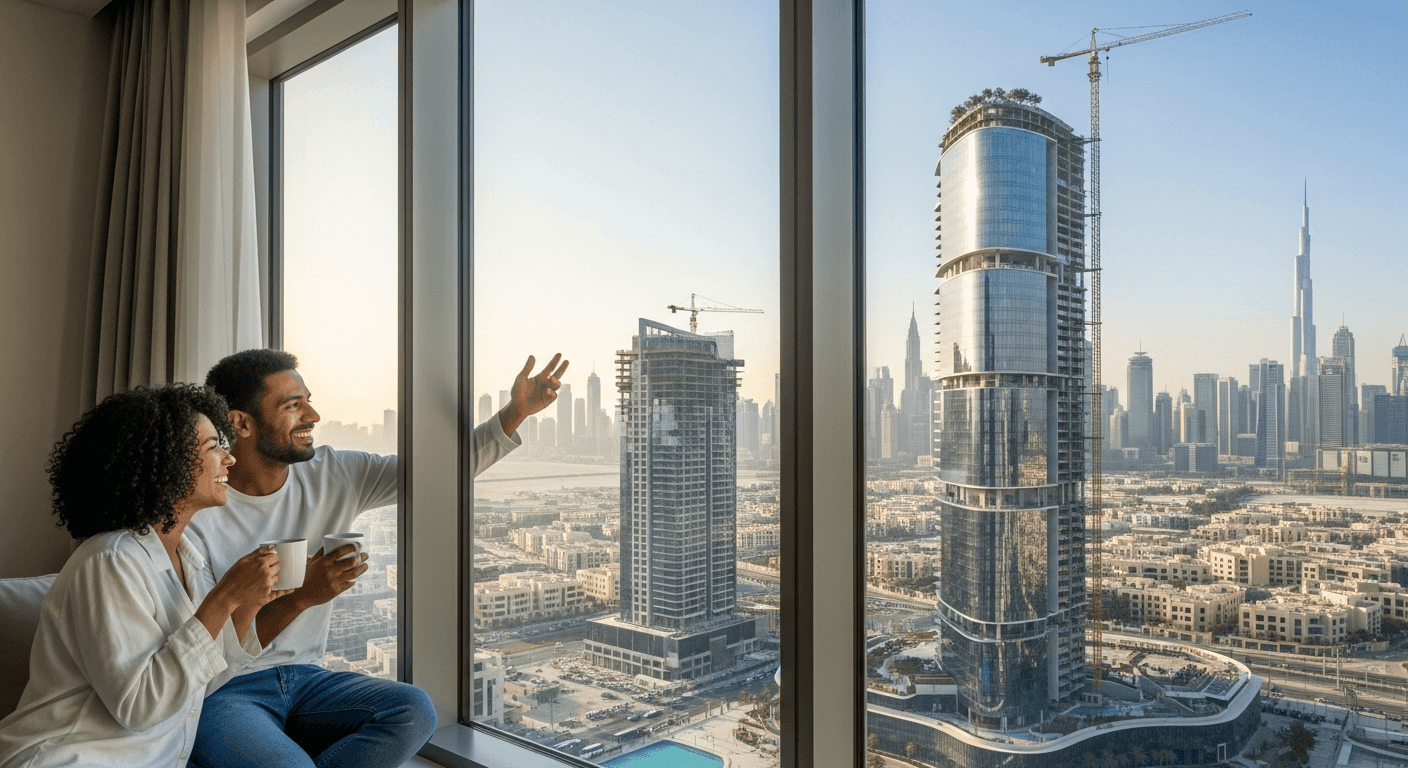
Dubai's Green Shift: What It Means for Your Property Value
A deep dive into Dubai's new green building codes, analyzing how they will reshape property values, increase upfront costs, and lower long-term operational expenses for homeowners and investors.

Dubai's mandatory green building standards are no longer a future concept; they are a present reality shaping every new construction project. As a property owner or investor, this regulatory shift has direct and significant consequences for your wallet, from upfront acquisition costs to long-term operational expenses and, ultimately, the future value of your asset. I'll break down exactly what you need to know.
Here's what we'll explore:
- The evolution of Dubai's green building codes from voluntary to mandatory.
- The immediate impact on construction costs for new developments.
- How green certifications like Al Sa'fat affect property valuations and rental premiums.
- A detailed breakdown of long-term operational cost savings for owners.
- The 'Green Premium': Fact or fiction in the Dubai secondary market?
- How developers are responding and which communities are leading the charge.
- Retrofitting older properties: costs, challenges, and potential ROI.
- The government incentives and financing options available.
- My verdict on investing in green properties in Dubai.
The Al Sa'fat Framework: Dubai's Green Mandate
For many years, 'green building' in Dubai was more of a marketing buzzword than a structural reality. That has fundamentally changed. The journey began in 2011 when Dubai Municipality introduced the Green Building Regulations & Specifications, which were initially voluntary for private developments. The real turning point came with the launch of the Al Sa'fat (which means 'palm fronds' in Arabic) rating system. This framework made sustainable construction practices compulsory for all new buildings in the emirate. It’s no longer an option; it's the law, enforced at the building permit stage. Understanding this system is now as crucial for an investor as understanding service charges or the 4% Dubai Land Department (DLD) transfer fee.
The Al Sa'fat system is tiered, creating a clear hierarchy of sustainability. The four levels are Bronze, Silver, Gold, and Platinum. The key point here is that the Bronze rating is the mandatory minimum for every single new building, whether it's a soaring skyscraper in Business Bay or a suburban villa in Arabian Ranches. Government-owned buildings are held to a higher standard, required to achieve a minimum of Gold. To receive a building permit, developers must prove their designs meet the criteria for at least the Bronze certification. This baseline focuses on crucial efficiencies in energy and water consumption, waste management, and the use of environmentally friendly materials. It's the foundational layer of the city's green ambitions.
This mandate is a core component of the UAE's wider strategic goals, particularly the UAE Net Zero by 2050 Strategic Initiative. Buildings are responsible for a significant portion of a city's energy consumption — in a hot climate like Dubai's, air conditioning is the single biggest driver, so tackling building efficiency is the most logical place to start. The regulations are comprehensive, covering everything from the building's orientation to minimize sun exposure, the type of glass used in windows (double-glazing with low-emissivity coatings is standard), the efficiency of HVAC systems, the installation of low-flow water fixtures, and requirements for on-site waste segregation. For investors and homeowners, this means that any property built post-mandate comes with a guaranteed baseline of efficiency that simply didn't exist before.
The Upfront Cost: Deconstructing the 'Green Premium'
 Featured project
The first question I always get from clients about these new standards is about cost. Does a mandatory green certification make new properties more expensive? The short answer is yes, but the context is critical. Industry analysis suggests that achieving the minimum Al Sa'fat Bronze certification adds a modest premium to the total construction cost, generally estimated to be in the range of 2-5%. Moving up to Silver or Gold can increase costs by 5-10% or more, depending on the specific technologies being implemented. This increase isn't arbitrary; it stems from tangible, higher-quality components and processes required for compliance.
These additional costs come from several specific areas. First is the use of higher-specification materials. This includes low-VOC (Volatile Organic Compound) paints that improve indoor air quality, insulation materials with better thermal performance, sustainably sourced timber, and using a higher percentage of recycled content in materials like steel and concrete. Second, the mechanical, electrical, and plumbing (MEP) systems are more advanced. This means high-efficiency HVAC units with better SEER (Seasonal Energy Efficiency Ratio) ratings, solar water heaters which are now common in new villa communities, and LED lighting throughout. Third is the integration of smart technology. Many new builds include systems for monitoring energy and water use, giving homeowners direct feedback on their consumption patterns. Finally, there are the 'soft costs' of consultancy, energy modeling, and the official certification process with Dubai Municipality, which add to the developer's bottom line.
To put this into perspective, let’s run through a simplified, illustrative cost comparison for a new two-bedroom off-plan apartment:
Illustrative Cost Scenario: 2-Bed Apartment (1,200 sq. Ft.)
- Standard Build (Pre-Mandate):
- Base Price: AED 1,800,000
- Total Purchase Price: AED 1,800,000
- Al Sa'fat Bronze Compliant Build:
- Base Price: AED 1,800,000
- Estimated 'Green Premium' (3%): + AED 54,000
- Total Purchase Price: AED 1,854,000
- Al Sa'fat Silver Compliant Build (with enhanced features):
- Base Price: AED 1,800,000
- Estimated 'Green Premium' (7%): + AED 126,000
- Total Purchase Price: AED 1,926,000
While developers rarely itemize this 'green premium', it's baked into the final price of new off-plan launches. The critical question for a buyer is not simply whether the property is more expensive, but whether the long-term benefits justify this initial outlay. This is where we need to shift the conversation from purchase price to total cost of ownership.
Long-Term Gains: Calculating Operational Savings
The entire premise of the Dubai green building codes is that the slightly higher upfront cost is an investment that pays dividends over the life of the property. These dividends come primarily in the form of lower monthly operational costs, with the most significant impact seen on DEWA (Dubai Electricity and Water Authority) bills. In my experience, this is the most compelling part of the value proposition for end-users and a crucial factor for investors calculating their net yields. The savings are not theoretical; they are the direct result of mandated engineering and design choices.
Electricity consumption is the biggest target. An Al Sa'fat compliant building achieves savings through a multi-pronged approach. Better thermal insulation in the walls and roof reduces the amount of heat that penetrates the building envelope. High-performance window glazing stops solar radiation from heating the interior. These two elements alone drastically reduce the 'cooling load,' meaning the air conditioning system doesn't have to work as hard or as often to maintain a comfortable temperature. Since AC can account for up to 70% of a typical household's electricity bill during Dubai's summer months, even a 15-20% improvement in AC efficiency translates into substantial monthly savings. Add to this the universal use of energy-saving LED lighting and more efficient appliances, and the cumulative effect is significant.
Water conservation is the second pillar. The codes mandate the installation of low-flow faucets and dual-flush toilets, which can reduce a household's indoor water consumption by 30% or more. For villas and townhouses with gardens, the regulations often push for water-wise irrigation systems and the use of native, drought-tolerant plants. Some higher-rated developments, like The Sustainable City by Diamond Developers, go even further, implementing greywater recycling systems that treat water from showers and sinks for reuse in irrigation. This not only cuts down on the owner's water bill but also reduces the strain on the city's desalination infrastructure. Here’s a look at how the monthly costs could differ:
Estimated Monthly Running Costs: 3-Bed Villa (2,500 sq. Ft. BUA)
- Older, Non-Compliant Villa:
- DEWA (Electricity & Water): AED 2,200
- Housing Fee (5% of rent, amortized monthly): AED 833 (assuming AED 200k/yr rent)
- Basic Maintenance: AED 300
- Estimated Monthly Total: AED 3,333
- New, Al Sa'fat Silver Villa:
- DEWA (with 25% efficiency saving): AED 1,650
- Housing Fee (5% of rent, amortized monthly): AED 833
- Basic Maintenance: AED 300
- Estimated Monthly Total: AED 2,783
In this conservative estimate, the green-compliant villa saves AED 550 per month, or AED 6,600 per year. Over a five-year period, that's AED 33,000 in direct savings, which begins to offset the initial green premium paid. For an investor, lower running costs make a property more attractive to tenants, potentially allowing for slightly higher rent or, more importantly, reducing vacancy periods. It also directly improves the net rental yield, as the gross rent is reduced by smaller operational outgoings.
“For years, the 'green premium' was a marketing talking point. Now, we're on the cusp of a 'brown discount' for inefficient buildings, which will have a much bigger impact on legacy assets.”
Valuations and Resale: Does 'Green' Translate to 'Gold'?
This is the million-dollar question for anyone buying property as an asset. Beyond the monthly savings, does a green certification actually increase the capital value of your property at resale? Historically, the evidence for a significant 'green premium' in the Dubai secondary market has been thin. The market has been primarily driven by location, size, view, and developer brand. Sustainability was a 'nice-to-have' feature, but rarely did a buyer pay a 10% premium just for a LEED or Al Sa'fat certificate. However, I believe we are at an inflection point where this is rapidly changing, driven by regulation and rising awareness.
My analysis is that the conversation is shifting from a 'green premium' to a 'brown discount.' As every new building enters the market with a mandatory level of energy efficiency, older, inefficient buildings will start to look comparatively less attractive. A prospective buyer for a ten-year-old apartment in Dubai Marina will soon be comparing its high DEWA bills directly against a brand new, efficient apartment in Emaar Beachfront. When presented with evidence that one property will cost AED 10,000 more per year to run than another, that difference will inevitably be factored into the offer price. The inefficient property isn't just older; it's functionally more expensive to own, month after month. This emerging 'brown discount' will become a powerful force in protecting the value of new, compliant properties.
Professional valuers are also beginning to formalize this. Global bodies like the Royal Institution of Chartered Surveyors (RICS) are actively pushing for sustainability metrics to be a standard component of property valuations. A bank's valuer, when assessing a property for a mortgage, will increasingly consider its energy performance certificate and Al Sa'fat rating. A property with demonstrably lower running costs is a lower risk for the bank and the buyer, justifying a more robust valuation. While this is still an evolving practice in Dubai, it's the clear direction of the global real estate industry. International studies have already proven the concept; research from markets in the US and Europe consistently shows that certified green commercial and residential buildings transact at a premium of anywhere from 5-15% compared to their non-certified peers. As the Dubai market continues to mature and attract more institutional capital, these global standards will become our local reality.
The Developer Response: Who is Building Dubai's Green Future?
The implementation of Al Sa'fat has sorted developers into two camps: those who do the bare minimum to achieve Bronze compliance, and those who embrace sustainability as a core part of their brand identity and a competitive advantage. The latter group is creating some of the most interesting and future-proofed communities in Dubai, and they are the ones that savvy investors should be watching closely. These developers understand that for the modern buyer, luxury is not just about marble floors and fancy lobbies; it's also about well-being, efficiency, and responsible design.
Emaar Properties, Dubai's largest developer, has been integrating sustainable practices across its master communities for years. In places like Dubai Hills, you see this in the form of extensive green parks, cycle tracks that encourage less car use, and the use of treated sewage effluent for irrigation, reducing the reliance on desalinated water. Their newer projects are designed from the ground up to meet and exceed the Al Sa'fat codes. Similarly, Meraas, known for design-led urban communities like City Walk and Bluewaters, has always focused on the quality of the public realm and pedestrian-friendly environments, which is a key tenet of sustainable urbanism.
Then there are the specialists. The most prominent example is Diamond Developers, the force behind The Sustainable City. This project in Dubailand remains a benchmark for what is possible. It’s a community designed to be a net-zero energy development, with every villa topped with solar panels, on-site waste recycling, urban farms that supply residents with fresh produce, and a car-free residential zone. Another pioneer in a different vein is Al Barari. Long before the green codes were mandatory, this developer built its brand around the concept of low-density luxury living amid dense, botanical-grade landscaping. Over 60% of the development is dedicated to green space, creating a microclimate that is noticeably cooler than surrounding areas. While its focus was initially more on lifestyle than technical efficiency, its new projects, like the developer's namesake project Al Barari, are now incorporating the latest green technologies to complement their nature-focused ethos.
Looking at the broader market, we see this trend accelerating. In Sharjah, Arada is building master-planned communities like Aljada with a strong emphasis on smart-home technology and sustainable design. In Abu Dhabi, developers like Aldar have been working under the capital's own rigorous Estidama Pearl Rating System for years, a framework that heavily influenced Dubai's Al Sa'fat. Developments in new hubs like Expo City, which is being repurposed from the Expo 2020 site into a sustainable, human-centric city, are setting new standards for mixed-use urban living. These are not niche projects anymore; they represent the new mainstream of Dubai real estate.
Rental Yields and Tenant Appeal
For a buy-to-let investor, capital appreciation is only half the story. The other half is rental performance: yield, occupancy, and tenant quality. The question is, does a green property attract better tenants or command higher rents? In my view, while we are not yet at a point where you can explicitly add an itemized 'green premium' to the rental contract, the benefits of sustainability have a powerful, indirect effect on rental performance. Tenants may not search for an 'Al Sa'fat Silver' apartment on property portals, but they are absolutely searching for a home with low utility bills, good natural light, and clean air.
A property's reputation for high running costs can be a major deterrent. Tenants talk, and communities with poorly insulated buildings and inefficient AC systems quickly become known for their 'DEWA horror stories.' This can lead to higher tenant turnover, longer vacancy periods between leases, and downward pressure on rents as landlords compete to fill empty units. Conversely, a modern, energy-efficient building offers tenants a more predictable and lower total cost of living. This makes them more likely to renew their lease, providing the landlord with a stable, uninterrupted income stream. A happy, long-term tenant is the holy grail for any landlord, and building efficiency is a key ingredient in achieving that.
Beyond that, the corporate housing market is increasingly driven by ESG (Environmental, Social, and Governance) policies. A growing number of multinational companies, particularly those from Europe and North America, have internal mandates that require them to lease office space and employee accommodation in buildings that meet certain sustainability criteria. For an executive being relocated to Dubai, their company may stipulate that they can only choose from properties in certified green buildings. This creates a captive and high-quality tenant pool for landlords who own assets in compliant developments, particularly in business-centric areas like DIFC or near hubs like Dubai Media City. This trend is only set to grow, giving sustainable properties a distinct advantage in the premium rental market.
The Retrofit Challenge: Upgrading Dubai's Existing Stock
While all new buildings must be green, we cannot ignore the vast number of properties — the majority of Dubai's current building stock, constructed before the Al Sa'fat mandate. These towers and villa communities, many built during the boom years of 2005-2008, were often designed with little regard for energy performance. For the owners of these properties, the rise of green standards presents a significant challenge: how to compete with the new, efficient stock hitting the market? The answer lies in retrofitting, but it's a path filled with complexity and cost.
Retrofitting a building for energy efficiency is far more involved than simply screwing in some LED lightbulbs. A meaningful upgrade requires a strategic and often expensive intervention. The process typically starts with a professional energy audit to identify the main sources of energy and water waste. For many Dubai buildings, the findings are predictable: aging, inefficient HVAC systems and poor insulation, particularly around windows and balconies. A comprehensive retrofit can involve replacing the entire chiller plant, upgrading the building management system (BMS), adding insulation to the roof, and even replacing single-glazed windows with modern double-glazed units. These are capital-intensive projects that can run into millions of dirhams for a single tower.
For an individual homeowner, especially in an apartment, the scope for unilateral action is limited. You can upgrade your own AC unit or install a smart thermostat, but you can't change the building's core systems or facade. This is where Owners Associations (OAs) come in. The decision to undertake a major building-wide retrofit must be made collectively by the owners. This involves commissioning studies, debating proposals, voting on special levies to fund the work, and managing the project. In my experience, this can be a slow and contentious process. The key is demonstrating a clear return on investment. If a retrofit project costs AED 5 million but is projected to save the building AED 1 million per year in common area utility costs, the five-year payback period becomes a compelling financial argument. Organizations like Etihad ESCO are focused on facilitating these projects, often with financing models where the capital cost is paid back from the energy savings, but this is still more common in large commercial and government buildings than in residential strata.
Here's a practical checklist for an owner of an older property considering an upgrade:
- Step 1: Get an Energy Audit. Commission a specialist to analyze your property's (or building's) specific consumption patterns and identify the biggest opportunities for savings.
- Step 2: Target the High-Impact Areas. In Dubai, this is almost always the HVAC system and the building envelope (windows and insulation). These are the most expensive fixes but deliver the biggest results.
- Step 3: Consider Water Fixtures. Upgrading to low-flow faucets and toilets is a relatively low-cost, high-impact measure.
- Step 4: Implement Smart Controls. Installing a smart thermostat can optimize AC usage and generate savings of 10-15% on its own.
- Step 5: For OAs, Explore Financing. Look into energy performance contracting models that can fund the project without a massive upfront special levy.
The reality is that not all older buildings will be retrofitted. Those that are will secure their place in the market for years to come. Those that aren't risk obsolescence and will be forced to compete on price alone, suffering the consequences of the 'brown discount'.
Financing and Government Incentives
With the financial implications of the green codes being so significant, a crucial question is what support is available for buyers and owners. While the UAE government is driving the regulatory change, its approach to incentives focuses more on creating a market framework for sustainability rather than providing direct cash subsidies to individuals. You won't find a government grant to help you install solar panels on your villa roof, for example. The incentive structure is more subtle and is being led by both financial institutions and the developers themselves.
An emerging trend we're watching closely at Gaia Living is the introduction of 'green mortgages.' A number of local banks, guided by the Central Bank of the UAE's sustainable finance framework, are starting to offer preferential terms to customers buying properties that meet certain environmental standards. This might take the form of a slightly reduced interest rate (e.g., 0.1-0.25% lower than their standard rate), a waiver of processing fees, or a higher loan-to-value ratio. While the direct financial saving may be modest on a monthly basis, it signals a fundamental recognition by lenders that green properties are lower-risk assets. They are less likely to suffer from value depreciation and their owners have better cash flow due to lower running costs, making them more reliable borrowers.
Developers are also using green features as a marketing tool and, in some cases, a financial incentive. A developer building a high-end project aiming for Al Sa'fat Gold might absorb the additional construction costs to maintain a competitive headline price, viewing the certification as a mark of quality that enhances their brand. Others might offer post-handover payment plans that are structured to highlight the energy savings, showing buyers how the lower DEWA bills will help them manage their monthly cash flow. As the market becomes more competitive, we may see developers offering to cover the first year of service charges or other similar promotions specifically for their most sustainable projects.
Finally, while not a direct financial incentive, the alignment of high-quality, sustainable real estate with programs like the Golden Visa is an important driver. High-net-worth individuals seeking to establish a long-term base in Dubai are not just looking for a property; they are investing in a lifestyle and a future-proof asset. A home in a well-designed, efficient, and sustainable community like Dubai Hills or Al Barari is a much more compelling proposition for a ten-year residency visa than a unit in an aging, inefficient tower. This link between asset quality and long-term residency is a powerful, if indirect, incentive to choose green.
The shift to mandatory green building standards is creating a two-tier market. New, compliant properties will benefit from lower running costs and appeal to a growing base of eco-conscious tenants and buyers, justifying a modest price premium. Older, inefficient buildings face the risk of a 'brown discount' as their higher operational costs become a significant liability.
My verdict is clear. For anyone looking to browse properties for sale in Dubai today, whether as an end-user or an investor, prioritizing projects that meet at least Al Sa'fat Silver standards is a financially prudent decision. The conversation must shift from the sticker price to the total cost of ownership. The monthly savings on utilities are real, and they add up. More importantly, as the market matures, the value of these efficient properties will be better protected against the inevitable 'brown discount' that will affect older, less-efficient stock. For owners of those older properties, the time to act is now. A strategic, data-led approach to retrofitting — even starting with small, high-impact changes, is no longer an optional upgrade; it's an essential measure to preserve asset value. The era of building fast and cheap, and ignoring the long-term consequences, is officially over. And in my view, that's a positive development for everyone involved in the Dubai property market.
Sources
- Dubai Green Building Regulations & Specifications: Dubai Municipality
- UAE Net Zero by 2050 Strategic Initiative: UAE Government Portal
- Property Transaction Data & Fees: Dubai Land Department (DLD)
- Real Estate Regulation Information: RERA (Real Estate Regulatory Agency)
- Sustainable Finance Framework: Central Bank of the UAE
Questions, answered
- What are the Al Sa'fat green building ratings in Dubai?
- Al Sa'fat is Dubai's green building rating system, with four tiers: Bronze, Silver, Gold, and Platinum. Bronze is the mandatory minimum for all new buildings, focusing on basic energy and water efficiency, while higher tiers incorporate more advanced sustainable features like renewable energy and recycled materials.
- Do green buildings in Dubai really have lower service charges?
- Not automatically, as service charges are billed per square foot. However, a well-designed green building consumes less energy and water for its common areas (like pools, gyms, and corridor cooling), which can lead to lower overall operational costs for the Owners Association and, in turn, potentially more stable or reduced service charges over time.
- How much more does it cost to buy a green-certified apartment in Dubai?
- The upfront 'green premium' on construction is estimated at 2-7% for a basic certified building. This may be passed on to the buyer, but the real financial impact is on the total cost of ownership, where lower utility bills can offset the higher initial price over a few years.
- Is it worth retrofitting my older Dubai property to meet new green standards?
- It can be, but it requires careful financial analysis. A full retrofit can be expensive, with payback periods of 5-15 years. It's often more strategic to focus on high-impact upgrades like HVAC systems and window insulation to lower running costs and protect your property from a potential 'brown discount' on resale.
- Are there government rebates for making my home more energy-efficient?
- Direct cash rebates for individual homeowners are not a standard policy in Dubai. The primary incentives are the long-term savings on DEWA bills and the potential for a higher property valuation. Some banks are starting to offer 'green mortgages' with slightly better terms for certified properties.
Omar tracks the announcements that move the market — new launches, regulation, mega-projects, and developer moves — and tells you what they actually mean for buyers.
Related stories
Beyond the Blueprint: The Retail Value Multiplier
It's a simple truth of Dubai real estate: proximity to quality retail and leisure isn't just a perk, it's a powerful driver of property value. I'll explain how operational hubs are creating measurable premiums for investors and residents.
Your Dubai Home Setup Guide
A step-by-step guide for new Dubai homeowners on connecting utilities, setting up essential services, and integrating into your new community.
The Productive Address in Dubai
The line between home and work has blurred for good. Discover the Dubai properties and communities designed for the focus, flexibility, and balance that modern professionals demand.
Echoes, in your inbox
One thoughtful email a month. Market insight, new launches, no spam.