

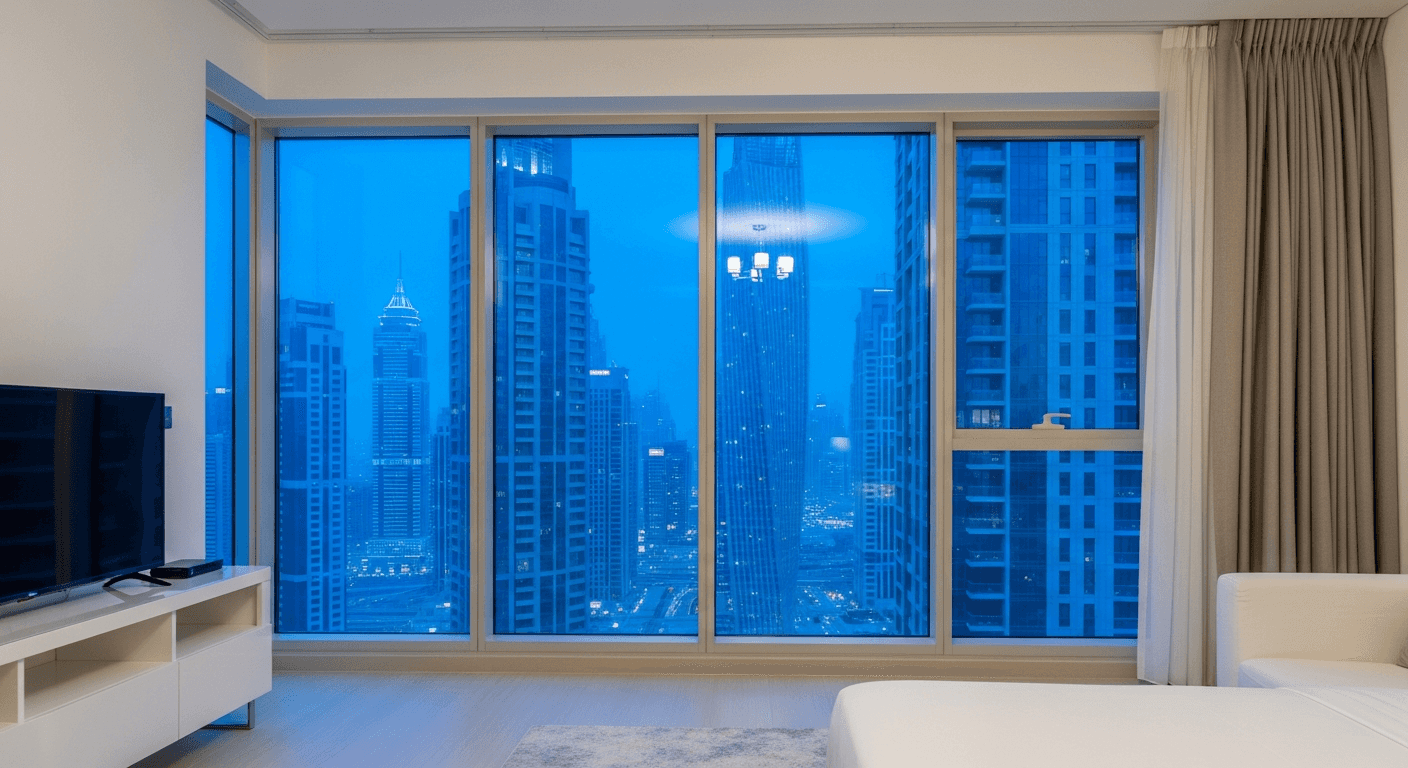
Dubai's Golden Visa: A Structural Re-Rating of Property
The UAE's residency reforms, anchored by the Golden Visa, are not just a perk for investors. They represent a fundamental shift that is re-shaping the long-term value and stability of Dubai's property market.

As a market analyst, I am trained to be skeptical of narratives. I prefer to focus on the hard data, on the clear mechanisms that drive supply and demand. Yet, every so often, a policy change emerges that is so profound its effects ripple out beyond simple metrics, reshaping the very psychology of a market. In my view, the UAE's recent residency reforms, with the expanded Golden Visa for property investors at their core, are precisely such a change. They have fundamentally altered the calculus for expat property ownership in Dubai, providing a structural anchor for long-term stability and creating a new class of resident stakeholder. This isn't just another incentive; it's a re-rating of the entire market's foundation.
Here's what we will explore in this analysis:
- The old paradigm: Understanding Dubai residency before the reforms.
- The Golden Visa for property investors: A detailed look at the rules.
- Quantifying the direct financial impact beyond the purchase price.
- The psychological shift: How security of tenure transforms buyer behaviour.
- Developer strategy: How the market is building for this new long-term resident.
- Market segmentation: Identifying the biggest winners from the visa changes.
- Second-order effects: From mortgage markets to community planning.
- My verdict on the future of Dubai property in this new era.
The Old Paradigm: Residency as a Temporary Privilege
To understand the magnitude of the current shift, one must first remember the old reality of expat life in Dubai. For decades, the dominant model was one of transience. Residency was almost exclusively tied to an employment contract. Your right to live in the UAE was sponsored by your employer, typically on a two-year visa, subject to renewal. This single dependency created a pervasive sense of impermanence.
This framework had profound consequences for the property market. It conditioned a majority of the expat population to think like tenants, not owners. Why commit to a 25-year mortgage when your residency was only guaranteed for the next 24 months? Losing a job didn't just mean a loss of income; it meant the imminent cancellation of your visa, a short grace period to find new employment, and the very real prospect of having to pack up and leave the country. This precarity was the defining feature of expat life. Consequently, renting was the logical, default choice for most.
Under this old system, expat property ownership Dubai was often a purely financial play, frequently undertaken by non-resident investors looking for yield. The decision-making process was dominated by spreadsheets calculating rental income versus service charges and capital growth potential over a relatively short holding period. There was a clear disconnect between the owner of the asset and the resident of the city. This dynamic also contributed to market volatility. During economic downturns, job losses would trigger a predictable cycle: visa cancellations led to an exodus of residents, which in turn created a surge in vacant rental properties and distress sales from those forced to leave, putting downward pressure on both rents and sales prices. The market lacked a stable base of long-term, owner-occupier stakeholders to act as a buffer.
Early attempts at property-linked visas existed, but they were far less compelling. They often had higher investment thresholds, more stringent requirements (like being fully paid off), and offered shorter residency terms. They were a niche product, a minor feature of the market rather than a driving force. The system was designed, implicitly, to maintain a flexible, transient workforce. The Golden Visa and its associated reforms have turned that entire philosophy on its head.
A Golden Opportunity: Unpacking the Property Investor Visa
 Featured project
The introduction and subsequent expansion of the UAE Golden Visa have been game-changing. While the scheme offers paths for entrepreneurs, scientists, and exceptional talents, the route through property investment has had the most direct and widespread impact on the real estate market. The current rules are clear, accessible, and strategically designed to foster long-term commitment.
At its core, the rule is straightforward: a 10-year renewable residency visa is granted to individuals who purchase property worth at least AED 2 million. This simple sentence, however, contains several revolutionary details when compared to the old system. First, the 10-year duration itself is a massive psychological and practical leap from the previous 2-year cycle. It grants what expats have craved for decades: the permission to plan a future. Second, the 'renewable' aspect is key. Provided you maintain the investment, this is not a one-off visa but a long-term residency solution.
Perhaps the most critical evolution in the rules has been the broadening of what constitutes a qualifying investment. The AED 2 million can be a single property or a portfolio of multiple properties. Crucially, the regulations now explicitly include off-plan properties purchased from government-approved developers. This was a masterstroke. It directly links the residency incentive to the primary development market, fueling construction and allowing investors to enter at an earlier stage. A buyer can now secure a 10-year visa by making a down payment on a property from a reputable developer like Emaar Properties or Damac, long before the unit is even handed over. All that is required is the Oqood (initial contract of sale) and proof that at least AED 2 million of the property's value has been invested, or that the total value of the property is AED 2 million or more if purchasing with a mortgage.
This brings us to another vital detail: the property does not need to be fully paid for or mortgage-free. An investor can purchase a qualifying property in communities like Dubai Marina or Business Bay using bank financing. As long as the total property value on the title deed or Oqood meets the AED 2 million threshold, the buyer is eligible to apply for the Golden Visa. This makes the visa accessible to a much broader pool of investors, not just cash buyers. According to official government information available from sources like the UAE Government Portal (u.ae), the visa holder can also sponsor their spouse, children (with no age limit for daughters, and up to 25 for sons), and domestic helpers, cementing its status as a tool for families to put down roots.
The Financial Calculus: Beyond the AED 2 Million Threshold
To truly quantify the influence of the Golden Visa, we must look beyond the simple fact of residency and analyze its financial implications. The visa itself has a tangible economic value that effectively lowers the net cost of property ownership over the long term. It transforms the purchase from a simple asset acquisition into a strategic investment in one's lifestyle and security.
Let's begin with the direct costs of a qualifying purchase. An investor targeting the Golden Visa must first acquire a property valued at AED 2 million or more. A typical transaction for a property at, say, AED 2,500,000, incurs a series of mandatory fees that every buyer must understand. Here is a realistic line-by-line breakdown of the upfront costs:
- Property Purchase Price: AED 2,500,000
- Dubai Land Department (DLD) Transfer Fee (4%): AED 100,000
- Real Estate Agency Fee (2% + VAT): AED 52,500
- DLD Registration Trustee Fee: AED 4,200 (for properties above AED 500k)
- Title Deed Issuance Fee: AED 580
- Total Initial Outlay (excluding mortgage-related fees): Approximately AED 2,657,280
These numbers are straightforward. However, the analysis becomes more interesting when we consider the value of the benefit received — the 10-year visa. Before these reforms, an individual seeking long-term residency without being tied to an employer might have had to set up a free-zone company. The costs for this can be significant, often running into tens of thousands of dirhams annually in license fees, administrative costs, and the mandatory rental of a small office space, all just to maintain a residency visa. Over a 10-year period, these costs could easily exceed AED 200,000-300,000, representing a pure expense with no underlying asset.
Viewed through this lens, the Golden Visa via property acts as a 'cost avoidance' benefit. The investor acquires a tangible, potentially appreciating asset while simultaneously securing the residency that would have otherwise been a recurring, sunk cost. This effectively creates a 'residency yield' on top of any rental income or capital appreciation the property might generate. The visa reforms impact property by turning a liability (visa fees) into an asset-backed solution.
Beyond that, the inclusion of off-plan and mortgaged properties democratizes access to this benefit. An investor doesn't need AED 2M+ in cash. With a 25% down payment on a AED 2.5M property (AED 625,000), plus the associated fees, they can secure the visa. This leverages their capital significantly. The ability to obtain the visa while paying for an off-plan property over a 3-5 year construction period is particularly powerful. It allows the buyer to secure their long-term residency status years before the property is complete, spreading the cost and aligning their residency timeline with their investment plan. The process is managed through the Dubai Land Department (DLD) and its REST application, ensuring transparency and security for all parties.
“The Golden Visa gives families and professionals what they could never truly buy in Dubai before: the permission to plan their lives in decades, not two-year increments.”
The Psychological Shift: From Tenant to Stakeholder
Beyond the financial spreadsheets, the most profound impact of the Golden Visa is psychological. It is a fundamental rewiring of the relationship between the expat resident and the city itself. The shift from a precarious, two-year employment visa to a secure, ten-year, self-sponsored residency cannot be overstated. It is the difference between being a guest and being a member of the community.
This newfound security changes behavior. When your residency is no longer contingent on your current employer, you are free to make decisions for the long term. This is the 'permission to plan' I mentioned earlier. A family with a Golden Visa can confidently enroll their children in a school, knowing they won't be forced to pull them out in 24 months. An entrepreneur can leave a corporate job to start a business, knowing their right to live in the country is secure. A senior professional can negotiate employment terms from a position of strength, or even take a sabbatical, without the looming threat of visa cancellation.
This stability has a direct and measurable effect on property choices. The mindset shifts from 'What is the most flexible, low-commitment rental I can find?' to 'Where do I want to build a life?'. This question leads buyers to prioritize different factors. Community amenities, proximity to good schools, park access, quality of construction, and neighborhood character become paramount. This is a key reason for the surge in demand we've seen at Gaia Living for family-oriented communities. Areas like Dubai Hills, with its central park, golf course, and schools, or the established green spaces of Arabian Ranches, have become prime targets for these new long-term residents.
This transformation from tenant to stakeholder also fosters a deeper investment in the community's well-being. As an owner-occupier with a long-term visa, you are more likely to care about the quality of maintenance, the performance of the owners' association, and the upkeep of communal facilities. You are literally invested in the future of your neighborhood. This creates a virtuous cycle: a stable base of engaged residents leads to better-maintained communities, which in turn attracts more long-term residents and supports property values. We are seeing a maturation of the market, moving away from a purely speculative playground towards a more balanced ecosystem of investors and genuine end-users who are putting down roots.
Developer Response: Building for a Long-Term Resident
Dubai's leading property developers are astute observers of market demand. They have been quick to recognize this fundamental shift and are adapting their products and marketing strategies accordingly. The profile of the target buyer has changed, and the properties being brought to market reflect this new reality. The focus is increasingly on creating holistic lifestyles, not just selling square footage.
We see this clearly in the master plans of new and evolving communities. Developers like Meraas are crafting destinations like City Walk and Bluewaters Island that integrate high-end residential with retail, dining, and leisure, catering to a resident who seeks a complete living experience. Similarly, Emaar's massive Creek Harbour project is a city-within-a-city, designed around a long-term vision of community with vast green spaces, pedestrian-friendly walkways, and comprehensive amenities. This is a departure from building standalone towers; the new currency is the integrated community.
The unit mix within these projects is also evolving. While studios and one-bedroom apartments will always have a place, there is a renewed focus on larger units — spacious two and three-bedroom apartments, townhouses, and villas. These are the homes sought by the families and senior professionals who are the primary beneficiaries of the Dubai Golden Visa property investment scheme. Developers are incorporating features that cater to long-term living: home offices, larger balconies and terraces for outdoor living, ample storage, and robust community facilities like modern gyms, swimming pools, and residents' lounges. Projects in areas like Palm Jumeirah and Jumeirah Golf Estates now consistently feature layouts and amenities designed for permanence, not short-term stays.
Marketing language has also pivoted. The aggressive, yield-focused slogans of the past ('20% ROI Guaranteed!') — which were always problematic from a regulatory standpoint, have been replaced by a more sophisticated message centered on lifestyle, legacy, and creating a 'forever home'. Developers are selling the vision of a life in Dubai, enabled by the security of the Golden Visa. The fact that their off-plan launches now directly qualify for this visa is a powerful sales tool they are using effectively. They are no longer just selling a property; they are selling a comprehensive package that includes a tangible path to long-term residency in the UAE.
Segmenting the Impact: Who Wins Most?
While the visa reforms have provided a powerful tailwind for the entire Dubai property market, their influence is not uniform across all segments. As analysts, it's our job to look at the nuances and identify where the impact is most concentrated. My analysis shows that the benefits are disproportionately accruing to specific price bands and property types, creating clear winners.
First and foremost, the price band between AED 2 million and AED 5 million is the epicentre of the Golden Visa effect. This is the sweet spot that directly unlocks the 10-year residency. Properties in this bracket have seen a significant increase in both transaction volume and price appreciation. Buyers are actively targeting this price point, not just for the property itself, but for the residency it confers. This has created a solid demand floor. A two-bedroom apartment in Downtown Dubai, a three-bedroom townhouse in Town Square, or a small villa in Damac Hills and Damac Hills II that falls within this range is now in higher demand than ever before.
Second, family-oriented villa and townhouse communities are major beneficiaries. As discussed, the psychological shift towards long-term planning naturally leads buyers to seek more space and family-friendly environments. These communities, often located in suburban master developments, provide the schools, parks, and sense of community that Golden Visa holders are looking for. They are choosing to raise their families here, and the real estate reflects that. This is a clear example of how the UAE residency property benefits are shaping urban development patterns.
Third, the branded residence segment is another clear winner. High-net-worth individuals attracted by the Golden Visa and Dubai's lifestyle often seek the turnkey convenience, premium services, and trusted quality associated with brands like The Address, Four Seasons, or W. These properties, typically located in prime areas like the DIFC, Palm Jumeirah, or along the canal in Business Bay, offer a hassle-free ownership experience that is highly appealing to this demographic. They are willing to pay a premium for the brand, the service, and the location, and the Golden Visa provides the final piece of the puzzle — long-term residency security.
Conversely, the impact is less direct at the lower end of the market. The sub-AED 1 million segment, dominated by studios and one-bedroom apartments in areas like Jumeirah Village Circle (JVC) and Dubai South, is not the primary target for Golden Visa-motivated buyers. While this segment benefits from the overall positive market sentiment and rental demand from the wider population, its price dynamics are still more closely tied to traditional metrics like rental yields and affordability for young professionals. The Golden Visa effect here is more of a gentle ripple than a direct wave.
Second-Order Effects: Mortgages, Schools, and Structural Stability
The influence of these residency reforms extends far beyond the immediate transactions logged by the DLD. It is creating a series of positive, second-order effects that are reinforcing the market's long-term health and the city's overall attractiveness. These are the deeper, structural changes that I believe will define the Dubai of the future.
One of the most significant impacts is on the mortgage market. Banks assess risk, and a borrower with a 10-year, self-sponsored visa is a fundamentally lower risk than one whose residency is tied to a 2-year employment contract. This reduced 'flight risk' makes lenders more comfortable extending financing. Over time, I expect this to translate into more competitive mortgage products, potentially better rates, and higher loan-to-value ratios for this class of borrower. This improved access to credit, governed by the prudent regulations of the Central Bank of the UAE, will further support the owner-occupier market.
Another critical area is social infrastructure planning. The growing population of long-term residents creates predictable demand for high-quality schools, advanced healthcare facilities, and other essential services. This allows both the government and private sector to invest with confidence. When a new school opens in a community like Al Furjan, it does so with the knowledge that there is a stable base of families who will be there for the next decade. This creates a powerful, self-reinforcing loop: better social infrastructure makes Dubai an even more attractive place for families to settle, which in turn fuels demand for property and supports the economy.
However, the most important second-order effect, in my professional opinion, is the introduction of a structural buffer against market volatility. In every previous property cycle, Dubai was vulnerable to external shocks that led to job losses. The subsequent exodus of the expat workforce would create a domino effect, crashing rental and sales markets. The Golden Visa helps to break this cycle. A significant and growing portion of the population now has a right to reside that is independent of their employment status. They own their homes. In the face of an economic downturn, they are far less likely to leave. This cohort acts as a stabilizing force, a permanent base of demand that will dampen the wild price swings of the past. The market will still have cycles, but the troughs should be shallower and the overall trajectory more stable, thanks to this new foundation.
The Golden Visa has fundamentally changed the nature of property investment in Dubai. It has shifted the focus from short-term speculation to long-term value creation, turning transient residents into permanent stakeholders and creating a more stable, mature, and resilient market.
My Verdict: From Market to Metropolis
Having analyzed the Dubai property market for years, I have seen many incentives and initiatives come and go. Most are cyclical, designed to provide a temporary boost. The residency reforms, however, are different. This is a secular, structural change. The Golden Visa is not merely a piece of paper; it is a social contract, an invitation from the UAE leadership for global talent and capital to not just invest in the country, but to become a part of its fabric.
By linking long-term residency to property ownership, the government has achieved multiple strategic goals at once. It has attracted significant foreign direct investment, provided a powerful demand driver for the real estate sector, and, most importantly, fostered a class of residents who are financially and emotionally invested in the city's future. The impact of this on long-term visa real estate Dubai cannot be overstated. It is building a foundation of stability that the market has never had before.
In my view, this is the most significant policy development for the Dubai property market since the introduction of freehold ownership for foreigners in 2002. It marks the city's evolution from a transient hub to a global metropolis where people from all over the world can build a lasting home. While market prices will always fluctuate in response to economic conditions, the structural floor is now fundamentally higher and more solid. The era of extreme volatility driven by expat exodus is likely behind us. For investors and residents alike, the message is clear: the rules of the game have changed. The smart play is no longer about flipping for a quick profit, but about investing in quality communities for the long haul. This is the new reality of the Dubai property market, and its future looks more secure for it.
Sources
- UAE Government Portal (Golden Visa): u.ae
- Dubai Land Department (DLD): dubailand.gov.ae
- Central Bank of the UAE (CBUAE): centralbank.ae
Questions, answered
- What is the minimum property investment for a Dubai Golden Visa?
- You need to own a property or a share in one or more properties with a total value of at least AED 2 million. This can include off-plan properties from approved developers, and the property does not need to be mortgage-free.
- Can I get a Golden Visa by buying an off-plan property in Dubai?
- Yes, as of recent reforms, you can obtain a Golden Visa by investing AED 2 million or more in an off-plan property. The property must be from a developer approved by the Dubai Land Department (DLD) and you must provide an Oqood certificate or other proof of registration.
- Does the Golden Visa give me UAE citizenship?
- No, the Golden Visa is a long-term renewable residency visa, typically for 10 years. It does not grant UAE citizenship, but it provides the right to live, work (with the relevant permits), and study in the UAE without needing a national sponsor.
- Is the Dubai property market more stable because of the Golden Visa?
- In my analysis, the visa reforms have added a significant layer of structural stability. By decoupling residency from employment for a growing class of property owners, the market is better insulated from the economic shocks that previously caused resident exodus and property downturns.
- What are the main costs when buying a property for the Golden Visa?
- Beyond the AED 2 million property price, you must budget for a 4% Dubai Land Department transfer fee, a 2% real estate agency fee, and various smaller administrative fees for the trustee and title deed. These upfront costs typically add 6-7% to the property's purchase price.
- Can my family also get a visa if I have a property Golden Visa?
- Yes, a significant benefit of the Golden Visa is the ability to sponsor your spouse and children (with no age limit for unmarried daughters and sons under 25). This enhances its appeal for families looking to establish long-term roots in Dubai.

Amara translates DLD transaction data, supply pipelines, and macro signals into clear calls on where Dubai's market is heading. She writes the numbers most brokers only feel.
Related stories
Dubai's Big Squeeze: Smaller Plots, Denser Living
Dubai real estate is undergoing a fundamental shift towards smaller plot sizes and higher density. We analyse the economic drivers, the impact on property values, and what this new era of compact urban living means for both homebuyers and investors.
Resort Living as Your Dubai Reality
Explore how to trade temporary staycations for a permanent home with five-star amenities in Dubai. I'll break down the real costs, best communities, and lifestyle trade-offs of embracing high-end resort living every day.
Finding Your Tribe in Dubai's Villa Communities
I explore which of Dubai's renowned villa communities attract specific expat nationalities and lifestyle groups, offering insights to help you find a place that feels like home.
Echoes, in your inbox
One thoughtful email a month. Market insight, new launches, no spam.