

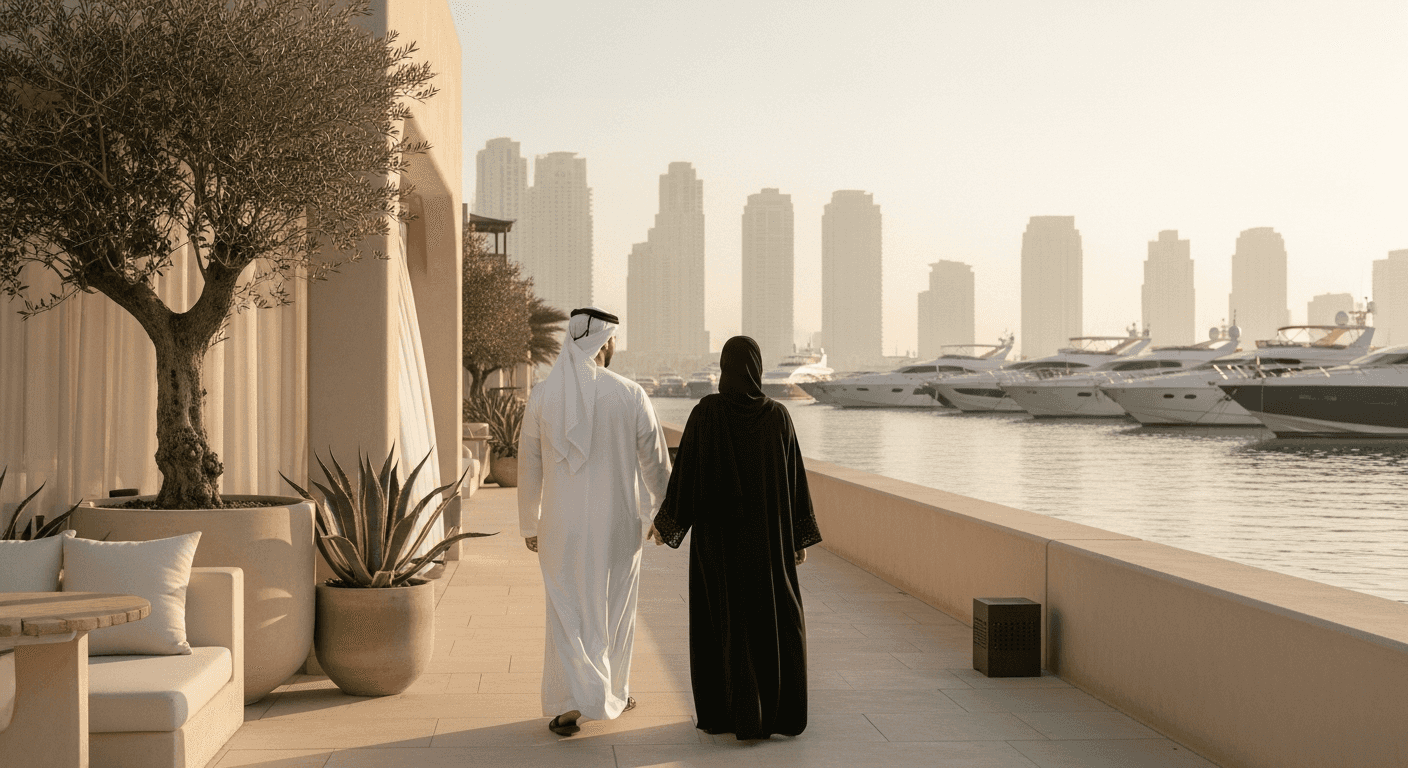
Dubai's Global Villages: Its Most Diverse Neighbourhoods
Discover where Dubai's international residents choose to live, blending global cultures with premium property. This is my deep dive into the city's true melting pot communities.

People often ask me what makes Dubai, well, *Dubai*. Is it the impossible architecture? The ambition? The year-round sun? My answer is always the same: it’s the people. The city’s true character isn’t forged in steel and glass, but in the daily interactions of over 200 nationalities who have chosen to call it home. This incredible human diversity is the engine of Dubai, and nowhere is it more tangible than in the neighbourhoods themselves. This is a deep dive into those melting pot communities Dubai is famous for; the places that define multicultural living Dubai.
In this feature, I want to take you beyond the postcards and into the real fabric of the city. We’ll explore what makes a neighbourhood truly global and why certain areas have become magnets for international residents. Here is what we will cover:
- The real DNA of a 'diverse' neighbourhood in Dubai
- Spotlight on Dubai Marina: The original vertical village
- Spotlight on Jumeirah Village Circle (JVC): Where affordability builds community
- Spotlight on Downtown Dubai: The cosmopolitan urban core
- Spotlight on Al Furjan: Connected suburban living
- The financial reality: What this global lifestyle truly costs
- Beyond the big names: Other emerging diverse hubs
- My verdict: How to choose the right melting pot for you
What Makes a Dubai Neighbourhood Truly Diverse?
When we talk about diverse neighbourhoods Dubai, it's easy to get lost in statistics and pie charts of resident nationalities. While those numbers are impressive, they don't capture the essence of what it feels like to live there. True diversity, in my experience, is an alchemy of factors. It's about the sounds, smells, and textures of a place. It's walking down the street and hearing English, Arabic, Russian, and Hindi in the space of a hundred metres. It's having a choice between a French patisserie, a Lebanese manakish bakery, and a South Indian vegetarian spot for your breakfast, all within the same block. This is the lived reality that statistics can't convey.
The foundation for these global villages was laid back in 2002 when Dubai designated specific freehold zones, allowing non-GCC nationals to own property for the first time. This single policy decision transformed the city's demographic and urban landscape forever. It created the very possibility for these international residents areas to exist. Instead of being transient renters in designated compounds, expats could now put down roots, invest in their homes, and, by extension, invest in their communities. This sense of ownership, both literal and figurative, is a powerful force for community building. It encourages residents to care about their surroundings, support local businesses, and engage with their neighbours in a more meaningful way.
A key ingredient in this recipe for diversity is a mix of housing options that cater to different life stages and budgets. A neighbourhood filled only with five-bedroom villas or only with studio apartments will inevitably attract a more homogenous population. The most vibrant communities I've seen are those that blend high-rise apartments for young professionals, mid-rise buildings for couples and small families, and townhouses for those needing more space. This mix creates a natural ladder of life within the community. Someone might start by renting a studio, then buy a one-bedroom when they get married, and eventually upgrade to a townhouse when they have children, all without ever leaving the neighbourhood they've grown to love. This creates stability and a depth of community that transient areas lack.
This blend of people and property types creates a palpable buzz. It's the difference between a sleepy suburb and a living, breathing urban village. It’s the energy of shared public spaces — parks filled with children from a dozen different countries, promenades bustling with joggers and families, and community centres that host everything from yoga classes to farmers' markets. This is the true measure of a diverse neighbourhood. It’s not just a collection of different passports; it's a functioning, integrated ecosystem where different cultures don't just coexist but actively enrich one another, creating a unique identity that is quintessentially Dubai.
The Blueprint: Dubai Marina and JBR
 Featured project
If you were to create a blueprint for a modern, high-density, multicultural community from scratch, it would look a lot like Dubai Marina. When it first emerged from the desert sands in the early 2000s, it was a staggering concept: the world's largest man-made marina, surrounded by a forest of glittering residential towers. Today, it stands as the quintessential example of a successful vertical village, a place that has profoundly shaped the expectations for global lifestyle property in Dubai and beyond. Its success is no accident; it’s a masterclass in urban planning centred on lifestyle and convenience.
The core of the Marina's appeal is its self-contained nature. Everything you need is, quite literally, on your doorstep. The 7km Marina Walk is more than just a promenade; it's the community's central artery, lined with an endless array of cafes, restaurants, and shops. The public transport integration is smooth, with the Dubai Tram circuiting the area and connecting to the Dubai Metro, making it one of the few places in Dubai where you can genuinely live a car-free life. Add direct access to the beach via the pedestrian bridges to Jumeirah Beach Residence (JBR), its vibrant, beachfront sibling, and you have an unparalleled lifestyle offering. This infrastructure is the skeleton upon which the community is built.
The demographic of Dubai Marina is as dynamic as its skyline. It’s a magnet for young professionals and couples from every corner of the globe, particularly Europe, the UK, and other parts of the MENA region. They are drawn by the energy, the social scene, and the sheer convenience. Walk through any of the well-known towers — from the original Emaar 6 to the super-tall Torch Tower or Princess Tower, and the resident mix is a microcosm of the United Nations. This transient population means there’s a constant influx of new energy, but there's also a strong core of long-term residents who have made the Marina their permanent home. This blend of new and old creates a welcoming atmosphere for newcomers.
From a property perspective, the Marina is dominated by apartments, ranging from compact studios to sprawling penthouses. A typical one-bedroom apartment can be rented for AED 100,000 to AED 150,000 per year, while purchasing one will cost between AED 1.5 million and AED 2.5 million, depending on the view, tower quality, and size. While the initial investment and annual service charges (often in the AED 18-25 per square foot range) are higher than in other parts of the city, the trade-off is exceptional rental demand and a liquid sales market. For many, the premium is a price worth paying for the lifestyle. The Marina set the standard, proving that by investing heavily in public realm and amenities, you can create a thriving, diverse community in the sky.
The New Contender: Jumeirah Village Circle (JVC)
For years, the conversation about expat community homes was dominated by premium postcodes like the Marina. But over the last decade, a new contender has quietly — and then very loudly, risen to become one of the most talked-about and actively sought-after communities in Dubai: Jumeirah Village Circle (JVC). Initially perceived by some as a distant, budget-friendly option, JVC has undergone a remarkable transformation. It has leveraged its affordability and unique master plan, originally by Nakheel, to cultivate a character all its own, evolving into a genuine community hub that offers a different, yet equally compelling, vision of multicultural living.
What makes JVC so interesting to me is its organic growth. Unlike the top-down, single-developer vision of Downtown, JVC is a patchwork of hundreds of individual plots sold to various private developers. This has resulted in a fascinatingly eclectic mix of architectural styles and building types. Low and mid-rise apartment buildings sit alongside rows of townhouses and standalone villas. This variety is JVC's secret weapon. It has created a diverse property landscape that attracts a much broader demographic than a typical high-rise community. Here, you'll find single professionals in studios, young families in two-bedroom apartments, and larger families in four-bedroom townhouses, all sharing the same parks and amenities. This creates a more balanced and, in my opinion, more resilient community structure.
The neighbourhood's circular layout, with its network of parks and green spaces, is designed to foster a sense of community. While navigating its streets can be a challenge for first-time visitors, for residents, it creates a series of intimate micro-neighbourhoods. Supermarkets and small businesses have flourished, catering to the specific tastes of the diverse population. It’s not uncommon to find a grocery store with dedicated aisles for British, Russian, Indian, and Filipino goods, reflecting the needs of the residents. This grassroots commercial ecosystem is a strong indicator of a healthy, settled community where people are putting down roots.
The primary driver for JVC's popularity, however, remains its value proposition. The price points for both renting and buying offer an accessible entry into the Dubai property market without compromising on quality or space. A studio apartment can be rented for AED 45,000 to AED 60,000, while a one-bedroom apartment ranges from AED 65,000 to AED 90,000. For buyers, these properties are available from around AED 500,000 and AED 800,000, respectively. Townhouses offer incredible value for families. Service charges are also significantly lower than in coastal areas, typically falling between AED 12 and AED 18 per square foot. This financial accessibility has made JVC a true melting pot, attracting a vibrant mix of residents from across the world who are building a life in Dubai on their own terms.
The Urban Heart: Downtown Dubai
If Dubai Marina is the lively, sun-drenched coastal town, then Downtown Dubai is the sophisticated, high-powered global capital. Master-planned and executed to perfection by Emaar Properties, this is the epicentre of 'New Dubai', an urban core that combines iconic landmarks with luxury residential living. The diversity here is of a different flavour. It’s less about the grassroots community feel of JVC and more about being at the absolute centre of the action, attracting a global elite of high-net-worth individuals, top executives, and discerning tourists who demand the best.
The lifestyle in Downtown is one of ultimate convenience and prestige. Its tagline, 'The Centre of Now', is not an exaggeration. The area is anchored by the trifecta of the Burj Khalifa, The Dubai Mall, and The Dubai Fountain. The walkability is unparalleled; residents can stroll from their apartments to world-class shopping, Michelin-starred restaurants, the Dubai Opera, and lush parks like Burj Park. This curated urban environment is meticulously maintained, creating a clean, safe, and visually stunning backdrop for daily life. It’s a powerful draw for those who value time and proximity above all else.
The resident profile in Downtown is distinctly international and affluent. It's a place where you'll find company CEOs, entrepreneurs who have just exited their startups, and families who split their time between Dubai and other global cities like London, Hong Kong, or New York. This creates a cosmopolitan atmosphere where privacy is valued, but the shared appreciation for quality is a common bond. The lobbies of towers like The Address Residences or the iconic Burj Khalifa itself are quiet crossroads of global power and influence. It’s a prime example of a global lifestyle property that attracts a very specific, and very international, clientele.
Of course, this premium lifestyle comes at a premium price. The properties are predominantly apartments, from stylish studios in the South Ridge complex to lavish penthouses and podium-level villas in the more exclusive towers. A well-located one-bedroom apartment in Downtown typically sells for between AED 2 million and AED 3.5 million, with rentals for the same fetching upwards of AED 150,000 to AED 220,000 annually. Service charges are also at the top end of the market, often exceeding AED 30 per square foot, to maintain the five-star amenities and pristine common areas. For buyers and investors in this bracket, however, the value is clear: they are purchasing a piece of one of the most famous postcodes in the world, with strong potential for capital appreciation and robust rental demand, particularly from the lucrative short-term rental market.
The Family-Friendly Melting Pot: Al Furjan
While the high-rise glamour of the Marina and Downtown often grabs the headlines, some of the most authentic and fastest-growing melting pot communities Dubai has to offer are found in its thoughtfully planned suburban developments. A prime example that I often recommend to clients is Al Furjan. Developed by Nakheel, Al Furjan — which means ‘a collection of homes’ or ‘small village’ in Arabic, was designed from the ground up to foster community interaction. It offers a different pace of life, one that has become incredibly popular with international families seeking space, connectivity, and a sense of belonging.
The single biggest catalyst for Al Furjan's recent surge in popularity was the extension of the Dubai Metro. The Route 2020 line, built for the Expo, gave the community its own dedicated station, instantly connecting it to the rest of the city. This transformed the area from a pleasant but somewhat isolated suburb into a highly connected transport hub. Suddenly, residents could commute to hubs like JLT, the Marina, or Downtown without ever needing a car. This connectivity has been a game-changer, broadening its appeal to a much wider range of professionals and families and solidifying its place among the top international residents areas.
The master plan of Al Furjan is centred around shared spaces. The community is organized into distinct phases, each with its own ‘Pavilion’ community centre. These aren't just strip malls; they are true local hubs featuring supermarkets, clinics, gyms, cafes, and restaurants. They act as natural meeting points, places where neighbours bump into each other while grabbing groceries or a morning coffee. The neighbourhood is also crisscrossed with landscaped walkways and cycle paths, encouraging residents to get out and interact. This focus on the public realm is a deliberate design choice intended to create the 'village' feel that its name promises, and in my view, it has been remarkably successful.
Al Furjan's property mix, which includes a blend of apartment buildings, terraced townhouses, and independent villas, has attracted a wonderfully diverse group of residents. You’ll find a strong contingent of families from the UK, Europe, and South Asia, drawn by the spacious homes, community feel, and proximity to excellent schools in neighbouring areas. The price points offer a compelling value proposition for families looking for more space. A three-bedroom townhouse might range from AED 2.8 million to AED 3.5 million, offering a lifestyle that would be financially out of reach for many in more central locations. This combination of thoughtful planning, excellent connectivity, and accessible pricing has created a vibrant, family-friendly community that truly lives up to its name.
The Financial Reality: Budgeting for a Global Lifestyle
I believe in painting a complete picture for our clients at Gaia Living. While the lifestyle in Dubai's diverse neighbourhoods is incredibly appealing, it's crucial to ground that dream in financial reality. Understanding the full spectrum of costs, both upfront and ongoing, is the key to making a sustainable and successful investment in your home. The purchase price is just the beginning of the story. Many first-time buyers are surprised by the additional costs involved, which can add up significantly. Being prepared for these expenses is essential for a smooth transaction.
Let’s break down the typical upfront costs involved in purchasing a property. The largest single fee is the Dubai Land Department (DLD) transfer fee, which is a mandatory 4% of the purchase price. This is the government tax on the transaction. On top of that, there are administrative fees payable to the DLD. If you're using a mortgage, your bank will charge arrangement and valuation fees. You also need to account for your real estate agent's commission, which is typically 2% of the purchase price plus 5% VAT. Finally, the developer will charge a fee for issuing the No Objection Certificate (NOC) to permit the sale. Let's put this into practice with a real-world example.
“Dubai's genius lies in creating spaces where a banker from London, an entrepreneur from Mumbai, and an artist from Cairo can all call the same building 'home'.”
Here is a line-by-line cost breakdown for a hypothetical AED 1,500,000 apartment purchase, a common price point for a one-bedroom in a popular area like Dubai Marina or a two-bedroom in JVC:
- Purchase Price: AED 1,500,000
- Down Payment (20% for residents): AED 300,000
- Dubai Land Department (DLD) Fee (4%): AED 60,000
- DLD Admin Fee: AED 4,200 (this is a fixed fee)
- Property Registration Fee: AED 4,200 (for properties over AED 500k)
- Real Estate Agency Fee (2% + 5% VAT): AED 31,500
- Mortgage Arrangement & Valuation Fees (approx. 1%): AED 15,000
- No Objection Certificate (NOC) Fee: AED 1,000 - AED 5,000 (varies by developer)
- Total Upfront Cash Required (approx.): AED 415,900 - AED 419,900
Beyond the initial purchase, the most significant ongoing cost of ownership is the annual service charge. This is a critical number to consider as it directly impacts your monthly expenses and the property's overall yield if you're an investor. Service charges cover the maintenance of all common areas — pools, gyms, security, landscaping, cleaning, and building insurance. They are calculated per square foot of your property's area. The variation can be huge: a budget-friendly community like JVC might have charges of AED 12-18/sqft, meaning a 1,000 sqft apartment would cost AED 12,000-18,000 per year. In a premium area like Downtown, with its extensive amenities, charges can easily be AED 30-45/sqft, pushing the annual cost for the same apartment to AED 30,000-45,000. This is a non-negotiable expense, and understanding it is key to assessing the true affordability of a property.
Beyond the Big Names: Other Diverse Hubs
While the four communities I’ve detailed offer a fantastic cross-section of life in Dubai, the city's portfolio of diverse neighbourhoods Dubai is constantly expanding. The beauty of Dubai is its dynamism; new areas are always emerging and evolving, each developing its own unique character and attracting a distinct mix of international residents. It’s worth looking beyond the most famous names to find communities that might offer the perfect fit for your specific lifestyle and budget. These areas prove that the spirit of multicultural living isn't confined to a few postcodes but is woven into the very fabric of the city's expansion.
One of the most significant success stories of the last decade is Dubai Hills Estate. This vast, green master community by Emaar is often described as a city within a city. It combines luxury villas, modern townhouses, and chic apartment buildings, all set around a championship golf course and a huge central park. Its strategic location between Sheikh Mohammed Bin Zayed Road and Al Khail Road provides excellent connectivity. What I find most compelling about Dubai Hills is the quality of life it offers. It has attracted a truly global mix of affluent families who value green space, high-quality schools, and world-class amenities, including its own hospital and the Dubai Hills Mall. It represents a more serene, family-centric version of the global lifestyle property dream.
For those seeking a blend of urban energy and relative affordability, areas like Business Bay and Motor City present excellent options. Business Bay, the functional extension of Downtown, has transformed from a purely commercial district into a vibrant residential and lifestyle destination. Its forest of modern skyscrapers along the Dubai Canal now houses thousands of young professionals from around the world, drawn by the proximity to the city's business hubs and a burgeoning social scene. Further out, Motor City and the adjacent Dubai Studio City have long been a well-kept secret among Western expats. These low-rise, leafy communities offer spacious apartments and townhouses, cobbled streets, and a relaxed, European-village atmosphere that feels a world away from the city's hustle, yet it remains incredibly popular and diverse.
Finally, the rise of the large-scale villa communities has introduced another dimension to multicultural living. Areas like Damac Hills and Damac Hills II or the ever-popular Arabian Ranches offer a slice of suburban paradise that appeals to a broad international audience. These communities are defined by their extensive amenities — golf courses, stables, wave pools, and sports facilities, creating a resort-like environment. They are particularly popular with families who need more space and want a safe, self-contained environment for their children to grow up in. The resident mix in these areas is incredibly diverse, with families from Europe, Asia, Africa, and the Americas all living side-by-side, creating a rich and varied community life built around school runs, weekend sports, and community barbecues.
My Verdict: Finding Your Place in the Mosaic
We’ve walked through towering high-rises, quiet suburban streets, and bustling urban centres. It’s clear that 'diversity' in Dubai is not a monolithic concept. It's a rich and varied mosaic, with each neighbourhood offering a unique tile. The best multicultural living Dubai has to offer isn't about finding the place with the longest list of nationalities; it's about finding the community whose specific character, rhythm, and values resonate with your own. The perfect neighbourhood is a deeply personal choice, a balance of heart and head, lifestyle and logistics.
To help you navigate this choice, I always encourage clients to perform a simple self-assessment. Before you even start looking at listings, take a moment to define what truly matters to you. This clarity will be your compass as you explore the city's many options. Here is a simple checklist to get you started:
- Lifestyle Priority: What is your non-negotiable? Is it the buzz of walkability and being able to step out for a coffee (Downtown, Marina)? Is it vast green space for your children and dog (Dubai Hills, Arabian Ranches)? Or is it maximum value and space for your money (JVC, Al Furjan)?
- The Daily Grind: Be realistic about your daily commute to work and school. Use Google Maps during peak hours to test travel times. A beautiful home becomes less appealing with a soul-crushing two-hour round trip every day. Proximity to a Metro station can be a life-changing factor.
- The Hidden Costs: Look beyond the purchase price or rent. Ask for the recent service charge bills for any property you're serious about. A cheaper apartment in a building with sky-high charges might be a worse deal in the long run than a slightly more expensive unit in a well-managed, efficient building.
- Vertical or Horizontal?: Are you energized by the view from the 50th floor and the anonymity of high-rise living? Or do you crave a small garden, a front door that opens to the street, and a closer connection to your immediate neighbours? Be honest about the environment where you thrive.
The most culturally diverse neighbourhoods in Dubai aren't just a list of nationalities; they are dynamic ecosystems built on shared amenities, varied property types, and excellent connectivity. Your 'best' choice depends entirely on matching your lifestyle priorities and budget to the specific character of each area, from the high-rise buzz of Dubai Marina to the family-focused community of Al Furjan.
In my personal view, the most successful and resilient melting pot communities in Dubai are those that have developed an organic mix of property types, price points, and people. A neighbourhood that has homes for singles, couples, and families, for renters and owners, for those on a budget and those with more to spend, is a neighbourhood that is alive. This is why I find the evolution of a place like JVC so compelling. It grew, sometimes messily, into a place with a real soul because its accessibility allowed a true cross-section of Dubai to build a life there. Ultimately, the best advice I can give is the simplest: get out there. Spend a weekend morning having coffee in one neighbourhood, an evening walking through another. The right place will speak to you. At Gaia Living, we believe the best way to understand a community is to walk its streets, and we'd be delighted to be the ones to show you around.
Sources
- Dubai Land Department (DLD): https://www.dubailand.gov.ae/en/
- UAE Government Portal: https://u.ae/en
- Roads & Transport Authority (RTA): https://www.rta.ae/wps/portal/rta/ae/home
- Central Bank of the UAE: https://www.centralbank.ae/en/
Questions, answered
- What are the most multicultural areas in Dubai for families?
- For families seeking a diverse community, I often recommend areas like Arabian Ranches, Dubai Hills Estate, and Al Furjan. These neighbourhoods offer villas and townhouses with excellent schools, parks, and a strong sense of community among residents from all over the world.
- Which diverse Dubai neighbourhood is best for young professionals?
- Young professionals are typically drawn to the energy and convenience of high-rise communities. Dubai Marina, JLT, Business Bay, and City Walk are top choices, offering great social scenes, walkability, metro access, and a vibrant mix of international residents.
- Are service charges higher in more diverse, amenity-rich neighbourhoods?
- Yes, there is a direct correlation. Neighbourhoods like Downtown Dubai and Dubai Marina have higher service charges because they fund premium amenities like large swimming pools, state-of-the-art gyms, 24/7 security, and meticulous landscaping that define their lifestyle.
- How can I find out the specific nationality mix of a building or community?
- Precise demographic data for specific buildings is not publicly available. The best way to gauge the feel of a community is to spend time there. At Gaia Living, we provide qualitative insights based on years of experience on the ground, helping you understand the character of each area.
- Is it better to rent or buy in one of these expat community homes?
- This depends entirely on your personal circumstances and long-term plans in Dubai. Renting offers flexibility, which is ideal if you're new to the city. Buying provides stability, a hedge against rising rents, and the potential for capital appreciation, with pathways to long-term residency like the Golden Visa making it more attractive than ever.
- What is the average cost to buy an apartment in a good multicultural area in Dubai?
- The cost varies widely. In an affordable, diverse area like JVC, a one-bedroom apartment might start around AED 800,000. In a premium, central area like Dubai Marina, a similar apartment could be AED 1.5 million or more. Your total upfront cost will be about 25-30% of the property price.

Yusuf writes about how Dubai actually lives — waterfront mornings, community dining, walkability, and the lifestyle premium built into an address.
Related stories
Dubai's Established Charm: The Case for Older Homes
In a city focused on the future, I believe the smartest move for many buyers is to look back. Dubai's seasoned communities offer space, character, and surprising value that new builds often can't match.
The True Cost of Owning a Dubai Property
Beyond the purchase price, your annual budget for a Dubai home must account for service charges, utilities, and maintenance. I'll break down every ongoing expense you need to plan for.
Calculating ROI on Dubai Rental Upgrades
As a landlord in Dubai, you can't just follow trends. I'll show you how to calculate the precise ROI of minor property upgrades to genuinely increase your rental yield.
Echoes, in your inbox
One thoughtful email a month. Market insight, new launches, no spam.