

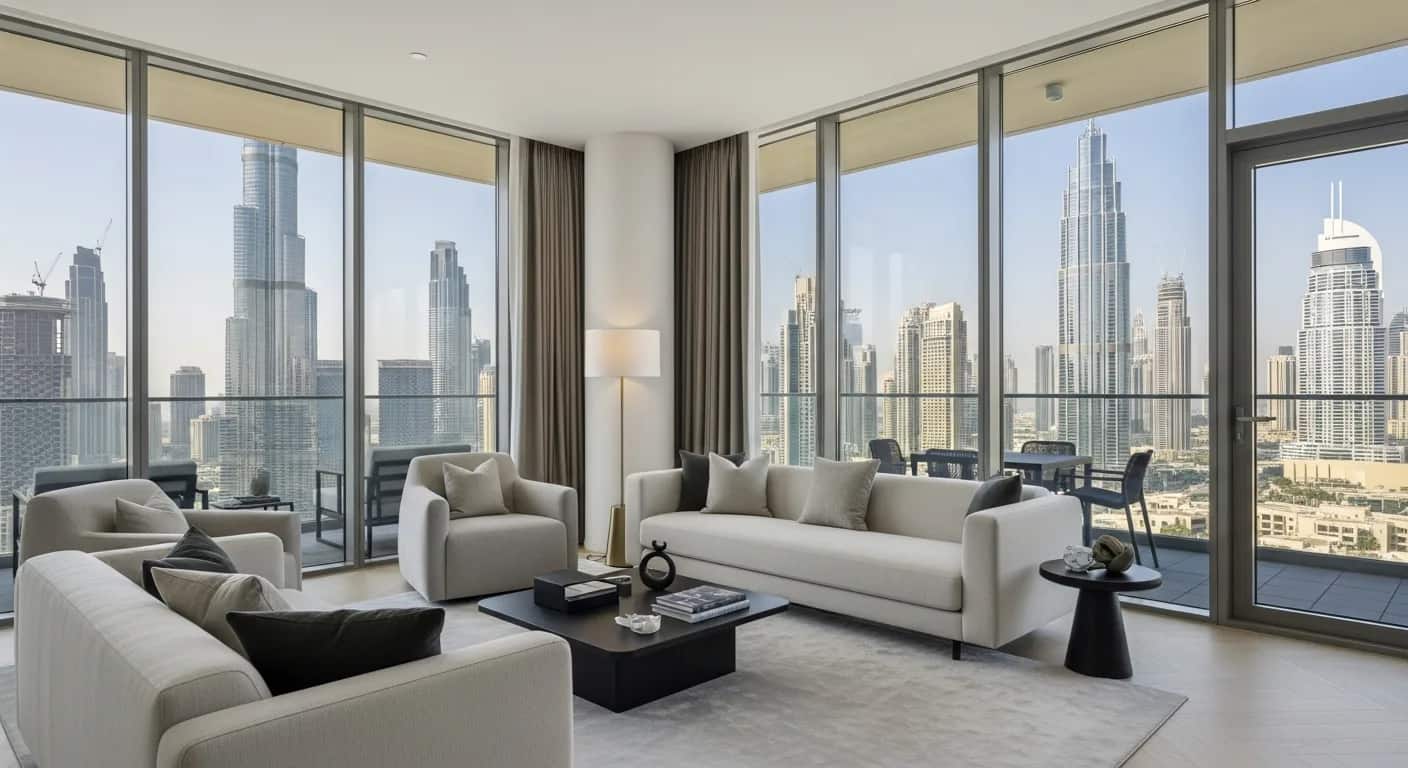
Dubai's Branded Residences: Worth the Premium?
As Dubai's skyline welcomes more ultra-luxury branded residences, we analyse if the hefty price tag and high service charges are justified by the promised lifestyle and investment potential.

As an editor focused on apartments, I've walked through more buildings in this city than I can count. Yet, nothing ignites a conversation quite like the rise of the branded residence. These monuments to luxury, stamped with the names of world-renowned hotels and fashion houses, promise a life less ordinary—but they command a price to match. The question our clients at Gaia Living ask most frequently is a simple one: are they actually worth the premium?
This isn't just about a fancy logo in the lobby. It's a deep dive into value, lifestyle, and long-term financial sense. In this feature, I'll unpack the entire proposition. Here's what we'll explore:
- The fundamental concept of a branded residence and its appeal.
- A numerical breakdown of the price premium you can expect to pay.
- The tangible services and amenities that set these properties apart.
- The crucial, and often overlooked, impact of high service charges.
- An honest assessment of their performance as an investment asset.
- A due diligence checklist for any serious prospective buyer.
- A fully costed, line-by-line example of what it takes to buy one.
- The intangible 'halo effect' and community benefits.
- My final verdict on who these elite properties are truly for.
The Seductive Allure of the Brand
First, let's be precise about what we mean by a 'branded residence'. At its core, it is a residential property associated with a brand, which licenses its name and, crucially, its standards. The brand's involvement isn't merely cosmetic; it extends to the design, servicing, and management of the property. Broadly, they fall into two camps. The first, and most established, are the hotel-branded residences. Think of The Residences at the Four Seasons, The St. Regis Residences, or the W Residences. These are often, but not always, co-located with a hotel, allowing residents to tap into the full suite of five-star services—from in-residence dining to a world-class concierge. The second, a rapidly growing segment in Dubai, involves non-hotel luxury brands. Fashion, jewellery, and even automotive marques are now lending their names and design DNA to residential towers. We're seeing projects like Baccarat Residences, Cavalli Tower by Damac, and the forthcoming Bugatti Residences by Binghatti.
The appeal is multifaceted and deeply psychological. For the end-user, it represents the pinnacle of turnkey living. It’s the promise that your every need is anticipated, that your environment is curated to the highest possible standard, and that you are insulated from the mundane hassles of property ownership. It’s the hotel experience, but it’s home. This is particularly potent in a global hub like Dubai, attracting a transient, high-net-worth population that values time and convenience above all else. There's an inherent trust in a global brand like a Mandarin Oriental or a Bulgari; you know the quality of the finishes, the level of service, and the calibre of the amenities before you even step inside. It removes uncertainty from the buying equation.
Beyond the practicalities, there is an undeniable element of status. Owning a home in a building bearing a prestigious name is a statement. It signifies not just wealth, but a certain taste level and an appreciation for the finest things. It's an automatic entry into an exclusive global club. Developers understand this aspirational pull and leverage it masterfully in their marketing. When you browse properties for sale in prime locations like Downtown Dubai or Palm Jumeirah, the branded options are positioned as a distinct and superior asset class. My thesis, however, is that while the allure is powerful and the quality is often impeccable, the value proposition is far from universal. The premium is not just a number; it's a complex equation of tangible benefits, ongoing costs, and personal priorities that every potential buyer must solve for themselves.
Deconstructing the Premium: How Much More Are We Talking?
 Featured project
The first question any analytical buyer asks is, "Exactly how much more am I paying for the name?" While a single figure is impossible to pin down across such a diverse market, a generally accepted baseline is a premium of 20% to 30% over a comparable unbranded luxury property in the same location. In my experience, for the most coveted, top-tier brands in prime locations, this figure can easily stretch to 50% or even higher. This isn't just marketing fluff; it's a quantifiable gap you can see when comparing properties on a price-per-square-foot (PSF) basis. For instance, a top-quality, but unbranded, new-build apartment in a prime area like Business Bay might trade in the range of AED 2,800 to AED 3,500 PSF. A new branded residence in the same vicinity could launch at anywhere from AED 4,000 to AED 6,500 PSF.
Let’s take a more concrete example. On the iconic Palm Jumeirah, a high-end apartment in a non-branded building by a reputable developer might sell for around AED 4,000 PSF. A stone's throw away, an apartment in a development like Atlantis The Royal Residences has commanded prices well north of AED 7,000 PSF, reaching stratospheric levels for its signature penthouses. This difference of AED 3,000 per square foot means that for a 2,500 sq ft apartment, the brand premium alone could account for an additional AED 7.5 million. This isn't a small number, and it forces a serious contemplation of what, precisely, you are receiving for that extra investment. The premium is not arbitrary; it's the developer's calculation of the value brought by several key factors.
First and foremost is the brand equity itself—the instant recognition and association with quality. Second is the superior level of design and finishes. Branded residences often employ world-famous architects and interior designers, with specifications that are a clear cut above standard luxury. Materials are more opulent, technology is more integrated, and the attention to detail is obsessive. Third is the promise of an elevated service culture, which we will explore in the next section. And finally, in many cases, it's about securing an absolute trophy location. Brands are protective of their image and will typically only attach their name to projects in the most prestigious and desirable addresses, such as along the waterfront of Emaar Beachfront or with panoramic views of the Burj Khalifa. The premium, therefore, is a composite of tangible quality, intangible prestige, and prime real estate.
The Tangible Benefits: Services and Amenities
If the price premium is the cost of entry, then the service and amenity offering is the primary justification. This is where the branded residence proposition moves from abstract prestige to concrete daily value. The goal is to replicate and even surpass the experience of staying in a five-star hotel. This begins the moment you arrive. Instead of a standard security desk, you're greeted by a doorman and a 24/7 valet service. The lobby is staffed by a highly trained, multilingual concierge team capable of handling everything from restaurant reservations and travel bookings to sourcing difficult-to-find items or arranging private events. They act as the resident's personal assistant, a single point of contact for a seamless life.
This service layer extends directly into your home. Most hotel-branded residences offer a full suite of a la carte services. This means you can order from the hotel's in-residence dining menu, have your apartment cleaned and serviced by the hotel's housekeeping staff, and use their laundry and dry-cleaning services, all billed directly to your residence account. For busy professionals, frequent travellers, or those who simply want to outsource life's daily chores, this is an incredibly compelling benefit. It effectively eliminates the need to manage domestic staff and ensures a consistently high standard of maintenance and care for your home. It’s the ultimate lock-and-leave lifestyle, with the peace of mind that your multi-million dirham asset is being looked after by a professional global operator.
Beyond personal services, the amenities are on another level entirely. We are not talking about a simple gym and pool. In a top-tier branded residence, you can expect a state-of-the-art wellness centre that rivals the best private clubs in the city, complete with advanced Technogym equipment, yoga studios, and personal trainers. The pools are often spectacular, featuring infinity edges with stunning views, extensive cabanas, and poolside F&B service. Exclusive residents' lounges provide a sophisticated space for work or relaxation, while private cinemas, golf simulators, and children's clubs are increasingly common. Projects like the Four Seasons Private Residences in DIFC or The Address branded towers by Emaar Properties exemplify this, offering a curated ecosystem of amenities that residents may never need to leave. This comprehensive offering is a powerful draw, creating a self-contained world of luxury and convenience that standard residential buildings simply cannot replicate.
The Hidden Costs: Decoding Service Charges
Here we arrive at the topic I believe is most critical for any prospective buyer, and the one that is most often underestimated: service charges. That incredible array of amenities and the army of staff required to deliver five-star service come at a significant, recurring cost. As an apartment specialist, I've seen more deals complicated by the reality of service charges than almost any other factor. In a branded residence, this is magnified tenfold. Understanding these charges is not just advisable; it is absolutely essential to an informed purchase decision.
In Dubai, service charges are regulated and are calculated on a per-square-foot basis of your property's total area. The budget, which covers all common area maintenance, security, utilities, management fees, and amenity upkeep, must be approved by the Dubai Land Department (DLD) or its regulatory arm, RERA. You can often check the approved rates for any building on the DLD's REST app. While a high-quality but unbranded luxury tower in Dubai might have service charges in the range of AED 18 to AED 28 per square foot per year, a branded residence will typically start at AED 30 and can easily exceed AED 60 per square foot for the most exclusive hotel brands. This delta is enormous and has a profound impact on your annual cost of ownership.
Let's put this into real numbers. Consider a 2,000-square-foot, two-bedroom apartment:
- Unbranded Luxury Building: At AED 25/sqft, the annual service charge would be 2,000 x 25 = AED 50,000.
- Branded Residence: At AED 45/sqft, the annual service charge would be 2,000 x 45 = AED 90,000.
- Ultra-Luxe Branded Residence: At AED 60/sqft, the annual service charge would be 2,000 x 60 = AED 120,000.
That's a difference of AED 40,000 to AED 70,000 every single year for the same size apartment. Over a five-year period, that's an additional AED 200,000 to AED 350,000 in holding costs. This is not a trivial amount. It's crucial for buyers to request the detailed service charge budget and understand exactly what it includes. Are the brand's management and licensing fees reasonable? Is the staffing level appropriate for the building's size? Are there sinking fund contributions for future capital expenditures? For a lifestyle buyer, this higher cost may be a fair price for the convenience. For an investor, it directly impacts the net rental yield and must be factored into any ROI calculation.
“The allure of a brand can be intoxicating, but the service charge statement is where the dream meets the spreadsheet. It's the single most important document for understanding the true, long-term cost of ownership.”
The Investment Case: Capital Appreciation and Rental Yields
For many of our clients at Gaia Living, the decision to purchase property is as much an investment decision as it is a lifestyle choice. So, how does a branded residence stack up as a financial asset? The argument from proponents is that the brand acts as a powerful insulator of value. In a fluctuating market, a property associated with a globally respected name is believed to be more resilient. It is argued that they hold their value better during downturns and appreciate more robustly during upswings. There is some logic to this: the inherent quality, superior management, and trophy status create a 'flight to quality' effect, attracting discerning buyers and commanding a premium even in a softer market.
This brand association also translates into a significant rental premium. Tenants, particularly corporate tenants and high-net-worth individuals on short- to medium-term stays, are willing to pay substantially more for the convenience, security, and prestige of a branded address. If a standard luxury two-bedroom apartment in Dubai Marina rents for AED 250,000 per year, a comparable unit in a branded tower nearby could realistically achieve AED 350,000 or more. Many hotel-branded properties also offer participation in a rental pool. This allows an owner to place their apartment into the hotel's inventory, generating rental income managed entirely by the operator. This is a hands-off solution, ideal for non-resident investors, but it comes with caveats. The operator takes a significant share of the revenue (often 40-50%), and there are usually restrictions on the owner's personal use of the property.
However, a higher rental income does not automatically equal a better investment. The critical metric is net rental yield, which is the annual rental income minus all costs (service charges, management fees, etc.), expressed as a percentage of the property's total purchase price. Here, the math becomes more complex. The much higher purchase price and the steep annual service charges can significantly compress the net yield. An investor might find that a non-branded apartment, purchased for 30% less and with 50% lower service charges, delivers a superior net yield despite achieving a lower gross rent. The investment case for a branded residence, therefore, often hinges more on capital preservation and long-term appreciation than on generating the highest possible annual cash flow. It’s a lower-risk, lower-yield play in the ultra-luxury segment.
Due Diligence: Beyond the Glossy Brochure
If you're seriously considering taking the plunge, the due diligence process must be far more rigorous than for a standard property. The glossy marketing materials and stunning show apartments tell only part of the story. As your advisor, I would insist on peeling back the layers and examining the core legal and financial structures that underpin the 'brand'. My team and I at Gaia Living have developed a critical checklist for our clients venturing into this segment.
First on that list is the Brand Management Agreement (BMA) or Hotel Management Agreement (HMA). This is the legal document that governs the relationship between the developer, the brand, and the homeowners. You need to understand its duration—is it for 20 years, 50 years, or in perpetuity? What are the termination clauses? What happens if the brand underperforms or if the hotel operator is sold to another company? Can the homeowners' association replace the operator if they are not satisfied? The strength and flexibility of this agreement are paramount to the long-term health and value of your investment. It’s a complex legal document, and we always advise clients to have it reviewed by a lawyer specializing in UAE property law.
Here are some other crucial points I always tell my clients to scrutinize:
- The Service Charge Budget: Don't just accept the headline PSF figure. Request the full, line-item budget from the developer or the Owners Association manager. Look at the breakdown between staffing, utilities, maintenance contracts, and the brand's licensing or management fee. Is it transparent and reasonable?
- Rental Pool Agreement Details: If you are considering the rental pool, read the fine print. What is the exact revenue split? Who pays for marketing, minor repairs, and furniture replacement? How is income allocated (per unit, or pooled across all similar units)? What are the blackout dates and limits on owner usage?
- Layout and Efficiency: This is a pet peeve of mine. Sometimes, a developer will use the power of a brand to sell a less-than-optimal floor plan. I've seen branded apartments with long, useless corridors or awkward room shapes. Don't be blinded by the brand; the fundamental livability of the space is still critical. Measure the usable area against the total area to understand its efficiency.
- Developer's Track Record: A great brand paired with an inexperienced or financially weak developer is a major red flag. The brand provides the soft-touch services, but the developer delivers the hard asset. Has the developer, such as proven names like Meraas or Select Group, completed similar quality projects on time before? Scrutinize their history as much as you do the brand's.
A Worked Example: The Full Cost of Buying a Branded Residence
To make this discussion truly concrete, let's walk through a line-by-line breakdown of the costs involved in purchasing a hypothetical branded residence. This exercise is invaluable for understanding the total capital outlay required, which goes far beyond the sticker price. We'll base our example on a two-bedroom apartment in a new, high-end branded project in a prime central location like Downtown Dubai, with a purchase price of AED 7,000,000. This is a realistic figure for a quality offering in the current market.
Upfront Purchase Costs (for a secondary market transaction): This calculation outlines the typical fees payable upon transfer of title, as mandated by Dubai regulations.
- Purchase Price: AED 7,000,000
- Dubai Land Department (DLD) Transfer Fee (4% of Purchase Price): AED 280,000. This is the largest ancillary cost, typically split between buyer and seller, but often paid entirely by the buyer as per market convention. The fee is stipulated by the Dubai Land Department (DLD).
- DLD Registration Fees: Approximately AED 4,200 (includes AED 4,000 fee + AED 20 knowledge/innovation fee, subject to change).
- Real Estate Agency Fee (2% of Purchase Price + 5% VAT): AED 140,000 + AED 7,000 = AED 147,000.
- Trustee Office Fee (for transfer process): Approximately AED 4,200.
- No Objection Certificate (NOC) Fee (paid to developer): Can range from AED 500 to AED 5,000.
Total Upfront Cash Outlay (approximate): AED 7,436,400
If you were financing the purchase with a mortgage, you would need to add further costs. As per Central Bank of the UAE regulations, expatriate buyers typically need a minimum down payment of 20-25% for a property of this value. So, you would need at least AED 1,750,000 in cash for the down payment, plus all the fees listed above. You would also incur mortgage registration fees (0.25% of the loan amount paid to the DLD) and bank processing/valuation fees (up to 1% of the loan amount). These costs add up quickly and must be budgeted for. The true entry cost is significantly higher than the property price alone. This is a critical piece of financial planning that we at Gaia Living walk every buyer through, ensuring there are no surprises on closing day.
The 'Halo Effect': Is It Just About the Apartment?
To fully evaluate the worth of a branded residence, one must look beyond the four walls of the apartment and even the building's immediate amenities. These landmark projects often create what urban planners call a 'halo effect'—an aura of prestige and value that elevates the entire surrounding neighbourhood. The arrival of a Four Seasons or a St. Regis in an emerging area is a powerful statement of confidence. It signals that the location has 'arrived', attracting further high-end retail, fine-dining establishments, and other luxury developments. This can have a tangible positive impact on the capital appreciation of all properties in the vicinity, not just the branded project itself.
A prime example of this is the area around The Dubai Mall and Burj Khalifa in Downtown Dubai. The presence of multiple Address hotels and residences, alongside the Armani Hotel, created an ultra-premium ecosystem that has set the benchmark for pricing in the entire city. A more recent example is the transformative impact of Atlantis The Royal on the crescent of Palm Jumeirah. Its iconic architecture and ultra-luxury positioning have significantly lifted the profile and pricing of neighbouring properties. When you buy into a top-tier branded project, you are in some ways investing in a master-planned vision and the continued uplift of a prime piece of the city.
Furthermore, for many international high-net-worth buyers, the purchase is linked to obtaining the UAE Golden Visa. Under the current rules outlined by the UAE government portal (u.ae), an investment of AED 2 million in property grants eligibility for a 10-year renewable visa. A branded residence is often seen as the ideal asset for this purpose. For an investor who may not reside in Dubai full-time, the peace of mind that comes from having a global brand manage their asset is invaluable. They know the property will be maintained to an impeccable standard, protected from neglect, and will remain desirable to tenants or future buyers. This hassle-free, secure ownership model is a significant part of the value proposition and, for many, justifies a substantial portion of the premium.
My Verdict: Who Should Buy a Branded Residence?
So, we return to the fundamental question: is it worth it? After years of analysing these properties, showing them to clients, and dissecting their financial structures, my conclusion is nuanced. There is no one-size-fits-all answer. The 'worth' of the premium is entirely dependent on who you are as a buyer and what you prioritize.
For the lifestyle-driven end-user, the UHNW individual for whom convenience, service, and status are paramount, my answer is often a resounding yes. If the higher purchase price and substantial annual service charges do not materially impact your finances, then the benefits are undeniable. You are buying the most seamless, frictionless version of luxury living available. It’s a five-star hotel that you own, a turnkey solution that buys you back your most valuable asset: time. The ability to have every need catered to by a world-class service team, in an environment of impeccable quality, is a lifestyle proposition that few other real estate products can match. For this buyer, the premium is not a cost; it's the price of entry to a life of ultimate convenience.
For the pure, ROI-focused investor, however, the case is far more ambiguous. My advice is to proceed with extreme caution and a very sharp pencil. While the promise of strong capital appreciation and rental premiums is alluring, you must run the numbers with discipline. You will almost certainly find that a non-branded luxury apartment in the same area offers a higher net rental yield on paper due to its lower cost base. The investment argument for a branded residence rests more on the concepts of capital preservation, long-term growth in a trophy asset, and resilience in market downturns. It can be a superb addition to a diversified portfolio, but if your primary goal is maximizing annual cash flow, there are often more efficient ways to deploy your capital in the Dubai property market. At Gaia Living, our role is to provide this clear-eyed analysis, comparing specific branded and unbranded options to find the asset that best aligns with a client's financial goals, not just their lifestyle aspirations.
For lifestyle buyers who value service and status above all, the premium for a branded residence can be entirely justified. For pure investors, the higher costs can erode yields, making it a decision that requires rigorous financial modeling against unbranded luxury alternatives.
Sources
- Dubai Land Department (DLD): dubailand.gov.ae
- Central Bank of the UAE (CBUAE): centralbank.ae
- UAE Government Portal (Property Investment and Visas): u.ae
Questions, answered
- What is the average premium for a branded residence in Dubai?
- The premium for a branded residence in Dubai typically ranges from 20% to 50% compared to a non-branded luxury property in the same area. For ultra-exclusive brands like The Dorchester or Baccarat, this premium can be significantly higher.
- Are the service charges higher in branded residences?
- Yes, service charges are substantially higher in branded residences to cover the extensive five-star amenities and services. Expect to pay AED 30-60+ per square foot annually, compared to AED 18-28 per square foot for a standard luxury building.
- Do branded residences in Dubai offer good rental returns?
- While branded residences command a significant rental premium, the net rental yield can be compressed by the high purchase price and steep service charges. Investors must calculate their net return carefully, as a non-branded luxury unit may offer a better yield on paper.
- What are the main benefits of buying a branded residence?
- The main benefits are unparalleled convenience, a five-star service level (concierge, valet, housekeeping), world-class amenities, and the status associated with the brand. For overseas investors, it also offers peace of mind knowing the property is managed to a consistent global standard.
- What should I check before buying a branded residence?
- Critically review the brand management agreement, scrutinise the detailed service charge budget, and assess the developer's track record. It's also vital to analyse the floor plan's efficiency beyond the brand's allure and understand the fine print of any optional rental pool agreement.
- Are all branded residences connected to a hotel?
- No. There are two main types: hotel-branded residences (e.g., Four Seasons, St. Regis) which are often co-located with a hotel, and luxury non-hotel branded residences (e.g., Baccarat, Bugatti, Cavalli) that leverage a luxury goods brand for its design ethos and prestige.

Ravi lives and breathes apartment living — from studio yields in JVC to branded residences on the Palm. Floor plans, service charges, and view lines are his love language.
Related stories
Right-Sizing Your Dubai Villa for a New Chapter
As an empty nester or active retiree, your idea of the perfect Dubai home shifts. I explore the best villa communities that prioritise lifestyle and low-maintenance living over sheer size.
Dubai's AC Dilemma: The Real Cost of Cooling
Your apartment's air conditioning is more than just a utility—it's a major factor in your monthly budget and comfort. I'll break down the real costs and benefits of Dubai's two main cooling systems, helping you choose your next home wisely.
Managing Multiple Offers: A Dubai Seller's Playbook
Receiving multiple offers on your Dubai property is an excellent problem to have, but handling it incorrectly can cost you time and money. Here’s my strategic playbook for managing competitive bids to secure the best possible outcome.
Echoes, in your inbox
One thoughtful email a month. Market insight, new launches, no spam.