

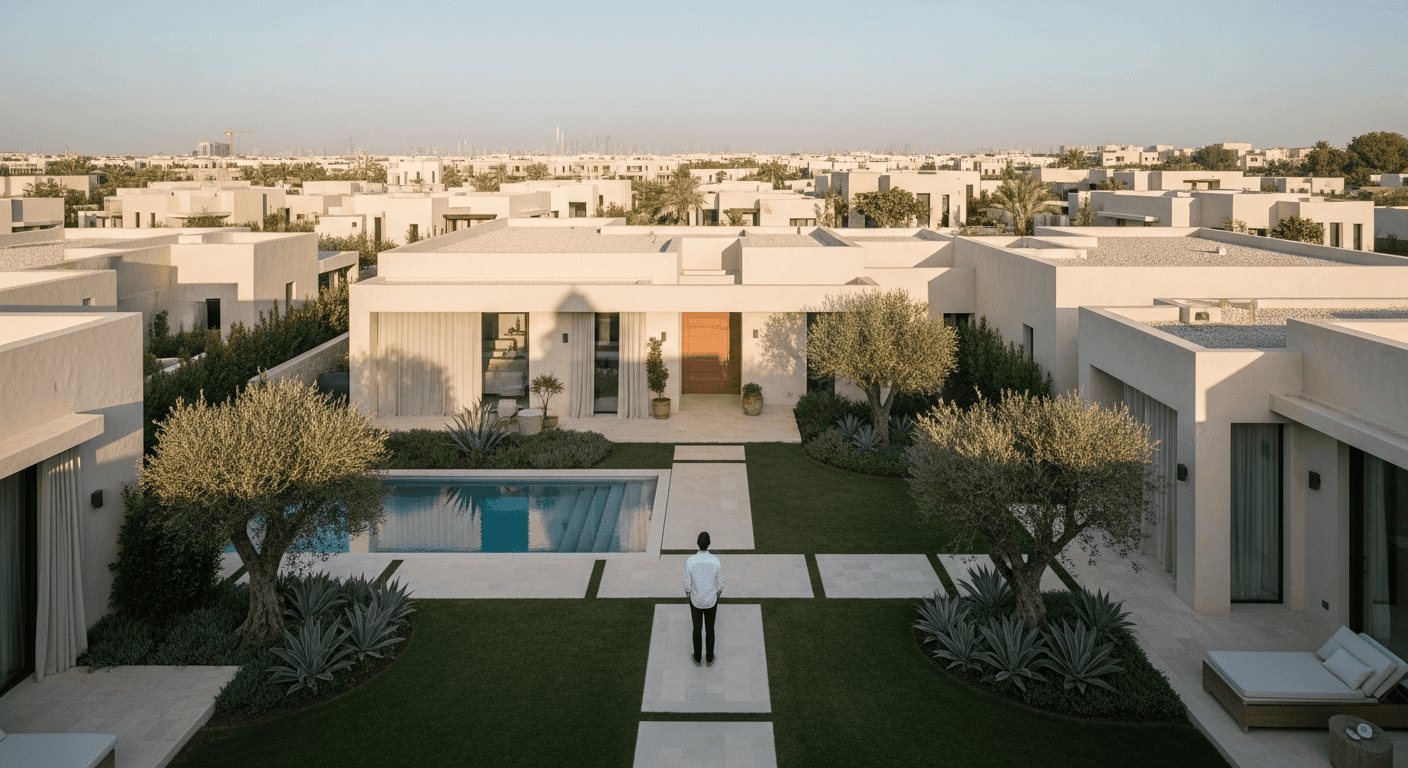
Dubai Rental Yields: A 2026 Reality Check for Investors
The era of rapid, double-digit rental growth in Dubai is transitioning into a new phase of stability. For investors, this means that securing strong returns now requires a more sophisticated approach, focused on net yields, asset quality, and micro-market analysis.

For the past few years, anyone who owned an investment property in Dubai felt like a genius. Rents weren't just rising; they were rocketing, with annual increases of 20-30% becoming commonplace in prime areas. This rental gold rush, fuelled by a post-pandemic influx and global recognition of the city's appeal, created a simple and highly profitable narrative for investors. But as I look at the market today from our desk at Gaia Living, I see the dynamics shifting. The era of easy, exponential gains is maturing into a more complex, sustainable, and, in my view, healthier market. This is the new reality check for anyone looking to invest.
Here is a frank look at what this shift means for you:
- The real difference between headline gross yields and the net return that lands in your bank account.
- A granular `Dubai rental yield analysis` across different property types and communities.
- The impact of the significant new supply pipeline on future rents and `Dubai property occupancy rates`.
- How the changing profile of Dubai's tenants should influence your investment choice.
- A practical `landlord guide Dubai market` to navigating regulations and maximising your asset's performance.
- My final verdict on where the smart money should be looking now.
From Hyper-Growth to Stability: The New Macro Picture
Let’s be clear: the Dubai rental market is not in decline. Far from it. The fundamental drivers are stronger than ever. The Dubai 2040 Urban Master Plan envisions a city of 5.8 million residents by 2040, a massive increase that requires a vast expansion of housing stock. This population growth is the bedrock that supports long-term rental demand and keeps occupancy rates exceptionally high across the city. What has changed is the *rate* of growth. The dizzying rent hikes of the recent past were a market correction, a rebound from the softer prices of the pre-2021 period. That correction phase is now largely complete. We are entering a period of normalization, where rental increases will likely track more closely with wage growth and inflation, rather than outpacing them by multiples.
This stabilization is a sign of market maturity. The Real Estate Regulatory Agency (RERA) plays a key role here. Its Rental Index is not a cap, but a governor. By providing a clear, data-driven benchmark for permissible rent increases upon contract renewal, it prevents the kind of speculative, runaway inflation that can destabilize a market. A tenant in a one-bedroom apartment in Jumeirah Beach Residence can now use the official calculator on the DLD website to see if their landlord’s proposed renewal hike is legally permissible. This brings predictability for both sides. Landlords are protected from rental stagnation, and tenants are protected from extortionate demands. This framework fosters a more stable tenant base, encouraging longer stays and reducing costly turnover for investors.
Beyond that, the monetary policy from the UAE's Central Bank, which tends to move in lockstep with the US Federal Reserve, has an indirect but powerful influence. Higher interest rates make mortgages more expensive for potential homebuyers. This can lead to a portion of would-be end-users remaining in the rental market for longer, bolstering demand, particularly in the mid-to-upper segments. An executive couple who might have bought an apartment in Business Bay might now choose to rent for another year or two, waiting for a more favourable interest rate environment. For an `investor rental property Dubai`, this dynamic provides a consistent and well-capitalized tenant pool. The market is transitioning from a speculative frenzy to one underpinned by solid economic and demographic fundamentals.
Gross vs. Net Yield: The Calculation Every Investor Must Master
One of the biggest mistakes I see new investors make is getting mesmerized by the headline 'gross yield'. A developer’s brochure or a property listing might trumpet an 8% or 9% yield, and while that number might be technically accurate, it is not the figure that determines your actual return on investment. The gross yield is simply the total annual rent divided by the property's purchase price. The net yield, the number that truly matters, is what’s left after all your expenses are paid. The difference between the two can be substantial, and failing to do this calculation is the fastest way to disappointment.
A thorough `landlord guide Dubai market` must begin with a transparent look at costs. Let's walk through a realistic example for a one-bedroom apartment in a popular area like Dubai Marina. The numbers here are illustrative, but they reflect the real costs involved.
Initial Purchase & Upfront Costs:
- Purchase Price: AED 1,800,000
- Dubai Land Department (DLD) Transfer Fee (4% of price): AED 72,000
- DLD Admin Fee: AED 580
- Real Estate Agency Fee (2% of price + 5% VAT): AED 37,800
- Property Registration Trustee Fee: ~AED 4,200
- Developer No-Objection Certificate (NOC) Fee: ~AED 1,000
- AED 5,000 (varies)
- Total Upfront Investment: ~AED 1,915,580
Now, let's calculate the annual return.
Annual Income & Running Costs: - Estimated Annual Rent: AED 130,000 - Gross Yield: (130,000 / 1,800,000) = 7.2%
This looks attractive. But now we subtract the unavoidable annual expenses:
- Service Charges: This is the big one. For a good quality tower in Dubai Marina, this could be around AED 18-22 per square foot. For an 850 sq ft apartment, let's use AED 20/sqft. That's AED 17,000 per year.
- Property Management Fee: If you live overseas or prefer a hands-off approach, hiring a company like ours at Gaia Living to manage the tenancy, maintenance, and payments is essential. This typically costs 5% of the annual rent. (5% of 130,000) = AED 6,500.
- Maintenance Buffer: Even with service charges covering the building, you are responsible for the apartment's interior. It is prudent to set aside 1-2% of the property's value annually for AC servicing, plumbing issues, or appliance repairs. Let’s budget a conservative AED 3,000.
- Total Annual Costs: AED 17,000 + AED 6,500 + AED 3,000 = AED 26,500
Calculating the Net Yield:
- Net Annual Income: AED 130,000 (Rent)
- AED 26,500 (Costs) = AED 103,500
- Net Yield (on purchase price): (103,500 / 1,800,000) = 5.75%
- True Net Yield (on total capital deployed): (103,500 / 1,915,580) = 5.4%
As you can see, the seductive 7.2% gross yield has become a more realistic 5.4% net return on your total cash outlay. This is still a very healthy return in a global context, especially in a stable, tax-efficient environment like Dubai, but it's a world away from the initial marketing figure. Understanding this math is the first step toward becoming a successful, long-term property investor in this city.
Yield Sweet Spots: A Segmented Market Analysis
The notion of a single 'Dubai property market' is a dangerous oversimplification. In reality, Dubai is a mosaic of distinct micro-markets, each with its own character, tenant profile, and investment dynamics. A successful `Dubai rental yield analysis` requires drilling down into these segments. The question isn't 'what is the yield in Dubai?', but rather 'what is the yield for this specific asset type in this specific community?'
Let’s compare the classic apartment-versus-villa dynamic. Apartments, especially in dense, amenity-rich urban hubs, are the workhorses of the rental market. A studio or one-bedroom unit in an area like Jumeirah Village Circle (JVC) or Arjan can generate gross yields in the 7-9% range. The entry prices are lower, and the tenant pool is vast, comprising young professionals, couples, and new arrivals to the city. The trade-off is higher competition. With so many similar units available, landlords must compete on price, quality of finish, and responsiveness to keep their properties occupied. The `Dubai apartment rental trends` show a clear flight to quality; tenants will pay a slight premium for a well-maintained apartment from a professional landlord over a cheaper but poorly managed alternative.
Villas and townhouses, on the other hand, operate on a different logic. Found in sprawling, family-oriented communities like Dubai Hills or Arabian Ranches, these properties attract a different kind of tenant — families with children, senior executives, and long-term residents who prioritize space, privacy, and community amenities like schools and parks. Rental yields for villas are typically lower, often in the 4-6% gross range. However, they usually secure longer-term tenancies, reducing vacancy periods and turnover costs. More importantly, villas have historically demonstrated stronger capital appreciation than apartments. An investor in a villa is often playing a longer game, accepting a lower annual cash flow in exchange for a potentially larger payout when they eventually sell.
Another critical segmentation is established versus emerging communities. An established, prime area like Downtown Dubai, home to the Burj Khalifa and Dubai Mall, is the definition of a blue-chip real estate investment. Vacancy is virtually non-existent, and the prestige of the address commands premium rents. However, the entry prices are among the highest in the city, which compresses the percentage yield. An investor here is buying stability and status. Conversely, an emerging area like Dubai South, the master-planned city around Al Maktoum International Airport, offers a very different proposition. Purchase prices are significantly lower, and the potential for high rental yields is greater. The risk, however, is also higher. Investors are betting on the future delivery of infrastructure, transport links, and amenities to attract the tenant base that will make their investment pay off. Success in these areas requires a longer investment horizon and a greater tolerance for construction and delivery risk.
The Supply Pipeline: A Flood or a Managed Flow?
No conversation about Dubai property is complete without addressing the elephant in the room: supply. The sight of cranes across the skyline prompts the perennial question: is Dubai overbuilding again? It's a valid concern, rooted in the market's history. But in my opinion, the situation today is fundamentally different from the speculative boom of the pre-2008 era.
Yes, the pipeline of off-plan launches is robust. Major developers like Emaar Properties, Nakheel, and a new generation of ambitious private builders like Binghatti and Select Group are actively bringing new projects to market. However, this supply is being delivered into a market with demonstrably deep and growing demand. Unlike in the past, today's construction is largely underpinned by a real, tangible increase in population and a government-led economic diversification strategy that is attracting talent and businesses from around the world.
Crucially, the regulatory environment has matured. The mandatory use of Escrow accounts, governed by RERA, means that buyer funds for off-plan properties are held in a protected account and released to the developer only upon meeting certified construction milestones. This system, detailed on the Dubai REST platform, provides a powerful layer of security for buyers and significantly reduces the risk of failed or indefinitely stalled projects that created so much dead-weight supply in previous cycles. Developers are also more sophisticated, phasing their launches to match absorption rates rather than flooding the market all at once. The payment plans — often structured as 60/40, 70/30, or even with post-handover installments, also create a more disciplined sales process.
The easy money in Dubai rentals has been made; the smart money is now being made through meticulous research and focusing on asset quality over speculative yield.
That said, investors must be strategic. While city-wide `Dubai property occupancy rates` remain high, a concentrated burst of handovers in a single community can create localized, temporary pressure on rents. An investor who bought an off-plan apartment in a large new development must be prepared for the fact that on handover day, they will be competing with hundreds of other landlords to attract the first tenants. This often leads to an initial 6-12 month period of lower-than-projected rents. The key is to have the financial buffer to withstand this initial dip and to have confidence in the long-term appeal of the community's master plan. The best investments are in projects that offer something unique — superior amenities, a prime location within the masterplan, or a distinctive design, that will help them stand out when the rental market gets crowded.
The Modern Tenant: Understanding a Diversifying Demand
To be a successful landlord, you must understand your customer. And the profile of the Dubai tenant is evolving rapidly. The old stereotype of the transient expat on a two-year contract is becoming outdated. The city is increasingly a place people choose as a long-term home, and this has profound implications for the rental market.
The UAE government's visionary visa reforms, especially the expanded Golden Visa program, are central to this shift. By offering 10-year residency to investors, entrepreneurs, and skilled professionals, the government is encouraging people to put down deeper roots. A family with a Golden Visa is more likely to seek a stable, long-term rental, perhaps a townhouse in a community with good schools like Dubai Hills. They are less price-sensitive and more focused on quality of life. This creates a more reliable income stream for landlords and reduces the friction and cost of frequent tenant turnover.
Alongside this, we're seeing the rise of new tenant archetypes. The global remote work trend has brought a wave of digital nomads and freelance professionals to Dubai. This group has a distinct set of needs. They favour furnished, 'plug-and-play' apartments with all bills included. They prioritize high-speed internet, access to co-working spaces, and locations within vibrant, walkable communities packed with cafes, gyms, and social spots. Areas like Dubai Marina, City Walk, and Bluewaters excel at catering to this demographic. For an investor, targeting this niche through short-term or monthly rentals can yield significantly higher returns than a standard annual lease, but it comes with the demands of more intensive management, marketing, and compliance with Dubai's Department of Economy and Tourism (DET) holiday home regulations.
This evolving demand has sparked an "amenity arms race" among developers. A simple pool and gym are no longer enough. Today's premium projects by developers like Meraas or Emaar Properties offer a comprehensive lifestyle package: residents' lounges, cinema rooms, paddle tennis courts, wellness centres, and meticulously landscaped parks. When choosing an `investor rental property Dubai`, you must look beyond the four walls of the apartment. The quality of the shared facilities and the overall community environment are now primary drivers of rental value and tenant retention. A property in a building with tired, poorly maintained amenities will struggle to compete, even if it's in a prime location.
The Landlord's Toolkit: Regulations and Best Practices
Navigating the operational side of being a landlord in Dubai is straightforward, thanks to a clear and mature regulatory framework designed to protect all parties. Understanding these rules is not just about compliance; it's about running your investment efficiently and professionally.
The cornerstone of any tenancy is the Ejari contract. 'Ejari' means 'my rent' in Arabic, and it is the mandatory system for registering all tenancy agreements with RERA. This registration, easily done through the Dubai REST app, is what makes the contract legally binding and admissible in case of a dispute. Without an Ejari, you have little legal recourse as a landlord. It is a simple but non-negotiable step. When a tenancy is agreed, the contract is signed, and the Ejari is registered, allowing the tenant to then connect their utilities (DEWA) in their own name.
For disputes, Dubai has a specialized judicial body, the Rental Dispute Settlement Centre (RDSC), which operates under the umbrella of the DLD. The process for filing a case is relatively quick and efficient. This provides landlords with a clear pathway to address issues like non-payment of rent or a tenant's refusal to vacate after a legal notice period. Equally, it protects tenants from unlawful eviction or unfair practices. For a landlord, knowing this robust system exists provides significant peace of mind. Here is a simple checklist of best practices we advise all our landlord clients to follow:
- Formalize Everything: Always use the official unified tenancy contract and register it with Ejari immediately. Verbal agreements have no legal standing.
- Secure the Deposit: Collect a security deposit (typically 5% of annual rent for unfurnished, 10% for furnished) and provide a receipt. This cannot be used by the tenant as their final month's rent; it is for rectifying any damages beyond normal wear and tear at the end of the tenancy.
- Document Condition: Conduct a thorough move-in inspection with the tenant, taking detailed photos and videos of the property's condition. Have both parties sign the report. This document is your best evidence if there is a dispute over the security deposit at the end of the contract.
- Know the Law on Rent Increases: You cannot arbitrarily increase the rent. Any increase on renewal must be in line with the RERA Rental Index calculator. Check the calculator at least 90 days before the contract expiry to see what, if any, increase is permitted.
- Respect Notice Periods: To evict a tenant, you must provide 12 months' written notice delivered via registered mail or notary public, and only for specific, legally permissible reasons such as the owner wishing to sell or move in themselves. You cannot simply ask a tenant to leave at the end of their contract.
My Verdict: Where to Invest Now
So, after analyzing the shifting dynamics, what is my advice for an investor looking at Dubai's rental market today? My view is one of cautious, strategic optimism. The market has matured. It's no longer a place where you can throw a dart at a map, buy an apartment, and be guaranteed a spectacular return. Success now demands diligence.
The fundamental thesis for investing in Dubai property remains intact and, in my opinion, is stronger than ever. The city's economic growth, its status as a global hub for talent and capital, and its ambitious population targets provide a powerful, long-term tailwind for the real estate sector. High `Dubai property occupancy rates` are not a temporary phenomenon; they are a structural feature of this growing city.
However, the investor's approach must evolve. The focus must shift from chasing speculative gross yields to building a resilient portfolio based on solid net yields and long-term capital preservation. This means choosing assets not just for their price, but for their quality, their location within a well-managed community, and their appeal to a specific, enduring tenant demographic. It means favouring a building with slightly lower yields but excellent maintenance and amenities over one with a higher advertised yield but a history of service charge disputes and deteriorating facilities.
For investors seeking yield, I would point towards mid-market communities with excellent infrastructure and a proven track record, such as the newer phases of Dubai Hills or specific, well-managed towers in JVC and Business Bay. For those with a longer horizon focused on capital growth, acquiring a prime asset in an irreplaceable location like Palm Jumeirah or Downtown Dubai during a moment of market stability is a strategy that has historically paid handsome dividends.
Key takeaway: The Dubai rental market's new chapter rewards diligence over speculation. Investors who do their homework, calculate their net yields accurately, and focus on buying quality properties that appeal to the city's increasingly discerning tenants will be the ones who achieve sustainable, long-term success. The opportunity is still immense, but it is now smarter and more nuanced.
## Sources
- Dubai Land Department (DLD): https://dubailand.gov.ae/en/
- Dubai REST app: https://dubairest.gov.ae/
- Central Bank of the UAE (CBUAE): https://www.centralbank.ae/
- The UAE Government Portal (u.ae): https://u.ae/en
Questions, answered
- What is a realistic rental yield for a Dubai property investor?
- While gross yields can be advertised at 7-9% in some areas, a realistic net rental yield for a good quality property in Dubai, after factoring in service charges, fees, and potential voids, is typically between 5% and 6.5%. Luxury properties may yield less (3-5%) but often see higher capital appreciation.
- Are Dubai property occupancy rates high?
- Yes, Dubai enjoys very high property occupancy rates, often exceeding 90% in desirable communities. This is driven by strong population growth, economic diversification, and government initiatives like the Golden Visa that encourage long-term residency.
- How are rental increases regulated in Dubai?
- Rental increases are regulated by the Real Estate Regulatory Agency (RERA). Landlords can only increase rent on renewal based on the official RERA Rental Index Calculator, which compares the current rent to the average market rate for similar properties. A 12-month notice is also required for eviction for specific, legally-defined reasons.
- What are the main costs for a landlord in Dubai besides the purchase price?
- The primary ongoing cost for a landlord is the annual service charge, which covers maintenance and amenities for the building or community. Other costs include property management fees (if used), a budget for repairs, and ensuring the property is compliant with all regulations. These must be factored into any Dubai rental yield analysis.
- Is it better to invest in an apartment or a villa for rental income in Dubai?
- This depends on your investment strategy. Apartments in areas like Dubai Marina or Downtown Dubai generally offer higher percentage yields and a larger tenant pool. Villas in communities like Arabian Ranches or Dubai Hills appeal to families, often securing longer-term tenants, though their percentage yields are typically lower while capital appreciation can be stronger.
- How does new property supply affect rental yields in Dubai?
- A high volume of new property handovers in a specific area can temporarily suppress rents as many units become available for rent simultaneously. Investors buying off-plan should anticipate this initial dip and focus on the long-term fundamentals of the community, such as its location, amenities, and infrastructure.

Omar tracks the announcements that move the market — new launches, regulation, mega-projects, and developer moves — and tells you what they actually mean for buyers.
Related stories
Dubai 2040: A Land Use and Investment Blueprint
A deep dive into the Dubai 2040 Urban Master Plan, analysing specific zoning changes and land use designations to reveal the next generation of property investment hotspots.
Beyond the Blueprint: The Retail Value Multiplier
It's a simple truth of Dubai real estate: proximity to quality retail and leisure isn't just a perk, it's a powerful driver of property value. I'll explain how operational hubs are creating measurable premiums for investors and residents.
Your Dubai Home Setup Guide
A step-by-step guide for new Dubai homeowners on connecting utilities, setting up essential services, and integrating into your new community.
Echoes, in your inbox
One thoughtful email a month. Market insight, new launches, no spam.